
When you bake pizza at high heat, the dough transforms into that perfect crust you crave. The intense temperature creates steam, forming airy pockets while drying the outer layer for crunchiness. This heat also helps gases expand, giving you a chewy interior. Proper heat distribution is key, as uneven cooking can ruin your pizza’s texture. With the right temperature management, you can achieve that ideal crispy exterior and flavorful inside—learn how to master this technique for even better results!
Key Takeaways
- High heat transforms pizza dough into a crispy exterior while maintaining a chewy interior through effective moisture management.
- Intense temperatures promote steam generation, creating air pockets that enhance crust texture and flavor.
- Consistent heat circulation ensures even cooking, preventing undesirable textures and ensuring every part of the pizza is perfectly baked.
- The fermentation process, influenced by temperature, develops flavors and gases that help the dough rise effectively.
- Proper heat management is crucial for achieving the ideal balance between a crispy crust and a soft, flavorful inside.
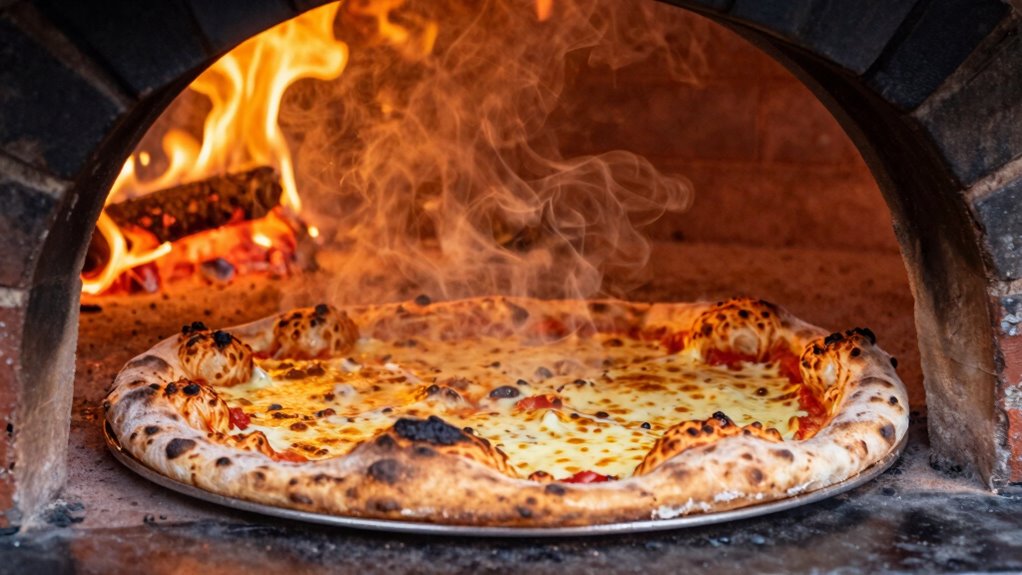
When you’re cooking pizza, understanding how heat works in a pizza oven is essential for achieving that perfect crust. The high temperatures typical of a pizza oven can transform your dough into something extraordinary. It’s not just about cooking the toppings; the heat plays a critical role in the dough fermentation process and contributes greatly to the crust texture.
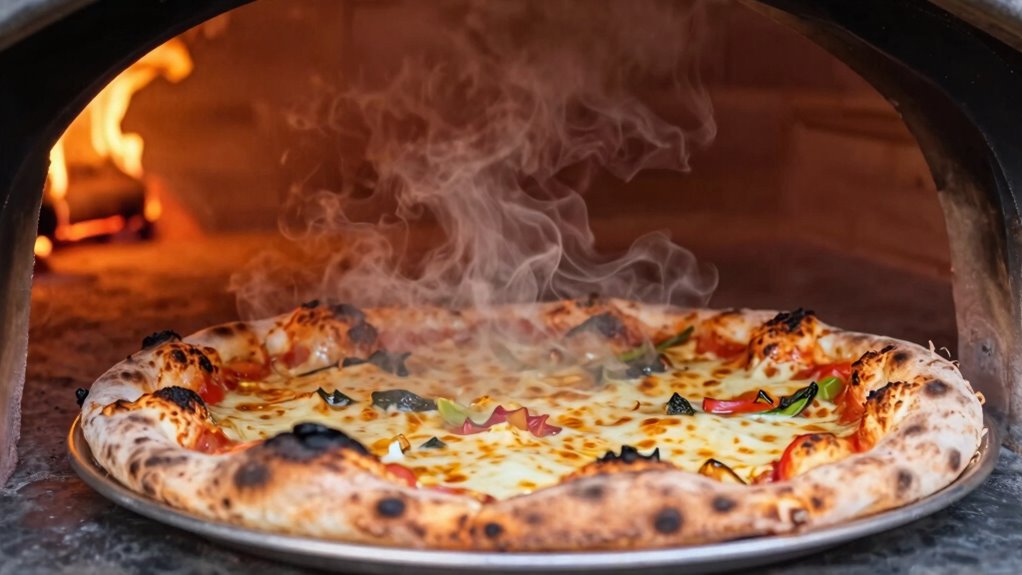
As the pizza oven heats up, the intense heat affects the moisture content in the dough. When you place your pizza inside, the outer layer of the dough starts to dry out, which allows it to become firm and develop that desirable crispy exterior. This is where the magic happens: the high heat causes the water in the dough to turn into steam, creating air pockets that give your crust its light and airy texture. If you’ve ever bitten into a perfectly cooked slice, you know exactly what I mean.
The intense heat transforms the dough, creating a crisp exterior and airy texture that makes each bite irresistible.
Dough fermentation is also a key factor in this process. When you allow your dough to ferment, it develops flavors and a texture that high heat can accentuate. The fermentation process produces gases that help your dough rise, and when you bake it at high temperatures, these gases expand rapidly. This results in a crust that’s not only crispy on the outside but also chewy and flavorful on the inside. You can taste the difference each time you perfect your technique. Additionally, the temperature at which you bake influences how these gases behave and how the crust develops. Proper heat management can make a significant difference in achieving the ideal crust.
It’s important to remember that temperature isn’t everything. The way heat circulates in your pizza oven can greatly affect how evenly your pizza cooks. Most pizza ovens are designed to provide consistent, radiating heat from various angles, ensuring that every part of your pizza gets the attention it needs. If one side cooks faster than the other, you’ll end up with uneven textures—definitely not what you want for that perfect pie. Furthermore, understanding the heat transfer process can help you optimize your oven settings for the best results. Proper heat distribution is crucial for ensuring that the high heat impacts the dough uniformly, leading to a perfectly cooked crust every time.

BIG HORN 14-Inch Indoor Pizza Oven, 850°F High-Heat Electric Countertop Pizza Oven for Restaurant-Style Artisan Pizza with Pizza Stone and Pizza Peel, PID Precision Temperature Control
【14”Professional Pizza Maker】Our indoor pizza oven preheats in 15 minutes, reaching 850℉ at maximum and cooks tasty 14”pizzas…
As an affiliate, we earn on qualifying purchases.
As an affiliate, we earn on qualifying purchases.
Frequently Asked Questions
What Type of Wood Is Best for High-Heat Pizza Ovens?
For high-heat pizza ovens, hardwoods like oak, hickory, and maple are your best bets. Oak offers a balanced flavor profile with a steady burn rate, while hickory adds a robust, smoky taste. Maple brings a subtle sweetness, enhancing the overall flavor without overpowering your pizza. Each wood type has unique smoke characteristics, so experimenting can help you find the perfect combo for your pies. Enjoy the delicious results!
How Long Does It Take to Preheat a Pizza Oven?
Preheating a pizza oven’s like warming up before a big game; it takes about 30 to 45 minutes to reach that perfect temperature. You’ll want to use effective preheating techniques, ensuring temperature consistency throughout. Start your oven early, letting the heat distribute evenly for the best results. Once it’s hot enough, your dough will rise beautifully, creating that perfect crust you’re aiming for. Enjoy the process and savor the delicious outcome!
Can I Use Frozen Dough in a High-Heat Oven?
Yes, you can use frozen dough in a high-heat oven. Just make sure to thaw it first; otherwise, it might not cook evenly. Once it’s at room temperature, stretch or shape it as you like before placing it in the oven. High-heat cooking will give you that crispy crust you crave, but keep an eye on it since frozen dough may require a bit more time to bake fully. Enjoy your pizza!
What’s the Ideal Temperature for Cooking Different Pizza Styles?
Imagine your pizza oven as a concert stage, where each style gets its own spotlight. For Neapolitan technique, crank it up to 800°F, letting dough hydration shine in a quick bake. New York style thrives around 500°F, balancing chew and crisp. If you’re going for a Sicilian crust, aim for about 450°F, allowing for a fluffy base. Wood-fired ovens bring unique benefits, infusing flavor while ensuring a perfect cook for all styles.
How Do I Maintain My Pizza Oven’s Heat?
To maintain your pizza oven’s heat, focus on effective heat retention and use insulation techniques. Keep the oven door closed as much as possible to trap warmth. If you’re using wood, add logs strategically to sustain the flame. Consider insulating the oven with materials like firebricks or ceramic blankets, which can help minimize heat loss. Regularly check the temperature, ensuring you’re ready to adjust your fuel and manage airflow effectively.
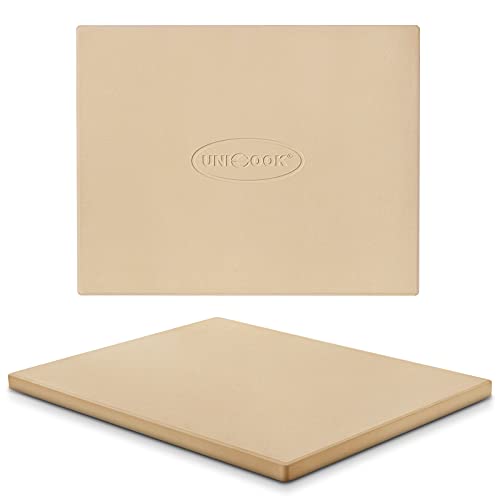
Unicook Pizza Stone, Heavy Duty Cordierite Pizza Pan for Oven and Grill, Thermal Shock Resistant Baking Stone for Bread, 15 X 12 Inch Rectangular, 6.8 lbs
Rectangular Baking Stone: This baking stone measures 15" L x 12" W with 0.6" thickness and weighs about…
As an affiliate, we earn on qualifying purchases.
As an affiliate, we earn on qualifying purchases.
Conclusion
In pizza-making, high heat is your best friend. It transforms raw dough into a crust that’s crispy on the outside and soft inside, creating that perfect bite. Remember, “you can’t make an omelet without breaking a few eggs.” Similarly, mastering your pizza oven might take some trial and error, but the rewards are worth it. Embrace the heat, experiment, and soon you’ll be crafting pizzas that impress everyone at the table.

Etekcity Infrared Thermometer Laser Temperature Gun 774, Meat Food Candy Oven Thermometer for Griddle Accessories, Heat Gun for Cooking Refrigerator Tools, Adjustable Emissivity & Max Measure, Yellow
𝐕𝐞𝐫𝐬𝐚𝐭𝐢𝐥𝐞 𝐓𝐨𝐨𝐥𝐬: Infrared technology allows you to measure various objects at home and outdoors; Use it for 𝒎𝒆𝒂𝒕,…
As an affiliate, we earn on qualifying purchases.
As an affiliate, we earn on qualifying purchases.

ThermiChef 16×16 Pizza Steel, 1/4" Thick, 17.6 lbs – Cooking Steel for Oven & Grill – Made in USA
RESTAURANT RESULTS – Achieve wood-fired-style pizza with delicious, crispy crust at home! This 16" by 16" pizza steel…
As an affiliate, we earn on qualifying purchases.
As an affiliate, we earn on qualifying purchases.