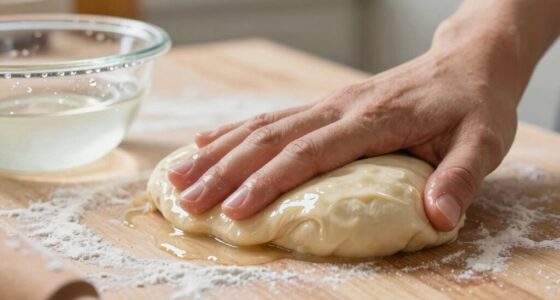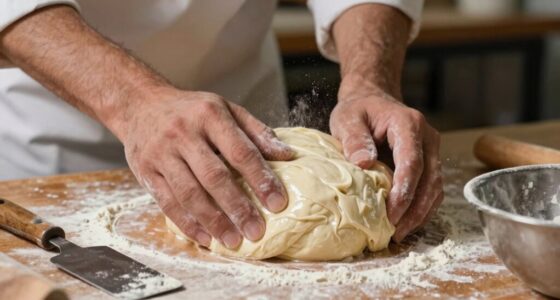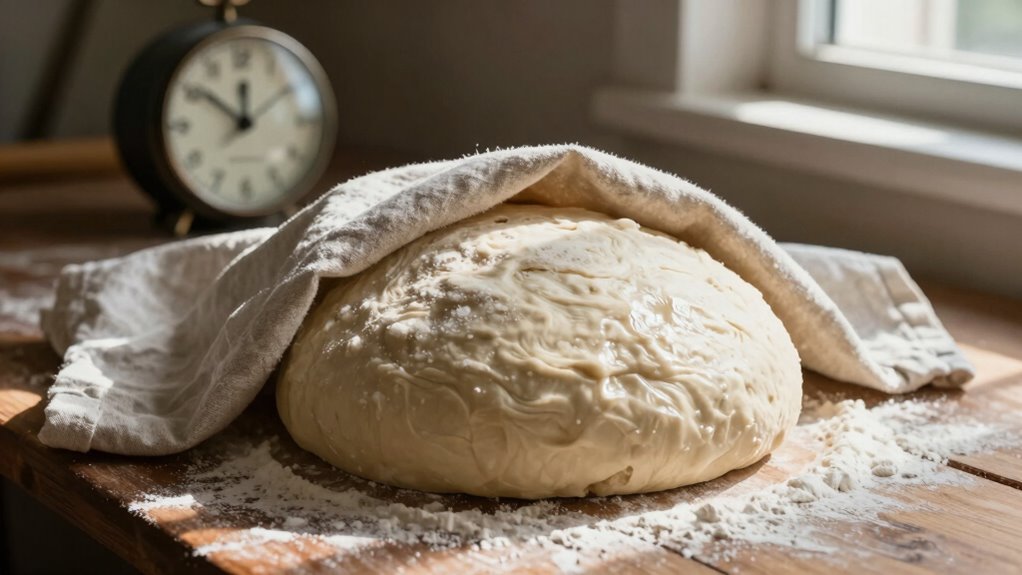

To master bulk fermentation signs, stop fixating on the clock. Instead, look for your dough’s cues. It should rise and expand, showing bubbles both on the surface and inside. When you poke it, it should spring back slowly. The texture becomes smoother and cohesive, and the aroma shifts to a pleasant tang. These signs indicate it’s ready for the next step. Want to enhance your dough-making skills even further? There’s more to explore.
Key Takeaways
- Look for visible dough expansion and volume increase, indicating active yeast fermentation.
- Check for bubbles forming on the surface and within the dough.
- Poke the dough; it should slowly spring back, suggesting proper fermentation.
- Smell for a pleasant, slightly tangy aroma, indicating readiness for the next step.
- Assess the dough’s texture; it should be smooth, cohesive, and pliable.
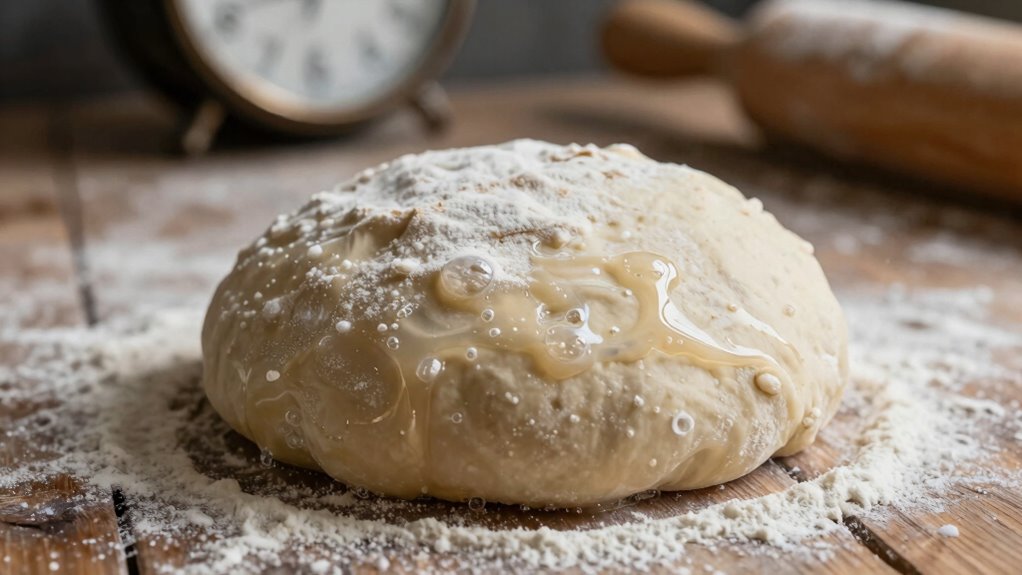
When you’re diving into the world of bread making, recognizing the signs of bulk fermentation is vital for achieving that perfect loaf. Instead of relying solely on the clock, you’ll want to observe your dough closely. As you mix your ingredients and let them rest, keep an eye on how the dough volume changes. Ideally, you should see it rise and expand, indicating that the yeast is actively fermenting and producing gas.
You’ll notice that the gluten development is significant during this phase. As the proteins in the flour hydrate and interact, they create a network that traps the gases being released. This is where you’ll see bubble formation starting to appear on the surface and within the dough. These bubbles are a clear sign of yeast activity, showing that fermentation is well underway. If you poke the dough gently, it should spring back slowly, indicating the right amount of elasticity and strength in the gluten structure.
Temperature plays a considerable role in all of this. If your fermentation temperature is too low, the yeast will be sluggish, resulting in a longer bulk fermentation. Conversely, if it’s too warm, the yeast might overdo it, leading to an overly airy dough that can’t hold its shape. You’ll want to find that sweet spot to guarantee ideal yeast activity. Maintaining a consistent fermentation temperature is crucial for predictable results. Proper yeast activity is essential for developing the desired flavor and texture in your bread. Being aware of fermentation signs helps bakers troubleshoot and adjust as needed for optimal results.
Another important aspect to keep in mind is the dough texture. As fermentation progresses, you should feel the dough becoming smoother and more cohesive. A well-fermented dough will have a soft, pliable texture, making it easier to shape later on. Pay attention to the aroma changes as well; a pleasant, slightly tangy smell is a good indication that fermentation is occurring as it should.
Lastly, observe the surface smoothness of the dough. Once you’ve got the right volume and texture, the dough should look fairly smooth, without any large cracks or rough areas. If you notice that everything is aligning—the dough is rising, the texture is soft, and the aroma is inviting—you can feel confident that it’s time to move on to the next step in your bread-making journey. Trust your instincts and these visual cues; they’ll serve you far better than the clock ever will. Understanding the fermentation process is key to mastering bread baking and achieving consistent results.

Sourdough Proofing Basket Gift Set, 9" Round and 10" Oval Banneton Bread Baking Supplies, Sourdough Baskets with Bread Lame, Danish Whish, Bowl Scraper, Sourdough Scraper, and Linen Liner
What You Get: 1 9-inch round banneton bread proofing basket , 1 10-inch oval proofing basket, 2 liners,…
As an affiliate, we earn on qualifying purchases.
As an affiliate, we earn on qualifying purchases.
Frequently Asked Questions
How Does Temperature Affect Bulk Fermentation Timing?
Temperature considerably affects bulk fermentation timing. When it’s warm, yeast activity increases, speeding up fermentation stages, which can lead to a quicker rise. Conversely, cooler temperatures slow down yeast, extending the process. You’ll notice changes in dough strength and texture as fermentation progresses. So, instead of relying on the clock, pay attention to the dough’s behavior—its rise and bubbles will tell you when it’s ready, regardless of the temperature.
Can I Use a Cold Environment for Fermentation?
Yes, you can use a cold environment for fermentation! In fact, studies show that cold storage can enhance flavors in your bread, allowing for more complex profiles. By fermenting at lower temperatures, you slow down yeast activity, which develops those rich fermentation flavors over time. Just remember, it might take longer than usual, but the result is often worth the wait. So, embrace the chill and enjoy the unique taste it brings!
What Ingredients Influence Bulk Fermentation Duration?
Yeast activity, flour type, sugar content, and dough structure all influence bulk fermentation duration. If you use high-protein flour, it can absorb more water, creating a stronger dough that might take longer to rise. Sugars can speed up fermentation, while a cooler environment may slow yeast activity. Pay attention to how your dough feels and looks; those signs often matter more than the clock when determining when to proceed to the next step.
How Do I Maintain Hydration Levels During Fermentation?
To maintain hydration levels during fermentation, try using hydration techniques like autolyse or stretch and fold. Did you know that dough consistency can improve with just a 5% increase in water? Keep an eye on your dough; it should feel smooth and elastic. Adjust hydration based on flour type and environmental conditions. Experimenting with different levels will help you find the perfect balance for your bread, resulting in a delightful texture.
Is Bulk Fermentation Different for Sourdough Versus Yeasted Bread?
Yes, bulk fermentation is different for sourdough versus yeasted bread. Sourdough characteristics, like its natural leavening, mean you’ll notice slower yeast activity compared to commercial yeast. This slower rise allows for more flavor development and a unique texture. In contrast, yeasted bread rises more quickly due to the concentrated yeast, resulting in a different fermentation timeline. Pay attention to the dough’s feel and volume, rather than just the clock, to judge readiness.
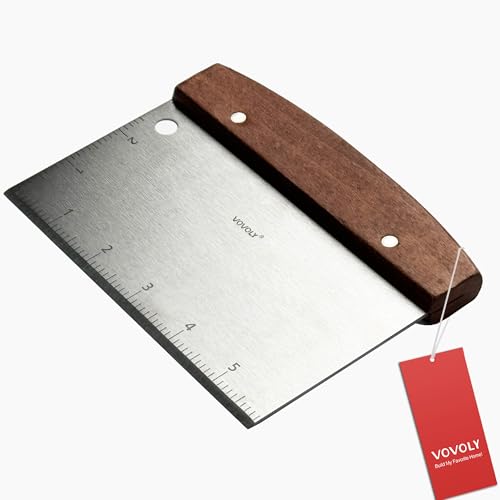
Vovoly Multipurpose Bench Scraper Kitchen Utensil for Flat Top Griddle, Dough Scraper Cutter for Bread and Pizza Cutter – Stainless Steel Metal Griddle Scraper Chopper
Thickened stainless steel – This bench scraper is made of thickened stainless steel, non-reactive, rust free, hygienic and…
As an affiliate, we earn on qualifying purchases.
As an affiliate, we earn on qualifying purchases.
Conclusion
In the dance of bread-making, let the dough lead. Instead of counting the minutes, watch for signs—bubbles forming, volume rising, and that delightful aroma wafting through the air. When your dough’s ready, it’ll speak to you like an old friend, enthusiastic to be shaped and baked. Trust your instincts, embrace the process, and soon you’ll create a loaf that’s not just bread, but a warm hug for the soul. Keep baking, and let your dough guide you!

Lonicera Digital Cooking Thermometer for Bread Baking, 5" Probe, Instant Read 2-3s, IPX6 Waterproof Food Thermometer with Backlight, for Liquid, Water & Meat (Red)
5" Probe & IPX6 Waterproof – Long 5-inch food-grade probe keeps your hands safely away from hot liquid…
As an affiliate, we earn on qualifying purchases.
As an affiliate, we earn on qualifying purchases.

Saint Germain Bakery Premium Professional Bakers Extra Large Couche 35"x26" from France – Heavy Duty Proofing Cloth 100% Natural Flax Linen
AUTHENTIC 100% FLAX LINEN: Top quality French import, extra large couche fabric, 35×26 inches, is of premium professional…
As an affiliate, we earn on qualifying purchases.
As an affiliate, we earn on qualifying purchases.