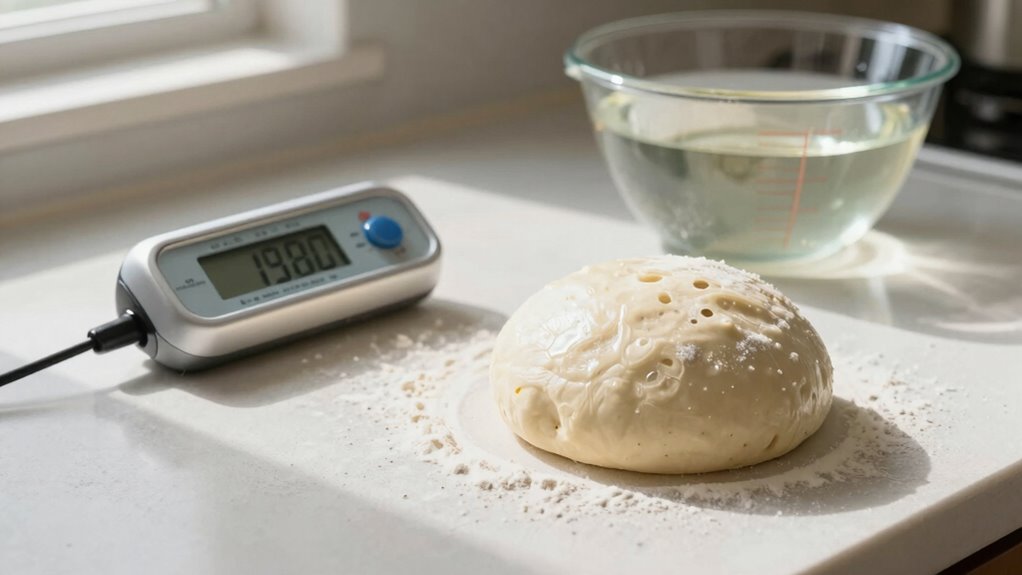

To achieve the perfect dough, aim for a target temperature of 75°F to 78°F. Consider the temperatures of your ingredients and any heat generated during mixing. For example, if your flour is at 70°F and mixing raises the temperature by 10°F, you’ll need to use water at 90°F. Adjusting these factors carefully can lead to better fermentation and texture. There’s more about how to master this process waiting for you!
Key Takeaways
- Aim for a target dough temperature of 75°F to 78°F for optimal fermentation and results.
- Consider the temperatures of all ingredients when calculating the final dough temperature.
- Mixing generates heat; adjust water temperature based on your mixing method (hand vs. stand mixer).
- Higher hydration levels retain heat, affecting the final temperature; balance is crucial.
- Use the formula: Desired Temp = (Flour Temp + Mixing Heat + Water Temp) to achieve target dough temperature.
When you’re baking bread, achieving the desired dough temperature is essential for perfect fermentation and texture. The right dough temperature not only influences the fermentation process but also affects yeast activity, which is vital for that perfect rise you’re aiming for. By understanding the factors that contribute to dough temperature, you can improve your bread-baking results considerably.
First, you need to take into account the ingredients you’re using. Each ingredient has a different impact on dough temperature. For instance, if you’re using cold water or refrigerated ingredients, they’ll lower the overall temperature of your dough. Conversely, warm water or room-temperature ingredients can raise it. Knowing the temperatures of your ingredients before mixing can help you calculate the final dough temperature more accurately.
Consider the temperatures of your ingredients; cold items will lower dough temperature, while warm ones will raise it, affecting fermentation.
Mixing methods also play a role in how heat is generated during the process. When you mix your ingredients, friction generates heat, which can elevate the dough temperature. If you’re using a stand mixer, the mixing speed and duration will directly affect how much heat is produced. If you mix by hand, you’ll generate less friction and as a result, may need to adjust your ingredient temperatures accordingly.
Next, let’s talk about hydration levels. The amount of water you incorporate into your dough impacts its temperature as well. Higher hydration levels can lead to more heat retention during the fermentation process. If your dough is too wet, it might warm up quicker than you expect. Striking the right balance is key; if your dough is too warm, yeast activity can become erratic, leading to over-fermentation or under-fermentation, both of which can ruin your loaf.
To calculate your desired dough temperature, you can use a simple formula. Aim for a dough temperature of around 75°F to 78°F for most bread recipes. Take into account the temperatures of your ingredients and the heat generated during mixing. You can adjust your ingredient temperatures accordingly: for instance, if your flour is at 70°F, and you know your mixing will generate about 10°F of heat, you’d want your water to be around 90°F to hit that target.
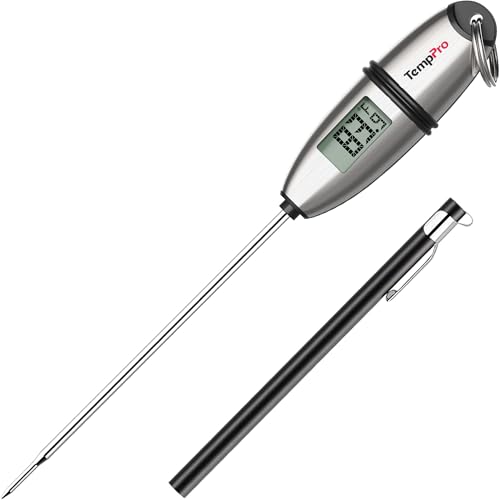
TempPro TP02S Digital Food Thermometer for Cooking Bread Baking Sourdough Liquids, Meat Thermometer Digital with Super Long Probe for Kitchen BBQ Yogurt Candy Making Accessory (Previously ThermoPro)
Fast and Accurate Reading: Kitchen thermometer for cooking features a 1 to 3 second readout speed and high…
As an affiliate, we earn on qualifying purchases.
As an affiliate, we earn on qualifying purchases.
Frequently Asked Questions
What Tools Do I Need to Measure Dough Temperature?
To measure dough temperature, you’ll need a reliable dough thermometer and a temperature chart. A digital thermometer works best for quick readings. Simply insert it into the dough’s center and wait for the reading. Having a temperature chart handy helps you understand the ideal temperatures for different types of dough. With these tools, you can guarantee your dough’s at the right temperature for perfect baking every time.
How Does Humidity Affect Dough Temperature?
Humidity affects dough temperature by influencing moisture levels in your ingredients. When it’s humid, your flour may absorb more moisture, which can raise the dough temperature. This imbalance can lead to over-hydration, making your dough stickier and harder to handle. To maintain a proper temperature balance, adjust your water content based on the humidity. Keep an eye on your environment, and you’ll achieve better results in your baking!
Can I Use Cold Water to Adjust Dough Temperature?
Yes, you can use cold water to adjust dough temperature! If your dough’s getting too warm, incorporating cold water is an effective cooling technique. Just keep in mind the water temperature you’re using, as it’ll impact the final dough. Start with small amounts to avoid drastic changes, and mix well to guarantee even cooling. This way, you can achieve the perfect dough temperature for your baking needs. Happy baking!
What Happens if My Dough Temperature Is Too High?
If your dough temperature’s too high, you’re in for a rough ride. Yeast activity skyrockets, leading to rapid fermentation speed that can produce off flavors and a less desirable texture. You might end up with overly airy bread or a dense loaf that doesn’t rise properly. Keeping an eye on your dough temperature is essential, or you’ll find yourself in a pickle, wondering where it all went wrong.
How Does Flour Type Influence Desired Dough Temperature?
Flour type greatly influences your desired dough temperature. Higher protein flours, like bread flour, absorb more water and need a different hydration level, which can raise the dough temperature. Lower protein flours, like cake flour, require less water and can help keep the temperature down. Adjusting your hydration levels based on the flour type guarantees your dough ferments properly, leading to the best texture and flavor in your final product.
TempPro TP02S Digital Food Thermometer for Cooking Bread Baking Sourdough Liquids, Meat Thermometer Digital with Super Long Probe for Kitchen BBQ Yogurt Candy Making Accessory (Previously ThermoPro)
Fast and Accurate Reading: Kitchen thermometer for cooking features a 1 to 3 second readout speed and high…
As an affiliate, we earn on qualifying purchases.
As an affiliate, we earn on qualifying purchases.
Conclusion
In the dance of bread-making, your desired dough temperature is the guiding star. Embrace this simple calculation, and watch as your ingredients meld like old friends, creating a harmony that rises to perfection. Just as a warm sun nurtures a budding flower, the right temperature breathes life into your dough. So, next time you knead, remember this magic, and let your creations bloom into golden loaves, filling your kitchen with the promise of warmth and comfort.

Alpha Grillers Meat Thermometer Digital – Instant Read Food Thermometer for Cooking & Grilling – Professional Kitchen Gifts for Men, Dad & Mom
Instant Read Food Thermometer | Our instant read thermometer features a temperature probe and advanced, highly accurate technology…
As an affiliate, we earn on qualifying purchases.
As an affiliate, we earn on qualifying purchases.

Foldable Bread Proofing Box with Temperature Timer Controller (86-113℉),Space-Saving Dough Proofer with Metal Rack,Sourdough Starter Warmer,Proofing Box for Bread Baking,Pizza,Yogurt,Seed Starting
Updated Foldable Proofing Box: Energy-Efficient and Safe Design for Berverra proofing box, The large dough proofer fits multiple…
As an affiliate, we earn on qualifying purchases.
As an affiliate, we earn on qualifying purchases.