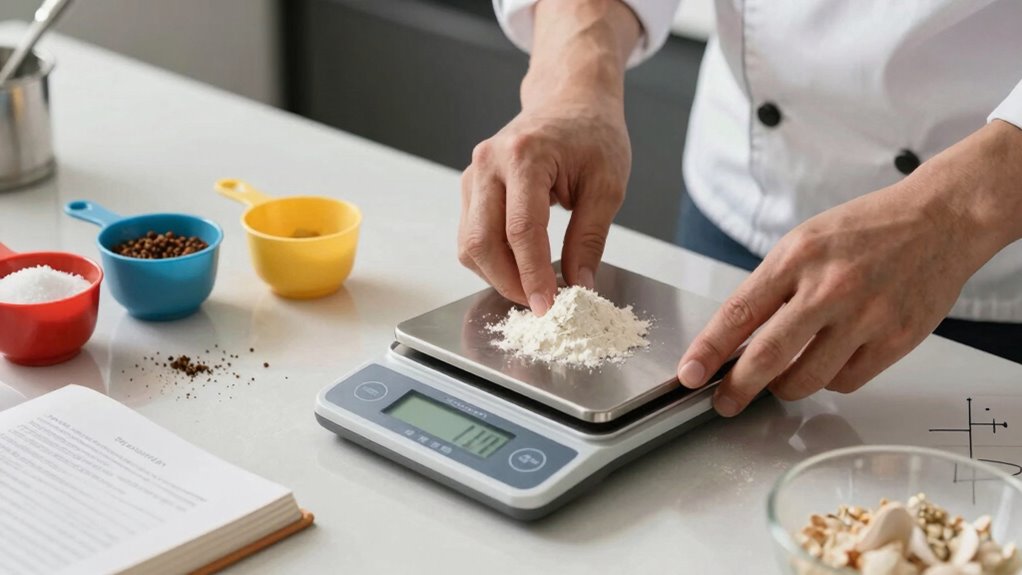
To successfully scale recipes, you need to respect ingredient ratios, ensuring flavor and texture stay balanced. Use precise measurements and conversion tools, especially when adjusting for volume to weight. Be cautious with leavening agents like baking soda, and consider your cookware size, which affects cooking times. Fine-tuning small amounts during scaling helps prevent issues like improper rising. Keep these math principles in mind, and you’ll master recipe scaling—there’s more to discover on how to perfect your adjustments.
Key Takeaways
- Maintain ingredient ratios to preserve flavor, texture, and chemical reactions during scaling.
- Use accurate measurement conversions and a kitchen scale for precise adjustments.
- Scale ingredients carefully, especially leavening agents and liquids, to ensure proper rising and consistency.
- Adjust cooking times and equipment size to prevent under or overcooking.
- Make small, precise fine-tunings during scaling to optimize recipe outcomes.
Scaling recipes can be tricky, but with the right approach, you can avoid common pitfalls and achieve consistent results. When you’re adjusting a recipe, understanding ingredient ratios is crucial. These ratios ensure that the balance of flavors, textures, and chemical reactions remains intact, no matter how much you’re making. If you’re doubling or halving, pay close attention to how each ingredient relates to the others. For example, if a recipe calls for 1 cup of sugar and 2 cups of flour, keep that same ratio when you scale it up or down. Ignoring these ratios can lead to textures that are off or flavors that don’t blend well.
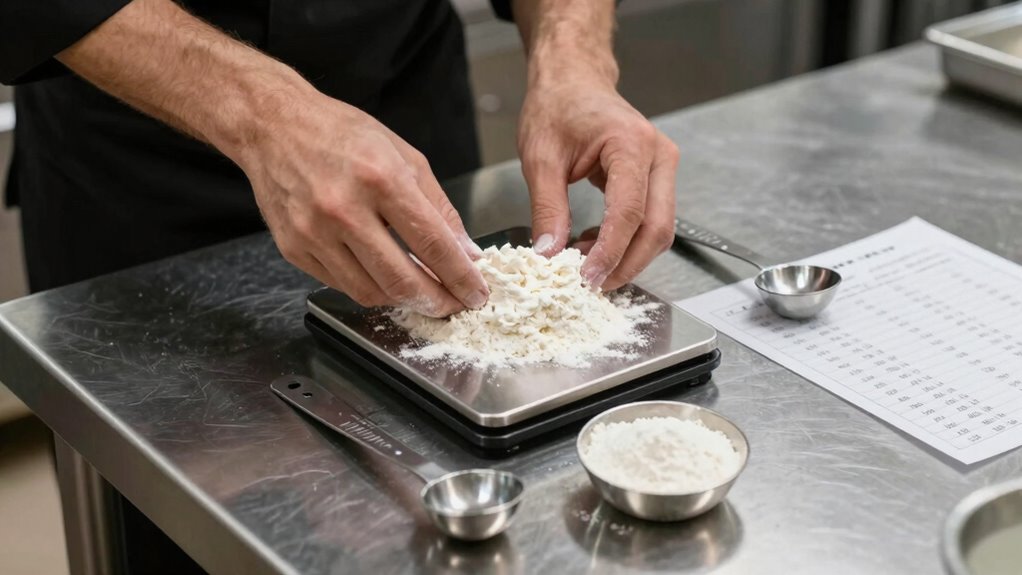
Measurement conversions often trip people up when changing recipe sizes. Different ingredients require different measurement conversions, especially when going from volume to weight or vice versa. A cup of flour isn’t always equal in weight to a cup of sugar, so it’s essential to use accurate conversion charts or tools. Using a kitchen scale can make this process more precise, particularly when working with baking recipes, where small deviations can make a big difference. Convert measurements carefully, and double-check your calculations to prevent errors that could spoil your dish.
When scaling, it’s tempting to simply multiply all ingredients by the same number, but that doesn’t always work perfectly. Some ingredients, like baking powder or baking soda, have a limited range of effectiveness and can affect the rise or texture if scaled improperly. For these, small adjustments are necessary, and sometimes reducing an ingredient slightly can improve the final product. Similarly, liquids may need different treatment—adding a bit more or less to achieve the right consistency. Paying attention to ingredient interactions can help you fine-tune your adjustments for better results. Additionally, understanding measurement accuracy is essential for maintaining recipe integrity during scaling.
It’s also helpful to consider equipment size because it can influence cooking times and heat distribution, impacting the final outcome.

Etekcity Food Kitchen Scale, Digital Grams and Ounces, 11lb
- Multiple Units Support: oz, lb, fl oz, g, mL
- Tare Function Included: Zero out weight for accurate measurements
- Battery Powered: Includes 2 AAA batteries for convenience
As an affiliate, we earn on qualifying purchases.
As an affiliate, we earn on qualifying purchases.
Frequently Asked Questions
How Do Ingredient Ratios Change When Scaling Recipes?
When scaling recipes, ingredient proportions change based on the scaling factors you choose. You multiply each ingredient’s original amount by this factor to maintain consistent proportions. For example, doubling a recipe means using a scaling factor of 2, so all ingredients are doubled. Keep in mind that some ingredients, like spices or leavening agents, may need adjustments beyond simple multiplication to preserve flavor and texture.
What Common Mistakes Occur When Doubling a Recipe?
You might accidentally turn your doubled recipe into a flavor disaster, with overpowering spices or blandness. Common mistakes include ingredient substitution errors that throw off flavor balance, or forgetting to double all components equally. Don’t forget that doubling doesn’t mean just doubling ingredients blindly—pay attention to how flavors interact. If you rush, you risk ruining your dish, turning a simple recipe into a culinary catastrophe. Always adjust carefully!
How Can I Adjust Baking Times When Increasing Recipe Size?
When increasing your recipe, you should keep an eye on baking times by monitoring the baking temperature and oven calibration. Generally, you might need to extend the baking time slightly, but avoid overbaking by checking for doneness earlier. Make sure your oven is properly calibrated for accurate temperature, and consider using an oven thermometer. Adjustments may vary based on the size and density of your scaled-up dish.
Do All Recipes Scale Equally Without Adjustments?
Not all recipes scale equally without adjustments. When you increase a recipe, ingredient substitution and flavor balance can be affected, so you might need to tweak measurements slightly. Larger batches can alter baking times, texture, and taste. Pay close attention to consistency, and don’t hesitate to modify ingredients or seasonings to keep the flavor profile balanced. This guarantees your scaled recipe turns out just as delicious as the original.
What Tools Are Best for Precise Recipe Scaling?
You’ll want precise tools like digital kitchen scales and measuring cups for accurate recipe scaling. These tools help with unit conversions, ensuring you get the right measurements every time. Also, use a reliable calculator for quick conversions and ingredient substitutions. This way, you avoid errors, maintain consistency, and scale recipes confidently. Investing in digital scales and conversion apps makes adjusting recipes smooth and precise, giving you perfect results every time.
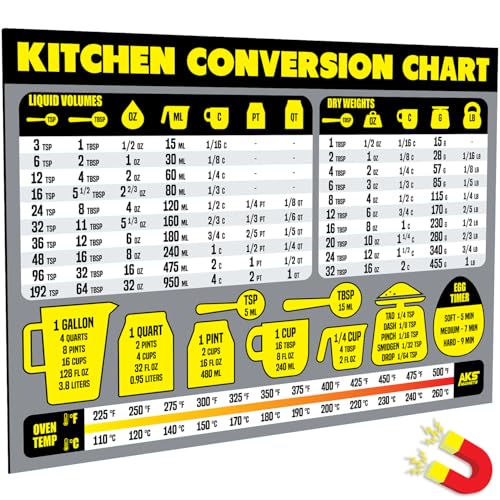
Kitchen Conversion Chart Magnet – Cooking, Baking & Recipe Accessory (Grey)
- Accurate Measurement Conversions: Reliable unit conversions for recipes
- Large, Easy-to-Read Format: 11 x 8.5 inch bold, clear layout
- Comprehensive Conversion Coverage: Volume, weight, and temperature conversions
As an affiliate, we earn on qualifying purchases.
As an affiliate, we earn on qualifying purchases.
Conclusion
Mastering measurements makes meal-making manageable. By understanding the math behind scaling, you avoid failures and foster finesse in your food. Remember, careful calculations create consistent, crave-worthy results. So, stay steady, simplify the science, and savor success. With these tips, you’ll confidently conquer cooking chaos, crafting culinary creations that consistently satisfy. Happy scaling!

TILUCK Stainless Steel Measuring Cups & Spoons Set, Cups and Spoons
- Includes Multiple Sizes: Various cups and spoons for all needs
- Premium Food-Grade Steel: Rust-resistant, non-toxic stainless steel
- Dishwasher Safe: Easy to clean and stack
As an affiliate, we earn on qualifying purchases.
As an affiliate, we earn on qualifying purchases.

KitchenArt Adjustable Measuring Tool Set, Includes Adjustable Teaspoon, Tablespoon, and 2 Cup Measuring Cup
- Adjustable Measuring Set: Includes adjustable cups and spoons
- Clear Measurement Markings: Easy-to-read measurement indicators
- Versatile for Liquids and Dry: Suitable for liquids and dry ingredients
As an affiliate, we earn on qualifying purchases.
As an affiliate, we earn on qualifying purchases.