To master home-baked baguettes, you need to balance fermentation, oven temperature, and crust development. Guarantee your dough ferments just enough for flavor and a good open crumb, while keeping conditions controlled. Preheat your oven to at least 475°F with a baking stone or steel, and use steam during initial baking to develop a perfect crust. If you’re ready to access more tips, you’ll find that addressing these constraints makes all the difference.
Key Takeaways
- Control fermentation timing and environment to develop flavor, texture, and optimal dough rise.
- Preheat oven thoroughly to ensure consistent, high heat for crust formation.
- Apply proper steaming techniques during initial baking to achieve a crispy, golden crust.
- Use appropriate tools like baking stones or steels for even heat distribution.
- Monitor baking progress through crust color and hollow sound for perfect doneness.
Baking a baguette at home might seem intimidating, but with a little practice, it becomes a rewarding and straightforward process. The key to achieving that perfect crust and tender crumb lies in mastering fermentation techniques and oven temperature control. Fermentation is where the magic begins, as it develops flavor, texture, and the characteristic open crumb of a baguette. You need to pay close attention to your dough’s fermentation process, allowing it to rise just enough to develop complexity without overproofing. Using proper fermentation techniques, like bulk fermentation and proofing, ensures the dough develops the right acidity and structure. Keep your environment at a consistent temperature, and consider using a dough retarder or cooler to slow fermentation if your kitchen is warm. This patience results in a more flavorful loaf with a better crumb structure. Monitoring and adjusting fermentation conditions are essential to optimize your bread’s quality, especially in home baking environments where temperature and humidity can vary. Additionally, understanding fermentation timing can help you better control the development of flavors and dough strength. Proper temperature management during fermentation is crucial to achieving consistent results, especially in variable home conditions. To enhance flavor and texture, some bakers incorporate preferments or pre-ferments, which can improve fermentation control and bread quality.
Master fermentation and oven control for perfect, flavorful baguettes with a crisp crust and tender crumb.
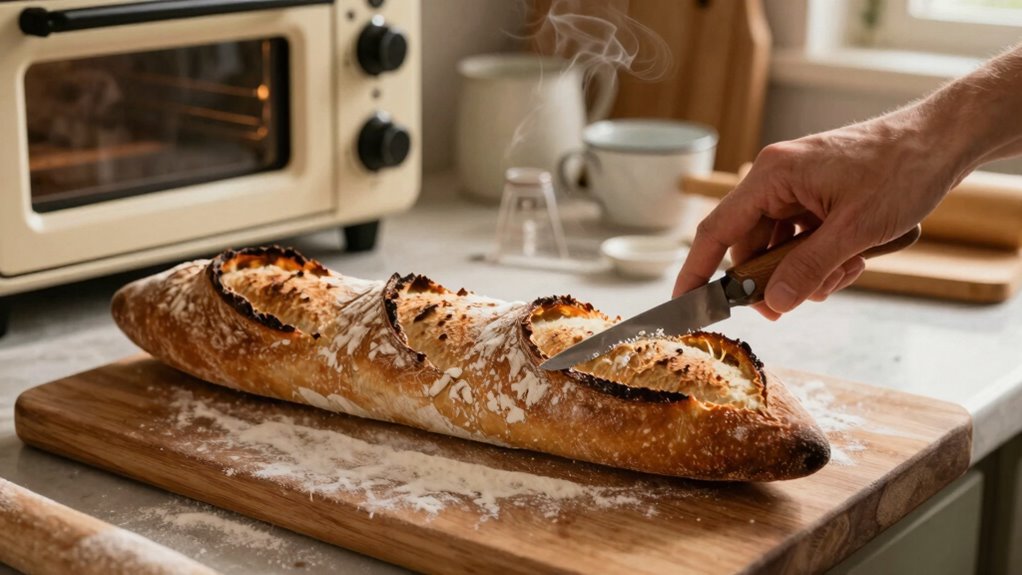
Oven temperature control is equally essential. A scorching hot oven is fundamental to mimic professional baking conditions. Preheat your oven well in advance, ideally to at least 475°F (246°C), and use a baking stone or steel if possible. These tools help distribute heat evenly and create that iconic crust you associate with authentic baguettes. To get the oven just right, consider steaming it during the initial baking phase—this can be achieved by placing a metal tray with water at the bottom of the oven or spritzing water directly onto the oven walls before placing the dough inside. Steaming increases humidity, which allows the crust to expand beautifully before setting, resulting in that crisp exterior. Maintaining consistent oven temperature throughout baking and utilizing proper oven temperature control techniques are vital for achieving bakery-quality crusts. Controlling oven temperature isn’t just about initial heat; maintaining that high temperature during baking is essential. Avoid opening the oven door too often, as temperature fluctuations can hinder crust formation. Rotate the baguettes halfway through baking to promote even coloring and ensure uniform crust development. When baking, keep an eye on the color and texture, pulling them out once the crust is deep amber and the loaf sounds hollow when tapped. These details indicate you’ve mastered oven temperature control and fermentation techniques, which are the backbone of great home-baked baguettes. Paying attention to these baking fundamentals will help you consistently produce bakery-quality results. Consistent practice and careful observation of your process will lead to better results over time. Remember, achieving professional results at home relies on understanding and controlling these baking essentials for optimal outcomes.
As an affiliate, we earn on qualifying purchases.
Frequently Asked Questions
What Type of Flour Is Best for Authentic Baguettes?
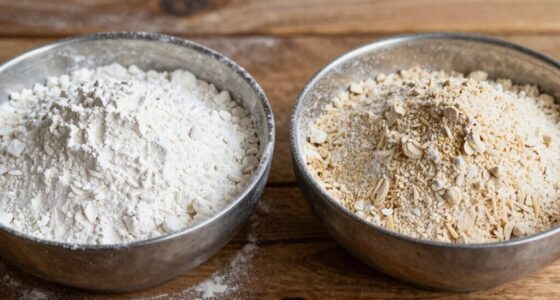
You should use high-protein, bread flour for authentic baguettes because it supports a strong fermentation process, creating the ideal gluten structure. This flour helps develop the dough’s elasticity, essential for shaping and oven spring. Maintain the right baking temperature to guarantee a crisp crust and airy crumb. Using bread flour, along with proper fermentation and baking conditions, gives you that traditional, artisanal baguette texture and flavor.
How Can I Prevent My Baguette From Becoming Dense?
Prevent your baguette from becoming dense by perfecting your dough hydration and fermentation control. Keep your dough hydrated just right—neither too dry nor too wet—to promote proper rising. Manage fermentation carefully by allowing enough time for the yeast to develop flavor and structure, avoiding rushed proofing. This balance boosts airy openness, ensuring your baguette stays light, crusty, and irresistibly delicious.
What Are Common Mistakes in Shaping Baguettes?
You often make mistakes in shaping baguettes by not applying proper shaping techniques or scoring correctly. Make sure you use gentle, even shaping techniques to create a smooth, taut surface, avoiding overworking the dough. When scoring, use sharp blades and adopt consistent scoring techniques to control the expansion during baking. Proper shaping and scoring help achieve an even, airy crumb and classic baguette appearance. Practice improves your technique and results over time.
How Do I Achieve a Crispy Crust at Home?
To get a crispy crust at home, you should use artisan techniques like steaming your oven with a tray of water or spraying water during baking. Preheat your oven thoroughly and bake at high temperatures. Consider ingredient substitutions like adding a bit of malt or sugar to enhance crust development. These methods help create that authentic crunch, making your baguettes bakery-perfect without needing special equipment.
What’s the Ideal Proofing Time for a Perfect Baguette?
Did you know that the ideal proofing time for a perfect baguette is around 1.5 to 2 hours? During this period, yeast activation peaks, helping your dough develop flavor and structure. Keep the dough hydrated—about 70% hydration—to guarantee proper gluten development. If you proof too long, the dough may over-ferment, losing its elasticity. Keep an eye on it, and your baguette will have that perfect airy, chewy interior.
dough retarder for fermentation control
As an affiliate, we earn on qualifying purchases.
As an affiliate, we earn on qualifying purchases.
Conclusion
Think of baking the perfect baguette as tending a delicate garden. You control the water, heat, and timing—each one a crucial seed. Neglect one, and the entire bloom falters. By mastering these three constraints, you become the gardener of your own bakery, nurturing each step with care. With patience and practice, your home kitchen transforms into a flourishing boulangerie, where the sweet scent of success and the crisp crunch of a perfect baguette bloom together in harmony.
As an affiliate, we earn on qualifying purchases.
As an affiliate, we earn on qualifying purchases.