To fix sticky dough without adding a mountain of flour, start by resting it under a damp cloth or plastic wrap for 10-15 minutes, which helps develop gluten and improves elasticity. Gently knead with oiled hands or tools to prevent sticking, and use stretching or folding techniques to build gluten strength. Adjust hydration subtly by sprinkling small amounts of flour during kneading if needed. Keep exploring these tips to master your dough’s texture even better.
Key Takeaways
- Rest the dough covered for 10-15 minutes to allow gluten development and reduce stickiness.
- Use oiled hands or tools to handle the dough, preventing sticking without adding extra flour.
- Incorporate gentle stretching and folding techniques to strengthen gluten and improve manageability.
- Adjust hydration by gradually adding small amounts of flour during kneading if necessary.
- Gently sprinkle minimal flour during kneading to balance moisture without creating a dry dough.
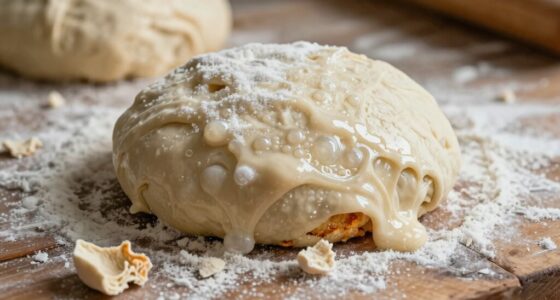
If your dough feels too sticky to work with, don’t worry—there are simple ways to fix it. The key is to improve gluten development without overwhelming the dough with extra flour. Sticky dough often results from insufficient gluten formation or improper hydration, which can make handling tricky. Instead of piling on more flour, focus on techniques that help your dough become more manageable while maintaining its desired texture.
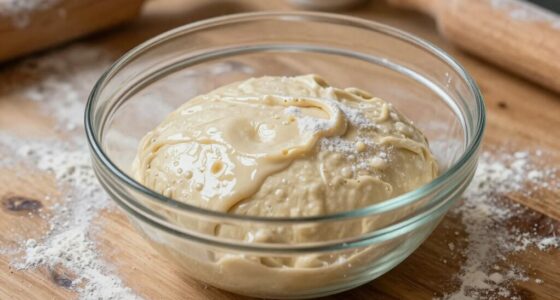
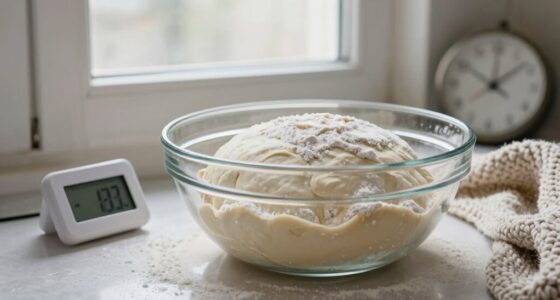
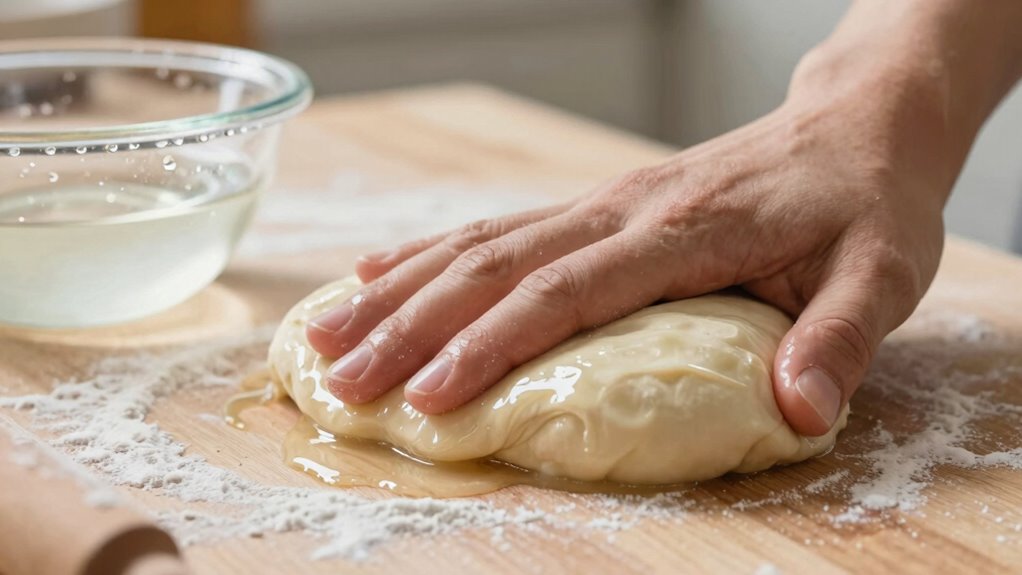
One effective method is to let the dough rest. Cover it with a damp cloth or plastic wrap and give it 10 to 15 minutes. During this time, gluten continues to develop naturally, creating a stronger, more elastic dough. Resting allows the proteins to bond better, which improves gluten development and gives the dough more structure. As a result, it becomes easier to knead and shape without sticking excessively. This approach not only avoids adding unnecessary flour but also enhances the dough’s overall texture.
Another important step is to adjust hydration if needed. Sometimes, dough is sticky because it contains too much water relative to flour. If you suspect this, gently sprinkle a small amount of flour onto the dough while kneading. Instead of adding it all at once, do this gradually, just enough to help the dough stick together without becoming dry or tough. This incremental hydration adjustment allows the gluten networks to form properly, giving the dough better elasticity and reducing stickiness. Be cautious not to add too much flour, as that can lead to a dense, tough product.
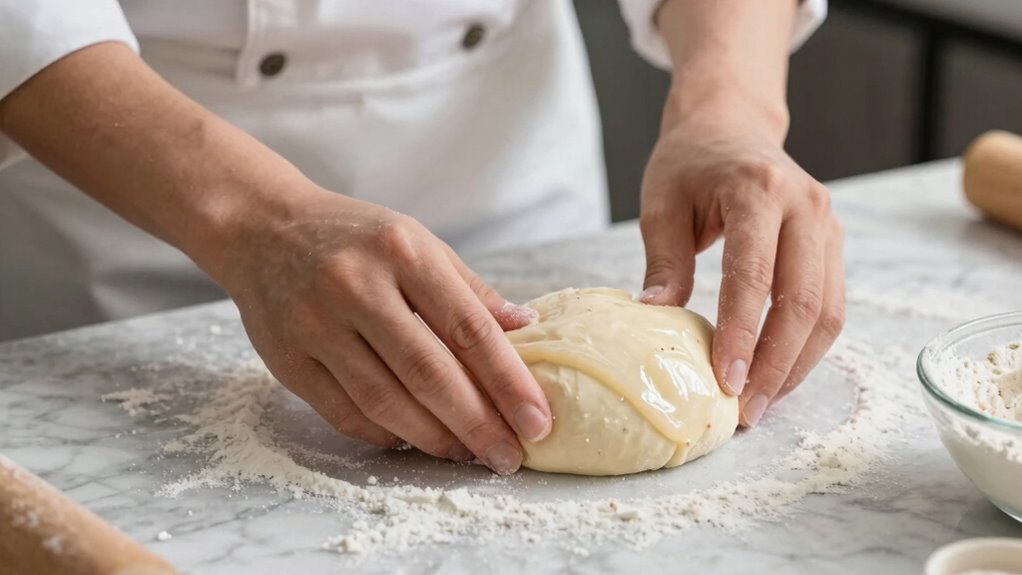
When kneading, focus on developing gluten by working the dough thoroughly but gently. Use a folding motion rather than pounding or aggressive kneading, which can break down gluten strands. Consistent, gentle kneading encourages gluten formation, giving the dough the strength to hold together and resist sticking. If your dough is particularly sticky, try using a bench scraper or oiled hands for handling, which prevents sticking without adding flour. The oil also helps glide through the dough, making kneading smoother and more efficient. Additionally, incorporating proper gluten development through techniques like stretching and folding can significantly improve dough manageability. Improving your understanding of hydration balance can also help prevent sticky dough in the future. Furthermore, experimenting with resting time can optimize gluten formation, making your dough even easier to work with.

Ecavria Bench Scraper, Premium Stainless Steel Dough Scraper with 2 PCS Flexible Bowl Scraper, Dough Cutter with Measuring Scale, Versatile Kitchen Scraper Set for Pastry Bread Pizza Cake
[PRACTICAL SCRAPER SET]: Ecavria kitchen scraper set contains 1 pc 6.6*4.7 inches stainless steel bench scraper and 2…
As an affiliate, we earn on qualifying purchases.
As an affiliate, we earn on qualifying purchases.
Frequently Asked Questions
Can Using Oil Help Fix Sticky Dough?
Yes, using oil can help fix sticky dough. Applying a small amount of oil to your hands or work surface minimizes sticking by reducing surface tension, making dough easier to handle. It also aids in managing dough hydration, preventing it from becoming overly sticky without adding more flour. Just use a light touch—too much oil can alter the dough’s texture, so add gradually for the best results.
Is It Better to Chill Sticky Dough Before Working With It?
Chilling sticky dough isn’t the magic fix you might hope for. It actually slows down dough temperature and halts gluten development, making it less sticky and easier to work with. Ironically, the cooler temperature can improve gluten structure, resulting in better texture. So, if your dough’s stubbornly sticky, give it a chill—just don’t expect it to turn into a perfectly manageable ball instantly.
How Does Humidity Affect Dough Stickiness?
Humidity effects considerably influence dough stickiness, as higher humidity increases dough moisture, making it stickier and harder to handle. Conversely, low humidity causes dough to dry out and become less sticky. You should adjust your techniques accordingly: in humid conditions, work quickly or lightly flour surfaces, and in dry environments, add small amounts of water gradually if needed. Understanding humidity effects helps you manage dough consistency more effectively.
Can Over-Kneading Cause Dough to Become Sticky?
Yes, over-kneading can make your dough sticky, ironically, by overworking the gluten development. When you knead too much, the gluten strands become overly elastic and trap excess moisture, turning your dough into a sticky mess. A good kneading technique balances gluten formation without pushing it to the point of stickiness. Keep an eye on texture, and stop kneading before the dough becomes unmanageable, preserving its ideal elasticity.
What’s the Best Way to Prevent Dough From Sticking Initially?
To prevent dough from sticking initially, focus on proper gluten development and dough hydration. Use slightly less water or adjust as needed to keep the dough manageable. Incorporate enough kneading to develop gluten structure, which helps the dough hold together better. Also, lightly oil your hands and work surface, and let the dough rest if it feels too sticky. This approach guarantees a smoother, less sticky dough from the start.

MMmat Silicone Baking Mat – Best German Silicone – Non Slip Silicone Baking Sheet, Non Stick Reusable Silicone Mats for Baking, Oven Liner, Counter Mat – Half Sheet Baking Mat, Set of 2
Best German Silicone: We attach great importance to the health of our customers. Therefore, we use the best…
As an affiliate, we earn on qualifying purchases.
As an affiliate, we earn on qualifying purchases.
Conclusion
Next time your dough feels more like a sticky relic from a forgotten era, remember this trick. Instead of drowning it in flour, gently knead in a bit more water or oil until it’s just right. Think of it as channeling the spirit of a master baker, like one guiding a dough through the ages. With patience, your dough will transform from a stubborn mess to a perfect, pliable masterpiece—ready to impress, whether in a modern kitchen or a medieval tavern.

Beautiful Linen Cotton Blend Bowl Covers for Bread Proofing – Reusable Set of 3 in Varying Sizes Easily Fit Your Bowls 7" to 13" – Durable Fabric Covers, Ideal Sourdough Bread Baking Accessories
Reusable Convenience You’ll Love: KIBAGA’s set of 3 reusable bowl covers for bread proofing makes eco-friendly living effortless…
As an affiliate, we earn on qualifying purchases.
As an affiliate, we earn on qualifying purchases.
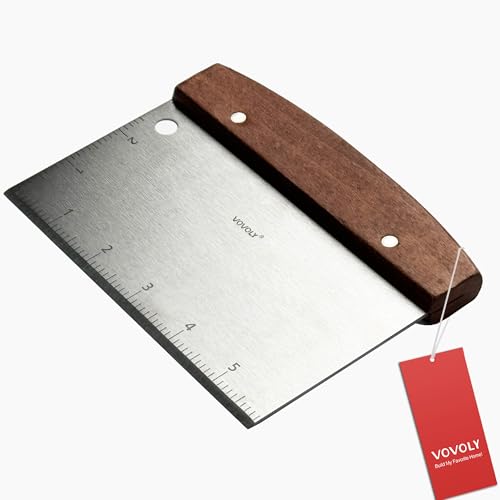
Vovoly Multipurpose Bench Scraper Kitchen Utensil for Flat Top Griddle, Dough Scraper Cutter for Bread and Pizza Cutter – Stainless Steel Metal Griddle Scraper Chopper
Thickened stainless steel – This bench scraper is made of thickened stainless steel, non-reactive, rust free, hygienic and…
As an affiliate, we earn on qualifying purchases.
As an affiliate, we earn on qualifying purchases.