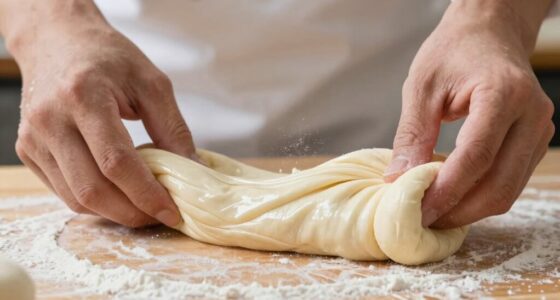
To achieve the ideal dough temperature, use the simple formula: *Target Dough Temp = (Flour Temp + Water Temp + Environment Temp) ÷ 3 + Compensation*. Adjust water temperature based on flour and ambient conditions for consistent results. Be precise with ingredient temps because small variations can affect fermentation and bread quality. Mastering this formula helps you control yeast activity and gluten development every time—keep going to discover more tips for perfect dough.

Get kitchen gear delivered free with Prime
- Fast, free delivery on millions of items
- Prime Video, Amazon Music and more included
- Member-only deals all year
Key Takeaways
- The target dough temperature is typically 75-78°F (24-26°C) for optimal fermentation.
- Use the formula: (Desired Dough Temp) = (Flour Temp + Water Temp + Room Temp) / 3 as a starting point.
- Adjust water temperature based on flour and room temperature to reach the desired dough temperature.
- Measure ingredient temperatures accurately to ensure precise calculations.
- Regularly monitor dough temperature during mixing to maintain consistency.

Achieving the perfect dough begins with understanding its desired temperature, which plays a crucial role in the fermentation process and overall bread quality. When you control the dough’s temperature precisely, you influence how the yeast activates, how gluten develops, and how flavors mature. This precise control is essential because fermentation control directly impacts the bread’s texture and flavor. By maintaining the right temperature, you guarantee consistent fermentation, which results in better texture, flavor, and rise. If the dough is too warm, fermentation speeds up, risking overproofing and a coarse crumb. Too cold, and fermentation slows down, leading to dense bread with less flavor development.
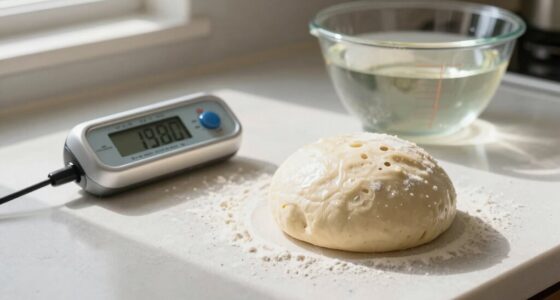
To reach that ideal dough temperature, you need to pay attention to ingredient adjustments. The temperature of your flour, water, and even the environment influences the final dough temperature. For example, if your flour is cold, you may need to warm your water slightly to compensate. Conversely, if your kitchen is warm, you might want to use colder water to prevent the dough from getting too warm during mixing. This balance is essential because even small variations can markedly affect fermentation control. You might find it helpful to measure the temperature of your ingredients before mixing, so you can make precise adjustments and hit your target dough temperature every time. Additionally, understanding the environmental factors that affect dough temperature can help you adapt your process more effectively. Being aware of temperature variability in your workspace enables better control over the fermentation process. Recognizing how ambient temperature impacts dough can further refine your method for consistent results. Incorporating ingredient temperature considerations into your baking routine helps optimize fermentation and final product quality.
digital instant-read thermometer for baking
As an affiliate, we earn on qualifying purchases.
As an affiliate, we earn on qualifying purchases.
Frequently Asked Questions
How Does Ambient Temperature Affect Dough Temperature?
Ambient temperature substantially influences dough temperature, as it’s a key part of ambient influence on your dough’s temperature regulation. When the environment is warmer, your dough heats up faster, making it harder to control fermentation. Conversely, cooler surroundings slow down the process. To maintain consistent dough temperature, you need to adjust ingredients or proofing conditions accordingly, ensuring your dough develops perfectly regardless of ambient influence.
What Tools Are Best for Measuring Dough Temperature Accurately?
Think of measuring dough temperature like tuning a fine instrument. A digital instant-read thermometer is your best ally, providing quick, accurate readings essential for dough cooling and ensuring precise temperature calibration. For continuous monitoring, a thermocouple or infrared thermometer offers reliability and speed. These tools help you maintain perfect dough consistency, allowing you to adjust ingredients or process timing with confidence, like a maestro refining each note for harmony.
Can Incorrect Dough Temperature Impact Bread Flavor?
Yes, incorrect dough temperature can impact bread flavor. When the temperature is too high or low, it alters fermentation rate, which influences how flavors develop during proofing. Additionally, improper temperature can hinder gluten development, affecting the bread’s texture and taste. Maintaining the right dough temperature guarantees consistent fermentation, promotes ideal gluten structure, and ultimately results in better flavor and crumb in your bread.
How Often Should I Check Dough Temperature During Mixing?
You should check your dough temperature every 5 to 10 minutes during mixing. Did you know that even a 2°F difference can considerably impact dough fermentation and yeast activity? Monitoring closely ensures ideal conditions, preventing over- or under-proofing. By staying attentive, you control fermentation speed and dough development, leading to better texture and flavor. Consistent checks help you achieve perfect bread every time.
Does Dough Temperature Vary With Different Types of Flour?
Yes, dough temperature varies with different types of flour because of flour moisture content and gluten development. Higher moisture in flour can retain more heat, raising dough temperature, while low-moisture flours may keep it cooler. Different flours also develop gluten at different rates, affecting how quickly the dough heats up during mixing. So, you should adjust your temperature checks based on the flour you’re using to guarantee ideal dough consistency.
As an affiliate, we earn on qualifying purchases.
Conclusion
So, after all that number crunching, you’d think nailing your dough temperature would be a breeze, right? Turns out, the real secret isn’t just plugging numbers into a formula—it’s about mastering the art of patience and precision. Ironically, the more you try to control every degree, the more you realize baking is a delightful dance of science and intuition. Embrace the unpredictability, and your perfect dough will be your sweetest surprise yet.
dough temperature control thermometer
As an affiliate, we earn on qualifying purchases.
As an affiliate, we earn on qualifying purchases.
As an affiliate, we earn on qualifying purchases.
Halloween Picks
halloween
As an affiliate, we earn on qualifying purchases.