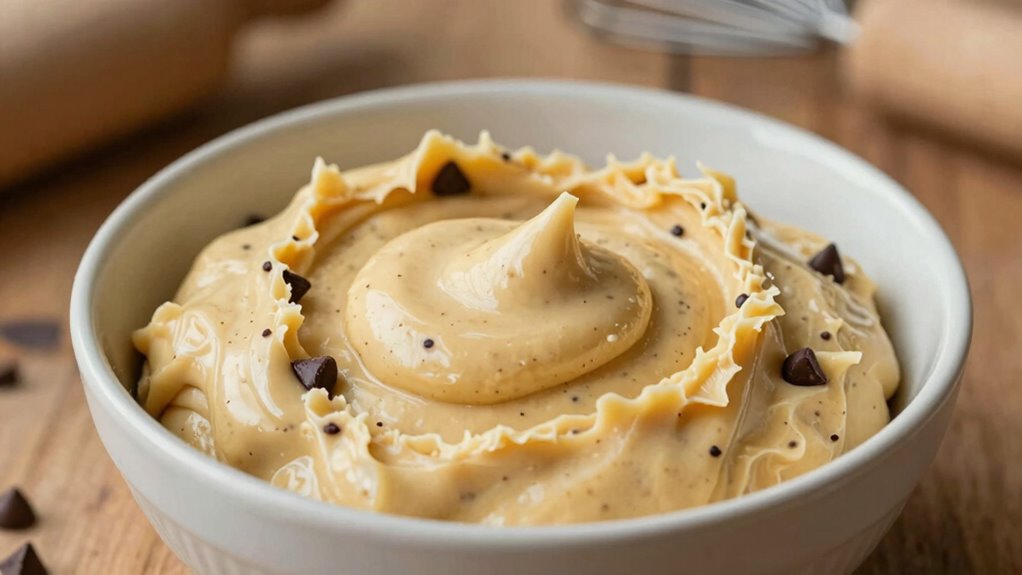

Resting cookie dough lets flavors fully meld, making your cookies richer and more complex. It improves texture by hydrating flour, helping ingredients combine better, and encouraging a more even bake. This also keeps chocolate chips intact longer and creates a satisfying balance of crisp edges and chewy centers. Plus, it deepens flavors and prevents over or underbaking. Keep going to discover how this simple step can transform your baking results.
Key Takeaways
- Resting allows flour to fully hydrate, enhancing flavor development and dough consistency.
- It enables flavors like vanilla and chocolate to meld, creating a richer, more layered taste.
- Resting promotes starch gelatinization, improving cookie texture and structure.
- It helps control cookie spread and ensures even baking for better final appearance.
- Resting dissolves sugar particles completely, increasing sweetness and overall flavor depth.
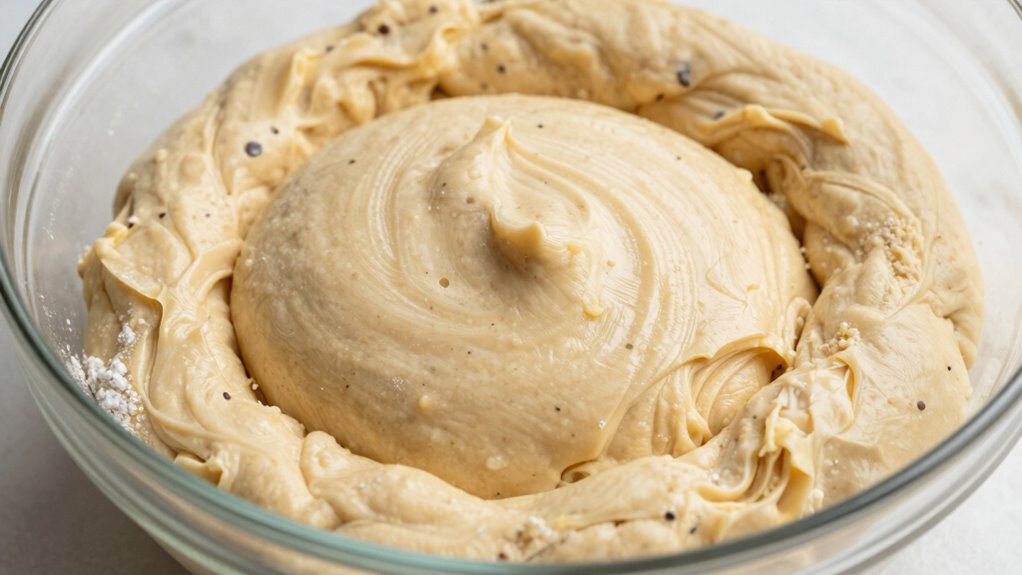
Allowing cookie dough to rest before baking might seem like an extra step, but it’s essential for developing the best flavor and texture. When you let the dough sit, the flour fully hydrates, and the ingredients meld together, creating a richer, more complex taste. This resting period also enhances the dough’s consistency, making it easier to handle and shaping a better cookie overall. If you’ve experimented with different chocolate chip variations, you might notice that resting the dough allows the flavors of dark, milk, or white chocolate chips to integrate more thoroughly, giving each bite a more harmonious flavor profile.
Resting cookie dough enhances flavor, texture, and chocolate chip harmony for the perfect bake.
Adjusting your baking temperature can also be more effective when the dough has rested. Because the ingredients have fully combined, the cookies tend to bake more evenly, reducing the risk of overbaking or underbaking in spots. Resting the dough helps control the spread of the cookies, especially when using recipes with higher butter content or specific chocolate chip variations that might melt differently. By giving the dough time to rest, you’re essentially setting the stage for a more consistent bake, which means your cookies will have a better texture—crisp on the edges and chewy in the center. Additionally, the resting period encourages the development of flavor deeper within the dough. The sugar particles dissolve more completely, resulting in a sweeter, more flavorful cookie. This is particularly noticeable if you’ve added ingredients like brown sugar or vanilla extract, which benefit from time to fully infuse the dough. When you bake immediately, you might miss out on these flavor enhancements, but with a brief rest, those nuances shine through. Proper hydration of the flour is a key aspect of this process and significantly impacts the final result. Resting also allows the starch molecules in the flour to gelatinize, contributing to a better overall texture.
Furthermore, resting the dough can help improve the overall baking consistency, ensuring that each cookie turns out similar in texture and appearance. If you enjoy experimenting with different chocolate chip variations, resting your dough allows each type to shine without overpowering the others. For example, chunks of bittersweet chocolate will contrast nicely with milder milk chocolate, creating a layered flavor experience. Plus, the improved texture from resting can help the chips stay intact longer during baking, giving your cookies that desirable gooey or slightly crisp chip, depending on your preference. Resting the dough also allows the flavor to deepen, making each bite more satisfying. Interestingly, the hydration process can also influence how the dough responds to different oven conditions, further enhancing your baking results. In the end, resting cookie dough isn’t just about convenience; it’s a crucial step to elevate your baking. It helps you fine-tune your baking temperature adjustments for perfect cookies and makes sure every chocolate chip variation is showcased beautifully. The extra time spent waiting pays off with cookies that are more flavorful, better textured, and visually appealing—worth every minute of patience.
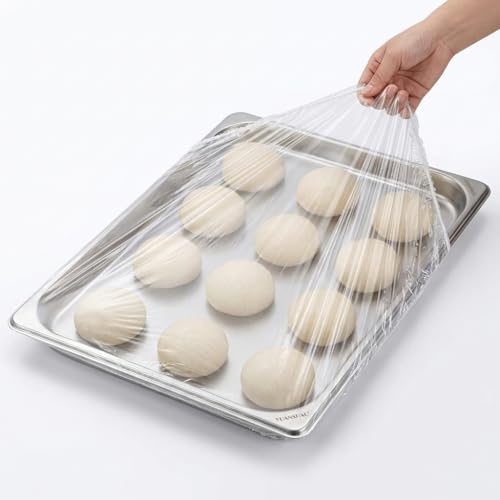
30Pcs Sheet Pan Covers for 24×16, 21×15, 18×13 inch – Extra Large Elastic Food Covers Stretches to 39", 12 Microns Thick Oversized Bowl Covers for Foil Pans & Dough Proofing- BV Certified BPA-Free
- Universal Fit for Large Pans: Fits various sheet pan sizes up to 39 inches
- Heavy Duty & BPA-Free: BV Certified, 12-micron thick, food-safe plastic
- Ideal for Dough Proofing: Maintains humidity, transparent for monitoring
As an affiliate, we earn on qualifying purchases.
As an affiliate, we earn on qualifying purchases.
Frequently Asked Questions
How Long Should I Let Cookie Dough Rest for Optimal Flavor?
You should let your cookie dough rest for at least 24 hours for ideal flavor enhancement and texture improvement. During this time, the flavors meld and develop, resulting in richer taste. Resting also allows the flour to fully hydrate, giving you a better texture—crisp edges and chewy centers. For even better results, some bakers recommend resting up to 48 hours, but a day usually strikes the perfect balance.
Can Resting Cookie Dough Affect Cookie Size and Shape?
Yes, resting cookie dough can affect cookie size and shape. When you let the dough rest, the gluten develops, increasing dough elasticity, which helps maintain a more uniform shape during baking. Plus, resting enhances flavor, making your cookies tastier. As a result, you’ll notice cookies that hold their shape better and have a more consistent size. So, giving your dough time to rest is a simple step to improve both appearance and flavor.
Is It Necessary to Refrigerate Cookie Dough During Resting?
Imagine your favorite song sounding better after a pause—resting cookie dough works similarly. You should refrigerate it during resting for cookie dough safety and flavor enhancement. Chilling slows bacteria growth and allows flavors to meld, making cookies tastier. Skipping this step risks safety and dulls taste. So, yes, refrigerate your dough; it’s like giving your cookies a chance to develop their full, delicious potential.
Does Resting Cookie Dough Improve Gluten Development?
Yes, resting cookie dough improves gluten structure. As you let the dough sit, gluten strands relax and develop, creating a better texture in your cookies. This process also enhances flavor, as resting allows ingredients like flour and butter to meld, deepening the overall taste. So, giving your dough a proper rest not only boosts the cookie’s structure but also makes every bite richer and more satisfying.
Can Resting Cookie Dough Reduce Cookie Spreading During Baking?
Resting cookie dough can considerably reduce cookie spread during baking by about 20-30%. When you let the dough rest, the flour absorbs moisture and fat, resulting in a firmer dough consistency. This improved consistency helps the cookies hold their shape better, limiting excessive spread. So, if you want thicker cookies, resting your dough is a simple step that can make a noticeable difference in the final texture.

GUANCI 2 Pack Silicone Baking Mats, 11.6" x 16.5" Each, 0.7mm Thick, Food Grade Non-Stick Reusable Baking Mats & Baking Sheet Liners for Cookies, Macarons, Bread, Pizza & Pastry
- Food-Grade Silicone: BPA-free, PFOA-free, non-toxic
- Thick and Durable: 0.70mm thickness for stability
- Non-Stick Surface: Easy food release and cleaning
As an affiliate, we earn on qualifying purchases.
As an affiliate, we earn on qualifying purchases.
Conclusion
Resting your cookie dough truly enhances its flavor and texture, making your cookies irresistibly delicious. Some might think it’s unnecessary or a waste of time, but trust me, those extra minutes make a noticeable difference. The dough develops richer flavors and a better consistency, resulting in cookies that are more tender and flavorful. So, next time you bake, don’t skip the resting step—you’ll be glad you didn’t, even if it feels like a small delay.
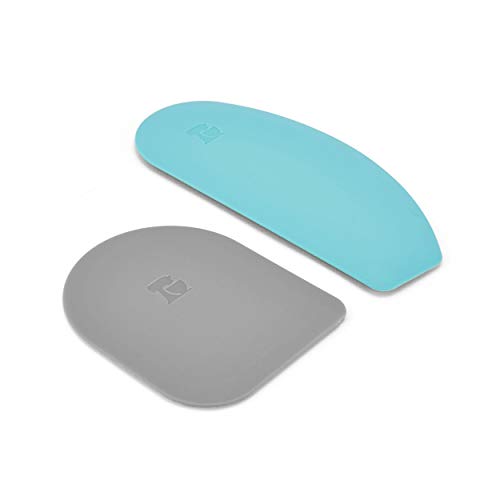
KitchenAid Gourmet Bowl Scraper, Set of 2, Aqua Sky and Storm Grey
- Flexible Silicone Scraper: Conforms to bowl for thorough scraping
- Heat-Resistant Silicone: Withstands up to 400°F for versatile use
- Sturdy Nylon Pot Scraper: Effective on sticky sauces and eggs
As an affiliate, we earn on qualifying purchases.
As an affiliate, we earn on qualifying purchases.

GoodCook Everyday Nonstick Baking Sheet Set, 3 Pack Includes Small (13×9) Medium (15×1) and Large (17×11) Pans Carbon Steel Construction Cookie Sheets Bakeware Set, Gray
- Set Includes Three Sizes: Small, Medium, Large baking sheets
- Ensures Even Baking: Heavy-duty gauge for consistent heat
- Durable Carbon Steel Construction: Resists warping and scratching
As an affiliate, we earn on qualifying purchases.
As an affiliate, we earn on qualifying purchases.