The only preheat rule you really need is to wait until your oven signals it’s at the right temperature before you start baking. This guarantees even cooking, prevents burning or underbaking, and keeps your recipes on track. Trust the oven’s light or beep, rather than guessing or opening the door too early. Following this simple step leads to consistent, perfect results every time. Stick around to discover more tips that make baking easier and more reliable.
Key Takeaways
- Always preheat your oven fully before baking to ensure it reaches the correct temperature.
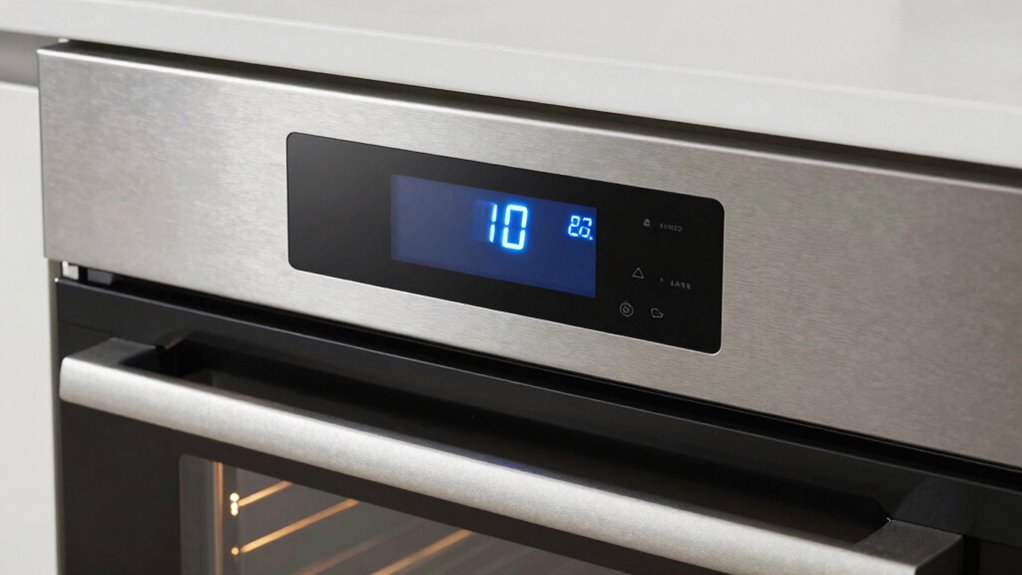
- Wait for the oven’s signal (light or beep) indicating it has preheated completely.
- Use an oven thermometer to verify accurate temperature, especially if your oven’s gauge is unreliable.
- Follow the recipe’s suggested baking time after preheating to prevent under or overcooking.
- Regularly calibrate your oven to maintain consistent, reliable heat for perfect baking results.
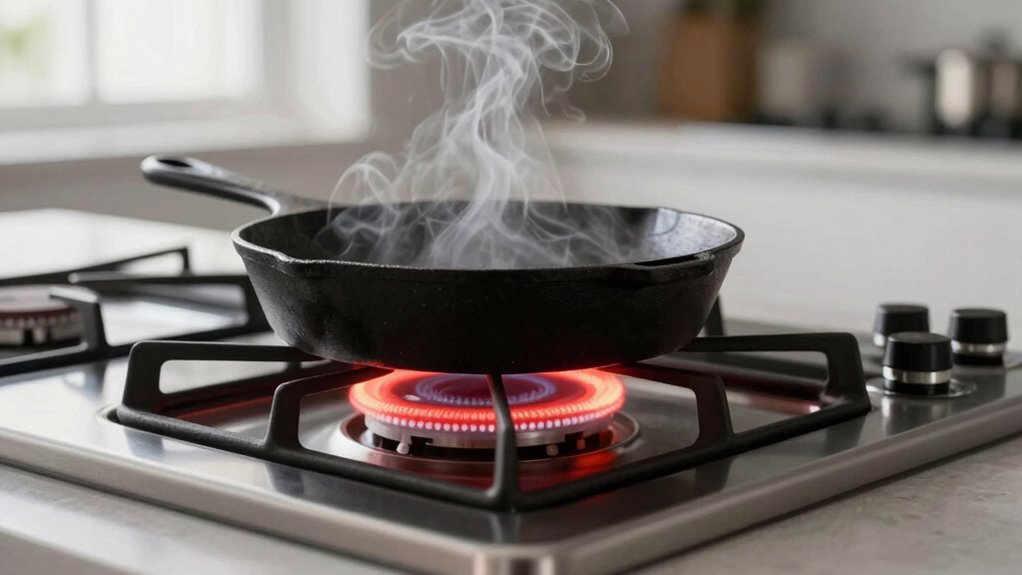
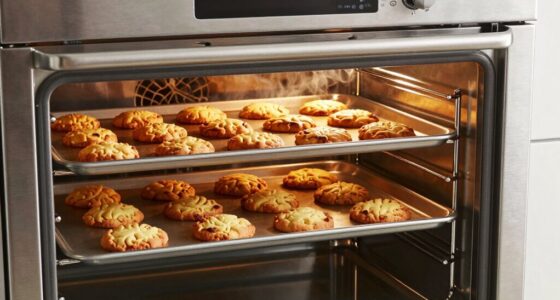
Have you ever wondered why many recipes and cooking instructions emphasize the importance of preheating your oven? The reason is simple: preheating ensures your oven reaches the correct oven temperature before you start baking. When you skip this step, you risk uneven cooking, underbaked or burnt results, and inconsistent texture. The goal is to give your oven a head start so that when you place your food inside, it begins baking immediately at the right temperature. This consistency is crucial whether you’re baking cookies, roasting vegetables, or cooking a delicate soufflé.
The key is understanding that oven temperature and baking duration are interconnected. When your oven is properly preheated, the heat surrounds your food evenly, allowing it to cook uniformly. If you put your dish in before reaching the correct oven temperature, the baking process can be thrown off. The oven might take longer to cook, or parts of your dish may cook faster than others. This results in unpredictable outcomes and often ruins what you’re trying to achieve. Preheating minimizes this risk by ensuring the oven is at the precise temperature needed for your recipe, which helps you stick to the recommended baking duration. Additionally, temperature accuracy plays a significant role in achieving consistent results with your baked goods. Properly calibrating your oven can prevent temperature fluctuations that compromise your cooking, ensuring you always bake with consistent heat.
Many people overlook the importance of timing once the oven hits the target temperature. But it’s critical to wait until the oven signals it’s ready—usually through a light or a beep—before placing your dish inside. This guarantees that the entire baking process unfolds at the intended oven temperature, leading to better results. If you rush and start baking too early, you may need to extend the baking duration, which can cause overcooking or burning. Conversely, waiting for the oven to reach the correct temperature allows you to adhere closely to the recipe’s suggested baking duration, ensuring your dish comes out just right.
To make the most of this rule, always allow your oven to fully preheat before inserting your food. Use an oven thermometer if your oven’s built-in temperature gauge isn’t reliable. It’s also helpful to understand that oven calibration can vary over time, affecting your oven’s accuracy. Once preheated, place your dish inside and trust the baking duration specified in your recipe. This approach simplifies your process, guarantees consistent results, and eliminates guesswork. It’s a straightforward rule that, if followed, transforms your baking from uncertain to successful. Remember, the secret isn’t just in setting the oven temperature but in patiently waiting for it to reach that perfect point before you start the clock. That way, you’re always baking with precision, not guesswork. Understanding the importance of accurate temperature control helps ensure your baked goods turn out exactly as intended.
As an affiliate, we earn on qualifying purchases.
Frequently Asked Questions
Does Preheating Affect Cooking Times?
Yes, preheating affects cooking times because it guarantees your oven reaches the correct temperature, which is essential for consistent results. If your oven isn’t calibrated properly, it might not heat evenly, impacting heat distribution and cooking efficiency. When you preheat thoroughly, you give your food a stable environment, reducing cooking time variations and helping dishes turn out perfectly every time.
Can I Skip Preheating for Certain Recipes?
Skipping preheat isn’t always a gamble—some recipes, like casseroles or baked goods, can handle alternative heating. Think of preheat exceptions as shortcuts in your kitchen maze. When time’s tight or the recipe’s forgiving, you can skip preheating and still get tasty results. Just remember, for crisp crusts or precise textures, sticking to preheating remains your best bet. Use your judgment, and your dishes will thank you.
What’s the Best Way to Test Oven Temperature Accuracy?
To test your oven’s temperature accuracy, use an oven thermometer placed in the center. Run the oven at a set temperature, like 350°F, and compare the thermometer reading. If it’s off, you may need to calibrate your oven, addressing potential temperature variability. Regular calibration guarantees consistent results, so you get accurate baking every time. Adjust the oven’s settings as needed for precise temperature control.
How Does Preheating Impact Food Texture?
Preheating is like setting the stage for a performance; it guarantees your food’s texture turns out just right. When you preheat, the oven’s heat distribution becomes even, reducing hot spots that can cause uneven cooking. Proper preheating also controls oven moisture, preventing soggy or overly dry dishes. As a result, your baked goods develop a satisfying crust or tender crumb, making every bite perfect and consistent.
Are There Safety Concerns With Preheating Ovens?
Preheating your oven is generally safe if you follow proper oven safety guidelines. It helps guarantee temperature consistency, which is essential for cooking evenly and avoiding undercooked or overcooked food. Always stay nearby during preheating, avoid leaving the oven unattended, and keep flammable items away. Regularly check your oven’s temperature accuracy with a thermometer to prevent safety hazards and make sure your food cooks perfectly every time.
As an affiliate, we earn on qualifying purchases.
Conclusion
So, next time you’re tempted to guess the right preheat temperature, remember that following the one simple rule makes all the difference. Think of it like steering a ship—you don’t rely on guesswork when guiding treacherous waters; you trust the compass. Just like that, trusting the preheat rule assures your cooking is precise, safe, and delicious. Ditch the guesswork, set your heat, and enjoy the confidence of knowing you’re on the right track.

Rubbermaid Commercial Products Stainless Steel Monitoring Thermometer, Safe for Inside Oven/Grill/Smoker, 60-580°F Range, Easy to Read Food Thermometer For Food Resturant/Home Cooking
- Food Safety Monitoring: Displays true oven temperature instantly
- Wide Temperature Range: 60°F to 580°F / 20°C to 300°C
- Versatile Kitchen Use: Suitable for home and professional kitchens
As an affiliate, we earn on qualifying purchases.
As an affiliate, we earn on qualifying purchases.
baking oven with preheat indicator
As an affiliate, we earn on qualifying purchases.
As an affiliate, we earn on qualifying purchases.