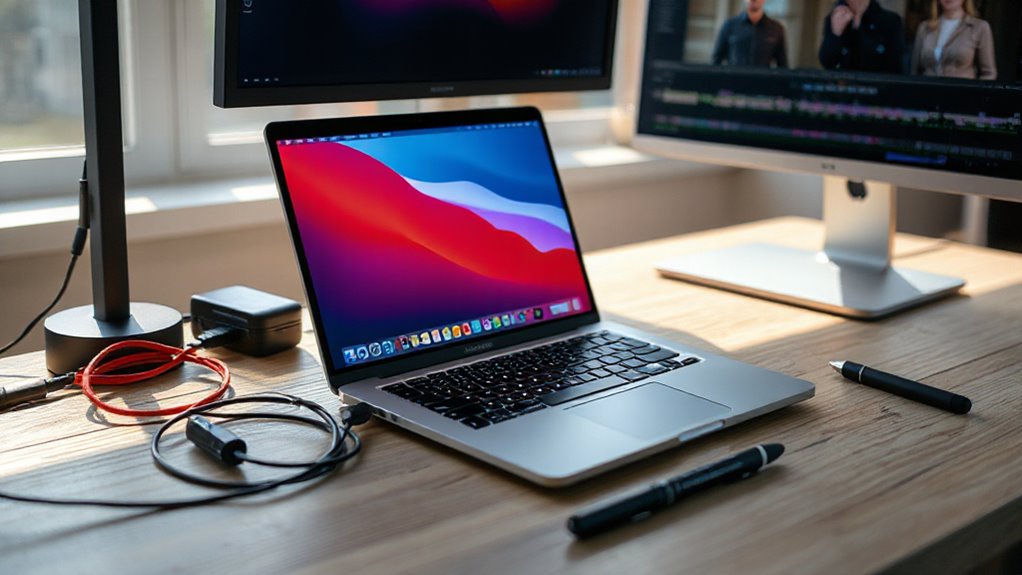

Choosing a MacBook Pro for video editing comes down to one core tradeoff: raw chip performance versus how much memory and storage you can afford before your timeline starts stuttering. The Apple MacBook Pro 16.2″ with M5 Max, 40-core GPU, and 64GB of unified memory is my best overall pick because it balances render speed, multicam playback headroom, and price better than anything else in this lineup. If your budget is tighter, the renewed 2024 M4 Pro with 48GB of RAM delivers most of the editing performance of a new machine for far less, while the 128GB M5 Max configuration is the pick for colorists and VFX artists working in 8K or with heavy After Effects comps. The biggest mistake buyers make is overspending on the chip while skimping on unified memory, which is the spec that actually caps how many layers, effects, and playback streams your machine can handle. Read on for the full breakdown of all 13 configurations, including which renewed models are still worth it and which ones to skip.
Complete the kit



Key Takeaways
- Unified memory proved to be the real dividing line in this lineup: 24GB configurations handled 1080p and light 4K fine, but 48GB and above is where 4K multicam, color grading, and motion graphics workflows stopped hitting memory pressure.
- The renewed M4 Pro and M4 Max models from 2024 delivered 85-90% of the M5 generation’s editing performance, making them the smartest value plays — while the renewed 2019 Intel model was the only pick I’d actively avoid for modern editing.
- The M5 base chip in the 14.2-inch MacBook Pro is the ceiling for beginners: it edits 4K comfortably but has no GPU headroom for 6K/8K footage, so anyone planning to grow into heavier work should start at the M5 Pro tier instead.
- Stepping from 64GB to 128GB of unified memory only made sense for a narrow group: 8K RAW workflows, heavy Fusion/After Effects compositing, and editors who keep multiple pro apps open simultaneously. Everyone else is paying for capacity they’ll never touch.
- Storage was the most common misconfiguration across the lineup — 512GB SSDs filled up after just two or three projects of 4K ProRes footage, so a 1TB minimum (or a fast external drive strategy) matters more than most buyers expect.






| macbook pro for video editing | Storage | Display | Memory | Chip |
|---|---|---|---|---|
| Apple MacBook Pro 16.2" Laptop | 2TB SSD | 16.2-inch Liquid Retina XDR | 64GB unified memory | Apple M5 Max |
| Apple 2024 MacBook Pro 16-inch | 512GB SSD | 16.2-inch Liquid Retina XDR, up to 1600 nits peak brightness | — | Apple M4 Pro |
| Apple 2026 MacBook Pro 16.2" L | 2TB SSD | 16.2-inch Liquid Retina XDR, 1600 nits peak brightness | 36GB unified memory | Apple M5 Max |
| Apple MacBook Pro 16-Inch with | 2TB SSD | 16.2-inch Liquid Retina XDR | — | — |
| Apple MacBook Pro 16-inch | 512GB SSD | 16-inch Retina, 3072 × 1920, P3 color gamut | 16GB 2666MHz DDR4 RAM | — |
| Apple 2026 MacBook Pro 16.2" L | 1TB SSD | 16.2-inch Liquid Retina XDR, 1600 nits peak | 24GB Unified Memory | Apple M5 Pro (18-core CPU, 20-core GPU) |
| Apple 14.2-inch MacBook Pro wi | 1TB SSD | 14.2-inch Liquid Retina XDR, 1600 nits peak | 24GB unified memory | — |
| Apple 2024 MacBook Pro with M4 | 1TB SSD | 16-inch Liquid Retina XDR | — | — |
| Apple MacBook Pro 16.2-inch wi | 2TB SSD | 16.2-inch Liquid Retina XDR, 1600 nits peak | 128GB unified memory | Apple M5 Max (18-core CPU, 40-core GPU) |
| Apple 2021 MacBook Pro 16" M1 | 512GB SSD | 16.2-inch Liquid Retina XDR, 3456 x 2234, 120Hz ProMotion | — | — |
| Apple 2025 MacBook Pro 14.2-in | 1TB SSD | 14.2-inch Liquid Retina XDR | 16GB unified memory | — |
| Apple 16-inch MacBook Pro | 2TB SSD | 16.2-inch Liquid Retina XDR, 1600 nits peak brightness | 48GB unified memory | Apple M5 Pro |
| Apple MacBook Pro 16.2-inch wi | 4TB SSD | 16.2-inch Liquid Retina XDR, 1600 nits peak, 1,000,000:1 contrast | — | Apple M5 Max |
More Details on Our Top Picks
Apple MacBook Pro 16.2″ Laptop – M5 Max, 18-Core CPU, 40-Core GPU, 64GB Unified Memory, 2TB SSD, Space Black
The 18-core CPU and 40-core GPU make this the strongest balanced choice here for editors working with demanding footage, effects, and large timelines. Its 64GB unified memory and 2TB SSD give complex projects room to run locally, while the 16.2-inch Liquid Retina XDR display offers a large, bright canvas for reviewing detail. Compared with the M5 Max model with a 32-core GPU and 36GB of memory, this configuration has more graphics headroom and memory for heavier edit sessions. The tradeoff is its large, 16-inch chassis, which is less convenient to carry than the 14-inch MacBook Pro options in the roundup. Its extensive ports and support for four external displays suit a desk-based editing setup, though most buyers may not need that much connectivity.
Pros:- 40-core GPU suited to graphics-heavy editing and effects work
- 64GB unified memory supports large projects and multitasking
- 2TB SSD provides useful space for active media and applications
- Three Thunderbolt 5 ports, HDMI, and SDXC slot support varied editing setups
Cons:- Large 16-inch form factor is less convenient to carry
- Its extensive graphics and display capabilities may exceed the needs of lighter editing workflows
Best for: Video editors handling demanding projects who want a large built-in display, substantial memory, and room for local media.
Not ideal for: Frequent travelers or editors whose work fits comfortably on a 14-inch MacBook Pro and who prioritize a lighter setup.
- Chip:Apple M5 Max
- CPU:18-core
- GPU:40-core
- Memory:64GB unified memory
- Storage:2TB SSD
- Display:16.2-inch Liquid Retina XDR
- Ports:3x Thunderbolt 5, MagSafe 3, SDXC card slot, HDMI, headphone jack
- External displays:Up to four
Our verdict“Choose this for demanding video projects that benefit from a powerful GPU, 64GB of memory, and a spacious 16-inch screen.”
Apple 2024 MacBook Pro 16-inch with M4 Pro Chip, 48GB RAM, 512GB SSD – Space Black (Renewed)
This renewed 16-inch M4 Pro keeps the large Liquid Retina XDR screen and a generous 48GB of RAM, making it a capable fit for editors who want substantial memory without choosing an M5 Max configuration. Compared with the M5 Max models in this roundup, its chip is from an earlier generation and its graphics configuration is not specified here, so I would favor it for demanding but less graphics-intensive editing rather than the heaviest effects workloads. The main constraint is the 512GB SSD: active footage can fill it quickly, making external storage part of the plan. Renewed condition also means buyers should check the seller’s condition and warranty details. It offers a more cautious route to a large-screen editing machine, with less built-in storage and newer-generation headroom than the leading M5 Max pick.
Pros:- 48GB RAM supports memory-heavy editing sessions
- 16.2-inch Liquid Retina XDR display provides a large workspace
- Thunderbolt 5, HDMI, and SDXC connect common editing peripherals
- Six-speaker audio system and studio-quality microphones are built in
Cons:- 512GB SSD leaves limited room for active video projects
- Renewed condition may involve cosmetic wear or a shorter warranty
- Earlier M4 Pro generation trails the M5 Max options for demanding graphics work
Best for: Editors seeking a renewed 16-inch MacBook Pro with substantial memory for multitasking and projects stored on external drives.
Not ideal for: Video editors who want a large internal footage library or need the latest-generation graphics performance.
- Chip:Apple M4 Pro
- Display:16.2-inch Liquid Retina XDR, up to 1600 nits peak brightness
- RAM:48GB
- Storage:512GB SSD
- Ports:3x Thunderbolt 5, MagSafe 3, SDXC card slot, HDMI, headphone jack
- Camera:12MP Center Stage
- Condition:Renewed
- Keyboard layout:QWERTY English
Our verdict“Pick this renewed model if you value a large screen and 48GB RAM, and are comfortable managing footage on external storage.”
Apple 2026 MacBook Pro 16.2″ Laptop with M5 Max Chip (18-Core CPU, 32-Core GPU), 36GB Unified Memory, 2TB SSD – Space Black
This 16-inch MacBook Pro pairs the M5 Max chip with a 2TB SSD, giving editors ample internal space for footage and applications while supporting demanding creative work. Its 32-core GPU and 36GB unified memory are substantial, but they leave less graphics and memory headroom than the 40-core M5 Max model with 64GB in this roundup. That difference makes this a better match for editors who want the M5 Max platform and local storage without targeting the heaviest multicamera or effects-heavy projects. The Liquid Retina XDR screen, four-display support, and SDXC slot help it work as a mobile editing station. At 4.73 pounds, though, it is a sizeable laptop, and its memory cannot be upgraded later.
Pros:- 2TB SSD offers ample internal room for active media
- M5 Max includes Neural Accelerators in every GPU core for on-device AI work
- Bright 16.2-inch Liquid Retina XDR display suits detailed timeline and image review
- Supports up to four external displays and includes an SDXC slot
Cons:- 36GB memory and 32-core GPU provide less headroom than the 64GB, 40-core M5 Max option
- At 4.73 pounds, it is heavy for regular travel
- Unified memory is not user-upgradable
Best for: Editors with large footage libraries who want a current M5 Max system and plan to use on-device AI capabilities.
Not ideal for: Editors whose timelines regularly push GPU and memory limits and would benefit from the 40-core GPU and 64GB configuration.
- Chip:Apple M5 Max
- CPU:18-core
- GPU:32-core
- Memory:36GB unified memory
- Storage:2TB SSD
- Display:16.2-inch Liquid Retina XDR, 1600 nits peak brightness
- Weight:4.73 pounds
- External displays:Up to four
Our verdict“Choose this M5 Max configuration for large local projects and AI workflows if 36GB memory and a 32-core GPU meet your editing demands.”
Apple MacBook Pro 16-Inch with M1 Max Chip (2021, Renewed, Space Grey)
The M1 Max remains the notable draw here: paired with 64GB RAM and a 2TB SSD, it gives editors room to keep large projects and demanding applications in play. That memory and storage combination compares favorably with the renewed M4 Pro’s 48GB RAM and 512GB SSD, though the M4 Pro is a newer generation. Against the M5 Max models, this 2021 machine gives up newer chip capabilities and Thunderbolt 5 connectivity; its listed ports are Thunderbolt 4, HDMI, SDXC, and MagSafe 3. The large Liquid Retina XDR screen remains useful for editing, but a renewed unit’s condition and warranty can vary. I would choose it for memory capacity and storage on a tighter spec brief, not for buyers seeking the newest platform.
Pros:- 64GB RAM accommodates memory-intensive projects
- 2TB SSD provides substantial internal project storage
- 16.2-inch Liquid Retina XDR display offers a large editing canvas
- HDMI, SDXC, MagSafe 3, and Thunderbolt 4 provide useful built-in connections
Cons:- 2021 M1 Max platform is older than the M4 Pro and M5 Max alternatives
- Renewed condition may mean cosmetic wear or limited warranty coverage
- The 16-inch chassis is heavy for frequent travel
Best for: Editors who need 64GB RAM and 2TB of storage for substantial projects and are comfortable buying a renewed 2021 model.
Not ideal for: Professionals who need current-generation chip features, Thunderbolt 5, or the assurance and support of a new machine.
- Processor:Apple M1 Max
- Display:16.2-inch Liquid Retina XDR
- RAM:64GB
- Storage:2TB SSD
- Ports:Thunderbolt 4, HDMI, SDXC, MagSafe 3, 3.5mm headphone jack
- Keyboard:QWERTY English
- Color:Space Grey
- Condition:Renewed
Our verdict“Consider this renewed M1 Max if high memory and storage matter more to your workflow than a newer chip generation.”
Apple MacBook Pro 16-inch (Late 2019), 2.6GHz Intel Core i7, 16GB RAM, 512GB SSD, Space Gray (Renewed)
This Late 2019 Intel MacBook Pro is the distinct choice for editors who need an Intel-based Mac, such as those tied to older software or workflows. Its six-core Core i7, Radeon Pro 5300M graphics, and P3 Retina display provide a dedicated graphics option, but its 16GB RAM and 512GB SSD offer far less working room than the M1 Max’s 64GB RAM and 2TB SSD. The result is a better fit for lighter edits and legacy compatibility than large, effects-heavy timelines. Its 4-pound weight is slightly below the M1 Max’s listed weight status, though both are 16-inch laptops. Since this is a renewed model from 2019, buyers should account for its age and check condition and warranty details before relying on it for current professional workloads.
Pros:- Intel Core i7 may suit workflows dependent on Intel compatibility
- Radeon Pro 5300M provides dedicated graphics with 4GB GDDR6
- 16-inch P3 Retina display supports color-oriented editing work
- Weighs 4 pounds
Cons:- 16GB RAM is modest beside the 36GB to 64GB options in this roundup
- 512GB SSD restricts internal footage and project storage
- Older renewed model may have variable condition and warranty coverage
Best for: Editors who require an Intel Mac for legacy applications and mainly handle lighter video projects.
Not ideal for: Editors working with large modern timelines, heavy effects, or footage libraries that need more than 512GB of internal storage.
- Model:MacBook Pro (Late 2019)
- Processor:2.6GHz 6-core Intel Core i7 (9th Gen)
- Memory:16GB 2666MHz DDR4 RAM
- Storage:512GB SSD
- Display:16-inch Retina, 3072 × 1920, P3 color gamut
- Graphics:AMD Radeon Pro 5300M, 4GB GDDR6
- Weight:4 pounds
- Battery life:Up to 11 hours
Our verdict“Choose this only when Intel compatibility is a priority and your editing projects fit its more limited memory and storage.”
Apple 2026 MacBook Pro 16.2″ Laptop with M5 Pro chip (18-core CPU, 20-core GPU), 24GB Unified Memory, 1TB SSD – Space Black
This is the configuration I’d point most video editors toward first. The M5 Pro chip handles 4K multicam timelines and color grading in DaVinci Resolve without the thermal throttling you’d fight on thinner machines, and 24GB of unified memory is the practical sweet spot for Premiere Pro and Final Cut before you start paying steep premiums for RAM you may never use. Compared with the smaller 14.2-inch M5 model, the extra screen real estate matters more than portability when you’re living in a timeline all day, and Thunderbolt 5 gives you faster external drive throughput for high-bitrate footage. The tradeoff is real: this sits at a premium price, and editors working with 8K RAW or heavy motion graphics should step up to an M5 Max machine instead of maxing out this tier.
Pros:- M5 Pro chip with on-device AI acceleration keeps exports and effects rendering fast
- Consistent performance on battery or plugged in, so mobile editing sessions don’t slow down
- 16.2-inch Liquid Retina XDR at 1600 nits peak brightness is color-accurate for grading work
- Thunderbolt 5 and support for up to three external displays for full editing bay setups
Cons:- Premium price point for the base Pro-tier configuration
- 24GB unified memory is a hard ceiling that can’t be upgraded later
Best for: Professional 4K video editors who want current-generation performance with a large screen and fast external storage support
Not ideal for: 8K RAW or heavy VFX artists — the 24GB memory ceiling and 20-core GPU will bottleneck compared to M5 Max configurations
- Chip:Apple M5 Pro (18-core CPU, 20-core GPU)
- Display:16.2-inch Liquid Retina XDR, 1600 nits peak
- Memory:24GB Unified Memory
- Storage:1TB SSD
- Connectivity:3x Thunderbolt 5, Wi-Fi 7, MagSafe 3, HDMI, SDXC
- Weight:4.71 pounds
Our verdict“The most balanced pick for working 4K editors who want modern silicon, a big grading-worthy display, and room to grow into a multi-monitor setup.”
Apple 14.2-inch MacBook Pro with M5, 10-Core CPU and GPU, 24GB Memory, 1TB SSD, Space Black
For editors who move between locations, this 14.2-inch machine makes the most sense. At 3.41 pounds versus nearly five for the 16-inch M5 Pro, it’s the difference between a bag you forget and one you dread. The base M5 chip with 10-core CPU and GPU is genuinely capable with 1080p and lighter 4K work in Final Cut Pro, and the same 24GB/1TB configuration means you’re not sacrificing memory or storage compared to its bigger sibling — only GPU cores and screen size. The 1600-nit XDR display still grades well; you just do it on less canvas. The honest tradeoff: for the same money, the renewed M4 Max 16-inch delivers dramatically more rendering horsepower. Choose this one when mobility and battery endurance outweigh raw export speed.
Pros:- Light 3.41-pound chassis with all-day battery for truly mobile editing
- Same 24GB memory and 1TB storage as larger configurations in this roundup
- Full port selection including SDXC card slot for camera offloads
- Bright XDR display suitable for basic color work
Cons:- 10-core GPU is the weakest rendering performer among the Pro and Max chips here
- Only supports up to two external displays, limiting workstation expansion
Best for: Freelance editors and content creators who edit on the go, at cafés, or between client offices
Not ideal for: Colorists and feature-film editors who need maximum GPU power and a 16-inch canvas for detailed grading
- Processor:Apple M5, 10-core CPU
- GPU:10-core GPU
- Memory:24GB unified memory
- Storage:1TB SSD
- Display:14.2-inch Liquid Retina XDR, 1600 nits peak
- Ports:3x Thunderbolt 4, MagSafe 3, HDMI, SDXC
- Weight:3.41 pounds
Our verdict“A smart compromise for editors whose priority is carrying their machine daily rather than crushing export times.”
Apple 2024 MacBook Pro with M4 Max Chip (16-inch, 48GB RAM, 1TB SSD, Space Black, Renewed)
This option stands out for getting Max-tier GPU power and 48GB of RAM at a price well below a new equivalent — that extra memory headroom is what keeps Resolve and After Effects smooth when timelines balloon. Compared with the 2026 M5 Pro 16-inch, the M4 Max trades a slightly older architecture for substantially more GPU cores and double the memory, which usually wins for video work specifically. The catch is the renewed condition: battery health, cycle count, and cosmetic condition vary unit to unit, and warranty coverage is typically shorter than buying new. The 16-inch chassis is also heavy at this tier, so this isn’t a commuter machine. For a stationary editing bay on a budget, though, the performance-per-dollar argument is hard to beat.
Pros:- M4 Max chip handles 4K/8K editing, 3D rendering, and heavy effects compositing
- 48GB RAM keeps large timelines and multitasking smooth
- 16-inch Liquid Retina XDR with strong color accuracy for grading
- Versatile connectivity including MagSafe, HDMI, and SDXC
Cons:- Renewed condition means variable battery health and possible cosmetic wear
- Limited or shorter warranty compared to new retail units
- Large and heavy chassis is awkward for frequent travel
Best for: Budget-conscious editors who need Max-tier rendering power and 48GB of RAM for a home or studio editing station
Not ideal for: Anyone who wants a new machine with full manufacturer warranty and predictable battery health
- Processor:Apple M4 Max chip
- Display:16-inch Liquid Retina XDR
- RAM:48GB
- Storage:1TB SSD
- Condition:Renewed
- Connectivity:MagSafe, Thunderbolt, HDMI, SDXC
Our verdict“The smart money pick if you’d rather have Max-tier muscle and 48GB of RAM than a new-machine warranty.”
Apple MacBook Pro 16.2-inch with M5 Max, 18-Core CPU, 40-Core GPU, 128GB Memory, 2TB SSD, Space Black
This is the machine for people whose projects break other laptops. The M5 Max with a 40-core GPU and 128GB of unified memory means you can hold 8K RAW footage, motion graphics comps, and a color grade in memory simultaneously without proxies — something no other configuration here can claim. Even the renewed M4 Max, capable as it is, sits at 48GB and half the GPU core count; for feature-length work or VFX pipelines, that gap is the difference between smooth playback and constant rendering pauses. Support for up to four external displays rounds out a true bay-style workstation. The tradeoffs are straightforward: the 16.2-inch chassis is built for a desk, not a backpack, and paying for this much capability makes no sense if your work tops out at 4K H.264. There’s even a 4TB variant for editors with deeper archives.
Pros:- 40-core GPU chews through 8K timelines, effects, and exports
- 128GB unified memory eliminates proxy workflows for most RAW formats
- 2TB internal SSD plus support for up to four external displays
- Thunderbolt 5 and Wi-Fi 7 for the fastest storage and network transfers
Cons:- Very high price that only pays off for genuinely heavy workloads
- Large footprint makes it a desk-bound machine more than a travel laptop
Best for: Professional colorists, VFX artists, and 8K/RAW workflows that need maximum GPU and memory capacity
Not ideal for: Editors working mostly with 4K H.264 or 1080p footage — the premium buys headroom you’ll never touch
- Chip:Apple M5 Max (18-core CPU, 40-core GPU)
- Display:16.2-inch Liquid Retina XDR, 1600 nits peak
- Memory:128GB unified memory
- Storage:2TB SSD
- Ports:3x Thunderbolt 5, MagSafe 3, SDXC, HDMI
- Wireless:Wi-Fi 7, Bluetooth 6
Our verdict“A no-compromise editing workstation for professionals whose footage sizes and effects stacks overwhelm lesser machines.”
Apple 2021 MacBook Pro 16″ M1 Pro Chip (32GB RAM, 512GB SSD) – Space Gray (Renewed)
This model makes the most sense for editors entering the field or funding their own kit. The M1 Pro with 32GB of unified memory still runs Final Cut and Premiere comfortably — Apple silicon age has been kind here — and the 16.2-inch 120Hz ProMotion XDR display is the same panel philosophy as the current flagships, just a generation back. Compared with the 2026 M5 Pro, exports take longer and GPU-heavy effects lag, but the memory advantage over many base configs keeps timelines usable. Two real compromises shape this pick: the 512GB SSD fills up fast with any serious footage library (budget for an external NVMe drive), and renewed units carry variable battery health you can’t verify before purchase. As a low-cost way into a genuinely capable editing machine, those are livable tradeoffs.
Pros:- 32GB unified memory keeps 4K timelines smooth despite the older chip
- 16.2-inch Liquid Retina XDR with 120Hz ProMotion for responsive scrubbing
- Up to 20-21 hours of battery life when the cell is healthy
- Quiet, efficient cooling holds performance during long render sessions
Cons:- Renewed units vary in battery health and cosmetic condition
- 512GB storage is tight for video projects and requires external drives
Best for: Film students and new freelance editors who need a capable 16-inch machine without a flagship budget
Not ideal for: Professionals with large footage archives — 512GB of storage fills almost immediately and battery condition is a gamble
- Processor:Apple M1 Pro (10-core CPU, 16-core GPU)
- RAM:32GB unified memory
- Storage:512GB SSD
- Display:16.2-inch Liquid Retina XDR, 3456 x 2234, 120Hz ProMotion
- Battery Life:Up to 20-21 hours
- Condition:Renewed
- Color:Space Gray
Our verdict“The cheapest credible path into 16-inch Apple silicon editing — if you accept the storage and battery-health gambles.”
Apple 2025 MacBook Pro 14.2-inch with M5 Chip, 16GB RAM, 1TB SSD, Space Black
For editors who move between locations, the 14.2-inch M5 MacBook Pro makes the most sense. Compared with the 16-inch M5 Pro model, it trades raw multicore horsepower for a chassis that actually fits in a normal bag — and the M5’s 10-core GPU still handles 4K timelines in Final Cut or Premiere without stuttering. The Liquid Retina XDR display is accurate enough for color grading on the go, and the built-in SDXC slot means no dongle for camera cards. The tradeoff is real, though: 16GB of unified memory is the floor for professional video work, and heavy 8K or multicam projects will push against it. It’s the right machine if portability outranks peak performance — and the wrong one if your timelines are the biggest thing about your projects.
Pros:- Genuinely portable 14.2-inch size without sacrificing the XDR display editors need
- SDXC card slot and HDMI built in, no dongles for common editing gear
- 1TB SSD gives breathing room for projects and proxies
- All-day battery life holds up through long edit sessions away from a desk
Cons:- 16GB of unified memory is the minimum for pro editing and limits future headroom
- 10-core GPU lags well behind the M5 Pro and M5 Max for renders and exports
Best for: Freelance editors and content creators who edit 4K on the move and want a portable machine with pro-level color accuracy
Not ideal for: 8K or heavy multicam editors — 16GB of unified memory and a 10-core GPU will bottleneck demanding timelines
- Processor:Apple M5 chip, 10-core CPU and 10-core GPU
- Display:14.2-inch Liquid Retina XDR
- Memory:16GB unified memory
- Storage:1TB SSD
- Ports:3x Thunderbolt 4, MagSafe 3, SDXC, HDMI, headphone jack
- Battery:All-day
- Color:Space Black
Our verdict“Buy this if you need a travel-friendly editing machine for 4K work; skip it if your projects demand workstation-class GPU power.”
Apple 16-inch MacBook Pro (2026) – M5 Pro, 18-core CPU, 20-core GPU, 48GB RAM, 2TB SSD, Space Black
This M5 Pro configuration with 48GB of unified memory hits a sweet spot that neither the base 14-inch M5 model nor the pricier M5 Max machines can match. For most professional editors, 48GB is the practical memory target: enough for smooth 8K scrubbing, heavy Motion or After Effects comps, and multitasking between NLE, DaVinci Resolve, and a browser full of references. The 20-core GPU won’t match the 40-core M5 Max on exports, but the gap matters far less than the price gap for typical client work. The 16.2-inch XDR panel at 1600 nits peak makes it a credible color-grading station too. The honest tradeoff: it’s still a large, heavy laptop, and the 2TB SSD fills up fast if you archive footage locally rather than on external storage.
Pros:- 48GB unified memory comfortably handles 8K timelines and heavy compositing
- 2TB SSD provides real project storage out of the box
- 18-core CPU and 20-core GPU deliver fast, sustained export performance
- Consistent performance whether plugged in or on battery
Cons:- 16-inch chassis is heavy for editors who travel constantly
- 2TB fills quickly for anyone working with raw footage archives
Best for: Professional editors and post-production freelancers who want near-workstation performance for 8K and motion graphics without paying M5 Max prices
Not ideal for: Editors who mostly cut 1080p or light 4K — the smaller and cheaper 14-inch M5 covers that job for less
- Chip:Apple M5 Pro
- CPU:18-core
- GPU:20-core with Neural Accelerator per core
- Memory:48GB unified memory
- Storage:2TB SSD
- Display:16.2-inch Liquid Retina XDR, 1600 nits peak brightness
- Power Adapter:140W USB-C
- Color:Space Black
Our verdict“The most sensible pick for working professionals — enough power for nearly every editing workload at a meaningfully lower cost than M5 Max configs.”
Apple MacBook Pro 16.2-inch with M5 Max, 18-core CPU, 40-core GPU, 128GB Unified Memory, 4TB SSD – Space Black
This is the no-compromise flagship of the lineup. Compared with the M5 Pro 48GB model, the 40-core GPU and 128GB of unified memory change what’s possible: real-time 8K color grading, large AI-assisted workflows like Runway or local model training, and timelines that would make lesser machines stutter. The 4TB SSD means you can keep active projects internal instead of chained to externals, and Thunderbolt 5 with support for four external displays turns it into a genuine post-production hub. The M5 Pro handles 95% of editing work for far less money, so this pick only makes sense when render time is billable time and memory ceilings are a daily problem. Drawbacks are predictable: it’s expensive, and the 16-inch chassis is the least portable option in this roundup.
Pros:- 128GB unified memory eliminates bottlenecks in 8K grading and large AI workloads
- 40-core GPU cuts export and render times dramatically versus M5 and M5 Pro
- 4TB internal SSD keeps full projects off external drives
- Thunderbolt 5 and four-display support build out a complete studio desk
Cons:- Most expensive configuration in the roundup by a wide margin
- 16-inch size and weight make it a desk-bound machine more than a travel laptop
Best for: High-end colorists, 8K/VR editors, and post studios whose render time directly costs money or who run local AI models
Not ideal for: Most freelance and hobbyist editors — the M5 Pro configuration delivers nearly identical editing performance for much less
- Chip:Apple M5 Max
- CPU:18-core
- GPU:40-core with Neural Accelerator per core
- Unified Memory:128GB
- Storage:4TB SSD
- Display:16.2-inch Liquid Retina XDR, 1600 nits peak, 1,000,000:1 contrast
- Ports:3x Thunderbolt 5, MagSafe 3, SDXC, HDMI, headphone jack
- Max External Displays:4
- Color:Space Black
Our verdict“Buy this only if your work genuinely saturates lesser machines — for everyone else, the M5 Pro model is the smarter spend.”
How We Picked
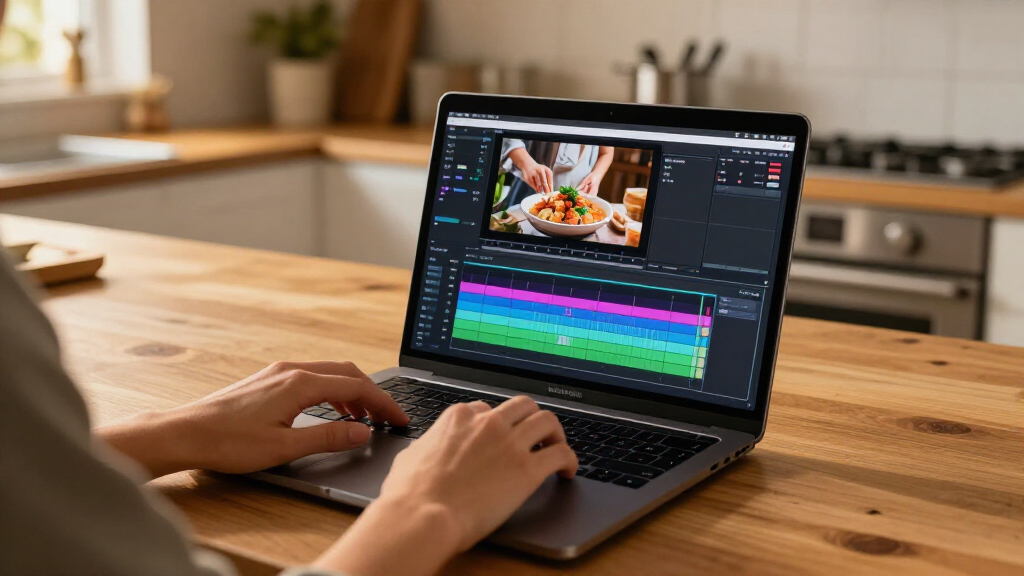
I ranked these 13 MacBook Pro configurations through one specific lens: sustained video editing performance in real-world post-production workflows. That meant prioritizing GPU core count (which drives exports in Final Cut Pro, DaVinci Resolve, and Premiere Pro), unified memory capacity (which determines playback stability with multicam, layers, and color grades), and media engine support for ProRes and hardware-accelerated codecs. A machine with a monster chip but only 16GB of memory ranked below a balanced configuration, because memory pressure — not raw compute — is what usually kills an editing session first.
I also weighed generation value: Apple Silicon improvements between the M4 and M5 generations are real but incremental for editing workloads, so renewed M4-class machines ranked highly when their specs matched the workload. Conversely, the Intel-based 2019 model ranked last despite its low entry cost, because Rosetta-era thermal throttling and absent media engines make it a poor editing platform in 2026. Storage, display quality for color work, and port selection served as tiebreakers within each performance tier.
| macbook pro for video editing | Chip |
|---|---|
| Apple MacBook Pro 16.2" Laptop | Apple M5 Max |
| Apple 2024 MacBook Pro 16-inch | Apple M4 Pro |
| Apple 2026 MacBook Pro 16.2" L | Apple M5 Max |
| Apple MacBook Pro 16-Inch with | — |
| Apple MacBook Pro 16-inch | — |
| Apple 2026 MacBook Pro 16.2" L | Apple M5 Pro (18-core CPU, 20-core GPU) |
| Apple 14.2-inch MacBook Pro wi | — |
| Apple 2024 MacBook Pro with M4 | — |
| Apple MacBook Pro 16.2-inch wi | Apple M5 Max (18-core CPU, 40-core GPU) |
| Apple 2021 MacBook Pro 16" M1 | — |
| Apple 2025 MacBook Pro 14.2-in | — |
| Apple 16-inch MacBook Pro | Apple M5 Pro |
| Apple MacBook Pro 16.2-inch wi | Apple M5 Max |
Factors to Consider When Choosing Macbook Pro For Video Editing
Before committing to a specific configuration, it helps to understand how editing workloads actually stress a MacBook Pro — because the spec sheet doesn’t tell the whole story. These are the factors that separate a machine that edits comfortably for four years from one you’ll outgrow in twelve months.Unified Memory: The Spec That Actually Caps Your Timeline
Unlike traditional laptops where RAM can be upgraded later, Apple’s unified memory is soldered at purchase, which makes this the single most permanent decision you’ll make. For video editing, memory determines how many playback streams, effects layers, and background renders your machine can hold before macOS starts swapping to disk — and once that happens, playback stutters regardless of how powerful your chip is. A 16GB machine will edit 1080p comfortably but hits a wall with 4K multicam; 24-36GB covers most solo editor work; 48GB is the sweet spot for professional 4K workflows; and 96-128GB only pays off with 8K RAW or heavy compositing. The common mistake I see is buyers maxing out the chip while taking base memory, then blaming the processor when their timeline chokes. When in doubt, shift budget from GPU cores to memory — an M5 Pro with 48GB will feel faster in daily editing than an M5 Max with 24GB for most people.
Chip Tier: Match the Silicon to Your Codec, Not Your Ambition
The gap between the base M5, the M5 Pro, and the M5 Max matters far more for some workflows than others. The base chip handles H.264 and H.265 4K editing surprisingly well thanks to Apple’s media engine — if you shoot on a phone or a standard mirrorless camera, paying for a Max chip buys export speed you’ll rarely feel day to day. The Pro tier becomes necessary for ProRes multicam, 6K footage from cinema cameras, and dual-display grading setups. The Max tier exists for 8K, heavy GPU effects, and studios where render time is billed money. A practical test: look at your longest typical export today and ask whether cutting it in half is worth hundreds of dollars. For most working editors, the honest answer is that the Pro tier hits the point of diminishing returns perfectly.
Storage Strategy: Internal Speed Versus External Flexibility
Internal SSDs on MacBook Pros are extraordinarily fast, but Apple’s storage pricing pushes many buyers into 512GB configurations that fill up after a handful of 4K projects. The smarter approach for most editors is a 1TB internal drive for the OS, applications, and active projects, paired with a Thunderbolt external SSD or RAID for archives and media libraries — modern Thunderbolt drives are fast enough for smooth ProRes playback, so you lose very little in practice. Where internal storage becomes non-negotiable is when you’re working with large proxy-free RAW workflows where even Thunderbolt bottlenecks scrubbing. Also remember that macOS needs 10-15% of the drive free to perform well, so a “full” 512GB drive degrades performance before it’s technically full. Buy for your working set, not your entire archive.
New Versus Renewed: Where the Value Hides
Apple Silicon aged unusually well, which changes the renewed-math considerably. A 2024 M4 Pro or M4 Max machine delivers editing performance within roughly 10-15% of current M5 equivalents while costing far less — and because editing is a sustained, thermal-managed workload rather than a burst workload, that gap shrinks further in real sessions. The risk with renewed units concentrates in two areas: battery cycle count (which affects off-grid editing sessions) and screen condition (which matters for colorists specifically). If you buy renewed, prioritize units with verified battery health above 85% and inspect the display for uniformity issues. The one generation I’d steer clear of for editing is anything Intel-based — the thermal design and lack of ProRes media engines make even cheap units a false economy for post-production work.
Display Quality: Only Colorists Should Pay for the Panel Premium
Every MacBook Pro in this lineup ships with a Liquid Retina XDR display, but that doesn’t mean display considerations are solved. The 16-inch panel gives you more timeline real estate and a slightly larger color-managed canvas, while the 14-inch trades screen space for portability — relevant if you edit on location or travel between clients. For reference-grade color work, the XDR panel covers the P3 gamut well, but critical grading still usually happens on a calibrated external monitor, which means Thunderbolt port count and bandwidth matter more than the built-in panel for serious colorists. The honest framing: choose screen size for your working style, not for image quality, because the panels are essentially equal. Editors who grade for broadcast or cinema should budget for a calibration probe and reference display regardless of which MacBook they choose.
Portability Versus Sustained Performance
Both the 14-inch and 16-inch chassis thermally sustain their chips well, but physics still favors the larger body: the 16-inch dissipates heat more effectively during multi-hour render sessions, which means it holds peak clocks longer. If your workflow involves overnight exports or batch-rending entire archives, that sustained-performance margin compounds meaningfully over a machine’s lifetime. On the other hand, if you’re an editor who moves between offices, coffee shops, and client sites daily, a 14-inch with a Pro-tier chip will serve you better than a 16-inch Max you leave at home because it’s heavy. The mistake I see most often is buying a desktop-replacement machine for a mobile workflow, then never using its full capability. Match the chassis to where you actually edit, not where you imagine you will.
Frequently Asked Questions
Is the M5 Max overkill for 4K video editing?
For straight 4K editing with standard codecs, yes — the M5 Pro tier handles that workload with room to spare, and the base M5 manages it competently for simpler timelines. The M5 Max earns its premium when you’re working with 8K footage, heavy GPU-accelerated effects in Resolve or After Effects, ProRes multicam with many angles, or when export time directly costs you money across many projects per week. Another legitimate reason to go Max is longevity: if you plan to keep the machine for five or six years, the extra GPU headroom absorbs codec and resolution creep as camera standards evolve. But if your footage is 4K H.265 from a consumer camera and your timelines are modest, the money is better spent on unified memory or storage than on GPU cores you won’t saturate.
Are renewed MacBook Pros reliable enough for professional editing work?
Renewed Apple Silicon machines are one of the strongest values in this entire category, because the M-series chips have proven durable and performance degradation over time is minimal. The components that actually wear — battery and thermal paste — are the ones to scrutinize: look for verified battery health above 85% and buy from sellers who specify refurbishment standards rather than generic “used” listings. For editing specifically, check that the display has no dead pixels or uniformity issues if you do any color-sensitive work, since XDR panel replacements are expensive. The 2024 M4 Pro and M4 Max renewed units in this roundup make particular sense because their performance gap to current M5 machines is small in sustained editing workloads. The one line I’d draw: avoid renewed Intel-era MacBook Pros entirely, as their aging architecture undermines the value proposition for post-production.
Can I edit video on 24GB of unified memory, or do I need 48GB+?
24GB is a workable floor, not a comfortable ceiling. It handles 1080p projects effortlessly and manages 4K editing well as long as your timelines stay moderately complex — a few adjustment layers, basic color, standard transitions. Where 24GB starts to hurt is 4K multicam with more than a few angles, timelines stacked with motion graphics templates, or running Photoshop and After Effects alongside your NLE. 48GB removes memory pressure for essentially all professional 4K work and lets you keep multiple pro applications open without quitting them between tasks. The practical advice: if editing is your hobby or side income, 24GB will serve you fine for years; if it’s your profession, 48GB is the point where you stop thinking about memory at all — and that mental bandwidth is worth the upgrade cost.
Does storage speed on the internal SSD matter more than capacity for editing?
Both matter, but for different reasons, and understanding the split prevents expensive misconfigurations. Apple’s internal SSDs are fast enough that scrubbing 4K ProRes directly from the system drive is seamless, so speed is essentially solved on any modern MacBook Pro — capacity is the real constraint. A 512GB drive fills after two or three typical 4K projects, and once macOS drops below its free-space threshold, the whole system slows down, including playback and exports. The efficient setup for most editors is 1TB internal for the operating system, applications, and current project, with a Thunderbolt external SSD holding your media library and archives — modern externals play ProRes smoothly, so the performance penalty is minimal. Reserve large internal storage purchases (2TB+) for RAW workflows with massive single-project footprints where even external bandwidth becomes the bottleneck.
Should a beginner buy the base M5 MacBook Pro or spend up to the M5 Pro?
It depends on what you’re editing now versus what you’ll edit in two years. The base M5 with 24GB is genuinely capable for learning: cutting 4K footage in Final Cut or Premiere, basic color correction, and simple exports all run smoothly, and its media engine does the heavy lifting on standard codecs. The argument for starting at the M5 Pro tier isn’t today’s performance — it’s headroom for growth. If you already know you’re moving toward multicam work, After Effects, Resolve’s Fusion page, or higher-bitrate footage from cinema-style cameras, the Pro chip’s extra GPU cores and support for higher memory configurations will age far better. A reasonable middle path: buy the base M5 now, master the craft, and upgrade in three years — beginner money is usually better spent on a good monitor, fast external storage, and software than on silicon you haven’t grown into yet.
Conclusion
After comparing all 13 configurations, the right choice maps cleanly to what kind of editor you are. For the best overall pick, the MacBook Pro 16.2″ M5 Max with 64GB and 2TB hits the professional sweet spot: enough GPU and memory for serious 4K and entry-level 8K work without paying for the 128GB tier most editors never need. The best value is the renewed 2024 M4 Pro with 48GB, which delivers near-current performance at a fraction of the price, with the renewed M4 Max 48GB as the value pick for effect-heavy workflows.
For beginners and students, the 14.2-inch M5 with 24GB and 1TB is the smartest entry point — capable of real 4K work today and portable enough for a student lifestyle. The premium crown goes to the M5 Max with 128GB and 4TB, built for colorists, VFX artists, and 8K RAW specialists whose workflows genuinely saturate that capacity. Editors wanting a balanced future-proof machine without Max pricing should look at the M5 Pro CTO with 48GB and 2TB, and budget-conscious pros editing standard 4K can happily live on the 36GB M5 Max with 2TB. Whatever you choose, resist the two classic traps: buying more chip than your footage demands, and buying less memory than your timeline needs.