
Editorial update log
November 19, 2026:
Deal update: RoundupForge price history now flags ASIN B08133HX34 on amazon.com as below its typical tracked range. RF labels the deal as all_time_low.
Exact pricing remains intentionally gated through the live Grimfaste price module in the article.
For espresso machines for home, my best overall pick is the Breville Barista Pro, which pairs an integrated grinder with a quicker, more guided workflow than the Barista Express models. The Breville Barista Express is a strong alternative for hands-on buyers who want grinding and espresso prep in one machine, while the Ninja Luxe Café Premier suits households that also want drip coffee and cold brew. The main tradeoffs are how much control you want, how much counter space you can spare, and whether you prefer a manual, semi-automatic, or fully automatic routine. More automation can save effort, while compact manual models often ask more of the person making each drink. Read on for the full comparison and help matching a machine to your daily habits.

Get kitchen gear delivered free with Prime
- Fast, free delivery on millions of items
- Prime Video, Amazon Music and more included
- Member-only deals all year
Complete the kit


Key Takeaways
- Integrated grinders separate the most capable all-in-one picks. The Breville Barista Pro and Barista Express models reduce the need to buy a separate grinder, but they take more counter space and involve more hands-on preparation than the Magnifica Duo.
- The Barista Pro stands out for a faster guided workflow. The Barista Express remains a compelling hands-on alternative, so choosing between them comes down to whether quicker operation matters more than the simpler appeal of the Express setup.
- Compact machines trade convenience for control. The Bambino, Stilosa, and CASABREWS CM5418 take a smaller footprint, but buyers should expect to handle more of the grinding, dosing, and brewing decisions themselves.
- The Ninja Luxe Café Premier is the lineup’s versatility pick. Its espresso, drip coffee, and cold brew functions suit mixed-drink households, while buyers focused only on espresso may prefer a more dedicated machine.
- Automatic milk preparation changes the daily workload. The De’Longhi Magnifica Duo offers a different route from wand-based models, but buyers who want to practice milk texture and manual steaming may prefer the Breville or De’Longhi wand machines.
| Breville Barista Express Espresso Machine with Built-In Grinder, Black Sesame |  | Best Overall for Hands-On Home Espresso | Type: Semi-automatic espresso machine | Grinder: Integrated conical burr grinder | Bean hopper capacity: 1/2 lb | VIEW LATEST PRICE | See Our Full Breakdown |
| AMZCHEF Semi-Automatic Espresso Machine with Grinder |  | Best for Grind and Drink Variety | Model: CM1626 | Type: Semi-automatic espresso machine | Grind settings: 44 | VIEW LATEST PRICE | See Our Full Breakdown |
| Chefman CraftBrew Digital Espresso Machine with Steam Wand, 1.5 L Reservoir |  | Best for Ground-Coffee Simplicity | Model: RJ54-SS-15-D-BLK | Operation mode: Semi-automatic | Pump pressure: 15 bar | VIEW LATEST PRICE | See Our Full Breakdown |
| De’Longhi Classic Matte Black Espresso Machine with Milk Frother |  | Best for Simple, Preset Brewing | Model: EM350BK | Operation: Fully automatic | Pressure: 9 bar | VIEW LATEST PRICE | See Our Full Breakdown |
| De’Longhi Stilosa Compact Manual Espresso Machine, Manual Milk Frother |  | Best Entry-Level Manual Pick | Operation mode: Manual | Pump pressure: 15 bar | Boiler: Stainless steel | VIEW LATEST PRICE | See Our Full Breakdown |
| atatix Semi-Automatic Espresso Machine with Milk Frother |  | Best for Temperature Control on a Compact Machine | Operation mode: Semi-automatic | Pump pressure: 20 bar pump; 9-bar extraction pressure | Temperature control: NTC + PID; 198°F (92°C) | VIEW LATEST PRICE | See Our Full Breakdown |
| De’Longhi Classic Signature Espresso Machine with Adjustable Milk Frother |  | Best for Straightforward Espresso Presets | Operation mode: Fully automatic | Pump pressure: 15 bar | Heating control: Thermoblock | VIEW LATEST PRICE | See Our Full Breakdown |
| Breville BES878BSS Barista Pro Espresso Machine, Brushed Stainless Steel |  | Best for Hands-On Bean-to-Cup Brewing | Operation mode: Manual | Grinder: Integrated precision conical burr grinder | Heating system: ThermoJet | VIEW LATEST PRICE | See Our Full Breakdown |
| Ninja Luxe Café Premier 3-in-1 Espresso Machine, Drip Coffee Maker, and Cold Brew Maker |  | Best for One Machine Across Multiple Coffee Styles | Coffee styles: Espresso, drip coffee, rapid cold brew, and cold-pressed espresso | Operation mode: Fully automatic | Grinder: Built-in conical burr grinder with 25 settings | VIEW LATEST PRICE | See Our Full Breakdown |
| AERCANA 20-Bar Semi-Automatic Espresso Machine with Milk Frother, 34 oz Removable Water Tank, Silver |  | Best for Narrow Counter Spaces | Operation mode: Semi-automatic | Pump pressure: 20 bar | Preheating time: About 20 seconds | VIEW LATEST PRICE | See Our Full Breakdown |
| CASABREWS CM5418 Compact Espresso Machine with Milk Frothing Wand |  | Best Compact Pick | Type: Semi-automatic espresso machine | Pump pressure: 20 bar | Power: 1350 W | VIEW LATEST PRICE | See Our Full Breakdown |
| Breville BES870XL Barista Express Espresso Machine, Brushed Stainless Steel |  | Best Integrated Grinder | Type: Manual espresso machine | Grinder: Integrated precision conical burr grinder | Power: 1600 W | VIEW LATEST PRICE | See Our Full Breakdown |
| CASABREWS 3700 Essential Stainless Steel Espresso Machine with Steam Wand |  | Best Value for a Larger Tank | Type: Semi-automatic espresso machine | Pump pressure: 20 bar | Power: 1350 W | VIEW LATEST PRICE | See Our Full Breakdown |
| De’Longhi Magnifica Duo Fully Automatic Espresso Machine with Milk Frother, Silver |  | Best for One-Touch Variety | Operation: Fully automatic | Recipes: 20 preset hot and iced drinks | Brewing options: Espresso, drip coffee, and cold brew | VIEW LATEST PRICE | See Our Full Breakdown |
| Breville Bambino Espresso Machine, Brushed Stainless Steel |  | Best for Fast, Compact Milk Drinks | Type: Semi-automatic espresso machine | Heating system: ThermoJet, 3-second heat-up | Portafilter: 54 mm | VIEW LATEST PRICE | See Our Full Breakdown |
| espresso machines for home | Dimensions | Weight | Wattage |
|---|---|---|---|
| Breville Barista Express Espre | 13.8 × 12.5 × 15.9 in | 22.1 lb | — |
| AMZCHEF Semi-Automatic Espress | 12.5 × 10.82 × 13.38 in (D × W × H) | 13.9 lb | 1500 W |
| Chefman CraftBrew Digital Espr | 10.8 × 8.9 × 11.9 in (D × W × H) | — | 1350 W |
| De’Longhi Classic Matte Black | 11.22 × 13.98 × 15.94 in (D × W × H) | 9.3 lb | 1350 W |
| De’Longhi Stilosa Compact Manu | 12.13 × 9.45 × 14.17 in (D × W × H) | 8.6 lb | 1100 W |
| atatix Semi-Automatic Espresso | 12.24 × 7.5 × 11.18 inches (D × W × H) | — | 1350 watts |
| De’Longhi Classic Signature Es | 11.22 × 13.98 × 15.94 inches (D × W × H) | 9.3 pounds | 1350 watts |
| Breville BES878BSS Barista Pro | 13 × 14 × 16 inches (D × W × H) | 19.5 pounds | 1680 watts |
| Ninja Luxe Café Premier 3-in-1 | 12.95 × 13.99 × 14.57 inches (D × W × H) | 25.7 pounds | 1650 watts |
| AERCANA 20-Bar Semi-Automatic | 12.2 × 5.32 × 11.5 inches (D × W × H) | — | 1450 watts |
| CASABREWS CM5418 Compact Espre | — | — | — |
| Breville BES870XL Barista Expr | 13.8 × 12.5 × 15.9 in | 22.1 lb | — |
| CASABREWS 3700 Essential Stain | 13 × 6.5 × 12.1 in | 8.1 lb | — |
| De’Longhi Magnifica Duo Fully | 19.69 × 12.2 × 16.14 in | 20.8 lb | — |
| Breville Bambino Espresso Mach | 13.7 × 6.3 × 12 in | 10.9 lb | — |
More Details on Our Top Picks
Breville Barista Express Espresso Machine with Built-In Grinder, Black Sesame
The Barista Express is my strongest all-around pick for home espresso drinkers who want fresh grinding and room to refine their technique. Its integrated conical burr grinder sends grounds directly into the portafilter, while PID temperature control and low-pressure pre-infusion give more control over extraction than the simpler De’Longhi Stilosa. The manual steam wand also suits people who want to learn milk texturing rather than rely on an automatic frother.
That control comes with more work: grinding, tamping, and steaming are hands-on, and the machine takes up more counter space than the compact Chefman CraftBrew. Its 67-ounce tank and half-pound hopper also need replenishing. I’d choose it over the AMZCHEF when espresso-focused control matters more than extra grind settings and cold-brew mode.
Pros:- Integrated conical burr grinder feeds fresh grounds directly into the portafilter.
- PID temperature control and low-pressure pre-infusion support controlled extraction.
- Manual steam wand can texture microfoam for lattes and cappuccinos.
- Includes a portafilter, filter baskets, tamper, milk jug, and cleaning accessories.
Cons:- Manual grinding, tamping, and steaming require practice and active preparation.
- Larger footprint than compact options such as the Chefman CraftBrew.
- The half-pound hopper and 67-ounce water tank require periodic refills.
Best for: Home espresso drinkers who want an integrated grinder, manual milk texturing, and room to improve their brewing technique.
Not ideal for: Buyers who want push-button drinks, minimal cleanup, or a small machine for a crowded counter.
- Type:Semi-automatic espresso machine
- Grinder:Integrated conical burr grinder
- Bean hopper capacity:1/2 lb
- Water tank capacity:67 oz
- Power:1600 W
- Dimensions:13.8 × 12.5 × 15.9 in
- Weight:22.1 lb
- Material:Stainless steel
Our verdict“Choose the Barista Express if you want an all-in-one, hands-on espresso setup with more extraction control than simpler machines.”
AMZCHEF Semi-Automatic Espresso Machine with Grinder
The AMZCHEF earns its place for households that want one machine to handle several coffee styles. Its 44 grind settings and adjustable 190°F–201°F brew temperature offer a wider range of adjustments than the ground-coffee-only Chefman CraftBrew. A built-in grinder keeps the setup self-contained, while the touch screen displays grind time, brew time, and temperature for a more guided workflow.
Its one-touch hot and cold brew modes add flexibility, but the listing does not specify the same extraction features as the Breville Barista Express’s PID control and low-pressure pre-infusion. The AMZCHEF remains semi-automatic, so buyers still handle preparation and milk steaming. Its 60-ounce reservoir is practical for routine home use, though frequent brewing means refills. Pick it for adjustability and drink range; skip it if espresso technique and a simpler control set matter more.
Pros:- Built-in grinder offers 44 settings for different grind sizes and coffee styles.
- Adjustable brewing temperature from 190°F to 201°F.
- Touch screen displays grind time, brew time, and temperature.
- Includes hot and cold brew modes, plus a descaling function.
Cons:- Semi-automatic brewing still requires hands-on preparation and milk steaming.
- The 60-ounce tank may need refilling in households that brew frequently.
- Offers a wider range of adjustments than the simpler Chefman, which may be unnecessary for espresso-only users.
Best for: Households that brew espresso and other coffee styles and want extensive grind adjustment, temperature selection, and a built-in grinder.
Not ideal for: Espresso purists who prioritize specified extraction controls, or buyers seeking a fully automatic drink-making routine.
- Model:CM1626
- Type:Semi-automatic espresso machine
- Grind settings:44
- Brewing temperature:190°F–201°F
- Water tank capacity:60 oz
- Wattage:1500 W
- Dimensions:12.5 × 10.82 × 13.38 in (D × W × H)
- Weight:13.9 lb
- Steam wand:8 mm stainless steel
Our verdict“Choose the AMZCHEF if you want a built-in grinder and broad coffee-style adjustments in one home machine.”
Chefman CraftBrew Digital Espresso Machine with Steam Wand, 1.5 L Reservoir
The Chefman CraftBrew makes sense for buyers who already use ground coffee and want a compact machine with straightforward shot controls. Unlike the Breville Barista Express and AMZCHEF, it has no built-in grinder, so it avoids adding grinder adjustments to the routine but depends on coffee that is ground separately. Its touch panel lets users set shot volume and use a timer, giving it more brewing adjustment than the button-based De’Longhi Classic.
A steam wand handles milk drinks, and the removable 1.5-liter reservoir is easy to take to the sink. The machine’s smaller footprint can suit tighter counters, though the tank may need refilling during frequent use. Its descaling alert after 500 brewing cycles is a useful maintenance prompt, not a substitute for routine cleaning. Choose this over the grinder-equipped options if simplicity and compact dimensions matter more than grinding fresh beans at the machine.
Pros:- Programmable shot volume supports different espresso serving sizes.
- Removable 1.5-liter reservoir is convenient to fill and clean.
- Steam wand supports cappuccinos and lattes.
- Descaling alert provides a cycle-based maintenance reminder.
Cons:- Requires ground coffee and does not include a grinder.
- The reservoir may need frequent refilling during high-volume use.
- Manual milk steaming takes more effort than an automatic frother.
Best for: Apartment dwellers and ground-coffee users who want adjustable shot volume, a steam wand, and a compact footprint.
Not ideal for: Whole-bean drinkers who want an integrated grinder or households that brew many drinks between tank refills.
- Model:RJ54-SS-15-D-BLK
- Operation mode:Semi-automatic
- Pump pressure:15 bar
- Wattage:1350 W
- Water tank capacity:1.5 L
- Coffee input:Ground coffee
- Dimensions:10.8 × 8.9 × 11.9 in (D × W × H)
- Controls:Touch panel with programmable shot volume and timer
- Warranty:1 year
Our verdict“Choose the CraftBrew if you want compact, adjustable brewing with pre-ground coffee rather than an integrated grinder.”
De’Longhi Classic Matte Black Espresso Machine with Milk Frother
The De’Longhi Classic suits home drinkers who want a short path from ground coffee to a single or double shot. Its preset shot buttons and automatic stop reduce the need to judge when brewing should end, making it less involved than the manual De’Longhi Stilosa. Thermoblock temperature control supports quick heat-up, while the adjustable drip tray accommodates different cup and glass heights.
This convenience comes with less control than the Breville Barista Express, which pairs an integrated grinder with specified pre-infusion and PID temperature control. The Classic uses ground coffee, and its frother provides a simpler milk-drink route than a manual wand designed for hands-on microfoam work. It is listed as fully automatic, but the supplied information does not describe an automatic grinder or one-touch milk drinks. Choose it for preset brewing and easy cup-size flexibility, not for extensive espresso tuning.
Pros:- Single- and double-shot presets with automatic stop simplify brewing.
- Thermoblock temperature control supports quick heat-up.
- Adjustable drip tray accommodates different cup and glass sizes.
- Frother can be used with dairy and plant-based milk alternatives.
Cons:- Uses ground coffee and has no built-in grinder.
- Offers fewer specified extraction adjustments than the Breville Barista Express.
- Its listed depth is nearly 14 inches, which may be a constraint on shallow counters.
Best for: Ground-coffee users who want quick-heating preset shots, automatic stopping, and a frother for everyday milk drinks.
Not ideal for: Buyers who want an integrated grinder, advanced extraction adjustments, or a particularly shallow machine for a tight counter.
- Model:EM350BK
- Operation:Fully automatic
- Pressure:9 bar
- Wattage:1350 W
- Water tank:Removable
- Dimensions:11.22 × 13.98 × 15.94 in (D × W × H)
- Weight:9.3 lb
- Materials:Plastic and stainless steel
- Controls:Buttons
Our verdict“Choose the De’Longhi Classic if preset shots and a frother matter more than grinder integration or hands-on extraction control.”
De’Longhi Stilosa Compact Manual Espresso Machine, Manual Milk Frother
The Stilosa is the straightforward choice for someone learning home espresso without needing a built-in grinder or digital interface. It uses ground coffee, a portafilter, and separate single- and double-shot filters, so buyers can focus on dosing and tamping with the included scoop-tamper. Its manual steam wand gives more direct control over milk texture than the De’Longhi Classic’s simpler frother, but it also asks for more practice.
Compared with the Chefman CraftBrew, the Stilosa has a smaller 1-liter tank and dial controls rather than a touch panel with programmable shot volume. Its compact dimensions and 8.6-pound weight make it easier to place than the larger Breville Barista Express, but neither machine grinds beans. The stainless steel boiler and two-level cup holder suit basic espresso routines; buyers seeking temperature adjustments or integrated grinding should step up to the AMZCHEF or Breville instead.
Pros:- Compact 8.6-pound body suits kitchens with limited counter space.
- Includes single- and double-shot filters, portafilter, and scoop-tamper.
- Manual steam wand allows hands-on milk texturing.
- Two-level cup holder accommodates taller cups.
Cons:- Requires ground coffee and has no built-in grinder.
- Manual brewing and milk steaming involve more practice than the De’Longhi Classic’s preset approach.
- The 1-liter tank is smaller than the Chefman CraftBrew’s 1.5-liter reservoir.
Best for: New home espresso makers who want an affordable-in-complexity manual routine, a compact footprint, and a wand for milk drinks.
Not ideal for: People who want freshly ground beans from an integrated grinder, preset shot controls, or faster milk preparation.
- Operation mode:Manual
- Pump pressure:15 bar
- Boiler:Stainless steel
- Water tank capacity:1000 ml
- Wattage:1100 W
- Coffee input:Ground coffee
- Dimensions:12.13 × 9.45 × 14.17 in (D × W × H)
- Weight:8.6 lb
- Controls:Dial
Our verdict“Choose the Stilosa if you want a compact, manual starting point and are comfortable supplying ground coffee and learning to steam milk.”
atatix Semi-Automatic Espresso Machine with Milk Frother
The atatix EM31112 pairs a compact body with NTC + PID temperature control at a stated 198°F, making it a good fit for home brewers who want more control than a basic entry-level machine offers. Its single- and double-shot filters cover routine espresso, while the steam wand lets you make milk drinks without adding a separate appliance. Compared with the AERCANA 20-Bar Semi-Automatic Espresso Machine, atatix has a larger 44-ounce tank and a manual extraction option that can run for up to 102 seconds; AERCANA, by contrast, lists a quick preheat time and a pressure gauge. The tradeoff is that atatix’s extended extraction takes a press-and-hold action rather than running as a simple preset. It also uses ground coffee, so buyers who want an integrated grinder should look to the Breville Barista Pro instead.
Pros:- NTC + PID temperature control specifies a 198°F brewing temperature.
- Manual extraction can run for up to 102 seconds for longer customized shots.
- Removable 44-ounce tank reduces how often it needs refilling.
- Steam wand and single- and double-cup filters support espresso and milk drinks.
Cons:- Manual long extraction requires pressing and holding the button.
- Ground-coffee input means grinding and dosing are separate tasks.
- Designed for 110-volt power.
Best for: Home espresso drinkers with limited counter space who want temperature control, milk frothing, and the option to adjust shot duration manually.
Not ideal for: Buyers who want a built-in grinder, fully hands-off brewing, or an appliance suited to power systems other than 110 volts.
- Operation mode:Semi-automatic
- Pump pressure:20 bar pump; 9-bar extraction pressure
- Temperature control:NTC + PID; 198°F (92°C)
- Wattage:1350 watts
- Water tank:44 fluid ounces; removable
- Dimensions:12.24 × 7.5 × 11.18 inches (D × W × H)
- Coffee input:Ground coffee
- Material:Stainless steel
Our verdict“Choose atatix if temperature control and adjustable manual extraction matter more than a built-in grinder or fully automatic operation.”
De’Longhi Classic Signature Espresso Machine with Adjustable Milk Frother
The De’Longhi Classic Signature is aimed at households that want repeatable single or double espresso without managing every step of extraction. Its preset buttons simplify the routine, while the pressure gauge gives a visual reference during brewing and the adjustable dual-mode frother handles dairy or plant-based milk. Compared with the more hands-on atatix EM31112, this De’Longhi puts more emphasis on preset convenience than extended manual shot control. It also has an adjustable double-height drip tray, which helps accommodate different cups without forcing a change in the brew setup. The limits are clear: it takes ground coffee rather than grinding beans itself, and its 120-volt corded design is intended for compatible household outlets. At 15.94 inches tall, it is also less suited to very low-clearance shelves than shorter compact options such as AERCANA.
Pros:- Single- and double-shot presets simplify everyday brewing.
- Pressure gauge provides a visual indication during extraction.
- Adjustable dual-mode frother supports dairy and plant-based milk.
- Double-height adjustable drip tray fits a broader range of cup sizes.
Cons:- Ground-coffee input requires a separate grinder for whole beans.
- Tall 15.94-inch profile may not fit beneath low cabinets.
- Designed for 120-volt corded operation.
Best for: Households that mostly make one or two espresso drinks at a time and prefer preset brewing with a milk frother that accommodates different milk types.
Not ideal for: Bean-to-cup buyers, espresso hobbyists who want extended manual extraction control, or kitchens with low overhead cabinet clearance.
- Operation mode:Fully automatic
- Pump pressure:15 bar
- Heating control:Thermoblock
- Wattage:1350 watts
- Coffee input:Ground coffee
- Milk frother:Adjustable dual-mode
- Dimensions:11.22 × 13.98 × 15.94 inches (D × W × H)
- Weight:9.3 pounds
Our verdict“Pick the De’Longhi Classic Signature if simple espresso presets and flexible milk frothing matter more than integrated grinding or manual shot-length control.”
Breville BES878BSS Barista Pro Espresso Machine, Brushed Stainless Steel
The Breville Barista Pro suits home baristas who want grinding, espresso extraction, and milk texturing in one machine without giving up manual control. Its integrated conical burr grinder doses coffee on demand, while PID temperature control and low-pressure pre-infusion support a more controlled extraction process. The ThermoJet system reaches its stated extraction temperature in three seconds, so making a milk drink involves less waiting than with a machine that needs a longer heat-up. Compared with the Ninja Luxe Café Premier, the Barista Pro is more focused on espresso craft; Ninja offers drip coffee and cold brew as well as espresso, with more guided preparation. Breville’s tradeoff is the learning curve: grinding, dosing, tamping, and texturing still call for user involvement. Its 19.5-pound build and 14-inch width also demand more counter space than the compact atatix or AERCANA machines.
Pros:- Integrated conical burr grinder doses whole beans on demand.
- PID temperature regulation and low-pressure pre-infusion support controlled extraction.
- ThermoJet heating system reaches the stated extraction temperature in three seconds.
- Manual steam wand can texture milk for latte art.
Cons:- Grinding, tamping, extraction, and milk texturing require hands-on steps.
- Its 19.5-pound weight and roughly 14-inch width take substantial counter space.
- Designed for 120-volt power.
Best for: Home baristas who want fresh-ground espresso and manual milk texturing, and who are willing to learn a repeatable workflow.
Not ideal for: Buyers seeking one-touch drinks, a small or lightweight machine, or a single appliance that also makes drip coffee and cold brew.
- Operation mode:Manual
- Grinder:Integrated precision conical burr grinder
- Heating system:ThermoJet
- Temperature control:PID; stated regulation within ±2°C
- Water tank:67 fluid ounces
- Bean hopper:0.5 pound
- Wattage:1680 watts
- Dimensions:13 × 14 × 16 inches (D × W × H)
- Weight:19.5 pounds
Our verdict“Choose the Barista Pro if you want an integrated grinder and hands-on control, rather than Ninja’s broader drink menu and guided automation.”
Ninja Luxe Café Premier 3-in-1 Espresso Machine, Drip Coffee Maker, and Cold Brew Maker
The Ninja Luxe Café Premier earns its place for households that want espresso without limiting the counter to espresso alone. It also prepares drip coffee, rapid cold brew, and cold-pressed espresso, while its 25-setting conical burr grinder, weight-based dosing, and assisted tamper reduce some of the measuring and tamping work that comes with a manual setup. The dual froth system adds another convenience for milk drinks. Compared with the Breville Barista Pro, Ninja places more emphasis on guided preparation and drink variety; Breville offers manual microfoam work and a more explicitly hands-on espresso workflow. That breadth comes with a larger, heavier machine: at 25.7 pounds and about 13 by 14 inches at the base, it will claim a meaningful stretch of counter space. Buyers who mainly drink espresso may find the simpler atatix or AERCANA easier to fit and use.
Pros:- Makes espresso, drip coffee, rapid cold brew, and cold-pressed espresso.
- Built-in grinder offers 25 settings for adjusting the grind.
- Weight-based dosing and assisted tamping reduce manual measuring and leveling.
- 70-ounce removable reservoir and onboard accessory storage support a multi-drink routine.
Cons:- At 25.7 pounds, it is heavy to move for cleaning or counter rearrangement.
- Its roughly 13 × 14-inch footprint is substantial for an espresso-focused machine.
- Designed for 120-volt power.
Best for: Households with different coffee preferences that want guided espresso preparation, built-in grinding, drip coffee, and cold drinks from one appliance.
Not ideal for: Espresso-only drinkers with limited counter space, or buyers who want a light machine and direct manual control over each step.
- Coffee styles:Espresso, drip coffee, rapid cold brew, and cold-pressed espresso
- Operation mode:Fully automatic
- Grinder:Built-in conical burr grinder with 25 settings
- Water reservoir:70 fluid ounces; removable
- Wattage:1650 watts
- Dimensions:12.95 × 13.99 × 14.57 inches (D × W × H)
- Weight:25.7 pounds
- Material:Stainless steel
Our verdict“Choose Ninja if your household wants several coffee styles and guided preparation; pick a more compact espresso-only machine if counter space is the priority.”
AERCANA 20-Bar Semi-Automatic Espresso Machine with Milk Frother, 34 oz Removable Water Tank, Silver
At just 5.32 inches wide, the AERCANA is the lineup’s clearest fit for a narrow counter or a crowded apartment kitchen. It keeps the core home-espresso setup straightforward: use ground coffee, watch the pressure gauge, and froth milk with the steam wand. The listed 20-second preheat also suits buyers who want to get started without a long warm-up. Compared with the atatix EM31112, AERCANA is narrower and lists a hot-water dispenser and cup warmer, while atatix offers a larger 44-ounce tank and temperature control with manual extraction up to 102 seconds. AERCANA’s 34-ounce reservoir is smaller, and its main workflow limitation matters for milk-drink routines: the machine needs to cool after frothing before brewing, or its overheat protection may activate. That makes it less convenient for preparing several milk drinks in sequence.
Pros:- 5.32-inch width suits unusually narrow countertop spaces.
- Listed preheat time is about 20 seconds.
- Pressure gauge gives a visual reference during extraction.
- Removable water tank and drip tray simplify refilling and cleanup.
Cons:- Needs to cool after milk frothing before brewing to avoid overheat protection.
- 34-ounce tank is smaller than the atatix machine’s 44-ounce reservoir.
- Uses ground coffee and has no built-in grinder.
Best for: Apartment dwellers and solo espresso drinkers who need a very narrow machine and mostly prepare one drink at a time.
Not ideal for: Households that make several milk drinks back-to-back, whole-bean coffee drinkers without a separate grinder, or anyone who wants temperature and shot-duration controls.
- Operation mode:Semi-automatic
- Pump pressure:20 bar
- Preheating time:About 20 seconds
- Wattage:1450 watts
- Water tank:34 ounces (1 liter); removable
- Dimensions:12.2 × 5.32 × 11.5 inches (D × W × H)
- Coffee input:Ground coffee
- Special features:Pressure gauge, milk frother, hot-water dispenser, cup warmer
Our verdict“Choose AERCANA when a narrow footprint and quick listed preheat matter more than back-to-back milk drinks or adjustable extraction control.”
CASABREWS CM5418 Compact Espresso Machine with Milk Frothing Wand
The CASABREWS CM5418 suits kitchens where counter space matters but espresso and milk drinks are both on the menu. Its built-in pressure gauge gives a new manual-brewing owner a way to see how extraction is going, while the removable 34 oz tank avoids frequent trips to the sink. Compared with the larger-tank CASABREWS 3700 Essential, this model holds less water, but its compact brushed-steel design is a practical fit for a small kitchen or office.
The tradeoff is a more hands-on routine: you need ground coffee, and the machine needs to cool after steaming before brewing. Its stated 20-bar pump pressure does not remove the need to dial in grind and tamp; the product notes that a finer grind, larger dose, or firmer tamp may be needed. Choose it for compact, adjustable basics, not a rapid milk-to-espresso workflow.
Pros:- Compact brushed stainless steel body suits kitchens with limited counter space.
- Built-in pressure gauge provides feedback while dialing in espresso.
- Removable 34 oz water tank makes refilling easier.
- Steam wand supports milk frothing for cappuccinos and lattes.
Cons:- Needs time to cool after milk steaming before brewing.
- Manual extraction may require adjustments to grind, dose, and tamp.
- Smaller 34 oz tank needs more frequent refilling than the CASABREWS 3700 Essential.
Best for: Apartment dwellers or office users who want a compact semi-automatic machine with a steam wand and visible extraction feedback.
Not ideal for: People who regularly make several drinks in a row or want to brew immediately after steaming without a cooldown pause.
- Type:Semi-automatic espresso machine
- Pump pressure:20 bar
- Power:1350 W
- Water tank:34 oz, removable
- Milk frother:Steam wand
- Finish:Brushed stainless steel
- Included filters:One-cup and two-cup filters
Our verdict“Choose the CM5418 for a space-conscious home setup with manual espresso and milk frothing, provided you are comfortable adjusting your technique and waiting between steaming and brewing.”
Breville BES870XL Barista Express Espresso Machine, Brushed Stainless Steel
The Breville Barista Express is the strongest fit here for home baristas who want grinding and espresso preparation in one machine without giving up manual control. Its integrated conical burr grinder sends freshly ground coffee to the portafilter, while PID temperature control and low-pressure pre-infusion support more consistent extraction. Compared with the Breville Bambino, it takes up more room, but the Bambino requires a separate grinder; the Express bundles that step into its 12.5-inch-wide body.
This is not a push-button shortcut. You still need to adjust grind size and dose, tamp, pull the shot, and texture milk with the manual steam wand. That learning curve can suit someone who wants to refine each drink, but it is less convenient than the De’Longhi Magnifica Duo, which automates brewing and milk foam. The 67 oz tank and included tools support a full home routine, though the machine’s 22.1-pound weight and countertop footprint make it a substantial fixture.
Pros:- Integrated conical burr grinder grinds beans directly into the portafilter.
- PID temperature control and low-pressure pre-infusion support controlled extraction.
- Manual steam wand can texture microfoam for milk drinks.
- 67 oz water tank and included preparation and cleaning tools support regular home use.
Cons:- Manual grinding, dosing, tamping, extraction, and milk steaming require practice.
- At 22.1 pounds and 12.5 inches wide, it needs a dedicated counter space.
- Less convenient for quick drinks than the fully automatic De’Longhi Magnifica Duo.
Best for: Home espresso hobbyists who want an integrated grinder, manual shot control, and room to refine grind and milk-texturing technique.
Not ideal for: Buyers who prioritize one-touch drinks, minimal setup, or a small and lightweight machine.
- Type:Manual espresso machine
- Grinder:Integrated precision conical burr grinder
- Power:1600 W
- Water tank:67 oz
- Bean hopper:0.5 lb
- Temperature control:PID digital temperature control
- Portafilter:54 mm stainless steel
- Dimensions:13.8 × 12.5 × 15.9 in
- Weight:22.1 lb
Our verdict“Pick the Barista Express if you want an all-in-one grinder and espresso station to operate by hand, rather than a compact or automated machine.”
CASABREWS 3700 Essential Stainless Steel Espresso Machine with Steam Wand
The CASABREWS 3700 Essential keeps the basic semi-automatic workflow straightforward and pairs it with a 43.9 oz removable tank. That capacity is a useful step up from the 34 oz tank on the CASABREWS CM5418 if you make several drinks between refills. It also includes one- and two-cup filters, a portafilter, and a tamper with spoon, so a beginner has the core tools to start brewing.
Both CASABREWS models use a 20-bar pump and 1350 W heating system with a steam wand, so the 3700 is not a major upgrade in brewing control. Unlike the CM5418, the product details do not list a built-in pressure gauge, making extraction feedback less explicit. It also relies on ground coffee and manual steaming, rather than the integrated grinder and guided workflow of the Breville Barista Express. This is a sensible choice for basic espresso and milk drinks, not for buyers seeking fine-grained control or push-button convenience.
Pros:- 43.9 oz removable tank holds more water than the CASABREWS CM5418 tank.
- Compact 6.5-inch width can fit narrow counter spaces.
- Includes single- and double-cup filters, portafilter, and tamper with spoon.
- Steam wand lets owners make milk-based drinks as well as espresso.
Cons:- Requires ground coffee and manual control of the brewing process.
- No built-in pressure gauge is listed, unlike the CASABREWS CM5418.
- Manual steam wand takes practice to texture milk consistently.
Best for: First-time espresso owners who want a compact manual machine, a larger refill interval, and starter accessories for occasional lattes and cappuccinos.
Not ideal for: Coffee enthusiasts who want a built-in grinder, a pressure gauge, or automated brewing and milk preparation.
- Type:Semi-automatic espresso machine
- Pump pressure:20 bar
- Power:1350 W
- Water tank:43.9 oz, removable
- Milk frother:Steam wand
- Coffee input:Ground coffee
- Dimensions:13 × 6.5 × 12.1 in
- Weight:8.1 lb
Our verdict“Choose the 3700 Essential for a compact, accessory-ready starter machine with a larger tank, but skip it if you want built-in grinding or more extraction feedback.”
De’Longhi Magnifica Duo Fully Automatic Espresso Machine with Milk Frother, Silver
The De’Longhi Magnifica Duo is the convenience pick for households that want a broad drink menu without grinding, tamping, and steaming each cup by hand. Its integrated burr grinder and 20 preset hot and iced recipes cover espresso, drip coffee, and cold brew, while LatteCrema Hot and Cool prepares milk foam at the touch of a button. Compared with the Breville Barista Express, it asks far less of the person making the drink; the Breville offers more direct control over grinding and extraction, but requires more hands-on work.
The tradeoff is size and reduced manual involvement. At nearly 20 inches deep, this machine needs more counter depth than the compact Breville Bambino, and its plastic-and-steel construction is a less traditional manual espresso setup. Removable frothing components are dishwasher-safe, which helps with cleanup, but buyers should choose it for drink variety and automation rather than for practicing milk texturing or tuning every shot themselves.
Pros:- Twenty preset recipes span hot and iced drinks.
- Integrated conical burr grinder supports bean-to-cup preparation.
- LatteCrema Hot and Cool makes hot or cold milk foam automatically.
- Removable frothing components are dishwasher-safe.
Cons:- Nearly 20 inches deep, so it needs more counter space than the Breville Bambino.
- Fully automatic operation offers less hands-on control than the Breville Barista Express.
- Plastic and stainless steel construction may not appeal to buyers seeking an all-metal machine.
Best for: Busy households with varied coffee preferences that want automatic espresso, drip-style coffee, cold brew, and hot or cold milk foam from one machine.
Not ideal for: Small kitchens or hands-on espresso enthusiasts who want to control grinding, tamping, extraction, and milk texture themselves.
- Operation:Fully automatic
- Recipes:20 preset hot and iced drinks
- Brewing options:Espresso, drip coffee, and cold brew
- Grinder:Integrated conical burr grinder
- Milk system:LatteCrema Hot and Cool
- Power:1450 W
- Dimensions:19.69 × 12.2 × 16.14 in
- Weight:20.8 lb
- Warranty:2 years, with 1 additional year after product registration
Our verdict“Pick the Magnifica Duo if your household values automatic drink variety over manual espresso practice and has room for a deep countertop machine.”
Breville Bambino Espresso Machine, Brushed Stainless Steel
The Breville Bambino is a compact semi-automatic choice for people who want to make espresso and milk drinks without giving a large section of the counter to the machine. Its three-second ThermoJet heat-up makes it quicker to start than a more involved setup, while PID temperature control and low-pressure pre-infusion support a more controlled shot. The automatic steam wand, with adjustable temperature and texture, also asks less practice of the owner than the manual wand on the Breville Barista Express.
That convenience comes with a clear boundary: the Bambino has no built-in grinder, so you need ground coffee or a separate grinder. It also offers fewer all-in-one features than the Barista Express, which integrates bean grinding, and far less drink automation than the De’Longhi Magnifica Duo. Its 47 oz water capacity and slim 6.3-inch width make it easier to place in a small kitchen, but this is still a semi-automatic machine rather than a one-touch solution.
Pros:- ThermoJet system reaches extraction temperature in 3 seconds.
- Compact 6.3-inch width suits limited counter space.
- PID control and low-pressure pre-infusion support controlled extraction.
- Automatic steam wand offers adjustable milk temperature and texture.
Cons:- Does not include a grinder, unlike the Breville Barista Express.
- Requires ground coffee or a separate grinder.
- Offers less one-touch drink variety than the De’Longhi Magnifica Duo.
Best for: Small-kitchen owners who want quick startup, controlled espresso brewing, and easier milk texturing without an integrated grinder.
Not ideal for: Buyers who want beans-to-cup convenience, a built-in grinder, or automatic preset drinks instead of a semi-automatic process.
- Type:Semi-automatic espresso machine
- Heating system:ThermoJet, 3-second heat-up
- Portafilter:54 mm
- Coffee dose:19 g
- Water capacity:47 fl oz
- Power:1560 W
- Dimensions:13.7 × 6.3 × 12 in
- Weight:10.9 lb
- Milk system:Automatic steam wand with adjustable temperature and texture
Our verdict“Choose the Bambino for fast, compact espresso and easier milk frothing if you already have a grinder or are comfortable using ground coffee.”
How We Picked
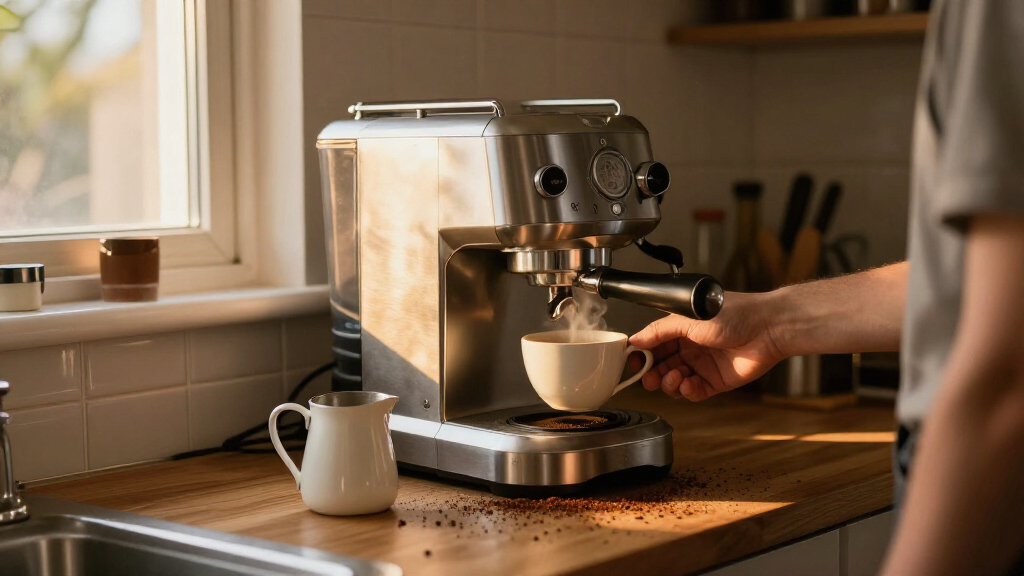
I ranked these home espresso machines by how well their design fits the routines buyers are likely to have: daily drink volume, interest in hands-on preparation, milk-drink habits, and available counter space. I compared the workflow each type implies, including whether a grinder is built in, how much control the user has over brewing and milk, whether the machine supports drinks beyond espresso, and how involved routine cleaning is likely to be. I also weighed practical ownership factors such as removable water tanks, machine footprint, and the difference between a dedicated espresso appliance and a multi-drink system.
The ranking favors machines that offer a strong balance of useful control, approachable operation, and everyday versatility, rather than treating the most features as an automatic win. The Barista Pro leads for its more streamlined all-in-one workflow; the Barista Express models follow for buyers who value hands-on espresso making. Compact and entry-focused machines rank lower when they require more separate gear or offer less flexibility, while the Magnifica Duo and Ninja Luxe Café Premier earn their places for distinct needs: automated milk drinks and broader beverage variety. Exact fit depends on your grinder, counter space, and willingness to learn espresso preparation.
Factors to Consider When Choosing Espresso Machines For Home
Before choosing a machine, decide what you want your morning routine to feel like. A model that offers maximum control may be a poor match if you want a drink with minimal setup, while an automated system can feel limiting if you enjoy adjusting grind and milk texture. These broader tradeoffs can narrow the field before you compare individual features.
Choose Your Workflow Before Comparing Features
Espresso machines range from manual and semi-automatic models to fully automatic systems, and those labels describe how much work stays with you. A manual or semi-automatic machine can make the process more engaging, but you may need to grind, dose, tamp, and manage the shot yourself. A fully automatic option reduces those steps, which can matter more than extra controls when several people make drinks each day. Do not assume a built-in grinder makes a machine hands-off; it removes one separate appliance but still leaves preparation tasks. A useful test is to ask how many steps you are willing to repeat before work. Match the machine to that answer rather than buying features you may not use.
Budget for the Full Coffee Setup
The machine is only one part of a home espresso setup. A machine without an integrated grinder may call for a capable standalone grinder, and a scale or suitable cups can also affect consistency and ease of use. That can make a compact machine less straightforward as a value choice if it requires several additions before it fits your routine. By contrast, an all-in-one machine reduces equipment clutter but may be larger and more involved to clean. Think about the total counter footprint, not just the appliance dimensions. Before buying, list what you already own and what you would need to add.
Match Milk Features to the Drinks You Actually Make
If you mostly drink straight espresso, an elaborate milk system may add cost, space, and cleaning work without much benefit. For frequent cappuccinos and lattes, a steam wand gives you hands-on control over milk texture, but it takes practice and needs prompt cleaning after use. Automatic milk preparation can simplify repeated drinks, especially in a household where not everyone wants to learn steaming. Consider whether you want to develop a skill or simply make milk drinks with fewer steps. Also check how the milk components are cleaned and stored, since upkeep can shape whether a feature remains convenient. Buy for your regular order, not the occasional drink you imagine making.
Treat Counter Space and Access as Daily Requirements
A machine can fit on a counter and still be awkward to live with if the water tank is hard to reach or there is little room to use the portafilter. Measure the intended spot, including clearance above the machine and space for cups, a grinder, and milk preparation. Removable tanks can be easier to fill at a sink, but only if you can pull them out without moving other appliances. A compact footprint is especially useful in smaller kitchens, though compact machines can shift more work onto the user or require separate equipment. Check where the machine’s cords, drip tray, and controls sit relative to your cabinets. Daily access matters more than a tidy measurement on paper.
Learn What Maintenance the Machine Expects
Espresso machines need regular care, but the routine varies with the brewing and milk systems. Coffee residue, water deposits, and milk can all affect performance if left unattended. A wand usually needs wiping and purging after steaming, while automatic milk components may have their own cleaning steps. Removable drip trays and water tanks can make routine tasks easier, but they do not replace periodic descaling or cleaning cycles. Check the maker’s care instructions before you buy, particularly if the machine will make milk drinks every day. A slightly less feature-rich model may suit you better if its upkeep is easier to fit into your routine.
Pay More for a Benefit You Will Notice Often
Extra functions are only valuable when they solve a recurring problem. A built-in grinder can simplify a daily espresso routine, while a multi-drink system makes more sense when people in the household want different kinds of coffee. Faster operation may justify a step up for someone making several drinks each morning, but it matters less if you make one cup at a relaxed pace. Avoid paying for cold brew, drip coffee, or milk automation if you expect to use only the espresso function. Compare the feature with the time, space, or separate equipment it saves. The best upgrade is the one that improves a task you perform regularly.
Frequently Asked Questions
Should I choose a machine with a built-in grinder or buy a separate grinder?
A built-in grinder can simplify the setup and keep grinding close to the espresso workflow, which is why the Breville Barista Pro and Barista Express are natural all-in-one options in this lineup. A separate grinder gives you more flexibility to choose or change equipment without replacing the espresso machine. It also adds counter space and another purchase to plan for. If you already own a suitable grinder, a machine without one may be the cleaner choice. If you are starting from scratch and want fewer appliances, an integrated grinder is convenient, but it does not remove the need to learn dosing and shot preparation.
Is a semi-automatic machine a good choice for a first espresso machine?
It can be, if you are willing to learn a repeatable routine and accept that early drinks may vary. Semi-automatic models give you more direct involvement than the Magnifica Duo, but that control comes with more preparation and cleanup. A compact option can keep the initial setup simple, while a machine with an integrated grinder bundles more of the process into one appliance. Before choosing, decide whether learning to grind, dose, and steam milk sounds enjoyable or like a chore. If you want the fewest steps, prioritize automation rather than assuming every first machine should be manual.
Do I need a steam wand if I usually drink lattes?
A steam wand is useful for lattes because it lets you heat and texture milk yourself, but it also asks you to practice and clean the wand after each use. If you make milk drinks often and enjoy adjusting texture, a wand-based Breville or De’Longhi model can fit that preference. If convenience matters more than hands-on control, the Magnifica Duo’s automatic approach may be a better match. Buyers who mostly drink straight espresso can skip milk features and put that space and complexity elsewhere. Think about whether you want to learn milk steaming before treating a wand as a must-have.
Can one machine serve a household that wants espresso, drip coffee, and cold brew?
The Ninja Luxe Café Premier is the clearest fit in this group for households that want all three drink styles from one appliance. That versatility can reduce the need for multiple machines, but it may not be the best choice if espresso quality and a dedicated espresso workflow are your only priorities. A household with different morning preferences may value the range more than a single-purpose machine’s focused setup. Check that you have room for a larger multi-function appliance and are comfortable using its separate brewing modes. If most people want espresso, a dedicated machine may be the more practical daily choice.
How much counter space should I set aside for a home espresso machine?
Measure the machine’s footprint, but also leave room to remove the water tank, place a cup, and work with a portafilter or milk pitcher. A compact model such as the Bambino or Stilosa can suit a smaller kitchen, though you may still need space for a separate grinder or accessories. Integrated-grinder machines combine equipment but often occupy more of the counter. Multi-function models can take up space that would otherwise hold a separate coffee maker. Include cabinet clearance and access to an outlet in your measurements, then consider where you will store beans and cleaning supplies.
Conclusion
For most buyers who want an integrated grinder and a more streamlined hands-on routine, I recommend the Breville Barista Pro as the best overall. The best value direction is a compact, straightforward machine such as the De’Longhi Stilosa, especially for buyers who already have a grinder or do not mind adding one. For a more capable all-in-one setup, the Breville Barista Express suits hands-on home baristas; buyers seeking a premium-feeling, more guided workflow can choose the Barista Pro. The best beginner fit depends on the learner: the Magnifica Duo favors convenience, while the Bambino offers a compact starting point for someone willing to build skills. For households with varied coffee tastes, choose the Ninja Luxe Café Premier; for smaller counters, look first at the Bambino, Stilosa, or CASABREWS CM5418. Pick the routine you will enjoy repeating, then let that determine which features are worth the space and upkeep.