
Shopping for espresso machines for home means choosing between three big tradeoffs: convenience versus control, built-in grinding versus buying a separate grinder, and compact footprints versus café-grade steam power. After comparing the lineup, the Breville Barista Express (BES870) stands out as the best overall pick because it combines a conical burr grinder, precise pressure control, and a real steam wand in one machine that grows with your skills. If budget matters most, the De’Longhi Stilosa delivers genuine espresso at a fraction of the price, while the Breville Barista Touch makes sense for buyers who want one-touch milk drinks with minimal learning curve. Below that, this roundup covers everything from ultra-compact CASABREWS models to the multi-function Ninja Luxe Café. Keep reading for the full ranked breakdown, buying guide, and answers to the questions that matter before you buy.

Get kitchen gear delivered free with Prime
- Fast, free delivery on millions of items
- Prime Video, Amazon Music and more included
- Member-only deals all year
Complete the kit


Key Takeaways
- The Breville Barista Express earned the top spot because it’s the only machine in this lineup that pairs a quality integrated burr grinder with adjustable extraction controls — everything else at lower prices makes you compromise on grind quality, steam power, or both.
- A 20-bar pump rating, heavily advertised on budget models like the XIXUBX, Arecovas, and Spacekey, tells you almost nothing about shot quality — real espresso happens around 9 bars, so build quality and temperature stability matter far more than peak pressure claims.
- There are three distinct price-performance tiers here: learning machines under $150 (Stilosa, IMUSA, CASABREWS), mid-tier all-in-ones (Spacekey, XIXUBX, Aromaster), and genuine upgrade machines (Breville family, Ninja Luxe) — jumping tiers buys consistency, not just features.
- The Bambino and Barista Express represent two different paths to the same result: the Bambino assumes you already own (or will buy) a good grinder, while the Barista Express bundles one — that single decision explains most of the price gap between them.
- Duplicate colorways inflate this category — the Barista Express appears three times in different finishes — so compare features, not listings, and check that a ‘deal’ isn’t just the same machine in a new color.
| Breville Barista Touch Espresso Machine, Brushed Stainless Steel (BES880BSS) |  | Best Overall | Grinder: Integrated precision conical burr grinder | Heating system: ThermoJet, ready in 3 seconds | Temperature control: Digital PID | VIEW LATEST PRICE | See Our Full Breakdown |
| XIXUBX Espresso Machine with Milk Frother, Gray |  | Best for Iced Coffee Drinkers | Type: Semi-automatic espresso machine | Power: 1350W | Pump pressure: 20 bar | VIEW LATEST PRICE | See Our Full Breakdown |
| Breville Barista Express Espresso Machine, Brushed Stainless Steel |  | Best for Learning the Craft | Model: BES870XL | Grinder: Integrated conical burr grinder | Bean hopper capacity: 1/2 lb | VIEW LATEST PRICE | See Our Full Breakdown |
| Breville Breville Bambino Espresso Machine, Brushed Stainless Steel (BES450BSS) | 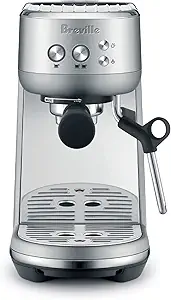 | Best Compact Pick | Model: BES450BSS | Heating system: ThermoJet, 3-second heat-up | Portafilter size: 54 mm | VIEW LATEST PRICE | See Our Full Breakdown |
| Arecovas Espresso Machine with 20-Bar Pressure and Milk Frother |  | Best Value for Visibility | Machine type: Semi-automatic espresso machine | Pressure: 20 bar | Power: 1300 watts | VIEW LATEST PRICE | See Our Full Breakdown |
| De’Longhi Stilosa Compact Manual Espresso Machine with Manual Milk Frother | 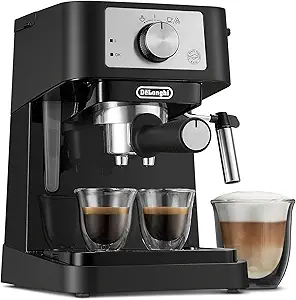 | Best Budget Starter | Type: Manual espresso machine | Milk frother: Manual | Boiler material: Stainless steel | VIEW LATEST PRICE | See Our Full Breakdown |
| Aromaster 1400W Espresso Machine with Milk Frother |  | Best Temperature Control on a Budget | Power: 1400W | Pump pressure: 20 bar | Operation mode: Semi-automatic | VIEW LATEST PRICE | See Our Full Breakdown |
| Ninja Luxe Café Premier 3-in-1 Espresso, Drip Coffee, and Cold Brew Machine |  | Best All-in-One Machine | Drink types: Espresso, drip coffee, cold brew | Grinder: Built-in conical burr grinder, 25 settings | Water reservoir: 70 oz, removable | VIEW LATEST PRICE | See Our Full Breakdown |
| CASABREWS CM5418 Compact Espresso Machine with Milk Frothing Steam Wand |  | Best for Learning Espresso Skills | Model: CM5418 | Type: Semi-automatic espresso machine | Pressure: 20 bar | VIEW LATEST PRICE | See Our Full Breakdown |
| IMUSA 4-Cup Electric Espresso and Cappuccino Maker with Milk Frother, Black |  | Best Ultra-Budget Option | Capacity: 4 cups | Type: Electric steam espresso maker | Milk frother: Included | VIEW LATEST PRICE | See Our Full Breakdown |
| CASABREWS 3700 Essential Stainless Steel Espresso Machine with Steam Wand |  | Best Value Pick | Machine type: Semi-automatic espresso machine | Pump pressure: 20 bar | Power: 1350 watts | VIEW LATEST PRICE | See Our Full Breakdown |
| Breville Barista Express Espresso Machine, Black Sesame |  | Best Overall | Model: BES870BSXL | Grinder: Integrated precision conical burr grinder | Water tank capacity: 67 oz | VIEW LATEST PRICE | See Our Full Breakdown |
| Spacekey Espresso Machine with Grinder and Milk Frother, 30 Grind Settings, 20-Bar Pump |  | Best for Grind Control | Grind settings: 30 | Pump pressure: 20 bar | Motor power: 1350 W | VIEW LATEST PRICE | See Our Full Breakdown |
| Breville Barista Express Espresso Machine, Black Truffle |  | Best Premium Aesthetic | Model: BES870BTR | Grinder: Integrated precision conical burr grinder | Water tank capacity: 67 oz | VIEW LATEST PRICE | See Our Full Breakdown |
| XIXUBX Espresso Machine with Milk Frother, Silver |  | Best for Shot Diagnosis | Pump pressure: 20 bar | Water tank capacity: 42 oz | Steam wand: 360° rotating, detachable | VIEW LATEST PRICE | See Our Full Breakdown |
| espresso machines for home | Water tank capacity | Power | Warranty |
|---|---|---|---|
| Breville Barista Touch Espress | 67 oz | 1680 watts | 2-year limited |
| XIXUBX Espresso Machine with M | — | 1350W | 1 year |
| Breville Barista Express Espre | 67 oz | 1600 W | 1-year limited |
| Breville Breville Bambino Espr | 67 oz | 1560 watts | 1-year limited |
| Arecovas Espresso Machine with | 1.2 L (41 oz) | 1300 watts | — |
| De’Longhi Stilosa Compact Manu | — | — | — |
| Aromaster 1400W Espresso Machi | 37 oz | 1400W | — |
| Ninja Luxe Café Premier 3-in-1 | — | — | — |
| CASABREWS CM5418 Compact Espre | 34 oz | — | — |
| IMUSA 4-Cup Electric Espresso | — | — | — |
| CASABREWS 3700 Essential Stain | 43.9 oz | 1350 watts | — |
| Breville Barista Express Espre | 67 oz | 1600 W | 1 year limited |
| Spacekey Espresso Machine with | 61 oz | — | One-year limited warranty |
| Breville Barista Express Espre | 67 oz | 1600 W | 1-year limited |
| XIXUBX Espresso Machine with M | 42 oz | — | 1 year |
More Details on Our Top Picks
Breville Barista Touch Espresso Machine, Brushed Stainless Steel (BES880BSS)
This model stands out for doing nearly everything without demanding much in return. The integrated conical burr grinder doses straight into the portafilter, the automatic steam wand textures milk to your chosen temperature and consistency, and the touchscreen remembers up to eight custom drinks — so a household with different tastes can each press one button. Compared with the Breville Barista Express, the big difference is hands-off milk texturing: the Express rewards practice, while the Touch removes the learning curve almost entirely. The tradeoffs are real, though. This is the most feature-dense machine in this lineup, which means more components to clean and maintain by hand, and the two-year warranty feels modest for a machine at this level. Still, for the buyer who wants café-quality lattes daily with minimal fuss, this pick makes the most sense.
Pros:- Integrated burr grinder delivers fresh grounds on demand
- Automatic steam wand with adjustable milk temperature and texture
- Touchscreen saves up to eight personalized drink profiles
- ThermoJet heating reaches extraction temperature in 3 seconds
Cons:- Requires regular manual cleaning and maintenance of grinder, wand, and group head
- Only a 2-year limited warranty despite the premium feature set
Best for: Busy households and casual drinkers who want fresh-ground, milk-based espresso drinks at the push of a button without barista skills
Not ideal for: Tinkerers who want full manual control over grinding, dosing, and steaming — the automation here removes most of the hands-on craft
- Grinder:Integrated precision conical burr grinder
- Heating system:ThermoJet, ready in 3 seconds
- Temperature control:Digital PID
- Milk texturing:Automatic steam wand, adjustable temperature and texture
- Custom drink settings:Up to 8 saved profiles
- Water tank capacity:67 oz
- Power:1680 watts
- Warranty:2-year limited
Our verdict“The best choice for anyone who wants repeatable, customized milk drinks with almost no learning curve — provided they accept the upkeep that comes with an all-in-one machine.”
XIXUBX Espresso Machine with Milk Frother, Gray
What sets this model apart from every other budget semi-automatic here — including the similar Arecovas — is one-touch cold brew. Most machines in this price band only pull hot shots, so anyone who lives on iced lattes gets genuine flexibility without a separate brewing device. The 1350W heater is ready in roughly 30 seconds, which is slower than the Breville Bambino’s 3-second ThermoJet but still fast for spontaneous afternoon drinks, and NTC temperature control keeps extraction steady shot to shot. The steam wand and included frothing pitcher cover the milk side, though texturing quality will depend on your technique. The honest tradeoff: there are no pressure gauges or adjustment dials, so dialing in a new bag of beans is guesswork, and the one-year warranty offers little cushion. For iced-drink lovers on a budget, though, the cold brew function carries a lot of weight.
Pros:- One-touch cold brew in addition to hot espresso
- Heats up in about 30 seconds
- Includes adjustable steam wand and frothing pitcher
- Push-button controls keep operation simple
Cons:- No pressure gauge or temperature dial for manual adjustment
- Only a 1-year warranty
- Steam wand performance depends heavily on user technique
Best for: Iced latte and cold brew fans who want a simple, affordable machine that handles both hot espresso and cold drinks
Not ideal for: Hands-on hobbyists who want to monitor and adjust pressure or temperature — the controls here are deliberately simplified
- Type:Semi-automatic espresso machine
- Power:1350W
- Pump pressure:20 bar
- Heating time:About 30 seconds
- Brewing options:Hot espresso and one-touch cold brew
- Temperature control:NTC sensor
- Included accessory:Milk frothing pitcher
- Warranty:1 year
Our verdict“A sensible budget pick for anyone whose espresso habit leans cold, as long as they don’t expect fine-tuned control over extraction.”
Breville Barista Express Espresso Machine, Brushed Stainless Steel
This is the machine for buyers who see espresso as a skill to develop rather than a button to press. The integrated conical burr grinder doses directly into the 54 mm portafilter, and PID temperature control plus low-pressure pre-infusion give you a stable platform while you experiment with grind size and dose. Compared with the Barista Touch, the Express trades automation for control: the manual steam wand won’t texture milk for you, but it will teach you microfoam and latte art in a way the Touch never can. Against compact machines like the Bambino, it adds the grinder and a larger working area, making it better suited to a dedicated coffee corner. The tradeoffs are straightforward — expect a learning curve, with sour or bitter shots while you dial in, and the manual milk workflow adds a few minutes to every drink. For aspiring home baristas, that friction is the appeal.
Pros:- Integrated conical burr grinder doses fresh grounds directly into the portafilter
- PID temperature control and low-pressure pre-infusion support balanced extraction
- Manual steam wand enables real microfoam and latte art
- Complete accessory kit including tamper, jug, and cleaning tools
Cons:- Manual operation requires practice before shots consistently taste good
- Milk texturing is fully manual, adding time and skill requirements
- Only a 1-year limited warranty
Best for: Aspiring home baristas who want to learn grinding, dosing, and manual milk texturing on a forgiving, well-supported platform
Not ideal for: Anyone who wants push-button convenience before their morning coffee — the manual workflow demands time and repetition
- Model:BES870XL
- Grinder:Integrated conical burr grinder
- Bean hopper capacity:1/2 lb
- Water tank capacity:67 oz
- Portafilter size:54 mm
- Shot options:Single or double
- Power:1600 W
- Warranty:1-year limited
Our verdict“The strongest choice for buyers who want to grow into the hobby on one machine, grinder included, and accept early frustration as tuition.”
Breville Breville Bambino Espresso Machine, Brushed Stainless Steel (BES450BSS)
For small kitchens, this is the machine I’d point to first. The ThermoJet heater reaches extraction temperature in 3 seconds, matching the far larger Barista Touch, and the footprint is a fraction of the Barista Express‘s — no bean hopper, no grinder, just a clean little brewing block. It keeps the essentials that matter: PID-adjacent temperature stability, low-pressure pre-infusion, and a proper 54 mm portafilter that takes a full 19-gram dose, which is more than most compact rivals offer. The tradeoff is that you’ll need a separate grinder, since the Bambino only accepts pre-ground coffee — and grinder quality largely determines espresso quality, so budget for it. Milk texturing on the manual steam wand also takes practice, similar to the Express but with less room for error. If counter space is your limiting factor and you already own (or will buy) a decent grinder, this pick makes the most sense.
Pros:- Heats to extraction temperature in 3 seconds
- Compact footprint suits small kitchens and tight counters
- Precise temperature control with low-pressure pre-infusion
- Full-size 54 mm portafilter accepts a 19-gram dose
Cons:- No integrated grinder, so espresso quality depends on a separate purchase
- Manual espresso and milk preparation involve a learning curve
- Only a 1-year limited warranty
Best for: Apartment dwellers and minimal-counter-space households who already have a burr grinder or plan to buy one
Not ideal for: Buyers wanting an all-in-one setup — with no integrated grinder, this machine depends entirely on an external one for shot quality
- Model:BES450BSS
- Heating system:ThermoJet, 3-second heat-up
- Portafilter size:54 mm
- Portafilter dose:19 grams
- Settings:1 cup, 2 cups, hot water, steam
- Water tank capacity:67 oz
- Power:1560 watts
- Warranty:1-year limited
Our verdict“The best small-footprint espresso machine for people who value speed and counter space and are willing to handle grinding separately.”
Arecovas Espresso Machine with 20-Bar Pressure and Milk Frother
Where the XIXUBX keeps you guessing, this machine shows its work: the LED display with a real-time pressure gauge lets you watch each shot develop, which is genuinely useful feedback when you’re learning how grind and tamp affect extraction. Add PID temperature control with dual NTC sensors and dedicated single-shot, double-shot, and Americano settings — the Americano function pushes up to 350 ml, covering the longer-coffee crowd most espresso-focused machines ignore. At 5.2 inches wide, it’s even slimmer than the Bambino, though it demands ground coffee, so a separate grinder is mandatory. Compared with the Bambino, you gain the pressure display and Americano mode but give up the 3-second heat-up and Breville’s accessory depth. The touchscreen interface is convenient, but semi-automatic operation still means manual prep every cup. For a buyer who wants visible shot feedback at a budget price, this model earns its slot.
Pros:- Real-time pressure gauge on the LED display provides useful shot feedback
- PID temperature control with dual NTC sensors
- Single-shot, double-shot, and up-to-350 ml Americano settings
- Slim 5.2-inch width fits very tight counters
Cons:- Requires ground coffee — no integrated grinder
- Semi-automatic operation involves manual preparation for every drink
- Build quality and steam power lag behind premium rivals like the Breville lineup
Best for: Budget-conscious beginners who want real-time pressure feedback and Americano capability without a large machine or investment
Not ideal for: Anyone expecting whole-bean convenience — with no grinder on board, this machine requires a separate one and pre-ground workflow
- Machine type:Semi-automatic espresso machine
- Pressure:20 bar
- Power:1300 watts
- Water tank capacity:1.2 L (41 oz)
- Interface:Touchscreen with LED display and pressure gauge
- Coffee input:7–9 g single shot; 13–15 g double shot
- Americano output:Up to 350 ml
- Dimensions:12 × 5.2 × 11.9 in (D × W × H)
Our verdict“A smart budget choice for beginners who want to see and learn from their shots, provided they already own or will buy a grinder.”
De’Longhi Stilosa Compact Manual Espresso Machine with Manual Milk Frother
This is the least expensive path into genuine manual espresso, and that’s exactly why it earns a spot. Compared with the CASABREWS CM5418, the Stilosa trades the pressure gauge and stainless trim for a lower barrier to entry — a smart swap if you’re not yet sure espresso-making will stick. The manual milk frother covers cappuccinos and lattes, and the two-level cup holder means you can pull a shot into a demitasse or a taller mug without spillage chaos.
The tradeoff is honesty about ceilings: there’s no PID stabilization like the Aromaster 1400W offers, so shot consistency depends heavily on your technique. Beginners get a real learning platform here, not a shortcut.
Pros:- Compact footprint fits small kitchen counters
- Manual frother handles cappuccinos, lattes, and flat whites
- Single- and double-shot filters included
- Two-level cup holder fits demitasse cups and taller mugs
Cons:- Manual operation requires hands-on prep for every drink
- No automatic milk frothing or temperature control
Best for: First-time espresso buyers who want to learn manual technique without a big financial commitment
Not ideal for: Buyers who want consistent, hands-off shots — the manual workflow demands practice every single morning
- Type:Manual espresso machine
- Milk frother:Manual
- Boiler material:Stainless steel
- Included accessories:Portafilter with single and double shot filters
- Cup holder:Two-level, fits different cup sizes
- Design:Compact and easy to clean
Our verdict“A low-risk entry point for anyone curious about learning real espresso skills on a budget.”
Aromaster 1400W Espresso Machine with Milk Frother
What separates this model from the crowd of budget semi-automatics is PID temperature control — the same technology that justifies the premium on Breville machines like the Barista Express, here at a fraction of the complexity and footprint. PID means the water stays at a stable brewing temperature, which translates to fewer sour or bitter shots when your grind and dose are dialed in.
The swiveling steam wand and pre-infusion round out a feature set that outspecs the De’Longhi Stilosa in every technical respect. The catch: the 37 oz tank and compact body mean more frequent refills than a machine like the Ninja Luxe Café, and you’re still doing the grinding, dosing, and tamping yourself.
Pros:- PID temperature control stabilizes brewing temperature for better shots
- Fast 1400W heat-up reduces morning wait time
- 360° swivel steam wand for flexible frothing
- One-touch descaling and removable tank simplify maintenance
Cons:- Semi-automatic workflow still requires hands-on preparation
- Compact design limits tank capacity and workspace
Best for: Budget-conscious buyers who understand that stable temperature matters more than gimmicks for shot quality
Not ideal for: Households brewing for several people daily — the compact tank and workspace limit throughput
- Power:1400W
- Pump pressure:20 bar
- Operation mode:Semi-automatic
- Water tank capacity:37 oz
- Dimensions:13 x 7 x 14 in
- Special features:PID control, pre-infusion, fast heat-up, one-touch descaling, auto shut-off
- Material:Stainless steel
Our verdict“The smartest pick if temperature stability is your priority but a Breville budget isn’t in the cards.”
Ninja Luxe Café Premier 3-in-1 Espresso, Drip Coffee, and Cold Brew Machine
Unlike every other machine in this roundup, the Luxe Café isn’t trying to be only an espresso machine — it replaces three appliances. Drip coffee for the household, cold brew for summer, and real espresso with a built-in 25-setting conical burr grinder, all in one footprint. Compared with the Breville Barista Express, its closest rival, the Ninja’s guided dosing, weight-based measurement, and assisted tamper lower the skill floor dramatically, while hands-free milk frothing with presets removes the steaming learning curve entirely.
That breadth is also the honest drawback: mastering the settings takes patience, and the footprint demands real counter space. If espresso only is your goal, a dedicated machine does it with less fuss.
Pros:- Replaces espresso machine, drip brewer, and cold brew maker in one unit
- Built-in burr grinder with 25 settings and weight-based dosing
- Guided tamping and hands-free frothing flatten the learning curve
- 70 oz removable reservoir and built-in accessory storage
Cons:- Extensive settings and functions take time to learn
- Large footprint consumes significant countertop space
Best for: Households split between espresso drinkers and drip-coffee drinkers who want one machine instead of three
Not ideal for: Small kitchens or pure espresso purists — the multi-function footprint is overkill for a single use case
- Drink types:Espresso, drip coffee, cold brew
- Grinder:Built-in conical burr grinder, 25 settings
- Water reservoir:70 oz, removable
- Frothing:Dual froth system, 4 presets plus manual mode
- Serving sizes:6–18 oz across brew styles
- Included accessories:Portafilter, milk jug, baskets, assisted tamper, cleaning kit, hard water test kit
Our verdict“The obvious choice for a multi-drinker household that wants café versatility without owning three machines.”
CASABREWS CM5418 Compact Espresso Machine with Milk Frothing Steam Wand
The CM5418’s standout feature is one most budget machines skip entirely: a built-in pressure gauge. Watching pressure in real time teaches you what a properly pulled shot looks like, which the De’Longhi Stilosa and IMUSA simply can’t show you. That feedback loop — grind too coarse and the needle drops, tamp too light and it never climbs — is why this model suits someone who wants to actually improve rather than just caffeinate.
Its brushed stainless finish looks pricier than the plastic-bodied IMUSA, and the 34 oz tank keeps it office-friendly. The workflow quirk: after steaming milk, you must let it cool before brewing again, which slows back-to-back lattes.
Pros:- Pressure gauge provides real-time feedback for dialing in shots
- Steam wand froths milk suitable for latte art
- Brushed stainless steel finish suits kitchens and offices
- Compact footprint with easy-refill removable tank
Cons:- Must cool down after frothing before brewing again
- Pressure requires adjusting grind, dose, or tamp to get right
Best for: Aspiring home baristas who want visual feedback to diagnose and improve their shots
Not ideal for: Anyone making multiple milk drinks in sequence — the cool-down period between frothing and brewing slows the routine
- Model:CM5418
- Type:Semi-automatic espresso machine
- Pressure:20 bar
- Wattage:1350 W
- Water tank capacity:34 oz
- Milk frother:Steam wand
- Material:Brushed stainless steel
- Included components:Portafilter, one- and two-cup filters, tamper with spoon
Our verdict“The best budget-class teacher, thanks to a pressure gauge that turns every shot into a lesson.”
IMUSA 4-Cup Electric Espresso and Cappuccino Maker with Milk Frother, Black
Positioned below even the De’Longhi Stilosa, the IMUSA plays a different game: it’s a steam-pressure espresso maker rather than a true pump machine, brewing up to four cups at once from a permanent filter basket. For someone who drinks moka-style coffee and the occasional milky cappuccino, that’s genuinely useful — no pods, no paper filters, minimal fuss, and a removable drip tray that makes cleanup quick.
Be clear-eyed about what it isn’t: it won’t produce the crema-rich, pressure-controlled shots of the CASABREWS CM5418 or the temperature stability of the Aromaster. The plastic exterior also feels less durable. This is coffee convenience, not barista craft.
Pros:- Brews up to four servings in one pass
- Milk frother covers basic cappuccinos and lattes
- Permanent filter basket eliminates ongoing paper filter costs
- Compact footprint with removable drip tray for easy cleanup
Cons:- Steam-based brewing can’t produce true pump-espresso crema
- Plastic exterior is less durable than stainless competitors
Best for: Casual drinkers on the tightest budget who want moka-style coffee and simple cappuccinos
Not ideal for: Espresso enthusiasts chasing authentic crema and shot quality — steam pressure can’t match a 20-bar pump
- Capacity:4 cups
- Type:Electric steam espresso maker
- Milk frother:Included
- Exterior:Heat-resistant plastic
- Filter:Permanent filter basket
- Drip tray:Removable
- Voltage:120 V
Our verdict“A fair trade at the bottom of the price range if convenience matters more than authentic espresso quality.”
CASABREWS 3700 Essential Stainless Steel Espresso Machine with Steam Wand
For buyers who want real espresso without the grinder premium, this option stands out as the most sensible entry point in the lineup. Unlike the Breville Barista Express, it skips the built-in burr grinder entirely, which is where most of the cost difference comes from — you’ll need a separate grinder, but pairing it with even a modest one still often undercuts an all-in-one machine. The 43.9 oz removable tank is generous for the footprint, and the compact body suits tight counters where the Breville’s bean hopper would crowd the space. The tradeoff is precision: with no pressure gauge and no PID stabilization, dialing in shots relies more on taste and repetition than on data, something the XIXUBX with its visible gauge handles more intuitively. Plan on a first-use flush cycle before your first real shot.
Pros:- Steam wand produces textureable microfoam for lattes and basic latte art
- Compact footprint fits small home or office counters
- Removable 43.9 oz tank and drip tray simplify refills and cleanup
- Includes both one-cup and two-cup filter baskets
Cons:- No pressure gauge, making shot diagnosis harder for newcomers
- Requires a rinse cycle before first brew
- No integrated grinder, so total system cost rises once you add one
Best for: Budget-minded beginners who already own a grinder or are willing to buy one separately
Not ideal for: Buyers who want an all-in-one workflow — the lack of a grinder means extra gear and counter space
- Machine type:Semi-automatic espresso machine
- Pump pressure:20 bar
- Power:1350 watts
- Water tank capacity:43.9 oz
- Coffee input:Ground coffee
- Milk frother:Steam wand
- Included filters:One-cup and two-cup brewing filters
Our verdict“The smartest low-cost path into espresso for anyone who already has a decent grinder — just don’t expect guided precision.”
Breville Barista Express Espresso Machine, Black Sesame
This is the machine I’d point most serious home baristas toward, and the reason is workflow: beans go in the hopper, and freshly ground coffee lands directly in the portafilter with adjustable dose control. Compared with the CASABREWS 3700, you’re paying for a built-in conical burr grinder plus digital PID temperature control, and that combination is what separates consistently balanced shots from frustrating guesswork. Low-pressure pre-infusion gently saturates the puck before full pressure hits, reducing channeling and sour extractions. The generous 67 oz tank and half-pound hopper mean fewer refills during daily use. The honest tradeoff: this is a manual machine through and through. Grinding, tamping, extracting, and texturing milk are all hands-on, and microfoam takes real practice — buyers wanting push-button convenience should look at the Breville Barista Touch instead.
Pros:- Integrated conical burr grinder grinds directly into the portafilter for maximum freshness
- PID temperature control and low-pressure pre-infusion support balanced extraction
- Steam wand enables manual microfoam texturing and latte art
- Includes portafilter, filter baskets, tamper, milk jug, and cleaning accessories
Cons:- Fully manual operation requires hands-on preparation for every drink
- Milk texturing has a real learning curve before latte-art-quality foam
Best for: Coffee enthusiasts who want fresh-ground, café-quality espresso at home and enjoy the hands-on process
Not ideal for: Busy households wanting one-touch drinks — the fully manual workflow demands time and skill-building
- Model:BES870BSXL
- Grinder:Integrated precision conical burr grinder
- Water tank capacity:67 oz
- Bean hopper capacity:1/2 lb
- Power:1600 W
- Temperature control:Digital PID
- Shot settings:Single or double
- Warranty:1 year limited
Our verdict“The complete package for anyone committed to learning espresso properly — grinder, temperature control, and accessories in one cohesive machine.”
Spacekey Espresso Machine with Grinder and Milk Frother, 30 Grind Settings, 20-Bar Pump
Where the Barista Express offers a set grind range, this model pushes adjustability further with 30 grind settings, which matters most when you’re chasing that narrow window between sour and bitter shots across different roast levels. It also adds something no Breville in this lineup does: a dedicated cold brew function, giving it genuine year-round flexibility for iced-drink drinkers. PID temperature control brings extraction stability closer to the Breville standard, and the 61 oz removable tank sits between the CASABREWS and Breville capacities. The compromise is ecosystem fit — the 51 mm portafilter is a nonstandard size, so third-party precision baskets and tampers are far harder to find than the 54 mm accessories the Breville accepts. Documentation on cleaning routines is also thin compared with Breville’s well-documented maintenance guides.
Pros:- 30 adjustable grind settings offer exceptional dial-in precision
- Built-in conical burr grinder keeps the workflow all-in-one
- Unique cold brew function covers iced coffee cravings
- Large 61 oz removable tank handles multiple servings
Cons:- Nonstandard 51 mm portafilter restricts third-party accessory options
- Sparse documentation on cleaning and maintenance procedures
Best for: Tinkerers who love fine-tuning grind size and want cold brew capability in the same machine
Not ideal for: Buyers planning to upgrade accessories later — the 51 mm portafilter sharply limits compatible baskets and tools
- Grind settings:30
- Pump pressure:20 bar
- Motor power:1350 W
- Water tank capacity:61 oz
- Grinder:Built-in conical burr grinder
- Temperature control:PID
- Dimensions:11.6 x 9 x 14 in
- Warranty:One-year limited warranty
Our verdict“A compelling Breville alternative for grind obsessives and cold brew fans, provided you can live outside the standard accessory ecosystem.”
Breville Barista Express Espresso Machine, Black Truffle
Functionally, this is the same Barista Express platform as the Black Sesame model — integrated conical burr grinder, PID control, low-pressure pre-infusion, 67 oz tank — so the choice between them comes down to kitchen design. The Black Truffle finish reads warmer and more furniture-like than the standard stainless or sesame options, making it the pick when the machine will sit prominently on an open counter. It still outclasses the Spacekey on ecosystem strength: the 54 mm portafilter opens the door to a wide market of precision baskets, tampers, and accessories for upgrading your technique over time. The half-pound sealed bean hopper keeps grounds fresh between sessions. Drawbacks are inherited rather than hidden — every drink is a hands-on project, and the one-year warranty feels short for a machine at this build level, especially next to brands stretching coverage longer.
Pros:- Integrated burr grinder delivers fresh grounds directly into the portafilter
- PID temperature control supports precise, repeatable extraction
- 54 mm portafilter accepts a wide range of upgrade accessories
- Distinctive Black Truffle finish elevates counter aesthetics
Cons:- Fully manual workflow for grinding, extraction, and milk texturing
- Limited 1-year warranty at this price tier
Best for: Design-conscious buyers who want the proven Barista Express performance in a distinctive, warm finish
Not ideal for: Anyone hoping for set-and-forget mornings — grinding, tamping, and steaming are manual every single time
- Model:BES870BTR
- Grinder:Integrated precision conical burr grinder
- Water tank capacity:67 oz
- Bean hopper capacity:1/2 lb
- Power:1600 W
- Portafilter size:54 mm
- Shot settings:Single or double
- Warranty:1-year limited
Our verdict“The Barista Express for people who care how the machine looks as much as how it pulls — identical performance, standout finish.”
XIXUBX Espresso Machine with Milk Frother, Silver
What separates this machine from the CASABREWS 3700 is the visible pressure gauge — a small dial that turns espresso troubleshooting from guesswork into a readable signal. When a shot runs fast or the crema falls flat, seeing actual pressure tells a beginner whether to grind finer or tamp harder, which is exactly the feedback the CASABREWS withholds. Fast heating means less waiting between powering on and pulling a shot, and the 360° rotating steam wand offers better angles for steaming pitchers of any size than fixed wands allow. The bundled stainless frothing pitcher is a genuinely useful inclusion most budget machines skip. It remains a ground-coffee-only machine with no grinder or PID, so shot quality still depends on your separate grinder — and frothing is fully manual, with a modest 42 oz tank compared to the Spacekey’s 61 oz.
Pros:- Visible pressure gauge makes shot problems easier to diagnose
- Fast heating shortens the wait before brewing and steaming
- 360° rotating, detachable steam wand angles easily for microfoam
- Includes a stainless steel milk frothing pitcher
Cons:- No integrated grinder, requiring a separate purchase for fresh grounds
- Manual milk frothing demands practice
- 42 oz tank is on the smaller side for multi-drink sessions
Best for: Visual learners who want pressure feedback while developing their espresso technique
Not ideal for: Buyers wanting an all-in-one setup — there’s no grinder, and daily output is limited by the 42 oz tank
- Pump pressure:20 bar
- Water tank capacity:42 oz
- Steam wand:360° rotating, detachable
- Body material:Stainless steel
- Included accessory:Stainless steel milk frothing pitcher
- Warranty:1 year
Our verdict“A smart budget pick for beginners who learn best by seeing what their machine is doing rather than guessing at it.”
How We Picked
I evaluated every machine against four buyer-facing criteria. Espresso quality potential came first: whether the machine can hold stable brewing temperature, whether it accepts a proper portafilter and fresh grounds, and whether grind control exists either onboard or through compatibility with a separate grinder. Milk steaming capability was second, because most home drinkers want lattes and cappuccinos — a real steam wand with acceptable pressure outranks automatic frothers for anyone who cares about microfoam, while auto-frothers suit convenience-first buyers.
From there I weighed usability and learning curve — how much skill the machine demands on day one and how forgiving it is of beginner mistakes — and value over time, meaning build quality, repairability, and whether the machine will still satisfy you in two years. Machines are ranked by how well they solve the home espresso problem specifically: counter space, daily routine, and realistic skill levels. That’s why the Barista Express outranks cheaper frother bundles, and why the De’Longhi Stilosa ranks above machines with more features but worse temperature stability.
Factors to Consider When Choosing Espresso Machines For Home
The fifteen machines above are ranked, but choosing between them depends on your kitchen, your habits, and how much ritual you actually want each morning. These are the factors that separate a purchase you’ll love from one that collects dust.Built-In Grinder or Separate Grinder?
This is the single most consequential decision, and most first-time buyers get it wrong. Espresso demands a grind quality that cheap blade grinders and most entry-level burr grinders simply cannot produce, which is why machines like the Barista Express and Spacekey bundle a grinder onboard. The catch is that integrated grinders are usually decent rather than excellent — serious enthusiasts eventually outgrow them. If you already own a quality burr grinder, a grinder-less machine like the Breville Bambino is the smarter buy, and you’ll get better shots than any all-in-one at the same total spend. If you don’t own a grinder and never want to think about one, an all-in-one wins on simplicity. What you should never do is pair a $100 espresso machine with pre-ground supermarket coffee and expect café results — the grinder, not the machine, is usually the bottleneck.
Steam Wand Power and Milk Drink Habits
Be honest about how many milk drinks you make. A manual steam wand, like those on the Stilosa, CASABREWS, and Breville machines, produces textured microfoam suitable for latte art, but it takes a week or two of practice and adds two minutes to your routine. An automatic frother, like the Barista Touch’s, hands you consistent cappuccino foam instantly but never produces the silky texture of properly steamed milk. Single-boiler machines — which is nearly everything under the premium tier — force you to brew shots first, then wait for the steam function to heat up, so back-to-back drinks for guests get slow. If your household makes four or more milk drinks a day, that workflow limitation matters more than any spec sheet suggests. Households that mostly drink straight espresso can ignore steam performance entirely and save money here.
Counter Space, Water Tank, and Daily Reality
Measure your counter before buying, not after. Compact machines like the CASABREWS CM5418 and De’Longhi Stilosa fit under cabinets and tuck into apartments, but their small water tanks mean refilling daily and their drip trays need emptying after just a few drinks. Full-size Breville models need serious real estate — depth is the dimension people forget, especially with the portafilter locked in and a cup underneath. Also check the cup clearance: some compact machines can’t fit a standard mug under the spout, forcing you into espresso cups only. Finally, think about whether you’ll leave it plugged in; machines with long heat-up times discourage spontaneous use, while thermojet-style heaters like the Bambino’s are ready in seconds and change how often you actually use the machine.
Manual Skill vs. One-Touch Convenience
There is a real pleasure gap between dialing in a shot yourself and pressing a button, and only you know which side of it you sit on. Manual and semi-automatic machines — everything from the Stilosa to the Barista Express — reward practice with better-tasting, fully customized shots, but they punish inconsistency: a slightly wrong grind or tamp produces a sour or bitter shot, and beginners often blame the machine. One-touch machines like the Barista Touch deliver the same drink every time at the press of a button, which is genuinely valuable for households with multiple users of varying interest levels. A common mistake is buying a fully manual machine for a partner who just wants coffee — the machine becomes yours alone, and resentment follows. Match the machine to the least enthusiastic daily user in your house, not the most.
Build Quality, Descaling, and Longevity
Espresso machines live hard lives: daily heating cycles, pressurized water, and milk residue. Stainless-steel-bodied machines like the Breville and CASABREWS 3700 hold up visually and structurally better than mostly-plastic units, though internal components matter more than exterior finish — a metal shell over a thin boiler is still a thin boiler. Every machine here needs regular descaling, and hard water will kill a budget machine within a couple of years, so factor in filters or distilled-water blending regardless of what you buy. Check whether the steam wand tip and portafilter baskets are standard sizes, because replacement parts and upgrade baskets are cheap for common fittings and nonexistent for proprietary ones. Breville’s ecosystem of parts, guides, and third-party accessories is a quiet advantage that budget brands can’t match. Cheaper machines aren’t a waste — but treat them as two-to-four-year investments, not decade purchases.
Frequently Asked Questions
Is the Breville Barista Express worth it over the cheaper Spacekey or XIXUBX all-in-ones?
In most cases, yes, and the difference comes down to grind quality and temperature stability rather than feature counts. The budget all-in-ones advertise 20-bar pumps and similar-looking feature lists, but their integrated grinders produce less consistent particle sizes, which shows up as shots that swing between sour and bitter no matter how carefully you dial in. The Barista Express’s grinder is adjustable across a wide range with a dose timer, and its thermocoil holds brewing temperature steadier shot to shot. That said, if you drink mostly milk-heavy drinks where espresso nuances get buried under milk and syrup, the cheaper machines are a defensible choice. The Breville earns its premium for people who drink straight espresso or lightly milked drinks and can taste the difference.
Can a $100 machine like the De’Longhi Stilosa actually make real espresso?
Yes, with two honest caveats. The Stilosa has a genuine 15-bar pump, a real portafilter, and a manual steam wand — the core anatomy of espresso — so with freshly ground coffee and some practice it pulls legitimate shots that beat anything from a pod machine. The first caveat is that it ships with a pressurized basket designed for pre-ground coffee, which produces crema through artificial means; buying a standard basket and fresh beans is the real upgrade path. The second is temperature stability: shot quality varies more from pull to pull than on pricier machines, and the steam wand is slow. It’s the right choice for testing whether the espresso hobby sticks before committing hundreds more, and it’s a better first machine than a mid-tier frother bundle that pretends to be more than it is.
Should I buy the Bambino now and a grinder later, or the Barista Express all at once?
Buy the Barista Express if you want everything working on day one and accept a good-but-not-great grinder; buy the Bambino if you’re willing to spend grinder money separately, because that path produces better espresso overall. A dedicated grinder in the $150–250 range outperforms any integrated grinder in this lineup on consistency, and the Bambino’s fast heat-up and excellent temperature control make the most of quality grounds. The mistake to avoid is buying the Bambino and then feeding it pre-ground or blade-ground coffee — it will make mediocre shots look like the machine’s fault. Also consider counterspace: the Bambino-plus-grinder combo occupies roughly the same footprint as the Barista Express but with a cable mess. If total simplicity matters more than the last 10% of shot quality, the all-in-one is the correct call.
Do I need a machine with a 20-bar pump for better espresso?
No — this is the most misleading spec in the category. Proper espresso extracts at roughly 9 bars of pressure; a 20-bar rating describes the pump’s maximum, not what reaches your coffee, and every machine regulates down regardless. What actually separates good shots from bad ones is grind consistency, dose accuracy, and water temperature stability, which is why the 15-bar Stilosa and the Breville machines outperform many 20-bar budget models in the cup. Treat bar-count marketing as a signal of who the brand is targeting rather than a performance figure. When comparing machines, look instead for details like boiler or thermocoil type, portafilter size (58mm is the enthusiast standard), and whether the machine supports non-pressurized baskets.
What’s the real difference between the three Barista Express colorways listed?
Functionally, nothing — the Brushed Stainless Steel, Black Sesame, and Black Truffle versions are the same BES870 machine in different finishes, so choose purely on looks and whichever listing offers the better terms at the time. The same logic applies to the gray and silver XIXUBX units. This matters because duplicate listings are common in this category and they inflate comparison shopping: a ‘new’ listing can look like a different machine while being identical under the skin. Before deciding, confirm the model number matches what you researched. The one legitimate variation to watch for is between Breville model families — the Barista Express, Barista Touch, and Bambino are genuinely different machines with different feature sets, and mixing up those names is far more costly than mixing up colors.
Conclusion
After comparing all fifteen machines, the decision really comes down to who’s standing at the counter. For the best overall home espresso machine, the Breville Barista Express is the pick — it bundles grinding, brewing, and steaming well enough to satisfy beginners and intermediate home baristas for years. For best value, the De’Longhi Stilosa proves you can learn real espresso technique for under $150, as long as you budget for fresh beans and eventually a better grinder. For best premium, the Breville Barista Touch buys back your mornings with one-touch milk drinks and automatic grinding — the right luxury for busy households that want quality without the ritual.
For beginners specifically, the CASABREWS CM5418 or Bambino (if a grinder is already in the picture) offers the gentlest entry point. For small kitchens and tight budgets, the compact CASABREWS, IMUSA, and Arecovas machines handle the basics without demanding counter space. And for households split between espresso drinkers and drip-coffee loyalists, the Ninja Luxe Café’s 3-in-1 flexibility ends the countertop argument entirely. Whatever you choose, remember that fresh beans and a consistent grind will improve your cup more than any machine upgrade — buy the machine that fits your routine, then spend the difference on better coffee.
Fall Picks
fall essentials
As an affiliate, we earn on qualifying purchases.