
TL;DR

Get kitchen gear delivered free — and shop member deals
- Fast, free delivery on millions of items
- Access to Prime Big Deal Days deals on October 6–7
- Prime Video, Amazon Music and more included
A Good Housekeeping report recommends combining a cheese that melts smoothly with one that adds sharper flavor. Experts cited in the article offer several pairings, but no single combination is presented as the definitive best choice.
A Good Housekeeping report recommends pairing an easy-melting cheese with a sharper, more distinctive variety to make grilled cheese sandwiches that are both creamy and flavorful. The advice, based on comments from food professionals and cheese specialists, offers several combinations rather than naming one universally best cheese.
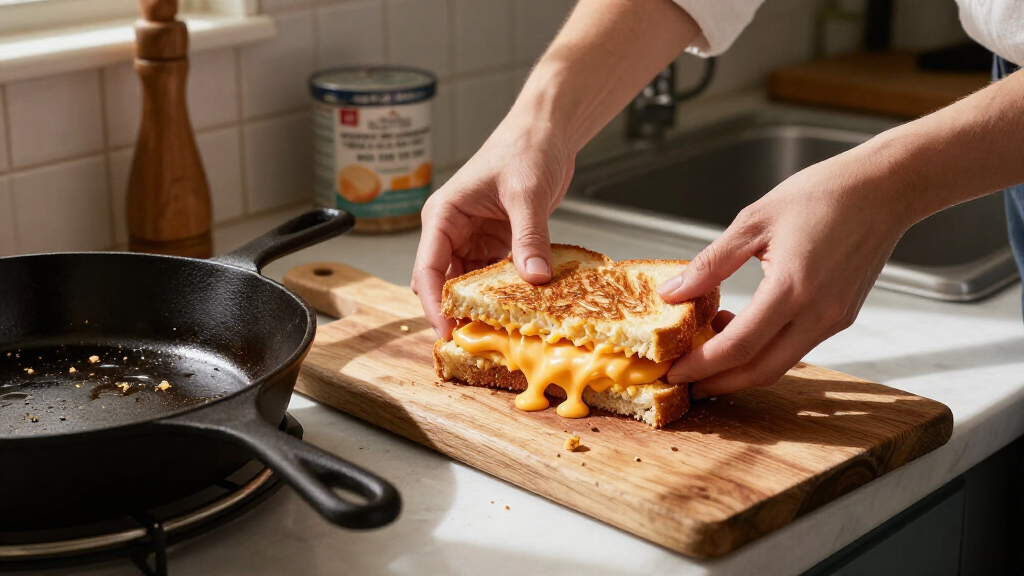
The report identifies meltability as a central consideration: the cheese should become creamy and cohesive when heated instead of remaining stiff, turning greasy, or becoming rubbery. It lists American, mozzarella, Monterey Jack, fontina, Gruyère and young Cheddar as options that can melt smoothly. In general, younger, fresher cheeses tend to melt more readily than aged, drier ones, according to the experts quoted.
Flavor can be a separate challenge. Some cheeses that melt easily are mild, so the report’s contributors suggest adding a more assertive cheese to keep the sandwich from tasting flat. Good Housekeeping Food Producer Tina Martinez recommends thinking about the balance between a mild base and a sharper or more flavorful addition, such as sharp Cheddar, Swiss or pepper Jack.
The suggested blends include mozzarella with strong Alpine cheese and sharp Cheddar; blue cheese with goat cheese and grated Parmesan; Stilton with mozzarella; smoked mozzarella with mild Cheddar; and raclette with Cheddar. The combinations are recommendations from individual contributors, not the result of a reported comparative test.
Balancing Melt and Flavor
The guidance addresses a practical cooking problem: a cheese with a strong flavor may not melt as smoothly as a younger, milder variety, while an easy-melting cheese can taste restrained on its own. Combining types lets cooks adjust both texture and flavor in one sandwich.
The advice also explains why ingredient choice affects a simple dish. Chef Eric Greenspan told the magazine that cheese breaking or releasing oil can undermine the sandwich, and that the preparation leaves little room to hide flaws. For home cooks, the report offers a way to choose ingredients based on how they behave under heat instead of relying on a single supposedly perfect cheese.
How Experts Choose Cheese
The report draws on comments from food producer Tina Martinez, chef and cookbook author Eric Greenspan, Murray’s Cheese Assistant Manager of Events & Education Isabelle Brosen, and cheese connoisseur Matthew Carver, proprietor of Pick & Cheese. Their comments focus on moisture, how the curds respond to heat, and the intensity of a cheese’s flavor.
Martinez said one cheese can supply creaminess and meltability while another contributes sharpness or a distinctive taste. Brosen described high moisture or curd treatment as factors that can help a cheese melt. Carver called mozzarella a strong melter but said he would often pair it with another cheese for more flavor. These are expert assessments quoted in the article; the supplied material does not describe a formal ranking or test methodology.
“Mozzarella is the best melter for grilled cheese. It’s not got a lot going on in flavor, though, so I’d normally add it with other cheeses to bring the funk.”
— Matthew Carver, cheese connoisseur and Pick & Cheese proprietor
No Single Winning Blend
The report does not establish one combination as the best for every cook, nor does the supplied source describe a controlled taste test comparing the suggested blends. Cheese results can depend on the varieties, their moisture and age, and how the sandwich is cooked. The published material also does not specify precise quantities or cooking temperatures for each pairing.
Its headline frames the subject as identifying a cheese to use, but the article’s actual advice is broader: select for both melting behavior and flavor, and experiment with combinations. The source does not claim that any one pairing guarantees a perfect result.
Try a Balanced Pairing
The report offers no scheduled follow-up or announced test. For readers applying its advice, the next step is to choose a mild cheese that melts well and pair it with a sharper or more distinctive cheese, then adjust the blend to taste. The listed combinations provide starting points, while the report leaves the final choice to individual preference.
Key Questions
What is the report’s main recommendation?
Pair a cheese that melts smoothly with a sharper or more distinctive cheese. Good Housekeeping’s Tina Martinez says this can balance creaminess with flavor.
Which cheeses does the report list as good melters?
It names American, mozzarella, Monterey Jack, fontina, Gruyère and young Cheddar. The report says younger, fresher cheeses generally melt more smoothly than aged, drier varieties.
Does the article name one best combination?
No. It offers several expert-recommended blends and says cooks should find the balance of moisture, meltability and flavor that suits them.
What are some combinations suggested by the experts?
Suggestions include mozzarella with strong Alpine cheese and sharp Cheddar, Stilton with mozzarella, and raclette with Cheddar. The report also lists blue cheese with goat cheese and grated Parmesan.
Source: rss
Fall Picks
fall essentials
As an affiliate, we earn on qualifying purchases.