To keep vegetables crisp all week, pick fresh, firm produce free of blemishes, and cut them into uniform pieces with sharp knives. Rinse thoroughly and dry completely before storing in airtight containers, ideally in the crisper drawer set at the right humidity. Maintain a consistent fridge temperature around 35-40°F, avoid overcrowding, and use moisture traps if needed. For more tips on keeping them fresh longer, continue exploring how proper prep and storage make a difference.
Key Takeaways
- Select fresh, firm vegetables free of blemishes and wilted parts for optimal crispness.
- Use sharp knives to cut vegetables uniformly and gently rinse, then thoroughly dry before storage.
- Store vegetables in airtight containers or breathable bags, keeping them in the fridge’s coldest, most humid areas.
- Maintain fridge temperature between 35-40°F and avoid overcrowding to ensure proper airflow and humidity.
- Revive limp vegetables by soaking in cold water for 15-30 minutes, then dry thoroughly to restore crispness.
Why Do Vegetables Lose Crispness and Which Stay Fresh Longer?
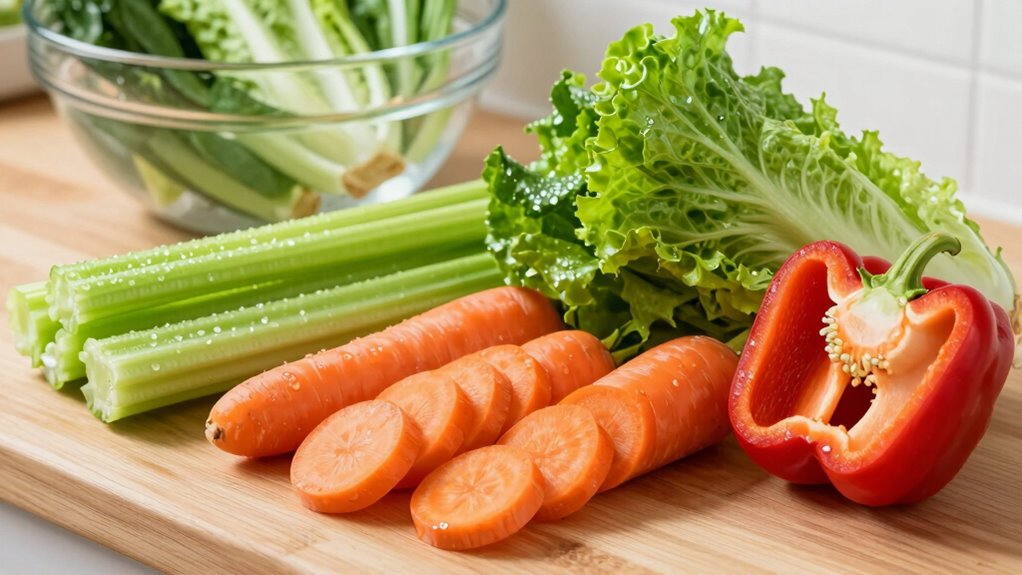
Vegetables lose their crispness mainly because moisture escapes or is unevenly distributed, causing cell walls to weaken and become limp. Proper cutting techniques can help maintain freshness; for example, slicing vegetables evenly reduces stress on cell structures, slowing moisture loss. Using the right storage containers is also essential; airtight containers or resealable bags trap humidity and prevent dehydration. When you cut vegetables with jagged or uneven edges, you increase the surface area exposed to air, accelerating wilting. Conversely, smooth, clean cuts help retain moisture longer. Keep vegetables in containers that maintain consistent humidity levels, avoiding overcrowding. By combining gentle cutting techniques with appropriate storage containers, you can markedly prolong the crispness of your vegetables.
How to Properly Prepare Vegetables Before Storage
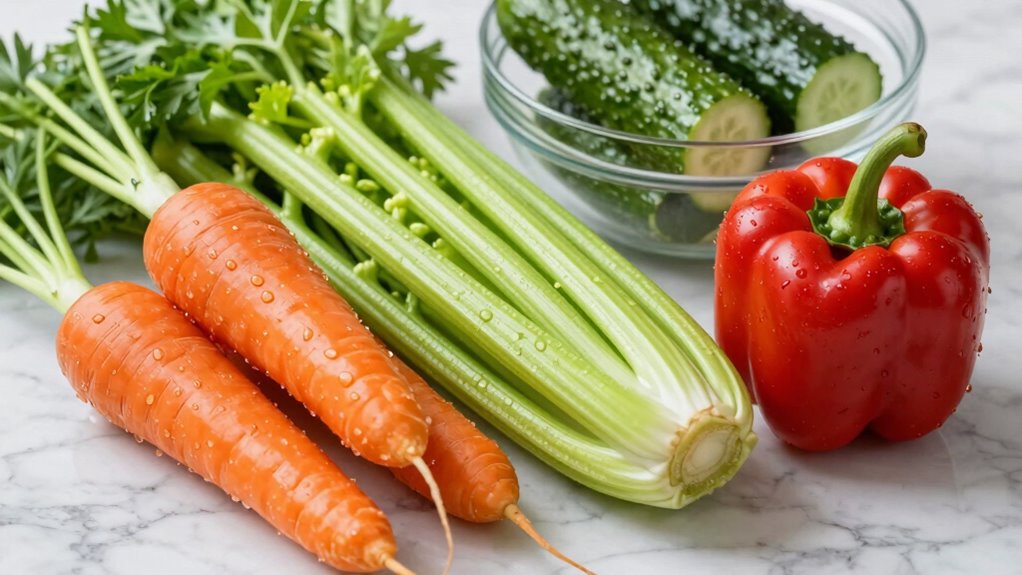
Before storing vegetables, it’s important to prepare them properly to maintain freshness and crispness. Start by removing any damaged or wilted parts. Use vegetable peeling if necessary, but avoid removing more skin than needed, as it can affect texture and moisture. When it comes to cutting techniques, opt for uniform pieces to ensure even storage and airflow. Cut vegetables into sizes that suit their intended use but avoid overly small pieces, which can dry out faster. Rinse vegetables thoroughly to remove dirt and bacteria, then dry them completely to prevent excess moisture that can cause spoilage. Proper preparation minimizes moisture buildup and preserves crunchiness, setting the stage for longer-lasting freshness when stored.
Choosing the Best Containers and Storage Methods to Keep Vegetables Crisp
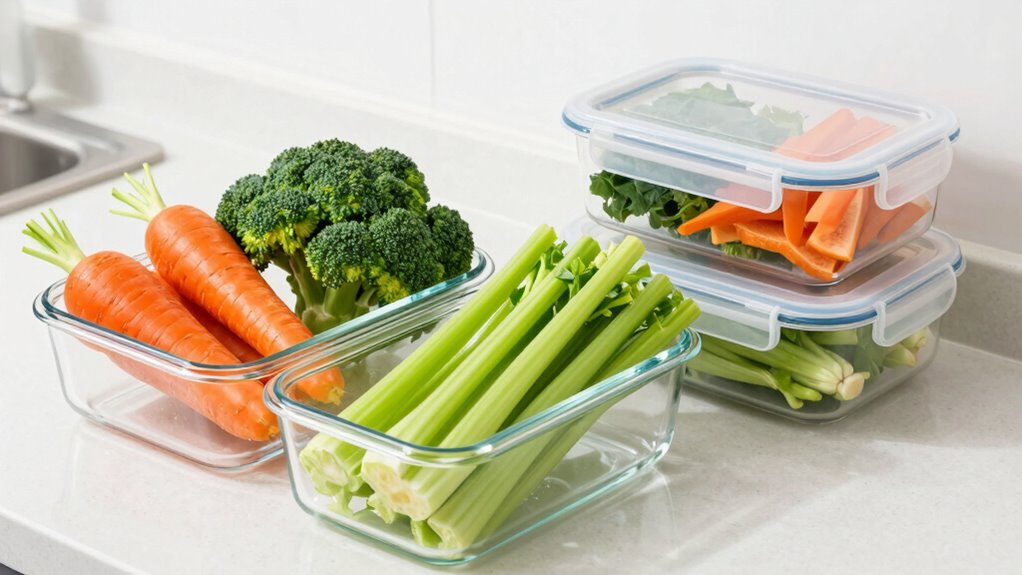
Choosing the right containers and storage methods can make a significant difference in keeping vegetables crisp. Use airtight containers to prevent moisture loss and protect vegetables from external odors, ensuring they stay fresh longer. For leafy greens and delicate vegetables, breathable bags are ideal because they allow excess moisture to escape, reducing the risk of rot and sogginess. Avoid plastic wrap or non-vented containers that trap humidity, which can lead to wilting. Make sure containers are clean and dry before storing vegetables to prevent mold growth. Proper storage techniques are essential for keeping produce fresh and minimizing waste. Additionally, understanding the importance of proper airflow can help maintain optimal humidity levels and extend freshness. Keep vegetables in a cool, dark spot within the fridge. By selecting the appropriate containers—airtight for firmer vegetables and breathable bags for leafy greens—you help maintain their crispness throughout the week.
How to Maintain the Perfect Humidity and Temperature for Fresh Vegetables

Maintaining the right humidity and temperature levels in your refrigerator is essential for keeping vegetables fresh and crisp. Proper humidity control prevents moisture loss, while temperature regulation slows down spoilage. To optimize, set your fridge to around 35-40°F (1.5-4°C). Use crisper drawers with adjustable humidity settings—high humidity keeps leafy greens fresh, while lower humidity is better for vegetables like carrots. Keep the fridge door closed as much as possible to avoid temperature fluctuations. Additionally, avoid overcrowding, which can restrict airflow and disrupt humidity control. Regularly check your fridge’s temperature with a thermometer, and adjust the settings as needed. Understanding deep‑sky imaging can help you better visualize the importance of precise environmental conditions for optimal results. Proper storage techniques play a crucial role in maintaining optimal conditions for a longer shelf life, and being aware of proper airflow can further enhance freshness. Ensuring your refrigerator has good temperature stability is also vital for keeping vegetables at their peak freshness.
Tips for Organizing Your Fridge to Maximize Vegetable Freshness

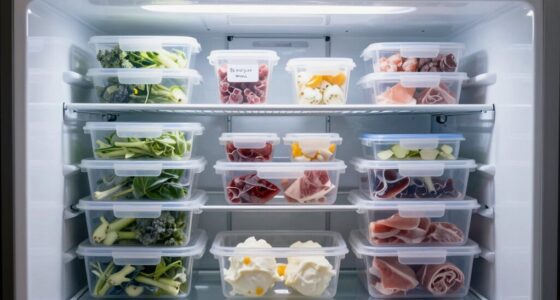
Organizing your fridge effectively can substantially boost the freshness and longevity of your vegetables. Start by using kitchen gadgets like clear bins or drawer dividers to separate produce types, making it easier to monitor and access them. Implement storage hacks such as placing leafy greens in perforated containers to improve airflow and prevent excess moisture buildup. Keep vegetables in the coldest part of the fridge, usually the bottom drawer, and avoid overcrowding to allow proper circulation. Label storage containers for quick identification and prioritize using older vegetables first. Consider investing in adjustable shelves or small baskets to customize space for different produce. Proper organization reduces spoilage and keeps vegetables crisp longer, ensuring they stay fresh throughout the week. Additionally, understanding how contrast ratio affects your fridge’s lighting can help you better see and organize your produce for optimal freshness. Incorporating smart refrigeration systems that monitor temperature and humidity levels can further optimize storage conditions and extend vegetable shelf life. Using humidity control features in your fridge can also help maintain ideal moisture levels for different types of vegetables.
Natural Ways to Keep Vegetables Crunchy and Extend Their Shelf Life

You can naturally keep vegetables crisp by using proper storage techniques and preparing them correctly. Simple steps like storing them in airtight containers or wrapping them in damp paper towels help retain moisture and crunch. Paying attention to these methods extends their freshness without the need for preservatives. Additionally, understanding proper ventilation can prevent excess moisture buildup, further helping vegetables stay fresh longer.
Proper Storage Techniques
Proper storage is essential for keeping vegetables crisp and extending their shelf life without relying on artificial preservatives. Different vegetable varieties require specific storage methods to stay fresh longer. Avoid common storage myths, like washing them before refrigeration, which can promote spoilage. Instead, keep vegetables dry and in the right environment. To maximize freshness:
- Store leafy greens in perforated bags or wrapped in a damp paper towel in the fridge.
- Keep root vegetables in a cool, dark, well-ventilated area.
- Use airtight containers for cut vegetables to prevent dehydration.
- Understanding the specific needs of each vegetable variety helps prevent spoilage. Proper storage techniques ensure crispness and longevity, making your prep easier and reducing waste. Additionally, maintaining consistent temperature and humidity levels in storage areas plays a crucial role in preserving freshness. Properly stored vegetables stay fresh and crunchy all week, especially when you consider proper airflow to prevent moisture buildup. Ensuring adequate ventilation helps maintain optimal conditions and extends shelf life even further. Incorporating natural methods of moisture control can further enhance freshness by avoiding excess condensation that accelerates spoilage.
Optimal Vegetable Preparation
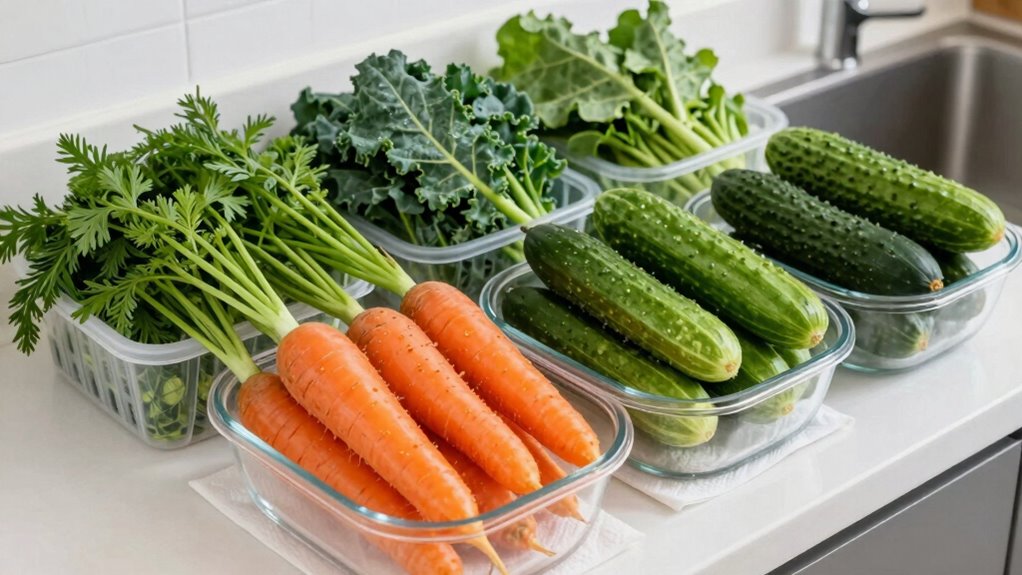
To keep vegetables crisp naturally and extend their freshness, selecting the right preparation methods is key. Start with vegetable selection by choosing fresh, firm produce free of blemishes or wilted areas. Proper cutting techniques also matter; use sharp knives to make clean cuts, which minimize cell damage and help retain moisture. For example, slicing cucumbers or carrots into uniform pieces ensures even moisture loss and prevents sogginess. Avoid excessive chopping or crushing, as these can break down cell walls and accelerate spoilage. Rinsing vegetables gently and drying thoroughly before storage is essential to remove excess moisture that can lead to spoilage. When prepping, consider blanching certain vegetables briefly to preserve texture, then cooling them quickly. Additionally, understanding vegetable physiology can help you choose the best storage conditions to maintain their crunch. By focusing on smart vegetable selection and precise cutting techniques, you can maximize crunchiness and extend freshness throughout the week.
Troubleshooting Soft Vegetables and How to Refresh Them

If your vegetables have become soft or wilted, don’t worry—you can often revive them. Recognize signs of spoilage and act quickly to refresh them with water. This simple step can restore some of their crispness and extend their usability. Additionally, understanding the wave and wind conditions can help you select the best storage techniques to keep vegetables fresh longer. Being mindful of storage conditions such as humidity and temperature can further improve freshness and prevent wilting.
Recognizing Wilted Vegetables
Wilted vegetables often show signs of softness, limpness, and dull appearance, making them easy to spot. Recognizing wilted vegetables is essential for maintaining crispness preservation. When vegetables lose their firmness, they may feel slack or rubbery to the touch and seem less vibrant in color. To identify them quickly, look for these signs:
- Excess moisture or sliminess on the surface
- Browning or yellowing leaves or edges
- Weak or floppy stems and stalks
- Electric power sources or refrigeration can help restore some crispness to slightly wilted vegetables. Additionally, understanding the water chemistry involved in storage can be beneficial for prolonging freshness. Maintaining optimal storage conditions is key to preventing wilting and extending shelf life. Proper humidity levels and temperature control are crucial factors in vegetable preservation to keep produce crisp longer. Being aware of post-harvest handling techniques can also significantly impact the freshness and texture retention of your vegetables.
Refreshing With Water
Ever notice how some vegetables just need a quick pick-me-up to regain their crispness? Water infusion and vegetable soaking are simple tricks to refresh soft produce. Fill a bowl with cold water and submerge your vegetables for about 15-30 minutes. This process helps restore moisture and firmness, especially for greens like lettuce or celery. For more stubborn vegetables, gently agitate or rotate them during soaking. Avoid over-soaking, as it can make vegetables too soggy. After soaking, dry them thoroughly with a clean towel or salad spinner to prevent excess moisture. This quick refresh can bring back a satisfying crunch and extend their shelf life. Just a brief vegetable soaking in water infusion is all it takes to revive limp, soft vegetables before reuse.
Frequently Asked Questions
Can I Wash Vegetables Before Storing to Keep Them Crisp Longer?
Yes, washing vegetables before storing can be beneficial if you dry them thoroughly afterward. Pre wash benefits include removing dirt and bacteria, helping veggies stay fresher longer. Just use cold water and a gentle scrub, then dry completely with a clean towel or salad spinner. Proper storage tips, like keeping vegetables in airtight containers or perforated bags, prevent excess moisture and maintain crispness throughout the week.
What Are Some Common Mistakes That Make Vegetables Spoil Faster?
You often spoil vegetables faster by overwatering them or using improper wrapping. Overwatering creates excess moisture, leading to mold and rot, so only water when necessary. Improper wrapping, like sealing vegetables in airtight bags without ventilation, traps humidity and accelerates spoilage. To keep vegetables fresh longer, avoid these mistakes by watering appropriately and using breathable containers or paper towels inside bags to absorb excess moisture.
How Long Can I Realistically Store Vegetables Without Losing Quality?
You can typically store vegetables for about 3 to 7 days without losing quality, depending on the type. To maximize vegetable freshness, use proper refrigeration techniques like keeping them in breathable containers and at consistent temperatures. Avoid overcrowding your fridge, and store vegetables away from ethylene-producing fruits. Regularly check for spoilage, and prep them correctly to extend their crispness and flavor throughout the week.
Do Different Vegetables Require Different Storage Methods?
Yes, different vegetables require different storage methods. You should consider their vegetable moisture and storage temperature. For example, leafy greens need high humidity and cooler temps, while root vegetables do well in slightly warmer, low-humidity conditions. Keep delicate vegetables in perforated containers to maintain moisture, and avoid storing moisture-sensitive veggies with moisture-retaining ones. Adjust your storage methods based on each vegetable’s moisture needs and suitable temperature to keep them crisp longer.
Are There Any Natural Preservatives That Help Vegetables Stay Crisp?
Natural preservatives like lemon juice or vinegar act as crispness enhancers, keeping your vegetables fresh and crunchy longer. Submerging veggies in water with a splash of these acids creates a magic shield against wilting. Plus, storing them in airtight containers helps lock in moisture. These simple, natural tricks turn your veggies into crunchy, fresh superstar ingredients all week long, making snack time feel like a crisp, invigorating adventure!
Conclusion
Think of your vegetables as treasures, each with a secret vitality waiting to be revealed. By giving them proper care—choosing the right storage, controlling humidity, and staying organized—you’re safeguarding their crispness like a vigilant guardian. When you treat your produce with respect and attention, you preserve their freshness, keeping their crunch alive as a symbol of your mindful nurturing. In doing so, you guarantee every bite remains a crisp, vibrant reminder of nature’s gift.