
Implementing FIFO (First-In, First-Out) in your pantry helps you organize your food so older items are used first, reducing waste and saving money. Start by labeling and organizing items with the oldest at the front, using clear containers for easy visibility. Regularly check expiration dates and rotate stock to keep food fresh longer. If you want to learn more about how to master pantry rotation and stop wasting food, keep exploring these helpful tips.
Key Takeaways
- Implement clear labeling with purchase and expiration dates to prioritize older items first.
- Organize pantry items with older products at the front for easy access and rotation.
- Use airtight, transparent containers to maintain freshness and facilitate visual inventory checks.
- Develop routine checks and rotations weekly or monthly to prevent spoilage and minimize waste.
- Buy smaller quantities more frequently to ensure proper FIFO and reduce excess stock.
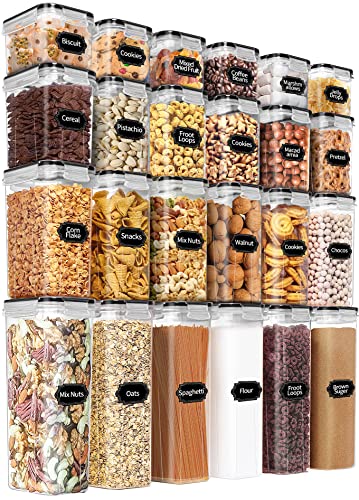
PRAKI Airtight Food Storage Containers Set with Lids – 24 PCS, BPA Free Kitchen and Pantry Organization, Plastic Leak-proof Canisters for Cereal Flour & Sugar – Labels & Marker
Bundle Set: This kitchen & pantry organizers and storage set comes with 24 containers, they are inlaid together,…
As an affiliate, we earn on qualifying purchases.
As an affiliate, we earn on qualifying purchases.
What Is FIFO and Why It Can Help You Waste Less Food
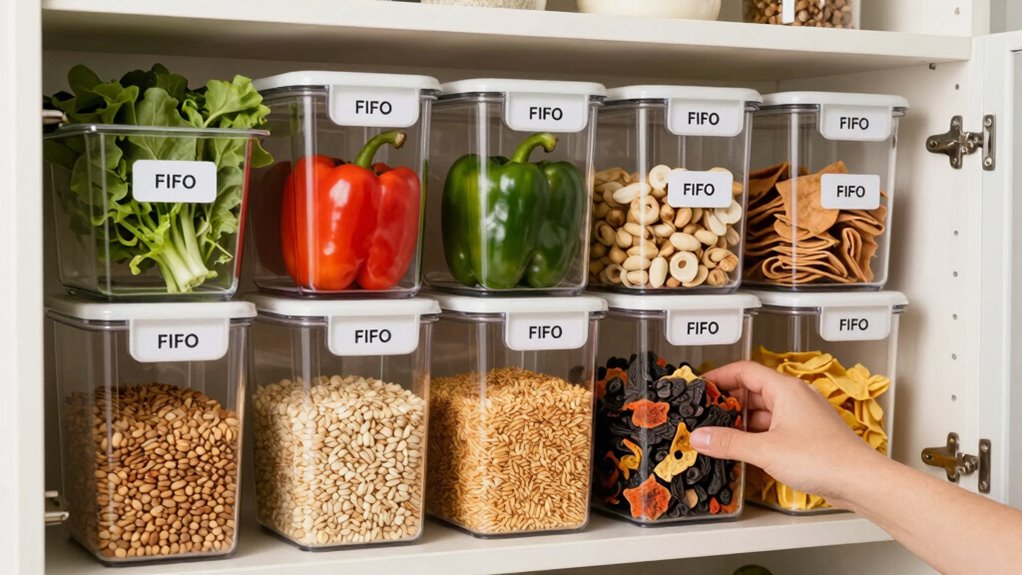
Have you ever wondered how to keep your pantry organized and reduce food waste? Implementing FIFO, or First-In, First-Out, is a simple strategy that can make a big difference. When you plan your meals and grocery shop, prioritize buying fresh items and placing older products front and center. This way, you use up older ingredients before they expire, minimizing waste. FIFO encourages you to rotate supplies regularly, ensuring that nothing gets forgotten or spoiled. During meal planning, check what’s already in your pantry and incorporate those items into your meals first. When grocery shopping, create a list that considers what you already have, helping you buy only what’s necessary. This method keeps your pantry tidy, reduces waste, and makes your shopping more efficient. Incorporating food management techniques and smart home automation can further enhance your efforts to prevent spoilage and save money. Additionally, adopting proper storage methods can help extend the shelf life of perishable items.

Freezer Labels 375pcs – 3"x1" Self-Adhesive Removable Food Labels | Write-On Waterproof & Oil-Proof Tape for Containers, Meal Prep & Pantry Organization (3 Rolls, 3 Colors)
Smart Food Safety System–3 rolls supply labels for 365+ meals – track expiration dates for meats, leftovers &…
As an affiliate, we earn on qualifying purchases.
As an affiliate, we earn on qualifying purchases.
How to Organize Your Pantry for Easy Food Rotation

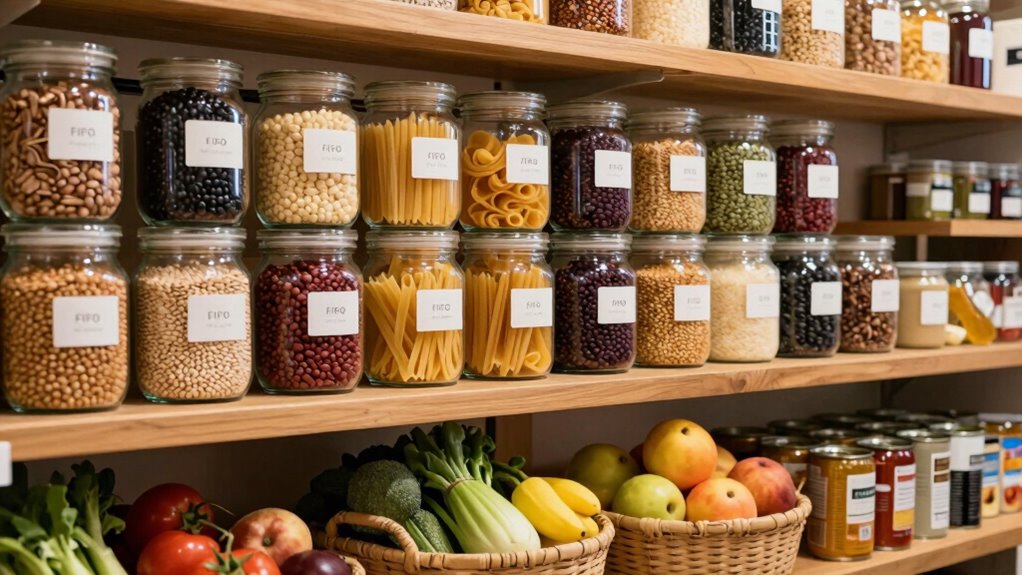
Using clear containers makes it easy to see what you have and track expiration dates. Label everything clearly so you can quickly identify items and follow your rotation system. This simple setup helps keep your pantry organized and minimizes food waste. Incorporating free floating storage solutions can further optimize space and accessibility. Additionally, implementing a FIFO system ensures older items are used first, reducing spoilage and saving money. Incorporating smart storage solutions can automate inventory tracking and alert you when items are nearing their expiration dates, further enhancing your food management. Considering total‑cost clarity when choosing storage options can help you find budget-friendly solutions that offer long-term value.
Use Clear Containers
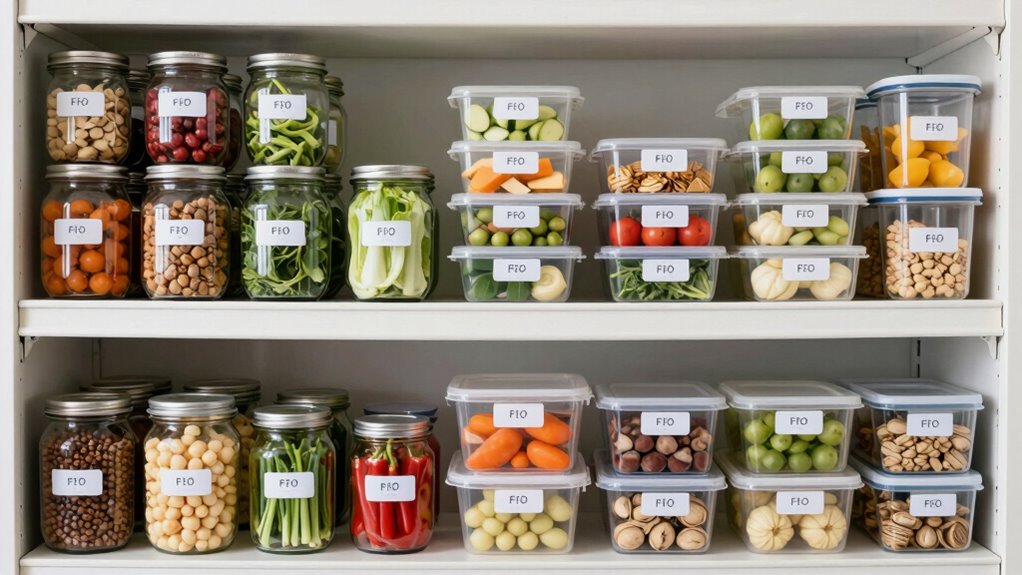
Clear containers make it easy to see what’s inside, eliminating the guesswork when you’re searching for ingredients. Using transparent food storage options helps you quickly identify what you have and what needs to be used first, supporting effective food rotation. When selecting containers, prioritize those that are durable, airtight, and stackable to maximize space and keep food fresh. Proper container selection also prevents spills and contamination, making your pantry safer and more organized. By choosing clear containers, you reduce the time spent rummaging through packages and avoid buying duplicates of items you already have. This simple upgrade enhances your ability to follow FIFO principles, ensuring older foods are used before newer stock. Incorporating ventilation considerations into your pantry setup can help prevent spoilage and moisture buildup, further preserving your food. Additionally, choosing containers made from food-safe materials ensures that your stored items remain free from harmful chemicals. Understanding airflow and moisture control can also help in maintaining optimal conditions inside your pantry. When you optimize pantry organization, you create an environment that supports long-term food safety and reduces waste. Implementing proper container labeling can further streamline your food rotation process, making it easier to identify expiration dates and usage priorities. Clear containers are a small change that makes a big difference in managing your pantry efficiently.
Label Everything Clearly
Labeling everything clearly is essential for keeping your pantry organized and ensuring you use foods in the correct order. Proper food labeling helps you quickly identify items and their expiration dates, preventing waste. Use a marker or labels to write the date you opened or purchased each item. Create a system that’s easy to follow, like placing newer items behind older ones. Here’s a simple layout:
| Item | Purchase Date | Expiration Date |
|---|---|---|
| Canned Beans | 01/10/24 | 01/10/26 |
| Pasta | 02/15/24 | 02/15/26 |
| Rice | 03/01/24 | 03/01/26 |
Clear food labeling makes FIFO simple, saving you money and reducing waste. Incorporating color coding can further streamline your pantry organization and help distinguish between different food types or priority levels. Additionally, understanding food safety practices can help prevent spoilage and ensure your food remains safe to consume, especially when managing perishable items. Implementing consistent labeling methods enhances efficiency and minimizes confusion during meal prep. Keeping your pantry organized with these strategies also contributes to energy-efficient food management, aligning with sustainable practices.

Vtopmart 6 Pack Clear Stackable Storage Bins with Lids, Medium Plastic Containers with Handle for Pantry Organizer and Storage,Perfect for Kitchen,Fridge,Cabinet, Closet,Bathroom Organization
✅Functional Storage for Any Space: You can use these pantry bins for various things throughout your home to…
As an affiliate, we earn on qualifying purchases.
As an affiliate, we earn on qualifying purchases.
How to Implement FIFO in Your Kitchen Step by Step
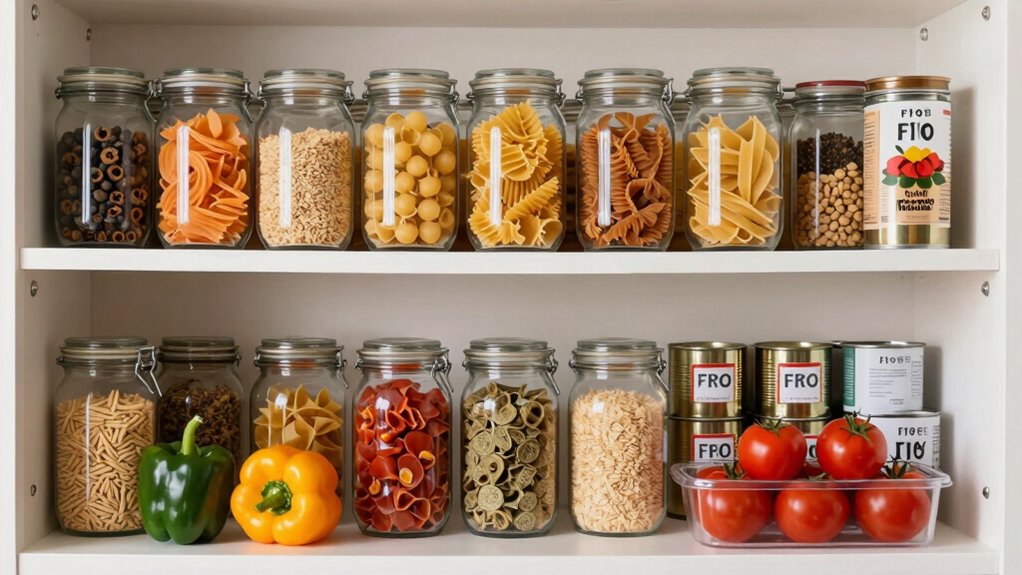
Implementing FIFO in your kitchen starts with understanding that proper organization can prevent waste and save money. Begin by evaluating your pantry and refrigerator, and arrange items so that newer products are placed behind older ones. When you plan meals, use ingredients from the front first, making FIFO part of your meal planning routine. During grocery shopping, keep FIFO in mind by buying smaller quantities more frequently, ensuring you’ll use items before they expire. Whenever you add new stock, place it behind existing items, and move older items to the front. Consistently applying this process helps maintain an organized space and reduces food waste. Understanding food expiration dates and how they relate to FIFO can further enhance your food management. Incorporating proper storage techniques ensures that your food stays fresh longer and helps you maintain an effective FIFO system. Using storage containers can also help keep your pantry organized and make rotation easier. Developing a routine to check and rotate your stock regularly reinforces proper inventory management, making your kitchen more efficient and your food last longer. Practicing these methods consistently will make FIFO second nature, streamlining your food rotation process and minimizing waste.
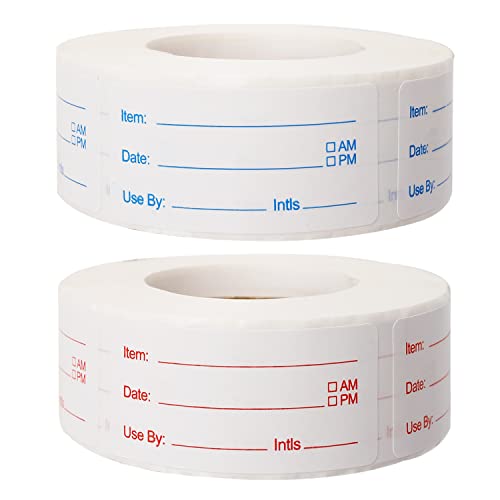
2 Rolls 1000 Pieces Removable Food Labels, 1 x 2 Inch Date Stickers for Freezer, Refrigerator Food Containers – Easy to Write On
【1000 Pcs Food Labels】Our freezer labels set contains 1000 blue and red food labels stickers,large quantity can meet…
As an affiliate, we earn on qualifying purchases.
As an affiliate, we earn on qualifying purchases.
Common FIFO Mistakes and How to Avoid Them
Even when you understand the importance of FIFO, common mistakes can undermine your efforts. One major error is overlooking expired snacks, which can lead to consuming spoiled food or waste. Regularly check your inventory for expired items and remove them promptly. Mislabeling errors also cause confusion, making it hard to identify which items to use first. Always label new products with the date you put them in your pantry and verify labels on existing items. Failing to organize properly can cause older items to get buried, leading to spoilage or accidental consumption. Staying vigilant about these mistakes keeps your system effective. Additionally, understanding body jewelry measurements and how they relate to proper storage can help you plan your shopping trips more efficiently so you don’t rush or overspend on transportation. Avoid rushing when restocking or reorganizing, and develop a habit of double-checking labels and expiration dates. That way, you minimize waste and keep your pantry running smoothly.
Tips for Maintaining Your FIFO System and Keeping Food Fresh
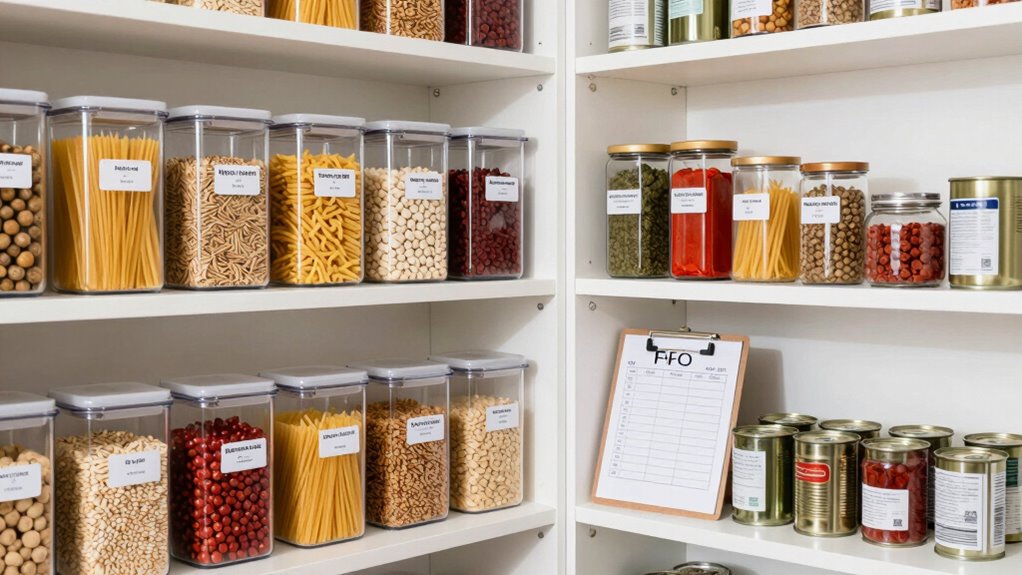
To keep your FIFO system effective, you should regularly check your inventory to spot expired or outdated items. Using proper storage techniques, like airtight containers and correct temperature settings, helps maintain food freshness. Consistently applying these tips guarantees your pantry stays organized and your food stays fresh longer.
Regular Inventory Checks
Regular inventory checks are essential to keep your pantry organized and guarantee your food stays fresh. By routinely reviewing your items, you can easily identify products nearing their expiration dates and prioritize using them first. Implementing effective inventory tracking helps you stay aware of what you have, preventing overstocking or buying duplicates. As you check your pantry, move older items to the front and place new purchases behind them. This simple step ensures you use products in the correct order, reducing waste. Regular checks also reveal damaged or expired items that need discarding, maintaining a clean and safe pantry. Dedicate a specific day each week or month for these checks to build a habit, making FIFO an effortless part of your routine.
Proper Storage Techniques
Proper storage techniques are essential for maintaining your FIFO system and ensuring your food stays fresh longer. To do this effectively, focus on three key practices. First, transfer perishable items into airtight containers to prevent spoilage and keep out pests. Second, control the temperature by storing perishables in the coldest part of your fridge, ideally at or below 40°F, to slow bacterial growth. Third, organize your pantry so older items are at the front, making it easy to use them first. Maintain consistent temperature control, avoid overcrowding, and always reseal opened packages properly. These steps help preserve food quality, reduce waste, and streamline your rotation process, ensuring your FIFO system works smoothly and your food stays fresh longer.
The Benefits of Using FIFO: Save Money and Reduce Waste
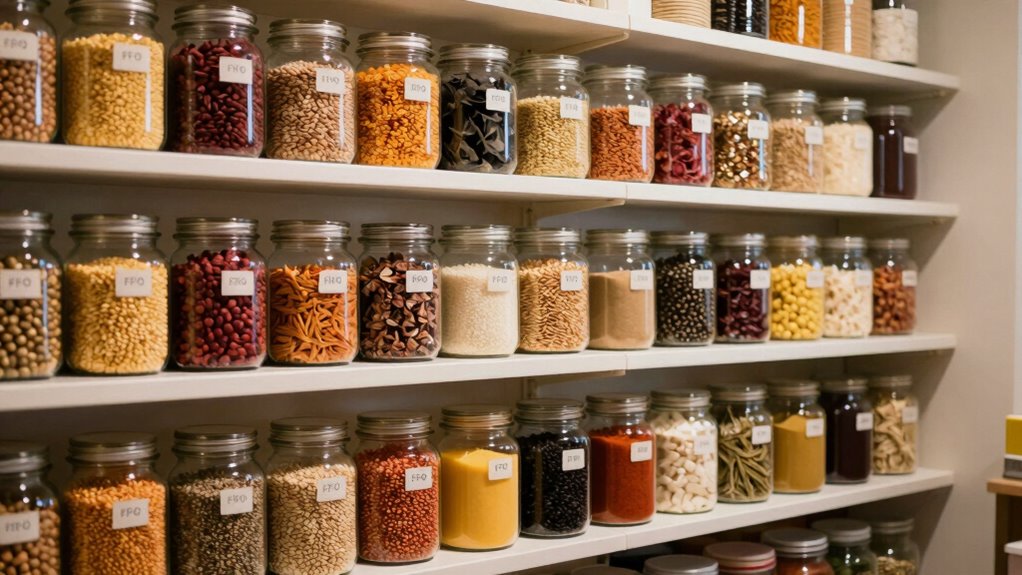
Using FIFO (First-In, First-Out) guarantees that you use older items before newer ones, which can considerably save you money and cut down on waste. By following this method, you prevent expired products from lingering and reduce unnecessary shopping trips. It also helps you stay aware of expiration dates, avoiding the confusion that comes with cluttered shelves. Adjusting your shopping habits to buy only what you need and organizing your pantry ensures older items are used first. Here’s a quick look at how FIFO benefits you:
| Benefit | How it helps | Result |
|---|---|---|
| Saves money | Prevents buying duplicates | Less waste, more savings |
| Reduces waste | Uses items before expiration dates | Less thrown away |
| Better organization | Clear view of pantry contents | Easier shopping decisions |
| Keeps pantry fresh | Avoids stale products | Healthier choices |
| Simplifies shopping | Focuses on needed items | Less impulsive buying |
Frequently Asked Questions
How Often Should I Check and Rotate My Pantry Items?
You should check and rotate your pantry items at least once a month. This helps you stay on top of expiration reminders and guarantees you use older items first. Use inventory tracking to keep an accurate list of what you have, making it easier to spot expired or soon-to-expire products. Regularly rotating your pantry prevents waste, saves money, and keeps your supplies fresh and organized.
What if I Have Items With Expiration Dates That Are Hard to Read?
If you have items with expiration dates that are hard to read, don’t panic—this is the biggest pantry puzzle you’ll face! Use a magnifying glass or take photos to zoom in on label readability and decipher expiration date confusion. Mark the date with a marker to keep track, and store items in a consistent spot so you always know what’s freshest. This way, you stay ahead and reduce waste effortlessly.
Can FIFO Work for Non-Perishable and Perishable Foods Together?
Yes, FIFO can work for both non-perishable and perishable foods if you use proper labeling techniques and storage solutions. You should clearly label all items with dates, making it easy to identify which to use first. Organize your pantry with designated sections or containers for each type, ensuring perishable items are stored in the fridge or freezer, while non-perishables stay in accessible, labeled storage areas.
How Do I Handle Bulk Purchases When Practicing FIFO?
When handling bulk purchases with FIFO, you should store bulk items in designated bulk storage areas, separate from smaller packages. Use clear labeling techniques to mark the purchase date and expiration date on each container or bag. Rotate stock by placing newer bulk items behind older ones, ensuring you use older supplies first. This keeps your inventory fresh and minimizes waste, making your pantry more efficient and organized.
What Tools or Labels Can Help Me Maintain an Effective FIFO System?
You can use clear labeling systems like date stickers or color-coded labels to track expiration dates easily. Incorporate inventory management tools like digital apps or spreadsheets to stay organized and monitor stock levels. These tools help you maintain an effective FIFO system by ensuring older items are used first, reducing waste. Regularly update your labels and inventory records to keep everything accurate and streamlined for efficient pantry rotation.
Conclusion
By using FIFO, you can cut food waste by up to 20%, saving you money and helping the environment. Keep your pantry organized, rotate your stock regularly, and stay vigilant to avoid common mistakes. With consistent effort, you’ll enjoy fresher foods and fewer trips to the store. Start implementing FIFO today—your wallet and the planet will thank you!