
To cook like a pro, start by carefully reviewing the entire recipe, not just skimming it. Make sure you understand each step, special instructions, and techniques involved. Check your ingredient list, measure everything beforehand, and gather all the necessary tools. Pay attention to timing, temperature, and the sequence of steps to keep the process smooth. Keep these tips in mind, and you’ll find it easier to prepare with confidence. Keep going for even more expert advice.

Get kitchen gear delivered free with Prime
- Fast, free delivery on millions of items
- Prime Video, Amazon Music and more included
- Member-only deals all year
Key Takeaways
- Read the entire recipe thoroughly to understand each step and special instructions.
- Review the ingredient list, quantities, and preparation methods before starting.
- Carefully examine instructions and note any unfamiliar techniques or tips.
- Gather all necessary tools and equipment in advance for efficient workflow.
- Plan your timing, temperature settings, and process flow to ensure smooth execution.
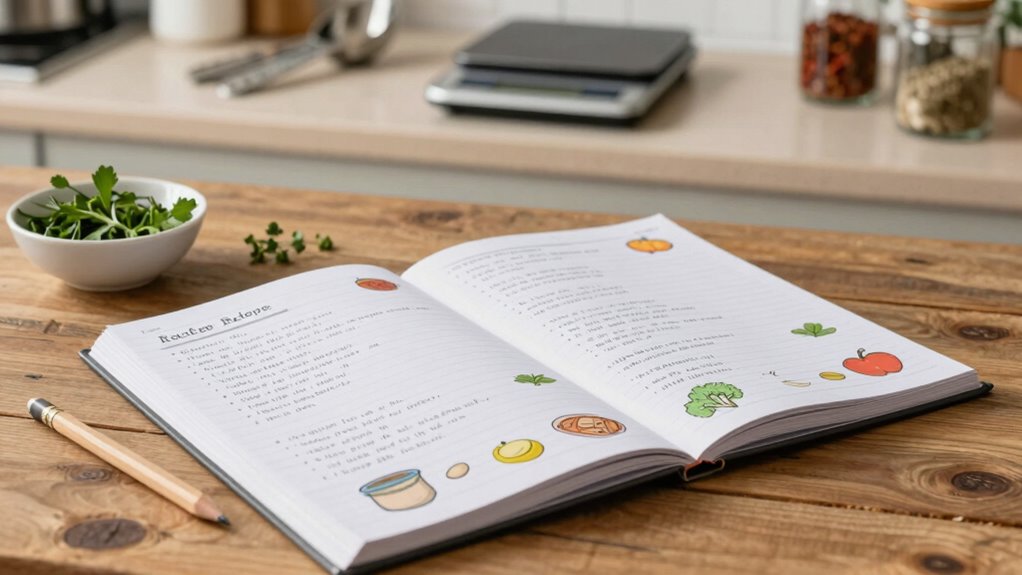
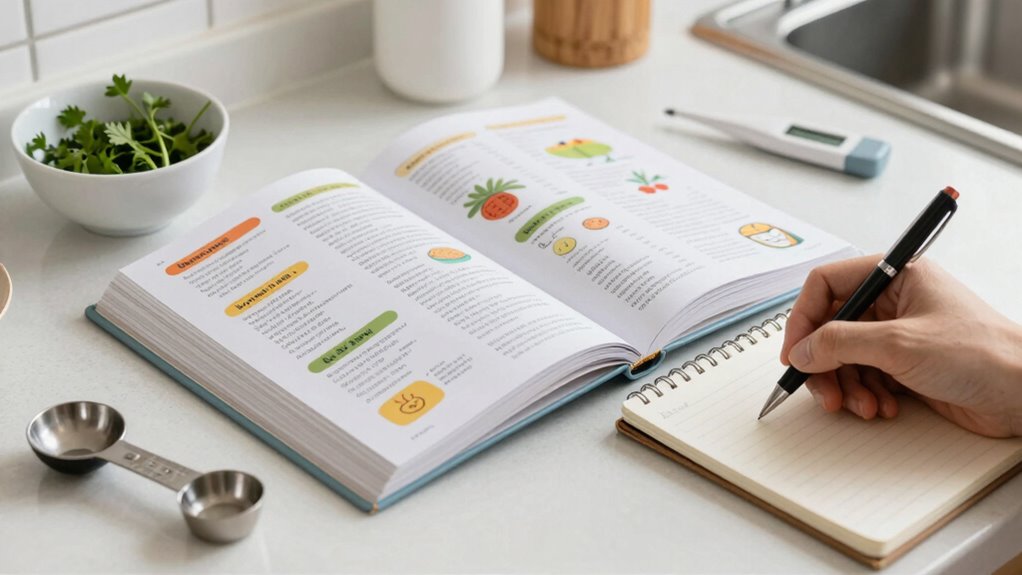
Understanding a recipe thoroughly is the first step to cooking with confidence. Before you even turn on the stove, you need to carefully read through the entire recipe. Don’t just skim; take your time to grasp each step and note any special instructions. Doing so helps you plan your ingredient preparation effectively and guarantees you have all the necessary kitchen tools on hand. When you understand the recipe fully, you can identify what ingredients need to be prepped first, whether it’s chopping vegetables, measuring spices, or marinating proteins. This proactive approach streamlines your cooking process and minimizes last-minute rushes.
As you read, pay close attention to the ingredient list. Make sure to understand the quantities and the form in which ingredients are required—whole, chopped, grated, or cooked. This helps you prepare everything in advance, saving you from scrambling mid-recipe. Check your pantry and fridge to see what you already have and what needs to be bought or prepared. When it comes to ingredient preparation, having everything pre-measured and ready to go makes cooking smoother and more enjoyable.
Next, review the recipe’s step-by-step instructions carefully. Some recipes include techniques or terms that might be unfamiliar, so look them up if needed. Highlight or note any specific notes or tips provided by the recipe creator. These often contain essential hints that could affect the outcome. As you read, consider your kitchen tools. Do you have the right equipment—such as a sharp knife, mixing bowls, or a food processor? If not, plan to gather these tools before you start. Having the correct kitchen tools at your fingertips means you can execute each step efficiently and safely.
Additionally, check for cooking times and temperature settings. Understanding these details helps you pace your cooking and avoid over- or under-cooking. If the recipe involves multiple stages—baking, simmering, or frying—map out the sequence in your mind or on paper. This way, you’ll stay organized and ensure each step flows smoothly into the next.
kitchen measuring cups and spoons set
As an affiliate, we earn on qualifying purchases.
As an affiliate, we earn on qualifying purchases.
Frequently Asked Questions
How Do I Adjust Recipes for Different Serving Sizes?
To adjust recipes for different servings, first scale ingredients proportionally using simple math. When reducing or increasing portions, consider ingredient substitutions if certain items are unavailable or to suit dietary needs. Remember, flavor balancing is key—adding extra spices or seasonings may be necessary when altering quantities. Taste as you go to guarantee the dish remains flavorful, and adjust seasonings accordingly to keep the perfect balance for your new serving size.
What Are Common Symbols Used in Recipes?
Common symbols in recipes include a teaspoon (tsp), tablespoon (tbsp), and cup for measurements. You’ll also see symbols like ‘°F’ for temperature, ‘h’ for hours, and ‘min’ for minutes. When you encounter unfamiliar symbols, use ingredient substitutions and measurement conversions to adapt the recipe. These symbols help you follow instructions accurately, ensuring your cooking turns out perfect every time.
How Do I Interpret Unfamiliar Cooking Terms?
When you encounter unfamiliar cooking terms, start by breaking down the culinary jargon. For example, if a recipe calls for “julienne,” you can look up that specific cooking terminology to understand it means slicing vegetables into thin strips. You adapt quickly by researching or referring to a glossary. This approach helps you follow the recipe accurately, boosting your confidence and ensuring your dish turns out just right.
What Equipment Is Essential for Following Most Recipes?
You need some basic kitchen tools like a good set of knives, measuring cups and spoons, a cutting board, and a mixing bowl. These essentials help you follow most recipes smoothly. Also, keep ingredient substitutions in mind; sometimes, you can swap ingredients if needed. Having a reliable set of kitchen tools makes cooking easier, and knowing about substitutions helps when you’re missing something or want to customize your dish.
How Can I Modify Recipes for Dietary Restrictions?
Sure, just ignore those pesky dietary restrictions and stick to the original recipe, right? Or, if you’re serious, you can make gluten-free substitutions like almond flour or rice noodles, and swap in vegan ingredients like plant-based milks or tofu. Always check labels and experiment with small amounts first. Your taste buds and dietary needs will thank you for the effort, making your cooking both inclusive and delicious.
As an affiliate, we earn on qualifying purchases.
Conclusion
Now that you know the secrets to reading recipes like a pro, you’re ready to tackle any culinary challenge with confidence. But here’s the twist—what if the next recipe holds a surprise ingredient or a tricky step that could throw you off? Stay sharp, stay curious, and always read between the lines. The kitchen is full of surprises, and your newfound skills will help you conquer them all—are you ready to discover what’s next?
As an affiliate, we earn on qualifying purchases.
As an affiliate, we earn on qualifying purchases.
Halloween Picks
halloween
As an affiliate, we earn on qualifying purchases.