
TL;DR

Get kitchen gear delivered free with Prime
- Fast, free delivery on millions of items
- Prime Video, Amazon Music and more included
- Member-only deals all year
A BTU calculator estimates the ideal cooling capacity for your room, considering size, sunlight, insulation, and usage. Proper sizing prevents inefficiency and discomfort, saving money in the long run.
Ever bought an air conditioner that just couldn’t keep your room cool? Or one that cycles on and off so fast it’s noisy and wasteful? The secret lies in sizing. A BTU calculator makes it simple to find the perfect match for your space, so you stay comfortable without wasting energy. It’s a quick step that can save you hundreds of dollars and frustration in the long run.
In this guide, you’ll learn how to use a BTU calculator effectively, what factors influence cooling needs, and how a few adjustments can make all the difference. Whether you’re replacing an old unit or sizing an addition, understanding your true cooling load is the smartest move you can make.
Always include environmental factors like sunlight, insulation, and occupancy in your BTU estimate.
Avoid oversizing; a unit too large causes short cycling, poor humidity control, and noise.
Use a room’s volume—length × width × height—for more precise sizing, especially in rooms with high ceilings.
Adjust the basic BTU calculation based on real-world conditions to get a more accurate match.
Professional load calculations are best for whole-home systems, but a good online calculator works well for individual rooms.
What Does a BTU Calculator Do for Your Room?
A BTU calculator estimates the cooling capacity you need based on your room’s size, sunlight, insulation, and more. Instead of guesswork, it gives you a number—say, 8,000 BTU—that matches your space’s unique heat gain. For example, a sunny living room with large east-facing windows may need more than a shaded bedroom of the same size.
Think of it like a tailored recipe. It considers the ingredients — room dimensions, sunlight, occupancy — to produce the right amount of cooling, so your unit runs efficiently and keeps a steady temperature. This precision prevents buying a unit too small or too large, which can cause discomfort or waste energy.
Understanding what the calculator outputs is crucial because it reflects the real-world demands on your cooling system. If you ignore these nuances, you risk selecting a unit that either underperforms — leading to hot spots and discomfort — or overperforms, which results in unnecessary energy consumption and higher costs. The calculator helps you balance these tradeoffs, ensuring comfort without waste.
As an affiliate, we earn on qualifying purchases.
How to Use a BTU Calculator in 3 Easy Steps
- Measure your room’s length and width. For example, a 12-foot by 15-foot living room equals 180 square feet.
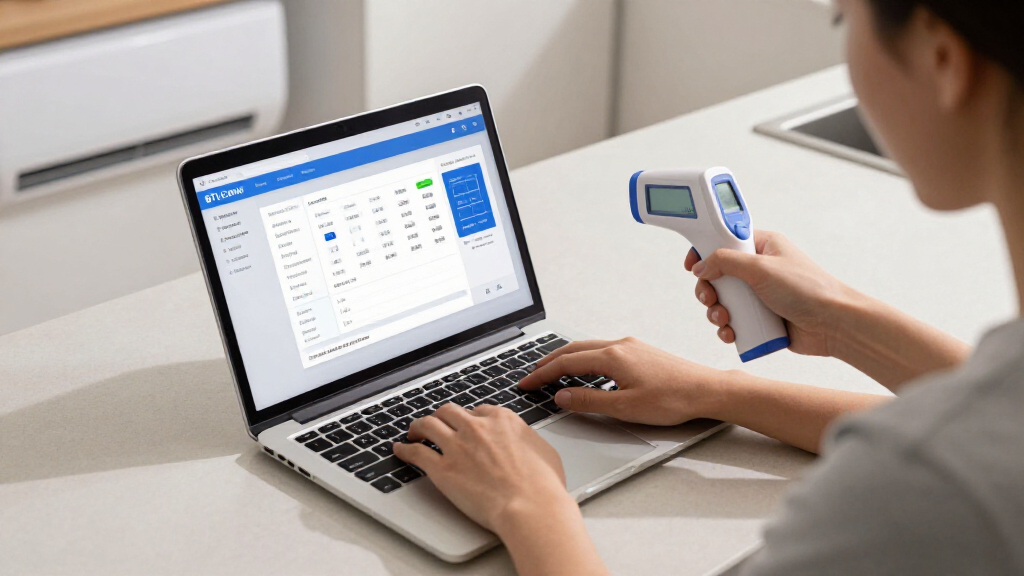
- Input your measurements into the calculator, along with details like ceiling height, sunlight exposure, and insulation quality.
- Review the recommended capacity. For the 180 sq ft example, you might see a need for around 3,600–5,400 BTU, adjusted for factors like sun or occupancy.
For instance, if your room faces west and gets afternoon sun, you might add 10% to the baseline. If your room is poorly insulated, bump it up similarly. This step-by-step process turns a simple room measurement into a precise cooling number.
It’s important to understand that these adjustments are not arbitrary. They reflect how real-world conditions influence heat gain, which directly impacts the size and efficiency of your air conditioner. Making these modifications ensures you avoid the common pitfalls of under- or over-sizing, leading to better comfort, lower energy bills, and longer equipment lifespan.
As an affiliate, we earn on qualifying purchases.
Why Room Size Isn’t the Whole Story — What Else Matters?
| Factor | How It Affects Cooling Needs |
|---|---|
| Ceiling Height | Higher ceilings mean more air to cool — add 10-20% for 10+ ft ceilings. This matters because the volume of air increases with height, and taller rooms require more cooling capacity to maintain comfort. Failing to account for ceiling height can lead to undercooling or overworking your unit, which affects efficiency and humidity control. Adjusting BTU estimates for ceiling height ensures your system can handle the actual air volume, preventing discomfort and unnecessary energy use. |
| Sun Exposure | South- or west-facing rooms need more cooling due to direct sunlight. This sunlight increases heat gain, especially during peak hours, making your space warmer than shaded equivalents. Ignoring sun exposure can cause underestimation of needed capacity, leading to insufficient cooling during hot afternoons. Properly adjusting for sunlight ensures your unit can handle these peak loads, maintaining consistent comfort and avoiding frequent cycling that wastes energy. |
| Insulation & Windows | Poor insulation or large, single-pane windows increase heat gain. Good insulation slows heat transfer, keeping cool air in and hot air out, which reduces cooling demand. Conversely, poor insulation or large, unshaded windows allow more heat to enter, raising the cooling load. Recognizing these factors allows you to select a unit with appropriate capacity, preventing the pitfalls of over- or under-sizing, which can lead to discomfort or unnecessary energy consumption. |
| Occupants & Appliances | Each extra person or heat-generating device adds about 600–1,000 BTU/h. This is significant because additional heat sources increase the cooling load beyond what simple room size suggests. Not accounting for these can cause your system to run constantly, increasing wear and energy costs. Understanding these factors helps you adjust your BTU estimate, ensuring your system can handle typical occupancy and appliances, maintaining comfort without overtaxing the unit. |
For example, a 250 sq ft room with high ceilings and large west-facing windows might need 20% more capacity than a standard estimate. Ignoring these details can lead to under or over-sizing, which impacts comfort and efficiency. Properly evaluating all these factors ensures your cooling system is neither too weak nor excessively powerful, both of which have tradeoffs in cost, comfort, and energy use.
energy efficient portable air conditioner
As an affiliate, we earn on qualifying purchases.
As an affiliate, we earn on qualifying purchases.
Common Mistakes When Sizing Your Air Conditioner
- Using only square footage — ignoring ceiling height or sunlight. This oversight can lead to significant miscalculations, as the volume of air and heat gain are not directly proportional to floor area alone. For instance, a room with high ceilings or intense sunlight demands more cooling capacity than a simple area calculation suggests, risking discomfort or inefficiency.
- Choosing a unit based on the biggest number on the box — bigger isn’t always better. An oversized unit cools quickly but often short cycles, which can cause humidity problems, increased wear, and noise. Proper sizing balances capacity with runtime, optimizing comfort and energy efficiency.
- Relying solely on portable BTU ratings, which can be misleading due to different testing standards. Portable units often have ratings based on ideal conditions that don’t reflect real-world performance. Comparing units tested under consistent standards ensures you select a unit that will perform as expected in your space.
- Forgetting to adjust for heat sources like kitchens or multiple occupants. These sources can significantly increase heat gain, making the initial BTU estimate too low. Adjusting for these factors prevents undercooling and ensures your system can handle the actual load, maintaining comfort and efficiency.
- Overestimating needs to avoid discomfort, leading to energy waste and noisy operation. While it might seem safer to choose a larger unit, it results in poor humidity control and higher bills. Accurate sizing based on thorough calculation achieves comfort without unnecessary expense or noise.
For instance, selecting a 12,000 BTU unit for a 200 sq ft bedroom might seem safe, but it could cause rapid cycling and humidity issues. Proper sizing balances capacity, noise, humidity control, and energy use, leading to a more comfortable and cost-effective operation.
air conditioner with adjustable BTU
As an affiliate, we earn on qualifying purchases.
As an affiliate, we earn on qualifying purchases.
The Quick Math: How Many BTUs Do You Actually Need?
Start with 20–30 BTU per square foot. For a 150 sq ft office, that’s about 3,000–4,500 BTU. Adjust for conditions: add 10% for sun, 600 BTU for each extra person, or 4,000 BTU if you cook often in the same space. This simple formula gets you close fast.
Understanding the implications of these calculations is key. For example, underestimating your needs can lead to an underperforming system that struggles during peak heat, causing discomfort and increasing energy costs due to longer runtimes. Overestimating, on the other hand, results in short cycling, poor humidity control, and higher upfront costs. Using this quick math as a baseline helps you strike a balance, ensuring your system is neither too small nor unnecessarily large, leading to better energy efficiency and comfort.
For example, a 300 sq ft bedroom in a shaded area might need roughly 6,000 BTU, but if it faces west with afternoon sun, bump it to about 6,600 BTU. It’s a straightforward way to avoid under or oversizing before checking detailed specs, giving you a practical starting point for more precise calculations.
Frequently Asked Questions
How do I know if my room needs more or less BTU?
Consider sunlight, insulation, occupancy, and heat sources. Sunny rooms and high ceilings need more BTU, while shaded, well-insulated rooms require less. Use a calculator to get a baseline, then adjust accordingly.Can I just buy the biggest unit I find?
No. An oversized unit cools quickly but cycles often, leading to poor humidity control, higher energy bills, and noise. Proper sizing ensures comfort and efficiency.How much extra capacity should I add for a kitchen?
A good rule of thumb is about 4,000 BTU for a kitchen, accounting for heat from cooking appliances and better humidity control. Adjust based on how much you cook and ventilation.What about portable AC units? Are their ratings reliable?
Portable units often show two ratings: a traditional BTU and a DOE SACC rating, which accounts for real-world performance. Always compare units tested under the same standards for accurate sizing.Is room volume more accurate than area?
Yes. High ceilings increase air volume, demanding more cooling capacity. Using volume (length × width × height) gives a more precise estimate, especially in rooms taller than 8 feet.Conclusion
Getting your air conditioner size right isn’t just about saving money — it’s about comfort, humidity, and quiet operation. Use a BTU calculator as your first step, then fine-tune with real-world adjustments. A well-sized unit makes every summer feel cooler and calmer.
Remember, it’s better to have a slightly smaller, efficient unit than an oversized one that runs constantly and wastes energy. Think of your room as a puzzle — the right BTU fits perfectly, keeping everything balanced and comfortable.
Air Conditioner BTU Calculator
Estimate a right-size cooling range from room area, ceiling height, sun exposure, and occupancy.
Your estimate fits a compact room unit. Compare 6,000 BTU air conditioners sized for smaller rooms.
See compact AC matchesYour estimate lands in the mid-size range. Compare 8,000 BTU window air conditioners for bedrooms or offices.
See mid-size AC matchesYour estimate needs a larger-capacity unit. Compare 12,000 BTU air conditioners and confirm room conditions before buying.
See larger AC matchesEstimate only. Check product specs, local rates, and site conditions before buying or planning around these numbers.
Fall Picks
fall essentials
As an affiliate, we earn on qualifying purchases.