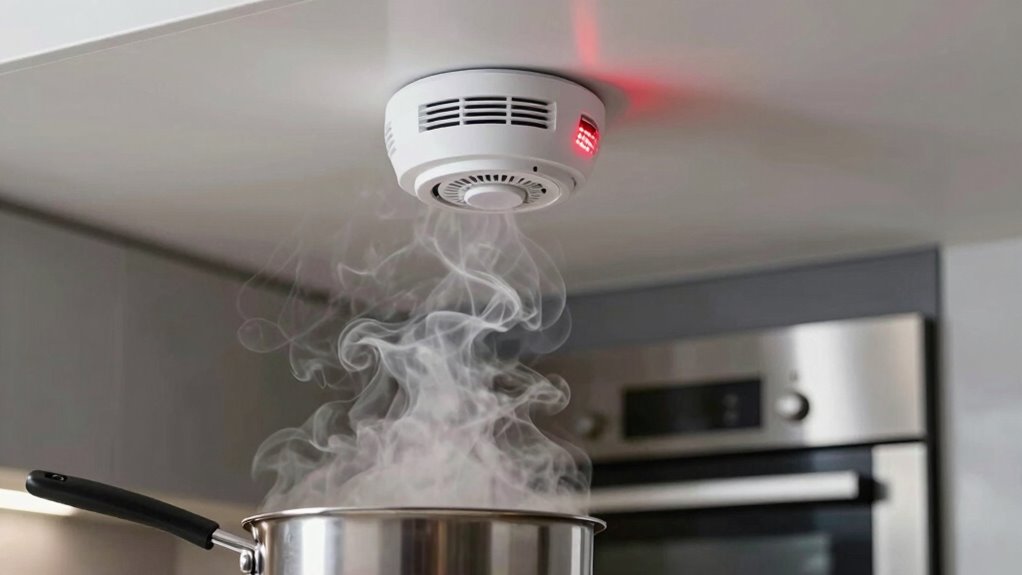
If your smoke alarm goes off while you’re cooking, the most common causes are steam or fumes triggering sensitive sensors. To fix this, make certain your kitchen has good ventilation by opening windows, using exhaust fans, and keeping the alarm away from cooking appliances. Proper placement on ceilings or high walls also helps. Regular cleaning and maintenance prevent dust and grease buildup. If issues persist, you can adjust sensitivity or upgrade to smarter alarms—continue for more tips to keep your alarm silent during cooking.
Key Takeaways
- Ensure proper placement of alarms at least 10 feet from cooking appliances and away from vents or windows.
- Regularly clean smoke alarms and sensors to remove dust, grease, and cooking residue that can cause false triggers.
- Improve kitchen ventilation with range hoods, open windows, or fans to disperse steam and cooking fumes before reaching the detector.
- Adjust the sensitivity settings or choose alarms with adjustable thresholds to reduce false alarms during cooking.
- Use alarms with dual sensors or smart features that differentiate between steam, fumes, and actual fire smoke.
Why Does My Smoke Alarm Go Off When Cooking?
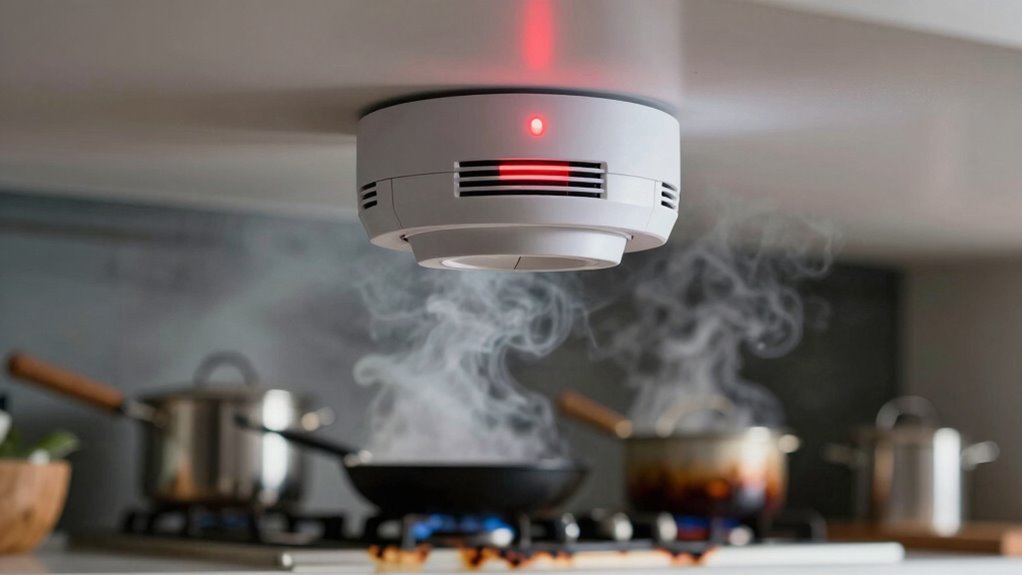
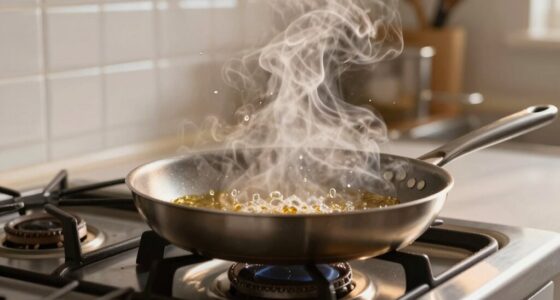
When you’re cooking and your smoke alarm suddenly goes off, it’s often because smoke or steam from your kitchen triggers the sensor. Kitchen fire hazards, like unattended pots or overheated oils, can produce smoke that sets off the alarm. Even steam from boiling or simmering can sometimes cause false alarms. To prevent this, follow basic cooking safety tips, such as never leaving food unattended and keeping flammable items away from heat. Proper ventilation system also helps clear smoke and steam quickly, reducing false triggers. Installing your smoke alarm in the right location—away from cooking appliances—is essential. Proper placement of smoke alarms can significantly reduce false alarms caused by steam or cooking fumes. Understanding these kitchen fire hazards and practicing good cooking safety tips can help you minimize false alarms while keeping your home safe. Additionally, choosing a smoke alarm with advanced sensor technology can help differentiate between smoke and steam, reducing false alarms. Ensuring your fire safety devices are correctly maintained and updated is also crucial for reliable detection.
How Steam and Smoke Trigger False Alarms
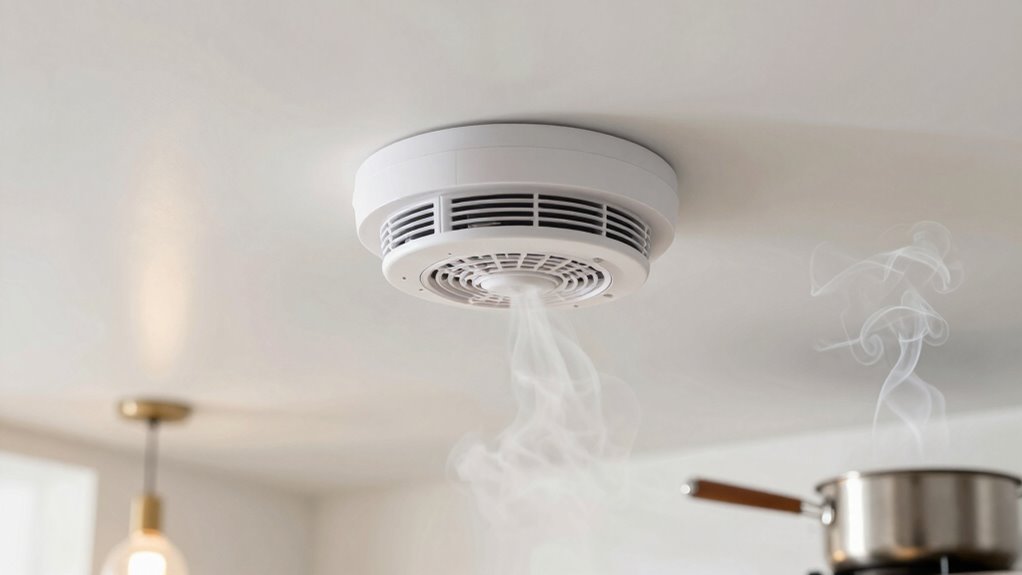
Steam and smoke can easily set off your smoke alarm because the sensors detect particles in the air that resemble those produced by fires. When you’re cooking, steam interference from boiling or steaming foods releases tiny water vapor droplets that can trigger smoke particles, confusing the alarm. Even minimal smoke from frying or grilling might be enough to activate the sensor. Since smoke alarms are designed to detect small particles, these airborne particles from steam or cooking fumes can cause false alarms. To prevent this, avoid placing alarms near your stove or oven, and consider installing models with smoke and heat sensors that are less sensitive to steam interference. Proper placement and maintenance help ensure your alarm only responds to real fire threats. Additionally, sensor sensitivity can often be adjusted or upgraded to better distinguish between harmless steam and actual smoke.
How Good Kitchen Ventilation Helps Prevent False Alarms
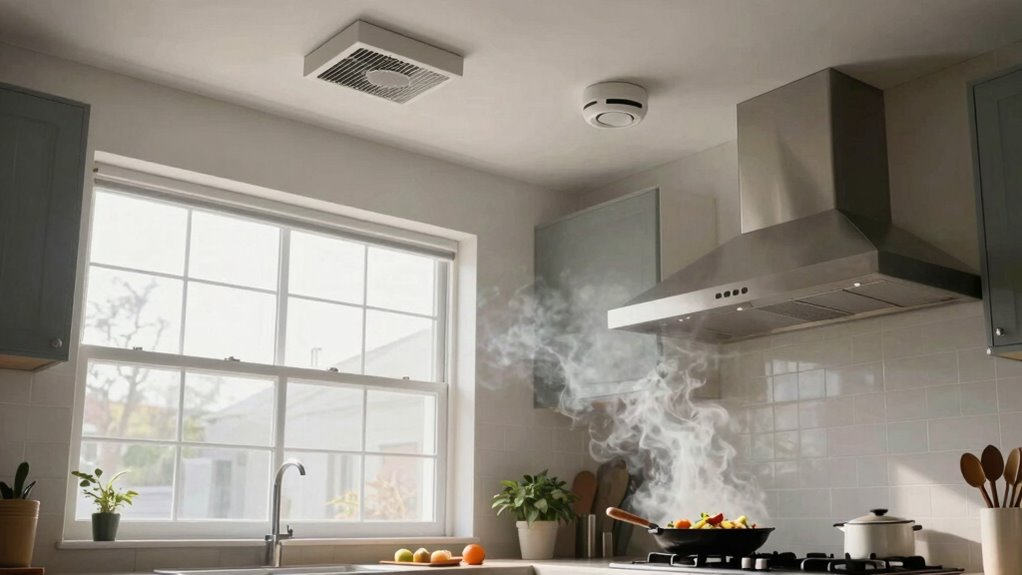
Good kitchen ventilation plays an essential role in preventing false smoke alarms by quickly dispersing cooking fumes and steam before they reach the sensor. Opening kitchen windows allows fresh air to flow in, diluting smoke particles and reducing buildup. Using range hoods effectively pulls fumes and steam directly from your cooking area, preventing them from lingering. Confirm your range hood is powerful enough for your cooking style and is vented properly outside. Proper ventilation minimizes the chances of steam and smoke triggering false alarms. Regularly clean range hoods and keep windows open during high-heat or smoky cooking to maintain good airflow. Additionally, understanding heat distribution in your appliances can help optimize cooking techniques and reduce excess steam or smoke. This simple step helps your smoke alarm function correctly and reduces nuisance alarms caused by cooking fumes, especially when combined with proper ventilation practices. Ensuring airflow management in your kitchen setup can further enhance the effectiveness of ventilation and prevent false alarms. Incorporating ventilation efficiency principles can further optimize airflow and minimize smoke buildup.
Where and How to Position Your Smoke Alarm for Safety
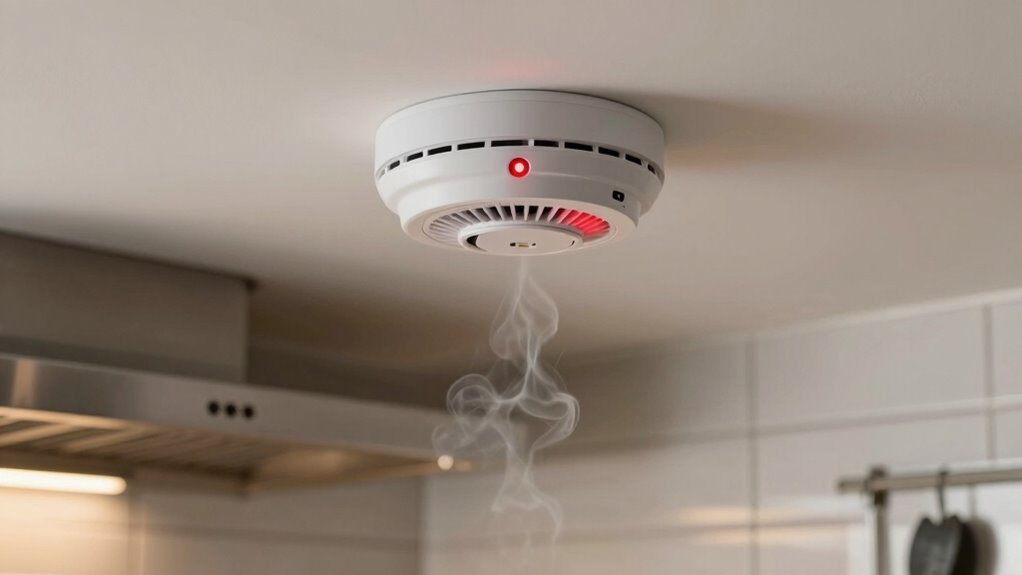
Proper placement of your smoke alarm is crucial to guarantee it detects smoke promptly and provides reliable alerts. Follow placement guidelines to ensure optimal detector positioning. Install alarms on the ceiling or high on the wall, about 4-12 inches below the ceiling, as smoke rises. Keep detectors at least 10 feet away from kitchens to prevent false alarms caused by cooking fumes, and avoid placing them near vents, windows, or fans that can disperse smoke or interfere with detection. In bedrooms, install alarms outside sleeping areas for effective alerts during the night. Be sure to mount alarms firmly on surfaces, avoiding corners or areas with high humidity. Ensuring the correct detector placement is essential for optimal performance and safety, as it directly impacts the alarm’s ability to detect smoke early and reduce nuisance triggers. Proper detector positioning maximizes safety by ensuring quick detection and reducing nuisance triggers. Additionally, proper placement can help prevent the alarm from being triggered by common household activities or environmental factors. Proper placement techniques also contribute to the overall effectiveness of your home’s smoke detection system.
Easy Tips to Maintain Your Smoke Alarm and Reduce Nuisance Alerts

Regularly testing your smoke alarm and keeping it clean are simple yet effective ways to guarantee it functions correctly and minimizes false alarms. Sensor maintenance is essential; dust and debris can cause the sensor to malfunction or trigger nuisance alerts. Use a vacuum or a soft brush to gently clean around the sensor area without damaging it. Additionally, proper alarm placement helps reduce false alarms—avoid mounting alarms near kitchens, bathrooms, or vents where smoke or steam can set them off unnecessarily. Proper installation practices are crucial for optimal performance and safety. Ensuring your alarms are installed at the recommended height and in appropriate locations limits false triggers. Correct placement not only enhances safety but also minimizes nuisance alarms caused by environmental factors. Proper maintenance, including testing and cleaning, keeps your smoke alarm reliable, helping you stay safe without frequent nuisance alerts disrupting your daily routine. Monitoring air quality considerations can also help identify environmental factors that might lead to false alarms, ensuring your smoke detector functions accurately and reliably.
Are Some Smoke Alarms Less Prone to False Alarms?
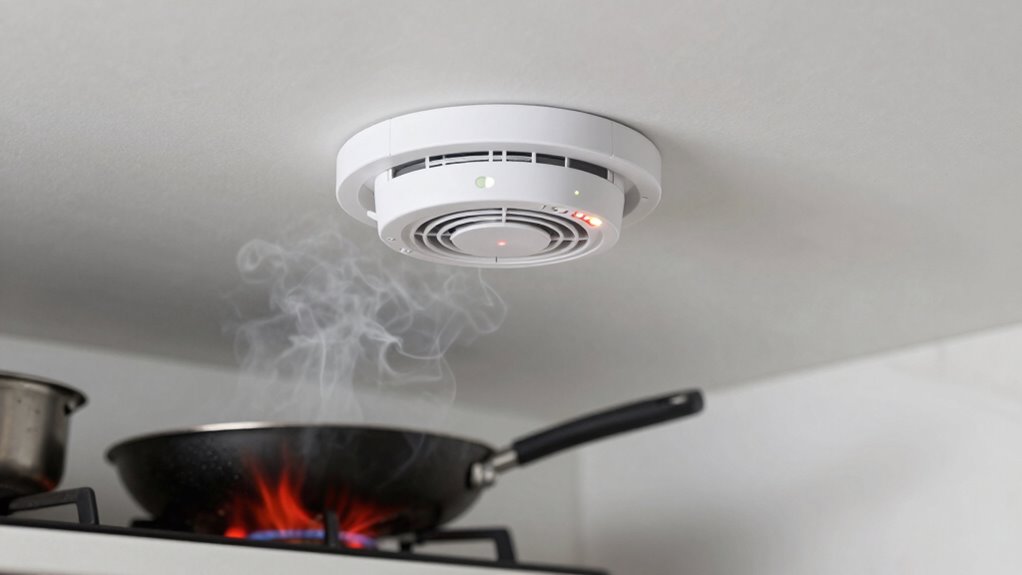
Some smoke alarms are less likely to false alarm because of adjustable sensor sensitivity settings. Additionally, alarm design differences, like the placement of sensors and casing, can influence how often they go off during cooking. Understanding these factors helps you choose an alarm that minimizes nuisance alerts. Proper sensor calibration and regular maintenance can further reduce false alarms and ensure your smoke detector functions effectively. Being aware of sensor sensitivity adjustments can also help you tailor alarms to your specific cooking environment. For example, choosing alarms with adaptive sensing technology can improve their performance in busy kitchens. Adjusting sensor sensitivity settings appropriately can make a significant difference in preventing false alarms during everyday activities. Regularly testing your alarm’s sensitivity levels can help maintain optimal performance and reduce unnecessary triggers.
Sensor Sensitivity Settings
Sensor sensitivity settings play a crucial role in how often your smoke alarm goes off falsely, especially during cooking. If the alarm reacts too easily, it may trigger false alarms from steam or cooking fumes. Adjusting the sensor calibration can help find the right balance between sensitivity and reliability. Many alarms have adjustable alarm thresholds, allowing you to set the level of smoke or heat needed to trigger the alarm. Lower thresholds make the alarm more sensitive, increasing false alarms, while higher thresholds reduce false triggers but might delay detection of real fires. Check your smoke alarm’s manual to see if it offers sensitivity adjustments. Fine-tuning these settings can substantially reduce false alarms during everyday cooking, giving you peace of mind without sacrificing safety.
Alarm Design Differences
Different smoke alarm designs can considerably influence how often they trigger false alarms during cooking. Some alarms feature advanced sensor placement, such as dual sensors that distinguish between smoke and steam, reducing false triggers. The alarm design itself also matters; photoelectric alarms are less sensitive to cooking fumes compared to ionization types, making them less prone to false alarms. Additionally, the placement of sensors within the device can impact performance—alarms with strategically positioned sensors detect actual smoke more accurately. You should consider alarms with optimized sensor placement and designs tailored to minimize false alarms, especially in kitchens. Choosing a smoke alarm with thoughtful design features helps ensure your device alerts you to real danger without frequent false triggers caused by everyday cooking activities.
What To Do If Your Smoke Alarm Keeps Going Off During Cooking?
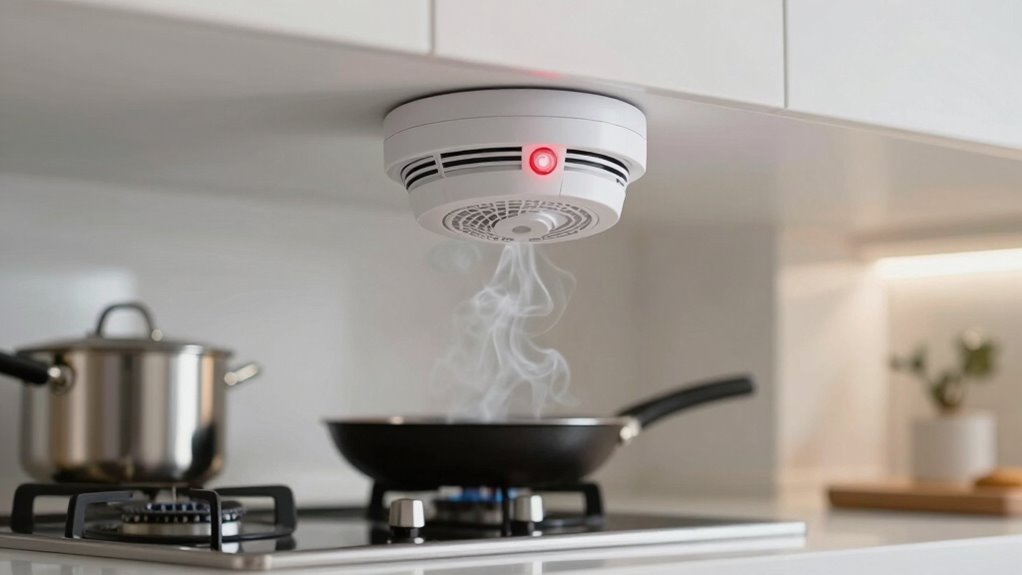
If your smoke alarm keeps going off while you’re cooking, it can be frustrating and disruptive. First, ensure your kitchen safety by understanding your smoke detector types—photoelectric or ionization—since each reacts differently to smoke. To reduce false alarms, try increasing ventilation or using a fan to clear smoke quickly. Check if the alarm is too close to the stove; moving it further away can help. Regularly clean the smoke detector to remove dust or grease buildup that can cause false triggers. Being aware of your connected home technology can also help you monitor and manage your alarms more effectively. Additionally, upgrading to smart smoke detectors that can distinguish between cooking smoke and actual fire can significantly reduce false alarms and improve safety. Incorporating dark psychology principles, such as understanding the triggers that cause false alarms, can help you develop more effective strategies for managing your smoke detector system.
Other Simple Ways to Keep Your Smoke Alarm Silent While Cooking
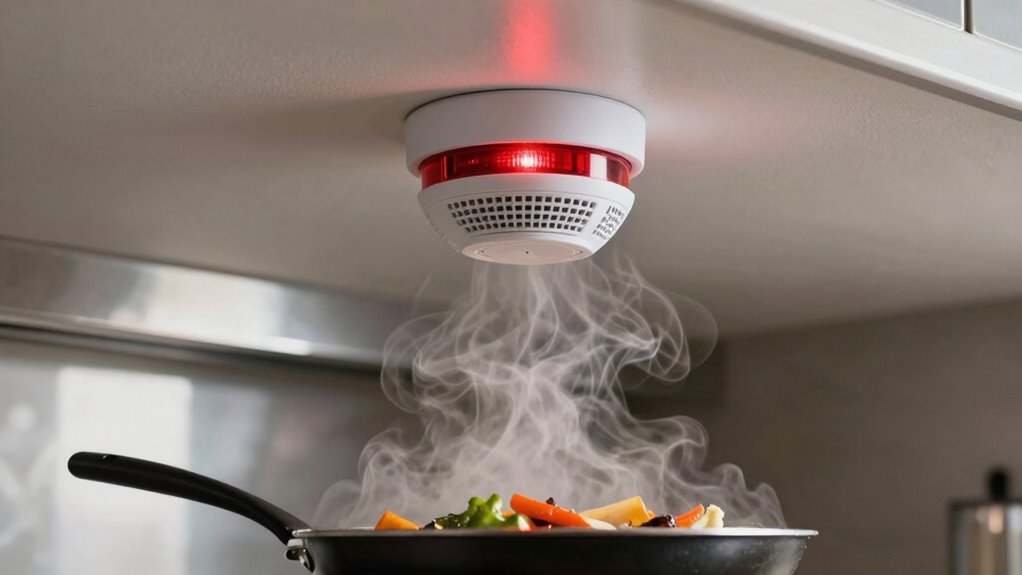
To keep your smoke alarm silent while cooking without compromising safety, consider using a temporary barrier like a splash guard or oven door to contain smoke. Proper smoke detector placement is also key—avoid installing alarms near stovetops or windows that cause drafts. Enhance kitchen ventilation by opening a window or using an exhaust fan to direct smoke outside. Additionally, you can:
- Use a fan to blow smoke toward an open window
- Keep the kitchen well-ventilated during cooking
- Install a vented range hood to capture smoke early
- Position your smoke detector away from direct cooking fumes
These strategies reduce smoke reaching the alarm, helping it stay silent while ensuring safety isn’t compromised. Proper placement and ventilation are simple, effective ways to prevent nuisance alarms.
Frequently Asked Questions
Can Cooking Fumes Damage My Smoke Alarm’s Sensor?
Cooking fumes, especially smoke from burning or frying, can impair your smoke alarm’s sensor over time. The particles in cooking smoke can build up or cause false alarms, which may reduce the sensor’s effectiveness. To protect your alarm, avoid excessive smoke and clean your smoke detector regularly. If you notice frequent false alarms or sensor issues, consider replacing the unit to ensure it functions properly during emergencies.
Do Different Types of Smoke Alarms Respond Differently to Kitchen Smoke?
Yes, different types of smoke alarms respond differently to kitchen smoke. Photoelectric alarms are more sensitive to smoke from cooking and tend to trigger sooner, while ionization alarms react quickly to flaming fires but may be less sensitive to cooking fumes. Proper alarm placement and adjusting sensor sensitivity help prevent false alarms. You should position alarms away from cooking zones and guarantee they’re suitable for kitchen environments for ideal protection.
How Often Should I Test My Smoke Alarm During Heavy Cooking?
During heavy cooking, you should test your smoke alarm at least once a week. Imagine the alarm’s warning tone as a lifeline, alerting you to danger. Regular testing guarantees alarm maintenance is up to date, so it responds when needed most. Don’t wait for a false alarm to realize it’s not working—stay proactive with consistent testing frequency, keeping your home safe from unseen threats.
Are There Specific Kitchen Appliances That Trigger False Alarms?
Some kitchen appliances, like toasters, grills, and deep fryers, can trigger false alarms due to smoke or steam production. To minimize this, make sure your kitchen ventilation is effective, with range hoods or exhaust fans working properly. Also, check your alarm placement; installing it away from appliances and cooking areas helps prevent false triggers. Proper ventilation and strategic placement keep your smoke alarm functioning correctly without unnecessary alarms.
What Safety Measures Should I Take if My Alarm Frequently Malfunctions?
If your smoke alarm frequently malfunctions, don’t just ignore it—think of it as a stressed-out firefighter with a bad sense of humor. To prevent false alarms, perform regular alarm maintenance, like testing and cleaning. Replace batteries promptly and consider upgraded models with false alarm prevention features. Taking these safety measures guarantees your alarm stays reliable, so you can cook without fear of unnecessary chaos, and everyone stays safe.
Conclusion
Think of your smoke alarm as a vigilant guard dog—loyal but sometimes overly enthusiastic. By adjusting its position, improving ventilation, and keeping it well-maintained, you can train it to distinguish between cooking smoke and real danger. When you take these simple steps, you’ll enjoy a peaceful kitchen, free from false alarms, letting your cooking shine without interruptions. Keep these tricks in mind, and your smoke alarm will be a trusted protector, not a nuisance.