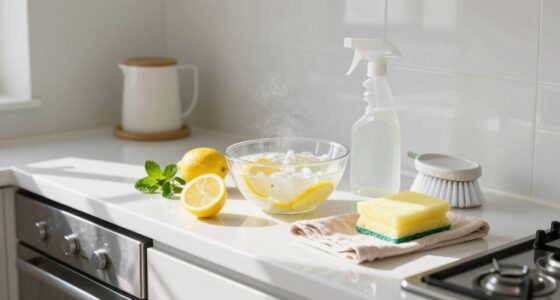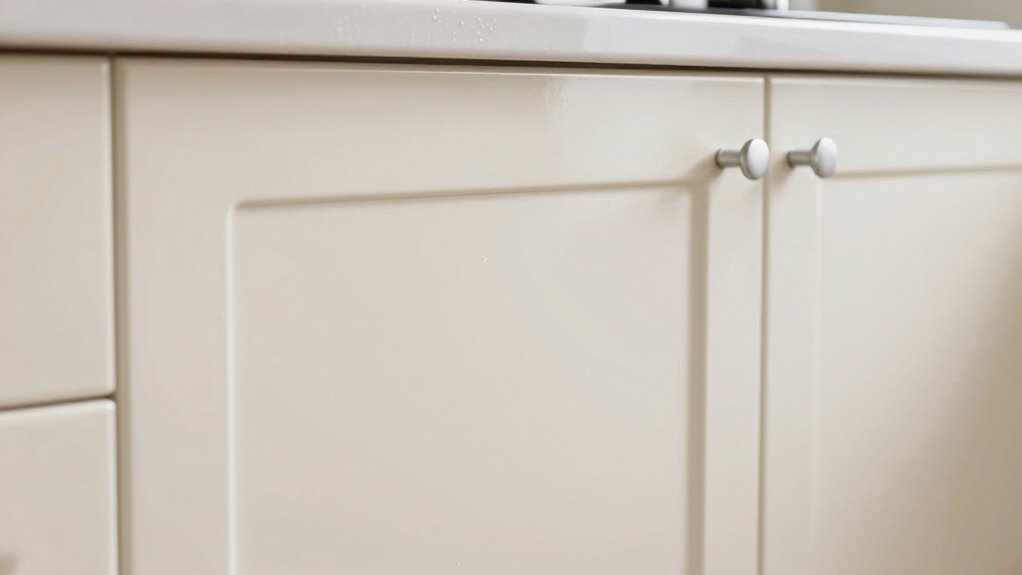
To safely remove grease from cabinets without leaving sticky residue, start by choosing gentle, natural cleaners like diluted vinegar or baking soda paste. Use a damp cloth or soft sponge to apply the solution evenly, working in small sections. Rinse thoroughly with warm water and dry completely to prevent streaks or residue buildup. Avoid harsh chemicals and vigorous scrubbing—proper technique guarantees a clean, residue-free finish. Keep exploring for more tips on effective, safe cabinet cleaning methods.
Key Takeaways
- Use gentle, non-abrasive cleaners like diluted vinegar or baking soda to avoid residue and damage.
- Apply cleaners with a damp cloth or sponge, working in small sections to prevent over-saturation.
- Rinse thoroughly with warm water and dry with a lint-free cloth to prevent sticky residue and water spots.
- Avoid harsh chemicals like ammonia or bleach that can damage cabinet finishes and cause residue buildup.
- Test cleaning solutions on small, hidden areas first to ensure they won’t harm the cabinet surface.

ATTITUDE Kitchen Cleaner Spray, EWG Verified, Degreaser Spray to Cut Grease & Grime, Plant-Based & Vegan, Citrus Zest Scent, 27.1 Fl Oz
EWG VERIFIED: This kitchen cleaner spray is formulated with clean ingredients and certified by the Environmental Working Group…
As an affiliate, we earn on qualifying purchases.
As an affiliate, we earn on qualifying purchases.
Why Does Grease Build Up on Kitchen Cabinets and How Does It Affect Your Space?
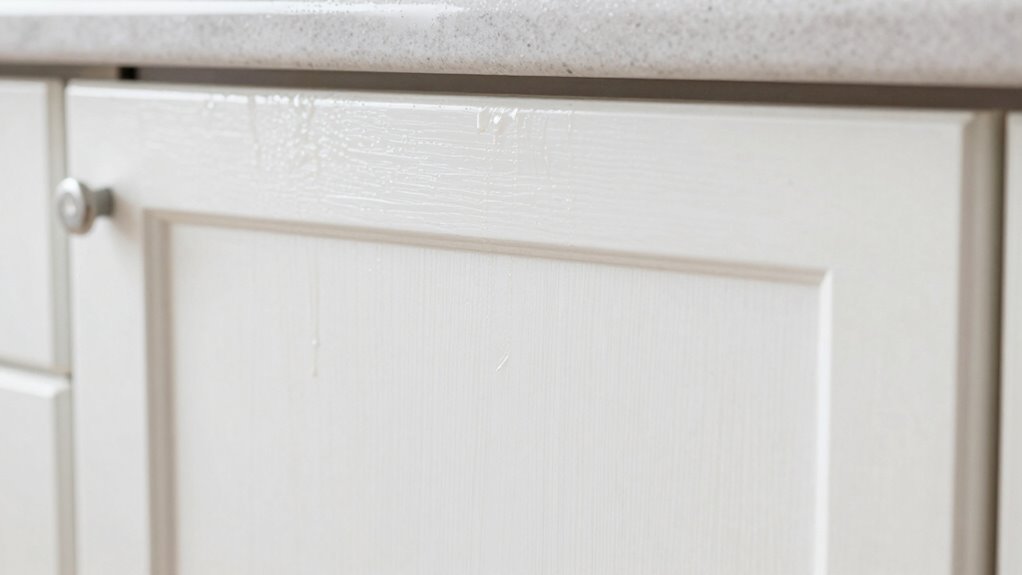
Grease tends to build up on kitchen cabinets because cooking releases oils and vapors that settle on surfaces over time. When you cook, cooking fumes carry tiny oil particles that cling to cabinets, especially near the stove. Without proper kitchen ventilation, these fumes linger longer, increasing grease accumulation. Over time, this buildup makes your cabinets look dirty and dull, and it can also cause unpleasant odors to persist. The sticky film traps dust and dirt, making cleaning more difficult and potentially damaging the cabinet finish. Additionally, thick grease layers can attract pests and promote mold growth in humid environments. Regularly managing cooking fumes through good ventilation is essential to prevent excessive grease buildup and maintain a clean, fresh-looking kitchen. Proper ventilation systems can significantly reduce grease buildup and make cleaning easier.

MRS. MEYER'S CLEAN DAY Baking Soda Cream Cleaner, Cuts Grease, Scratch-Free Polish, Lemon Verbena, 16 Fl Oz, Pack of 1
Mrs. Meyer’s Baking Soda Cream Cleaner removes soap scum and grease build-up to make your kitchen sparkle
As an affiliate, we earn on qualifying purchases.
As an affiliate, we earn on qualifying purchases.
How to Choose Safe and Effective Products to Clean Grease Off Cabinets
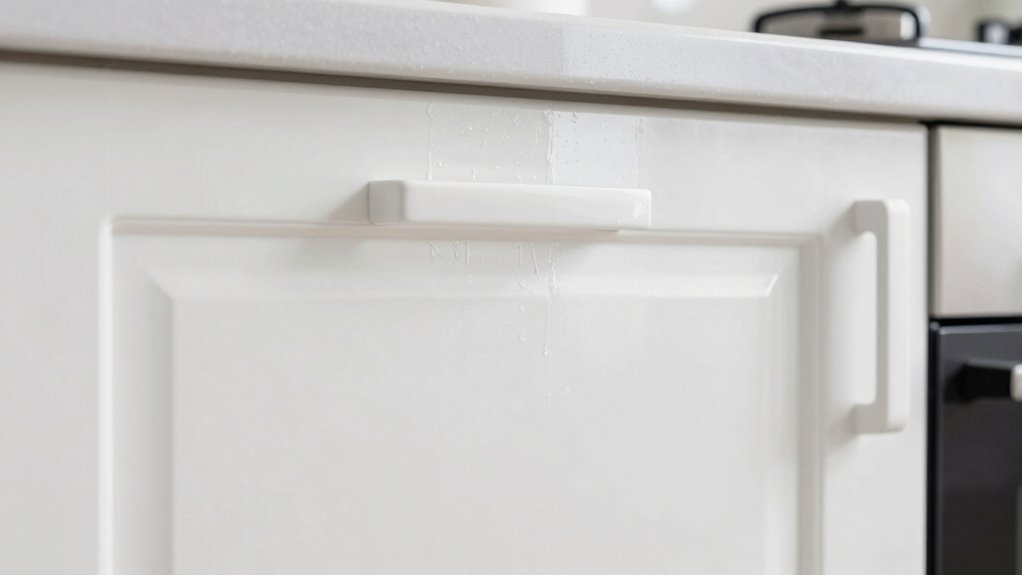
Choosing the right cleaning products is essential for safely and effectively removing grease from your cabinets. Focus on cleaning tips that prioritize product safety to avoid damage or harmful residues. Look for gentle, non-abrasive cleaners designed specifically for kitchen surfaces. Avoid harsh chemicals like ammonia or bleach, which can weaken cabinet finishes and pose health risks. Natural options such as diluted vinegar or baking soda can be effective and safe if used correctly. Always read labels carefully to ensure the product is suitable for your cabinet material. Conduct a patch test first to prevent unwanted reactions. By selecting products with safety and effectiveness in mind, you’ll maintain your cabinets’ appearance without risking damage or exposing your family to chemicals. Free Floating

YFUIF 2 Pack Damp Clean Duster Sponge, Magic Sponge Eraser for Household Cleaning, Reusable Dusters Cleaning Supplies for Housekeeping, Dish, Blinds, Glass, Baseboards,Window Track Grooves and Faucets
【Stop dust from flying everywhere】Instead of pushing dust around, our 23U-groove traps dust, hair, and grime inside—so you…
As an affiliate, we earn on qualifying purchases.
As an affiliate, we earn on qualifying purchases.
Step-By-Step: How to Remove Grease From Cabinets Without Sticky Residue
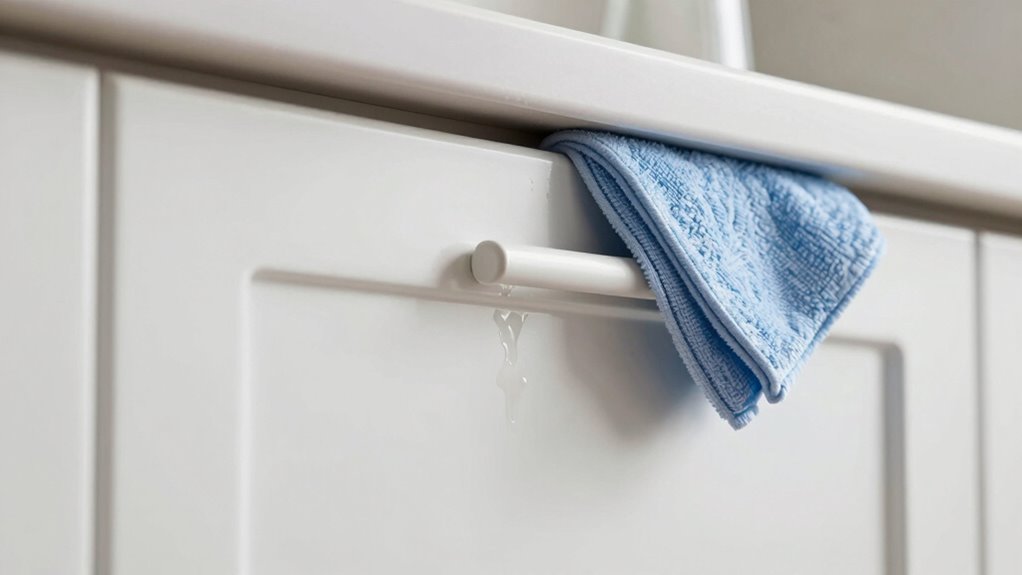
To effectively remove grease without leaving sticky residue, start by choosing the right cleaner suited for your cabinets’ finish. Apply it using proper techniques to make certain of even coverage without over-saturating the surface. Finish by rinsing thoroughly with clean water to eliminate any leftover residue and restore a smooth, clean finish.
Choosing the Right Cleaner
Selecting the right cleaner is essential to effectively remove grease without leaving a sticky residue. You want a product that cuts through grease while supporting grease prevention over time. When choosing, look for eco friendly cleaners that are safe for your family and the environment but still strong enough to tackle stubborn grime. Consider options with natural ingredients like vinegar or baking soda, which are effective and gentle. Avoid harsh chemicals that may leave a film or residue. Properly chosen cleaners help maintain a clean, streak-free finish and reduce future grease buildup. Incorporating innovative cloud solutions can also help manage cleaning schedules and supply inventories more efficiently, supporting overall sustainability and operational efficiency. Additionally, selecting products with certifications or endorsements from environmental organizations can ensure you’re choosing safer, eco-conscious options. Moreover, understanding effective email marketing strategies can help you promote these eco-friendly cleaning products more successfully to your target audience.
Proper Application Techniques
Proper application techniques are essential for removing grease from your cabinets without leaving a sticky residue. Start by applying your chosen degreasing solution evenly using the right tools, such as a soft cloth or sponge. Avoid pouring too much cleaner directly onto the surface; instead, lightly dampen your degreasing tools to prevent excess. Work in small sections, gently scrubbing with circular motions to lift grease effectively. Be sure to follow the manufacturer’s instructions for dwell time, allowing the cleaner to break down the grease. After application, use a clean, damp cloth to wipe away residue thoroughly. Proper application techniques ensure your degreasing tools do their job efficiently without leaving behind any sticky residue, leaving your cabinets clean and shiny. Additionally, understanding the degreasing process can help optimize your cleaning routine for better results. Using the correct application techniques can also prevent damage to your cabinetry’s finish and extend the lifespan of your cleaning efforts. Proper cleaning methods can further improve the effectiveness and safety of your degreasing routine. Applying these techniques correctly can also prevent damage to your cabinetry and maintain its appearance over time.
Effective Rinsing Methods
Once you’ve applied the degreasing solution, rinsing thoroughly is key to preventing sticky residues. Proper rinsing ensures effective grease removal and maintains your cabinets’ appearance. Use plenty of clean, warm water to wash away any leftover soap or degreaser. A soft sponge or cloth helps remove residue without scratching surfaces. Be sure to rinse from top to bottom to avoid streaks and guarantee complete cleaning. After rinsing, dry the cabinets with a lint-free cloth to prevent water spots. This step is essential for good cabinet maintenance and a spotless finish. Additionally, choosing trusted cleaning methods can help ensure your cabinets stay pristine without sticky buildup. Employing safe rinsing techniques minimizes the risk of chemical residues and enhances cleaning efficiency. Incorporating proper cleaning tools can further improve your results and reduce the effort required. Keep these tips in mind for the best results:
- Use a gentle, non-abrasive cloth for rinsing.
- Change water frequently to avoid re-depositing grease.
- Double-check for any missed spots before drying.

MR.SIGA Microfiber Cleaning Cloth,Pack of 12,Size:12.6" x 12.6"
ULTRA SOFT MATERIAL & SCRATCH FREE – Ultra soft and highly absorbent microfiber cleaning cloths, great for cleaning…
As an affiliate, we earn on qualifying purchases.
As an affiliate, we earn on qualifying purchases.
Easy Tips to Prevent Grease Buildup on Your Kitchen Cabinets
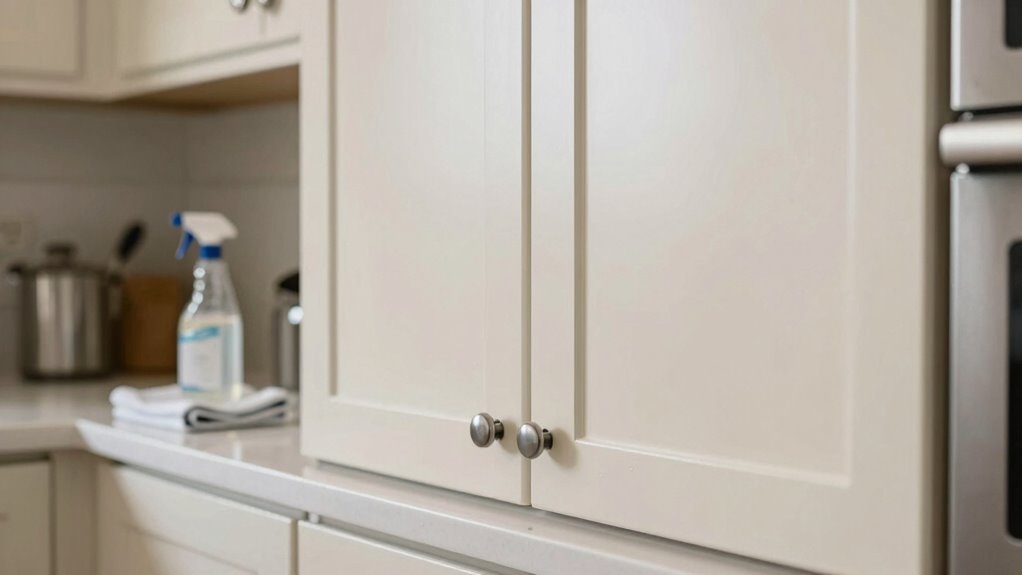
Grease buildup on your kitchen cabinets can quickly become a stubborn problem, but you can prevent it with simple steps. Start by improving your kitchen ventilation; using exhaust fans or range hoods while cooking helps remove airborne grease before it settles. Adjust your cooking habits by covering pots and pans to contain splatters, and avoid high-fat or greasy foods that produce more residue. Regularly clean and maintain your ventilation system to guarantee it works efficiently. Keep your cabinets dry and wipe them down frequently to prevent grease from accumulating. Organizing your cooking space also minimizes splatters and makes cleanup easier. Additionally, understanding regulatory standards related to kitchen safety and cleanliness can help you adopt more effective cleaning practices. Proper tool maintenance and using suitable cleaning products will also prolong the cleanliness of your cabinets and ensure safety during the cleaning process. Incorporating preventive measures can further reduce the need for frequent deep cleaning and maintain a cleaner kitchen environment. Moreover, using appropriate cleaning agents designed specifically for kitchen surfaces can enhance the effectiveness of your cleaning routine.
Common Mistakes to Avoid When Cleaning Grease From Cabinets
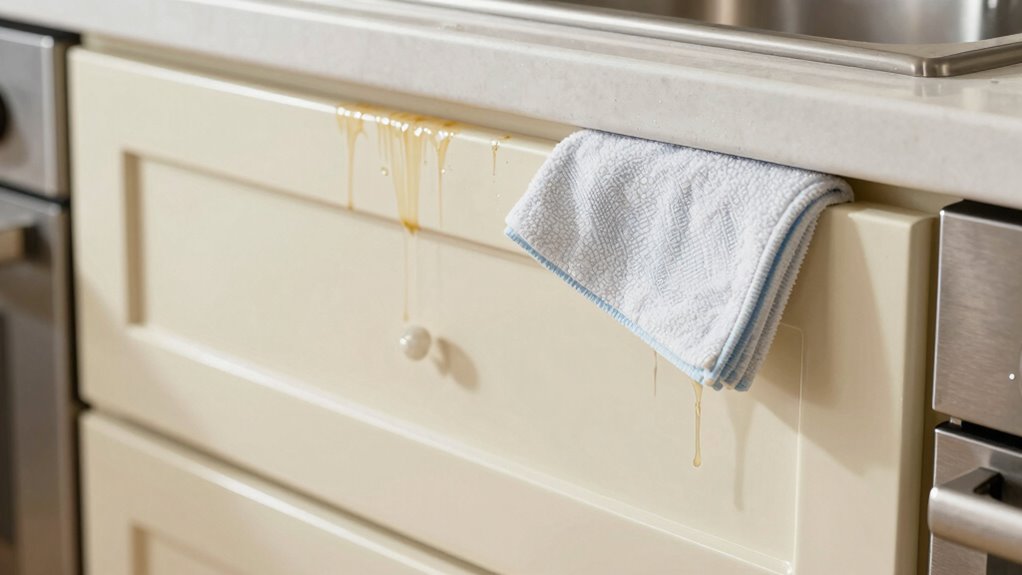
One common mistake is using harsh chemicals that can damage your cabinet finish. You should also avoid over-wetting the surfaces, which can cause warping or water spots. Additionally, don’t rub too vigorously, as this can scratch or strip away the protective coating. To protect your cabinets, consider using gentle cleaning methods that are safe for various finishes. Proper cleaning techniques help maintain the integrity and appearance of your cabinetry over time. Ensuring adequate airflow during cleaning can help prevent moisture buildup and preserve the cabinet material. Incorporating proper ventilation can further aid in drying and reduce the risk of damage from excess moisture. Implementing appropriate ventilation considerations is essential for maintaining a dry environment and preventing mold or warping.
Using Harsh Chemicals
Using harsh chemicals might seem like an effective way to remove stubborn grease, but it can actually do more harm than good. These substances can damage your cabinet surfaces and pose risks to your health. Plus, they often have a negative environmental impact, contaminating water sources and harming wildlife. When choosing cleaning products, always prioritize chemical safety and opt for gentler, eco-friendly options. Be cautious of these mistakes: – Using strong solvents that can strip finishes or cause discoloration – Ignoring ventilation, which can lead to inhaling harmful fumes – Relying solely on chemical cleaners without testing on a small area first and ensuring the products are environmentally friendly. Additionally, selecting natural cleaning alternatives can help protect your cabinets and the environment.
Over-wetting Surfaces
Over-wetting your cabinets during cleaning can lead to more damage than you might expect. When you over wet surfaces, excess moisture seeps into seams, hinges, or gaps, risking warping or swelling of the wood. This not only weakens the cabinet structure but also makes thorough drying more difficult, increasing the chance of mold or mildew growth. To avoid chemical damage and preserve your cabinets, use a damp cloth rather than soaking them. Properly wring out your cleaning tools and focus on targeted cleaning rather than saturating surfaces. By avoiding over wetting surfaces, you ensure effective grease removal without compromising the integrity of your cabinets. Always remember: less moisture is better for maintaining both appearance and longevity. Additionally, using proper cleaning techniques can help prevent moisture-related issues and extend the life of your cabinetry.
Rubbing Too Vigorously
Scrubbing cabinets with too much force can do more harm than good. Using abrasive scrubbers or scrubbing vigorously can scratch surfaces and remove finishes, making your cabinets look worse. Remember, frequent scrubbing isn’t necessary; over-cleaning can damage the wood and finish. Instead, focus on gentle, consistent cleaning to avoid unnecessary wear.
Be cautious of these common mistakes:
- Relying on abrasive scrubbers that can scratch the surface
- Excessive scrubbing that damages the cabinet finish
- Cleaning too often, which can weaken the protective coating
Proper cleaning involves patience and gentle motions. Avoid the temptation to scrub harshly, and stick to a moderate cleaning frequency for the best results. This approach keeps your cabinets looking fresh without risking damage.
Natural and Eco-Friendly Ways to Clean Grease Without Damaging Finish
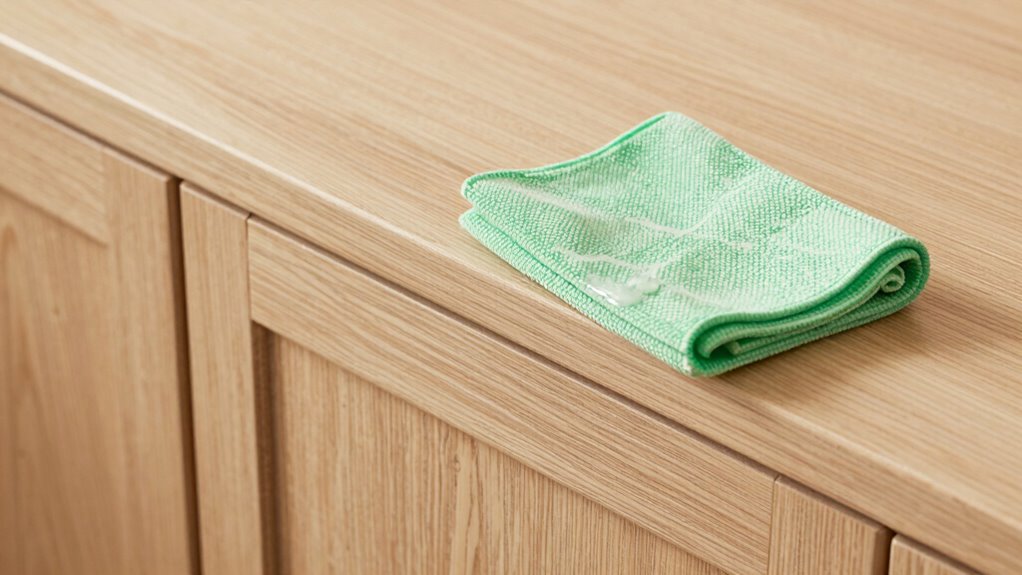
When cleaning grease off your cabinets naturally and eco-friendly, choosing gentle ingredients is key to protecting the finish. DIY solutions using eco friendly ingredients can effectively break down grease without harsh chemicals. White vinegar diluted with water is a safe, natural degreaser that’s gentle yet effective. Baking soda mixed with water creates a paste that lifts grease without scratching surfaces. Lemon juice acts as a natural degreaser and adds a fresh scent. These ingredients are biodegradable, non-toxic, and safe for your family and the environment. Apply them with a soft cloth or sponge, avoiding abrasive scrubbers that can damage the finish. Regular use of these eco-friendly solutions keeps your cabinets clean, shiny, and free from sticky residues, all while being gentle on the surface.
When Should You Call a Professional for Heavy Grease or Damage?
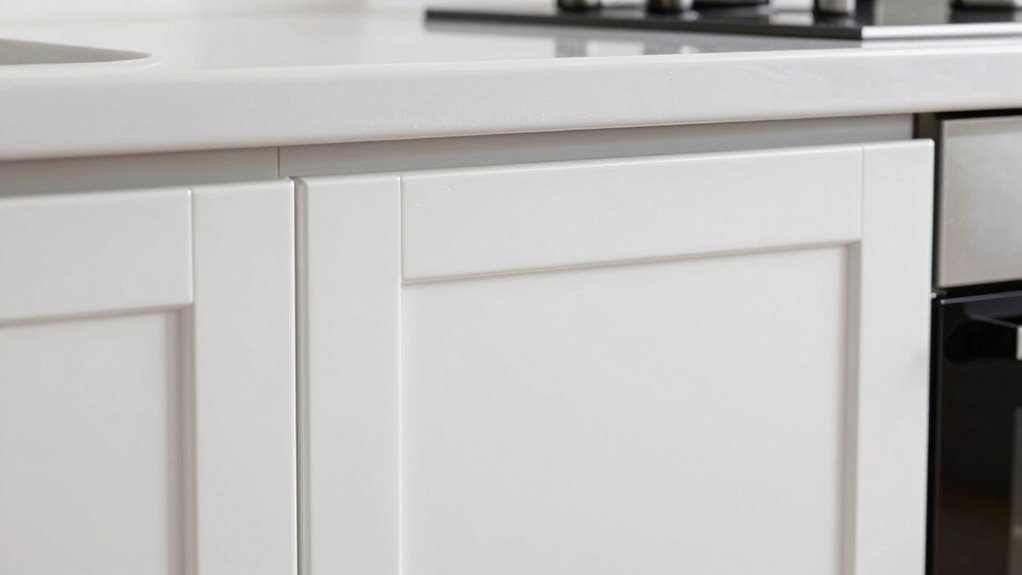
Heavy grease buildup or visible damage to your cabinets indicates it’s time to seek professional help. Different cabinet materials, like wood or laminate, react uniquely to heavy grease or harsh cleaning. If you notice persistent stains, warping, or peeling, it’s a sign that DIY methods aren’t enough. Additionally, certain grease types, such as oily or burnt grease, require specialized treatment.
Consider calling a professional if:
- The grease has penetrated deep into the cabinet material, making it hard to clean
- You see cracks, peeling, or damage caused by aggressive cleaning attempts
- The grease buildup is extensive or accompanied by damage that affects cabinet stability
Professionals can assess the damage and use appropriate techniques to restore your cabinets safely.
Frequently Asked Questions
Can Homemade Solutions Effectively Remove All Types of Grease?
Homemade solutions can effectively remove many types of grease, especially on cabinets and surfaces. You’ll want to use ingredients like vinegar, baking soda, or dish soap, which are great for grease removal. However, some stubborn or heavy-duty grease might require commercial degreasers. For best results, test your homemade solution first, and make sure you rinse thoroughly to avoid sticky residue. With proper application, homemade solutions can be quite effective for everyday grease cleanup.
Are There Specific Cleaning Frequencies Recommended for Different Kitchen Uses?
Imagine your kitchen as a bustling hub—frequently used areas need more attention. For light kitchen usage, cleaning schedules can be weekly or biweekly, keeping surfaces fresh without overdoing it. If your kitchen sees heavy cooking or multiple daily meals, consider more frequent cleaning, maybe every 2-3 days. Adjust your cleaning routine based on kitchen usage to prevent grease buildup and keep everything sparkling and inviting.
How Can I Prevent Streaks or Discoloration During Cleaning?
To prevent streaks and control discoloration during cleaning, you should use a gentle, non-abrasive cleaner and a soft cloth. Always wipe in the direction of the grain and avoid excessive scrubbing, which can lead to streaks. Rinse thoroughly with clean water, then dry immediately with a microfiber cloth to guarantee streak prevention and discoloration management. Regular maintenance helps keep your cabinets looking fresh and spotless.
What Safety Precautions Should I Take When Using Chemical Cleaners?
When using chemical cleaners, you should prioritize chemical safety by wearing protective gear such as gloves, goggles, and a mask to prevent skin and eye irritation. Make sure the area is well-ventilated to avoid inhaling fumes. Read labels carefully, follow usage instructions, and keep chemicals out of reach of children and pets. Taking these precautions guarantees your safety during cleaning and helps avoid accidents or health issues.
How Long Should I Wait Before Applying a New Finish After Cleaning?
Think of your cabinet finish like a seed that needs time to grow. You should wait at least 24 to 48 hours for the drying time before applying a new finish, ensuring the surface is completely dry. Remember, the finish curing process can take up to a week, so avoid rushing. Patience guarantees a smooth, durable final coat, preventing damage or peeling later on.
Conclusion
Keeping your cabinets grease-free isn’t just about spotless surfaces—it’s about creating a healthier, more inviting space. When you choose safe, effective methods, you’re not only protecting your finish but also your family’s well-being. Sometimes, a simple routine can prevent stubborn buildup, reminding us that small, consistent actions often lead to the biggest results. After all, a clean kitchen isn’t just about looks—it’s where memories are made, and every detail counts.