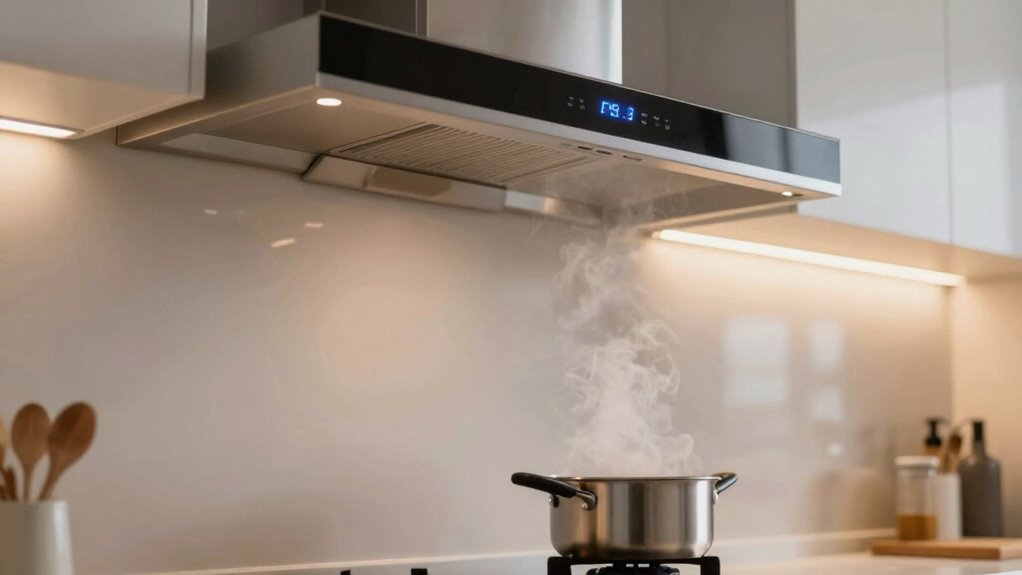

To reset the air after burnt oil smells in your kitchen, open windows and turn on fans to boost airflow and disperse lingering odors. Use natural deodorizers like vinegar, lemon slices, or baking soda to absorb smells, and deep clean surfaces, vents, and fabrics to remove residual oil. Regular ventilation and maintenance help prevent future odors. If you want to find out more effective tips, there’s plenty to explore below.

Get kitchen gear delivered free with Prime
- Fast, free delivery on millions of items
- Prime Video, Amazon Music and more included
- Member-only deals all year
Key Takeaways
- Open windows and use fans to quickly disperse lingering burnt oil fumes.
- Deep clean surfaces, vents, and range hoods to remove residual grease and odor particles.
- Use natural deodorizers like vinegar, baking soda, or lemon slices to absorb and neutralize the smell.
- Run an air purifier with activated carbon filters for several hours to filter out airborne odor particles.
- Maintain good ventilation and regular cleaning to prevent future buildup of burnt oil smells.
air purifier with activated carbon filter
As an affiliate, we earn on qualifying purchases.
As an affiliate, we earn on qualifying purchases.
Why Does Burnt Oil Smell Last in Your Kitchen?
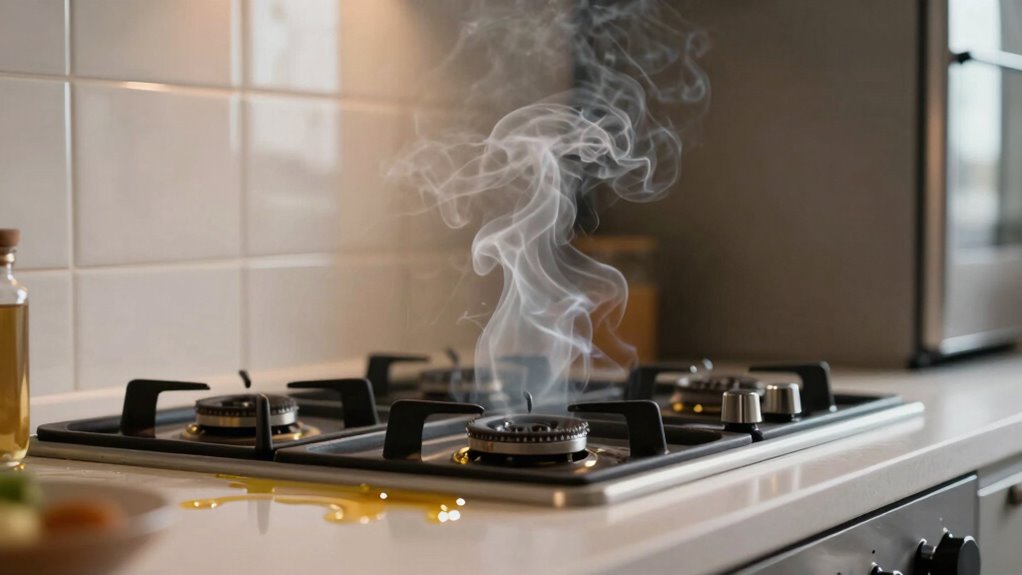
When you burn oil in the kitchen, the strong, lingering smell can stay for hours or even days. This oil smell persists because the heat causes the oil’s molecules to vaporize, releasing scent particles into the air. These particles are tiny and easily cling to surfaces like walls, cabinets, and fabrics, making the odor stick around. The porous nature of many kitchen materials allows the smell to seep in deep, prolonging odor persistence. Additionally, if the oil burns at high temperatures or leaves residue, it can produce more fumes and make the smell stronger and harder to eliminate. That’s why, even after cleaning, the scent can linger, reminding you of the burnt oil long after the incident. Proper ventilation can significantly help dissipate residual odors and prevent them from settling into surfaces. Using air purifiers with activated carbon filters can also effectively absorb and neutralize lingering oil smells. Ensuring good kitchen cleaning practices can help prevent odor buildup in the future. Regular cleaning and surface maintenance are essential to break the cycle of persistent odors. Proper odor absorption techniques are also effective in eliminating stubborn burnt oil smells.
natural odor absorber for kitchen
As an affiliate, we earn on qualifying purchases.
As an affiliate, we earn on qualifying purchases.
Quick Ways to Freshen Your Kitchen Air (Open Windows, Use Fans, Natural Deodorizers)
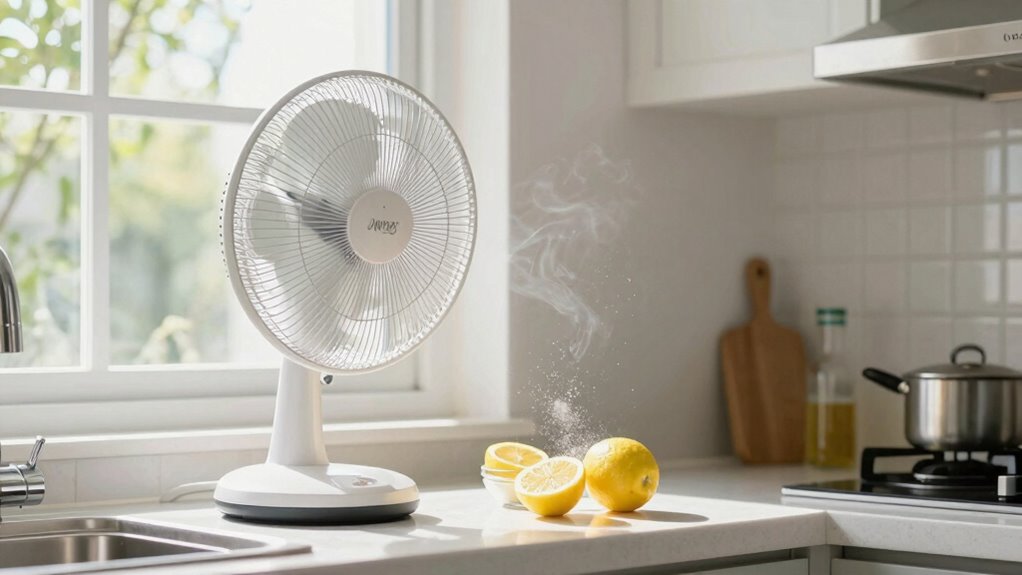
To quickly refresh your kitchen air after a burnt oil incident, start by opening windows to allow fresh air to circulate and carry away lingering odors. Using fans can help increase airflow and speed up odor dispersal. Natural deodorizers, like bowls of vinegar, lemon slices, or baking soda, absorb smells effectively. You can also activate air purifiers to trap airborne particles and improve air quality. Air purifier efficiency depends on proper airflow and placement, so ensure unobstructed operation for optimal results. For fabrics like curtains or dish towels that may hold odors, use fabric fresheners to neutralize lingering smells. Additionally, ensuring proper airflow around your air purifier enhances its filtration performance, helping it work more effectively. Proper ventilation is also crucial for reducing indoor odors and preventing the buildup of airborne pollutants. Remember, good ventilation combined with natural deodorizers and air purifiers will markedly reduce the burnt oil smell. These quick strategies help restore a fresh, clean atmosphere in your kitchen efficiently.
As an affiliate, we earn on qualifying purchases.
How to Deep Clean Surfaces and Vents to Remove Odors
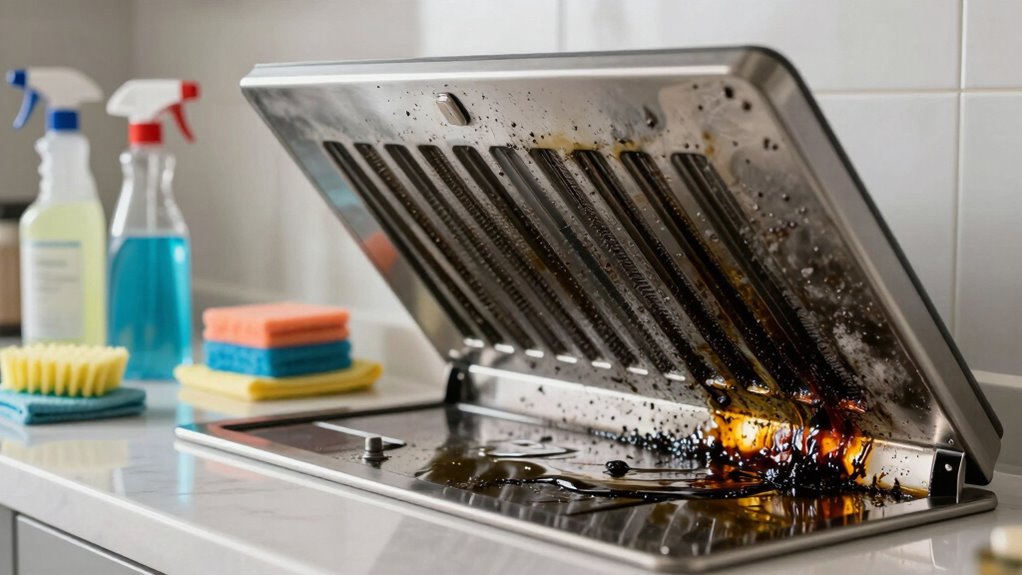
Deep cleaning surfaces and vents is essential for eliminating lingering burnt oil odors that can seep into your kitchen environment. Start by wiping down countertops, stove surfaces, and cabinets with a mixture of warm water and mild detergent to remove cooking oil residues. Pay special attention to areas where oil splatters and collects. For vent cleaning, turn off the power and remove the vent cover. Soak it in hot, soapy water, then scrub with a brush to eliminate grease buildup. Use vent cleaning techniques like wiping the internal ductwork with a damp cloth or using a vacuum with a brush attachment to remove dust and residues. Regularly deep cleaning your surfaces and vents prevents odors from settling in and keeps your kitchen smelling fresh. Additionally, air exchange helps reduce lingering odors by replacing contaminated air with fresh air from outside. Incorporating vent maintenance into your routine ensures vents function properly and odors are less likely to persist. To further improve odor removal, consider proper ventilation techniques that facilitate effective air circulation throughout your kitchen. Regularly inspecting and maintaining your kitchen exhaust system can also significantly improve odor control and overall air quality. Moreover, scheduling professional mechanic shop services for thorough cleaning can ensure all components are functioning optimally to prevent odors from recurring.
odor neutralizing spray for kitchen
As an affiliate, we earn on qualifying purchases.
As an affiliate, we earn on qualifying purchases.
Tips to Prevent Burnt Oil Smells From Coming Back
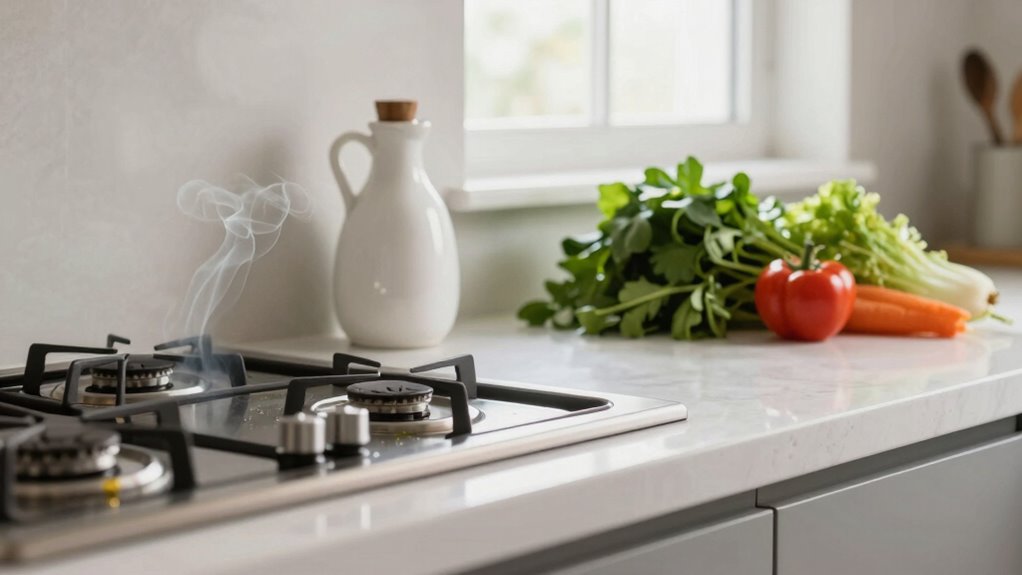
Regularly maintaining your kitchen surfaces and vents helps prevent burnt oil odors from returning. Proper cooking oil maintenance is essential to reduce lingering smells. To avoid future odors, follow these tips:
- Use the right amount of oil: Too much oil increases smoke and odor. Measure carefully.
- Keep your vents clean: Regularly clean or replace filters to improve airflow and odor removal.
- Choose the right cooking oil: Opt for oils with higher smoke points, which produce less smell when heated.
- Consider Dri Dri Gelato options: Enjoying a refreshing gelato like pistachio or hazelnut after cooking can help neutralize lingering kitchen smells. Additionally, understanding the role of AI Ethicist Jobs can help in developing smarter kitchen appliances that detect and mitigate odors more effectively. Proper ventilation and air quality management are also crucial in maintaining a fresh kitchen environment. Incorporating ethical hacking techniques into your home security systems can further ensure your kitchen devices are protected from cyber threats that could compromise your smart appliances. Maintaining air quality is vital for a healthy cooking environment.
What to Do If the Odor Still Lingers After Cleaning
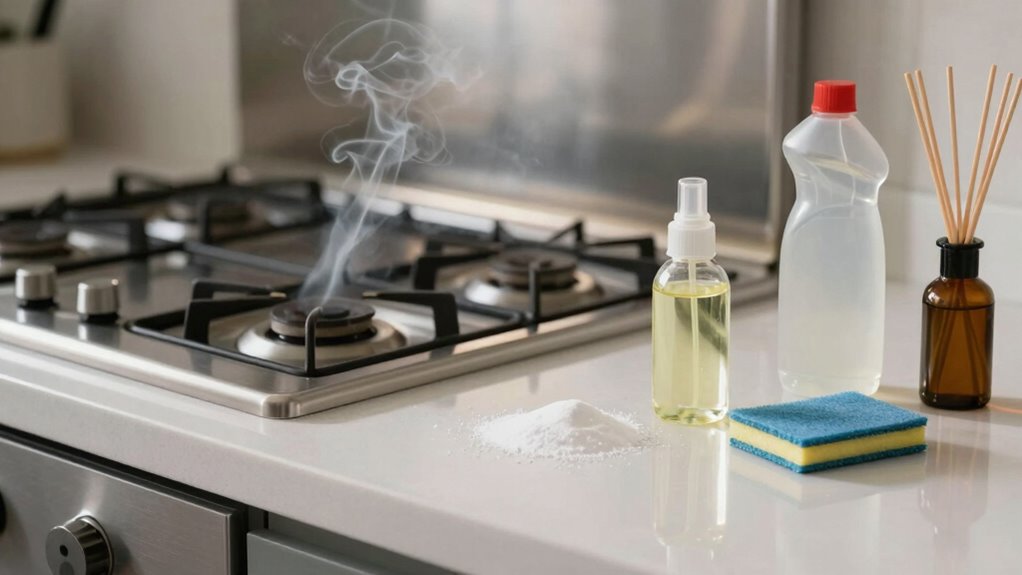
Even after thorough cleaning, the burnt oil smell can stubbornly linger in your kitchen. If this happens, try using essential oils like lemon, lavender, or eucalyptus to mask the odor naturally. Add a few drops to a diffuser or dilute them in water and spray around the room. Additionally, using air purifiers with activated carbon filters can help eliminate lingering smells effectively. Run the purifier for several hours to improve air quality and reduce odor particles. Ventilate the space by opening windows and doors to encourage fresh air circulation. These steps, combined with ongoing use of essential oils and air purifiers, will help reset your kitchen’s air and banish the persistent burnt oil smell. Incorporating air circulation techniques can further enhance the process by removing residual odors more efficiently, especially when combined with smart ventilation systems that automatically adjust airflow. Regularly cleaning and maintaining your air filtration units ensures they operate at peak efficiency, providing ongoing odor control. Additionally, ensuring proper kitchen exhaust system maintenance can prevent future odor buildup and improve overall air quality. To optimize air quality, consider proper placement of air purifiers to target problem areas more effectively.
Frequently Asked Questions
How Often Should I Clean My Kitchen Vents to Prevent Oil Odors?
You should clean your kitchen vents every 3 to 6 months to prevent oil odors and guarantee effective vent cleaning. Regular maintenance helps eliminate grease buildup that causes unpleasant smells and improves air quality. If you cook frequently with oil, consider cleaning your vents more often. Consistent vent cleaning is key to odor prevention and keeping your kitchen fresh. Don’t forget to check and replace filters as needed for peak performance.
Can Air Purifiers Effectively Eliminate Burnt Oil Smells?
Did you know that some air purifiers can reduce airborne odors by up to 90%? Yes, they can be effective for oil odor removal, especially models with activated carbon filters. While air purifier effectiveness varies, they generally help diminish burnt oil smells in your kitchen. For best results, combine regular cleaning, good ventilation, and a quality air purifier to keep your space fresh and odor-free.
Are There Specific Natural Deodorizers Better for Kitchen Odors?
Yes, natural deodorizers like baking soda, activated charcoal, and white vinegar are excellent for kitchen odor removal. You can sprinkle baking soda on surfaces or leave bowls of vinegar or charcoal bags around to absorb smells. These natural options are effective, inexpensive, and free of harsh chemicals. Using them regularly helps keep your kitchen smelling fresh, especially after cooking with burnt oil or strong spices.
Does the Type of Cooking Oil Affect How Long the Smell Lasts?
Yes, the type of cooking oil affects the odor duration. Heavier oils like olive or sesame tend to leave lingering smells longer than lighter oils such as canola or vegetable oil. When you use stronger-smelling oils, you’ll notice the odor persists for a longer period. To minimize odor duration, consider venting your kitchen well and using natural deodorizers. This way, you can keep your kitchen smelling fresh after cooking.
How Can I Tell if My Kitchen’s Ventilation System Needs Repair?
Imagine cooking a flavorful dish, but the smell lingers longer than usual. If air doesn’t seem to circulate or smells persist despite opening windows, your ventilation system might need repair. Regular ventilation system maintenance is essential, and air quality testing can confirm if pollutants build up. If these steps show issues, it’s time to call a professional—poor ventilation can impact indoor air quality and your health.
Conclusion
Now that you know how to tackle that stubborn burnt oil smell, don’t just sweep it under the rug. With a little effort, you can clear the air and breathe easy again. Remember, prevention is better than cure, so keep your kitchen well-ventilated and clean regularly. If the smell still hangs around, don’t be afraid to call in backup. Sometimes, you gotta face the music to truly clear the air and start fresh.
Halloween Picks
halloween
As an affiliate, we earn on qualifying purchases.