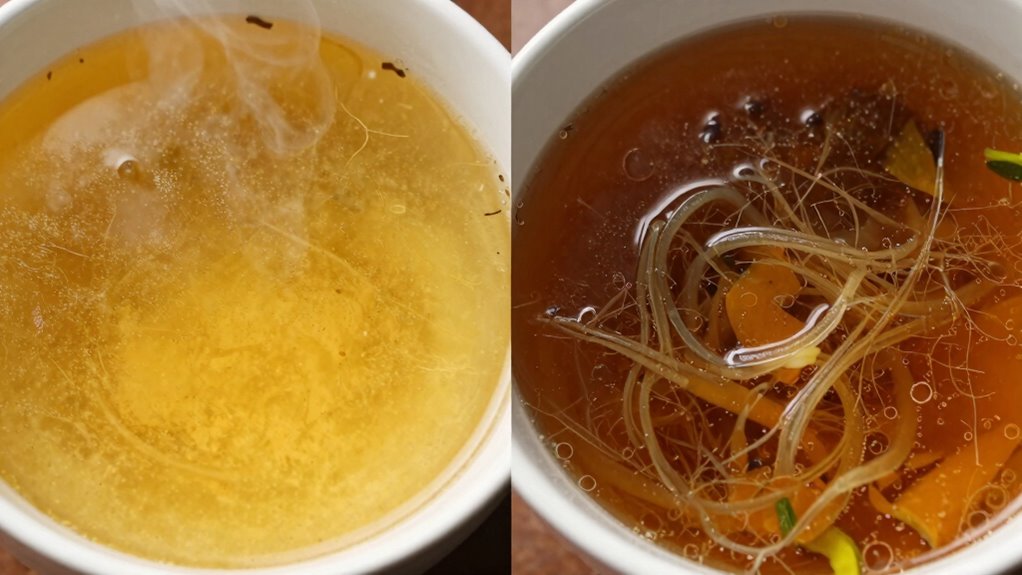

Stock and broth differ mainly in ingredients, preparation, and use. Stock is made by simmering bones, resulting in a thicker, gelatin-rich base with a deeper umami flavor, ideal for sauces and stews. Broth, on the other hand, uses meat and vegetables, making it lighter and seasoned for drinking or quick soups. Knowing when to use each can elevate your dishes—continue exploring to master their differences and best applications.
Key Takeaways
- Stock is made by simmering bones, resulting in a thicker, gelatinous consistency; broth uses meat and vegetables for a lighter, ready-to-eat liquid.
- Stock provides richer flavor and is ideal for sauces, gravies, and hearty dishes; broth is milder, suited for quick soups and drinking.
- Use stock when depth and gelatinous texture are needed; opt for broth when a lighter, seasoned liquid is sufficient.
- Stock is more neutral and concentrated, often stored longer; broth is seasoned and typically stored for shorter periods.
- Choose based on dish requirements and flavor preference—stock for richness, broth for lightness and convenience.

Pacific Foods Organic Beef Bone Broth, 32 oz Carton
One (1) 32 oz carton of Pacific Foods Organic Beef Bone Broth
As an affiliate, we earn on qualifying purchases.
As an affiliate, we earn on qualifying purchases.
What Are Stock and Broth? Definitions and Key Differences
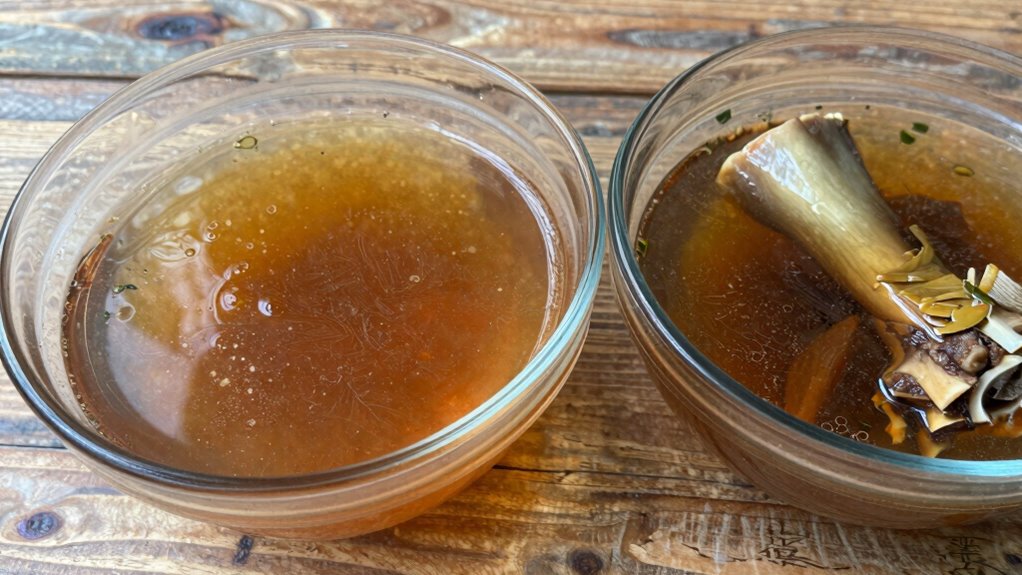
Have you ever wondered what sets stock and broth apart? While both are flavorful liquids used in cooking, their key differences lie in ingredients and purpose. Stock is made by simmering bones, often with seasoning variations, to extract gelatin and depth of flavor. Broth uses meat and vegetables, resulting in a lighter, more seasoned liquid. The seasoning variations in broth tend to be more prominent, making it ready to serve directly. When storing these liquids, keep in mind that stock can be frozen for longer periods, so follow proper storage tips to maintain freshness. Stock’s thicker consistency comes from collagen, which is released during simmering, whereas broth tends to be more liquid and less viscous. Ingredients and preparation methods also influence the final flavor and texture of each. Understanding these differences helps you choose the right base for your dishes, whether you need rich depth or a lighter, seasoned liquid. Recognizing the ingredients and purpose of each can also help in selecting the best option for different recipes. Additionally, knowing how to properly store and use these liquids can enhance your cooking results and reduce waste.

Knorr Cube Bouillon, Vegetable, 6 cubes, 2.1 oz
Knorr Vegetable Flavor Bouillon Cubes blend flavors of vegetables, onion, parsley, and other spices
As an affiliate, we earn on qualifying purchases.
As an affiliate, we earn on qualifying purchases.
How Are Stock and Broth Made? Cooking Methods Explained
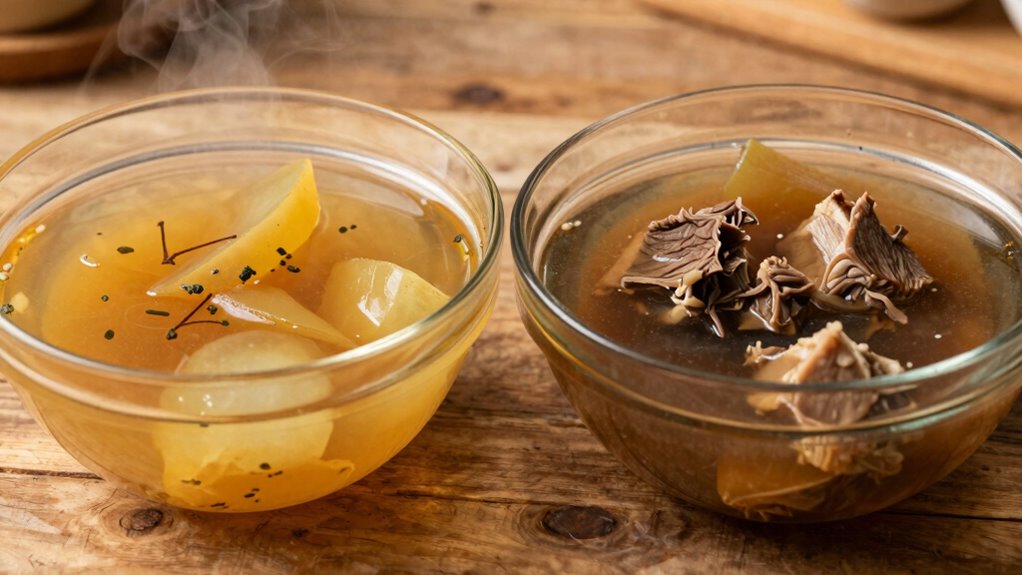
To make stock and broth, you start by selecting the right ingredients and applying different cooking techniques. Proper ingredient preparation—chopping bones, vegetables, or meat to maximize flavor extraction—is essential for a rich outcome. Once prepared, simmering techniques come into play. You gently heat the ingredients in water, maintaining a low, steady simmer, which allows flavors to develop without boiling violently. For stock, you typically simmer bones for several hours to extract gelatin, while broth uses meat, often cooked for less time. Keeping the temperature low is essential to prevent cloudiness and achieve clarity. Proper simmering helps ensure clarity and optimal flavor extraction during the cooking process. Controlling temperature and simmering time is crucial for achieving the desired consistency and flavor profile. Additionally, understanding the difference in ingredients can guide you in choosing the right method for your culinary goals. A thorough understanding of simmering techniques can further enhance the depth of flavor in your homemade stocks and broths.

6 oz Beef Gelatin Powder Unflavored, Natural Thickener, Rich in Collagen, Used in Jellies, Puddings, Candies, Dairy Products, Jams and Other Foods
NATURAL INGREDIENTS: Our gelatin powder unflavored is collagen extracted from bovine hides and is tasteless, odorless and has…
As an affiliate, we earn on qualifying purchases.
As an affiliate, we earn on qualifying purchases.
What’s in Stock and Broth? Main Ingredients You Should Know
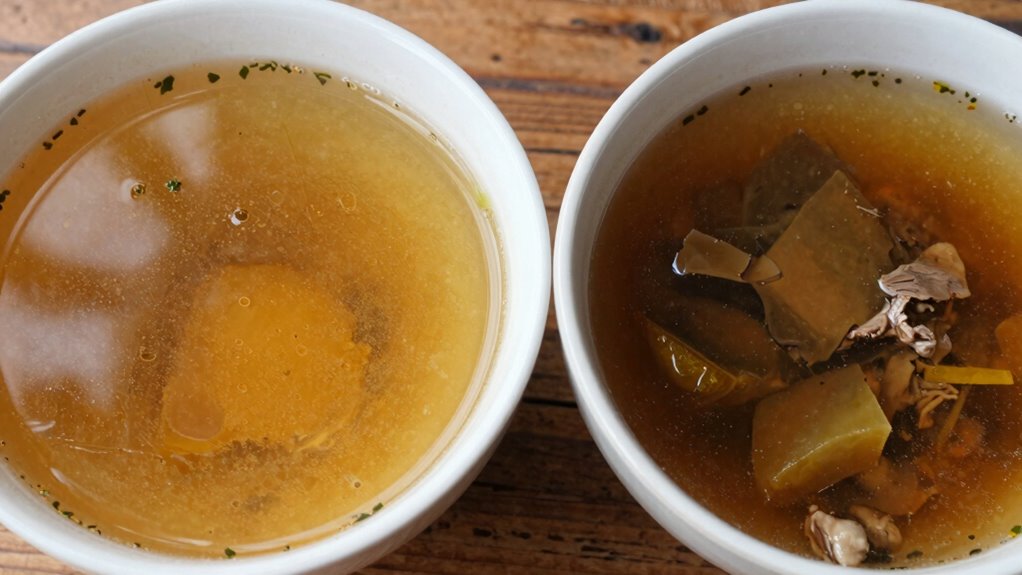
Understanding what goes into stock and broth helps you appreciate their flavors. You’ll find core ingredients like bones, meat, or vegetables, along with flavor enhancers such as herbs and spices. Sometimes, additional components like aromatics or seasonings are added to boost taste and complexity.
Core Ingredients
Stock and broth share a simple yet essential foundation: their core ingredients. These form the base of their flavor and texture. You’ll typically find a variety of vegetable varieties, such as onions, carrots, and celery, which add depth and sweetness. Meat options vary depending on the type—chicken, beef, or fish—providing richness and body. The main ingredients include:
- Vegetable varieties like onions, carrots, and celery
- Meat options like chicken, beef, or fish bones
- Water as the solvent
- Aromatics such as herbs and spices
- Salt for seasoning
These ingredients are simmered to extract flavors, creating a versatile base for many dishes. Understanding these core components helps you choose the right stock or broth for your recipe.
Flavor Enhancers
Flavor enhancers are the key ingredients that elevate the taste of stock and broth, making them more than just a simple liquid. They help with seasoning adjustments and achieve better flavor balancing. Common enhancers include salt, which amplifies overall taste, and umami-rich ingredients like soy sauce or anchovies that deepen the flavor profile. Herbs and spices, such as bay leaves, thyme, or peppercorns, add complexity and aroma. Sometimes, small amounts of sugar or acid—like vinegar or lemon juice—are used to brighten flavors and create harmony. By carefully incorporating these enhancers, you can customize your stock or broth to suit your dish, ensuring it’s well-seasoned and balanced without overpowering the natural ingredients.
Additional Components
The main ingredients in stock and broth form the foundation of their rich flavors. Beyond the primary components, additional ingredients and seasoning variations influence each. You’ll find that stock often includes bones, giving it a thicker, gelatinous texture, while broth uses more meat for a lighter feel. Packaging options vary: store-bought versions come in cartons, cans, or cubes, each offering convenience. When customizing, you can add herbs, spices, or aromatics to suit your taste. Some popular options include:
- Fresh herbs like thyme or parsley
- Dried seasoning blends
- Salt and pepper variations
- Aromatic vegetables like garlic or onion
- Concentrated bouillon cubes or powders
These components help tailor the flavor profile to your dish’s needs.

Swanson Sipping Chicken Bone Broth, 10.75 oz Microwavable Cup (8 Pack)
Eight (8) 10.75 oz microwavable cups of Swanson Sipping Chicken Bone Broth
As an affiliate, we earn on qualifying purchases.
As an affiliate, we earn on qualifying purchases.
When Do You Use Stock or Broth? Practical Tips and Best Recipes
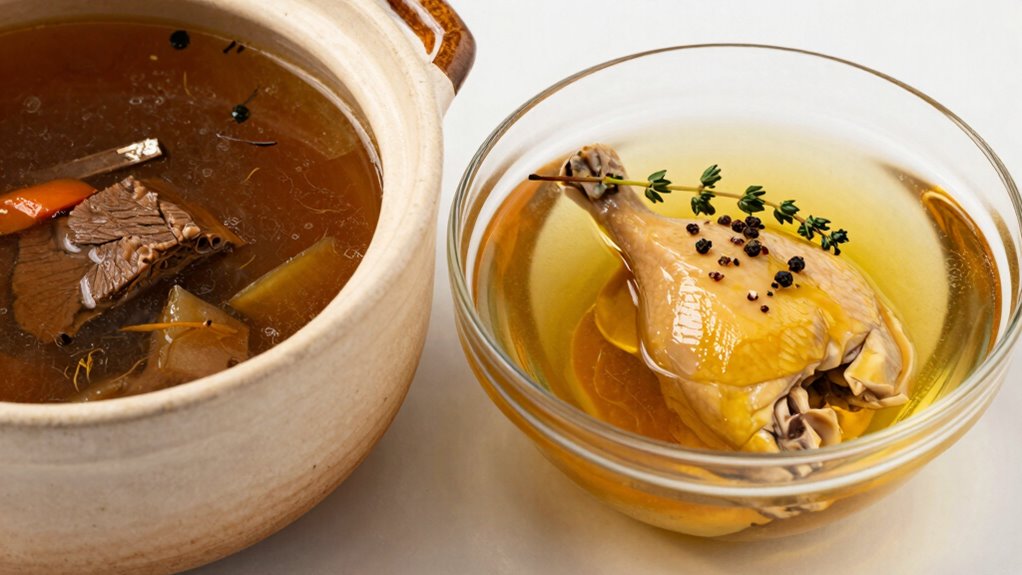
Knowing when to use stock or broth can guarantee your cooking and assure your dishes turn out just right. Use stock for richer flavors in sauces, gravies, or risottos, where depth is essential. Broth works well in light soups or as a base for quick meals, offering a milder taste. Consider seasoning variations to match your dish—herbs, spices, or salt levels can enhance either option. Proper storage tips are vital: refrigerate promptly in airtight containers and use within a few days, or freeze for longer shelf life. Additionally, understanding the natural qualities of each can help you choose the best option for your culinary needs. Recognizing the difference between stock and broth can further refine your cooking choices. Here’s a quick guide:
| When to Use | Best Recipes |
|---|---|
| Stock | Risottos, gravies, braises |
| Broth | Clear soups, instant noodle bases |
| Both | Stews, simmered vegetables |
Understanding the preparation process of each can also influence their flavor profiles and suitability for different dishes.
How Do Flavor, Texture, and Nutrition Differ? A Closer Look
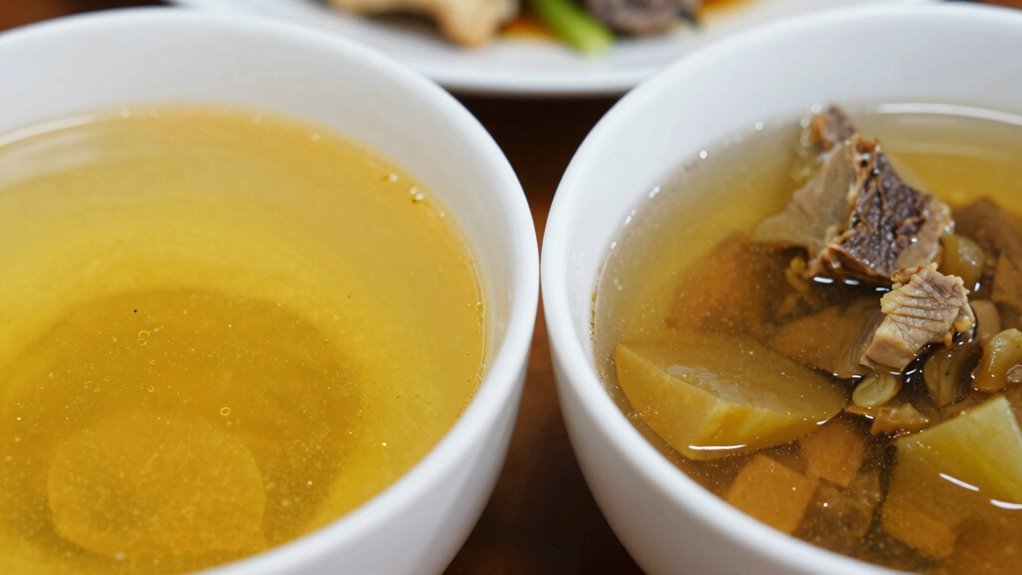
While both stock and broth add moisture and depth to your dishes, they differ considerably in flavor profile, texture, and nutritional content. Stock tends to have a richer, more concentrated flavor with a thicker, silkier texture because it’s made from bones and connective tissues. Broth, on the other hand, offers a lighter taste, often seasoned directly, and has a thinner, more liquid consistency. Nutritionally, stock provides collagen and minerals from bones, while broth delivers more immediate hydration and vitamins from added vegetables and meat. To understand these differences better:
- Stock has a deeper, umami flavor
- Broth is usually seasoned and more straightforward
- Stock’s texture is thicker and more gelatinous
- Broth is lighter and more fluid
- Nutritional content varies based on ingredients used
Can You Swap Stock for Broth and Vice Versa? Tips and Tricks

Although stock and broth have distinct qualities, you can often swap one for the other with some adjustments. Cultural variations influence how each is prepared, so consider the flavor profiles when substituting. For example, if a recipe calls for broth but you have stock, you might want to dilute it slightly to reduce its richness. Conversely, using broth instead of stock can add a lighter taste. Be mindful of dietary restrictions; vegetarians, for instance, may prefer vegetable broth over meat-based stock. Taste as you go to ensure the flavor remains balanced. In many recipes, these swaps are straightforward, but understanding their nuances helps you adapt dishes seamlessly while respecting cultural and dietary differences. Recognizing the character evolution of ingredients like stock and broth can also guide their best use in various dishes. Additionally, understanding culinary differences can help you choose the right base for your recipes. Knowing the types of stock and broth available can further refine your substitutions for optimal flavor. Being aware of ingredient roles in recipes can enhance your ability to substitute effectively.
How to Make Homemade Stock and Broth? Step-by-Step Guide
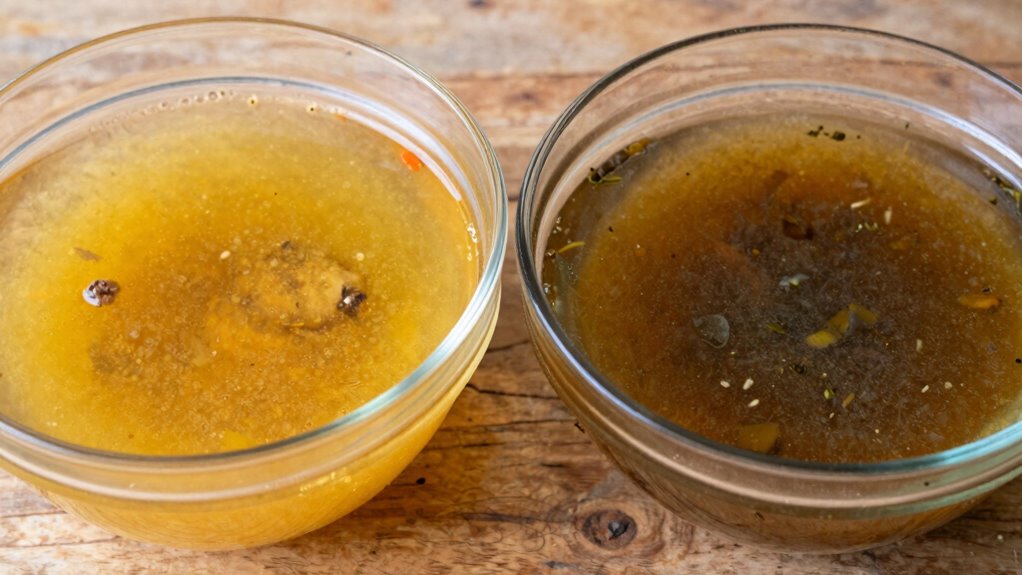
Making your own stock and broth at home allows you to control the flavors and ingredients, ensuring a fresh and customized result. To start, gather bones, vegetables, herbs, and water. Simmer these ingredients gently for several hours, occasionally skimming foam. You can vary seasoning options to suit your taste, exploring different seasoning variations like garlic, pepper, or bay leaves. Once cooked, strain the liquid, discarding solids. Store your homemade stock or broth properly using airtight containers, and label them with the date for efficient storage techniques. For best results, refrigerate for up to 4 days or freeze for up to 3 months. Consider freezing in ice cube trays for easy portioning. Incorporating timeless culinary techniques can elevate your homemade stocks to a professional level. With these steps, you’ll enjoy rich, flavorful homemade stock or broth anytime.
Common Mistakes to Avoid When Using Stock or Broth
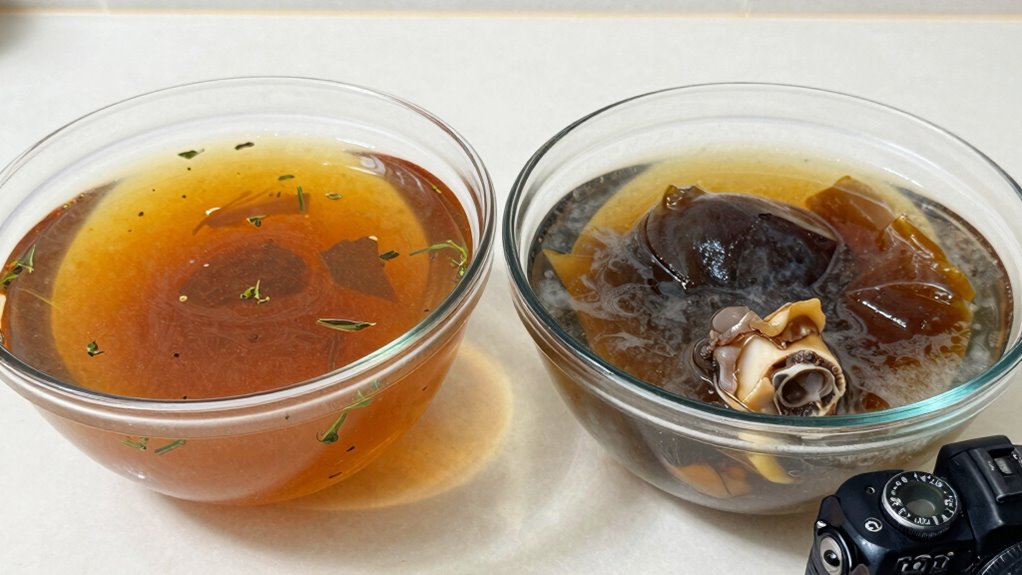
One common mistake is using incorrect ingredient ratios, which can throw off the flavor balance. You also need to pay attention to cooking times, as stock and broth often require different durations to develop their full taste. Be cautious with salt—over-salting the base can overpower your dish and be hard to fix later. Additionally, understanding the purpose of filtration in the preparation process helps ensure a smoother, more consistent final product.
Using Wrong Ingredient Ratios
Using the wrong ingredient ratios can quickly ruin the flavor and clarity of your stock or broth. If you don’t pay attention to proper ingredient proportions, you risk dull or overly greasy results. To get it right, focus on maintaining a good seasoning balance, which enhances natural flavors without overpowering them. Here are common mistakes to avoid:
- Overloading with salt or seasoning, which masks subtle tastes
- Using too much or too little water, affecting concentration
- Ignoring the balance of aromatics and vegetables
- Forgetting to adjust ingredient proportions based on batch size
- Neglecting to taste and adjust seasoning throughout cooking
Getting your ingredient proportions right ensures a well-balanced, flavorful base you can build on. Remember, seasoning balance is key to a clear, delicious stock or broth.
Ignoring Cooking Time Differences
Ignoring the different cooking times required for stock and broth can lead to weak flavors or overly concentrated results. Proper cooking time considerations are essential to extract the right depth of flavor without overdoing it. For stock, simmering for several hours helps extract gelatin and rich flavors from bones and ingredients, while broth typically requires less time to preserve a lighter taste. Failing to adjust cooking times based on your recipe can compromise the final product’s quality. Also, pay attention to ingredient preparation techniques—chopping ingredients uniformly ensures even cooking and flavor release. Rushing or extending cooking times without purpose can diminish the intended taste and texture. By understanding these timing differences, you create a well-balanced base that enhances your dishes.
Over-Salting the Base
Over-salting your stock or broth is a common mistake that can ruin a dish before it even reaches the table. Salt oversights happen when you add too much salt too early, making it difficult to adjust later. This disrupts the seasoning balance and can overpower other flavors. To prevent this, taste frequently and add salt gradually. Remember, you can always add more, but you can’t take it out. Avoid relying solely on salt to boost flavor; instead, use herbs and aromatics for depth. Keep these tips in mind:
- Taste regularly during cooking
- Add salt in small increments
- Use other seasonings to enhance flavor
- Be cautious with salty ingredients like soy sauce or stock
- Adjust seasoning only after cooking is complete
- Monitoring seasoning balance helps achieve a harmonious flavor profile.
Maintaining seasoning balance ensures a delicious, well-rounded dish.
Quick Summary: Choosing Between Stock and Broth for Your Cooking

When deciding between stock and broth for your cooking, understanding their differences can help you make the best choice. Stock typically offers a richer, more gelatinous base, ideal for sauces and hearty dishes, while broth is lighter and ready to eat on its own. Consider cultural variations, as some cuisines prefer specific types—like clear broths in Asian dishes or flavorful stocks in European recipes. Your dietary preferences also matter; vegetarians might opt for vegetable broth, whereas those avoiding animal products might choose plant-based options. If you need a versatile, quick cooking liquid, broth is your go-to. For depth of flavor and body, stock is preferable. Knowing these distinctions ensures you pick the right base for your dish’s purpose and flavor profile. Understanding the science of gelatin can further enhance your appreciation of how stock’s texture and richness develop during cooking, especially through gelatin extraction during simmering.
Frequently Asked Questions
Can You Use Stock or Broth for Drinking Directly?
Yes, you can use stock or broth for drinking directly, especially if you want flavor enhancement. Broth tends to be more palatable because it’s seasoned and lighter, making it more suitable for drinking. Stock, being richer and often unsalted, can also be enjoyed in small sips but is better used as a cooking base. Choose broth if you want a more flavorful, drinking-suitable option straight from the bowl.
Are There Dietary Restrictions Associated With Stock or Broth?
You should be aware of dietary restrictions when choosing stock or broth. Vegetarian options are available, made without animal products, perfect if you’re vegetarian or vegan. If you’re gluten-sensitive, check labels or homemade recipes to verify it’s gluten-free, as some broths contain gluten from added thickeners or flavorings. Always read ingredient lists or opt for brands that specify dietary considerations, so you can enjoy your broth safely and comfortably.
How Long Can Homemade Stock or Broth Be Stored Safely?
You can store homemade stock or broth in the refrigerator for up to 4 to 5 days. If you want to keep it longer, freeze it for up to 3 months. Always check for spoilage signs like sour smell, off taste, or mold before using. Proper storage in airtight containers helps prevent bacterial growth and maintains quality, ensuring you enjoy your homemade stock safely.
Do Store-Bought Stocks and Broths Contain Added Preservatives?
Most store-bought stocks and broths contain preservatives to extend shelf life and prevent spoilage, which can raise preservative concerns. These additives may also serve as flavor enhancers, giving the product a consistent taste. If you’re sensitive to preservatives or prefer a more natural option, check labels carefully. You might opt for organic or no-preservative brands, or make your own at home to control ingredients and flavor without additives.
What’s the Best Way to Enhance Flavor in Homemade Stock or Broth?
You can elevate your homemade stock or broth with simple seasoning techniques and ingredient variations. Add aromatic herbs like thyme, rosemary, or bay leaves, and toss in vegetables such as onions, garlic, or leeks for depth. Consider roasting bones or ingredients beforehand to intensify flavors. A splash of soy sauce or fish sauce can add umami richness, creating a broth that’s bursting with flavor, leaving your taste buds craving more.
Conclusion
Understanding the difference between stock and broth is like knowing the right tool for a job—you’ll achieve better flavor and texture in your dishes. Whether you choose one over the other depends on what you’re cooking and your personal taste. By mastering their uses, you’ll elevate your recipes just as a skilled artist uses the perfect brush. So, keep experimenting, and soon you’ll be confident in selecting the perfect base every time.