
When you see “par-fried” on a frozen food label, it means the item has been partially cooked by frying before freezing, which helps it stay fresh and crispy when reheated. Par-fried foods are made by frying in oil, then quick cooling and freezing to lock in flavor. They’re convenient but often contain extra fats and sodium. To cook them perfectly in your air fryer and learn more about spotting these labels, keep exploring below.
Key Takeaways
- “Par-fried” indicates the food is partially cooked through frying, suitable for quick air frying without full cooking.
- Look for labels like “par-fried,” “pre-fried,” or “partially cooked” to identify such products.
- Par-fried foods often contain added fats; adjust oil or cooking time when air frying.
- They typically require less cooking time in the air fryer compared to raw or fully cooked items.
- Properly read the packaging to ensure the product’s frying level aligns with your air frying instructions.
What Does “Par-Fried” Mean in Food Labeling?
When you see “par-fried” on a frozen food label, it means the food has been partially cooked through frying before being frozen. This process helps with food preservation, extending shelf life and maintaining freshness. Par-frying also boosts flavor enhancement, giving the food a richer, more appealing taste that can be easily finished at home. Because the item is only partially cooked, it requires additional cooking to reach the desired doneness. This method allows for quicker preparation and ensures the food retains its crispy texture when reheated. Understanding these labels helps you choose foods suited for your cooking style, especially when using appliances like air fryers. Additionally, contrast ratio plays a role in how visually appealing the final dish will look once prepared. Proper labeling practices are important for consumer awareness and food safety standards. Clear labeling also helps prevent misleading information that could affect your cooking outcomes. Overall, par-fried foods offer convenience while preserving flavor and texture, and being aware of food preparation techniques can help you optimize your meal results. Furthermore, knowing how processing methods impact nutritional content can guide healthier choices.
How Are Par-Fried Foods Made and Treated?
Par-fried foods are made through a process that involves partially cooking the product in oil at high temperatures, then rapidly cooling and freezing it to lock in flavor and texture. This par fried process guarantees that the food retains its crispy exterior and moist interior while reducing overall cooking time later. During manufacturing techniques, vendors carefully control temperature and time to achieve consistent results. After the initial fry, the food is quickly cooled to halt cooking and then flash-frozen to preserve freshness. This method allows for convenient storage and easy reheating without sacrificing quality. The process also helps lock in flavors, making par-fried items a popular choice for quick meals. Overall, par-fried foods are designed to be cooked quickly while maintaining the desired texture and taste. Temperature control during manufacturing is crucial to ensure consistent quality and safety throughout the process. Additionally, freezing techniques play a vital role in maintaining the food’s integrity during distribution and storage.
Are Par-Fried Foods Healthy? Pros and Cons

Par-fried foods can be tempting, but it’s important to contemplate their nutritional content and health effects. While they offer convenience, they often contain added fats and calories that may impact your well-being. Understanding these pros and cons helps you make smarter choices about consuming par-fried options. Additionally, considering precious metal investments can be a strategic way to diversify your financial portfolio and hedge against inflation. Moreover, selecting healthier cooking methods such as air frying can reduce fat intake while still enjoying crispy textures. Using proper piercing care and hygiene techniques can also help prevent infections when getting body piercings. As more jobs in fields like AI cybersecurity and AI software engineering grow, individuals can also explore entry-level AI training jobs to develop relevant skills for the future job market. Being aware of cooking techniques like par-frying can help you make more informed decisions about your diet and health.
Nutritional Content Insights
Are par-fried foods really a healthier choice? Not necessarily. While they often have a longer shelf life, which helps maintain freshness and reduces waste, their nutritional content can vary. Par-frying enhances flavor and texture, making foods more appealing, but it can also add extra fats and calories. Some products may contain additives or preservatives to boost shelf stability, impacting overall healthiness. If you’re watching your intake of saturated fats or sodium, it’s important to check labels carefully. Par-fried items can be convenient, but they aren’t always the best option for a balanced diet. Additionally, understanding the filtration process involved in air frying can help you better assess the health implications of different cooking methods. You can still enjoy them occasionally, especially when air frying, but understanding their nutritional profile helps you make smarter choices. Being aware of processing techniques also aids in choosing healthier options. Moreover, being familiar with electric cooking methods can guide you toward healthier preparation techniques that preserve nutrients better.
Health Impact Considerations
While par-fried foods can offer convenience and improved texture, their health benefits are less clear-cut. They may pose nutritional risks, such as higher fat and calorie content, which can impact your overall health if consumed frequently. Additionally, some par-fried products contain additives like preservatives, flavor enhancers, or stabilizers to maintain quality during processing and storage. These additives can raise concerns about potential allergic reactions or long-term health effects. Although air frying can reduce some fat content compared to traditional frying, it doesn’t eliminate the nutritional risks associated with par-fried foods entirely. It’s essential to read labels carefully and consume these products in moderation to balance convenience with health considerations. Incorporating outdoor kitchen setups can encourage healthier meal preparations and more mindful eating habits. Being aware of food additive concerns can further help you make informed choices about processed foods.
How to Cook Par-Fried Foods Perfectly in Your Air Fryer
To achieve perfectly crispy par-fried foods in your air fryer, start by preheating the appliance to the recommended temperature, usually around 375°F (190°C). Use proper cooking techniques like shaking or flipping halfway through to guarantee even crispiness. Since par-fried foods are already seasoned and partially cooked, you mainly want to focus on reheating and crisping without overcooking. For flavor enhancement, lightly spray or brush the food with oil before air frying; this boosts crispiness and adds a delicious texture. Keep an eye on cooking times, as par-fried foods cook faster than raw items. Once done, let them rest for a minute to settle, then serve hot for maximum crunch and flavor. To ensure safe and optimal results, it’s also helpful to consult the cookie categories associated with your device, as certain settings can influence cooking performance. Additionally, understanding product labeling can help you choose the best par-fried foods for your air fryer. It is also beneficial to explore security system reviews to find the best models that fit your home safety needs. Incorporating AI-powered virtual reality in e-learning can further enhance kitchen skills training by providing immersive tutorials. Moreover, paying attention to cooking guidelines can help prevent overcooking or undercooking your par-fried foods.
How Can You Identify Par-Fried Foods on Packaging?
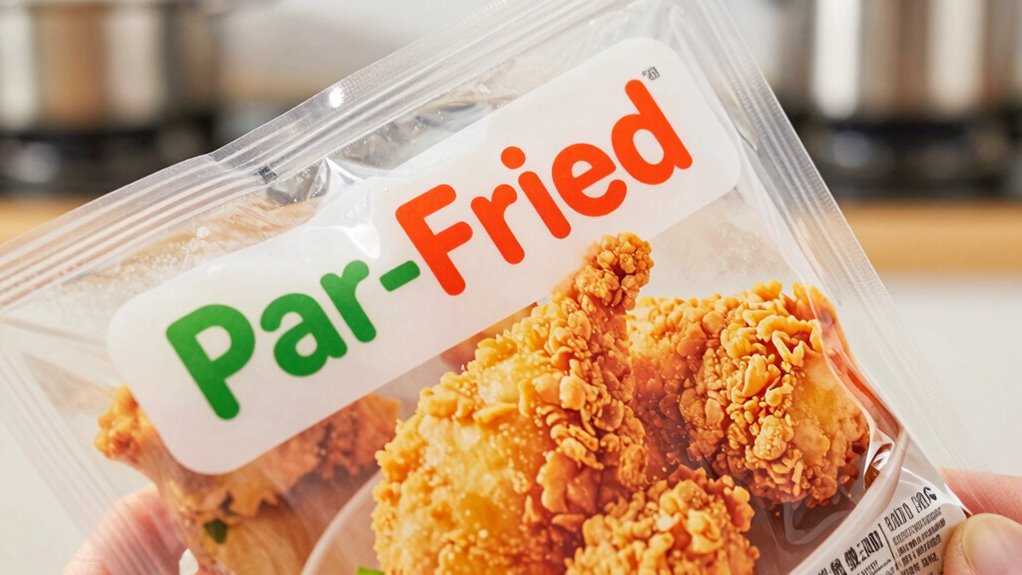
When selecting frozen foods, reading the packaging carefully helps you spot which items are par-fried. Look for ingredient identification that lists terms like “par-fried,” “pre-fried,” or “partially cooked.” Packaging symbols can also offer clues; icons indicating pre-cooking or frying processes often signal a par-fried product. Pay attention to labels that specify “ready to cook” or “for air frying,” which sometimes imply par-frying. Additionally, check the ingredients for oils or fats used, as par-fried items tend to contain added fats to enhance crispiness. Recognizing these indicators ensures you pick products suitable for your air fryer, saving time and avoiding surprises during cooking. Always review the packaging thoroughly before buying to make informed choices. Being aware of food processing methods can also help you determine the quality and preparation level of frozen foods, especially if you’re aiming for healthier options or specific cooking results. Understanding par-frying techniques can further assist in selecting products that meet your desired texture and nutritional preferences. Familiarity with food labels can also help you quickly identify the level of pre-cooking involved, streamlining your shopping experience.
Are There Healthier Alternatives to Par-Fried Foods?
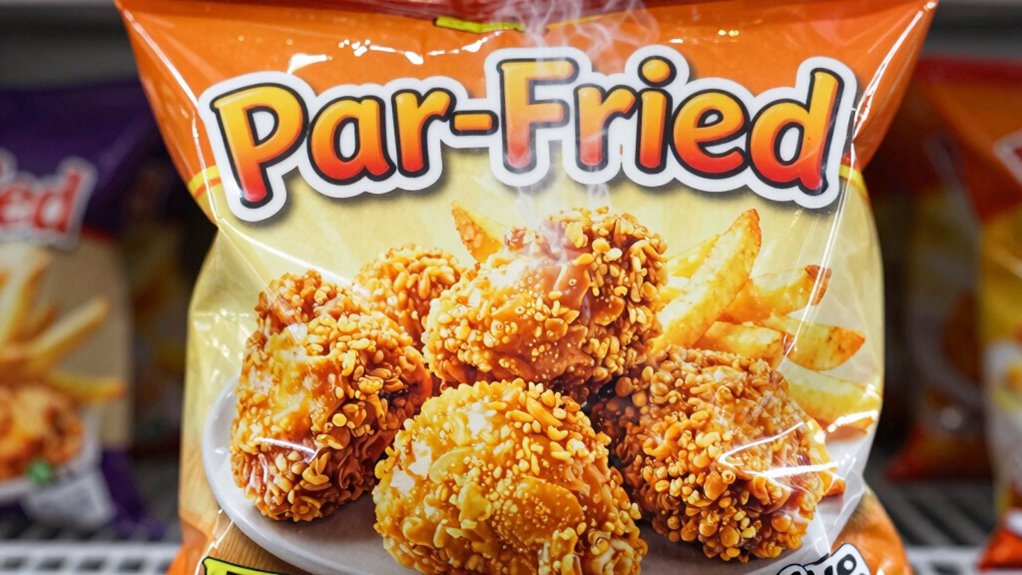
Are there healthier options than par-fried foods? Absolutely. You can choose plant-based alternatives that are baked or air-fried, cutting down on unhealthy fats and calories. Many brands now offer veggie-based or whole-grain versions that are less processed and more nutritious. Alternatively, making homemade crispy options allows you to control ingredients, using simple techniques like baking or air frying with minimal oil. For example, coat sliced vegetables or tofu with whole wheat breadcrumbs and bake until crispy. These methods provide satisfying textures without the added trans fats or preservatives found in par-fried foods. By opting for plant-based alternatives or homemade crispy options, you support better health while still enjoying delicious, crunchy textures.
Frequently Asked Questions
Can I Tell if a Food Is Par-Fried Just by Looking at the Package?
You can’t always tell if a food is par-fried just by looking at the packaging details. However, visual cues like a golden, crispy coating or a mention of “par-fried” on the label can give you clues. Check the packaging carefully for terms like “partially fried” or “pre-cooked,” and look for images that suggest frying. These hints help you identify if the food has been par-fried before you air fry it.
Does Par-Frying Affect the Nutritional Content of the Food?
Par-frying can cause some nutritional changes because it often involves oil absorption, which adds calories and fat. However, it usually doesn’t markedly alter primary ingredients, but ingredient modifications like added preservatives or flavorings may occur. You should check the nutrition label for specific information. Overall, par-fried foods might be slightly less healthy than their raw counterparts, so consider how it fits into your diet.
Are There Specific Brands Known for Better Par-Fried Options?
Some brands stand out for better par-fried options, thanks to their strong reputation and focus on ingredient quality. You’ll find that brands like Bell & Evans or Applegate prioritize natural ingredients and transparent labeling, making them a reliable choice. Look for brands that emphasize minimal processing and high-quality ingredients, ensuring you get a healthier, tastier product when you choose par-fried foods for your air fryer.
How Does Par-Frying Impact the Cooking Time in an Air Fryer?
Par-frying generally reduces your air fryer’s cooking duration because the food’s surface is already partially cooked. This means you’ll need less time to achieve a crispy, golden texture, and you might notice quicker texture modification. Keep an eye on the food, as overcooking can occur faster. Adjust your cooking time accordingly, starting with a shorter period and adding time if needed to reach your preferred crispness.
Are There Food Safety Concerns With Par-Fried Products?
Yes, there are food safety concerns with par-fried products. You should be mindful of foodborne pathogens that can grow if the product isn’t cooked thoroughly. Always follow proper storage practices to prevent contamination, and guarantee you cook par-fried items to the recommended internal temperature. Proper handling and cooking reduce risks and keep your meals safe to eat.
Conclusion
Understanding what “par-fried” really means helps you make better choices. For example, if you pick par-fried chicken, you can easily finish cooking it in your air fryer for a crispy meal without extra oil. Just be mindful of the ingredients and portion sizes. By knowing how to identify and prepare these foods properly, you can enjoy convenient, tasty meals that fit your health goals. Always read labels and choose options that align with your lifestyle.