
To improve your dish’s texture, choose between panko and regular breadcrumbs carefully. Use panko for a light, crispy coating that stays crunchy longer, perfect for fried foods or toppings. Opt for regular breadcrumbs when you want a denser, softer crust, great for baked casseroles or stuffed dishes. Adjust your coating technique; handle panko gently and press regular breadcrumbs firmly. Keep exploring to discover how mastering each type can elevate your cooking even more.
Key Takeaways
- Use Panko for light, crispy coatings that resist moisture and stay crunchy longer.
- Opt for regular breadcrumbs when a denser, softer crust or more flavor is desired.
- Coat ingredients evenly with the appropriate breadcrumb type, pressing firmly for regular breadcrumbs and gentle handling for Panko.
- Incorporate seasonings into breadcrumbs to enhance flavor and complement the desired texture.
- Adjust cooking temperature and time based on breadcrumb type to achieve optimal crispiness and prevent sogginess.
What’s the Difference Between Panko and Regular Breadcrumbs?
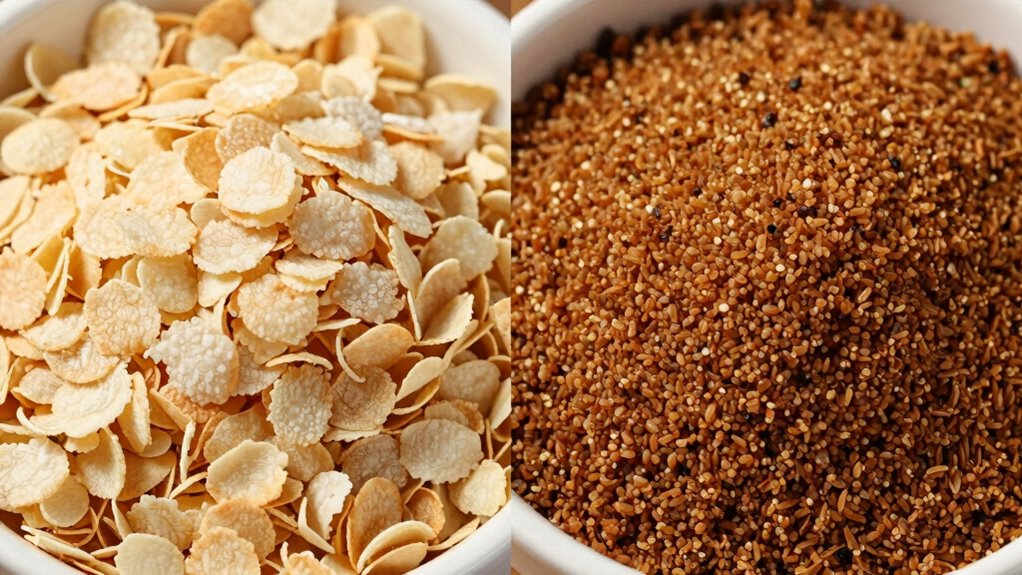
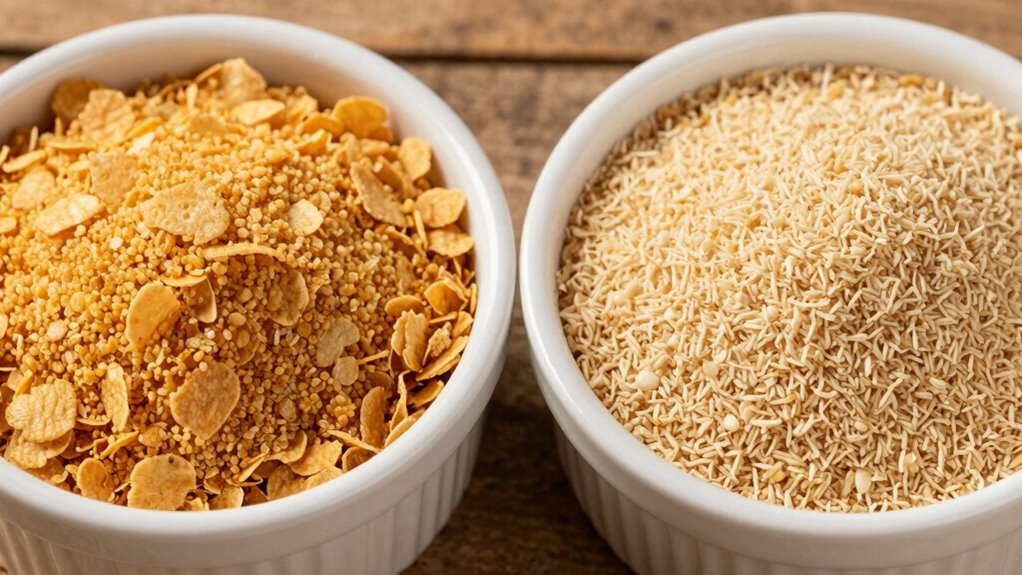
Although both panko and regular breadcrumbs are used to add crunch and texture to dishes, they have distinct differences. Panko breadcrumbs have a coarser, lighter texture, which creates a crisp, airy breadcrumb texture that’s different from regular breadcrumbs. This unique texture results in a coating that’s less dense but more evenly crisp. This characteristic also helps panko stay crispy longer by resisting moisture absorption, which is especially beneficial for maintaining crunch in fried or baked foods. Regular breadcrumbs are finer and denser, offering a thicker, more uniform coating. When it comes to coating durability, panko tends to stay crispy longer, resisting sogginess better than regular breadcrumbs. This makes panko ideal for dishes where maintaining crunch is essential. Regular breadcrumbs, however, provide a sturdier shell for heavier or more moist ingredients. Understanding these differences helps you choose the right breadcrumb type for achieving ideal texture and durability in your dishes. Additionally, contrast ratio plays a crucial role in how appealing the final dish looks, especially for dishes where visual presentation is important. Incorporating texture contrast can elevate the overall appeal and satisfaction of your culinary creations.
When Should You Use Panko for Extra Crunch and Lightness?

You should use panko when you want a light, crispy coating that stays crunchier longer. Its airy texture provides excellent lightness enhancement, making dishes feel less heavy and more delicate. Panko’s unique coarse crumbs create a satisfying texture contrast, adding a crunch that remains intact even after baking or frying. This makes it ideal for coating cutlets, fried vegetables, or seafood where you desire an extra crunch without sacrificing lightness. Use panko when you’re aiming for a more refined, crisp exterior that enhances the overall texture of your dish. Its ability to maintain crunchiness over time ensures your meal stays appealing, especially if it’s served after resting or cooling. Incorporating consistent feedback during preparation can help refine the coating’s texture and ensure optimal crunchiness. Additionally, choosing the appropriate breadcrumb type can influence the overall texture and appearance of your dish, aligning with your culinary goals. Considering the influence of artistic movements like Cubism can inspire innovative approaches to food presentation and texture contrast. For example, experimenting with visual texture and geometric plating can elevate the dining experience and highlight the crispness of your coating. Understanding how different breadcrumb materials interact with heat and moisture can further improve your results.
How to Use Regular Breadcrumbs for Dense, Hearty Coatings?
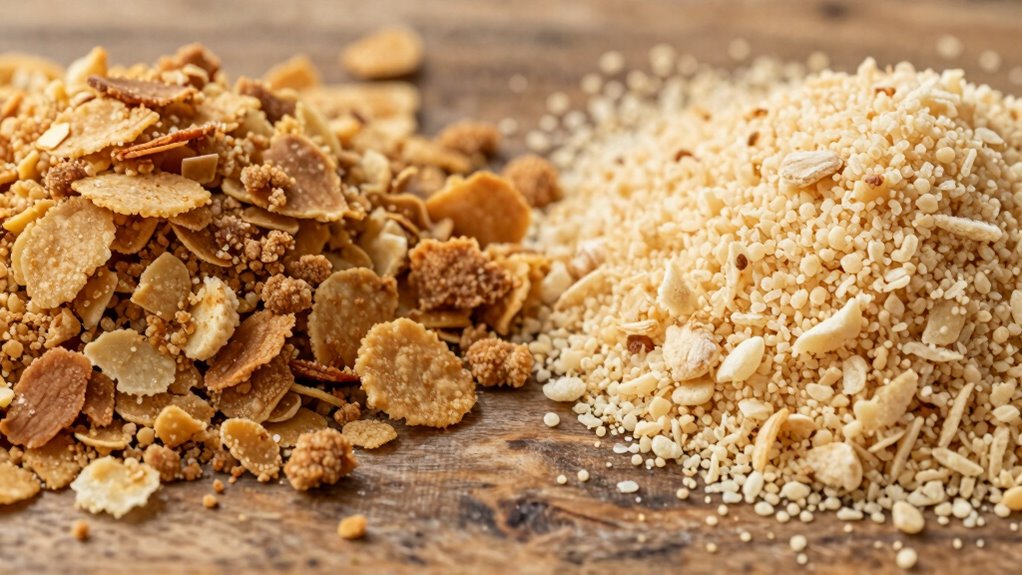
Regular breadcrumbs excel when you want a dense, hearty coating that adds substantial texture and flavor to your dishes. To achieve this, focus on adjusting the dough consistency so the breadcrumbs stick well without becoming too loose or dry. Thicker, slightly wetter coatings tend to hold regular breadcrumbs better, creating a more substantial crust. Incorporate seasoning techniques to enhance flavor—adding herbs, spices, or grated cheese directly into the breadcrumb mixture boosts taste and complements the dish. When applying, press the breadcrumbs firmly onto the surface, ensuring even coverage for a consistent, hearty layer. Using regular breadcrumbs in this way results in a robust exterior that enhances the overall dish, giving you a satisfying bite every time.
Best Techniques for Breading With Panko or Regular Breadcrumbs
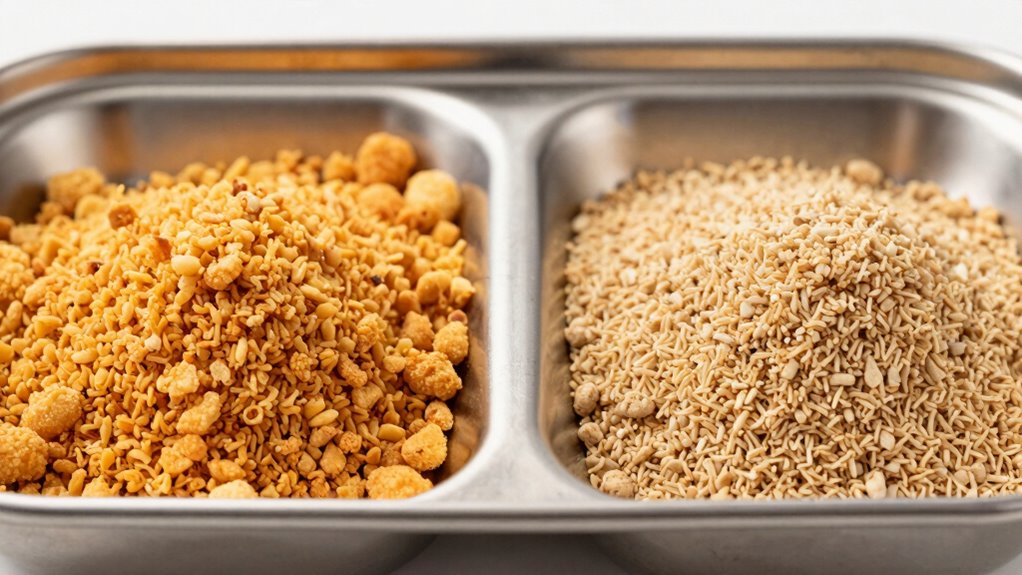
Choosing the right coating can make all the difference in your dish’s texture. Using the correct techniques helps you achieve crispy, golden results whether you’re working with panko or regular breadcrumbs. Let’s explore how to get the best crunch and flavor every time. Incorporating precise techniques ensures your coating adheres properly and yields consistent, satisfying results. Additionally, understanding the types of breadcrumbs can help you select the ideal option for your desired texture and flavor profile. For example, water absorption properties differ between panko and regular breadcrumbs, affecting how they behave during cooking. Recognizing how sound healing science influences cellular regeneration can also inspire innovative culinary presentations that promote well-being. Mastering proper frying temperatures can further enhance the texture and prevent sogginess in your breaded dishes.
Choosing the Right Coating
Selecting the right coating is essential for achieving the perfect crispy exterior, whether you’re using Panko or traditional breadcrumbs. When choosing, consider the grain textures—Panko offers larger, airy flakes that create a lighter, crunchier crust, while regular breadcrumbs have finer grains for a denser coating. Your choice also influences flavor variations; Panko tends to have a neutral taste, allowing seasonings to shine, whereas regular breadcrumbs can add a subtle toasted flavor. Think about the dish’s texture and flavor profile. If you want a crisp, airy finish, go with Panko. For a more substantial, traditional bite, regular breadcrumbs work better. Matching the coating to your recipe ensures ideal texture and taste, elevating your cooking results.
Techniques for Crispy Results
Achieving a crispy coating with Panko or regular breadcrumbs depends heavily on your technique. To get the best results, start by properly drying your ingredients, as moisture hampers crispiness. Use a three-step breading process: dip in seasoned flour, follow with an egg wash, then coat evenly with breadcrumbs. For extra crunch, press the breadcrumbs firmly onto the surface. Baking techniques matter too; baking at a high temperature helps achieve a golden, crispy crust without excess oil. When working with flavor combinations, consider adding herbs or spices to your breadcrumbs to enhance taste without sacrificing crunch. Whether you prefer Panko’s airy texture or regular breadcrumbs’ density, these techniques guarantee a consistently crispy exterior that elevates your dishes. Incorporating the right breading techniques can further improve texture and adherence.
Tips for Achieving Crispy Toppings With the Right Breadcrumbs
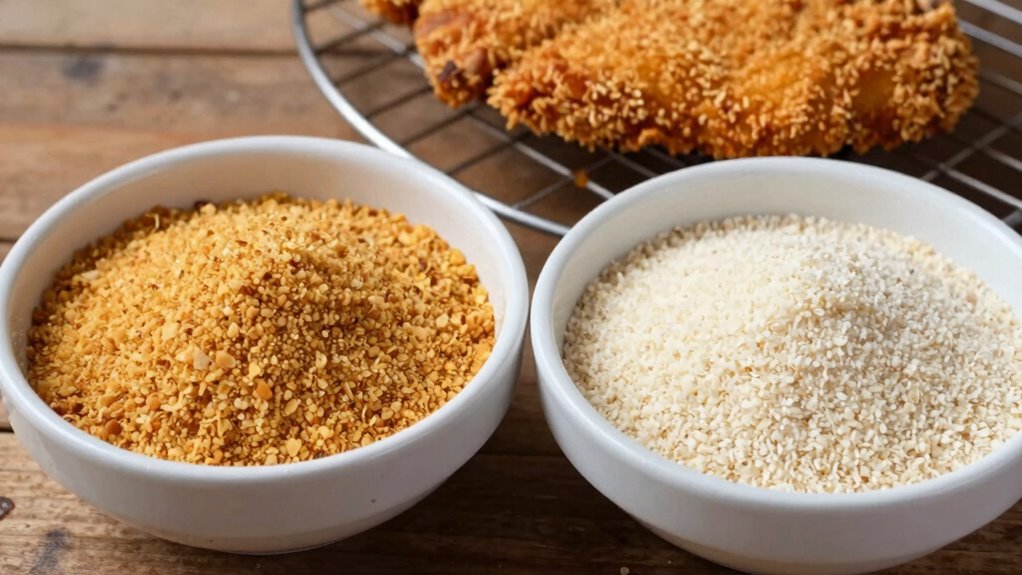
To get crispy toppings, start by choosing the right breadcrumb type for your dish. Make sure you coat your ingredients evenly to maximize crunch. Proper coating and selecting the best breadcrumbs are key to achieving that perfect crispy finish. Using the appropriate filtration technique can help ensure a consistent texture and prevent unwanted clumping. Additionally, paying attention to ingredient quality can make a noticeable difference in the final texture. Incorporating AI-driven content tools can assist in exploring new breadcrumb recipes or techniques to improve your cooking results. Being aware of vetted wave and wind conditions can also influence how you prepare and cook your toppings for optimal crispiness.
Choose the Right Breadcrumb Type
Choosing the right breadcrumb type can make all the difference in achieving perfectly crispy toppings. Higher-quality breadcrumbs provide better texture and flavor enhancement, ensuring your dish turns out crispy and delicious. Panko breadcrumbs, with their airy structure, create a light, crunchy coating, ideal for a crisp finish. Regular breadcrumbs, on the other hand, offer a denser bite and richer flavor, perfect for baked dishes. Consider your desired texture and flavor profile when selecting. Use the table below to compare options:
| Aspect | Panko | Regular | Best For |
|---|---|---|---|
| Breadcrumb quality | Light, airy | Dense, fine | Panko: crispy toppings; Regular: baked dishes |
| Flavor enhancement | Mild, neutral | Rich, savory | Regular adds depth |
| Texture | Crunchy, airy | Slightly softer, hearty | Panko for crispiness; Regular for flavor |
| Use case | Crispy coatings, toppings | Baked casseroles, stuffing | Tailor to your dish’s needs |
| Texture control | Adjusts crispiness based on breadcrumb type | The choice influences the final texture |
Properly Coat for Crispiness
For a perfectly crispy topping, selecting the right breadcrumb coating is essential, but applying it correctly makes all the difference. To achieve maximum crunch, focus on coating thickness and seasoning techniques. First, ensure an even layer—too thick and it becomes soggy; too thin, it lacks crunch. Second, season your breadcrumbs before coating for flavor infusion. Third, press the breadcrumbs firmly onto the surface for better adhesion. Fourth, bake or fry at the right temperature to activate crispiness without burning. Using Panko or regular breadcrumbs requires adjusting coating thickness accordingly, as Panko tends to be lighter and needs a slightly thicker layer. Proper application ensures your topping achieves the desired crispiness while maintaining flavor and texture balance. Additionally, choosing the right dog bed for Golden Retrievers can enhance your pet’s comfort during meal times or relaxation after cooking.
How to Adjust Your Breading Method Based on Breadcrumb Type
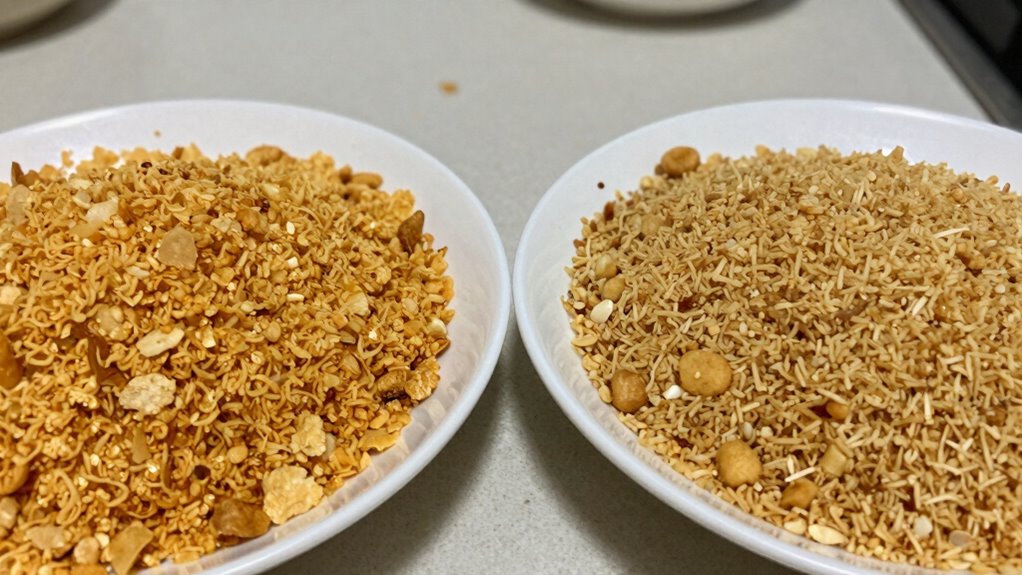
Since different types of breadcrumbs behave differently during the breading process, adjusting your method guarantees better adhesion and crunch. For breadcrumb variations like Panko and regular breadcrumbs, tweak your technique to optimize results. Panko tends to be lighter and requires a gentle press to stick, while regular breadcrumbs need a wetter coating, like egg wash, for better adhesion. Consider using alternative coatings such as buttermilk or yogurt when working with delicate types like Panko. Use this table to guide your adjustments:
| Breadcrumb Type | Best Breading Technique | Recommended Coatings |
|---|---|---|
| Panko | Light press, avoid over-coating | Egg wash, buttermilk |
| Regular | Firm press, ensure even coverage | Egg wash, milk |
| Fine crumbs | Gentle handling, minimal pressure | Egg wash, seasoned flour |
| Coarser crumbs | Firm press, double coating for crunch | Egg wash, seasoned flour |
Adapting your approach based on breadcrumb variations boosts adhesion and crunch, giving you perfect results every time. Properly adjusting your technique also helps maximize texture and ensures your coating stays intact during cooking.
Common Mistakes to Avoid When Using Breadcrumbs
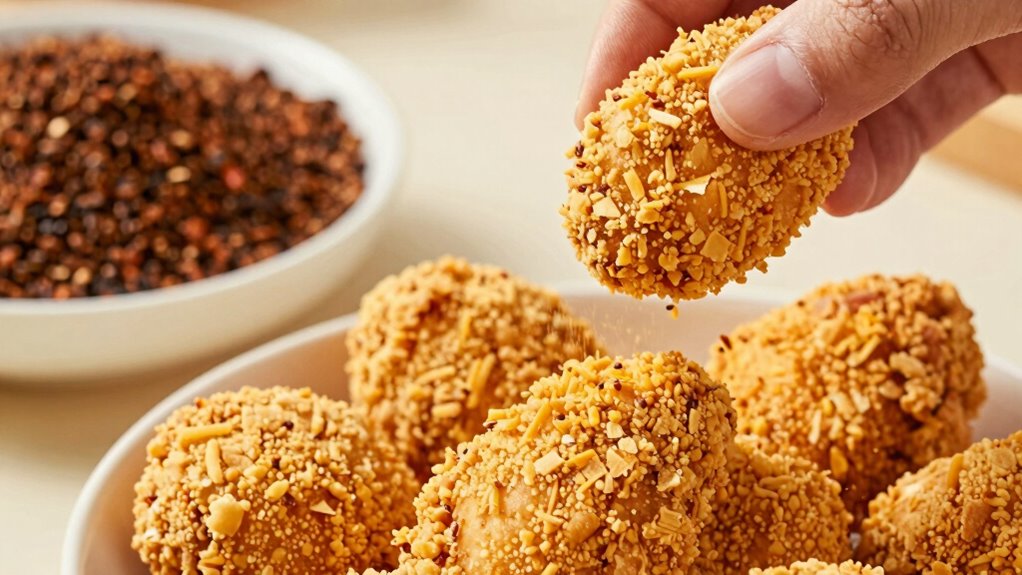
Using the wrong techniques when applying breadcrumbs can undermine your efforts to achieve a crispy, well-coated dish. Common mistakes include neglecting breadcrumb consistency, which affects coating adhesion and texture. Poor storage tips can lead to moisture buildup, causing breadcrumbs to clump or spoil. To avoid these pitfalls, keep these points in mind:
Using proper breadcrumb techniques ensures a crispy, well-coated dish every time.
- Ensure breadcrumb consistency matches your recipe—Panko for crunch, regular for a softer crust.
- Store breadcrumbs in airtight containers to prevent moisture and preserve freshness.
- Avoid using stale or damp breadcrumbs, as they won’t adhere properly or crisp up.
- Regularly check and refresh your breadcrumb supply to maintain ideal texture and flavor.
Creative Ways to Use Breadcrumbs to Add Flavor and Texture
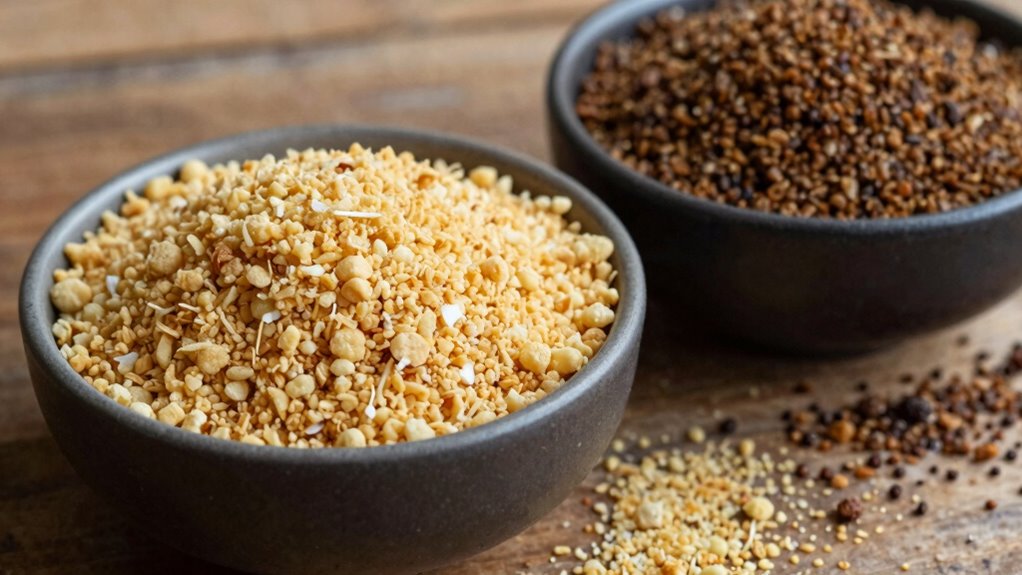
Breadcrumbs aren’t just for coating—they can also be a flavorful and textured addition to your dishes. You can elevate your recipes by mixing breadcrumbs with creative flavorings like herbs, spices, grated cheese, or even zest from citrus fruits. This technique allows for a flavorful enhancement that adds layers of taste and enhances the overall dish. Use them as a topping for casseroles or baked pasta to introduce innovative textures that contrast with creamy or tender ingredients. Toasting breadcrumbs with garlic or paprika creates a crunchy, savory crust that brings both flavor and visual appeal. You can also incorporate seasoned breadcrumbs into stuffing or meat mixtures for extra dimension. Experimenting with different flavorings and textures allows you to customize dishes, turning simple breadcrumbs into a versatile tool for culinary creativity. Incorporating texture layering techniques, such as layering textures, can elevate even the simplest dishes to new heights. Exploring the different breadcrumb types like Panko versus regular can help you achieve specific textures and flavors suited to your culinary goals.
Choosing the Right Breadcrumbs for Your Recipe and Cooking Style
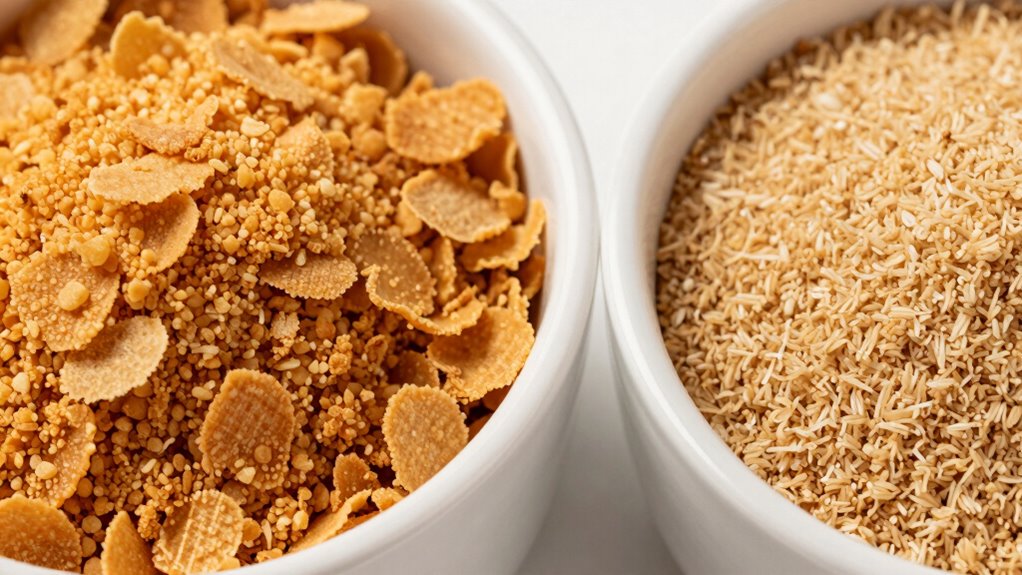
Choosing the right breadcrumbs depends on your recipe’s texture, flavor, and cooking method. To achieve the desired texture contrast and flavor enhancement, consider these factors:
- Type of Breadcrumbs: Use Panko for crispy, light textures or regular breadcrumbs for more cohesive coatings.
- Cooking Technique: Panko works well for frying or baking to add crunch, while regular breadcrumbs suit stuffing or meatloaf for moisture retention.
- Flavor Profile: Choose seasoned breadcrumbs for added flavor or plain ones to regulate seasoning.
- Size and Coarseness: Coarser breadcrumbs create more texture contrast, whereas finer crumbs blend smoothly into dishes.
- Impact on Texture: Different types of breadcrumbs can influence the overall dish’s texture contrast and mouthfeel, enhancing your culinary creation.
Matching these elements ensures your breadcrumbs contribute perfectly to your dish’s overall texture and flavor.
Frequently Asked Questions
Can You Substitute Panko With Regular Breadcrumbs in All Recipes?
You can substitute regular breadcrumbs for Panko in most recipes, but expect a different texture. Regular breadcrumbs tend to be denser and less crispy, which can affect the final dish’s texture enhancement. Panko’s light, airy nature is ideal for crispiness, so if you want that extra crunch, stick with Panko. However, for a softer coating or binding, regular breadcrumbs work fine as a substitute.
How Do Seasoning and Herbs Affect Breadcrumb Texture and Flavor?
Seasoning influence and herb variations considerably impact breadcrumb flavor and texture. When you add herbs, they infuse the crumbs with fresh, aromatic notes, enhancing taste. Seasonings like salt, pepper, or spices can also alter the crumbs’ crispiness, especially if they contain moisture. For better texture, keep herbs finely chopped and avoid excess moisture, ensuring your breadcrumbs stay crunchy and flavorful. Experimenting with herbs creates a personalized, flavorful crust or coating.
Are There Gluten-Free Options for Panko or Regular Breadcrumbs?
Think of gluten-free alternatives as a treasure chest full of breadcrumb substitutes. Yes, you can find gluten-free panko and regular breadcrumbs made from rice, corn, or gluten-free oats that give you that crunchy texture. These options are perfect if you’re avoiding gluten but still want that satisfying coating. Simply swap them in your recipes, and you won’t miss out on flavor or crunch—delivering delicious results every time.
How Does Moisture Content Impact Breadcrumb Adhesion and Crispiness?
Moisture levels directly impact breadcrumb stickiness and crispiness. If your ingredients are too moist, breadcrumbs may become soggy and stick excessively, reducing crunch. Conversely, dry moisture content allows breadcrumbs to adhere well without clumping, creating a crisp coating. To improve adhesion and texture, guarantee your ingredients are properly dried or lightly moistened, and choose breadcrumb types with the right moisture balance for your dish.
Can Breadcrumbs Be Toasted or Flavored Before Use for Added Taste?
You can definitely toast or flavor your breadcrumbs before using them. Imagine the aroma of toasted breadcrumbs filling your kitchen, adding a warm, nutty scent. Seasoned breadcrumbs bring an extra punch of flavor, elevating your dish. Toasting enhances their crunch, while adding herbs or spices creates a layered taste experience. Just toast them in a skillet until golden, then mix in your favorite seasonings for a richer, more flavorful crust or topping.
Conclusion
By mastering the art of choosing between panko and regular breadcrumbs, you’ll craft dishes as memorable as a timeless story. Think of panko as the feathered wings of a bird, offering lightness and crunch, while regular breadcrumbs are the sturdy foundation of a well-worn book. Use them wisely to elevate textures, add flavor, and create culinary magic. Remember, the right breadcrumb can turn an ordinary meal into a legendary chapter in your cooking journey.