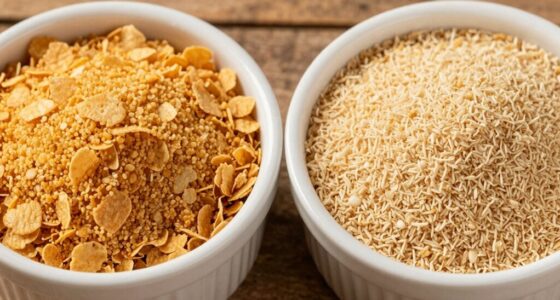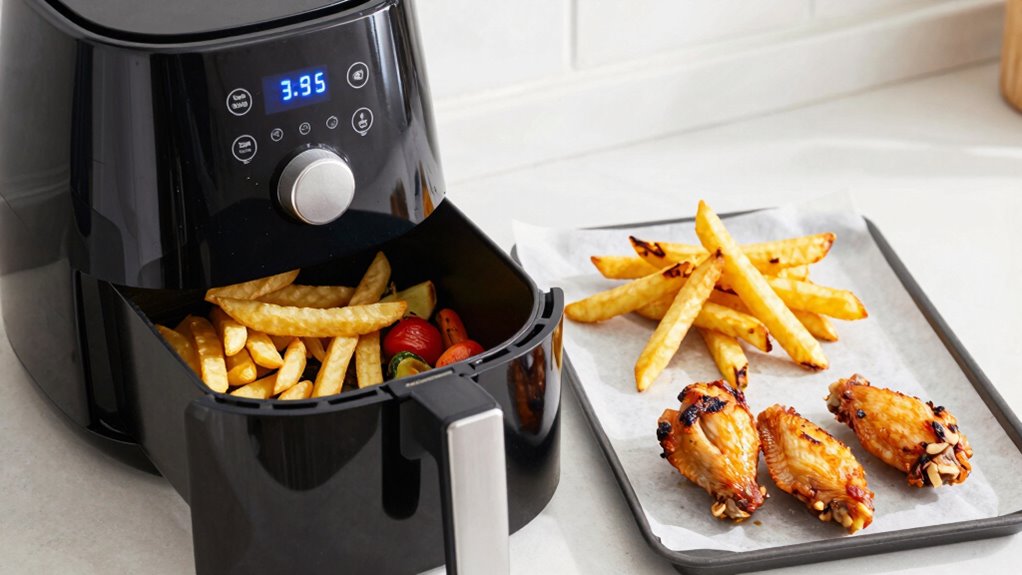

Oil-free air fryers work best when you want crispy textures with less oil by rapidly circulating hot air around your food. They quickly crisp items with low moisture and are ideal for foods like potatoes or chicken wings. However, they don’t produce the same crunch on high-moisture foods like fresh vegetables or battered items. If you’re curious about making perfect crispy results and knowing when this method succeeds or falls short, keep exploring these tips and tricks.
Key Takeaways
- Oil-free air fryers excel at crispy results with foods low in moisture, like fries and chicken wings, using rapid hot air circulation.
- They struggle to crisp high-moisture foods such as fresh vegetables or battered items, which tend to become soggy.
- Proper preheating, avoiding overcrowding, and shaking food during cooking enhance crispiness in oil-free air frying.
- Breading or batter may not turn crispy without oil, as moisture retention prevents crust formation.
- Light coatings like cornstarch or egg wash can improve browning and crunch without oil.
How Do Oil-Free Air Fryers Work?
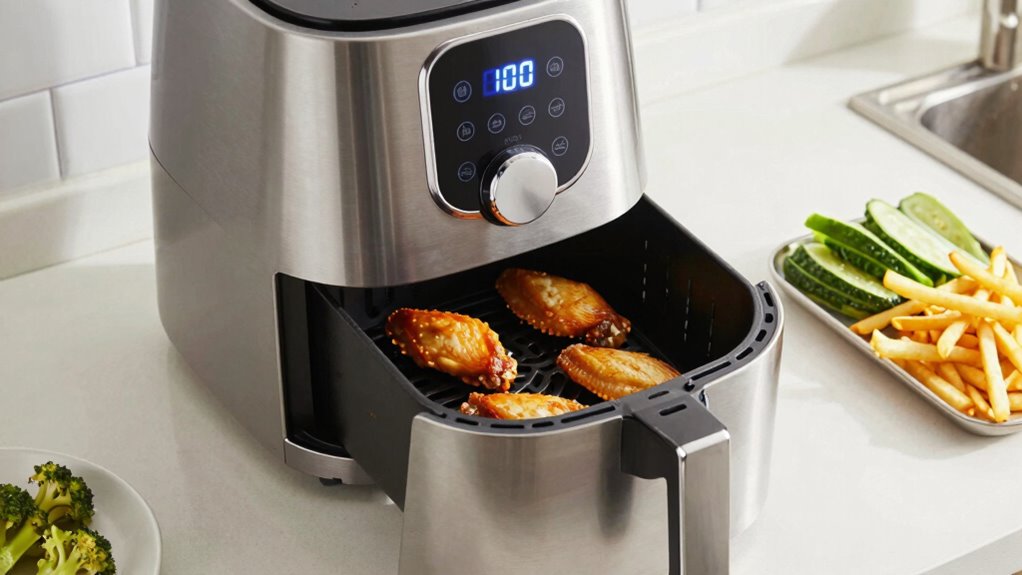
Oil-free air fryers work by circulating hot air rapidly around your food, creating a crispy exterior without the need for added oil. This process relies on an efficient air circulation system that evenly distributes heat to all sides of your food. The heating mechanism, usually a high-powered element, heats the air quickly, maintaining a consistent temperature. As the hot air moves around, it causes the surface of your food to dry out slightly, resulting in that desirable crispy texture. The combination of powerful air circulation and a reliable heating mechanism ensures even cooking and browning. Because it mimics frying by crisping food without oil, this technology allows you to enjoy healthier meals while still achieving satisfying textures.
When Do Oil-Free Air Fryers Give You That Same Crispy Finish?
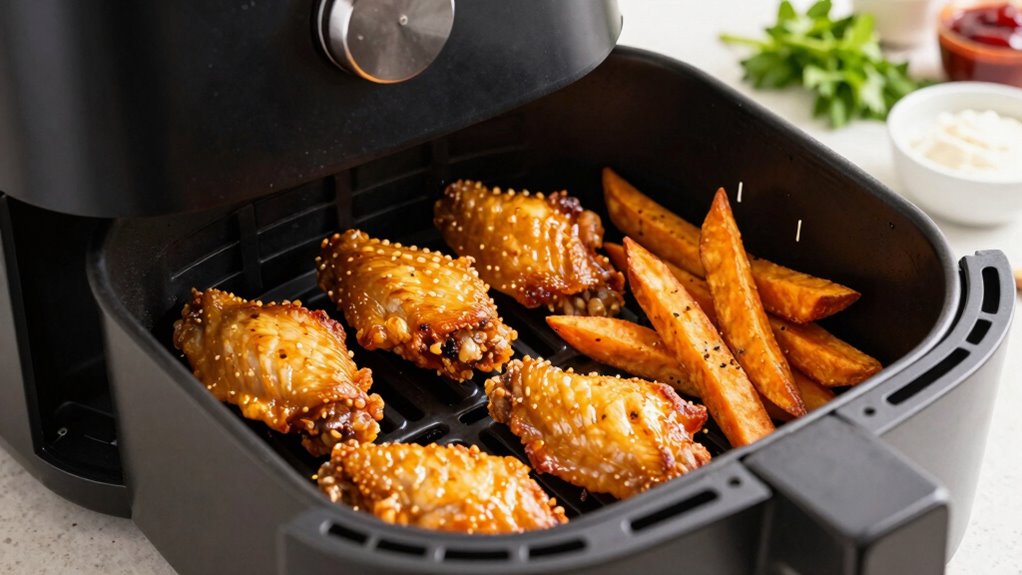
You can achieve that same crispy finish in oil-free air fryers when you cook foods at the right temperature and for the appropriate amount of time. Mastering proper cooking techniques is key; for example, preheating the appliance helps guarantee even crispiness. It’s also essential to avoid overcrowding the basket, which can hinder airflow and result in less crisp textures. Regular appliance maintenance, like cleaning the basket and ensuring proper airflow, helps maintain consistent results. Using a light coating of cooking spray on certain foods can enhance crispiness without oil. Remember, increasing cook time slightly or adjusting the temperature can make a difference. Additionally, understanding the importance of air circulation in achieving a crispy texture can help optimize results. Ensuring proper airflow within the appliance is crucial for consistent crispiness and optimal cooking. Proper airflow management can significantly improve the overall texture and quality of your fried foods. Paying attention to cooking techniques such as flipping or shaking the food during cooking can also contribute to a more uniform and crispy result. Incorporating air fryer accessories like racks or skewers can improve air circulation and cooking efficiency, leading to better crispiness. With these tips, your oil-free air fryer can deliver that satisfying crispy finish you’re aiming for.
What Foods Don’t Turn Out Crispy in Oil-Free Air Fryers?
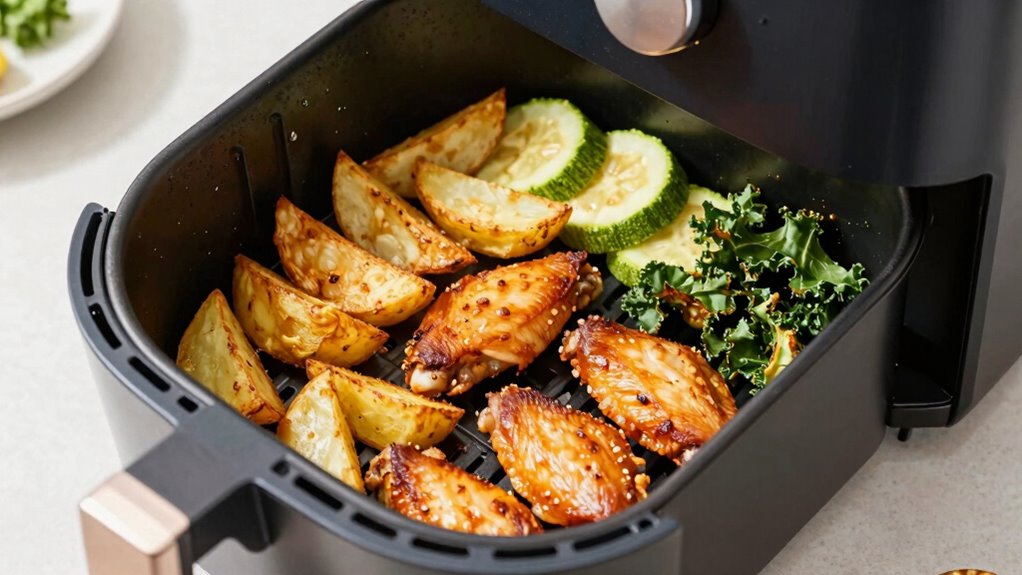
Certain foods just don’t turn out crispy in oil-free air fryers, especially those with high moisture content or delicate textures. These items struggle with moisture retention, which prevents the exterior from crisping up properly. For example, fresh vegetables or fruits often become soggy rather than crispy because their natural water content steams rather than fries. Breading failure is another common issue; breaded items like tempura or battered fish may not develop the desired crunch, as the dry environment hampers proper crust formation. These foods tend to retain moisture, making it difficult for the air fryer to achieve that crispy finish you’re after. Recognizing moisture retention as a key factor is essential for troubleshooting and improving air frying outcomes. Additionally, smart kitchen appliances with precise temperature control can sometimes help optimize results for certain moisture-sensitive foods. Being aware of cooking techniques that minimize moisture can also contribute to better crispy results in an oil-free air fryer. Moreover, understanding food texture and how it interacts with air frying can help select appropriate recipes and preparation methods.
Tips for Achieving Perfectly Crispy, Tasty Results
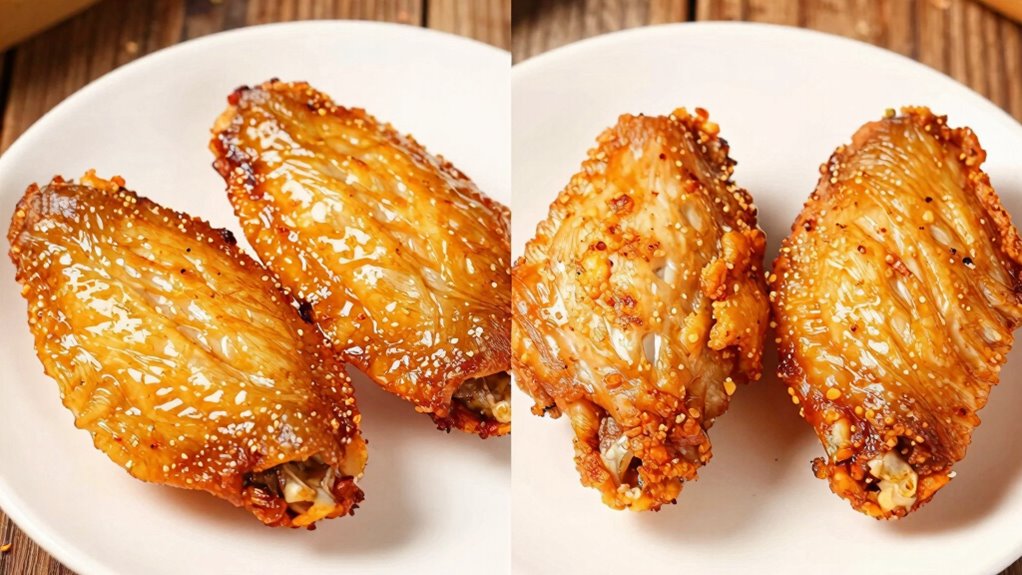
Achieving that perfect crispy, flavorful exterior in an oil-free air fryer is entirely possible with the right techniques. To enhance crispiness, guarantee proper air circulation by avoiding overcrowding; leave space between food pieces so hot air can circulate evenly. Use a light, even food coating—such as a thin layer of cornstarch or egg wash—to promote browning. Shake or flip your food halfway through cooking to maintain consistent crispiness. Here’s a quick visual:
| Tip | Explanation |
|---|---|
| Proper Air Circulation | Prevents sogginess, promotes crisp |
| Food Coating | Ensures even browning and crunch |
| Flip During Cooking | Maintains uniform crispiness |
Combine these tips for satisfying, crispy results every time.
Should You Use an Oil-Free Air Fryer or Stick With Oil-Based Cooking?
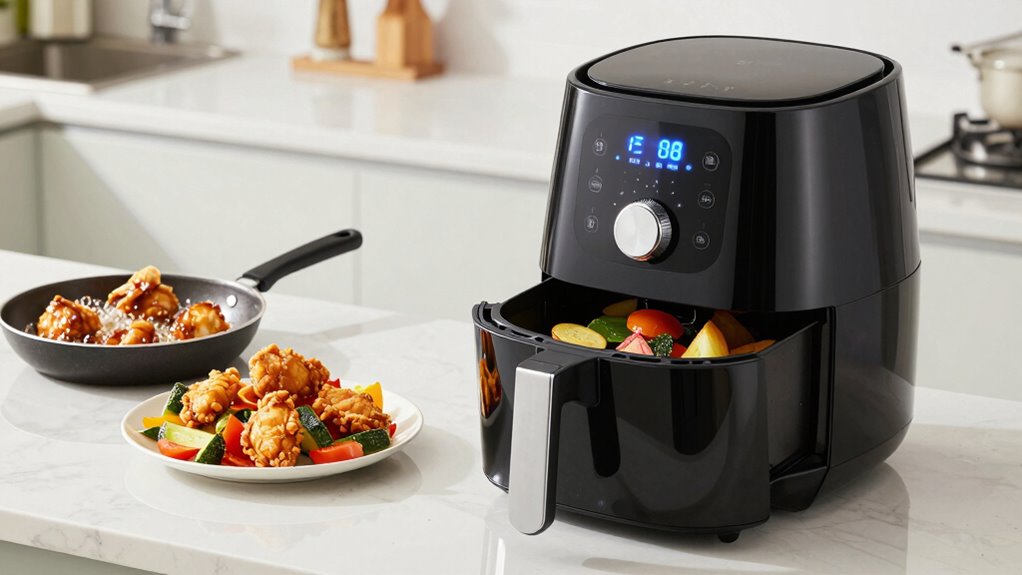
Deciding whether to use an oil-free air fryer or stick with traditional oil-based cooking depends on your health goals, taste preferences, and cooking habits. Oil-free alternatives can reduce calorie intake and fat consumption, making them appealing if you’re focused on healthier eating. However, some dishes may still require a small amount of cooking oil to achieve desired texture or flavor, so you’ll need to evaluate whether oil is a cooking oil necessity for certain recipes. If you prefer crispy, tender results without the mess or added calories, an oil-free air fryer can be a good choice. Additionally, understanding the cooking process involved in air frying can help you determine when it’s suitable. Recognizing the limitations of oil substitutes is important, as not all foods will replicate the same flavor and texture without oil. On the other hand, if you enjoy the richness and flavor that oil provides, sticking with oil-based methods might suit you better. Ultimately, it’s about balancing health, taste, and convenience in your cooking routine.
Frequently Asked Questions
Can Oil-Free Air Fryers Replace Traditional Fryers Entirely?
Oil-free air fryers can’t fully replace traditional fryers because of appliance limitations. While they’re great for healthier, crispy snacks, they may not achieve the same level of crunch or flavor as oil-based frying. If you prefer quick, low-fat cooking, an oil-free air fryer works well. However, for deep-fried dishes needing intense oil contact, traditional fryers still have the edge. So, consider your cooking needs before replacing your fryer entirely.
Are There Health Benefits to Using Oil-Free Air Fryers?
Think of your health as a garden needing care; using oil-free air fryers is like watering with pure, gentle rain. They offer health benefits by reducing unhealthy fats and calories, leading to nutritional improvements. This method helps you enjoy crispy foods without the guilt, supporting better heart health and weight management. With consistent use, you nurture your well-being, making healthier choices easier and more satisfying every day.
How Does Food Size Affect Cooking Time in Oil-Free Air Fryers?
Food size profoundly impacts cooking time in oil-free air fryers. When you chunk your food into smaller pieces, it cooks faster and more evenly, saving you time. Proper portion control ensures that heat circulates well around each piece, preventing uneven cooking. Larger chunks need more time, so adjust your timing accordingly. By managing food size, you optimize cooking efficiency and achieve better results in your air fryer.
Is Preheating Necessary for Optimal Results?
Preheating isn’t always necessary, but it can help attain ideal results. If you’re cooking foods that need a crispy exterior or precise temperature control, preheating your air fryer ensures even cooking and better texture. For smaller or quick-cook items, skipping preheating saves time without sacrificing quality. Generally, preheat when you want consistent, restaurant-style results, but it’s not a strict requirement for every recipe.
Can You Cook Frozen Foods Directly in an Oil-Free Air Fryer?
You can cook frozen foods directly in an oil-free air fryer, saving time and effort. About 80% of users report successful results this way. Just place your frozen food in the basket, set the temperature and time, and start cooking. Keep in mind, some items may need a shake or flip halfway through to ensure even cooking, but overall, it’s a quick and convenient method.
Conclusion
Whether you’re aiming for crispiness or craving convenience, oil-free air fryers offer a healthy, quick, and easy way to cook. They excel at delivering crispy textures on certain foods, but fall short with others that need extra moisture or oil. By understanding their strengths and limitations, you can decide when to embrace the air fryer’s magic and when to stick with traditional methods. Ultimately, it’s about choosing what’s best for your taste, health, and time.