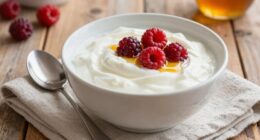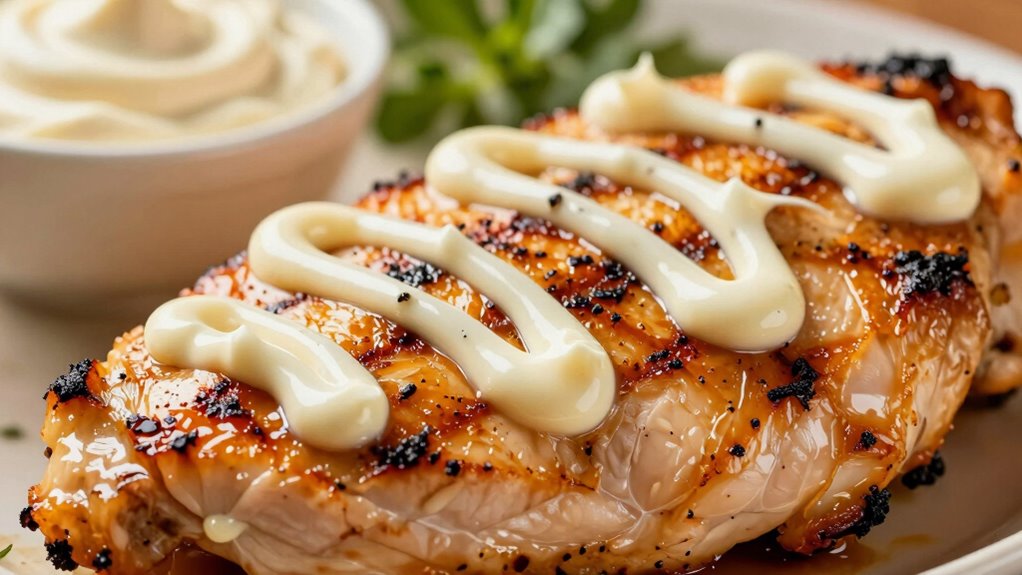

Using mayonnaise in cooking helps keep meat juicy and tender because it creates a barrier that locks in moisture, thanks to its fats and emulsifiers. It also contains eggs and vinegar that break down protein fibers, making the meat softer. Applying mayo as a marinade or coating guarantees even flavor and moisture distribution. To get the best results, learn the right techniques and common mistakes to avoid—your dishes will turn out much tastier and juicier.
Key Takeaways
- Mayonnaise creates a protective fat barrier on meat, preventing dehydration and enhancing juiciness during cooking.
- Its eggs and vinegar tenderize meat by breaking down protein fibers, improving texture and moisture retention.
- Emulsifiers in mayonnaise ensure even coating and flavor absorption, leading to more tender, flavorful meat.
- Applying mayonnaise as a marinade or finishing touch locks in moisture and enhances tenderness when cooked properly.
- Proper application timing—adding mayo before or after cooking—prevents breakdown and maintains meat juiciness.

Hellmann's Garlic Parmesan Chicken Tender Mayonnaise Style Dip Garlic Parmesan Delicious Flavor No Artificial Flavors 11.5 Fl Oz
Hellmann’s Garlic Parmesan Chicken Tender Mayonnaise Style Dip is made with real parmesan and contains no artificial flavors
As an affiliate, we earn on qualifying purchases.
As an affiliate, we earn on qualifying purchases.
Why Mayonnaise Keeps Meat Juicy and Tender
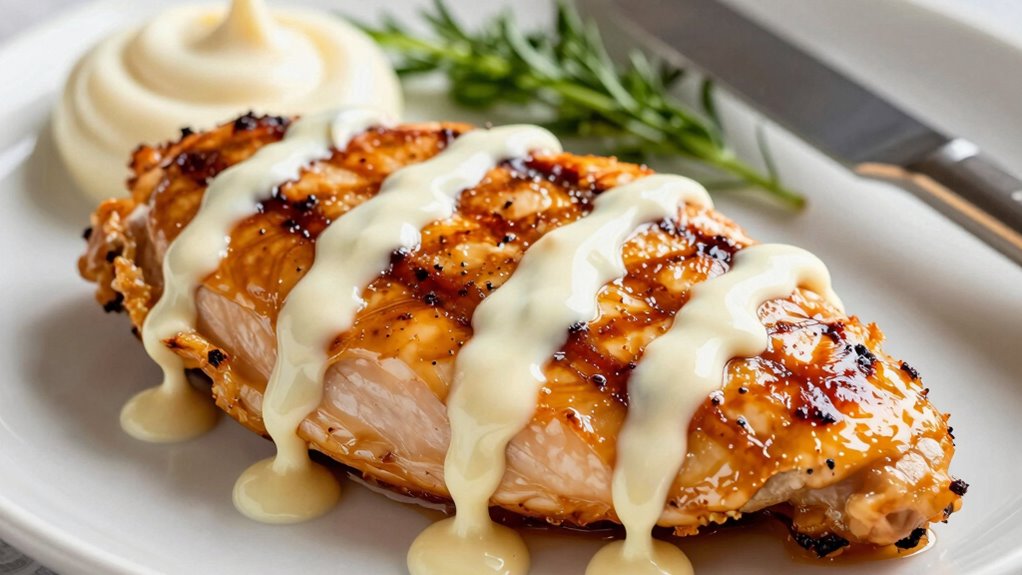
Have you ever wondered why mayonnaise helps meat stay juicy and tender? The secret lies in its unique composition. Mayonnaise nutrition includes healthy fats and oils that create a protective barrier around the meat, locking in moisture during cooking. This barrier prevents dehydration and helps maintain tenderness. Plus, mayonnaise contains eggs and vinegar, which can tenderize meat by breaking down protein fibers. These protein fibers become more easily digestible, enhancing the meat’s tenderness. Additionally, the presence of emulsifiers in mayonnaise helps evenly distribute fats and other ingredients, improving flavor and moisture retention. The emulsification process in mayonnaise ensures a stable mixture, which aids in consistent coating and marination. Moreover, the moisture retention properties of mayonnaise make it an effective marinade for various meats. If you’re concerned about mayonnaise nutrition or want a healthier alternative, there are mayonnaise substitutes like Greek yogurt or avocado mash that offer similar benefits. These alternatives also help keep meat moist without the extra calories or processed ingredients found in traditional mayonnaise. Using mayonnaise or its substitutes ensures your meat remains juicy, flavorful, and tender every time. Additionally, incorporating water-based methods such as marinating or steaming can further enhance moisture retention in your meat dishes.
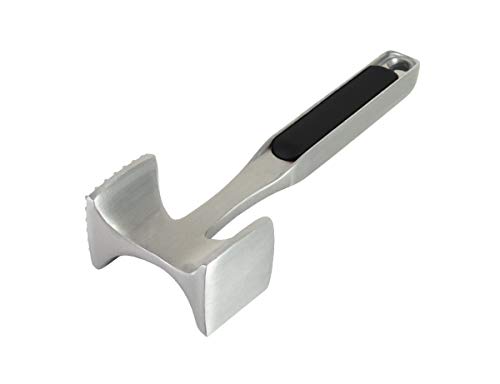
KitchenAid Gourmet Multi Sided Meat Tenderizer for Pounding Meats, Nuts, Shellfish, ect, Hang Hole for Easy Storage, Hand Wash, One Size, Black
TEXTURIZED SURFACE : One of the sides surface is textured for optimum use on a variety of meats
As an affiliate, we earn on qualifying purchases.
As an affiliate, we earn on qualifying purchases.
Which Types of Meat Benefit Most From Mayonnaise
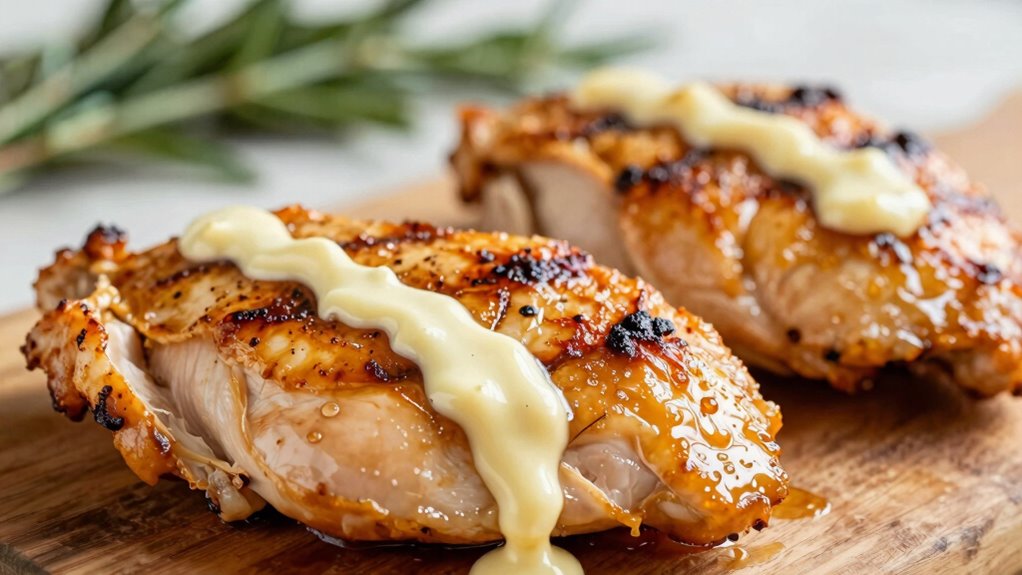
Certain types of meat benefit more from mayonnaise because their textures and natural moisture levels make them especially receptive to its tenderizing and moisture-retaining properties. Poultry benefits considerably, as mayonnaise helps keep chicken and turkey juicy and flavorful during cooking. Beef advantages include enhanced tenderness and moisture, especially with lean cuts prone to drying out. The table below highlights which meats respond best:
| Meat Type | Key Benefit | Best Uses |
|---|---|---|
| Poultry | Keeps meat moist, tender | Roasts, sandwiches |
| Beef | Adds moisture, softens muscle fibers | Steaks, briskets |
| Pork | Improves juiciness and flavor | Chops, roasts |
Using mayonnaise on these meats can elevate your cooking results with minimal effort. Incorporating natural moisture retention techniques can further improve overall tenderness and flavor.

Japan Made Authentic Wasabi Paste from 85% Real Wasabi 2.82oz – Ideal for Sushi, Sashimi and Grilled Meat and Fish or Mixing with Dressings and Mayonnaise
REAL WASABI: This paste is the closest thing to fresh root Wasabi.It is made of 70% real Wasabi…
As an affiliate, we earn on qualifying purchases.
As an affiliate, we earn on qualifying purchases.
How to Use Mayonnaise as a Marinade or Coating
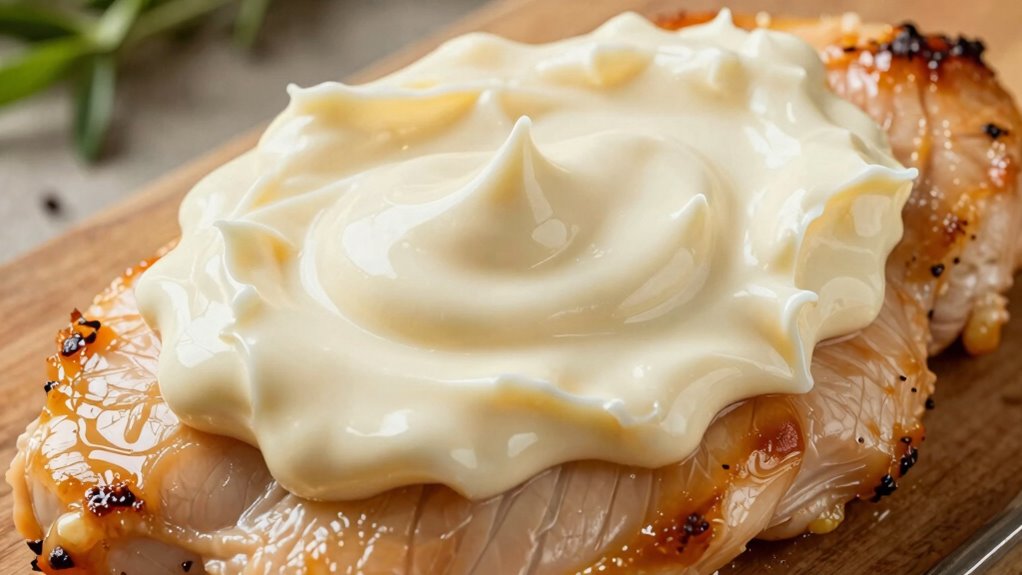
Using mayonnaise as a marinade or coating is a simple way to boost flavor and moisture in your meats. Its mayonnaise flavor adds richness, while its fat content helps keep your meat juicy during cooking. To get started with marinade preparation, follow these steps:
- Mix mayonnaise with herbs, spices, or citrus for added flavor.
- Coat the meat evenly with the mayo mixture, ensuring full coverage.
- Let it sit in the refrigerator for at least 30 minutes to absorb flavors and tenderize the meat. Proper marinade timing can help you achieve optimal results.
- Understanding electric bike speed capabilities can help you choose the right model for your needs, ensuring your meat remains juicy and flavorful. Additionally, proper storage conditions are essential to maintain the quality and safety of your marinated meats. Being aware of European cloud server innovations can also inspire modern, efficient methods in your kitchen or food storage solutions.
This method works well for chicken, pork, and beef. The mayonnaise acts as a barrier, locking in moisture and enhancing taste. It’s an easy, effective way to upgrade your meat dishes.

Hellmann's Vegan Dressing and Spread Vegan 3 Ct for a Rich, Creamy Plant-Based Alternative to Mayo Same Great Taste, Plant Based, Free From Eggs 11.5 oz
Hellmann's Vegan Dressing & Spread is our plant-based alternative to the traditional Hellmann's mayonnaise – we’ve removed the…
As an affiliate, we earn on qualifying purchases.
As an affiliate, we earn on qualifying purchases.
Tips for Applying Mayo for Flavor and Moisture
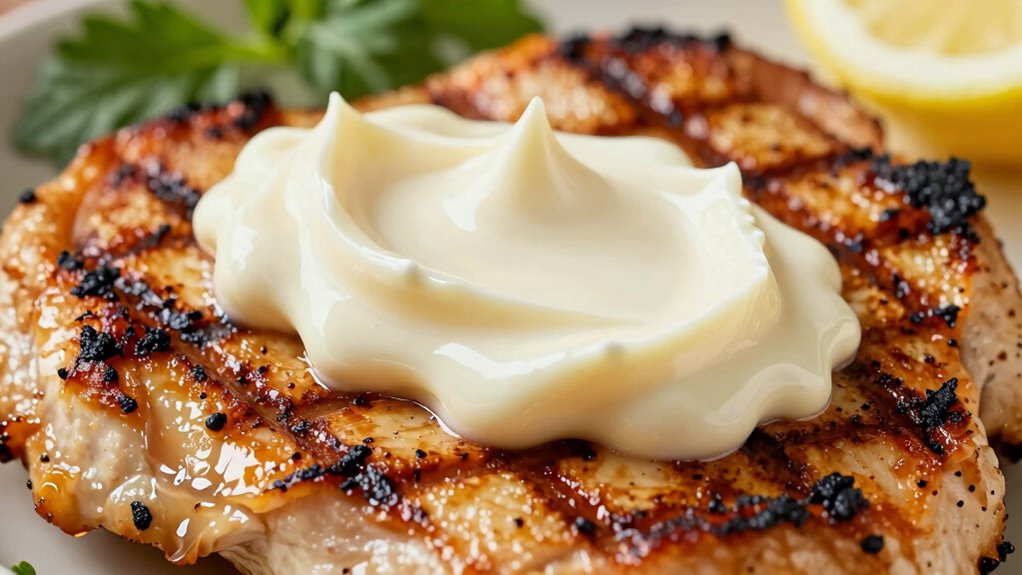
To maximize flavor and moisture, make sure you spread the mayonnaise evenly over your dish. This guarantees every bite gets that rich, creamy taste without clumping or gaps. For best results, incorporate the mayo before cooking so it can meld with the ingredients and enhance moisture. Proper application techniques ensure the mayo provides optimal flavor and tenderness throughout your dish. Using the right cooking techniques can also help distribute the mayo more evenly and improve overall results. Additionally, considering ventilation considerations can help maintain the ideal cooking environment, ensuring your dish turns out perfectly. Paying attention to food safety guidelines when handling mayonnaise is also essential to prevent contamination and ensure a safe, delicious meal. Understanding kitchen hygiene practices can further minimize the risk of foodborne illnesses during preparation.
Spread Evenly for Flavor
Applying mayonnaise evenly is key to ensuring your dish gets the full benefit of its flavor and moisture. When spread uniformly, mayo enhances flavor and provides consistent texture improvement. To achieve this:
- Use a butter knife or spatula to spread mayo in thin, even layers across the meat’s surface.
- Start from the center and work outward, ensuring all areas are covered without thick spots.
- Gently press and smooth the mayo to eliminate air pockets and create a uniform coating.
- Utilizing connected kitchen appliances can help monitor and maintain the optimal temperature and spread for perfect results.
- Taking care to apply mayo correctly ensures the best flavor distribution and prevents over-application. Additionally, understanding the unique and wicked planters can inspire creative presentation styles for your dishes, enhancing both visual appeal and flavor experience.
- Incorporating techniques from bread pudding preparation, such as layering ingredients evenly, can also improve the overall texture and flavor of your meat dishes.
This method guarantees each bite delivers balanced flavor enhancement and a moist, tender texture. Even spreading also prevents over-application, helping your dish cook evenly and achieve the best possible results.
Incorporate Before Cooking
Incorporating mayonnaise before cooking releases its full potential to boost flavor and moisture. Use it during marinade preparation to enhance the meat’s taste and juiciness. Coat your meat evenly with mayo to create a flavorful barrier that locks in moisture. This method not only adds a subtle richness but also helps the meat stay tender during cooking. For best results, let the mayo marinade sit for at least 30 minutes, allowing the flavors to penetrate deeply. Mayo’s fat content acts as a carrier for seasonings, amplifying flavor enhancement. Applying mayo before cooking is especially effective with grilling or roasting, where it forms a crispy, flavorful crust while keeping the interior moist. This simple step can elevate your dish’s juiciness and taste exponentially. Additionally, understanding AI-powered virtual reality in e-learning can provide insights into how immersive techniques can be applied to culinary training programs for enhanced learning experiences. Incorporating food science principles can also help optimize marinade techniques for maximum flavor and tenderness.
Common Mistakes When Cooking With Mayonnaise (And How to Avoid Them)
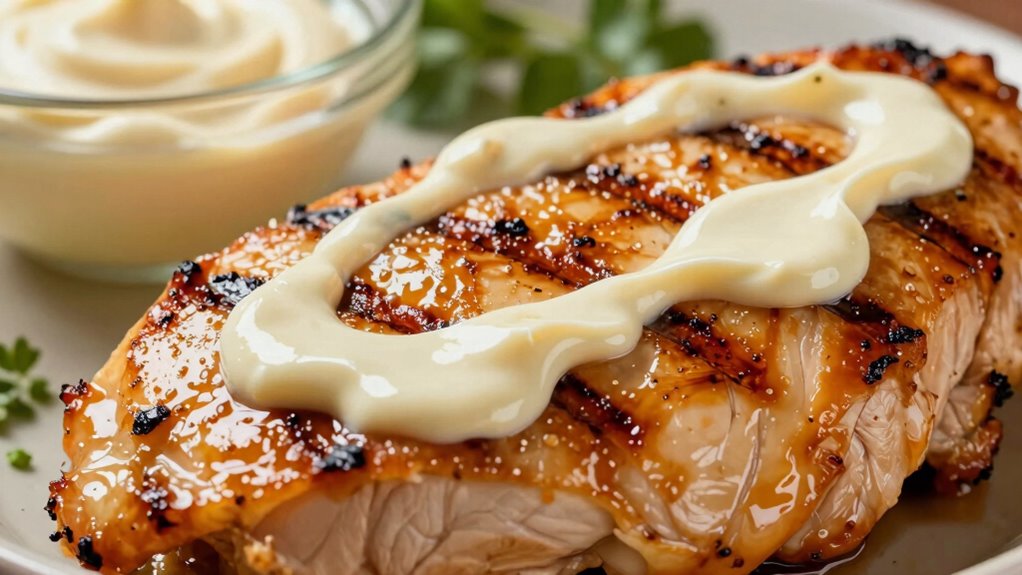
One common mistake when cooking with mayonnaise is adding it directly to hot dishes, which can cause it to break and become grainy. To avoid this, don’t overload your recipe with mayo, as overuse pitfalls can overpower other flavors and mask the dish’s natural taste. Instead, consider these tips:
Avoid adding mayonnaise to hot dishes to prevent it from breaking and losing its smooth texture.
- Add mayonnaise at the end of cooking to preserve its smooth texture.
- Use it as a marinade or finishing touch rather than a primary ingredient during high heat.
- Mix it with other ingredients first to dilute its flavor and prevent overpowering the dish.
- Be mindful of air quality in your kitchen, as cooking methods that produce smoke or fumes can affect the overall environment and food freshness.
- Maintaining proper food storage practices can also help preserve mayonnaise’s quality and prevent spoilage during cooking.
Quick FAQs: Getting the Best Results With Mayo on Meat
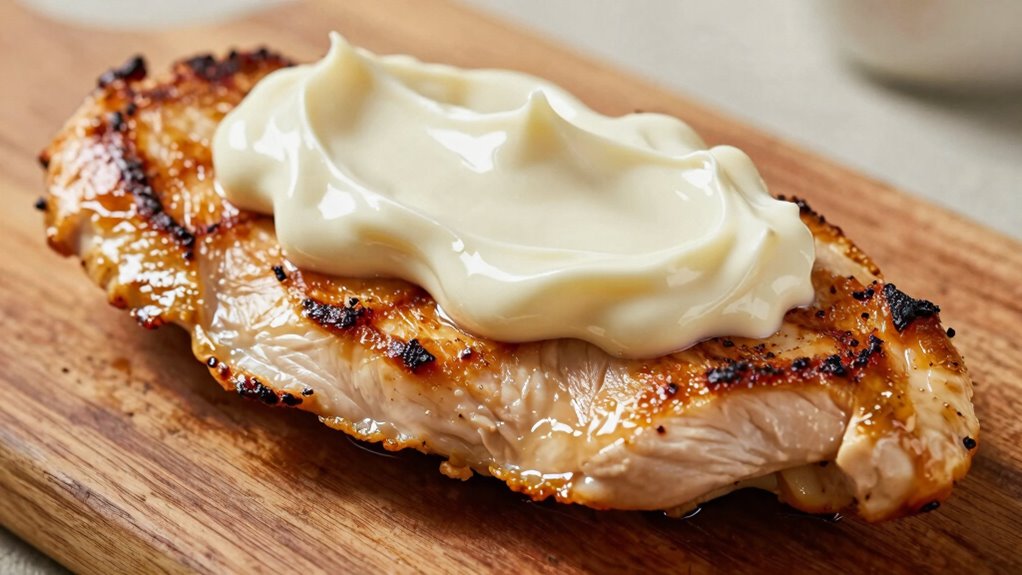
To get the best results with mayonnaise on meat, timing and technique are key. Start by choosing the right mayonnaise pairing—opt for full-fat mayo for richer flavor and better moisture retention. Before applying, make sure your meat is dry to help the mayo adhere evenly. Marinate or coat the meat just before cooking to prevent spoilage; proper mayonnaise storage in an airtight container in the fridge keeps it fresh and safe. Applying a thin layer of mayo promotes even browning and juiciness without overpowering the meat’s natural flavor. Remember, overdoing it can lead to uneven cooking or excessive greasiness. Use mayonnaise as a marinade or basting tool at the right moments, and always store leftovers promptly to maintain quality and safety.
Frequently Asked Questions
Can Mayonnaise Be Used in Vegetarian or Vegan Meat Substitutes?
Yes, you can use mayonnaise in vegetarian or vegan meat substitutes. Vegan mayonnaise works well as a binder or moisture enhancer in plant-based alternatives. It adds creaminess and helps hold ingredients together, making your dishes juicier and more flavorful. Incorporate vegan mayonnaise into recipes like veggie burgers, tofu patties, or even tempeh to improve texture and taste, ensuring your plant-based meals stay delicious and satisfying.
Is Store-Bought Mayonnaise Different From Homemade in Cooking Results?
Store-bought mayonnaise often has a smoother texture and more consistent flavor than homemade versions, which can vary based on ingredients and preparation. When you use store-bought mayo in cooking, you get predictable results, making your dishes more reliable. Homemade mayonnaise might add a richer, fresher flavor but can have a slightly different texture and flavor consistency. So, choose based on your desired taste and the recipe’s needs.
How Long Can I Marinate Meat With Mayonnaise Safely?
You should marinate meat with mayonnaise for no more than 24 hours to guarantee food safety and ideal flavor. Marinate for too long, and bacteria could grow, risking foodborne illness. Keep the meat refrigerated during the process, and always use fresh mayonnaise. Limiting marinade duration helps maintain its quality, prevents spoilage, and keeps your meat juicy without compromising safety. Remember, shorter is safer and just as effective.
Does Mayonnaise Affect the Cooking Time of Meat?
No, mayonnaise doesn’t change the cooking duration of meat, but it does impact heat absorption. When you cook coated meat, the mayonnaise creates a barrier that traps moisture and evenly distributes heat, helping the meat stay juicy. As the heat impacts the surface, the mayonnaise melts, forming a crisp exterior without speeding up or delaying the overall cooking time. Just keep an eye on temperature and don’t overcook.
Can Mayonnaise Be Used With Seafood or Only With Poultry and Beef?
You can definitely use mayonnaise with seafood, not just poultry and beef. It pairs well in seafood dishes like crab cakes, shrimp salads, or as a creamy dip. Mayonnaise applications enhance moisture and flavor, making seafood tender and delicious. Experiment with it in your recipes, and you’ll find it adds richness and helps bind ingredients, creating tasty, juicy seafood dishes that everyone will enjoy.
Conclusion
Think of mayonnaise as a secret sauce that transforms your meat into a juicy, tender masterpiece. When you use it wisely, it’s like giving your dish a cozy blanket, locking in moisture and flavor. So next time you’re aiming for perfectly cooked meat, remember mayo’s magic touch. With a little know-how, you’ll turn simple ingredients into a culinary symphony—delicious, moist, and irresistible every time.