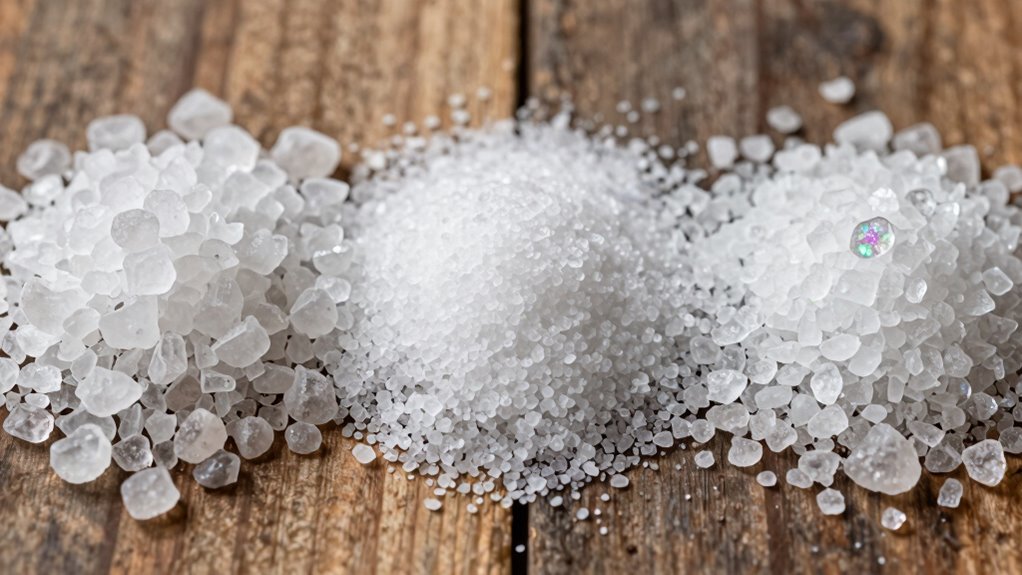

When substituting kosher, table, or sea salt, consider their texture, mineral content, and volume differences. Kosher salt has larger flakes, so you’ll need to use more by volume to match saltiness. Fine table salt dissolves quickly, so use less if swapping for coarser salts. Sea salt varies in grain size and flavor, so measure by weight for accuracy. Understanding these differences helps keep your dishes balanced—explore further for precise tips.
Key Takeaways
- Adjust measurements by weight rather than volume to account for different crystal sizes and densities.
- Use conversion ratios (e.g., 1 teaspoon of table salt ≈ 1.5 teaspoons of kosher salt).
- Consider mineral content and flavor differences, as they impact taste and saltiness levels.
- Fine salts dissolve quickly, suitable for seasoning, while coarse salts add texture and may require more volume.
- Match salt type to your culinary purpose; kosher for handling and seasoning, sea salt for nuanced flavor, and table salt for quick-dissolving needs.
Can You Swap Different Types of Salt Without Changing Your Recipe?
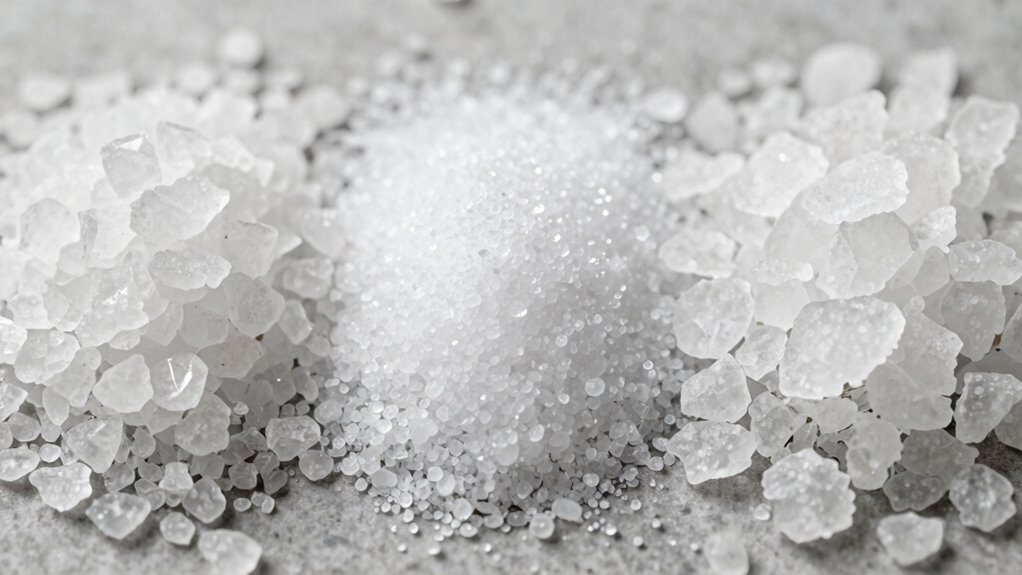
While you can often swap different types of salt in a recipe, it’s important to understand how their varying textures and flavors can affect the final dish. Salt preservation methods influence the grain size and mineral content, which impact how the salt dissolves and flavors food. For example, coarse sea salt might add a crunch or burst of flavor, while fine table salt dissolves quickly, blending seamlessly. When considering culinary pairing, choose salts that complement the dish’s profile; delicate fish pairs well with flaky sea salt, whereas hearty meats benefit from robust kosher salt. Keep in mind that substituting without adjusting quantities can lead to over- or under-seasoning. Understanding these differences helps you maintain the balance of flavors and textures without compromising your recipe’s integrity. Additionally, being curious about different salt types can enhance your culinary skills and help you make informed substitutions. Moreover, knowing how salt types are processed and their mineral content can guide your choices for specific dishes, especially when considering flavor enhancement and health considerations.
What Are the Main Differences Between Kosher, Table, and Sea Salt?
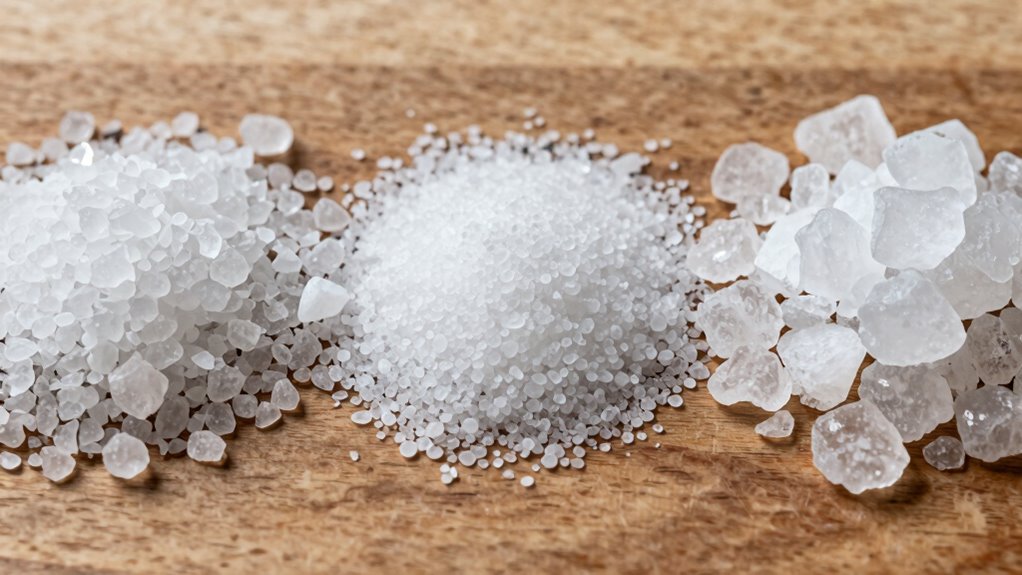
You’ll notice that kosher, table, and sea salt differ in mineral content, which can subtly influence taste. Their textures also vary—some are coarse and flaky, while others are fine and smooth—affecting how you use them in cooking. These differences in flavor and feel help you choose the right salt for your recipes and preferences.
Mineral Content Differences
Kosher, table, and sea salts differ markedly in their mineral content, which influences their flavor, texture, and health benefits. The mineral diversity among these salts affects their trace element impact, giving each type unique qualities. Sea salt retains more natural minerals from seawater, including magnesium, calcium, and potassium, which can add subtle flavors and potential health benefits. Additionally, the presence of these minerals can influence the color and appearance of the salt crystals, making sea salt visually distinct. The mineral content also plays a role in the crystal structure, affecting how the salt dissolves and its culinary use. Table salt, heavily refined, contains mostly sodium chloride with minimal trace minerals, resulting in a more neutral taste. Kosher salt falls somewhere in between, with larger crystals and some mineral content that can subtly alter flavor. These mineral differences not only influence taste but also contribute to the overall nutritional profile, making it important to contemplate the mineral content when choosing a salt for health or culinary purposes.
Texture and Flavor Variations
The mineral content differences among kosher, table, and sea salts directly influence their texture and flavor profiles. Kosher salt typically has large, coarse grains, giving it a flaky texture that dissolves slowly, resulting in a mild salty taste. Table salt has fine, uniform grains, providing a quick dissolve and a sharper, more pronounced salty flavor. Sea salt varies widely in grain size—ranging from coarse to fine—and often retains trace minerals that add subtle flavor nuances. Trace minerals in sea salt can enhance or soften the salty taste, depending on the grain size and processing. Additionally, the processing methods used for each type of salt can affect purity and mineral retention. These differences in mineral content also influence how each salt interacts with other ingredients during cooking. The distribution of minerals within each salt type can impact the overall texture and flavor release when used in various recipes. As a result, your choice of salt impacts both mouthfeel and flavor intensity, making it important to select the right type for your culinary needs. Variations in grain size can also alter how each salt disperses in dishes, affecting overall texture and seasoning accuracy.
How Do Salt Texture and Flavor Vary Among Types?
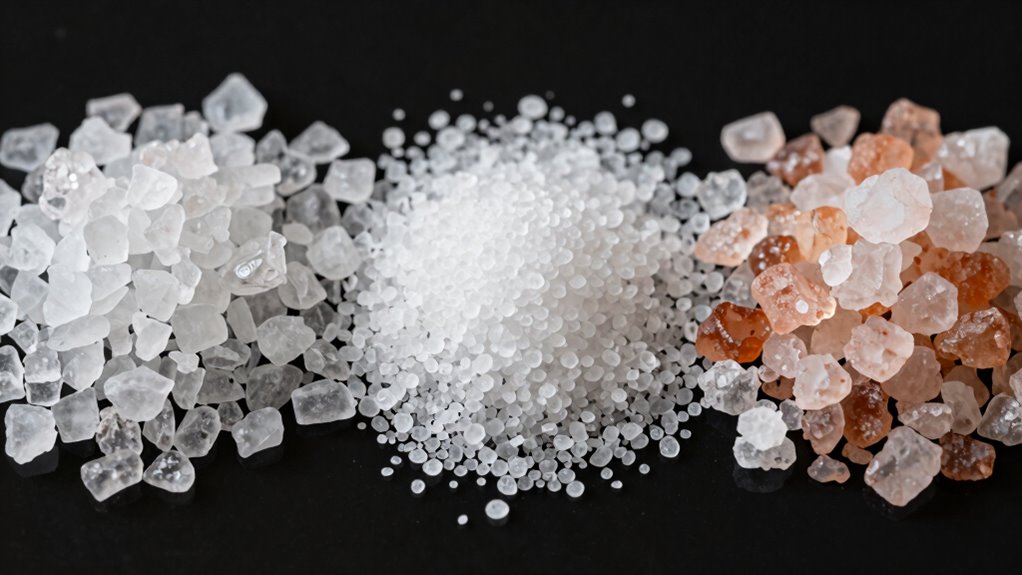
Your choice of salt affects both how it feels and tastes in your dishes. Coarser salts add crunch and are great for finishing, while finer salts dissolve quickly for seasoning. The flavor varies from mild to bold, shaping how your food ultimately tastes. Additionally, understanding the sustainability practices behind different salt types can influence your choice and support environmentally conscious options. Exploring the environmental impact of salt production can help you make more eco-friendly decisions. Considering the production methods can also reveal differences in mineral content and overall quality. Being aware of the halal status of salt products ensures they meet dietary requirements and are free from non-halal additives.
Texture Differences Affect Usage
Have you ever noticed how different salts feel and behave when added to dishes? The crystal size greatly influences their culinary applications. Fine table salt dissolves quickly, making it ideal for baking and seasoning during cooking. Its small crystals blend seamlessly into recipes, offering even saltiness. Coarser salts, like kosher or sea salt, have larger crystals that take longer to dissolve, perfect for finishing dishes or salt-rimming glasses. Sea salt’s varied crystal size can add a pleasant crunch or subtle texture, depending on the grind. Understanding these differences helps you choose the right salt for specific tasks, ensuring proper seasoning and texture. So, your choice of salt depends on its crystal size and how you want it to perform in your cooking.
Flavor Profiles Influence Taste
Different salts not only vary in texture but also boast distinct flavor profiles that can substantially influence the taste of your dishes. The flavor impact of each salt type depends on its mineral content and processing method. For example, sea salt often has a subtle briny taste, enhancing seafood or vegetable dishes, while kosher salt’s clean, straightforward flavor makes it versatile for seasoning. Table salt tends to have a pure, salty taste due to its refined nature, which can sometimes mask other flavors. These taste considerations are important when choosing the right salt, as their unique flavor profiles can either complement or overpower your ingredients. Understanding how each salt’s flavor impacts your dish helps you make smarter seasoning choices and achieve the desired culinary result. Additionally, salt texture can influence how quickly and evenly salt dissolves in your food, affecting overall flavor distribution.
How to Convert Salt Measurements When Substituting Types?
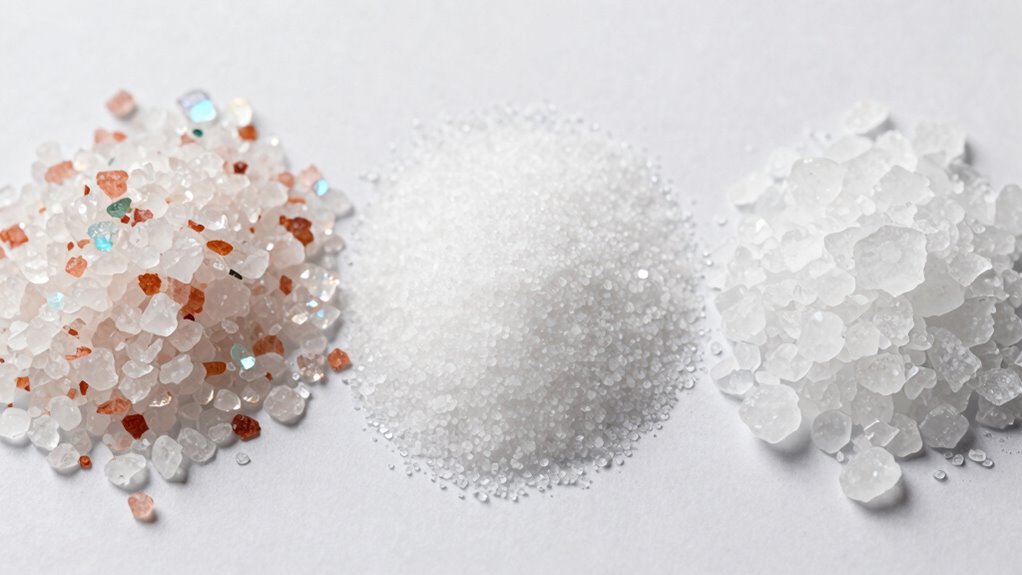
When substituting one type of salt for another in a recipe, it is essential to adjust the measurement to account for differences in density and flavor intensity. Salt crystal size greatly impacts volume measurements—coarser salts like sea salt have larger crystals and may weigh less per teaspoon than fine table salt, so you might need to use slightly more. Additionally, mineral composition influences taste and solubility; mineral-rich salts can be more flavorful, so less may be needed. To convert accurately, check the conversion ratio specific to each salt type, and consider measuring by weight rather than volume for precision. This approach guarantees your dish maintains proper seasoning while accommodating variations in salt crystal size and mineral content across different salt types. Accurate measurement techniques are crucial to ensure consistent results and flavor balance. Understanding salt density differences can further enhance your substitution accuracy. Moreover, being aware of flavor profiles helps in choosing the right salt for specific dishes and taste preferences, and knowing how to adjust seasoning ensures your recipes come out perfectly regardless of the salt type used.
When Should You Use Kosher Salt Instead of Table or Sea Salt?
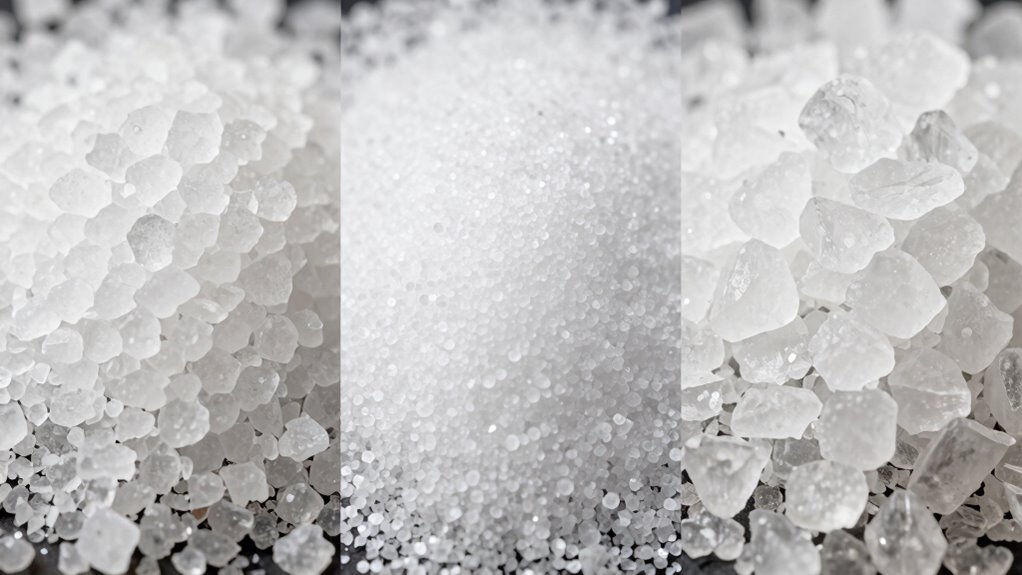
Choosing the right salt for your cooking can make a noticeable difference in flavor and texture. Use kosher salt instead of table or sea salt when you want better control over seasoning and texture. It’s ideal for certain cooking techniques like dry brining, seasoning meats, or sprinkling on dishes before serving. Consider these points:
Choose kosher salt for better control, flavor, and versatile cooking techniques.
- Texture and Coarseness – Kosher salt’s larger grains make it easy to pinch and control.
- Flavor Enhancements – Its clean taste enhances dishes without overpowering.
- Dietary Considerations – Kosher salt typically contains fewer additives, aligning with certain dietary needs.
- Cooking Techniques – Best suited for seasoning meats, brining, or finishing dishes where precision matters.
Use kosher salt when you want more control, especially if dietary considerations or specific techniques are a priority.
Will Substituting Different Salt Types Change Your Dish?

Substituting one type of salt for another can considerably impact the flavor, texture, and overall outcome of your dish. Different salt types have distinct salt flavors, which can alter the taste profile. For example, sea salt often has a more complex mineral content, giving it a subtle crunch and nuanced flavor, while table salt is more refined and consistently salty. Kosher salt’s larger grains may affect how salt dissolves and distributes. These differences mean your dish might taste saltier or less salty depending on the salt you use. Additionally, mineral content influences not just flavor but also texture, especially in finishing or seasoning. For instance, understanding the plant properties of herbal ingredients can help you achieve better flavor integration and overall balance in your cooking. So, swapping salts isn’t always a straightforward substitution and can change the final result more than you expect.
Tips for Choosing the Best Salt for Your Cooking Needs?
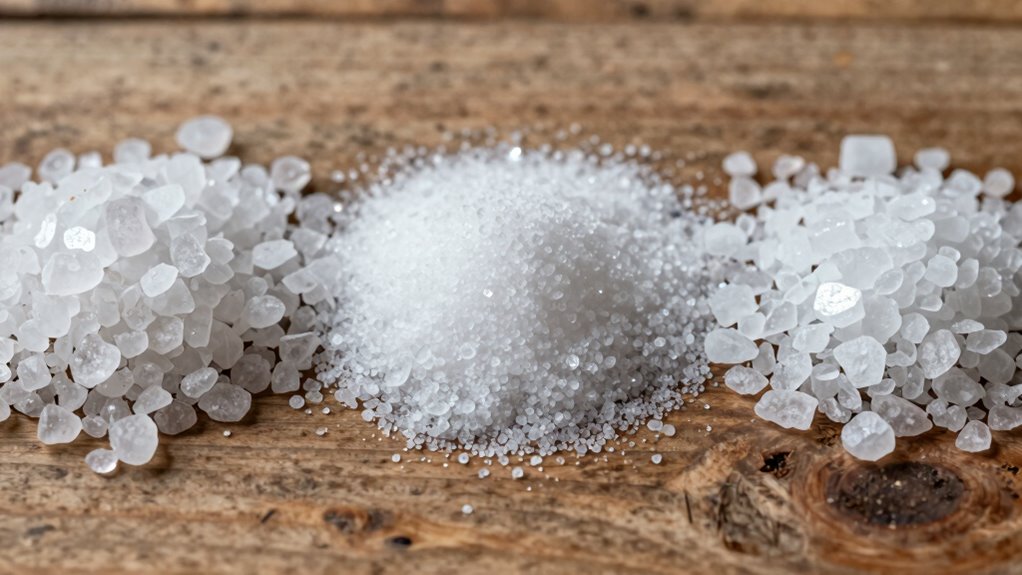
Selecting the right salt for your cooking depends on understanding its unique qualities and how they suit different dishes. The salt crystal structure influences how quickly it dissolves and delivers flavor. For example, fine table salt dissolves rapidly, ideal for seasoning during cooking, while coarser sea salt adds texture and subtle crunch. When choosing salt, consider these tips:
- Match salt type to the culinary pairing—use flaky sea salt for finishing dishes.
- Pay attention to salt crystal structure—larger crystals work well as a garnish.
- Use kosher salt for its purity and ease of handling in seasoning.
- Select specialty salts for specific flavors or visual appeal.
Understanding these factors helps you select the best salt to enhance your dishes effectively and safely.
Frequently Asked Questions
Can I Use Himalayan Salt as a Substitute for Kosher or Table Salt?
Yes, you can use Himalayan salt as a substitute, but keep in mind its distinct Himalayan salt flavor and mineral differences. Its coarse texture may require adjustments in measurement, so use less if substituting for table salt. Himalayan salt contains trace minerals that can subtly alter taste, adding depth. Just remember, the mineral content and flavor profile differ from kosher or table salt, so taste as you go to ensure it fits your dish.
How Does Mineral Content Affect the Taste of Different Salts?
Mineral content greatly influences the taste of different salts, adding unique flavor nuances. When you use salts with higher mineral influence, like sea salt or Himalayan salt, you’ll notice more complex taste profiles compared to plain table salt. These minerals enhance flavor depth, making dishes more interesting. So, if you want a richer, multi-dimensional taste, opt for salts with a diverse mineral content, but remember it might slightly alter your recipe’s expected saltiness.
Are There Health Benefits Associated With Specific Types of Salt?
You might enjoy some health benefits from certain salts, like mineral health benefits found in sea salt, which contains trace minerals. Some people also use salt therapy, where inhaling salt particles can help respiratory health. While these benefits vary, choosing unrefined salts with more minerals might support your overall well-being. Just remember, moderation is key, and consult a healthcare professional for personalized advice.
Does the Salt Grain Size Impact Cooking or Seasoning Efficiency?
When it comes to seasoning efficiency, grain size impact is significant—you can’t judge a book by its cover. Coarser grains take longer to dissolve, which might slow seasoning, while finer grains blend in quickly, providing even flavor. So, choose your salt based on your cooking needs; don’t put all your eggs in one basket. Adjust your measurements accordingly to guarantee your dishes turn out just right.
Can I Substitute Salt Types in Baking Recipes Without Adjustments?
Yes, you can substitute salt types in baking recipes, but you should consider salt flavor and salt melting point. Different salts have varying saltiness levels; for example, sea salt may taste milder, so you might need a slightly different amount. Also, because of their salt melting points, some salts dissolve faster, impacting texture and taste. Adjust the quantity carefully to maintain the recipe’s balance and flavor consistency.
Conclusion
Choosing the right salt is like picking the perfect paint color for a room—it sets the tone. By understanding the differences in texture, flavor, and measurements, you can confidently swap salts without compromising your dish. Whether you prefer the coarse crunch of kosher or the fine grains of table salt, your cooking will shine brighter when you select the right type for your needs. Trust your taste buds and enjoy experimenting—your kitchen is your creative canvas.