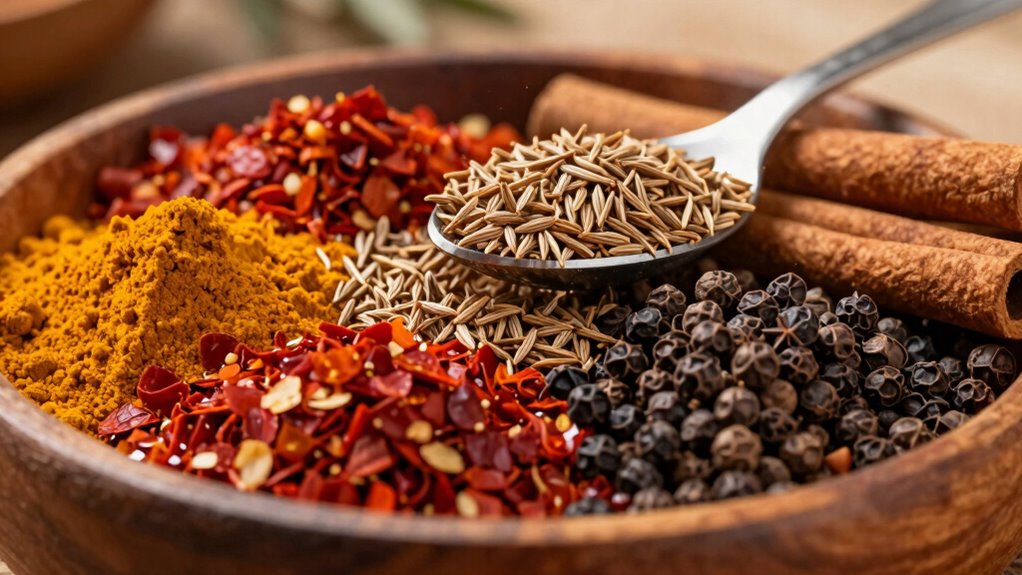

To make spices taste stronger, you need to master spice blooming. This technique involves gently heating spices to release their essential oils, intensifying aroma and flavor. Whether you toast whole spices or sauté ground ones, controlling the temperature and timing is key. Proper blooming prevents burning and release deep, vibrant flavors. Want to learn the exact steps and science behind this trick? Keep going to discover how to boost your dishes’ flavor with simple techniques.
Key Takeaways
- Bloom spices by gently heating them to release essential oils, intensifying their aroma and flavor.
- Toast whole spices before grinding or adding to unlock maximum flavor potential.
- Add spices early in cooking with oil or fat to enhance depth and richness.
- Use low to moderate heat during blooming to prevent burning and preserve aromatic qualities.
- Store spices properly in airtight containers away from light and heat to maintain potency for stronger flavor.
What Is Spice Blooming and Why Is It Important?

Have you ever wondered how certain spices develop their vibrant aroma and flavor over time? That’s where spice blooming comes in. It’s a technique that involves gently heating spices to reveal their full potential. When you bloom spices, you activate their essential oils, which enhances the spice aroma and makes the flavors more pronounced. This process is essential because it guarantees your dishes have a richer, deeper taste. Without blooming, spices can taste dull or flat, missing out on their true flavor potential. By properly blooming your spices, you’re not just adding seasoning—you’re elevating the entire dish’s flavor profile. Proper technique is crucial to ensure you don’t burn the spices while blooming, which would compromise their flavor. Additionally, using energy-efficient methods can help minimize environmental impact while preparing flavorful dishes. Employing temperature control during blooming ensures optimal activation of oils without risking burnt flavors. Incorporating precise timing can further enhance the effectiveness of blooming, ensuring maximum flavor extraction without overcooking. Using the right tools, such as a steaming method, can also help control the heat evenly and prevent burning.
When and How to Bloom Different Types of Spices
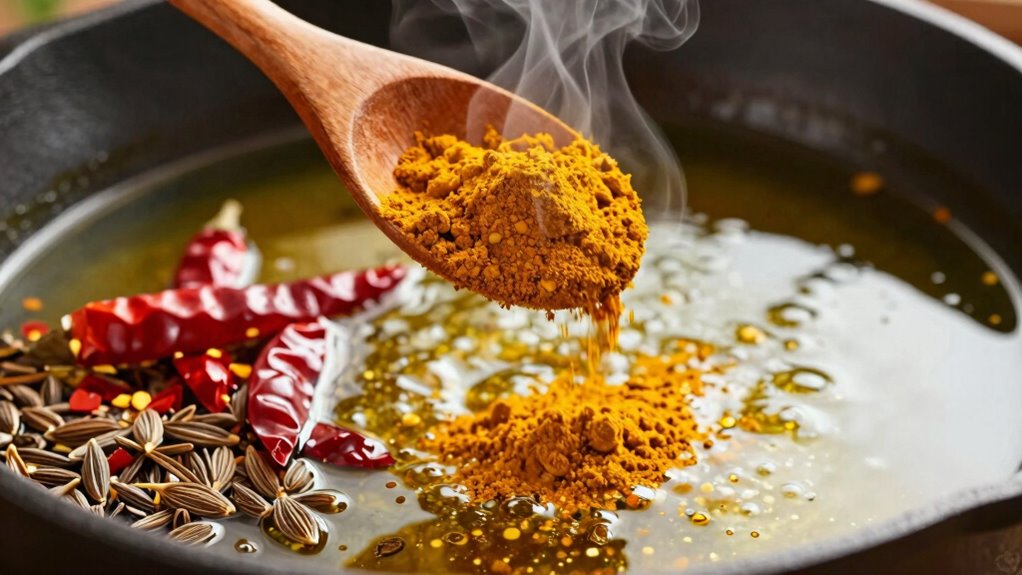
Knowing the right time to bloom your spices guarantees maximum flavor, so pay attention to when they are freshest. Use specific techniques like heating oil or dry roasting to bring out their aroma and depth. Keep in mind that each spice has an ideal temperature range, so adjusting heat carefully enhances the blooming process. Additionally, understanding the science behind spice blooming can help you optimize flavor extraction during cooking. Properly managing lease terms and conditions, such as avoiding excess wear and tear or exceeding mileage limits, ensures you get the most out of your lease and avoid costly fees.
When To Bloom Spices
Timing is key when it comes to blooming spices; adding them at the right moment can elevate your dish’s flavor. You should bloom delicate spices like cumin or coriander early in the cooking process to develop their full spice aroma and enhance flavor intensity. Toast these spices briefly in oil or dry heat before adding other ingredients. For more robust spices like cinnamon or cloves, bloom them when you add liquids or at the start of simmering to release their deeper aroma. Avoid adding spices too late, as their aroma and flavor won’t fully develop. Knowing when to bloom each spice ensures you maximize their potential, creating a richer, more fragrant dish with layered flavors. Timing truly makes all the difference in spice blooming.
Techniques For Blooming Spices
To effectively bloom spices, you need to understand the best techniques tailored to each type. Different spices require specific methods to release their full flavor, honoring their cultural significance. For ground spices, bloom them in hot oil for 30 seconds to release aroma and deepen taste. Whole spices benefit from dry roasting beforehand, enhancing their essential oils. Proper spice storage preserves freshness, ensuring ideal blooming. Proper storage practices help maintain the spices’ potency over time. Additionally, knowing air circulation around your spices can prevent moisture buildup, which can degrade their quality. Freshness plays a crucial role in flavor intensity. Properly stored spices retain their aroma longer, making blooming more effective. Here’s a quick guide:
| Spice Type | Blooming Technique |
|---|---|
| Ground Spices | Sauté briefly in oil until fragrant |
| Whole Spices | Dry roast until fragrant, then grind if needed |
| Dried Herbs | Add near the end, or briefly sauté |
Mastering these techniques makes your dishes richer and more vibrant. Additionally, understanding the natural oils within spices can help you optimize their flavor release during blooming.
Optimal Blooming Temperatures
Choosing the right temperature is vital for effectively blooming spices, as each type responds best within specific heat ranges. Generally, low to moderate heat (around 200–300°F) helps release the spice aroma without burning, which can diminish flavor intensity. For delicate spices like cumin and coriander, aim for a gentle sizzle, just enough to awaken their scent without overpowering heat. Stronger spices like cinnamon or cloves may tolerate higher temperatures up to 350°F, releasing their full flavor potential. Keep a close eye on the pan to prevent scorching, which can ruin both aroma and taste. Proper temperature control assures your spices bloom fully, maximizing their aromatic qualities and enhancing flavor intensity in your dish.
How to Bloom Spices Step-by-Step
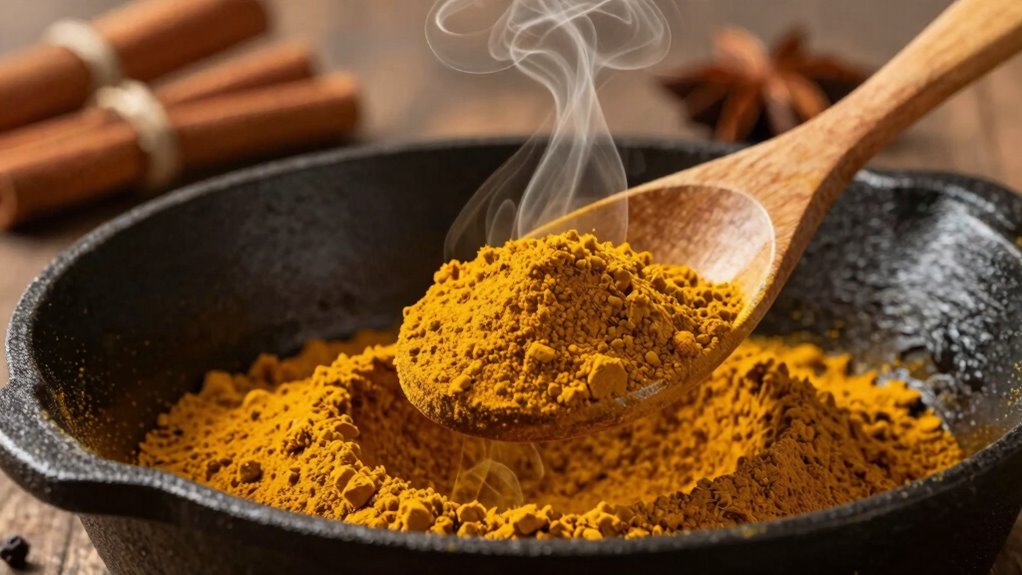
Blooming spices enhances their flavor and aroma, making your dishes more vibrant and fragrant. To do this, start by heating a small, dry skillet over medium heat. Add toasted seeds or whole spices, which release aromatic oils as they toast. Stir constantly to prevent burning. Once they start to crackle and smell fragrant, remove from heat. Next, quickly add a small amount of oil or fat, which helps release the spices’ essential oils. Continue stirring for about 30 seconds to a minute, allowing the spices to fully bloom. Incorporating visual cues can also assist in achieving the perfect bloom. Additionally, understanding the sugar content of various candies can help you choose healthier options when snacking or baking. Using adhesive strips or wall mounting brackets can help store or display your spice jars and containers nearby for easy access during cooking. Being aware of aromatic oils released during blooming can further improve your flavor development process, and practicing proper techniques ensures consistent results every time.
The Science Behind Spice Blooming (And Why It Works)

When you heat spices, the oil inside them releases, creating that vibrant aroma and flavor you notice. Temperature plays a vital role by activating these oils and opening their full potential. This process enhances flavor extraction, making your dishes more aromatic and flavorful than ever before. Recognizing the importance of flavor development can help you optimize your cooking techniques for even better results. Incorporating techniques like spice blooming can further intensify the flavors and aromas in your dishes. Understanding oil release can help you control the process for more consistent and elevated taste outcomes. Additionally, controlling temperature levels during cooking ensures that spices are neither under- nor over-heated, maximizing their flavor potential. Paying attention to cooking methods can also contribute to more effective spice blooming and overall flavor enhancement.
Oil Release Mechanism
The process of spice blooming relies on the release of essential oils trapped within the spice’s cellular structure. When you heat spices, these oils become more mobile, allowing them to escape more easily. This oil release is vital for flavor enhancement because it concentrates the spice’s aromatic compounds, intensifying their taste. As heat disrupts cell walls, oils seep out and coat surrounding ingredients, making flavors stronger and more vibrant. Properly blooming spices ensures you extract maximum flavor from a small amount, saving you from over-seasoning. Understanding this oil release mechanism helps you control the intensity of your dishes. By revealing these essential oils through gentle heat, you enhance aroma and taste, making your spices truly come alive in your cooking.
Temperature’s Role in Blooming
Temperature plays a vital role in spice blooming because it directly influences the release of essential oils. Proper temperature control guarantees that spices release their aroma without burning or losing flavor. If heat isn’t evenly distributed, some parts may overheat while others remain underdeveloped, reducing flavor strength. To optimize blooming, consider these tips:
- Use moderate heat to slowly warm spices, avoiding scorching.
- Stir frequently to promote even heat distribution.
- Monitor temperature carefully to prevent overheating.
- Start with low heat, then increase gradually for better oil release.
When you manage heat distribution well, you access the full aromatic potential of your spices. This careful temperature control makes your spices taste stronger and more vibrant, enhancing your dishes effortlessly.
Enhanced Flavor Extraction
Controlled heating activates the oils and compounds sealed inside spices, revealing their full flavor potential. This process enhances flavor extraction by releasing aromatic compounds, intensifying the spice aroma and boosting flavor. When you heat spices properly, their essential oils become more accessible, making each bite richer and more vibrant. Proper safety precautions during heating ensure that your spices are prepared without risk of burning or overcooking. Additionally, understanding appliance safety can help prevent accidents when using heat sources in your kitchen. Using the right temperature control techniques can further optimize spice blooming and prevent unintended mishaps. Recognizing the importance of net worth and other factors can also influence how you manage your kitchen budget and tools for spice preparation.
Mistakes to Avoid When Blooming Spices
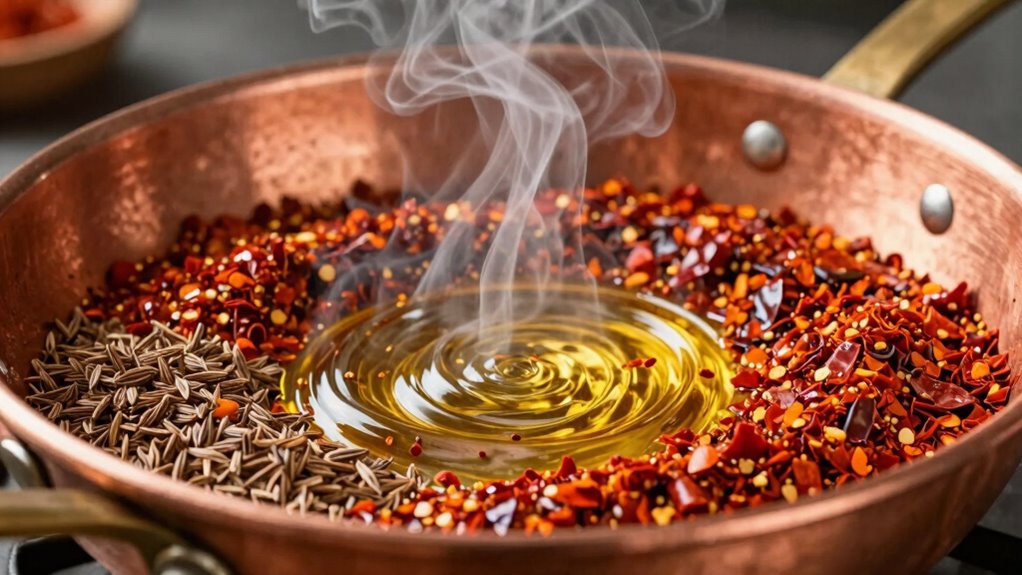
To guarantee your spices develop their full aroma and flavor, it’s essential to avoid common mistakes during the blooming process. First, don’t rush the heat; overheating can burn spices and ruin their flavor. Second, avoid adding spices at the wrong time; blooming works best early in cooking techniques, not after ingredients are too cooked. Third, be cautious with ingredient pairing; combining incompatible flavors can diminish spice potency. Lastly, don’t forget to stir constantly—uneven heating can lead to burnt spices and lost aroma. Proper timing, temperature control, and understanding how spices interact with other ingredients are key. By avoiding these mistakes, you’ll maximize spice flavor and create richer, more vibrant dishes.
How Blooming Enhances Flavor Without Extra Salt or Oil
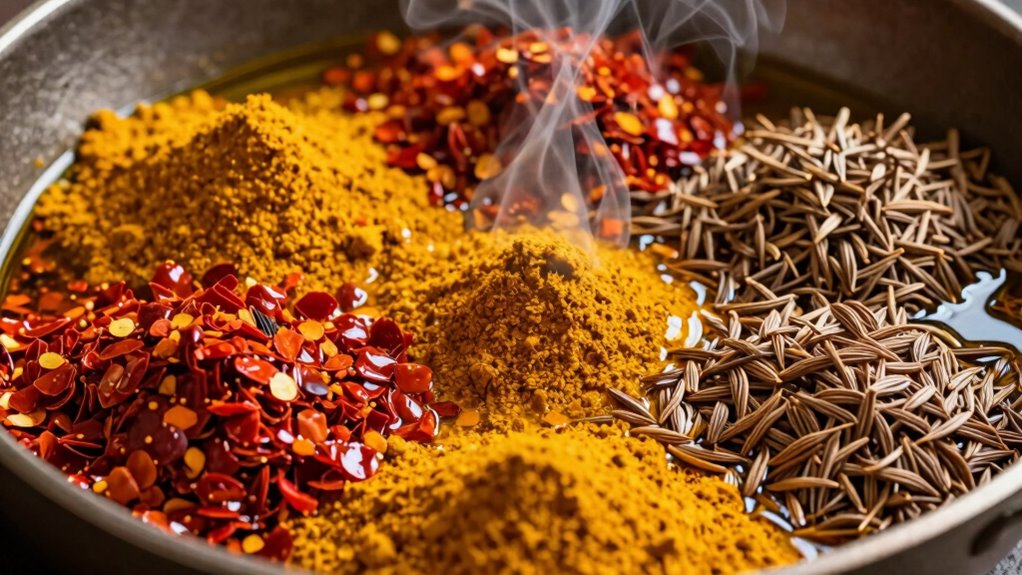
Blooming spices releases deep, rich flavors that might otherwise stay hidden. It also boosts the potency of your spices, making each bite more vibrant. Best of all, you get these flavor enhancements without adding extra salt or oil.
Unlocks Deep Flavors
When you add spices to hot oil during blooming, their flavors become more vibrant and complex without needing extra salt or oil. This process reveal deep flavors by intensifying the spice aroma and enhancing flavor layers. To maximize this effect, consider:
- Heating the oil before adding spices to release essential oils.
- Toasting spices briefly to deepen their aroma.
- Using fresh, high-quality spices for richer flavor.
- Stirring continuously to prevent burning and develop a well-rounded spice profile.
These steps help break down spice components, allowing their natural oils and aroma compounds to infuse the oil. As a result, your dish gains a more profound, nuanced flavor without relying on additional salt or oil, making your cooking more flavorful and healthier.
Enhances Spice Potency
By activating spices in hot oil, you amplify their inherent potency, making each flavor more pronounced without adding extra salt or oil. This process enhances the spice aroma, releasing essential oils that boost overall flavor. When spices are blooming, their natural oils are released, intensifying their aroma and making the taste more vibrant. This flavor enhancement allows you to achieve a richer, more robust dish without relying on additional salt or fats. As the spices heat, their essence penetrates deeper into the dish, creating a fuller flavor profile. Blooming spices not only intensifies their aroma but also elevates the perceived strength of their flavor, giving your dishes a bold, aromatic punch with less seasoning. It’s a simple trick to maximize taste naturally.
Tips for Perfect Spice Blooming Every Time
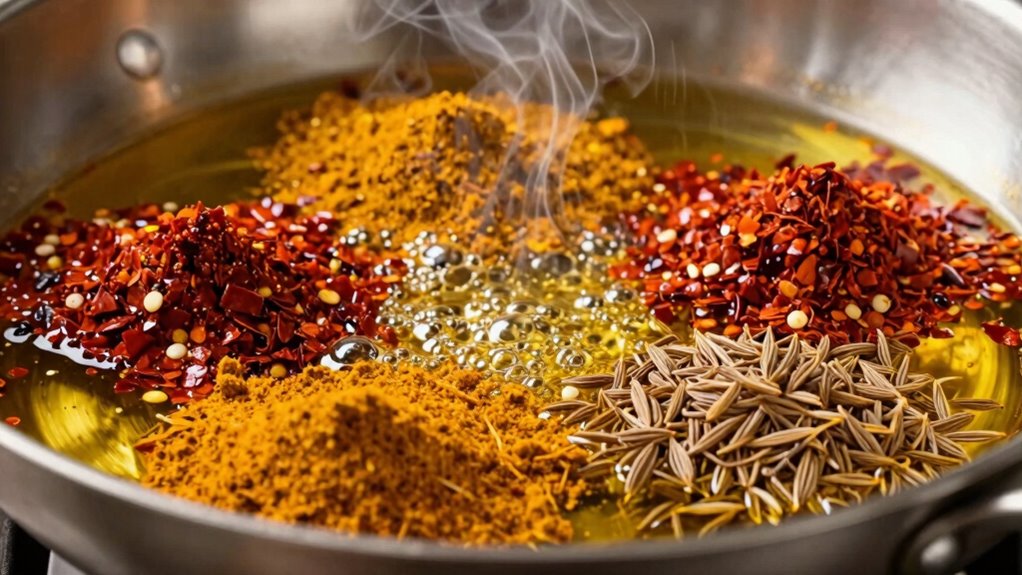
To achieve perfect spice blooming every time, start by heating your pan over medium heat until it’s warm but not smoking. This guarantees even heat distribution and prevents burning. Next, follow these tips:
- Use fresh spice combinations to maximize aroma and flavor. Old spices lose potency and won’t bloom properly.
- Add spices in the right order—start with whole or ground spices that need longer to release their oils.
- Stir constantly to prevent sticking and burning, which can diminish flavor.
- Store spices in airtight containers away from light and heat to maintain their potency and ensure they bloom vividly when used.
Recipes That Benefit Most From Blooming Techniques
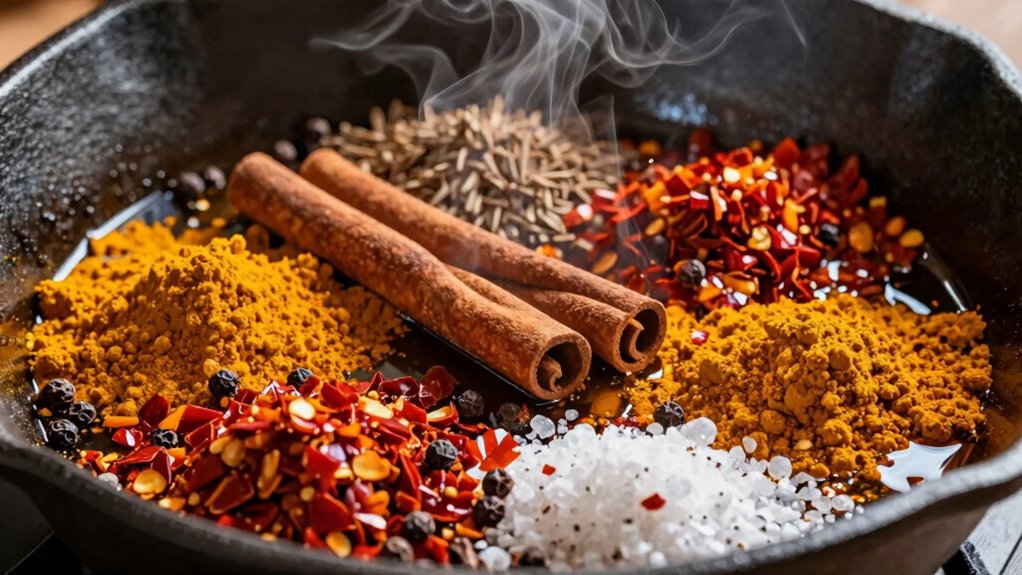
Certain recipes truly shine when you use blooming techniques to release their full flavor potential. Dishes like curries, stews, and spice-based sauces greatly benefit from blooming, as it enhances the spice aroma and boosts flavor. When you bloom spices at the start of cooking, the heat unlocks their essential oils, intensifying their aroma and creating a richer, more layered taste. This method works especially well with whole spices, dried herbs, and ground blends. By blooming spices first, you ensure the flavor enhancement permeates your dish evenly, making every bite more vibrant. Whether you’re preparing a fragrant Indian curry or a hearty chili, blooming spices elevates your recipe’s depth and complexity, transforming ordinary ingredients into a memorable culinary experience.
Troubleshooting: Why Your Spices Might Not Bloom Properly?
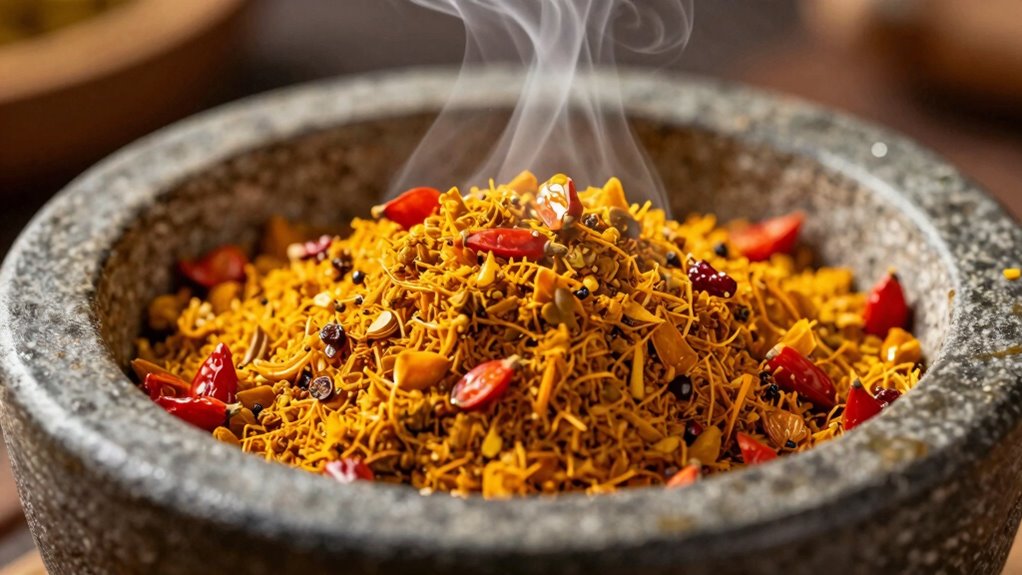
Have you ever wondered why your spices don’t release their aroma despite following blooming techniques? Sometimes, distribution challenges or improper storage solutions can dull their effectiveness. Here are common reasons:
Even fresh spices can lose aroma if not stored properly or heated adequately.
- Old spices – They lose potency over time, making blooming less effective.
- Poor storage – Exposure to air, light, or moisture degrades spice quality.
- Inconsistent grind size – Larger pieces release aroma slower; uniform grinding helps.
- Inadequate heat – Not heating the pan enough can prevent proper blooming.
To troubleshoot, check your spices’ freshness and store them in airtight containers away from light. Also, ensure you’re blooming spices at the right temperature. Addressing these issues helps spices release their full flavor potential.
Extra Tips to Maximize Spice Flavor in Your Cooking
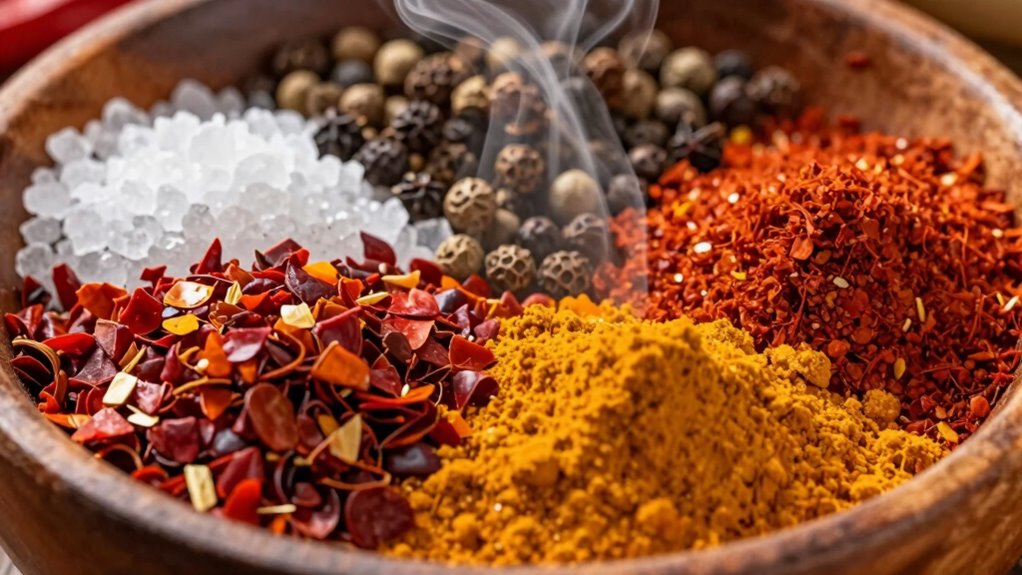
Maximizing spice flavor in your cooking often starts with mindful preparation. First, consider herb pairing; combining the right herbs with specific spices enhances their natural aroma and taste. For example, pairing cumin with coriander amplifies earthy notes, making dishes richer. Equally important is spice storage—keep spices in airtight containers away from heat, light, and humidity to preserve their potency. Freshly ground spices release more flavor than pre-ground versions, so grind only what you need. Toast spices briefly before adding to dishes; this releases essential oils and intensifies their aroma. By paying attention to herb pairing and proper spice storage, you unbolt deeper, more vibrant flavors that elevate your cooking and make spices taste stronger naturally.
Frequently Asked Questions
Can Spice Blooming Be Used With Pre-Ground Spices?
Yes, you can use spice blooming with pre-ground spices. To do so, heat your oil or butter and add the ground spices directly, allowing their flavors to release and intensify. This method helps with freshness preservation and flavor enhancement, making pre-ground spices taste fresher and more vibrant. Just be careful not to burn the spices, and stir constantly to maximize the flavor benefits of blooming.
Does Blooming Spices Affect Their Shelf Life?
Blooming spices doesn’t notably affect their shelf life, but it can enhance flavor retention and spice freshness. When you bloom spices, you release essential oils that boost flavor, making your dishes more aromatic and flavorful. However, if you leave spices blooming for too long, their oils can evaporate, reducing freshness. To maintain ideal spice freshness, bloom just long enough to unseal full flavor, then store properly to preserve their quality.
Is Spice Blooming Suitable for All Cuisines?
Like a chameleon changing colors, spice blooming suits many cuisines, but not all. It’s great for dishes with rich, layered flavors like Indian or Middle Eastern, yet may overpower delicate recipes like Japanese or Scandinavian. Cultural differences and ingredient variations influence its effectiveness. So, you should consider the cuisine and flavor profile before using this technique, customizing your approach to enhance the dish without overwhelming it.
Can Blooming Spices Reduce the Need for Salt?
Yes, blooming spices can reduce the need for salt. When you bloom spices, their flavors become more intense, allowing you to use less salt while still achieving a rich, flavorful dish. This not only enhances taste but also offers health benefits by lowering your salt intake, which can improve heart health and reduce blood pressure. So, next time you cook, try blooming your spices for a healthier, more flavorful meal.
How Long Does the Flavor Last After Blooming Spices?
On average, the flavor from blooming spices lasts about 30 minutes to an hour, but proper freshness preservation can extend this. When you bloom spices, their enhanced flavor stays more vibrant for longer, improving flavor longevity. To maximize this, add blooming spices early in your cooking process and keep them covered. This way, you’ll enjoy their full aroma and taste, making your dishes more flavorful for a longer period.
Conclusion
Now that you know the secret of spice blooming, imagine the flavor explosions waiting to unfold in your kitchen. With just a simple technique, you’ll uncover deeper, richer tastes that elevate any dish. But beware—perfecting this art takes a little practice. Ready to transform your cooking and surprise everyone with intensified spice profiles? The next step is yours. Immerse yourself, experiment, and discover the delicious mysteries that spice blooming can reveal. Your flavor journey is just beginning.