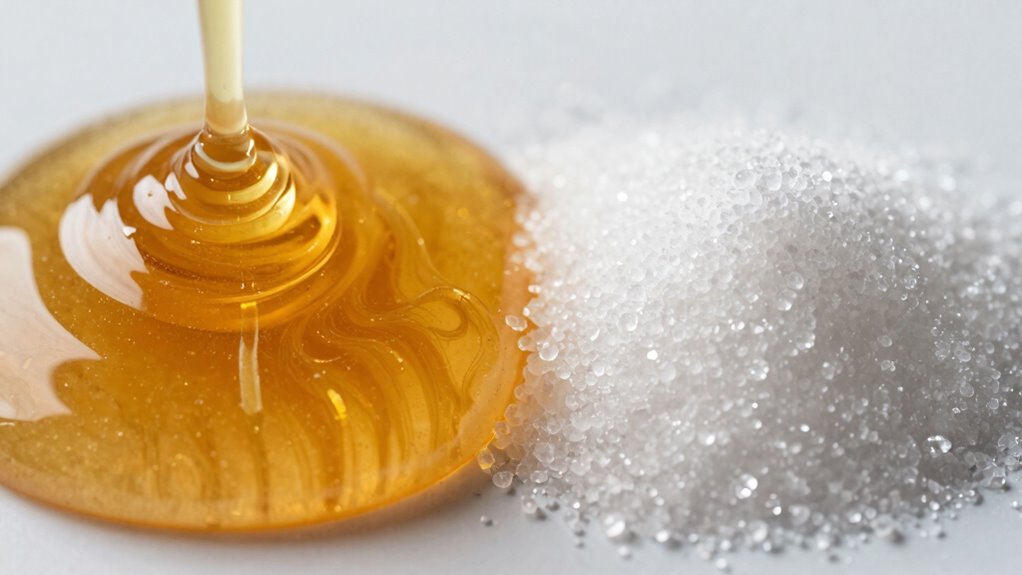

Honey and sugar can’t be swapped 1:1 in recipes because they differ in texture, moisture, and chemical properties. Honey is thicker, adds moisture, and contains enzymes that influence baking, often resulting in moister, denser, or darker goods. Sugar is neutral and primarily sweet. To get the best results, you need to adjust liquids, sweetness, and temperature. Keep going to discover exactly how to make successful substitutions without ruining your baked creations.
Key Takeaways
- Honey is more viscous and contains enzymes, affecting texture and chemical reactions differently than crystalline sugar.
- Its moisture and enzymatic activity can make baked goods moister, denser, and prone to over-browning if not adjusted.
- Honey is sweeter than sugar, so less is needed, but direct 1:1 swaps alter moisture and browning, impacting final results.
- Honey’s flavor adds complexity, unlike neutral sugar, influencing the taste and aroma of baked items.
- Proper recipe adjustments—reducing liquids and temperature—are necessary to compensate for honey’s unique properties.

Wholesome Yum Zero Sugar Honey Substitute (2 Pack) – Natural Sugar Free Honey Alternative With Monk Fruit & Allulose – Zero Net Carbs, Non GMO, Gluten Free, Keto, No Aftertaste (11 oz)
TASTE, SMELL, & CONSISTENCY JUST LIKE HONEY. Wholesome Yum sugar-free honey substitute is sweet, aromatic, thick, gooey, and…
As an affiliate, we earn on qualifying purchases.
As an affiliate, we earn on qualifying purchases.
What Are the Main Differences Between Honey and Sugar?
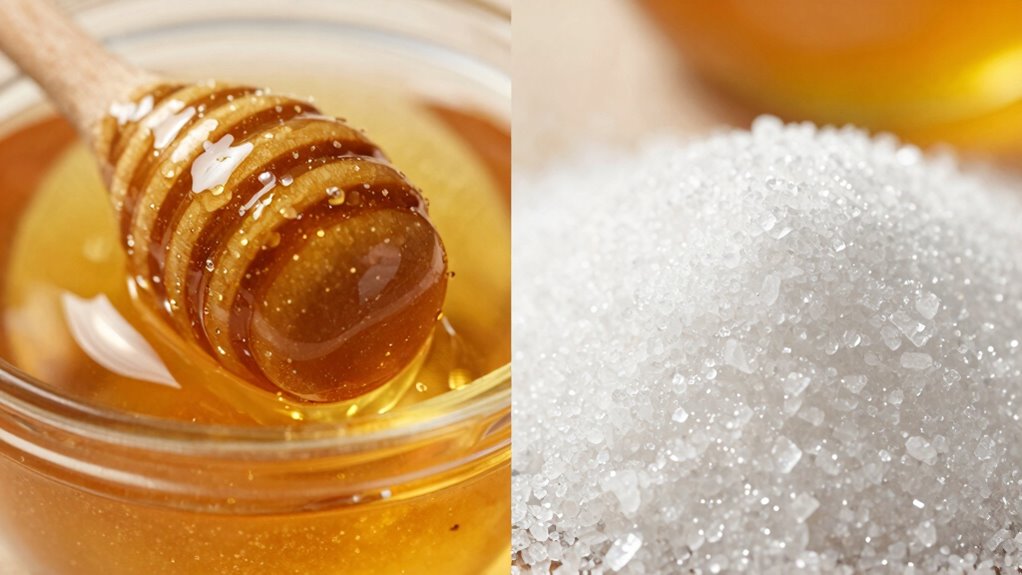
Have you ever wondered what sets honey apart from sugar? One key difference is honey’s viscosity; it’s thicker and flows more slowly than liquid sugar. This high viscosity affects how honey interacts with other ingredients, giving baked goods a moist, tender texture. Unlike sugar, which can crystallize easily, honey’s natural sugars stay suspended in the liquid, preventing rapid sugar crystallization. This keeps honey smooth and syrupy for longer periods, making it ideal for adding moisture and richness to recipes. Sugar, on the other hand, tends to crystallize as it cools, often leading to a gritty texture in baked items. These fundamental differences influence not just texture, but also how each sweetener behaves during cooking and baking. Additionally, honey contains enzymes and trace nutrients that can influence the chemical reactions during baking, affecting flavor development. The composition of sugars in honey varies depending on the nectar source, which can subtly alter the flavor profile of your baked goods. Moreover, honey’s natural antimicrobial properties can impact the preservation and freshness of baked products. Recognizing the biochemical properties of honey helps explain its distinct effects in culinary applications.

Wholesome Yum Zero Sugar Honey Substitute (Keto) – Natural Sugar Free Honey Alternative With Monk Fruit & Allulose – Zero Net Carbs, Non GMO, Gluten Free, No Aftertaste (11 oz)
TASTE, SMELL, & CONSISTENCY JUST LIKE HONEY. Wholesome Yum sugar-free honey substitute is sweet, aromatic, thick, gooey, and…
As an affiliate, we earn on qualifying purchases.
As an affiliate, we earn on qualifying purchases.
How Do Honey’s Moisture and Enzymes Affect Baking Results?
Because honey contains more moisture and natural enzymes than sugar, it considerably influences baking outcomes. Its moisture retention helps keep baked goods softer and moister longer, but it also affects how quickly batters and doughs rise. The natural enzymes in honey can break down starches and proteins, altering the structure of baked items. This enzyme activity can accelerate fermentation, making bread rise faster, or cause quicker browning due to increased caramelization. Additionally, the filter maintenance of your baking environment can influence how these effects manifest. Properly managing moisture levels in your recipes is essential to prevent sogginess or texture issues that might arise from the added moisture. Being aware of sound healing science can help you understand how these physical changes impact the overall quality of your baked goods. However, too much moisture from honey might lead to sogginess or affect the overall texture if not adjusted properly. Understanding these effects allows you to tweak your recipes, ensuring that the moisture and enzyme activity from honey enhance your baked goods without compromising their consistency or appearance.

Arm & Hammer Foot Powder for Shoes & Feet, Talc-Free Odor & Moisture Control for Men & Women, 7 oz (3 Pack)
Cleansing & Refreshing – Keep your feet cool and dry all day long; Arm & Hammer Talc-Free Foot…
As an affiliate, we earn on qualifying purchases.
As an affiliate, we earn on qualifying purchases.
Why Substituting Honey Changes Your Recipe’s Texture and Flavor?
When you substitute honey for sugar in a recipe, you’ll notice immediate changes in both texture and flavor. Honey’s natural enzymes can break down starches, affecting the structure of baked goods, making them moister and denser. Its high moisture content adds softness but can also alter the crumb. Additionally, honey’s baking acidity influences how ingredients interact, especially when combined with leavening agents, leading to a tangier taste. The complex flavor profile of honey introduces floral, fruity, or caramel notes that sugar doesn’t provide, changing the overall flavor. These differences mean your baked goods won’t turn out exactly the same as with sugar, so understanding how honey’s enzymes and acidity impact texture and flavor helps you adjust your recipes more accurately. Moreover, the horsepower of electric dirt bikes can influence how quickly and efficiently your baked goods are prepared when using electric appliances. Recognizing how fermentation processes impact baking with honey can further improve your results. Additionally, the chemical composition of honey plays a role in how it interacts with other ingredients during baking, affecting the final product’s quality. For instance, the pH level of honey can influence the leavening process, impacting rise and texture, and knowing about baking chemistry can help you fine-tune your recipes for better outcomes.

Micro Ingredients Organic Papaya Fruit Powder, 8 Ounce, Freeze Dried, Naturally Rich in Papaya Enzyme, No GMOs & Vegan Friendly
USDA Organic Papaya Powder, 8 ounce supply, non-GMO and vegan friendly freeze-dried papaya source.
As an affiliate, we earn on qualifying purchases.
As an affiliate, we earn on qualifying purchases.
How to Adjust Your Recipes When Using Honey Instead of Sugar?
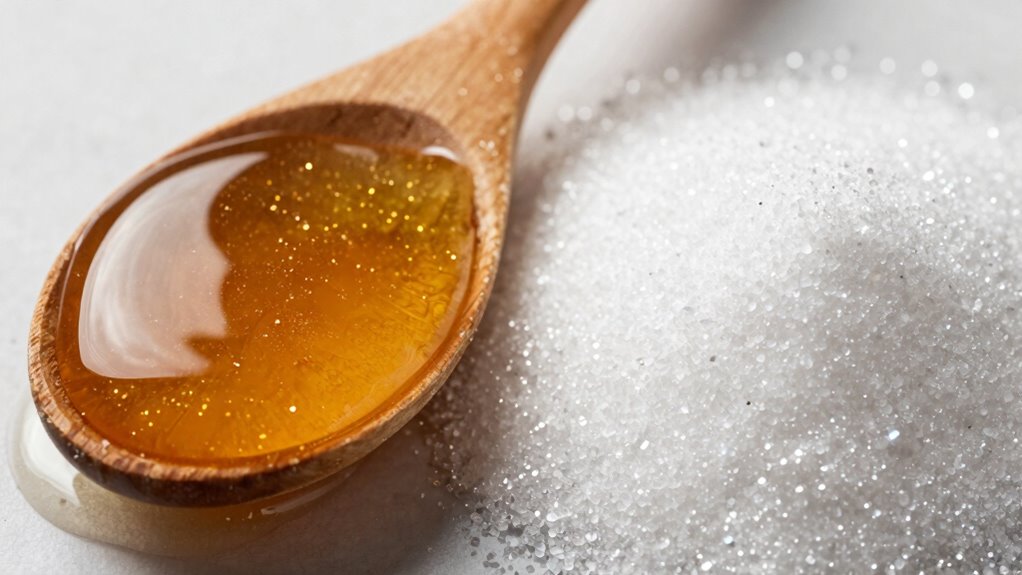
When swapping honey for sugar, you’ll need to adjust the recipe’s sweetness to match your taste. You should also modify the liquids and binders, since honey adds moisture and acts as a binder. These tweaks help make sure your baked goods turn out just right. Additionally, remember that honey’s natural sugars can cause baked items to brown more quickly, so you may need to adjust baking times accordingly. Incorporating baking adjustments and mindfulness practices during baking can help you better gauge these adjustments for optimal results.
Adjust Sweetness Levels
Replacing sugar with honey in your recipes requires adjusting the sweetness levels to achieve the right balance. When doing a recipe adaptation, you need to account for honey’s more intense sweetness compared to sugar. Start by reducing the amount of honey slightly—about 1/4 cup less for every cup of sugar called for—since honey is sweeter. Taste your mixture as you go and add more honey if needed, but remember that honey also adds moisture, so avoid oversweetening. Keep in mind that ingredient substitution isn’t just about replacing sugar; it’s about balancing flavors and textures. By adjusting the sweetness level carefully, you ensure your dish maintains its intended flavor profile without becoming overly sweet or imbalanced.
Modify Liquids and Binders
Because honey is a liquid sweetener, you’ll need to modify the recipe’s liquid ingredients to maintain the right consistency. Reduce other liquids, like water or milk, by about ¼ cup for each cup of honey used. This helps prevent your batter or dough from becoming too runny. Additionally, honey’s binder effects can enhance the structure of baked goods, so you might need to slightly decrease other binders like eggs or flour to avoid over-structuring. Keep in mind that honey’s moisture can make baked items more moist and dense, so you may need to tweak baking times or oven temperature. Adjusting liquids and binders ensures your recipe maintains proper liquid consistency and structural integrity when substituting honey for sugar. Understanding recipe adjustments can help you better anticipate the effects of using honey in baking. Incorporating baking chemistry principles ensures the final product has the desired texture and stability.
Is Honey a Better Choice Than Sugar for Your Baking Needs?
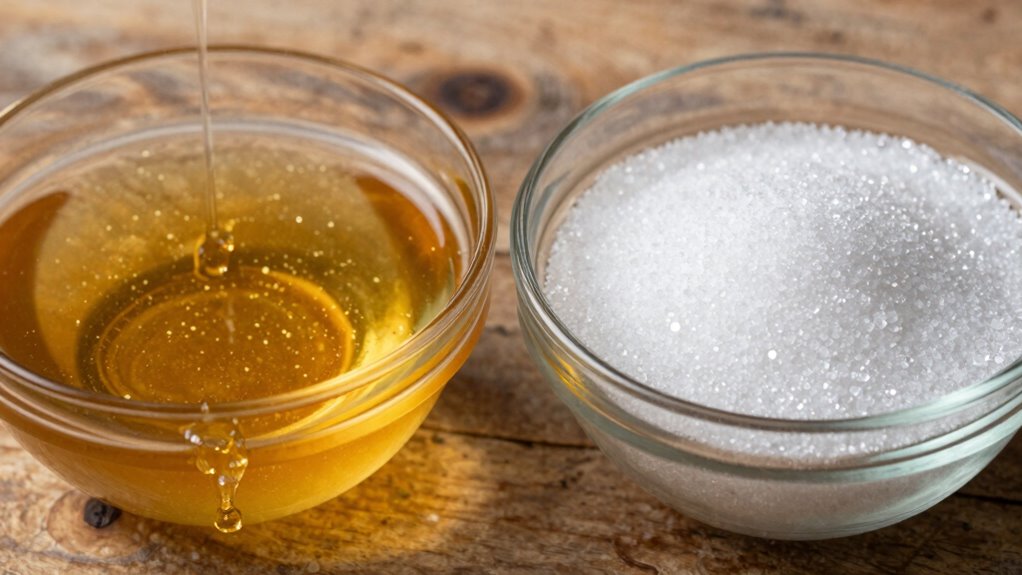
Honey offers a different flavor profile than sugar, bringing floral and complex notes to your baked goods. Because honey is sweeter than sugar, you may need to adjust your recipe to avoid overly sweet results. It also affects baking performance, often producing moister, denser textures compared to traditional sugar. Additionally, honey contains antimicrobial properties, which can influence the preservation and microbial stability of baked items. The baking performance of honey can also vary depending on its moisture content and composition. Moreover, the fermentation process can be affected by honey’s natural enzymes and sugars, impacting how baked goods rise and develop flavor.
Flavor Profile Differences
While both honey and sugar add sweetness to baked goods, they each bring distinct flavor profiles that can influence your final product. Honey has a rich, floral, and sometimes fruity taste, which can add complexity to baked items. Sugar, on the other hand, offers a neutral sweetness that doesn’t interfere with other flavors. If you’re pairing wine with your baked goods, honey’s nuanced flavor can complement certain wines better, enhancing the overall experience. Additionally, honey’s unique flavor can contribute to health benefits, such as antioxidants, though it’s important to contemplate these when choosing ingredients. Sugar provides a straightforward sweetness without altering the flavor profile much. Your choice depends on whether you want a subtle sweetness or a layered, aromatic flavor that honey can provide.
Sweetness and Conversion Rates
When it comes to sweetness, honey and sugar behave differently in recipes, affecting both the amount needed and the final taste. Honey is sweeter than sugar, so you often need less. However, honey’s high moisture content influences how much you should add, especially since it can cause honey crystallization over time, impacting texture. Moisture content can also lead to more delicate baked goods that require adjustments in other ingredients. Sugar caramelization occurs at high heat, creating complex flavors and color changes, which honey doesn’t replicate exactly. Honey’s natural sugars caramelize differently, often resulting in a richer, more nuanced flavor. Because of these differences, converting recipes isn’t straightforward. You can’t swap honey 1:1 for sugar without adjusting quantities and other ingredients to account for sweetness, moisture, and browning. Additionally, natural sweeteners like honey can also affect the overall consistency and structure of baked goods, so understanding these conversion rates helps guarantee your baked goods turn out just right.
Baking Performance Variations
Choosing between honey and sugar for baking depends on how each ingredient performs under heat. Honey’s nutritional benefits, like antioxidants and enzymes, can enhance your baked goods, but its moisture content may alter texture and rise. Honey browns faster than sugar, risking over-baking if not adjusted properly. Sugar’s shelf stability means it maintains consistent sweetness and texture over time, making it reliable for baking. Honey’s liquid form can affect batter consistency, requiring adjustments in recipes. Additionally, honey’s natural sugars can add a subtle flavor, but they may also cause uneven browning. Overall, honey can be a healthier alternative, but it demands careful modifications to achieve the desired baking performance compared to sugar. Understanding power tools can help you better adjust recipes and handling techniques when using liquid sweeteners like honey.
Common Mistakes When Using Honey as a Sugar Substitute?
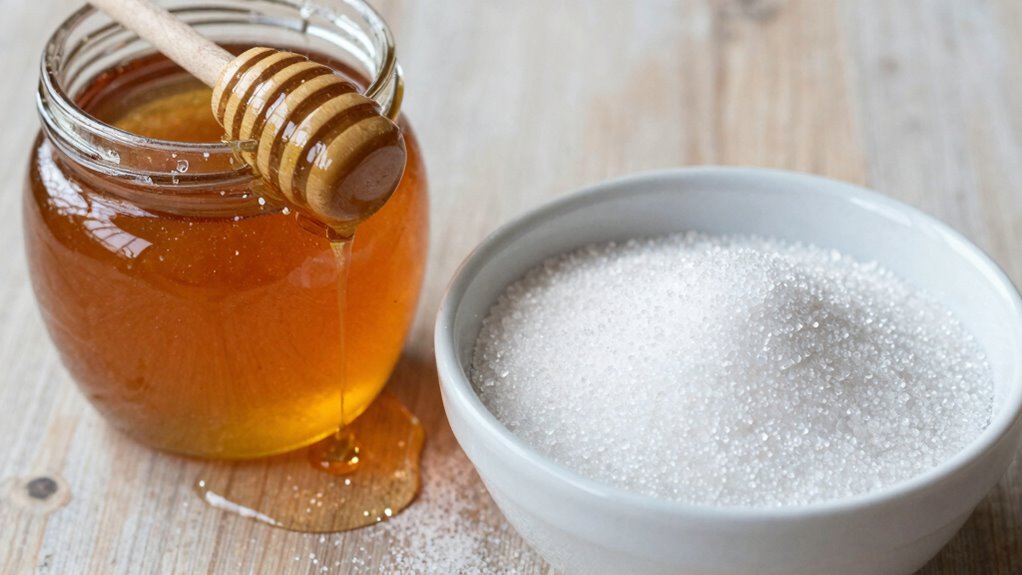
One common mistake people make when using honey as a sugar substitute is not adjusting the liquid ingredients in their recipes. Honey is more liquid than sugar, so failing to reduce other liquids can lead to overly moist or dense baked goods. Additionally, honey’s natural sugars can promote honey fermentation if not stored properly, affecting flavor and texture. Another mistake is not considering honey’s impact on sugar crystallization, which can cause graininess in candies or frostings. To visualize these effects, see the table below:
| Mistake | Effect | Solution |
|---|---|---|
| Not adjusting liquids | Dense or overly moist baked goods | Reduce liquids by ¼ cup per cup of honey |
| Ignoring honey fermentation | Off-flavors, spoilage | Store honey properly, use fresh honey |
| Overlooking sugar crystallization | Grainy texture in candies and frostings | Use acid or corn syrup to prevent crystallization |
Quick Tips for Perfectly Baking With Honey and Sugar
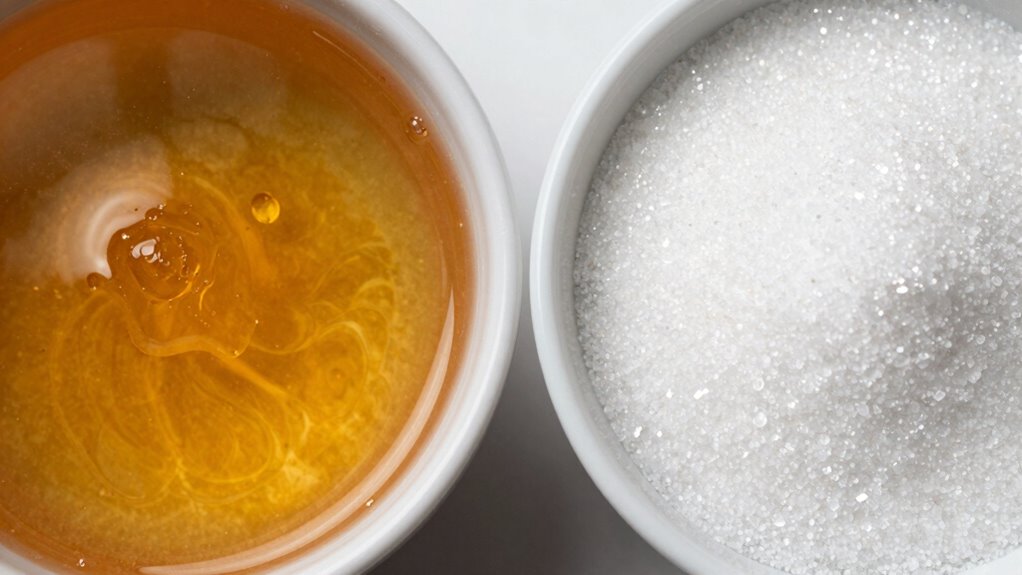
To achieve perfectly baked goods with honey and sugar, it’s essential to understand how each sweetener behaves during baking. Honey, produced by honey bee colonies, is sweeter and more moist than sugar cane-derived granulated sugar. When baking with honey, reduce the oven temperature by about 25°F to prevent over-browning. Use less honey than sugar called for—about ¾ cup honey for every cup of sugar—and reduce other liquids accordingly. Honey’s natural enzymes can cause quicker browning, so keep a close eye on your baked goods. When using sugar, guarantee it’s evenly incorporated for consistent sweetness and texture. Remember, honey adds moisture and flavor, while sugar provides structure. Mastering these tips helps you create perfectly baked treats, whether you’re using honey or sugar.
Frequently Asked Questions
Can I Use Honey in All Types of Baked Goods?
You can’t use honey in all baked goods without adjustments. Honey’s flavor profile adds sweetness and a distinct taste, which might overpower delicate recipes. Its higher moisture content can also affect the batter’s consistency, making baked goods denser or wetter. When substituting honey, reduce liquid ingredients and consider flavor balance. Always experiment a bit to get the perfect texture and taste, especially in recipes sensitive to moisture or flavor changes.
How Does Honey Impact the Shelf Life of Baked Products?
Honey can extend the shelf life of baked goods because its natural sugars inhibit microbial growth, but it may also lead to honey crystallization over time, affecting texture. Plus, honey’s sugar content caramelizes more quickly during baking, giving your treats a richer flavor and deeper color. Just remember, honey’s moisture can make baked products slightly more moist and prone to spoilage if not stored properly.
Are There Health Benefits to Using Honey Over Sugar?
You might enjoy honey’s natural sweetness more, as it offers some antioxidant benefits that sugar doesn’t. While honey contains trace vitamins and minerals, its lower glycemic index can help manage blood sugar levels better. Replacing sugar with honey in moderation may support your overall health, giving your baked goods a touch of natural goodness and a subtle, rich flavor that’s both delightful and beneficial.
What Are the Best Types of Honey for Baking?
You should choose honey varietals like clover, wildflower, or orange blossom for baking, as each offers unique flavor profiles that enhance your baked goods. Clover honey provides a mild sweetness, wildflower adds complexity, and orange blossom lends a subtle citrus aroma. Select honey based on the flavor you want to highlight in your recipe, and remember, a good quality honey makes a noticeable difference in taste and texture.
Does Honey Affect Cooking Times Compared to Sugar?
You’ll find that honey can slightly reduce cooking times because its moisture retention accelerates browning. Remarkably, honey’s texture differences from sugar mean baked goods stay moister, which affects cooking duration. Since honey is sweeter and more hygroscopic, it retains moisture better, often requiring you to adjust baking times. So, when swapping honey for sugar, expect a minor change in timing to achieve perfect results.
Conclusion
Choosing honey over sugar isn’t just about swapping ingredients—it’s about understanding how moisture and enzymes transform your baking. While honey adds richness and depth, sugar provides structure and sweetness without altering texture. If you ignore these differences, your cookies might spread too much or turn out too dense. Embrace the contrast, adjust your recipes, and enjoy perfect baked goods that balance flavor and consistency—because in baking, the right choice makes all the difference.