When swapping fresh garlic for garlic powder, start with about 1/4 teaspoon of powder per garlic clove to avoid overpowering your dish. Measure carefully and add gradually, tasting as you go. To prevent bitterness, add garlic powder later in the cooking process and keep the heat gentle. Keeping these tips in mind helps guarantee balanced flavor—continue with these strategies, and you’ll master this substitution effortlessly.
Key Takeaways
- Use approximately 1/8 teaspoon of garlic powder per garlic clove to avoid overpowering flavors.
- Start with a small amount of garlic powder and taste, adjusting gradually as needed.
- Add garlic powder later in cooking to preserve its flavor and prevent bitterness.
- Consider the dish’s cooking time; reduce heat and cooking duration after adding garlic powder.
- Balance garlic powder with other seasonings to maintain harmony and prevent dominance.
Why Understanding the Difference Between Fresh Garlic and Garlic Powder Matters
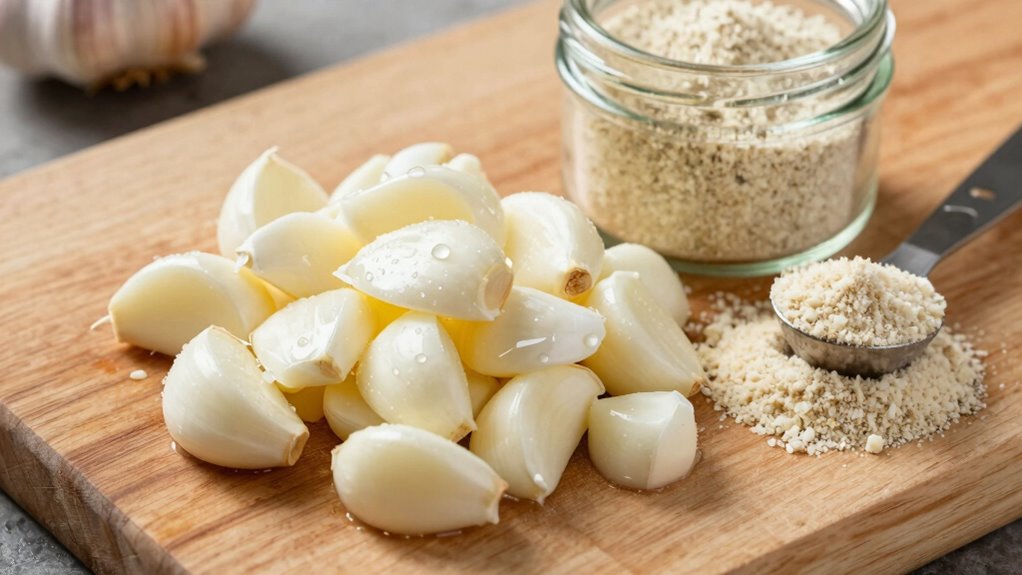
Understanding the difference between fresh garlic and garlic powder is essential because they don’t always deliver the same flavor or intensity in your dishes. Fresh garlic offers a bold, pungent garlic flavor that can enhance the depth of your culinary creations. In contrast, garlic powder provides a more concentrated, sometimes milder garlic taste, making it a convenient substitute when fresh garlic isn’t available. Recognizing these differences helps you choose the right ingredient for your recipes and avoid overpowering or underwhelming flavors. Knowing how each form impacts your dish also enables you to make effective culinary substitutions without sacrificing taste. Additionally, understanding how to measure substitutes accurately ensures your dishes turn out just as you intend and helps you use garlic in the most appropriate way. Properly understanding the flavor profiles of each form can significantly influence the success of your cooking. Being aware of storage methods for both forms can also impact their potency and freshness, ultimately affecting your dish’s flavor. Moreover, learning about proper garlic handling can help preserve its aroma and health benefits over time. Ultimately, understanding these variations guarantees your dishes taste just as you intend and helps you use garlic in the most appropriate way.
How Much Garlic Powder Replaces One Clove of Fresh Garlic
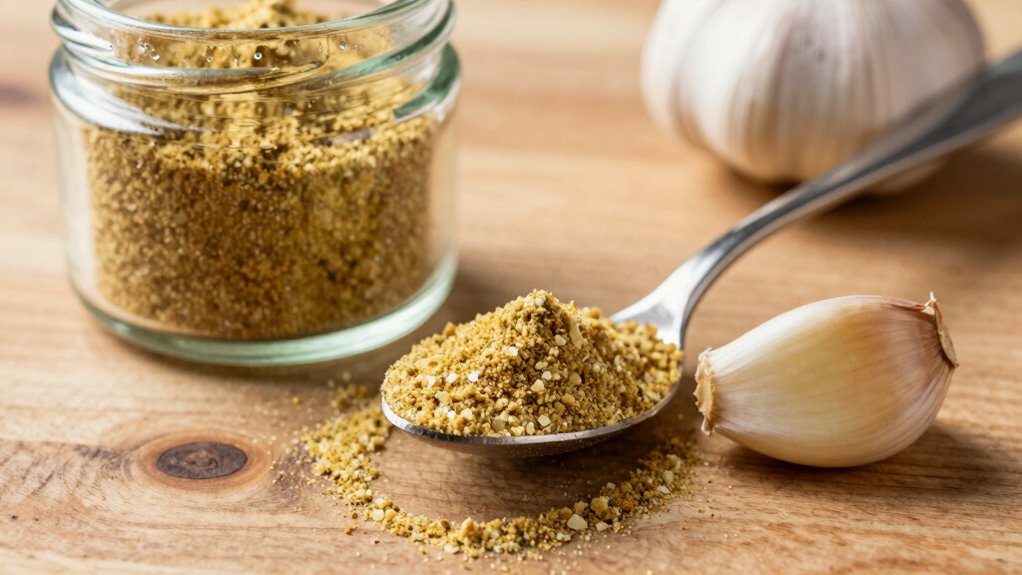
Wondering how to substitute garlic powder for fresh garlic? Generally, 1/8 teaspoon of garlic powder equals one garlic clove. Since garlic health benefits come from the compound allicin, which forms quickly in fresh garlic, using powder may slightly reduce its potency. Understanding the chemical properties of garlic can help you better grasp how processing affects its benefits. To maintain flavor without overpowering, measure carefully. Here’s a helpful comparison:
| Fresh Garlic Clove | Garlic Powder Equivalent |
|---|---|
| 1 clove | 1/8 teaspoon |
| 2 cloves | 1/4 teaspoon |
| 3 cloves | 1/2 teaspoon |
| 4 cloves | 3/4 teaspoon |
| 5 cloves | 1 teaspoon |
Adding sustainable cooking practices can help preserve the nutritional benefits of garlic while minimizing waste. Proper storage methods, such as keeping garlic in a cool, dark, and dry place, can also help extend the freshness and potency of garlic. Additionally, understanding nutritional benefits can guide you in making healthier substitutions in your recipes. Incorporating proper storage methods and chemical properties into your cooking approach ensures maximum flavor and health benefits.
When Is It Best to Use Garlic Powder Instead of Fresh Garlic?
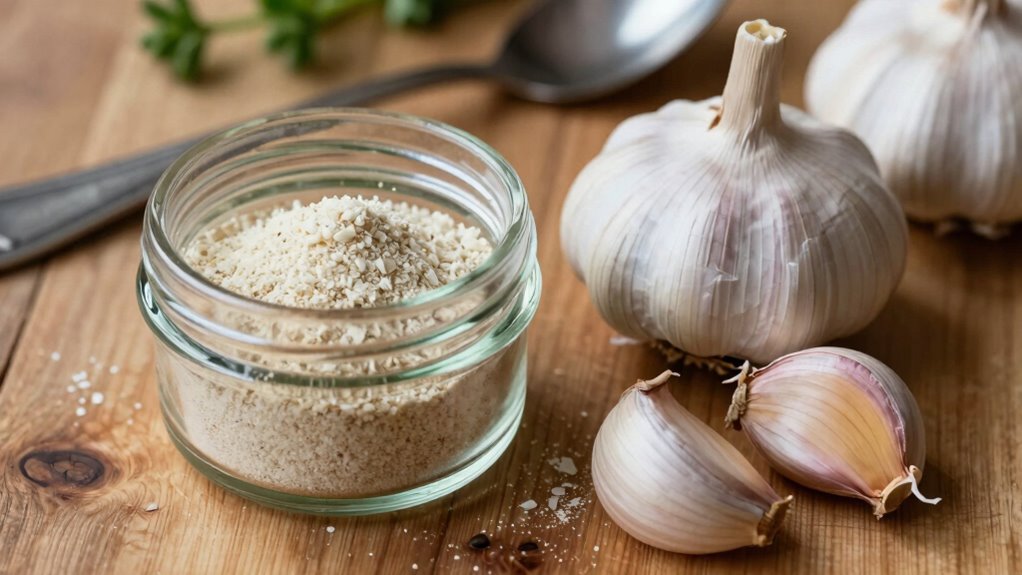
Garlic powder is your best choice when you need quick, convenient flavor without the fuss of peeling and chopping. It’s ideal for recipes where you want a consistent garlic flavor without altering the texture or appearance of your dish. Garlic powder offers excellent seasoning versatility, making it perfect for dry rubs, marinades, or seasoning mixes. It’s especially useful in long-cooking dishes like stews or roasts, where it dissolves evenly and infuses the dish with garlic flavor without burning. Additionally, when you’re short on time or want to streamline your prep work, garlic powder saves effort while still delivering that savory garlic essence. Use it when you desire a subtle, uniform garlic flavor that blends seamlessly into your ingredients.
How to Adjust Cooking Time and Technique When Using Garlic Powder
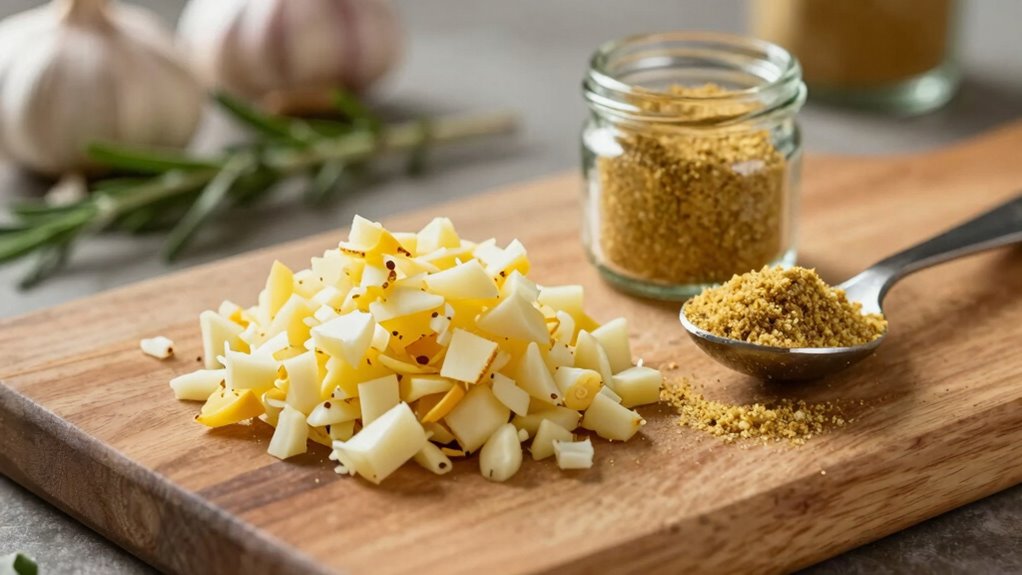
When cooking with garlic powder, you should adjust the cooking time to prevent overdoing it. Add the powder later in the process and keep the heat lower to preserve its flavor. This way, your dish maintains a balanced garlic taste without burning or becoming bitter. Incorporating modern kitchen technology can also help monitor and control cooking temperatures more precisely, further safeguarding the delicate flavors of garlic powder. Using precise temperature control devices ensures garlic powder doesn’t degrade from excessive heat, maintaining its aromatic qualities. Being aware of sound healing science and how specific frequencies influence the cooking process can offer innovative ways to enhance flavor preservation during preparation. Paying attention to flavor preservation techniques is key to achieving the best results when substituting garlic powder for fresh garlic.
Adjust Cooking Duration
Because garlic powder is more concentrated than fresh garlic, you’ll need to adjust your cooking time accordingly. Its intense flavor profile means it releases its aroma quickly, so overcooking can lead to bitterness. When swapping garlic powder, reduce the cooking duration to prevent overpowering the dish’s overall garlic flavor profiles. Typically, add garlic powder later in the cooking process, especially if you want a subtle garlic taste. If you’re sautéing, sprinkle it during the final minute to avoid burning. For longer cooking methods like braising or roasting, cut back on the usual time or add the powder towards the end. These cooking time adjustments help you maintain a balanced garlic flavor without risking bitterness or losing its aromatic qualities. To ensure proper flavor balance, be mindful of passive voice detection during your editing process. Additionally, understanding the flavor release rate of garlic powder can help you better time its addition for optimal aroma and taste. Being aware of the cooking time adjustments can also prevent the garlic from becoming overpowering. Recognizing the impact of heat on garlic can further refine your timing to preserve its delicate aroma and flavor. An understanding of cooking techniques can improve your overall control over garlic’s flavor contribution in your dishes.
Incorporate Later in Process
Adding garlic powder later in the cooking process helps preserve its flavor and prevent bitterness. When you add it toward the end, you maintain a fresher, more vibrant garlic flavor, ensuring better flavor balance. This timing also reduces the risk of flavor degradation, allowing the garlic’s natural aroma to shine through. This approach also improves substitution accuracy, making sure the garlic doesn’t become overcooked or develop a harsh taste. To adjust your cooking technique, reduce the overall cooking time once you add the garlic powder, since it dissolves quickly and releases its flavor rapidly. Stir frequently to distribute the powder evenly and prevent clumping. Keep in mind that garlic powder is concentrated, so a smaller amount can provide the desired flavor without overpowering the dish. Timing and technique are key to achieving a natural, balanced garlic taste when using powder later in your recipe. Heat transfer plays a role in how quickly garlic powder releases its flavor during cooking. Additionally, understanding concentration helps in measuring the right amount to avoid overpowering your dish. Being aware of flavor preservation techniques can further help you maintain the freshness of garlic in your cooking, especially when adjusting cooking methods to optimize flavor retention.
Use Lower Heat Settings
To prevent garlic powder from becoming bitter or developing a harsh flavor, it’s important to use lower heat settings during cooking. High temperatures can cause garlic to burn quickly, disrupting the flavor balance and creating undesirable bitterness. Since garlic storage affects its potency, adjusting your heat helps preserve its subtle nuances when using powder. Lower heat allows the garlic flavor to develop gradually, ensuring a more even distribution and better integration into your dish. Be mindful that garlic powder cooks faster than fresh garlic, so reduce the heat early in the process to avoid overcooking. Maintaining a gentle simmer or low heat will help you achieve a harmonious flavor profile without risking bitterness, giving you more control over your dish’s overall taste.
Tips for Incorporating Garlic Powder Without Overpowering Your Dish
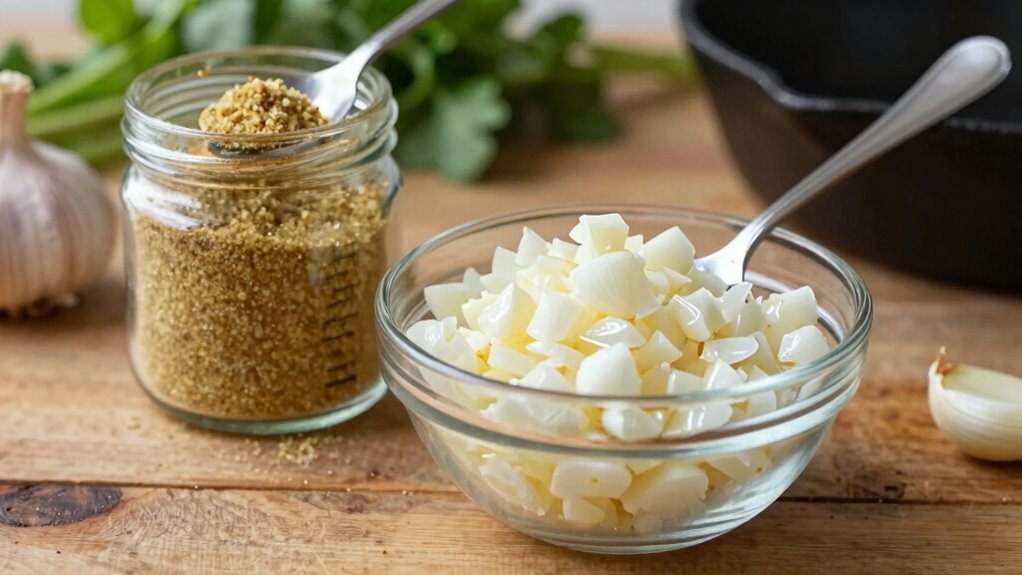
When adding garlic powder, measure carefully to avoid overwhelming your dish. Balancing flavors is key, so start with a small amount and taste as you go. This way, you can achieve the perfect aroma without overpowering other ingredients.
Measure Carefully
While garlic powder is a convenient way to add flavor, it’s easy to accidentally overpower your dish if you’re not careful. To avoid this, measure carefully and start with a small amount. Remember that garlic powder is concentrated, so a little goes a long way. When adding garlic powder, consider how you store your garlic; proper garlic storage helps maintain its potency and flavor. Keep in mind that flavor balancing is key—add gradually, tasting as you go, to ensure the garlic enhances rather than dominates. Using a measuring spoon can help you control portions precisely. If you find your dish becoming too strong, you can always add more ingredients to mellow the flavor, but it’s harder to fix if you’ve added too much garlic powder from the start.
Balance Flavors
Balancing flavors is key to ensuring garlic powder enhances rather than dominates your dish. To achieve this, start with a small amount and gradually add more, tasting as you go. The garlic aroma can quickly become overwhelming if you’re not careful, so remember that flavor intensity varies depending on the brand and freshness of your garlic powder. If your dish already has strong spices or ingredients, cut back on other seasonings to prevent overpowering the natural flavors. Keep in mind that garlic powder can intensify during cooking, so it’s better to add less at first and adjust later. By fine-tuning the amount you use, you’ll create a harmonious balance where garlic complements rather than overshadows your dish.
Common Mistakes to Avoid When Substituting Garlic Powder for Fresh Garlic
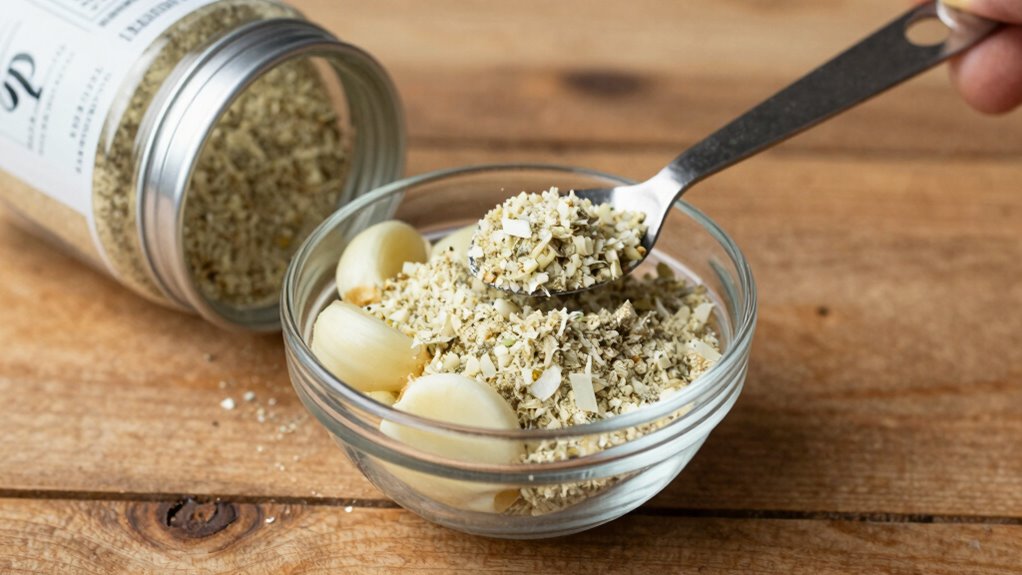
Substituting garlic powder for fresh garlic can seem straightforward, but many people make common mistakes that affect the flavor of their dishes. One mistake is overusing garlic powder, which can lead to an overpowering, bitter taste that masks other flavors. It’s important to understand garlic flavor profiles to balance your culinary substitutions properly. Another error is not adjusting the amount of garlic powder based on the dish’s cooking time; since powdered garlic is concentrated, it can become too intense if added too early. Additionally, relying solely on garlic powder for recipes that benefit from the fresh, vibrant aroma of garlic can diminish dish freshness. Being aware of these pitfalls helps you preserve the intended flavor, ensuring your culinary substitutions enhance rather than detract from your meal.
Storing Garlic Powder and Fresh Garlic for Maximum Freshness
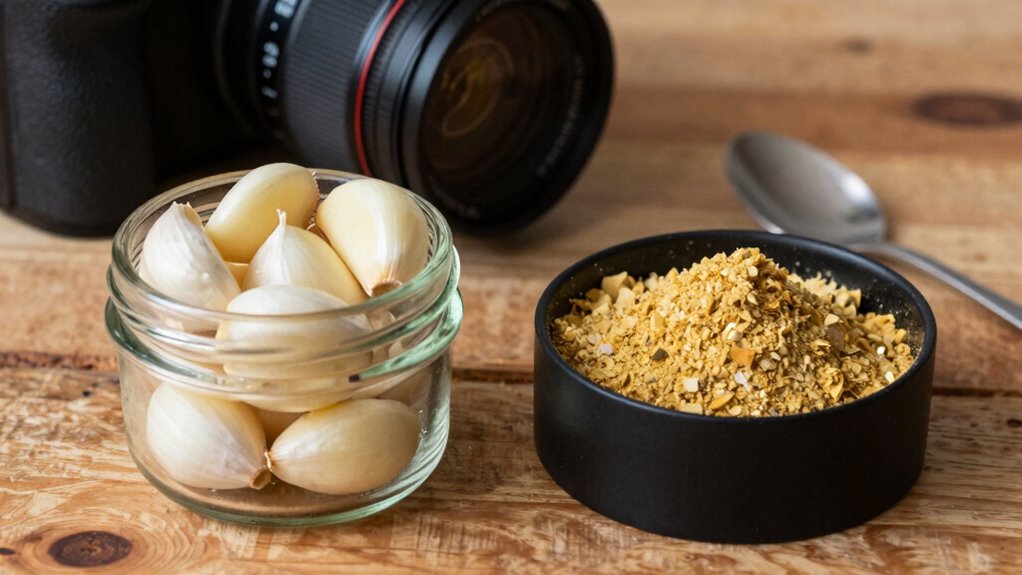
To keep garlic powder and fresh garlic at their peak flavor, proper storage is essential. For garlic storage, store fresh garlic in a cool, dark, well-ventilated place, like a pantry or mesh bag, to prevent sprouting and mold. Avoid refrigerating fresh garlic unless you’ve peeled or chopped it; cold temperatures can cause it to spoil faster. Keep garlic powder in an airtight container away from heat, light, and humidity to maintain its potency. Proper freshness preservation involves limiting exposure to moisture and air, which can degrade flavor and aroma. Check stored garlic regularly for signs of spoilage. By following these storage tips, you ensure your garlic stays fresh longer, preserving its vibrant flavor for your culinary needs.
Troubleshooting: Fixing Flavor Issues When Using Garlic Powder
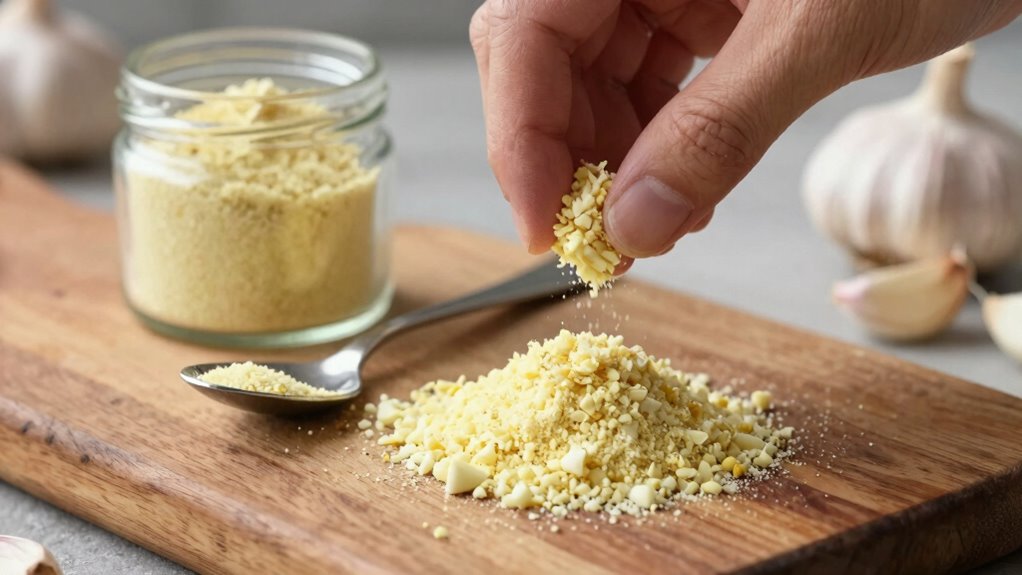
If your garlic powder isn’t delivering the expected flavor, you can often fix the issue by adjusting how you use it. For flavor enhancement, try increasing the amount slightly, but do so gradually to avoid overpowering other ingredients. To improve texture modification, mix garlic powder into liquids or create a paste with a little water or oil before adding it to dishes. This helps distribute the flavor evenly and prevents clumping. Also, consider adding a splash of acid like lemon juice or vinegar; this can brighten the garlic’s flavor. If the flavor still feels dull, toast the garlic powder briefly in a dry pan to release its essential oils, boosting its aroma and taste. Small adjustments can considerably improve your dish without overdoing it.
Frequently Asked Questions
Can Garlic Powder Be Used as a Substitute in Raw Dishes?
Yes, you can use garlic powder as a raw garlic alternative in dishes, but be mindful of its concentrated garlic powder flavor. Start with a small amount—about 1/4 teaspoon for every clove—and taste as you go. Raw garlic alternatives like minced fresh garlic offer a sharper, more pungent flavor, while garlic powder provides a milder, more uniform taste. Adjust accordingly to avoid overpowering your dish.
How Does Garlic Powder Affect the Overall Flavor Profile?
You might notice that garlic powder subtly enhances your dishes, adding a consistent garlic flavor without overpowering. Its seasoning intensity is more concentrated, so a little goes a long way. When you use garlic powder, it creates a harmonious balance, blending seamlessly into your recipes. Like a whisper of flavor, it complements other ingredients, enriching your dish without overshadowing the natural taste, making every bite more memorable.
Is Garlic Powder Suitable for Long-Term Storage in Recipes?
Yes, garlic powder is suitable for long-term storage in recipes. Its longevity depends on proper storage tips, such as keeping it in an airtight container away from heat, moisture, and light. When stored correctly, garlic powder can last up to 3-4 years, maintaining its flavor and potency. Always check for any signs of clumping or loss of aroma before using it to ensure freshness in your dishes.
What Are the Health Differences Between Fresh Garlic and Garlic Powder?
Imagine a medieval alchemist comparing ingredients—fresh garlic and garlic powder—you’re doing the same with garlic compound differences and health benefits comparison. Fresh garlic retains more allicin, offering stronger antioxidant and immune-boosting effects. Garlic powder loses some of these compounds during processing but provides convenience. Overall, fresh garlic provides more potent health benefits, while garlic powder is a good alternative when freshness isn’t an option, but it may have slightly milder effects.
How Do I Prevent Garlic Powder From Clumping or Losing Potency?
To prevent garlic powder from clumping or losing potency, store it in an airtight container in a cool, dry place. Keep moisture control in mind by avoiding humidity and exposure to air, which can cause clumping. Use a desiccant packet if needed, and always guarantee the lid is tightly sealed after each use. Proper storage tips help maintain its flavor and prevent clumping over time.
Conclusion
Switching from fresh garlic to garlic powder can elevate your dishes without overpowering them. Remember, one teaspoon of garlic powder equals about one clove of fresh garlic. Did you know that garlic has been used for over 5,000 years for both flavor and health benefits? By understanding these tips, you’ll guarantee balanced, flavorful meals every time. Keep experimenting, and you’ll master the perfect garlic substitution in no time!