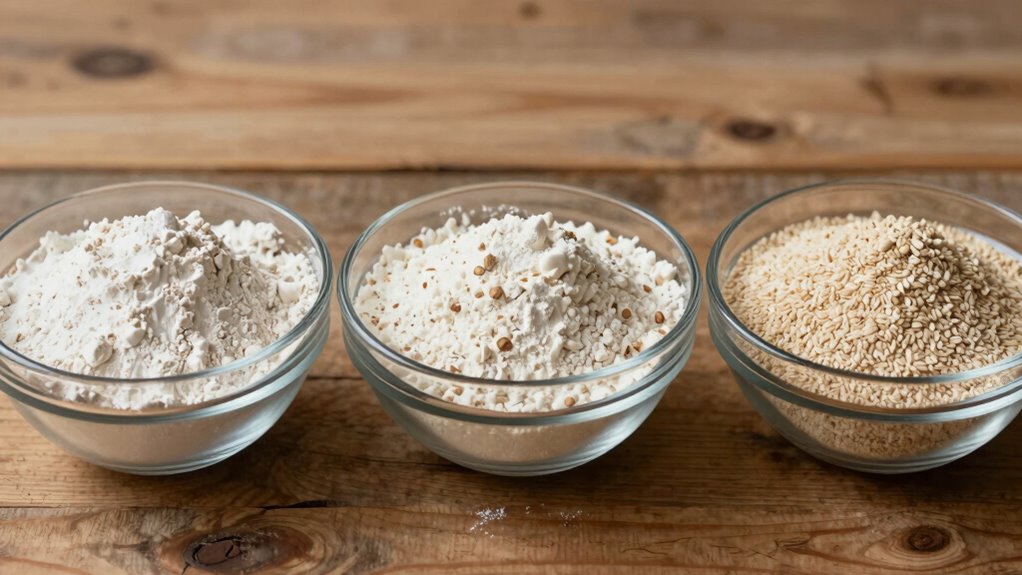
When choosing between all-purpose, bread, and cake flour, consider their protein contents: bread flour has the highest, perfect for chewy bread with strong gluten; all-purpose is versatile for cookies and muffins; cake flour has the lowest, ideal for light, tender cakes. Using the right flour affects texture and rise. To master baking success, understanding these differences is key, and you’ll find even more tips coming up.
Key Takeaways
- All-purpose flour has moderate protein, suitable for a variety of baked goods, balancing structure and tenderness.
- Bread flour has higher protein content, promoting strong gluten networks for chewy, well-risen bread.
- Cake flour has low protein, creating tender, delicate cakes with fine crumb and minimal gluten development.
- Choice of flour impacts texture, rise, and elasticity; select based on whether a chewy bread or tender cake is desired.
- Adjusting flour type according to baking goal ensures optimal dough handling, structure, and final product quality.
What Are the Main Differences Between All-Purpose, Bread, and Cake Flour?
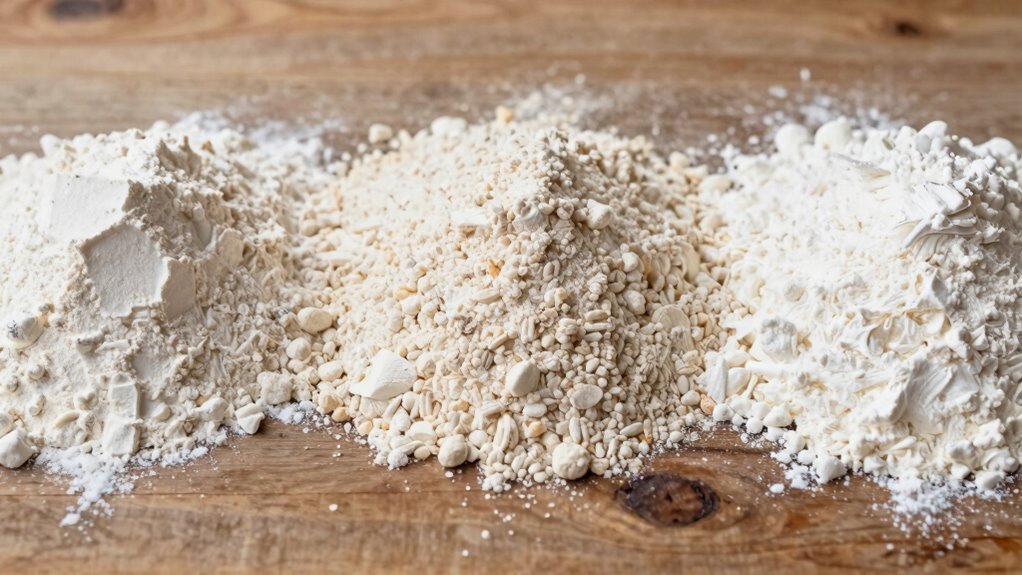
Understanding the main differences between all-purpose, bread, and cake flour is essential for baking success. All-purpose flour offers moderate gluten development, making it versatile for many baked goods. Bread flour has higher protein content, promoting stronger gluten networks that give bread its chewy texture. Cake flour, on the other hand, has the lowest protein, resulting in tender, delicate cakes. When choosing flour, consider storage considerations, as flour should be kept in a cool, airtight container to prevent spoilage and moisture absorption. Proper storage helps maintain freshness and gluten quality, especially for bread flour, which can develop off-flavors if stored improperly. Additionally, the gluten content of each flour type significantly influences the texture and structure of baked goods, so selecting the appropriate flour is crucial for achieving the desired result. Knowing these differences enables you to select the right flour for your recipe, ensuring suitable gluten development and the best baked results. Recognizing the lifestyle background of flour types can also help bakers tailor their recipes for specific dietary needs or flavor profiles.
How Does Protein Content Affect Gluten and Baking Results?
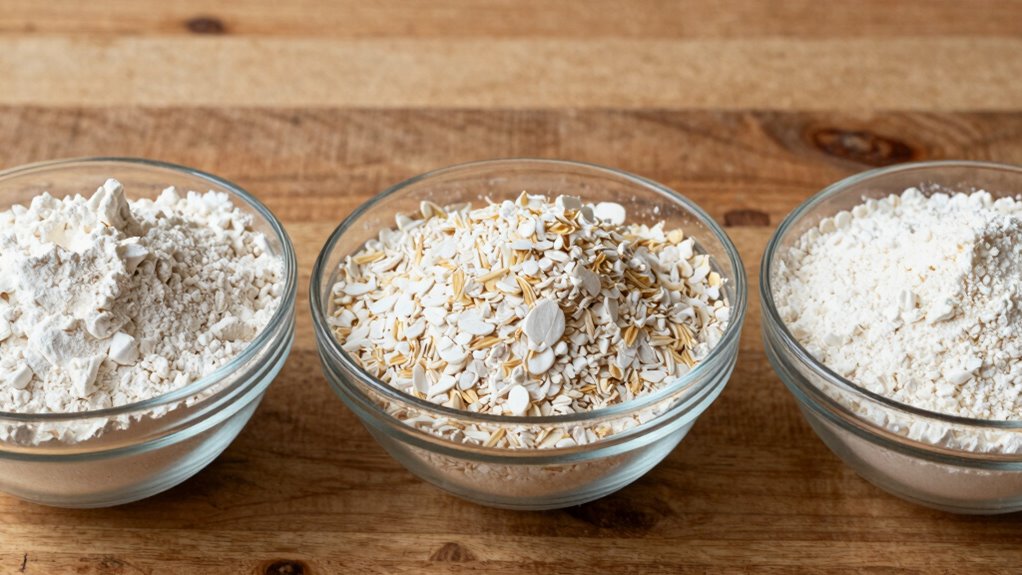
Protein content directly influences gluten formation, which affects the structure and texture of baked goods. Higher protein levels promote stronger gluten networks, resulting in increased dough elasticity and better gas retention. This improved gluten development contributes to a better rise and a chewier texture in baked items. Conversely, lower protein flours produce weaker gluten, leading to tender, delicate results. Understanding this balance helps you choose the right flour for your recipe. Additionally, the type of flour and traditional Indonesian decor masks can influence the overall aesthetic and authenticity of baked goods in cultural presentations. Gluten formation impacts dough stretchability and shape retention. Protein levels determine how much gluten develops during mixing. Adjusting protein content helps tailor the final texture of your baked products, especially when considering flour type and cultural influences. Recognizing the protein content of different flours is essential for achieving desired baking outcomes.
Which Flour Should You Use for Different Baked Goods?
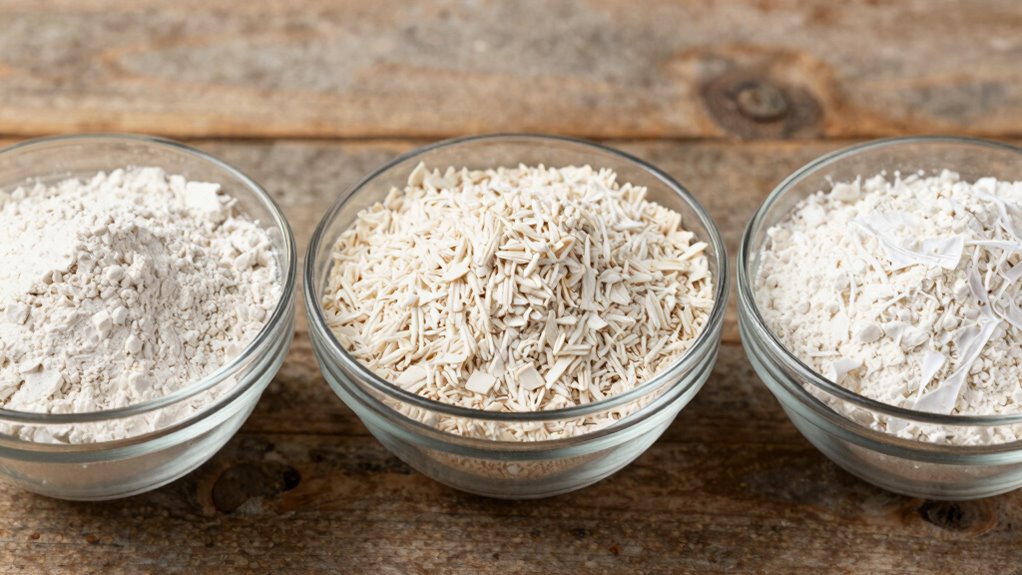
Choosing the right flour depends on its protein content and how it affects your baked goods. High-protein flours work best for bread, while lower-protein options suit cakes and pastries. Understanding these differences helps you pick the perfect flour for each recipe. For example, selecting the appropriate flour type can make a significant difference in achieving the desired texture and rise in your baked items. Additionally, water on water can influence the dough’s hydration and gluten development, impacting the final product’s quality. Moreover, being aware of AI-powered virtual reality in e-learning can help you better understand how technology influences education and baking tutorials alike. Furthermore, specialized flours like this can enhance baking results by providing consistent quality.
Protein Content Differences
Different baked goods require different levels of gluten development, which depends largely on the protein content of the flour you choose. Higher protein flours, like bread flour, promote strong gluten formation, giving dough elasticity and structure. Lower protein flours, such as cake flour, produce weaker gluten networks, resulting in tender baked goods. Understanding protein strength helps you select the right flour for your recipe:
- Bread flour has high protein content for chewy, airy loaves
- Cake flour’s low protein creates delicate textures
- All-purpose flour offers a moderate protein level, versatile for many recipes
- Whole wheat flour’s higher protein adds density and nutrition
- Pastry flour’s moderate protein makes flaky pastries and tender cookies
Choosing the right protein level ensures suitable gluten development, affecting texture, rise, and overall quality of your baked goods, especially when considering connected home fitness techniques that promote overall well-being through mindful choices.
Best Uses for Each
To achieve the best results in your baking, selecting the right flour for each recipe is essential. For bread, choose bread flour to maximize gluten development, creating a chewy texture and good rise. All-purpose flour works well for cookies and muffins, offering balanced gluten levels that provide structure without toughness. Cake flour is ideal for tender cakes, where lower gluten content results in a delicate crumb. When flavor enhancement matters, consider specialty flours like whole wheat or rye, which add depth and richness but may require adjustments. Knowing which flour to use helps you control gluten development, ensuring your baked goods have the right texture. Additionally, understanding wheat protein content can guide you in choosing the most suitable flour for your specific baking needs. Using the appropriate flour for each task guarantees your baked goods come out perfectly, with the right balance of structure and flavor. For example, selecting flours based on their gluten-forming proteins can further refine your baking results.
Why Is Cake Flour Ideal for Light, Tender Cakes?
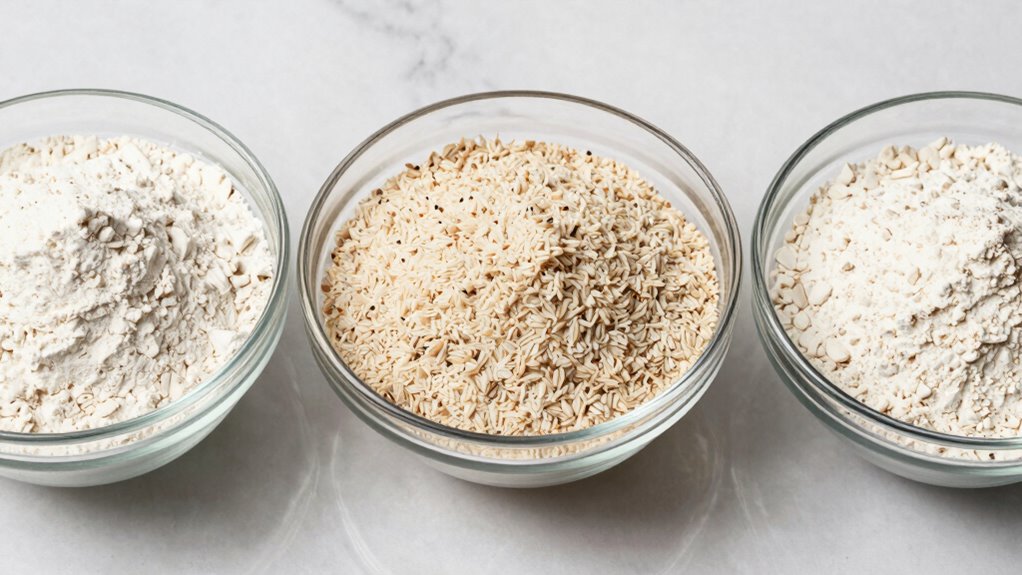
Because cake flour has a lower protein content than all-purpose flour, it produces a finer, softer crumb that’s perfect for light, tender cakes. The lower protein reduces gluten formation during mixing, which minimizes the development of a dense, chewy texture. This delicate gluten network enhances the baking chemistry, resulting in a fluffy and airy structure. Cake flour’s fine milling increases surface area, allowing for smoother batter consistency and better incorporation of ingredients. Its unique properties make it ideal for delicate cakes like sponge and chiffon, where a light texture is essential. Using cake flour helps you achieve a moist, tender crumb without excess chewiness, making your baked goods irresistibly soft and perfect for layering or icing. Understanding flour properties can help bakers choose the right type for each baked good.
How to Choose the Right Flour Based on Your Baking Goals
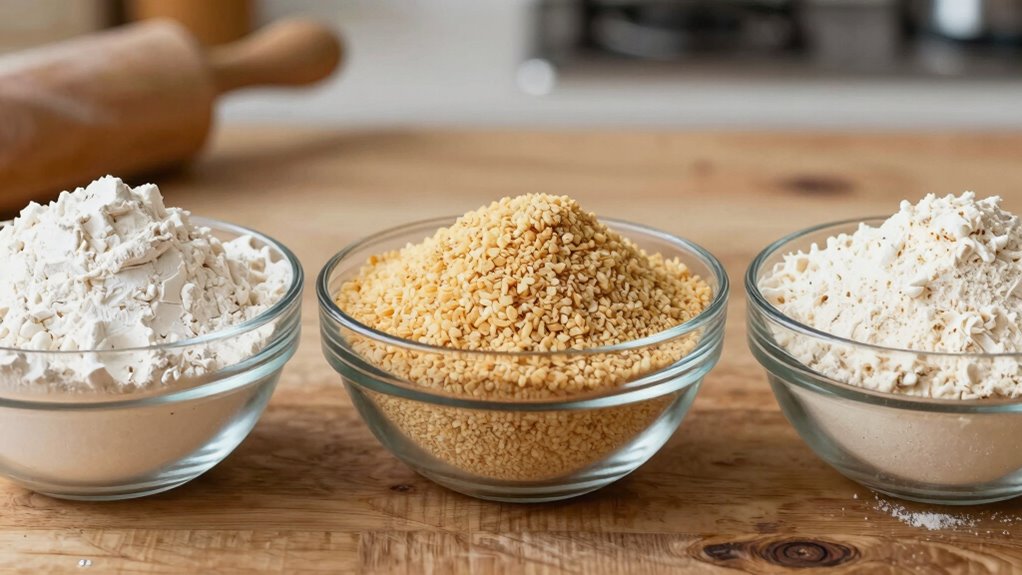
Choosing the right flour depends on your baking goals, so consider what you want to achieve. Pay attention to flour protein content, as it influences the texture and rise of your baked goods. Matching your flour choice to your intended purpose helps make sure your baked creations turn out just as you envision. Additionally, detecting passive voice in your writing can improve clarity and effectiveness.
Baking Purpose Alignment
Are you unsure which flour best suits your baking goals? Your choice depends on understanding how gluten formation impacts your baked goods and the baking techniques involved. For tender cakes, opt for low-protein flour to prevent excessive gluten development. If you’re making bread with a chewy crumb, higher protein flour encourages strong gluten networks. Consider the following:
- The desired texture and structure of your baked item
- The role of gluten formation in achieving stretchiness or tenderness
- Whether your recipe relies on specific baking techniques like kneading or folding
- The importance of crumb openness and elasticity
- The need for stability in high-hydration doughs
Aligning your flour type with your baking purpose guarantees ideal results, whether you’re aiming for light pastries or hearty bread.
Flour Protein Content
Understanding the protein content in flour helps you select the right type for your baking goals. Higher protein levels promote gluten formation, giving bread and chewy baked goods their structure and strength. Different wheat varieties naturally have varying protein amounts, which influence the flour’s performance. For example, hard wheat varieties contain more protein, making them ideal for bread flour, while soft wheat varieties have less protein, suited for cakes and pastries. When choosing flour, consider your desired texture and rise—higher protein flours develop more gluten, providing elasticity and volume. Conversely, lower protein flours produce tender, delicate crumbs. Knowing the protein levels can help you fine-tune your ingredient choices to achieve the perfect bake. Knowing the protein content helps you tailor your ingredient selection to match your recipe’s needs, ensuring your baked goods turn out just right. Understanding flour types can further enhance your ability to select the ideal flour for specific baked goods.
Texture and Rise
To achieve the desired texture and rise in your baked goods, selecting the right flour is essential. The type of flour influences gluten formation and dough elasticity, which directly affect how your baked items develop structure and fluffiness. Higher gluten content, like in bread flour, provides more stretch and better rise, ideal for chewy, airy loaves. Lower gluten flours, such as cake flour, produce tender, delicate textures but less rise. For suitable results, consider your goals: do you want a chewy bread or a tender cake? Using piercing techniques can also be beneficial for certain baked goods, especially when incorporating fillings or creating decorative effects.
- Use bread flour for elasticity and strong gluten networks
- Opt for cake flour for softer, finer crumb structures
- Adjust hydration levels based on gluten strength
- Mix flours for balanced texture and rise
- Knead or rest dough to enhance gluten development
Can You Substitute Flour Types? Tips for Successful Baking
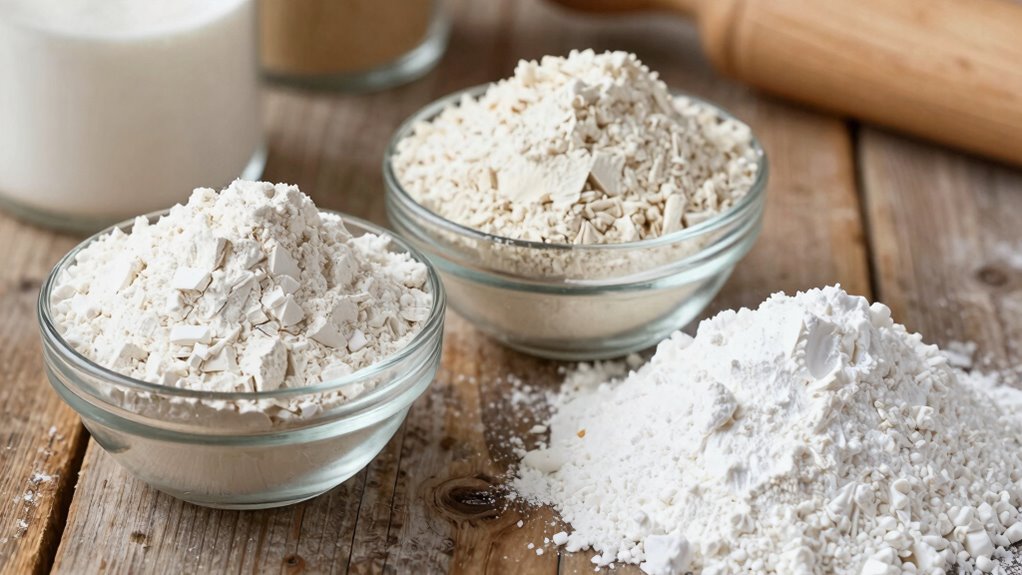
While substituting flour types can sometimes work, it’s important to recognize that different flours behave uniquely in baking. Flour substitutions require careful consideration because each type has distinct protein content and moisture absorption qualities. For example, replacing all-purpose flour with bread flour may yield a chewier texture, while using cake flour can result in a softer, more delicate crumb. To ensure baking success, adjust the amount of liquid or leavening agents as needed, and consider the specific recipe’s requirements. Understanding flour properties can help you choose the right type for your baked goods and achieve better results. Keep in mind that some substitutions may alter the final product’s texture or rise. Experimenting with small batches helps you learn how different flours perform, increasing your chances of successful baking and delicious results. Additionally, understanding dog breeds and their unique characteristics can help you select the best ingredients and methods for your baking projects.
Frequently Asked Questions
Can I Use Bread Flour for Cake Baking?
You can use bread flour for cake baking, but keep in mind the higher gluten content, which makes the cake denser and chewier. If you substitute, consider reducing the flour slightly or adding more liquid to balance the texture. While it’s possible, using bread flour may alter the cake’s tenderness, so it’s best to use cake flour for a softer, lighter crumb unless you’re aiming for a denser result.
How Does Flour Bleaching Affect Baking Outcomes?
Bleaching flour alters its color and texture through a chemical process, making it whiter and finer. This process can improve baking results by creating a softer, more tender crumb, especially in cakes. However, it reduces some nutrients, impacting the flour’s nutritional value. If you prefer less processed ingredients, unbleached flour offers a more natural option, though it might produce slightly denser baked goods.
Are There Gluten-Free Alternatives for All-Purpose Flour?
You can absolutely find gluten-free alternatives for all-purpose flour, and they’re more versatile than you might imagine! Gluten-free blends and allergen-free flours like rice, almond, or coconut flour mimic traditional flour’s properties, making your baking just as delicious. These options are perfect for those with gluten sensitivities or allergies, ensuring everyone can enjoy baked goods without sacrificing taste or texture. It’s almost like magic in your kitchen!
What Are the Storage Tips for Different Flour Types?
You should store flour in airtight containers in a cool, dark place to maintain ideal storage conditions. For all-purpose and bread flour, keep them in the pantry for up to six months; for cake flour, aim for three to four months. If you want to extend shelf life, consider freezing flour, especially whole grain varieties, which can last up to a year. Always check for signs of spoilage before use.
Is Whole Wheat Flour Suitable for All Recipes?
You might be surprised, but only about 5% of recipes call for 100% whole wheat flour. Whole wheat benefits include added fiber and nutrients, making your baking healthier. However, its drawbacks include a denser texture and stronger flavor, which may not suit delicate baked goods. So, while whole wheat flour is great for hearty breads and muffins, it may not work well for light cakes or pastries.
Conclusion
Think of baking as a musical symphony—each flour type is an instrument, creating a unique harmony. Choosing the right flour is like selecting the perfect instrument to bring your masterpiece to life. When you pick the one that suits your recipe’s melody, your baked goods will sing with lightness or structure as intended. So, trust your ingredients and let your baking skills compose delicious symphonies every time.