If you want the crispiest fries, go for Russet potatoes because their high starch content creates a dry, fluffy interior with a crunchy exterior. Choosing the right size, rinsing, soaking, and drying them properly boosts crispiness. Double frying at different temperatures enhances crunch, while avoiding overcrowding keeps oil hot and fries crispy. Want to master these tips and get perfect homemade fries? Keep exploring for all the details.
Key Takeaways
- Russet potatoes are the top choice for the crispiest fries due to their high starch content.
- High-starch varieties create a dry, crispy exterior while maintaining a fluffy interior.
- Rinsing and thoroughly drying potatoes before frying enhances crispiness by reducing surface moisture.
- Double frying at different temperatures (around 325°F and 375°F) maximizes crunch.
- Waxy potatoes produce softer fries with less crispiness, making them less ideal for achieving maximum crunch.
Which Potatoes Make the Crispiest Fries? Top Varieties You Should Try
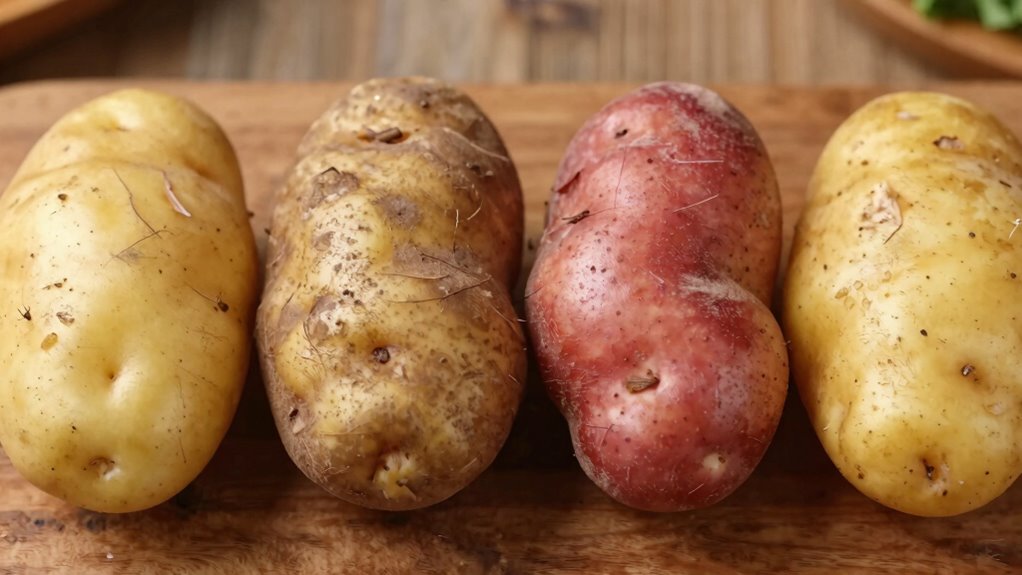
When it comes to making the crispiest fries, choosing the right potato variety is essential. Not all potatoes deliver the same crispiness factors, so selecting the best type makes a difference. Russet potatoes are a top choice because their high starch content creates a dry, fluffy interior with a crispy exterior. Yukon Golds, with their medium starch levels, can also produce good crispiness but may be softer. Waxy potatoes like red or new potatoes have lower starch and don’t crisp as well, leading to less crunch. For the ultimate fry, go for varieties known for their crispiness factors, especially those with high starch content. Additionally, understanding the role of potato starch in crispiness helps in selecting the best type for perfect fries. Picking the right potato ensures your fries turn out golden, crunchy, and irresistibly crispy every time.
Why Potatoes Matter for Crispy Fries: The Science Behind Texture
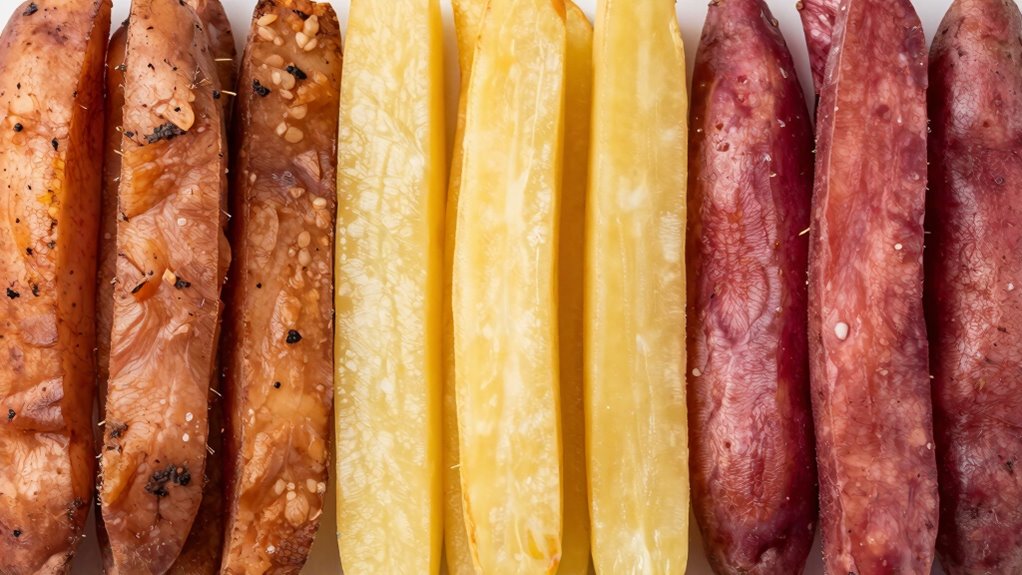
The key to crispy fries lies in understanding how starch content influences texture—you want enough to form a crispy exterior but not so much that they become gummy. Moisture levels in potatoes also matter, as too much water can prevent that perfect crunch. Factors like how the potato’s structure develops during cooking determine whether your fries turn out golden and crispy or soggy. Additionally, selecting the right type of potato based on its mammography guidelines can be an indicator of its starch and moisture content, influencing fry quality. Knowing about the best heat pump features can also be useful in understanding how proper cooking methods can optimize texture and consistency in your fries. Moreover, understanding the best garage door openers can be helpful in setting up your kitchen for efficient cooking environments. Proper storage conditions, such as temperature regulation, also play a role in maintaining the ideal potato quality before preparation. Being aware of storage techniques can further enhance your ability to keep potatoes fresh and ready for cooking.
Starch Content’s Role
Starch content in potatoes plays a crucial role in achieving that perfectly crispy fry texture. Higher potato starch levels create a firm surface that crisps up nicely during frying. When you choose a potato with a good amount of potato starch, it helps in moisture control, reducing excess water that can make fries soggy. The starch acts as a natural thickener, forming a barrier that traps moisture inside, resulting in a crisp exterior and fluffy interior. Potatoes with high starch content, like Russets, are ideal because they develop a golden, crunchy crust while maintaining internal softness. Color accuracy in potatoes can also influence visual appeal and perceived freshness. Understanding the starch composition helps you select the right potato for crispy fries, ensuring your final product has the perfect texture and crunch you’re aiming for. Additionally, selecting potatoes with the appropriate moisture content is essential to prevent sogginess and achieve optimal crispiness.
Potato Moisture Levels
Moisture levels in potatoes considerably influence the crispiness of your fries, as excess water can prevent proper browning and lead to sogginess. High potato moisture hampers the Maillard reaction, making it difficult to achieve that golden crust. Choosing potatoes with lower moisture content helps improve moisture retention during frying, resulting in crisper fries. Variieties with less water tend to dry out faster and develop a better crust because they don’t release as much steam. To manage moisture levels, you can pat potatoes dry thoroughly before frying or opt for varieties naturally lower in moisture. Supporting sustainable practices in potato farming can also influence moisture content and overall quality. Proper storage of potatoes also plays a vital role in moisture control and preserving their ideal frying qualities. Understanding potato moisture is key to mastering that perfect, crispy fry texture you’re after, especially considering how potato markets influence the availability of different varieties. Additionally, selecting potatoes grown with specific cultivation methods can further enhance their suitability for crispy fries.
Texture Development Factors
Choosing the right potato variety plays a crucial role in developing that perfect crispy exterior and tender interior. The texture of your fries depends heavily on factors like starch content, which influences how potatoes crisp up during frying. High-starch potato varieties, such as Russets, create crispier outsides because they release more starch when cooked, forming a golden crust. Conversely, lower-starch potatoes yield softer fries with less crunch. Other key factors include potato size, shape, and moisture levels, which affect how heat penetrates and how the surface crisps. To optimize texture, select potato varieties with high starch content, and consider how they’re prepared. Proper handling of these texture development factors ensures you get consistently crispy, delicious fries every time. Understanding starch content is essential for selecting the ideal potatoes for crispy fries.
How Starch Levels in Potatoes Affect Fry Crispiness and Fluffiness
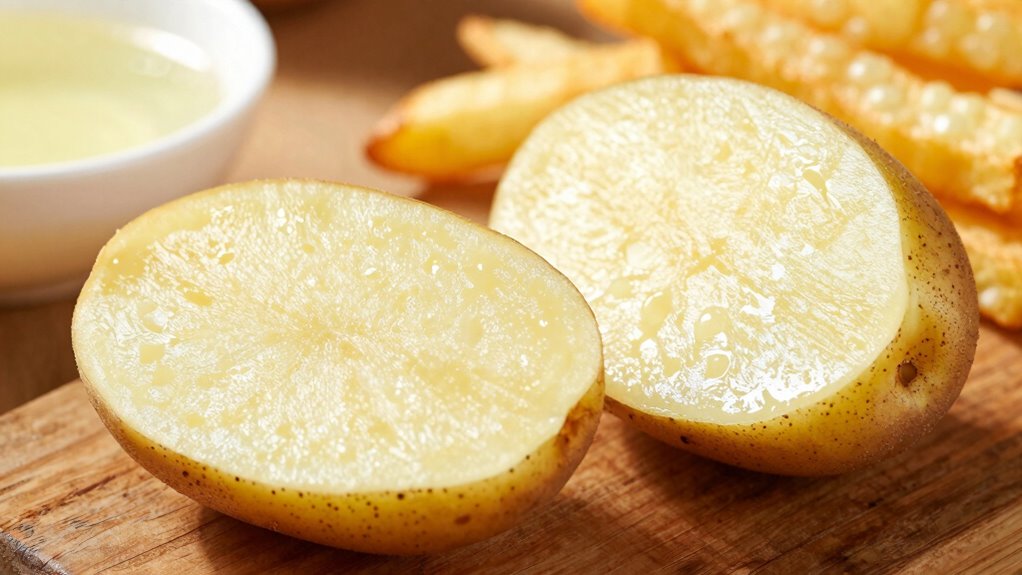
The amount of starch in a potato directly influences how it fries, impacting both crispiness and fluffiness. Higher starch levels create a drier, more brittle crust, resulting in a crisp fry. These potatoes tend to develop a sturdy fry texture that holds up well to double frying. Conversely, potatoes with lower starch levels contain more moisture, leading to a softer, fluffier interior. They produce a less crispy exterior but offer a tender bite. Understanding starch content helps you choose the right potato for your desired fry texture. For extra crispiness, go for high-starch varieties like Russets. If you prefer a lighter, more airy fry, lower-starch potatoes like Yukon Golds work better. Adjusting starch levels directly impacts the final fry’s texture and overall quality. Additionally, starch content is a key factor in how potatoes react to frying temperatures and techniques, influencing the final outcome. Knowing the frying process can help optimize the results based on the starch level. Recognizing the potato variety is essential for achieving your preferred fry texture and consistency.
Picking the Best Potatoes: Size, Shape, and When to Use Them
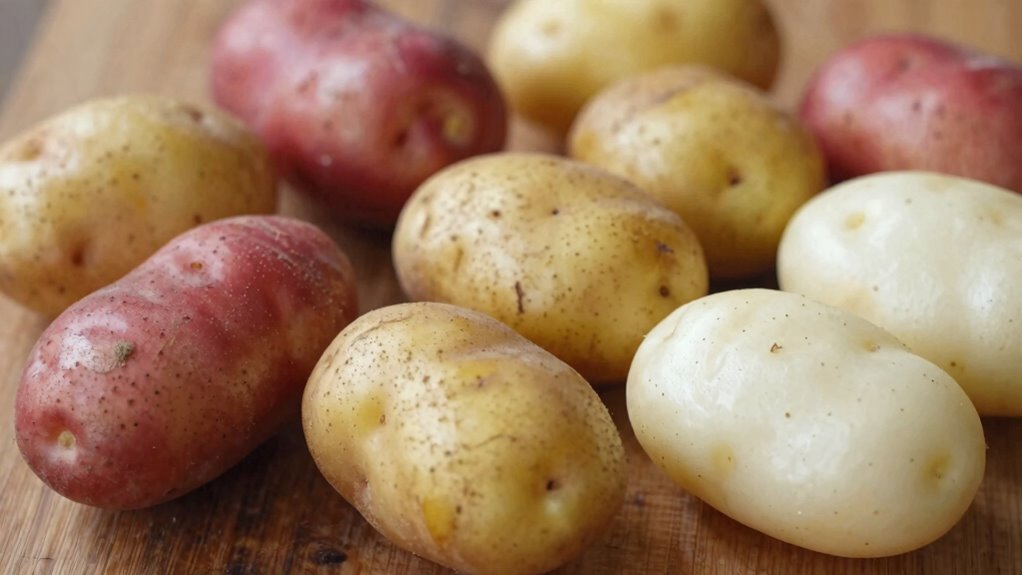
Selecting the right potatoes depends on their size, shape, and when you’ll use them. For crispy fries, choose potatoes with a uniform size to guarantee even cooking and consistent texture. Wedge-shaped potatoes are ideal as they promote good surface area for crispiness, while rounder ones work well for softer fries. Smaller potatoes cook faster, making them perfect when you want quick results, whereas larger ones require longer cooking times. If you’re aiming for crispy fries with a fluffy interior, opt for medium-sized, elongated potatoes that balance cooking timing and texture. Keep in mind that larger potatoes may need extra time in the oil, so adjust your cooking process accordingly. Picking the right potato size and shape helps you control cooking timing and achieve perfect fries. Additionally, understanding the starch content of different potato varieties can influence their crispiness and texture after frying. Moreover, selecting potatoes with the appropriate moisture level can also significantly impact the final crispiness of your fries. Interestingly, potato storage conditions can affect their moisture and starch levels, thereby influencing your frying results. Proper storage in a cool, dark, and well-ventilated place helps maintain optimal potato quality for frying.
Getting Your Potatoes Ready: Rinsing, Soaking, and Drying Tips
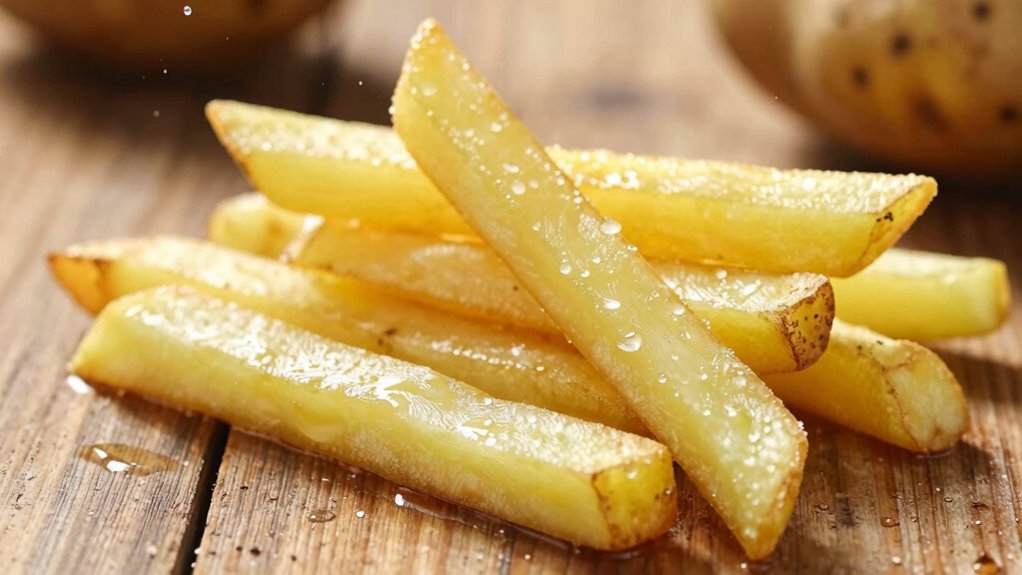
Start by rinsing your potatoes to wash away excess starch, which helps achieve crispiness. After rinsing, soak them if desired to further remove surface starch, but be sure to dry thoroughly afterward. Patting them dry guarantees there’s no moisture that could prevent your fries from getting crispy.
Rinse to Remove Starch
Have you ever noticed how rinsing potatoes removes excess starch and results in crispier fries? Different potato varieties contain varying amounts of starch, so rinsing helps achieve ideal starch removal for better texture. When you rinse, you wash away surface starch, which can cause fries to stick together or become soggy. Proper rinsing ensures your fries are evenly crisp and golden. To maximize starch removal, use cold water and gently agitate the potatoes. Keep in mind that some varieties, like Russets, benefit more from rinsing due to their high starch content. Proper rinsing techniques are essential for achieving consistently crispy fries. Rinsing is a simple step that makes a big difference in the final fry quality. Understanding potato starch levels can help you select the best variety for crispy fries. Follow these tips for the crispiest results and enjoy perfectly cooked fries every time.
Pat Dry Thoroughly
Once you’ve rinsed your potatoes to remove surface starch, drying them thoroughly is the next key step. Pat dry meticulously using a clean towel or paper towels to ensure maximum moisture removal. Excess moisture can prevent your fries from crisping properly and may cause oil splatters during frying. Be gentle but thorough, covering all surfaces of the potatoes. Removing as much moisture as possible encourages even browning and helps achieve that crispy exterior you’re aiming for. If you skip this step, residual water can create steam, leading to soggy fries. Take your time to pat dry each piece carefully, ensuring no moisture remains. Proper moisture removal is essential for achieving the perfect, crispy fries every time. Regular use of vetted techniques like thorough drying also emphasizes the importance of proper preparation and thorough drying for optimal results.
Deep Frying or Air Frying: Which Method Gives the Crispiest Fries?
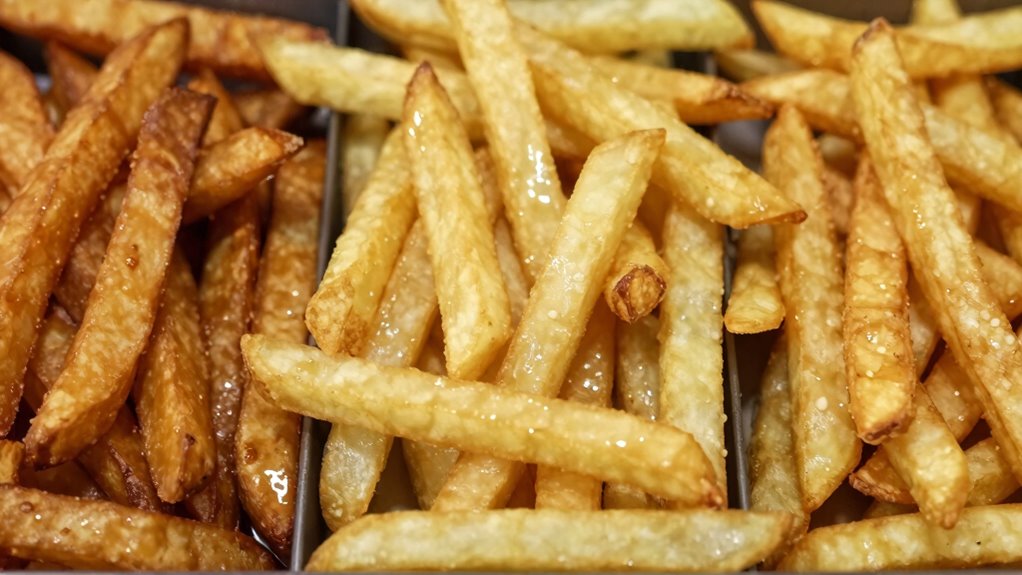
When it comes to achieving the crispiest fries, choosing between deep frying and air frying makes a significant difference. Deep frying typically delivers superior crispiness because it uses hot oil at the right temperature, around 350-375°F, ensuring a quick, even cook. The frying duration is shorter, locking in crunch and flavor. Air frying, on the other hand, uses hot air to crisp up your fries, but they may not be as crunchy unless you spray them with oil and extend cooking time.
Deep frying yields crispier fries with hot oil at 350-375°F for quick, even cooking.
Consider these factors:
- Oil temperature precision
- Frying duration control
- Amount of oil used
- Crispiness level desired
- Ease of cleanup and health considerations
How to Double Fry for Extra Crunch and Perfect Texture
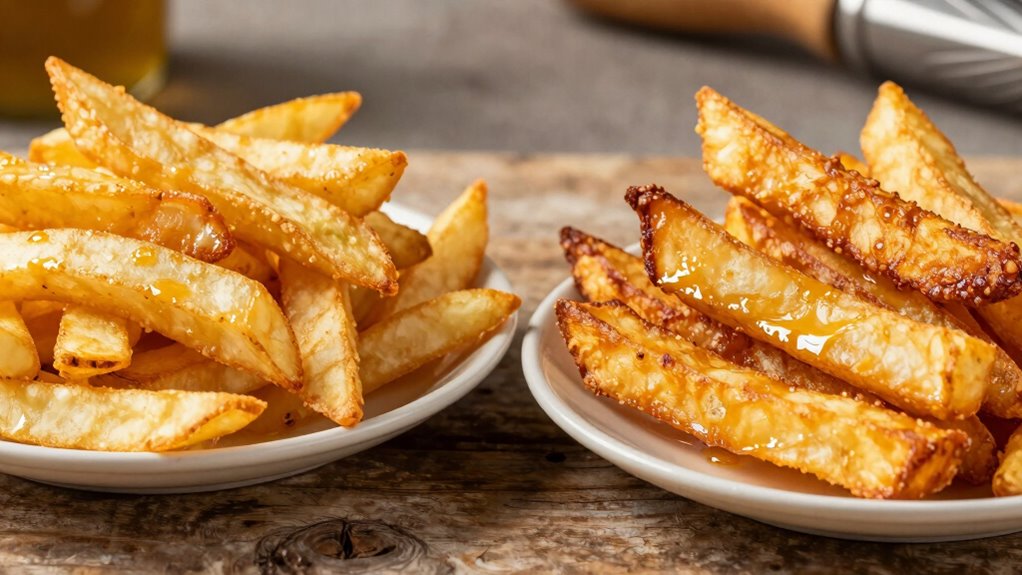
To achieve the ultimate crunch and a perfectly textured fry, double frying is the way to go. First, heat your oil to about 325°F (163°C) and fry the potatoes for 3-4 minutes. This initial fry cooks the potato through without browning it too much. Remove the fries and let them rest for a few minutes. Then, increase the oil temperature to 375°F (191°C). Fry the potatoes again for 2-3 minutes until they turn golden and crispy. This second fry enhances the crunch and guarantees the interior is fluffy. Keep an eye on the oil temperature during both stages to prevent under- or over-cooking. The precise frying duration is key to achieving that perfect balance of crunch and texture.
Common Mistakes That Ruin Your Crispy Fries and How to Avoid Them
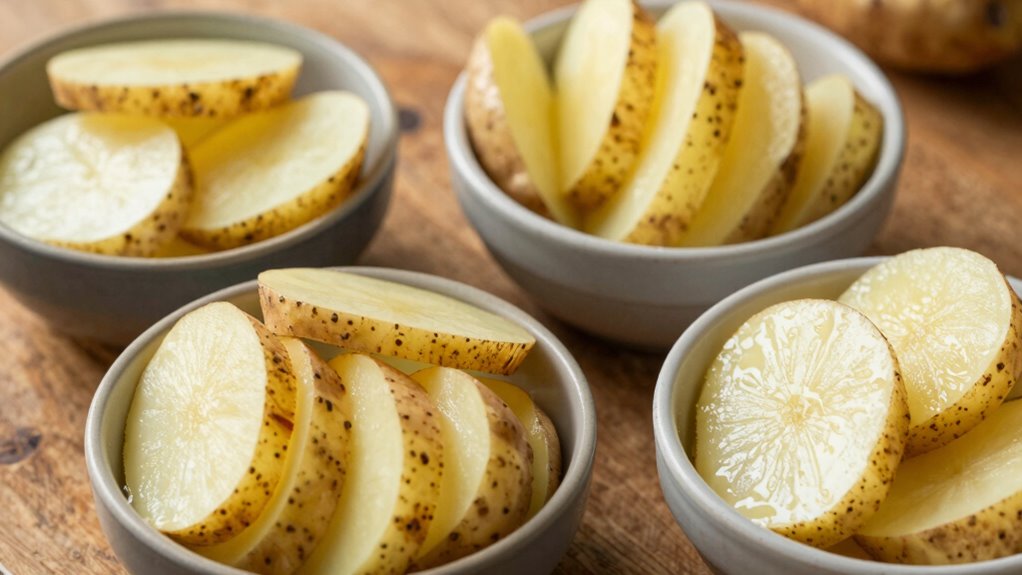
Many common mistakes can sabotage your efforts to make crispy fries, but the most frequent is overcrowding the fryer. When you add too many potatoes at once, the temperature drops, resulting in soggy, limp fries rather than crispy ones. Another mistake is neglecting seasoning variations; under-seasoning or unevenly coating fries can diminish flavor. Relying solely on traditional frying without exploring alternative cooking methods, like baking or air frying, can limit texture and health benefits. Additionally, not drying potatoes thoroughly before cooking causes excess moisture, leading to steam instead of crispiness. Finally, skipping the double fry process or not monitoring oil temperature can ruin your efforts. To avoid these pitfalls, work in small batches, experiment with seasoning, and consider alternative cooking methods to perfect your crispy fries.
How to Serve and Keep Your Fries Crispy for Longer
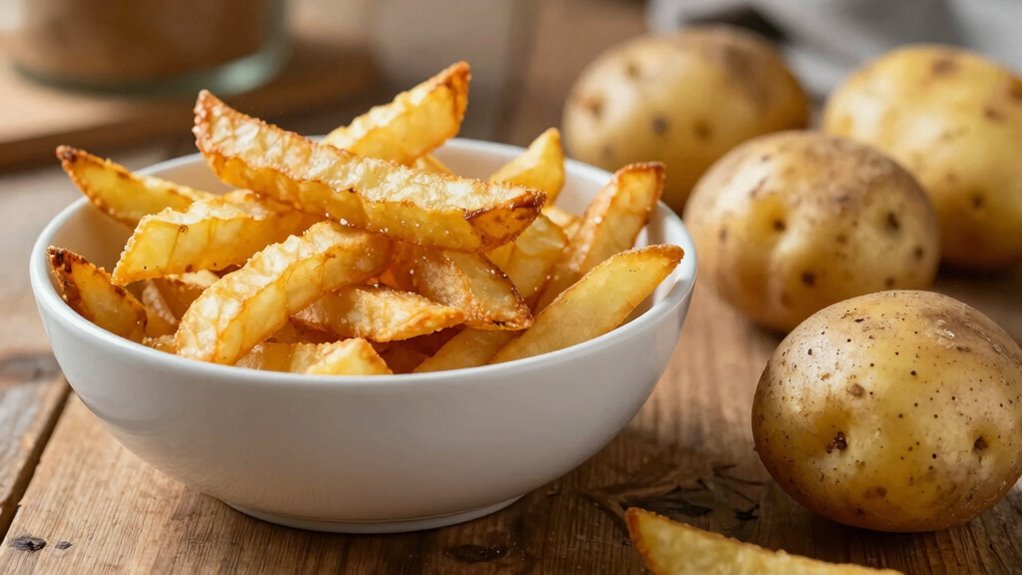
Once you’ve perfected your crispy fries, the next step is ensuring they stay that way from serving to the final bite. To keep fries crispy longer, consider proper serving suggestions and storage methods. Serve fries immediately on a warm plate or paper-lined tray to prevent sogginess. If you need to hold them, place them in a single layer in a warm oven (around 200°F) to maintain crispiness. For storage, avoid airtight containers, which trap moisture; instead, use a paper towel-lined container. Here’s a quick guide:
| Serving Suggestions | Storage Methods | Tips |
|---|---|---|
| Serve hot with dips | Use paper towels in container | Reheat in oven for crispness |
| Serve on a warm plate | Keep in a mesh or open container | Don’t refrigerate for best texture |
| Add seasoning right before serving | Avoid stacking fries | Reheat to restore crunch |
Final Tips for Perfect Crispy Homemade Fries

To achieve perfectly crispy fries, you need to focus on proper frying techniques, like maintaining the right oil temperature and avoiding overcrowding. Season your fries thoughtfully to enhance flavor without making them soggy. Keep these tips in mind to guarantee your homemade fries come out irresistibly crispy every time.
Proper Frying Techniques
Achieving perfectly crispy fries begins with mastering proper frying techniques. To get that ideal crunch, keep a close eye on oil temperature—aim for around 350°F (175°C). Consistent oil temperature ensures even cooking and prevents sogginess. Fry in small batches to avoid drops in temperature, maintaining the right frying duration for each batch. Use a cooking thermometer to monitor temperature accurately. Here are some tips to perfect your technique:
- Preheat oil thoroughly before adding potatoes
- Avoid overcrowding the pan
- Stir gently to prevent sticking
- Drain fries on paper towels immediately
- Keep oil at a steady temperature throughout
Following these simple steps helps you achieve crispy, golden fries every time. Proper frying isn’t just about timing; it’s about control and attention to detail.
Optimal Seasoning Tips
For perfectly seasoned crispy fries, choosing the right seasonings and applying them at the ideal time are key. Start with simple seasoning blends like salt, pepper, garlic powder, or paprika to enhance flavor without overpowering. For the best flavor enhancements, season your fries immediately after frying while they’re still hot, so the spices stick better and infuse more deeply. You can also toss the fries with a light spray of oil before adding seasonings to help them adhere and improve crispiness. Avoid seasoning too early, which can cause moisture and sogginess. Experiment with herbs or spice mixes to customize your fries, but always aim for a balanced blend that complements the potato’s natural taste. Proper timing and choice of seasonings elevate your homemade fries to perfection.
Frequently Asked Questions
Can Potato Variety Affect the Flavor of Fries?
Yes, potato variety substantially affects fry taste and potato flavor. Different potatoes have unique starch and moisture levels, which influence the overall flavor and texture of your fries. For instance, Russets offer a rich potato flavor and a fluffy interior, while Yukon Golds provide a buttery taste. Choosing the right potato variety ensures your fries have the desired flavor profile and crispiness, enhancing your overall fry experience.
Is There a Difference Between Fresh and Stored Potatoes for Frying?
Fresh potatoes fry better, delivering crispy, flavorful results, while stored potatoes can become starchy or sprouted, affecting fry quality. Proper storage methods, like keeping potatoes in a cool, dark, well-ventilated spot, maintain their freshness and subtopic relevance for frying. When you use fresh potatoes, you ensure the best bite—crisp, tender, and tasty—whereas stored ones might compromise crunch and flavor. So, always prioritize freshness for perfect fries!
How Does Altitude Influence Frying Potatoes?
Altitude effects can considerably impact your frying process. As you go higher, the air pressure drops, making water boil at lower temperatures. This means you need to adjust your frying temperature higher to achieve crispy fries. Without this adjustment, your fries might turn out soggy or undercooked inside. Always monitor and modify your frying temperature based on altitude to guarantee perfectly crispy fries every time.
Do Organic Potatoes Produce Crispier Fries?
Organic potatoes often produce crispier fries because of their organic quality and freshness. When you use fresh, organic potatoes, they tend to have a better texture and fewer blemishes, which helps achieve that perfect crunch. Their natural sugars and fewer preservatives also contribute to a more even fry. So, if you want crispier fries, choose organic potatoes with high organic quality and guarantee they’re as fresh as possible.
Can Adding Salt Before Frying Improve Crispiness?
Adding salt before frying can enhance crispiness, as seen in a home experiment where salted potatoes fried at the right oil temperature developed a golden, crunchy exterior. This seasoning technique draws out moisture, helping fries crisp up better. Just make certain your oil is hot enough—around 350°F (175°C)—to prevent sogginess. Proper seasoning techniques and maintaining ideal oil temperature work together for irresistibly crispy fries.
Conclusion
Now that you know the secrets, your homemade fries will be so crispy, they’ll shatter like glass with every bite! Say goodbye to soggy, limp fries forever—you’re about to conquer the crispy fry universe. Just pick the right potatoes, master the double fry, and watch as everyone begs for your secret. Get ready to turn your kitchen into the crispiest fry haven known to mankind—your crispy, perfect fries await!