
TL;DR

Get kitchen gear delivered free with Prime
- Fast, free delivery on millions of items
- Prime Video, Amazon Music and more included
- Member-only deals all year
Pest-control experts interviewed by Hunker say there is no reliable evidence that WD-40 repels mice, and its odor is not a dependable barrier. They recommend sealing entry points, removing food and water sources, and contacting a qualified professional when there are signs of an infestation or damage.
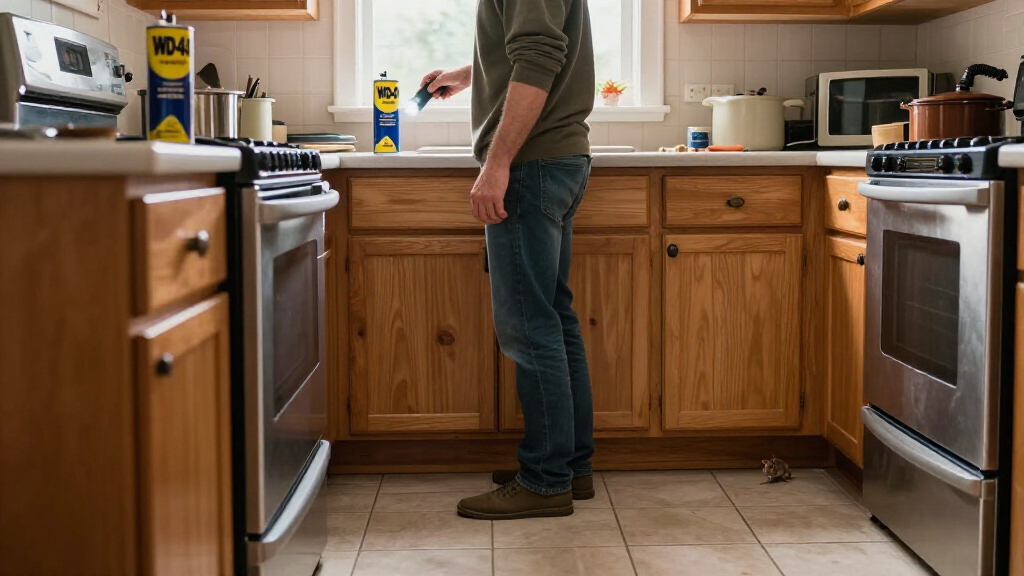
WD-40 is not a proven way to repel mice, according to pest-control experts interviewed by Hunker, who say spraying it around a home is unlikely to keep rodents out. The advice matters because the lubricant is sometimes promoted as a low-cost DIY deterrent, but experts warn it may create fire, inhalation and cleanup hazards without addressing how mice enter or what attracts them.
Josh Petro, operations manager at Truly Nolen Pest Control, told Hunker there is no reliable, evidence-based proof that WD-40 discourages mice or other rodents. He said the idea may stem from rodents’ strong sense of smell and the product’s petroleum or solvent odor, but that smell fades. Spraying the product around doors, windows or a home’s perimeter, he said, is unlikely to form an effective barrier.
Petro also warned that WD-40 is a flammable aerosol containing petroleum-based hydrocarbons. He said its vapors or mist may cause respiratory irritation, dizziness or other nervous-system effects, while contact can irritate or dry the skin and eyes. The product can also leave a sticky residue that collects dirt and debris. These are risks described by Petro in the Hunker report; the supplied material does not provide independent product testing or a clinical assessment.
Instead of relying on a scent-based hack, Petro recommended excluding mice and removing attractants, with traps if rodents are already inside. Hunker also quoted Dr. Jim Fredericks, a board-certified entomologist and senior vice president of public affairs at the National Pest Management Association, advising homeowners to seal gaps, repair loose mortar and weather stripping, store food in sealed containers, and keep firewood away from the home.
Why a Scent Barrier Falls Short
The practical issue is not just whether WD-40’s odor bothers a mouse. A smell that fades does not close a gap, remove accessible food or establish that rodents have left a building. Using it as a perimeter treatment may leave the entry route and infestation unaddressed, while exposing household members to product hazards and creating residue.
Fredericks told Hunker that rodents can spread more than 35 diseases, including hantavirus, lymphocytic choriomeningitis and plague. He also warned that mice can chew electrical wires and wood, increasing fire risk. The report cites his estimate that more than 21 million homes are invaded by mice each winter; it does not supply the methodology or time period behind that figure, so it should be understood as an attributed estimate rather than independently verified data here.
For readers weighing inexpensive DIY methods against pest-control visits, the distinction is between a supposed repellent and steps that address access and food sources. The report says pest-control visits average $100 to $300, but gives no location, service scope or date for that price range. Costs and appropriate treatment can vary, while evidence of wiring damage, contamination or multiple mice can make professional advice more pressing.
As an affiliate, we earn on qualifying purchases.
The Advice Behind the WD-40 Myth
The Hunker report frames WD-40 as a modern pest-control myth: the theory is that its strong smell will repel mice, which have a keen sense of smell. Petro’s explanation is that the odor eventually fades and does not provide a reliable barrier. The source does not describe controlled trials comparing WD-40 with other deterrents, so the conclusion is grounded in the experts’ stated pest-control experience and the absence of reliable evidence they identified.
Fredericks said mice do not hibernate and seek warmth, shelter and food in homes. His recommended prevention steps focus on limiting access and resources: seal cracks and holes, replace damaged mortar or weather stripping, store food in sealed containers, and place firewood at least 20 feet from the house and at least five feet off the ground. These measures are presented as prevention, not a guarantee that a home will remain rodent-free.
The experts distinguish prevention from an active infestation. Petro said traps may be used when mice are already inside, while Fredericks advised seeking qualified pest-control help if residents find droppings, gnaw marks or dark grease along floors. The report mentions peppermint essential oil as a possible natural option, but it does not provide evidence that the oil reliably eliminates or prevents an infestation.
“The safest and most reliable DIY approach is not really a ‘repellent’. It is exclusion plus removing attractants, with traps only if mice are already inside.”
— Josh Petro, quoted by Hunker
As an affiliate, we earn on qualifying purchases.
Limits of the Evidence and Advice
The source reports the experts’ assessments but does not provide laboratory studies, a head-to-head test of WD-40 and other deterrents, or independent verification of the health and infestation statistics cited. It is therefore not possible from this material to quantify how often mice encounter WD-40 or how their behavior might vary. The experts’ central point is narrower: WD-40 is not an evidence-backed rodent repellent and should not be treated as a reliable way to secure a home.
The report also does not establish that peppermint oil consistently repels mice, despite mentioning it among possible alternatives. It gives no details on the extent of any individual infestation, the best trapping method for a particular home, or the cost of a professional inspection in a given area. Those choices depend on the evidence found at the property and local conditions.
rodent-proof food storage containers
As an affiliate, we earn on qualifying purchases.
As an affiliate, we earn on qualifying purchases.
Steps for Homeowners Now
For prevention, the experts’ advice is to inspect the home for openings, seal gaps, repair worn weather stripping or loose mortar, secure food, and reduce accessible water and shelter. Homeowners who already see mice can look for droppings, gnaw marks, grease marks or damage, while avoiding the assumption that a scent or spray has solved the problem.
Fredericks and Petro recommend calling a qualified pest-control professional when signs are extensive, multiple mice are present, food is being contaminated, or rodents may have damaged wiring or the structure. Petro said professional help is safer when DIY treatment would involve potentially hazardous chemicals. What happens next depends on the scale and location of the infestation; the Hunker report does not announce a new product test, regulatory action or follow-up study.
As an affiliate, we earn on qualifying purchases.
Key Questions
Does WD-40 repel mice?
Experts interviewed by Hunker say it is not a proven mouse repellent. Petro said its odor fades and spraying it around a home is unlikely to create an effective barrier.
Is it safe to spray WD-40 around doors and windows?
Petro warned that WD-40 is a flammable aerosol and that vapors or mist may irritate the respiratory system or cause dizziness and other effects. He also cited possible skin and eye irritation and sticky residue. The report does not recommend using it as a pest treatment.
What should I do to keep mice out?
Fredericks recommended sealing cracks and holes, repairing loose mortar and weather stripping, storing food in sealed containers, and keeping firewood away from the house. Petro advised removing food and water sources and focusing on exclusion rather than relying on a repellent.
When should I call a pest-control professional?
Fredericks advised getting help if you find droppings, gnaw marks or dark grease marks. Petro said multiple mice, substantial droppings or damage, food contamination, wiring or structural damage, and hazardous DIY treatments are reasons to seek professional assistance.
Source: rss
Halloween Picks
halloween
As an affiliate, we earn on qualifying purchases.