
TL;DR

Get kitchen gear delivered free with Prime
- Fast, free delivery on millions of items
- Prime Video, Amazon Music and more included
- Member-only deals all year
Michael Natiello, creative director for The Great Jack-o’-Lantern Blaze, recommends starting with a fresh, stable pumpkin, planning the design and taking time with each carving step. He also suggests sealing cut edges with petroleum jelly and says a cold-water soak may help a shriveled pumpkin recover; the source does not give comparative tests or a guaranteed lifespan.
Good Housekeeping has published a Halloween pumpkin-carving guide featuring advice from Michael Natiello, a professional carver and creative director for The Great Jack-o’-Lantern Blaze. His tips cover choosing a stable pumpkin, cutting and thinning it carefully, and preserving the carved edges—steps intended to help home carvers make a cleaner design and keep it looking fresh longer.
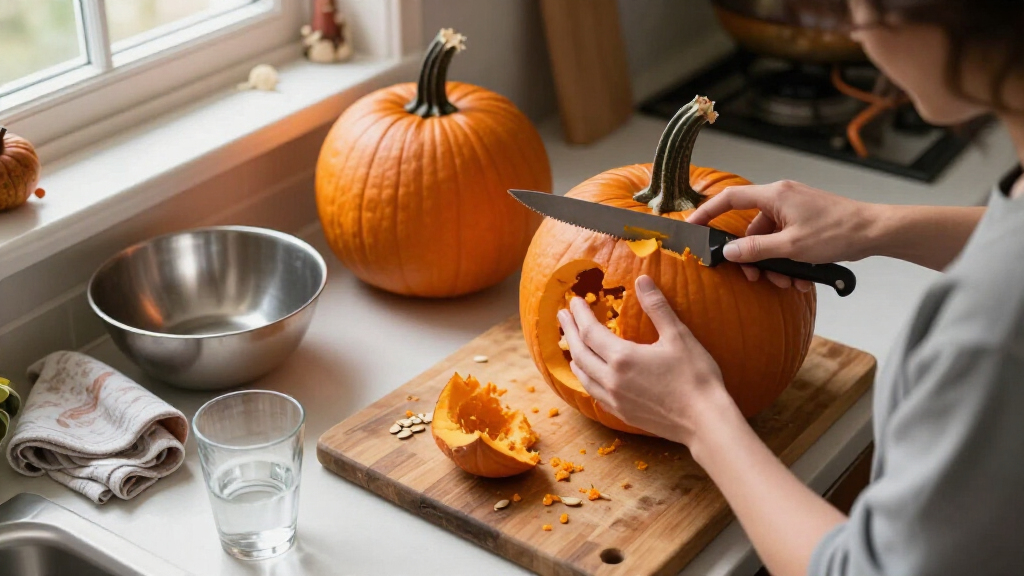
Natiello’s central advice is to take time at each stage, beginning with the pumpkin itself. The guide recommends choosing one that is fresh, has a sturdy stem, shows no bruises and rests on a flat bottom. A stable base can keep it from rolling during carving. For the opening, the report says cutting from the bottom can help prevent the pumpkin’s sides from caving in. If carving from the top instead, cut the lid at an angle so it is less likely to fall inside when replaced.
After removing the seeds and pulp with a scoop or ice cream scoop, the guide advises thinning the wall behind the design area to about 1¼ inches, making the shell easier to pierce. Natiello recommends drawing the design on paper first, then taping it to the pumpkin and marking its lines with a fork or pencil. The report suggests a serrated kitchen knife or an X-Acto knife for carving, with a small saw as an option for intricate designs. It advises making clean, straight cuts and removing larger pieces before tidying the edges.
For freshness, Natiello recommends spreading petroleum jelly on cut edges to help seal in moisture. If the pumpkin shrivels after a few days, the guide says a facedown soak in cold water for up to eight hours may revive it. These are expert recommendations in the report, not results from a comparative test. The guide also suggests using battery-operated votives as an alternative to a candle; if using a candle, it describes making a small chimney hole after the lid has blackened.
Keeping a Carved Pumpkin Fresh
Carved pumpkins can lose moisture and shrivel, leaving a design less distinct before Halloween. The advice gives home carvers practical ways to address two common concerns: getting cleaner cuts and slowing visible deterioration. Choosing a sound pumpkin and planning the pattern may also reduce the chance of damage from rushed or awkward cuts.
The recommendations are useful as household guidance, but the source does not quantify how many extra days petroleum jelly might add or establish that every pumpkin will respond to a cold-water soak. Results can vary with the pumpkin and its storage conditions. For households prioritizing flame safety, the guide’s suggestion of battery-operated lights offers an option that avoids an open candle flame.
As an affiliate, we earn on qualifying purchases.
From Pumpkin Choice to Lighting
The report presents the process as a sequence: select a suitable pumpkin, decide where to make the opening, remove pulp, plan the design, carve, preserve the edges and add lighting. It advises carving with the pumpkin positioned so its face is easy to see, and using discarded shell pieces for details such as a tongue or accessories.
Natiello is identified in the source as a pumpkin-carving professional and creative director for The Great Jack-o’-Lantern Blaze. Good Housekeeping’s guide also offers pre-made patterns and carving-kit tools as alternatives for people who do not want to draw a design themselves. The article is practical seasonal advice, rather than a report of new research or a product test.
battery operated LED pumpkin lights
As an affiliate, we earn on qualifying purchases.
As an affiliate, we earn on qualifying purchases.
How Long the Tips Can Help
The source does not report controlled tests comparing preservation methods, state how many days a carved pumpkin may last, or specify how long petroleum jelly should remain on the cuts. It also does not establish that the suggested cold-water soak will restore every shriveled pumpkin. The advice is attributed to Natiello, but the article gives no measured results or guarantee.
The report does not provide detailed safety instructions for knife use or candle placement. Readers should take care with sharp tools and open flames, and follow the directions supplied with any lighting product. The source also gives no publication date, so its timing relative to the current Halloween season is not specified.
As an affiliate, we earn on qualifying purchases.
Before Displaying the Jack-o’-Lantern
The next steps for a home carver are to select a fresh pumpkin, sketch a design and prepare the carving area before cutting. The guide recommends checking the pumpkin’s stability, removing the pulp thoroughly and thinning the wall behind the design. After carving, apply the suggested edge treatment and monitor the pumpkin for shriveling; a cold-water soak is presented as a possible response, not a guaranteed fix.
For display, decide on lighting before placing the pumpkin outdoors or indoors. The report suggests battery-operated votives as an alternative to candles. It gives no additional follow-up reporting or scheduled milestone; the advice remains a set of practical recommendations rather than an announcement with further developments expected.
As an affiliate, we earn on qualifying purchases.
Key Questions
What kind of pumpkin should I choose for carving?
The guide recommends a fresh pumpkin with a sturdy stem, no bruises and a flat bottom so it is less likely to roll while you work.
Is it better to cut the opening at the top or bottom?
Natiello recommends cutting from the bottom to help prevent the sides from caving in. If you cut a lid at the top, angle the cut so the lid is less likely to drop inside.
How can I make the pumpkin easier to carve?
Remove the pulp and thin the wall behind the design to about 1¼ inches, as the guide advises. Sketching a pattern first can also help you plan where to cut.
What does the guide recommend to keep a carved pumpkin fresh?
Natiello recommends putting petroleum jelly on cut edges to help seal in moisture. The guide also says a facedown cold-water soak of up to eight hours may help if the pumpkin shrivels, but it does not promise a result or specify how much longer the pumpkin will last.
What can I use instead of a candle?
The guide suggests battery-operated votives as an alternative to an open flame. It also mentions Christmas lights, including blinking lights.
Source: rss
Columbus Day / Indigenous Peoples' Day Picks
long weekend sales
As an affiliate, we earn on qualifying purchases.