
Freezer burn happens when your food loses moisture and develops ice crystals on its surface, causing dry, leathery textures and flavor loss. It occurs mainly due to exposure to air, temperature fluctuations, or improper packaging. To prevent it, use airtight wraps, remove excess air, and keep your freezer at or below 0°F (-18°C). Maintaining proper storage habits can help preserve your food’s quality longer—if you want to learn how to avoid it effectively, there’s more to discover.
Key Takeaways
- Freezer burn occurs when ice crystals form on food surfaces, causing dehydration and texture changes, but it doesn’t make food unsafe.
- It results from moisture loss due to air exposure, temperature fluctuations, and improper packaging.
- Maintaining a consistent freezer temperature at or below 0°F (−18°C) helps prevent ice crystal growth and dehydration.
- Proper packaging, like airtight seals or vacuum sealing, creates a barrier to moisture and air, reducing freezer burn risk.
- Using best storage practices, such as labeling, organizing, and avoiding overloading, preserves food quality and minimizes freezer burn.

Airtight Food Storage Containers with Lids, Vtopmart 24 pcs Plastic Kitchen and Pantry Organization Canisters for Cereal, Dry Food, Flour and Sugar, BPA Free, Includes 24 Labels,Black
Help Organize Your Kitchen and Pantry— Imagine every time walking to your kitchen or pantry, found everything is…
As an affiliate, we earn on qualifying purchases.
As an affiliate, we earn on qualifying purchases.
What Is Freezer Burn and Why Does It Matter?
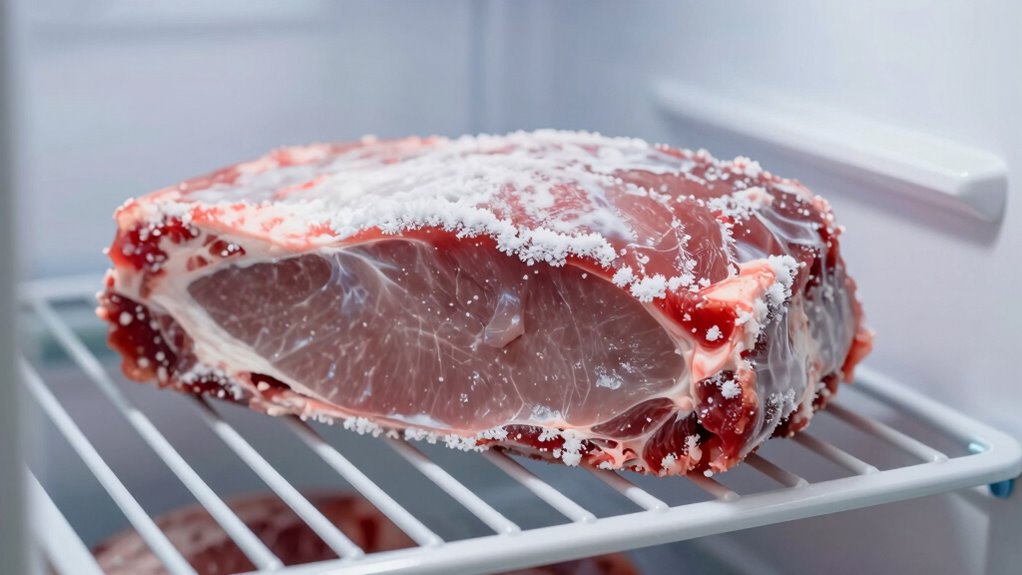
Have you ever noticed icy spots or a dry, leathery texture on frozen food? That’s a sign of freezer burn, caused by ice crystal formation and moisture loss. When food is exposed to air or fluctuating temperatures, water inside the food migrates to the surface and forms ice crystals. Over time, these crystals grow and damage the cell structure, leading to dehydration and a tough texture. The moisture loss reduces food quality, making it less flavorful and more prone to spoilage. Freezer burn doesn’t make food unsafe to eat, but it substantially diminishes taste and texture. Understanding what freezer burn is helps you take steps to prevent it, ensuring your food stays fresh, flavorful, and better preserved. Proper freezer storage techniques and maintaining consistent temperatures can also help reduce the risk of freezer burn occurring. Additionally, air exposure accelerates the process, so sealing foods properly with airtight containers or wraps is crucial. Moreover, maintaining a stable temperature within the freezer minimizes temperature fluctuations, which can contribute to freezer burn development over time. Using appropriate packaging materials can further protect food from moisture loss and air contact, extending its frozen shelf life.

Chef Preserve Compact Vacuum Sealer for Food (Vacuum Sealer Machine + 30 Reusable Vacuum Bags) Powerful Handheld Vacuum Sealer Machine, Seal Meal Saver, Portable Food Sealer
💰REDUCE WASTE AND SAVE MONEY: Chef Preserve vacuum seals your food in less than 5 seconds, extends freshness,…
As an affiliate, we earn on qualifying purchases.
As an affiliate, we earn on qualifying purchases.
What Causes Freezer Burn? Common Factors Explained

Freezer burn often happens because of improper packaging, leaving your food exposed to air and moisture. Fluctuating freezer temperatures can cause ice crystals to form and melt, damaging the food’s surface. Plus, storing items for too long increases the risk, as even well-packed food can eventually develop freezer burn over time. Using appropriate storage containers can help prevent this issue by maintaining a consistent environment for your food. Regularly monitoring freezer temperature can also prevent temperature fluctuations that contribute to freezer burn. Additionally, understanding food preservation techniques can help extend the freshness of your stored items. Properly wrapping foods with airtight materials can further reduce exposure to air, minimizing the chances of freezer burn. Ensuring proper air circulation within the freezer can also help maintain a stable temperature and prevent localized cold spots that promote ice crystal formation.
Improper Packaging Methods
Improper packaging methods are a common cause of freezer burn because they allow air to reach the food, leading to dehydration and oxidation. When you don’t use airtight seals or proper wrapping, moisture escapes, and air interacts with the food’s surface. This exposure causes freezer burn over time, resulting in dry, discolored patches and a loss of flavor. To prevent this, verify you use airtight containers or vacuum-sealed bags that eliminate air exposure. Proper wrapping, like wrapping meats tightly with plastic wrap followed by aluminum foil, forms a barrier against air and moisture loss. Avoid loose wraps or inadequate sealing, as these increase the risk of freezer burn. Correct packaging methods are key to maintaining your food’s quality and extending its freezer life. Additionally, understanding the importance of air-tight packaging can help you choose the best methods for long-term food preservation. Using proper sealing techniques can significantly reduce the chances of freezer burn by minimizing air contact and preserving moisture within the food. Being aware of freezer burn signs helps you identify and address issues early to keep your food fresh longer. Furthermore, selecting appropriate storage containers designed for freezing can enhance protection against air and moisture infiltration.
Fluctuating Freezer Temperatures
Fluctuating freezer temperatures are a major factor that accelerates freezer burn because they cause the ice crystals within food to melt and refreeze repeatedly. This process damages cell structures, leading to dryness and quality loss. When temperature stability is compromised, the food’s surface becomes more vulnerable to dehydration. Frequent temperature changes also shorten the storage duration by increasing the risk of freezer burn over time. To minimize these effects, keep your freezer at a consistent temperature, ideally around 0°F (-18°C). Consider these points:
- Avoid opening the freezer door unnecessarily
- Use a reliable thermometer to monitor temperature
- Store food in airtight containers to buffer against temperature shifts
- Understanding freezer insulation can help prevent temperature fluctuations and protect your food.
Maintaining steady temperatures helps preserve food quality and extends how long your items stay freezer burn-free. Additionally, proper freezer organization can help maintain consistent cold temperatures and reduce the need for frequent door openings, further protecting your stored items.
Extended Storage Duration
When food remains in the freezer for extended periods, the risk of freezer burn increases considerably. Extended storage can cause dehydration and oxidation, leading to dry, discolored spots on your food. Even if your freezer is consistently cold, long-term preservation can still result in freezer burn if packaging isn’t airtight. Over time, moisture escapes from the food’s surface, creating ice crystals and dry patches. The temperature stability of your freezer also plays a crucial role in preventing freezer burn, as fluctuations can accelerate moisture loss. The longer you store food, the greater the chance these issues occur. To minimize this, use proper, airtight containers or vacuum-sealing methods for long-term preservation. Label your items with dates, so you know when to consume them before freezer burn develops. Recognizing the impacts of extended storage helps you better protect your food’s quality and flavor over time. Additionally, understanding the storage duration can help you prevent unnecessary spoilage and waste. Proper freezer organization also ensures consistent temperature maintenance and reduces the risk of accidental thawing. Maintaining optimal freezer temperature settings, ideally at 0°F (-18°C), further helps prevent moisture loss and freezer burn in stored foods. Regularly checking your freezer’s temperature with a thermometer can help maintain these optimal conditions and prevent temperature fluctuations.
freezer storage bags
As an affiliate, we earn on qualifying purchases.
As an affiliate, we earn on qualifying purchases.
How to Spot Freezer Burn on Your Food
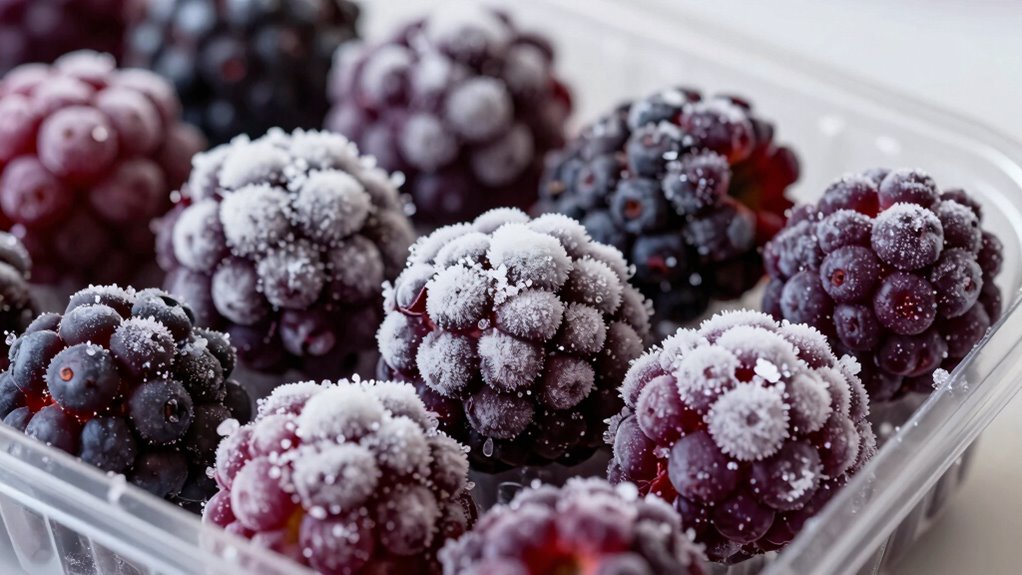
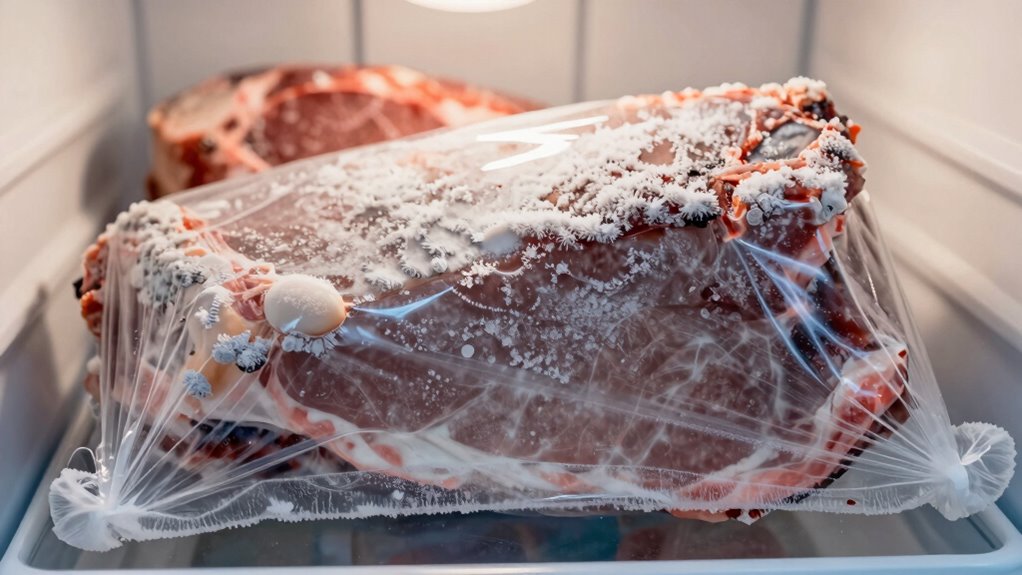
Freezer burn can be easy to spot once you know what to look for. It often appears as dry, discolored patches on your food’s surface, indicating dehydration caused by improper packaging techniques. These spots may look leathery or frosty and can alter the texture and taste of your food. To identify freezer burn, check for signs of food spoilage such as off smells or unusual textures, but the visual cues are usually most telling. Keep an eye on packaging that’s torn, wrinkled, or has developed ice crystals, as these are common indicators of exposure to air. Recognizing these signs helps prevent consuming compromised food and guarantees your food stays fresh longer. Proper packaging techniques help prevent freezer burn by creating a barrier against air and moisture. Additionally, understanding the causes of freezer burn can help you adopt better storage habits to avoid it altogether, including proper temperature control within your freezer.

2 Pack Refrigerator Thermometer, 30-30°C/20-80°F, Classic Fridge Thermometer Large Dial with Red Indicator Thermometer for Freezer Refrigerator Cooler
Convenient and practical: Our refrigerator thermometer is suitable for traditional refrigerators, freezers, insulated boxes, etc. It has a…
As an affiliate, we earn on qualifying purchases.
As an affiliate, we earn on qualifying purchases.
How Freezer Temperature Affects Freezer Burn

Your freezer’s temperature plays a vital role in preventing freezer burn. Setting it too high or letting it fluctuate causes moisture loss and damage to your food. Overfreezing can also make your food dry and tough, so keeping a consistent, ideal temperature is key. Properly maintaining your freezer’s temperature can help prolong the freshness of stored items and reduce energy consumption, ensuring optimal performance. Whole-house water filtration systems can provide insights into maintaining overall appliance efficiency.
Optimal Freezer Settings
Setting your freezer to the right temperature is essential in preventing freezer burn. Keep it at or below 0°F (−18°C) to slow down frost formation and maintain proper air circulation. When the temperature is too high, moisture escapes from food, leading to dehydration and freezer burn. Conversely, setting it too cold can cause excessive frost buildup, impairing airflow. To optimize your freezer’s performance, ensure vents aren’t blocked, allowing air to circulate freely. Regularly defrost if frost becomes thick, as this helps maintain consistent temperature and prevents uneven freezing. Proper temperature control minimizes moisture loss and keeps your food fresh longer.
- Maintain a steady temperature of 0°F (−18°C)
- Avoid overloading to improve air circulation
- Defrost regularly to prevent excess frost buildup
Impact of Temperature Fluctuations
Temperature fluctuations can markedly increase the risk of freezer burn by causing inconsistent freezing conditions. When your freezer’s temperature isn’t stable, ice crystals form unevenly, leading to dehydration and surface damage on your food. This instability shortens effective storage duration, as foods are more vulnerable to freezer burn the longer they sit. Maintaining consistent temperature stability helps ensure your food freezes quickly and stays frozen evenly, preventing moisture loss. Frequent opening of the freezer or power outages can cause these fluctuations, so it’s essential to keep the temperature steady. By avoiding temperature swings, you preserve food quality, extend storage duration, and reduce the chances of freezer burn developing on your items. Consistent freezer conditions are key to keeping food fresh and safe.
Effects of Overfreezing
Overfreezing can substantially increase the likelihood of freezer burn by causing excessive dehydration and surface ice formation on your food. When your freezer is too cold, the overfreezing effects accelerate, leading to more freezer burn damage. This process strips moisture from the food’s surface, resulting in dry, leathery textures and flavor loss. Over time, repeated freezing and thawing cycles worsen these effects, making food less appealing and reducing shelf life. To avoid this, keep your freezer at the recommended temperature and monitor it regularly. Proper temperature control minimizes overfreezing effects and preserves food quality. Remember, maintaining ideal conditions prevents freezer burn damage, ensuring your food stays fresh, flavorful, and free from undesirable ice crystals.
- Prevents moisture loss and texture changes
- Reduces freezer burn damage over time
- Keeps food tasting fresh and consistent
Packaging Tips to Prevent Freezer Burn
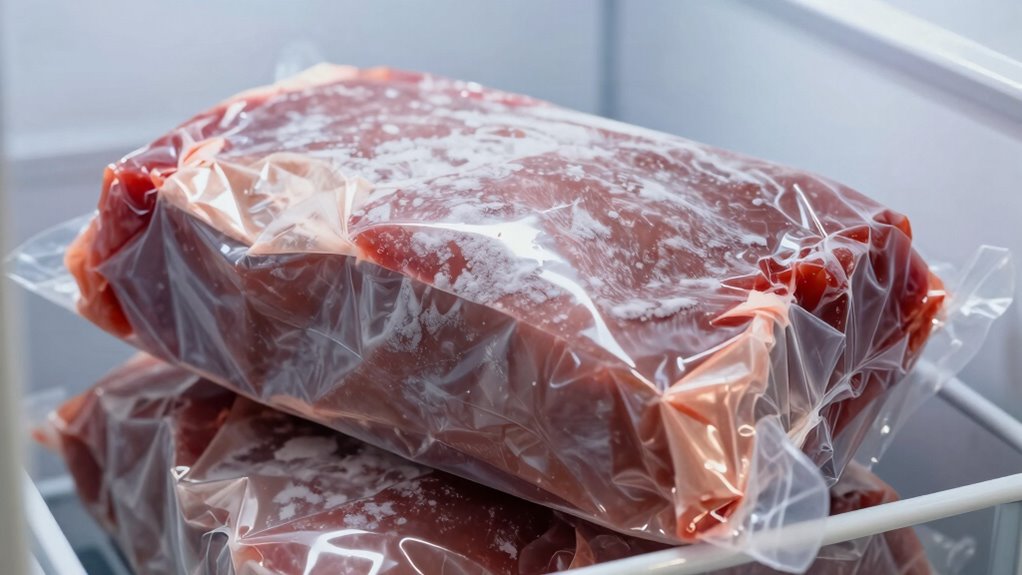
To prevent freezer burn, proper packaging is essential. Use airtight packaging to keep moisture locked in and prevent air from reaching your food. When possible, opt for vacuum sealing, which removes excess air and creates a tight seal around your items. This method considerably reduces oxidation and dehydration, both of which contribute to freezer burn. If vacuum sealing isn’t an option, wrap foods tightly with plastic wrap or aluminum foil before placing them in a sealed container or freezer bag. Remove as much air as possible before sealing to minimize exposure. Label packages with dates to ensure timely use. Proper packaging keeps your food fresh longer, preserves flavor, and protects against freezer burn, ensuring you get the most out of your frozen foods.
Organizing Your Freezer to Keep Food Fresh
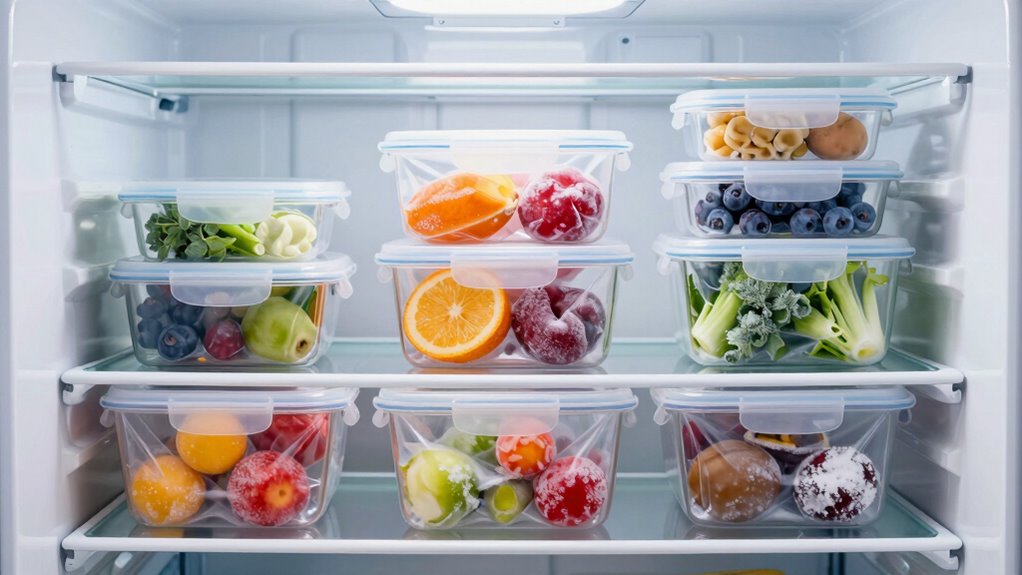
To keep your food fresh longer, organize your freezer with clear storage containers so you can easily see what’s inside. Make sure to label and date everything, so you use older items first and prevent spoilage. Maintaining a consistent temperature helps prevent freezer burn and keeps your food at its best.
Use Clear Storage Containers
Using clear storage containers is one of the easiest ways to keep your freezer organized and your food fresh. They let you see what’s inside without opening each one, saving time and preventing freezer burn. Choose airtight containers to guarantee proper sealing, which keeps moisture out and prevents air from causing freezer burn. Transparent containers also help you identify food quickly, reducing unnecessary opening and closing. To maximize freshness, ensure the lids fit tightly and seal properly. This prevents air exposure and helps maintain ideal storage conditions. Keep similar items grouped together for easy access, and stack containers efficiently to save space. Using clear, airtight containers streamlines your freezer organization, keeps food fresh longer, and minimizes waste.
Label and Date Items
Labeling and dating your freezer items guarantees you always know what’s inside and when it was stored. Accurate labeling guarantees you can easily identify contents, saving time and avoiding unnecessary thawing. Use clear, legible labels and include the date of freezing to track storage duration effectively. This practice helps prevent food from lingering too long, which can lead to freezer burn or spoilage. Stick to a consistent labeling system, such as listing the item and date, so you can quickly assess freshness when needed. Proper labeling enhances organization, minimizes waste, and keeps your freezer efficiently managed. By maintaining labeling accuracy and monitoring storage duration, you ensure your frozen foods stay fresh, safe, and ready to enjoy when you need them.
Maintain Consistent Temperature
Maintaining a consistent temperature in your freezer is essential for preserving the quality and safety of your food. Fluctuations can lead to freezer burn and spoilage. Proper freezer management ensures temperature consistency, which keeps food fresh longer. To achieve this, regularly check your freezer’s thermostat and avoid overcrowding, which can restrict airflow. Keep the freezer door closed as much as possible to prevent temperature swings. Also, consider installing a thermometer to monitor internal temperatures accurately. Consistent temperatures inhibit ice crystal formation and prevent dehydration of food. Good freezer management not only extends shelf life but also helps you avoid the hassle of thawing and refreezing. Staying vigilant about temperature consistency is a simple yet effective way to keep your food at its best.
Do Different Foods Need Different Freezing Tips?
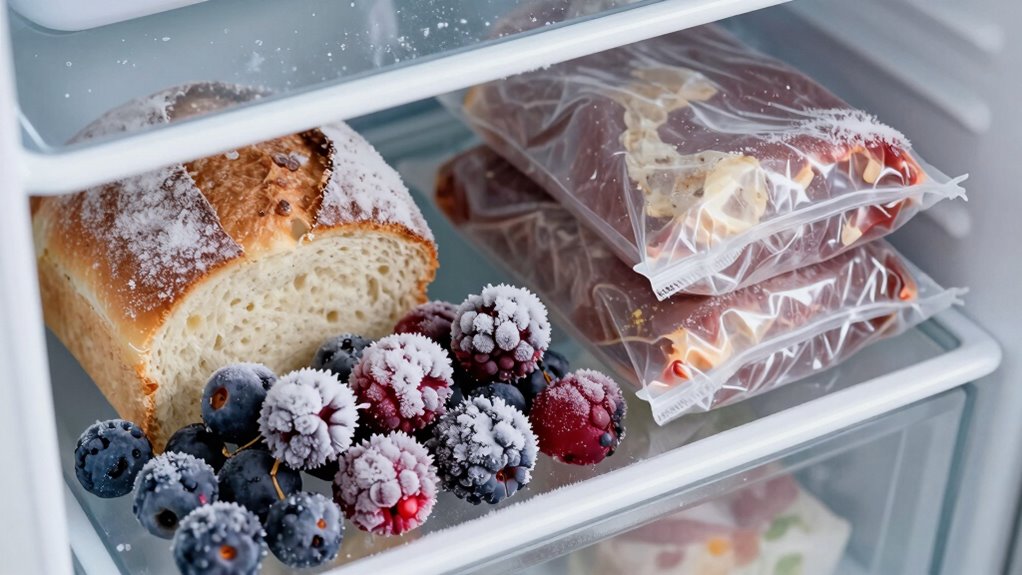
Different foods require specific freezing techniques to preserve their texture and flavor. You can’t freeze everything the same way if you want ideal food preservation. For example, fruits with high water content, like berries, benefit from quick freezing to prevent ice crystal formation that damages cell walls. Vegetables should be blanched before freezing to deactivate enzymes that cause spoilage. Meats need proper wrapping to prevent freezer burn and maintain freshness. Dairy products, such as cheese and butter, should be tightly sealed to avoid moisture loss. By understanding these differences, you can choose the right freezing techniques for each type of food. This tailored approach helps you maximize food preservation, reduce waste, and keep your frozen items tasting fresh and delicious longer.
Can You Revive Food That Has Freezer Burn?
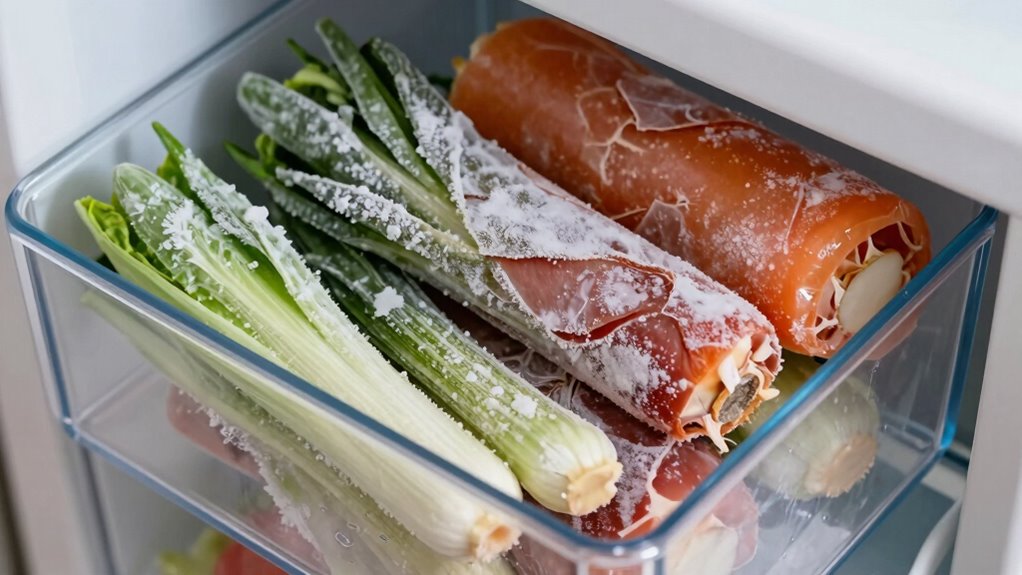
Freezer burn can be disheartening, but it doesn’t always mean your food is beyond saving. While it affects texture and flavor, some foods can still be salvaged if you focus on proper food preservation techniques. You might not revive the original quality, but you can make the food safe to eat and reduce waste.
To improve freezer safety and minimize further damage:
- Cut away freezer-burned areas and cook the remaining parts promptly.
- Use the food in recipes where texture isn’t critical, like soups or stews.
- Properly store food in airtight packaging to prevent additional freezer burn.
Simple Ways to Prevent Freezer Burn and Save Money
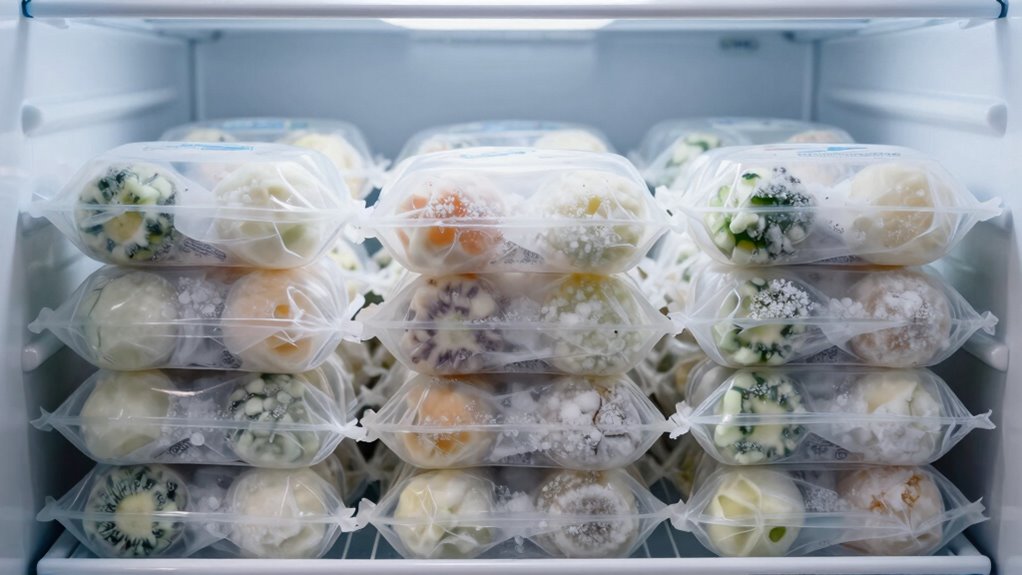
To prevent freezer burn and save money, you need to adopt simple, effective habits that keep your food fresh longer. Proper food preservation starts with using the right freezer techniques, such as airtight packaging and removing excess air from bags. Wrap items tightly in plastic wrap or foil before placing them in containers to minimize exposure to air. Label everything with dates to track freshness and avoid freezing food too long. Keep your freezer at the right temperature—around 0°F or -18°C—to slow spoilage. Avoid overloading the freezer, which can restrict airflow and cause uneven freezing. By maintaining consistent freezer conditions and practicing these straightforward food preservation methods, you’ll reduce freezer burn and extend the life of your frozen foods, saving money in the long run.
Avoid These Common Mistakes That Lead to Freezer Burn
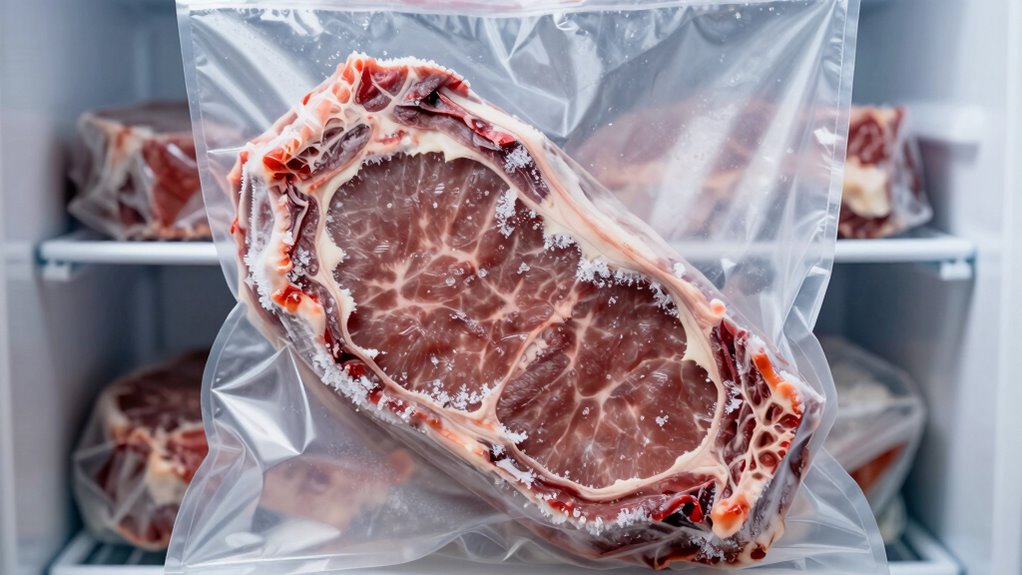
Many common mistakes can undermine your efforts to prevent freezer burn, even when you use proper packaging techniques. One key error is neglecting air circulation; if air isn’t circulating well, moisture can settle and cause freezer burn. Another mistake is failing to control moisture properly—exposing food to excess humidity leads to ice crystals forming. Additionally, sealing packages too loosely or leaving gaps allows air to reach the food, speeding up dehydration. To avoid these pitfalls, guarantee your freezer has good airflow, use airtight containers or vacuum-sealed bags, and remove as much moisture as possible before freezing. Proper moisture control and air circulation are essential to keeping your food fresh and free from freezer burn.
Frequently Asked Questions
Can Freezer Burn Occur in Refrigerated Foods?
Freezer burn doesn’t occur in refrigerated foods because refrigeration keeps your food at higher temperatures, preventing moisture loss that causes freezer burn. Unlike freezing, refrigeration isn’t cold enough to create the dehydration and ice crystal formation that damage food. So, if you want to avoid freezer burn, keep foods in the refrigerator instead of the freezer when you plan to consume them soon. Proper storage helps maintain freshness and prevents moisture loss.
Does the Type of Packaging Impact Freezer Burn Prevention?
Imagine your food’s protection armor—packaging materials and storage containers. Yes, the type you choose impacts freezer burn prevention. Thick, airtight packaging acts like a shield, locking out air and moisture that cause freezer burn. Use sturdy storage containers designed for freezing, and wrap items tightly. Proper packaging creates a barrier, preserving flavor and texture, and ensuring your frozen foods stay fresh longer, free from the damage of freezer burn.
How Long Can Food Be Safely Stored Before Freezer Burn Develops?
You can usually store food in your freezer for about 3 to 12 months before freezer burn risk increases considerably. For ideal quality, try to consume items within the recommended storage duration, especially for longer periods. Proper packaging can extend this window, but keep in mind that beyond these timeframes, freezer burn becomes more likely, affecting texture and flavor. Regularly check your freezer to prevent unnecessary freezer burn.
Are Some Foods More Susceptible to Freezer Burn Than Others?
Yes, some foods are more susceptible to freezer burn than others. Foods with higher food moisture, like fruits, vegetables, and meats, tend to develop freezer burn faster if you don’t maintain proper storage temperature. To prevent this, make certain your freezer stays at a consistent, cold temperature and properly package your items to reduce exposure to air. This helps preserve quality and minimize freezer burn on your favorite foods.
What Are the Best Methods to Thaw Freezer-Burned Food Safely?
Thawing freezer-burned food is like gently unwrapping a fragile treasure. You should use safe defrosting techniques, such as thawing in the refrigerator, in cold water, or using the microwave’s defrost setting. These methods guarantee even thawing and reduce bacteria growth. Avoid leaving food at room temperature. By following these steps, you keep your food safe and preserve its quality, even if it’s already been affected by freezer burn.
Conclusion
Think of your freezer as a fortress guarding your food treasures. When you neglect its defenses—like proper packaging and temperature—you leave your bounty vulnerable to the icy invaders of freezer burn. But with mindful care, you become a vigilant guardian, preserving freshness and flavor. By understanding and preventing freezer burn, you’re not just saving food—you’re safeguarding memories and sustenance, ensuring your frozen treasures remain as vibrant as the day they were sealed.