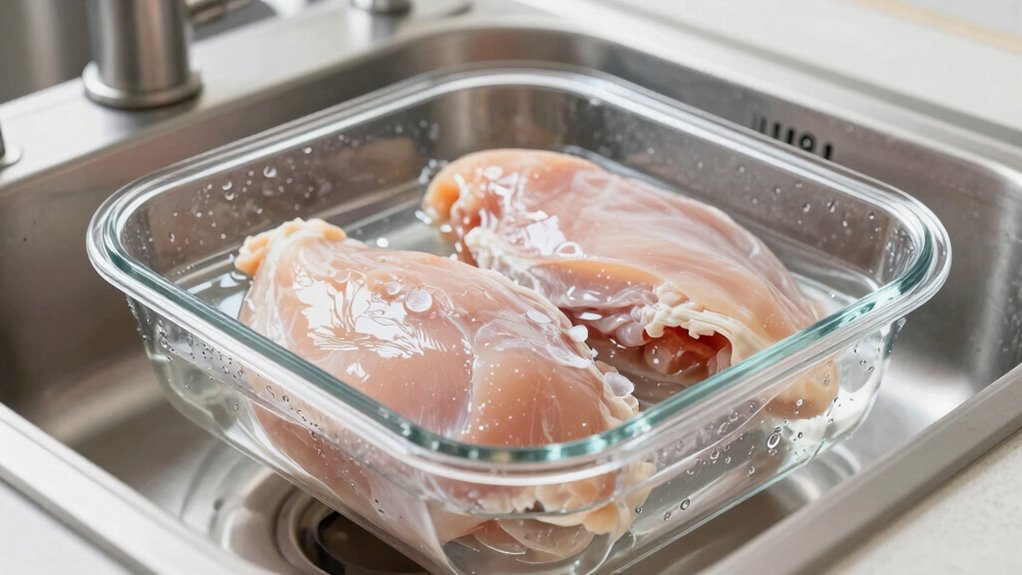
To prevent bacteria growth when defrosting, always thaw food in the refrigerator, submerge it in cold water, or use a microwave. Never thaw at room temperature, as bacteria multiply rapidly. Use leak-proof containers for refrigerator or water methods, and cook food immediately after microwave thawing. Planning ahead guarantees safe, quick thawing. Keep these strategies in mind to avoid food safety hazards, and you’ll discover more about proper techniques as you continue.
Key Takeaways
- Thaw foods in the refrigerator at below 40°F to ensure a consistent, safe temperature and slow bacterial growth.
- Submerge sealed food in cold water, changing the water every 30 minutes, to thaw safely and quickly.
- Use the microwave’s defrost setting, and cook immediately after to prevent bacteria from multiplying.
- Avoid thawing at room temperature, as it allows rapid bacterial growth and increases food safety risks.
- Plan ahead and track thawing times to ensure foods are fully thawed and safe to cook and eat.
Why Proper Thawing Is Crucial for Food Safety
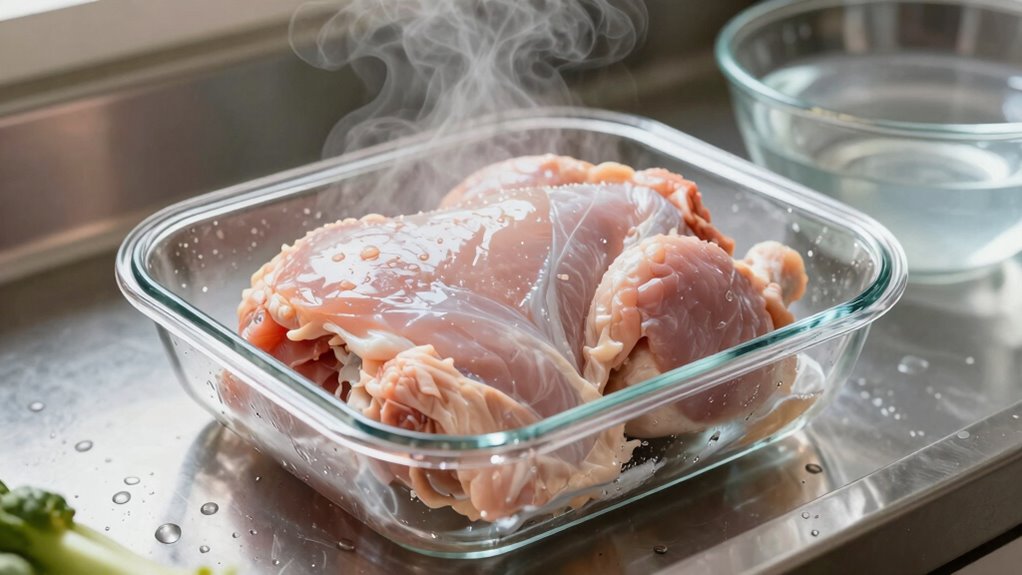
Proper thawing is essential because it prevents harmful bacteria from multiplying to dangerous levels. When food isn’t thawed correctly, bacteria can grow rapidly, increasing the risk of food contamination. Left at room temperature, bacteria enter their most active phase, which can lead to foodborne illnesses. By thawing food safely, you slow bacterial growth and minimize health risks. Using methods like refrigerator thawing, cold water, or the microwave helps control the temperature, keeping food out of the danger zone. Proper thawing techniques also depend on understanding the temperature control required to maintain food safety. These techniques ensure bacteria don’t reach harmful levels, preserving your food’s safety and quality. Neglecting this step can turn a delicious meal into a health hazard. So, understanding and practicing safe thawing is key to protecting yourself and your loved ones from foodborne illnesses. Additionally, employing proper thawing techniques can also help maintain the overall quality and texture of your food, especially when considering AI-driven food safety systems that monitor temperature and timing during thawing processes. Being aware of natural thawing methods can further enhance safety by reducing reliance on mechanical devices.
Foods That Should Never Be Thawed at Room Temperature
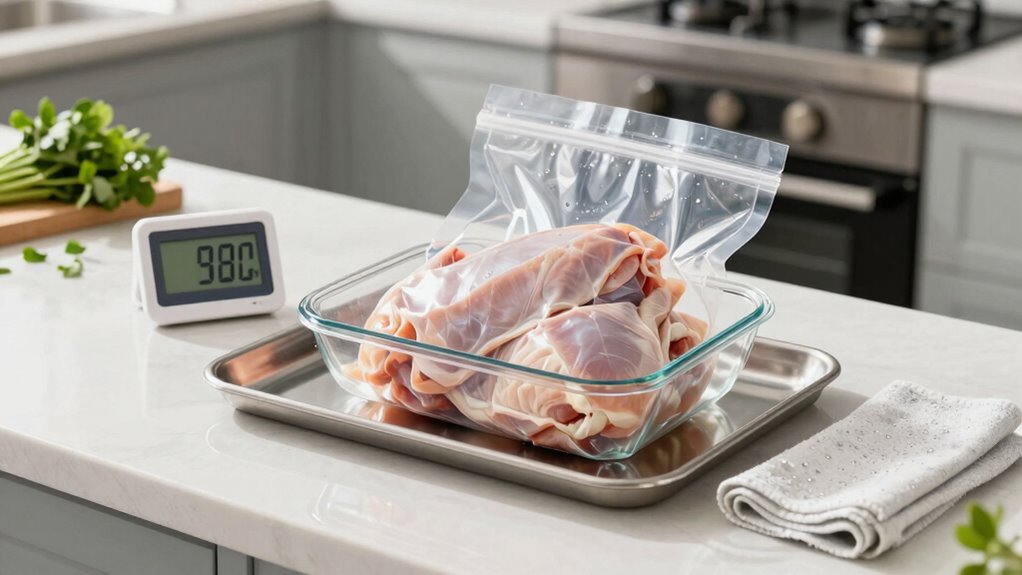
Many foods are safe to thaw using methods that control temperature and prevent bacterial growth, but some should never be left at room temperature. Bacteria thrive when food stays in the danger zone (40°F–140°F), so avoiding room temperature thawing is essential. Using food safety monitoring to track and maintain proper temperatures can further enhance safety. Here are foods you should never thaw at room temperature: 1. Raw poultry, beef, and seafood—bacteria multiply quickly on these. 2. Cooked leftovers—thawing at room temp risks bacterial growth. 3. Bread thawing—leaving it out can promote mold and bacteria. 4. Dairy products—milk and cheese should be thawed safely in the fridge or cold water. Proper thawing techniques, such as safe refrigeration, can help prevent cross-contamination and spoilage. Always choose safer thawing methods to prevent foodborne illness and keep your food fresh and safe.
How to Thaw Meat Safely in the Refrigerator

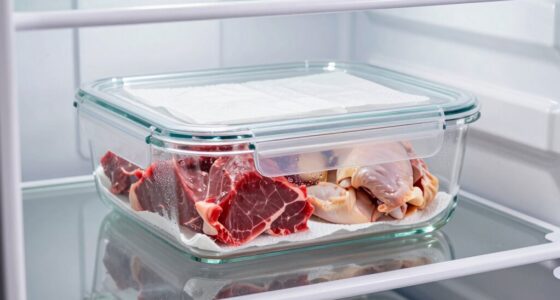
Thawing meat in the refrigerator is one of the safest methods because it keeps the meat at a consistent, cold temperature that inhibits bacterial growth. When you plan ahead, place your frozen meat in a leak-proof container or on a plate to catch drips. Refrigerator thawing allows the meat to gradually defrost over 24 hours or more, depending on size. This slow process maintains a safe temperature, preventing bacteria from multiplying. Keep the meat in the coldest part of your fridge, usually on the bottom shelf, and ensure your refrigerator is at or below 40°F (4°C). Proper refrigerator thawing reduces the risk of contamination and keeps your frozen meat safe to cook once fully thawed. It’s also important to follow food safety guidelines to ensure the meat remains safe throughout the thawing process. Additionally, understanding the home cooling systems can help you maintain consistent temperatures and prevent temperature fluctuations that might compromise safety. Proper temperature control in your refrigerator is essential for safe meat storage and thawing. Maintaining a consistent temperature also supports safe food handling practices, which are crucial for preventing foodborne illnesses. Planning ahead and considering proper refrigeration techniques can further ensure the safety and quality of your meat during thawing.
How to Thaw Food Quickly and Safely in Cold Water
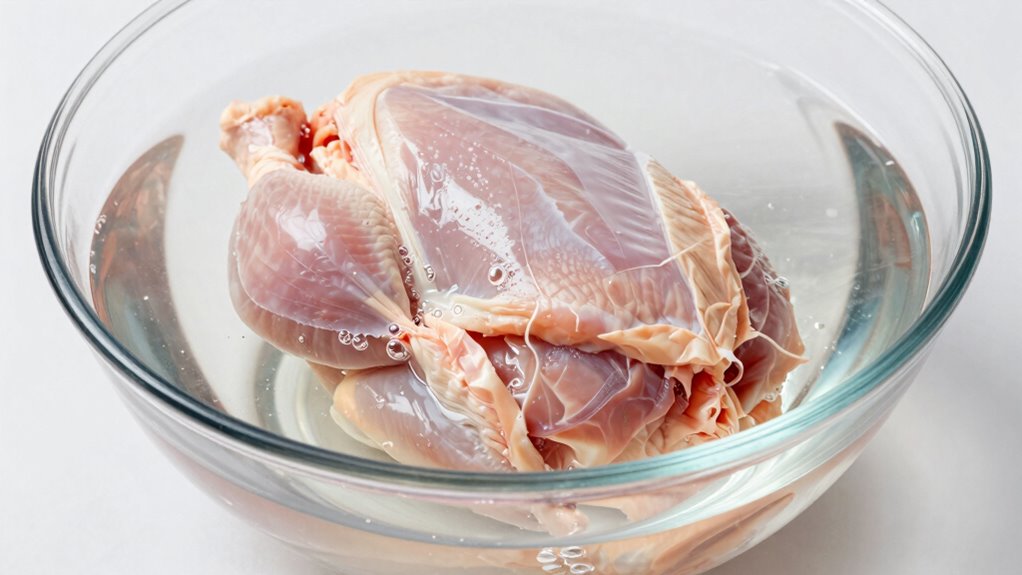
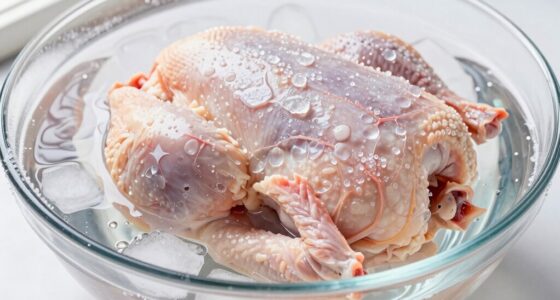
When you need to thaw food quickly but still want to guarantee safety, cold water thawing is a reliable option. It’s effective for thawing frozen vegetables and seafood while maintaining proper preservation. To do it safely, follow these steps:
- Place the food in a leak-proof plastic bag to prevent contamination.
- Submerge the bag in cold water, changing the water every 30 minutes to keep it cold.
- Ensure the water stays below 70°F to avoid bacterial growth.
- Use the food immediately after thawing to prevent bacteria from developing.
- Be aware of proper food safety practices when handling thawed items to minimize the risk of contamination. Properly maintaining the air quality in your kitchen can also help reduce the spread of bacteria during food preparation.
- Keep in mind that proper kitchen ventilation plays a critical role in maintaining a safe environment for food handling and storage. This method is faster than refrigerator thawing and helps preserve the quality of seafood and vegetables without risking bacteria growth. Incorporating existential themes into food safety education can promote more mindful practices. It is also important to monitor safety standards to ensure that all food handling procedures meet health guidelines. Always handle thawed food promptly and safely.
How to Thaw Food Safely Using a Microwave
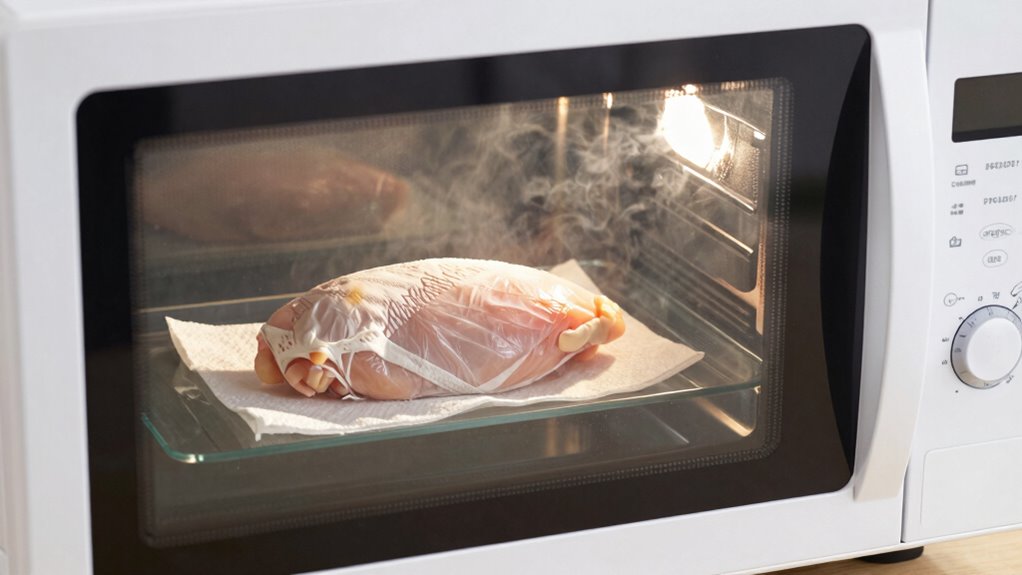
When thawing food in a microwave, it’s important to utilize the correct settings to prevent uneven heating. Always select the defrost or low power mode to ensure the food thaws evenly without starting to cook. Be cautious of partial thawing, which can create bacteria-friendly zones, and plan to cook the food immediately after microwaving.
Use Microwave Settings Properly
Using your microwave to thaw food safely requires selecting the correct power setting and monitoring the process carefully. Proper use of thawing settings guarantees microwave safety and prevents partial cooking. To do this effectively:
- Set your microwave to the “defrost” or “thaw” mode, which uses lower power levels.
- Check the food frequently, pausing to rotate or stir as needed.
- Use the recommended thawing time based on weight and type.
- Avoid leaving food unattended to prevent uneven thawing or cooking on edges.
Avoid Partial Thawing Risks
To prevent partial thawing and guarantee your food remains safe to eat, it’s crucial to monitor the microwave closely during the defrosting process. Partial thawing creates bacteria risk, as some areas stay frozen while others begin to warm. To avoid this, stop the microwave periodically and rotate or flip your food. Use the microwave’s defrost setting, but stay attentive.
| Thawing Tip | Why It Matters | Result |
|---|---|---|
| Rotate food regularly | Prevents uneven thawing | Even defrosting |
| Use short intervals | Stops partial thawing | Safer, bacteria risk minimized |
| Check internal temperature | Ensures thorough thawing | Reduces bacteria risk |
Tips for Planning Ahead to Thaw Food in Time
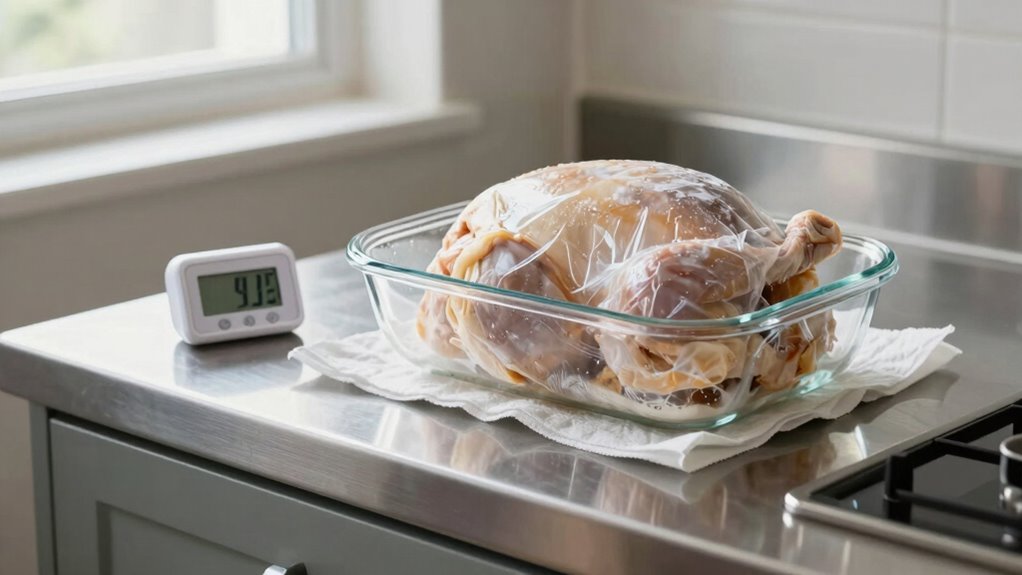
Planning ahead is essential to guarantee your food thaws safely and on time. Proper preparation helps prevent last-minute rushes and unsafe practices. To stay on top of your thawing schedule, consider these tips:
- Schedule meal prep days to plan when to thaw specific items.
- Organize your freezer so that frequently used foods are easy to access and labeled clearly.
- Use a calendar or reminder system to track thawing times for different items.
- Thaw larger cuts of meat in the refrigerator overnight or longer, ensuring they’re ready when needed.
- Understanding food safety guidelines helps prevent bacteria growth during the thawing process.
- Keeping track of thawing times and methods can also improve overall kitchen organization and reduce food waste.
Common Mistakes During Thawing That Can Cause Bacterial Growth
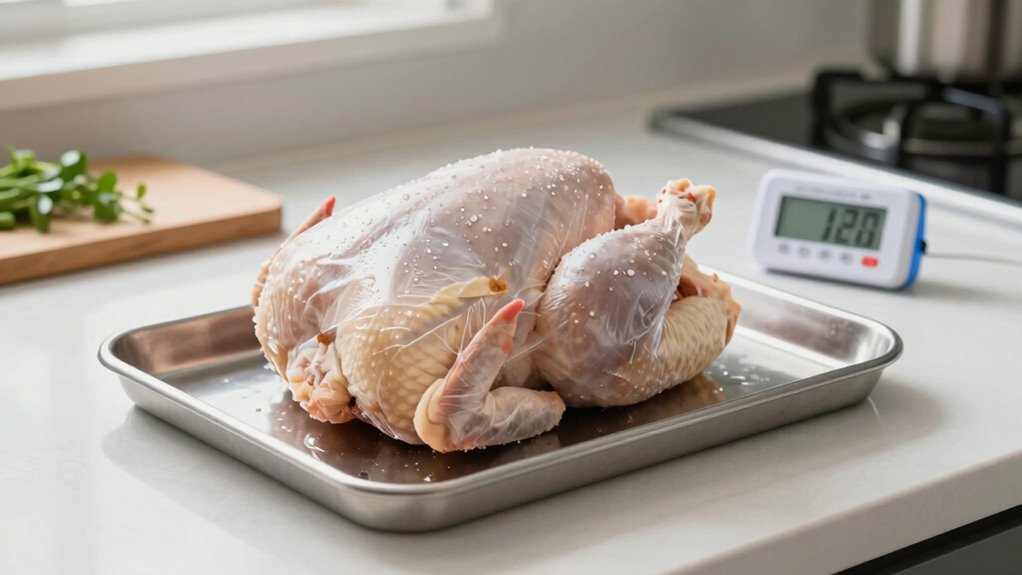
Many common thawing mistakes can lead to bacterial growth and foodborne illnesses. One major error is thawing food at room temperature, which allows bacteria to multiply rapidly. Another mistake is not practicing proper storage techniques, such as placing raw meat above cooked foods, risking cross contamination prevention. Additionally, rinsing meat under hot water can spread bacteria to surrounding surfaces. To avoid these pitfalls, always thaw in the refrigerator, keeping food at safe temperatures. Use proper storage techniques to prevent cross contamination, like sealing raw meats separately. Here’s a quick overview:
| Mistake | Solution |
|---|---|
| Thawing at room temperature | Thaw in the fridge or cold water |
| Improper storage | Store raw separately from cooked foods |
| Rinsing raw meat | Avoid rinsing; cook thoroughly |
How to Reheat Thawed Food Safely and Maintain Quality
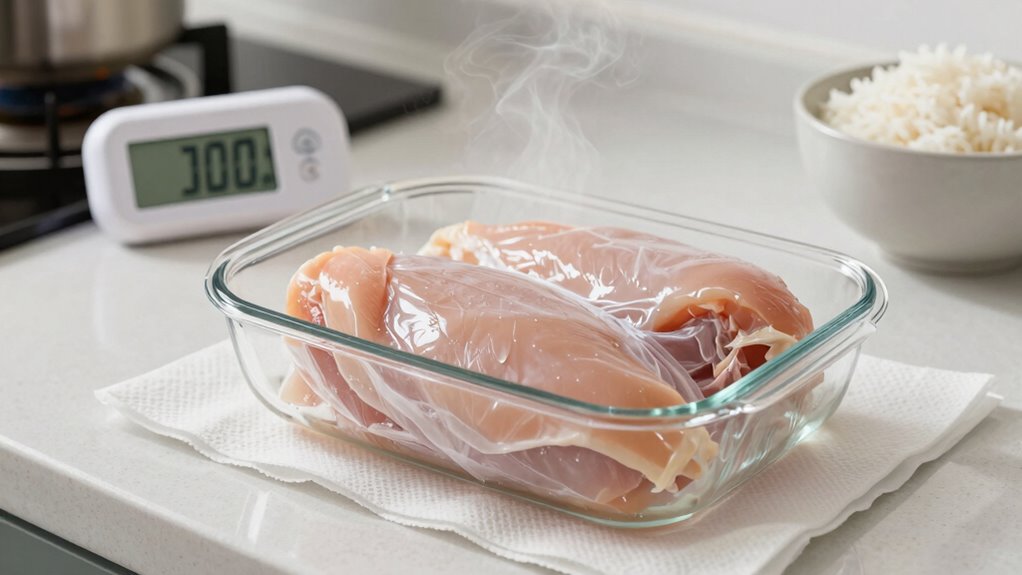
Reheating thawed food safely is essential to prevent foodborne illnesses and preserve its quality. To guarantee flavor preservation and texture maintenance, follow these steps:
- Reheat to an internal temperature of 165°F (74°C) using a food thermometer.
- Use microwave, oven, or stovetop, stirring or rotating food for even heating.
- Avoid reheating multiple times; reheat only what you plan to eat.
- Let food rest for a minute or two after reheating to allow heat distribution.
- Ensure proper piercing care and hygiene to prevent contamination during handling. Proper food safety practices are crucial to maintaining the integrity of your meal and preventing bacteria growth during reheating. Implementing temperature control techniques can further ensure food remains safe and of high quality.
Your Quick Guide to Safe and Effective Food Thawing Methods
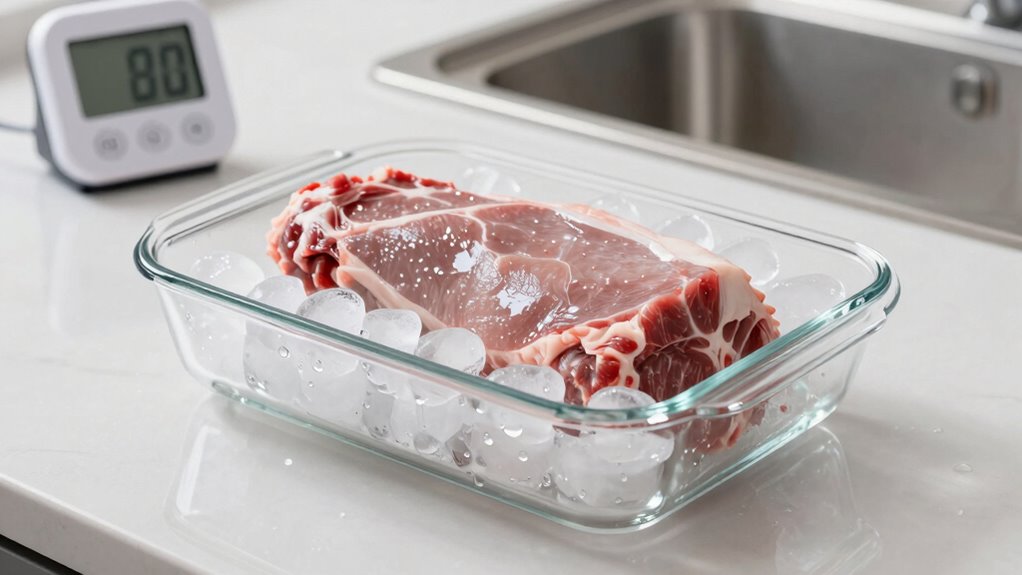
To guarantee food safety and maintain quality, choosing the right thawing method is essential. Start by considering your food storage options; thawing in the refrigerator is the safest, as it keeps food at a consistent, safe temperature. If you’re short on time, use thawing equipment like cold water baths, ensuring the food is sealed properly to prevent contamination. Avoid thawing at room temperature, which promotes bacteria growth. Always plan ahead for refrigerator thawing, allowing enough time for the process. For quick thawing, microwave methods work but require immediate cooking afterward. Remember, proper food storage and effective thawing equipment help prevent bacteria and preserve food quality. Selecting the right method depends on your timeline and the type of food you’re thawing.
Frequently Asked Questions
Can You Refreeze Food That Has Been Thawed Using Different Methods?
Yes, you can refreeze leftovers if you’ve thawed them using safe methods like in the refrigerator, cold water, or microwave, following freezing safety guidelines. However, avoid refreezing food thawed at room temperature, as bacteria can grow quickly. Always make certain the food hasn’t been out too long, and refreeze promptly. This helps maintain quality and safety, preventing bacteria buildup that can cause illness.
How Long Can Thawed Food Safely Stay in the Refrigerator Before Cooking?
Think of your refrigerator as a delicate dance partner—keep food in sync for safety. You can usually store thawed food in the refrigerator for 1 to 2 days before cooking, ensuring food safety and freshness. Always check for any signs of spoilage and keep your fridge at the right temperature. Proper refrigerator storage prevents bacteria growth, so you can enjoy your meals without worry.
Is It Safe to Thaw Food in Hot Water?
Thawing food in hot water isn’t safe because it can promote the rapid growth of bacteria, risking food safety. Hot water can also cause the outer layers of the food to reach temperatures that allow bacteria to thrive, while the inside remains frozen. Instead, opt for safer methods like refrigerator thawing or using cold water, which help keep your food at safe temperatures and prevent bacteria growth.
What Are the Signs That Thawed Food Has Spoiled?
Food spoilage indicators are like warning signs on a road; ignore them, and you risk a hazardous journey. If your thawed food develops a sour smell, slimy texture, or unusual discoloration, it’s a clear sign of contamination. You might also notice mold or an off-putting odor. Trust these signs, and avoid consuming food that shows any of these spoilage indicators, as they signal bacteria and spoilage beyond safe consumption.
How Does Thawing Affect the Texture and Flavor of Different Foods?
Thawing can change the food texture, making meats tougher or more tender, depending on the method used. It also impacts flavor, sometimes causing a loss of freshness or a slight change in taste. When you thaw foods slowly in the fridge, you usually preserve their original texture and flavor better. However, rapid thawing might lead to uneven texture and flavor changes, so choose your method based on the food type.
Conclusion
Remember, proper thawing is key to keeping your food safe and delicious, much like a well-tuned knight’s armor in a joust. Always plan ahead, avoid room temperature thawing, and use safe methods like the refrigerator, cold water, or microwave. Skip the mistakes and reheating mishaps, and your meals will stay tasty and bacteria-free. Stay vigilant, and your kitchen will remain a fortress of food safety—no dragons of contamination here!