
The biggest reheating mistake is not heating leftovers to a safe internal temperature, which lets bacteria survive and can cause illness. Many people underestimate how uneven reheating can leave cold spots where bacteria thrive. To stay safe, always reheat leftovers to at least 165°F, verify with a food thermometer, and don’t reheat more than once. If you keep these tips in mind, you’ll be better prepared to avoid unsafe leftovers and protect your health.
Key Takeaways
- Reheating leftovers unevenly, especially in a microwave, can leave cold spots where bacteria survive and grow.
- Not heating leftovers to at least 165°F (74°C) increases the risk of consuming unsafe bacteria.
- Reheating leftovers multiple times allows bacteria to proliferate and spoil the food.
- Failing to store leftovers properly, such as leaving them out over 2 hours, promotes bacterial growth.
- Using inappropriate reheating methods or containers can prevent even heating, making leftovers unsafe to eat.
Why Reheating Leftovers Safely Is Important for Your Health
Reheating leftovers safely is essential because it helps prevent foodborne illnesses that can make you sick. When leftovers sit too long or aren’t stored properly, bacteria can grow rapidly, increasing the risk of food poisoning. Reheating at the right temperature kills these bacteria, reducing your chances of falling ill. If you skip proper reheating, harmful bacteria may survive and cause stomach issues, vomiting, or worse. It’s vital to heat leftovers evenly and thoroughly, reaching at least 165°F (74°C), to guarantee bacteria are eliminated. By prioritizing safe reheating practices, you protect yourself and your loved ones from avoidable health problems linked to bacteria growth and food poisoning. Safe reheating isn’t just about taste; it’s about keeping you healthy.
How to Tell When Leftovers Are Unsafe to Eat
Knowing when leftovers are no longer safe to eat is essential to avoid foodborne illnesses. Food spoilage signs and bacterial growth are key indicators that leftovers have gone bad. Proper storage in a temperature-controlled environment can also help slow bacterial development, which is similar to how proper mounting and cooling techniques are important in astrophotography to maintain image quality. Additionally, understanding food safety guidelines can help prevent accidental consumption of contaminated food. For example, proper refrigeration slows down bacterial growth and extends the safety of leftovers. Here are four ways to tell if leftovers are unsafe: 1. Unpleasant Odor: If it smells off or sour, bacteria may have grown. 2. Change in Texture or Color: Slimy, sticky, or discolored food signals spoilage. 3. Visible Mold or Spots: Any mold or unusual spots mean it’s time to discard. 4. Prolonged Storage: Leftovers stored beyond 3-4 days are more prone to bacterial growth. Always trust your senses and storage time; these are your best tools to prevent eating food that could cause illness. When in doubt, throw it out.
The Most Common Reheating Mistakes : And How to Avoid Them
Many people assume that simply microwaving leftovers will make them safe and tasty again, but common reheating mistakes can ruin the texture, flavor, and even pose health risks. One mistake is uneven microwave reheating, which can leave cold spots where bacteria survive. To avoid this, stir your food halfway through and use a microwave-safe cover to promote even heating. Proper microwave reheating techniques ensure your leftovers reach a safe temperature and retain their quality. Poor food storage practices also contribute to reheating issues; leaving leftovers out too long or storing them improperly can lead to bacterial growth. Always refrigerate leftovers promptly and reheat only what you’ll eat. Using a food thermometer helps ensure your leftovers reach the right temperature, preventing foodborne illnesses. Additionally, understanding the importance of proper food safety protocols can further reduce health risks associated with reheating. Recognizing foodborne pathogens and their growth conditions is key to preventing illness. Proper handling and food storage practices are essential to maintaining leftovers’ safety and quality. By paying attention to microwave reheating techniques and food storage practices, you keep your leftovers safe and delicious. Being aware of safe reheating temperatures can help you avoid underheating or overheating your leftovers, which is crucial for safety and taste.
How Long to Reheat Leftovers Safely to Kill Harmful Bacteria
To guarantee your leftovers are safe to eat, you need to reheat them to at least 165°F. Using a food thermometer helps you verify the temperature accurately. Make sure to reheat evenly and thoroughly to kill any harmful bacteria present. Proper reheating techniques are essential to prevent foodborne illnesses.Proper food handling]
Reheat to 165°F
Reheating leftovers to an internal temperature of 165°F is essential for eliminating harmful bacteria and ensuring food safety. This temperature effectively kills bacteria that can cause foodborne illnesses. To safely reheat your leftovers:
- Use a food thermometer to check the temperature accurately.
- Reheat evenly, stirring or rotating food if necessary.
- Allow the food to reach 165°F throughout, not just on the surface.
- Avoid reheating multiple times to prevent bacteria growth.
Use a Food Thermometer
Using a food thermometer is the most reliable way to guarantee your leftovers reach the safe temperature of 165°F. Without it, you can’t be certain if your food has been reheated thoroughly enough to ensure reheating safety. Insert the thermometer into the thickest part of the dish, avoiding bones or the container sides. If the temperature hasn’t reached 165°F, continue reheating and check again. This step helps prevent harmful bacteria from surviving, reducing the risk of foodborne illness. Relying solely on visual cues or time can be misleading. A food thermometer provides precise readings, giving you confidence that your leftovers are heated properly. Incorporating even heat distribution techniques in your reheating process can help maintain even heat distribution and prevent cold spots. Ensuring your reheating equipment is properly ventilated can also improve heat circulation and safety.
Reheat Evenly and Thoroughly
Ensuring leftovers are heated evenly and thoroughly is essential for killing harmful bacteria and preventing foodborne illnesses. Uneven heating can lead to food contamination, leaving some areas unsafe to eat. When reheating, consider these tips:
- Use a microwave-safe container and stir food midway to distribute heat evenly.
- Cover leftovers to retain moisture and promote uniform heating.
- Reheat in short intervals, checking the temperature regularly with a food thermometer.
- Avoid reheating multiple times, as repeated heating increases the risk of bacteria growth.
- Be mindful of food safety guidelines to ensure proper reheating practices and reduce health risks.
- Incorporating connected kitchen appliances can help monitor and control temperature more precisely, enhancing safety during reheating.
- Remember that proper reheating not only improves taste but is crucial for food safety and your health.
- Using a food thermometer is an effective way to verify that leftovers have reached the recommended temperature to destroy bacteria.
Reheating Tips for Different Types of Food
Different types of food require specific reheating methods to preserve their flavor and texture. For example, soups and stews heat well with microwave reheating, so use short intervals to avoid overcooking. Be sure to stir occasionally for even temperature distribution. On the other hand, dishes like pasta or rice can be reheated on the stovetop, allowing you to add a splash of water or broth to prevent drying out. For meats, especially steak or chicken, stovetop heating helps retain moisture better than microwave reheating. Avoid overheating delicate items like seafood, which can become rubbery. Additionally, food safety is crucial to prevent foodborne illnesses, so always reheat leftovers to the proper internal temperature. Using a food thermometer can help ensure your leftovers reach the safe temperature. Proper reheating practices can also help protect your savings by avoiding the need to discard spoiled leftovers. Incorporating reheating techniques tailored to each food type can improve both safety and taste. By choosing the right method and monitoring carefully, you ensure your leftovers stay tasty and safe to eat. Tailor your reheating approach to each food type for best results.
Safe Methods for Reheating Leftovers : What Works Best?
Choosing the right reheating method is key to keeping leftovers safe and tasting good. To guarantee food safety and flavor, consider these methods:
Selecting the proper reheating method ensures leftovers stay safe and delicious.
- Microwave safety: Use microwave-safe containers, cover food loosely, and stir halfway through to heat evenly. Incorporating a proper reheating technique ensures consistent temperature distribution. Additionally, using a food thermometer can help verify that the food reaches the necessary safe temperature for consumption.
- Oven reheating: Preheat your oven to 350°F, place leftovers in an oven-safe dish, and heat until steaming hot.
- Stovetop reheating: Use low to medium heat, stirring regularly, to prevent hot spots and ensure even heating.
- Avoid slow cookers or direct heat on stovetops for large quantities, which can cause uneven warming and food safety issues.
- Proper temperature maintenance: Use a food thermometer to verify leftovers reach at least 165°F to ensure food safety.
These methods help maintain proper temperature, reduce bacteria growth, and preserve taste. Always verify leftovers reach at least 165°F before eating.
How Proper Food Storage Affects Reheating Safety
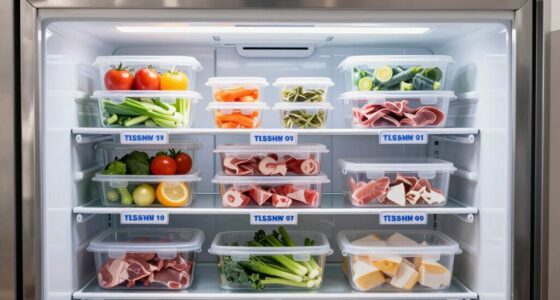
Proper food storage plays a crucial role in maintaining the safety and quality of leftovers when reheating. Using the right food packaging helps prevent contamination and keeps bacteria out. Opt for airtight storage containers that seal tightly, reducing exposure to air and moisture, which can accelerate spoilage. When storing leftovers, ensure they are cooled quickly before sealing to prevent bacterial growth. Labeling containers with dates helps track freshness and avoid reheating spoiled food. Avoid overfilling storage containers, as this can lead to uneven cooling and potential safety issues. Properly stored leftovers stay fresher longer and are safer to reheat later. Additionally, selecting storage solutions compatible with electric appliances can enhance food preservation. Incorporating food safety guidelines ensures leftovers are stored correctly and reduces the risk of foodborne illness. By paying attention to food packaging and choosing appropriate storage containers, you minimize the risk of foodborne illness and preserve the flavor and texture of your leftovers.
Troubleshooting Common Reheating Problems
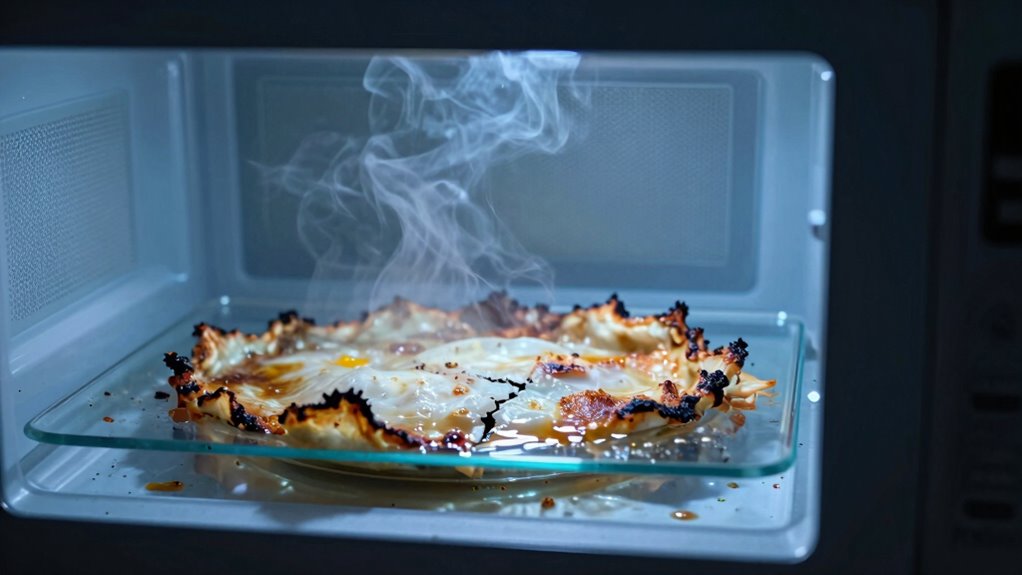
When reheating leftovers, uneven heating can leave some parts undercooked or unsafe. Proper storage techniques help prevent bacterial growth and make certain your food heats thoroughly and safely every time.
Uneven Heating Risks
Uneven heating during reheating can lead to dangerous bacteria surviving in cold spots, increasing the risk of foodborne illness. To prevent this, ensure your heating equipment distributes heat evenly. Here are tips to avoid uneven heating risks:
- Stir or rotate leftovers halfway through heating to promote uniform temperature.
- Use microwave safety containers designed for even heat distribution.
- Opt for reheating methods that provide consistent heat, like a stove or oven, when possible.
- Check for hot and cold spots before consuming, especially after microwave reheating.
Proper Storage Techniques
To troubleshoot common reheating problems, starting with proper storage is essential. Use a suitable food container that seals tightly to prevent bacteria and moisture loss. Label leftovers with the date to track storage duration and avoid keeping food too long, which increases the risk of spoilage. Refrigerate leftovers promptly within two hours of cooking, and avoid leaving food out at room temperature. When storing, guarantee the container is placed in the coldest part of the fridge to slow bacterial growth. Proper storage techniques not only preserve flavor and texture but also reduce the chance of foodborne illness when reheating. Remember, the key is to keep leftovers safe by controlling how long and how well they’re stored before reheating.
Reheating Temperature Tips
Ensuring the right reheating temperature is essential for both food safety and quality. If leftovers aren’t heated properly, bacteria can survive, risking illness. To keep your food safe and tasty, follow these temperature tips:
- Reheat leftovers to at least 165°F (74°C) to kill bacteria.
- Use a food thermometer to verify the temperature, not just visual cues.
- Stir or rotate food during reheating to promote even heat distribution.
- Maintain kitchen hygiene by cleaning surfaces and utensils before reheating to prevent cross-contamination.
Proper reheating temperature guarantees safe leftovers and preserves flavor. Always prioritize food safety by monitoring temperatures, and keep your kitchen hygienic to avoid introducing harmful bacteria. This simple step minimizes risks and ensures your leftovers are both safe and delicious.
Quick Tips to Reheat Leftovers Safely Every Time
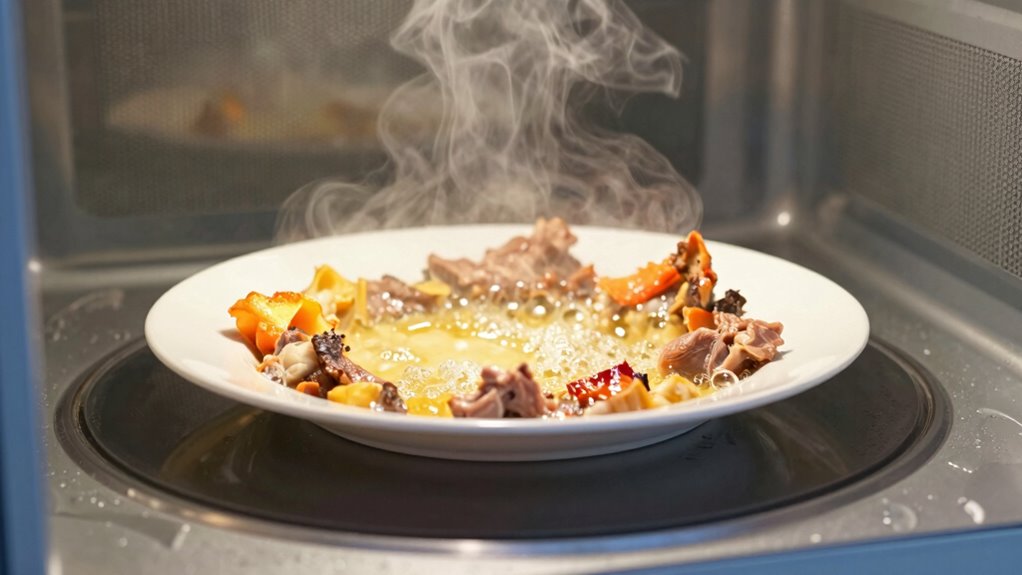
Reheating leftovers safely is vital to prevent foodborne illnesses, and doing it right doesn’t have to be complicated. First, check food labeling and consume leftovers within the recommended timeframe. Proper storage containers are essential; use airtight, microwave-safe containers to keep leftovers fresh and prevent contamination. Before reheating, stir or spread leftovers evenly to ensure uniform heating. Always use a food thermometer to verify that the internal temperature reaches at least 165°F (74°C). Avoid reheating leftovers multiple times, as each reheating increases the risk of bacterial growth. Store leftovers promptly in the refrigerator if you aren’t eating them immediately. Following these quick tips helps you enjoy leftovers safely and reduces waste. Proper labeling and storage are your best tools for safe reheating every time.
What to Do if You Suspect Food Poisoning From Reheated Leftovers
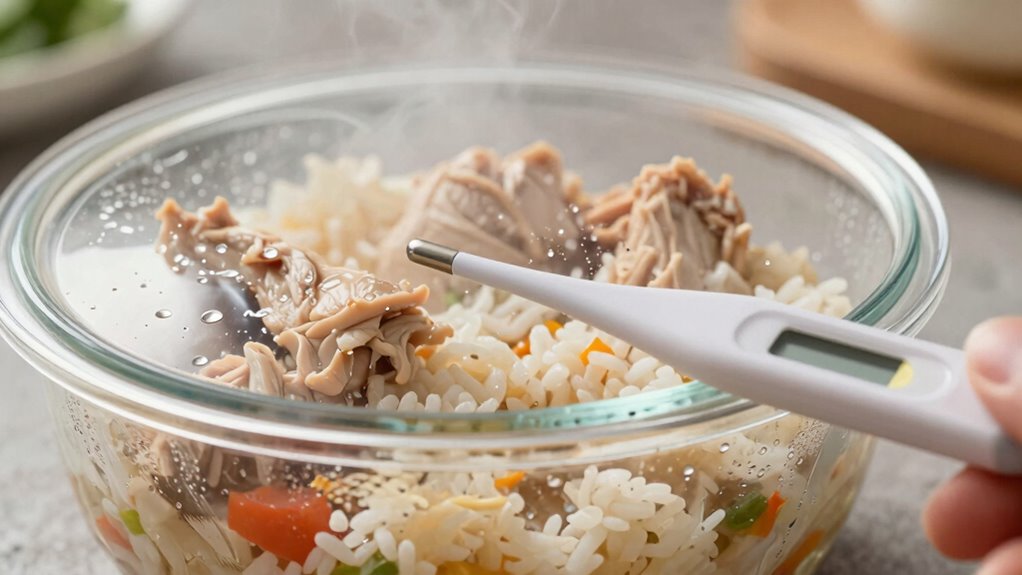
If you start feeling sick after eating leftovers, it’s important to take swift action. Food poisoning can be serious, so act quickly to protect your health. First, stop eating the leftovers and drink plenty of water to stay hydrated. Second, seek medical attention if symptoms worsen or persist. Third, inform your healthcare provider about your meal prep organization practices and any food allergy awareness concerns, as these can influence treatment. Fourth, report the incident to your local health department to help identify potential contamination issues. Remember to always reheat leftovers thoroughly and store them properly. Being vigilant about food allergy awareness and meal prep organization reduces risks and helps prevent future incidents. Acting fast ensures your health stays protected.
Frequently Asked Questions
Can Reheating Leftovers Multiple Times Make Food Unsafe?
Reheating leftovers multiple times can jeopardize food safety if you don’t follow reheating guidelines properly. Each reheating increases the risk of bacteria growth if the food isn’t heated evenly or to the right temperature. To stay safe, reheat leftovers only once or twice, ensure they reach 165°F, and consume them promptly. Avoid reheating repeatedly, as it can make your food unsafe to eat.
What Is the Ideal Temperature to Reheat Leftovers?
Perfectly reheated leftovers reach a precise point: 165°F (74°C). Follow food safety and reheating guidelines by using a food thermometer to verify your food hits this temperature, eliminating harmful bacteria. Don’t guess—gauge to guarantee safety. When you heed this heat, you prevent potential problems, provide a pleasing palate, and promote proper health. Remember, proper reheating prevents problems and promotes safety, so always aim for that ideal, accurate temperature.
How Can I Prevent Leftovers From Spoiling Before Reheating?
To prevent leftovers from spoiling before reheating, you should practice proper food storage by refrigerating or freezing leftovers promptly, ideally within two hours of cooking. Keep your fridge at or below 40°F (4°C) and store leftovers in airtight containers to avert spoilage. Label and date your food, and consume leftovers within a safe timeframe—usually 3 to 4 days—to ensure freshness and safety before reheating.
Are Microwave Reheating Methods Safer Than Stovetop?
Microwave reheating can be just as safe as stovetop methods if you follow proper microwave safety, such as using microwave-safe containers and stirring food for even heat. Stovetop reheating offers advantages like better control over temperature, reducing the risk of hot spots that can cause bacteria growth. Both methods are safe when used correctly, but stovetop reheating often provides more consistent and thorough heating, especially for dense or large portions.
How Do I Reheat Leftovers Without Losing Flavor and Texture?
Reheat leftovers gently, like whispering to delicate fabric, to preserve flavor and maintain texture. Use a steam basket or low heat on the stove, stirring occasionally, to evenly warm your food without drying it out. Cover dishes to trap moisture, and avoid high heat, which can cause sogginess or toughness. This careful approach keeps your leftovers tasting fresh and feeling just right, like they were right off the stove.
Conclusion
Remember, reheating leftovers is like walking a tightrope—you need to do it carefully to avoid food safety pitfalls. By following proper techniques and paying attention to storage, you’ll keep your meals safe and tasty. Don’t let a simple mistake turn your dinner into a health hazard. Stay vigilant, reheating wisely, and enjoy your leftovers without worry—because a little caution is your best recipe for safe, satisfying meals every time.