
To reheat seafood safely without turning it rubbery or risking illness, keep it chilled until reheating and use gentle methods like low-temperature oven or stovetop, avoiding high heat. Cover seafood to retain moisture and monitor the internal temperature, aiming for 145°F to 165°F. Stir occasionally and add a splash of broth if needed. For best results and safety tips, explore how to keep seafood tender and flavorful while reheating properly.
Key Takeaways
- Reheat seafood to at least 165°F (74°C) using gentle methods like oven or stovetop for even heating.
- Store leftovers promptly in airtight containers and reheat within safe timeframes to prevent bacteria growth.
- Use a food thermometer to ensure internal temperatures reach safety levels, avoiding underheating.
- Reheat slowly and cover seafood to retain moisture, preventing dryness and rubbery textures.
- Avoid multiple reheating sessions and spoiled seafood to reduce health risks and preserve quality.
What’s the Best Way to Reheat Seafood Without Ruining It?
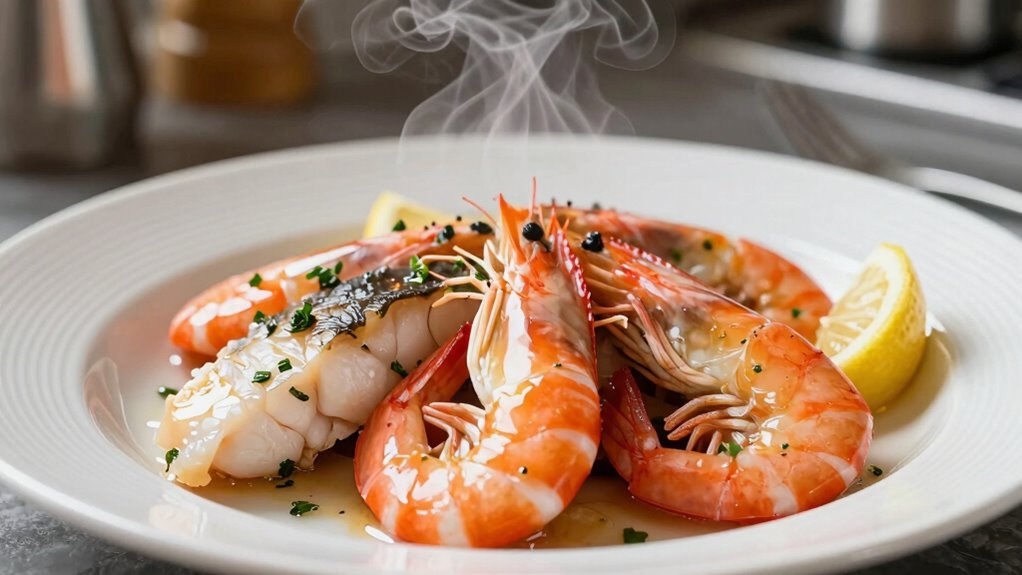
When reheating seafood, it’s essential to do it gently to preserve its texture and flavor. Proper seafood storage is key to maintaining freshness, so always keep your seafood refrigerated or frozen until you’re ready to reheat. Use gentle methods like a microwave on low power or reheating in a steamer or oven at a low temperature to prevent overcooking. Avoid high heat, which can make seafood rubbery and dry, ruining its delicate texture. Covering the seafood while reheating helps retain moisture and flavor. Remember, fast reheating can compromise flavor preservation, so take your time. energy-efficient reheating techniques can also help minimize energy consumption while keeping your seafood delicious. Additionally, selecting appropriate reheating appliances can enhance food safety by ensuring the seafood is heated evenly and thoroughly. Using proper reheating methods is crucial for maintaining the quality and safety of leftovers, preventing spoilage and foodborne illness. Incorporating appropriate reheating techniques can also help extend the shelf life of your seafood. By handling seafood carefully during reheating, you’ll enjoy leftovers that taste just as fresh as when first cooked.
How Does Proper Reheating Keep Seafood Safe and Tasty?
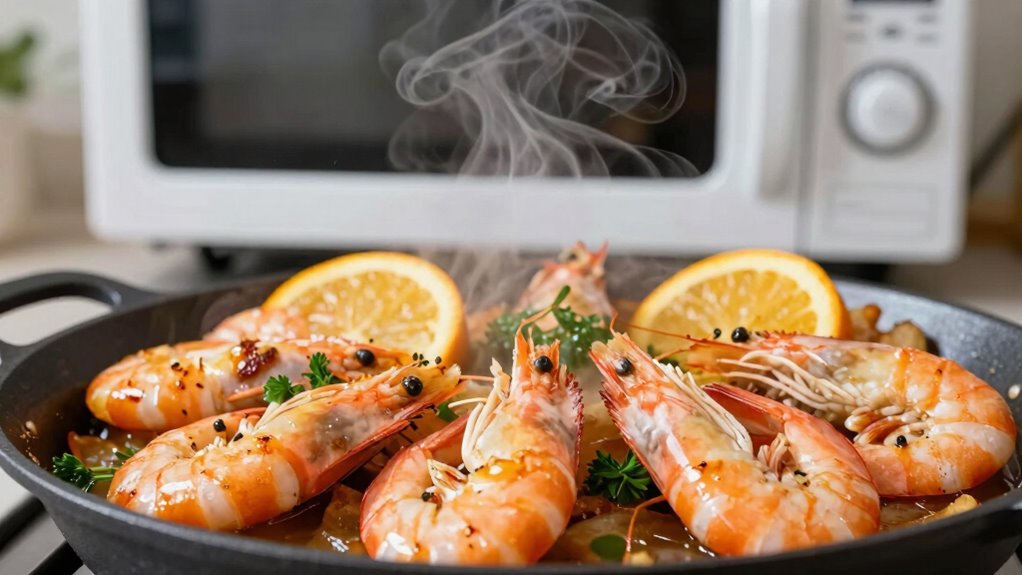
Proper reheating keeps seafood safe by reaching the right temperature, preventing harmful bacteria from growing. It also preserves its texture and flavor, so it still tastes fresh and appealing. When done correctly, reheating reduces the risk of foodborne illness while maintaining the quality you enjoy. Incorporating safe reheating practices can help ensure even heating and optimal safety. Additionally, using smart kitchen appliances with precise temperature controls can further enhance safe reheating and protect your health. Employing temperature monitoring techniques during reheating can provide extra assurance of safety and quality.
Maintains Proper Temperature
Reheating seafood to the right temperature guarantees it stays safe to eat and retains its flavor. Proper temperature control guarantees harmful bacteria are destroyed, preventing foodborne illnesses. To achieve this, heat your seafood evenly and thoroughly until it reaches an internal temperature of 145°F (63°C). Use a food thermometer to monitor the temperature accurately. Avoid reheating seafood multiple times, as fluctuations can create unsafe conditions. Maintaining consistent heat not only safeguards your health but also preserves the quality of the seafood, preventing it from becoming rubbery or dry. Temperature control is essential for safe reheating and optimal taste. Proper food safety practices help in maintaining the quality and safety of seafood during reheating, and understanding safe reheating techniques can further enhance your confidence in handling leftovers. Additionally, ensuring proper temperature regulation during reheating is vital for preventing bacterial growth and spoilage. Being aware of bacterial growth temperatures helps in planning safe reheating practices and avoiding foodborne illnesses.
Preserves Texture and Flavor
Maintaining the right temperature during reheating not only keeps seafood safe but also helps preserve its delicate texture and fresh flavor. When you reheat seafood properly, you prevent it from becoming rubbery or dry, ensuring that its natural moisture stays intact. This careful process boosts flavor retention, allowing the seafood’s subtle nuances to shine through. Using gentle heat methods, like a warm oven or stovetop, helps avoid overcooking and texture breakdown. Proper reheating also prevents the loss of essential oils and juices, which are key to maintaining that fresh, appealing taste. Paying attention to temperature control is essential for preserving the quality of seafood during reheating. By paying attention to food safety guidelines, you ensure your seafood remains tender, flavorful, and enjoyable, making leftovers almost as good as freshly cooked. Additionally, understanding storage times can help prevent bacteria growth and spoilage before reheating. Keeping seafood at the correct reheating temperature minimizes the risk of bacterial contamination and spoilage.
Reduces Bacterial Growth
Since bacteria can rapidly multiply on seafood that isn’t heated enough, guaranteeing you reach the right temperature is essential for safety. Proper reheating kills off harmful bacteria, helping you maintain food safety and prevent foodborne illnesses. Bacterial control relies on heating seafood evenly to at least 165°F (74°C), which destroys most pathogens. Using a food thermometer ensures you hit this safe temperature and avoid underheating. When reheating seafood thoroughly, you reduce the risk of bacteria growth that can cause illness. This not only keeps your seafood safe but also preserves its flavor and texture. Understanding cleaning appliances can be helpful in case of unexpected issues during reheating or storage, ensuring safety is maintained. Regularly inspecting your appliances can help prevent reheating inconsistencies that might lead to underheating or uneven temperatures. Additionally, being aware of your appliance’s temperature accuracy can make a significant difference in achieving safe reheating results. Remember, even a few degrees can make a difference, so don’t skip checking the temperature. Proper reheating is a simple yet effective way to enjoy seafood safely. The horsepower of electric dirt bikes can be a helpful comparison for understanding the energy needed for thorough reheating.
Top Techniques for Reheating Shrimp, Fish, and Crab
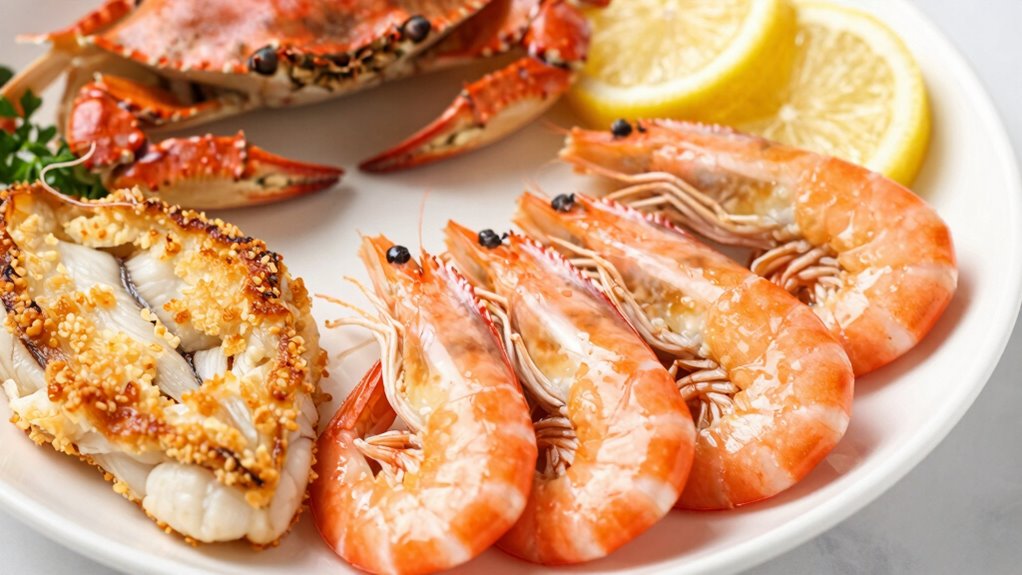
When reheating seafood, it’s important to hit the right temperature to keep it safe and flavorful. You want to avoid overcooking, which can ruin texture and taste, so choosing the best method matters. Understanding ideal temperatures and techniques helps you reheat shrimp, fish, and crab perfectly every time. Proper temperature control is essential to prevent foodborne illness and maintain seafood quality.
Optimal Reheating Temperatures
Reheating seafood to the right temperature is essential to guarantee safety and preserve quality. Aim for an internal temperature of 125°F to 145°F, depending on the seafood type. Use a food thermometer to ensure accuracy, avoiding overheating which can lead to rubbery textures. When reheating, consider marinade compatibility; acidic marinades may cause texture changes if reheated improperly, so ensure they’re fully heated through. Proper seafood storage tips also matter—store leftovers in airtight containers and reheat promptly to prevent bacterial growth. Gentle reheating methods, like a low oven or stovetop, help reach the ideal temperature without overcooking. Keeping these temperatures in mind ensures your seafood remains tender, flavorful, and safe to eat.
Preventing Overcooking Risks
To prevent overcooking while reheating seafood like shrimp, fish, and crab, it’s important to use gentle heat and monitor the process closely. This helps preserve seafood freshness and ensures your leftovers don’t turn rubbery or dry. Use low to medium heat on the stove or in the oven, avoiding high temperatures that can quickly overcook delicate proteins. Reheating leftovers slowly allows heat to distribute evenly, maintaining moisture and texture. Keep an eye on the seafood, checking frequently to prevent exceeding the ideal temperature. Using a food thermometer can help you stay within safe yet gentle reheating ranges. By controlling heat carefully and paying attention, you’ll enjoy seafood leftovers that are flavorful, tender, and safe to eat without risking overcooking.
Best Reheating Methods
Choosing the right reheating method is essential to preserve the delicate texture and flavor of seafood like shrimp, fish, and crab. To avoid seafood spoilage and maintain quality, gentle reheating is best. The microwave is convenient but can cause uneven heating, risking overcooking and rubbery textures. If you use a microwave, do so with microwave safety in mind: cover the seafood lightly, use low power, and heat in short bursts. Alternatively, reheating in the oven or on the stovetop allows better control, helping prevent seafood from drying out or becoming rubbery. Steaming is also effective, especially for crab and shrimp, as it gently warms seafood while retaining moisture. Overall, gentle, even reheating methods help you enjoy seafood at its best without risking spoilage or texture issues.
Tips to Avoid Rubberiness When Reheating Seafood

When reheating seafood, it’s easy to accidentally turn it rubbery and tough. To keep it tender, focus on preserving seafood freshness and using proper storage techniques. Start by storing leftovers promptly in airtight containers to prevent moisture loss. When reheating, avoid high heat that can overcook the delicate proteins. Instead, opt for gentle methods like steaming or low-temperature microwave settings. Keep an eye on timing to prevent overexposure to heat. Also, adding a splash of broth or water can help maintain moisture. Remember, reheating seafood slowly preserves its texture and flavor. Use these tips to prevent rubberiness and enjoy your seafood leftovers just as delicious as the first time.
Reheating Seafood at the Right Temperature for Perfect Results
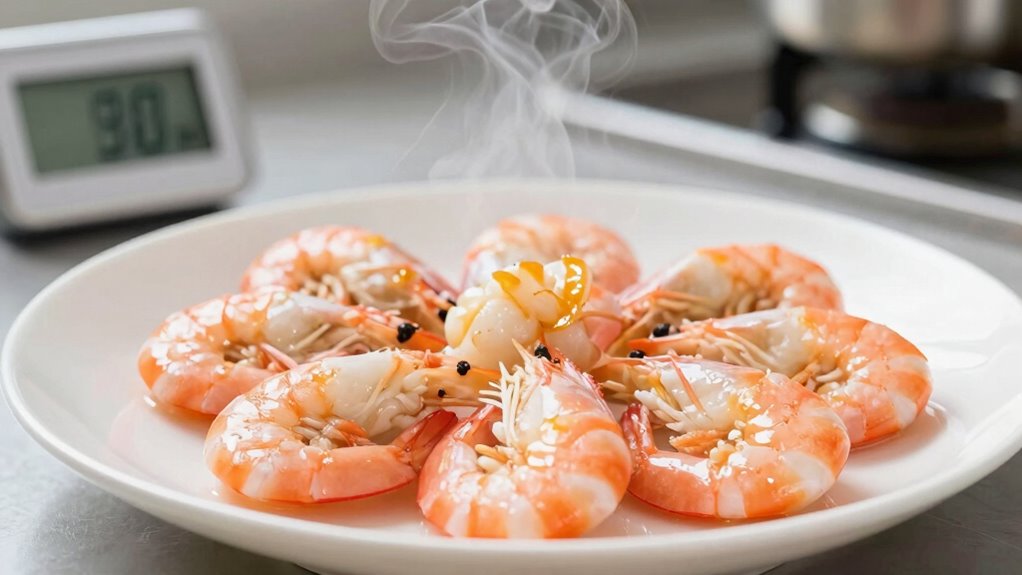
Reheating seafood at the right temperature is essential to preserve its delicate texture and flavor. Use proper storage containers to keep seafood fresh and prevent bacteria growth. When reheating, aim for an internal temperature of 125°F to 130°F (52°C to 54°C), ensuring the seafood is heated evenly without overcooking. Using a microwave or stovetop, stir or rotate the seafood frequently to distribute heat uniformly. Avoid reheating seafood at too high a temperature, which can cause rubberiness and dry out the meat. Always prioritize food safety by verifying the temperature with a reliable food thermometer. Proper reheating not only maintains the quality but also minimizes the risk of foodborne illnesses, making your seafood both delicious and safe to enjoy.
Common Mistakes to Watch Out For When Reheating Seafood
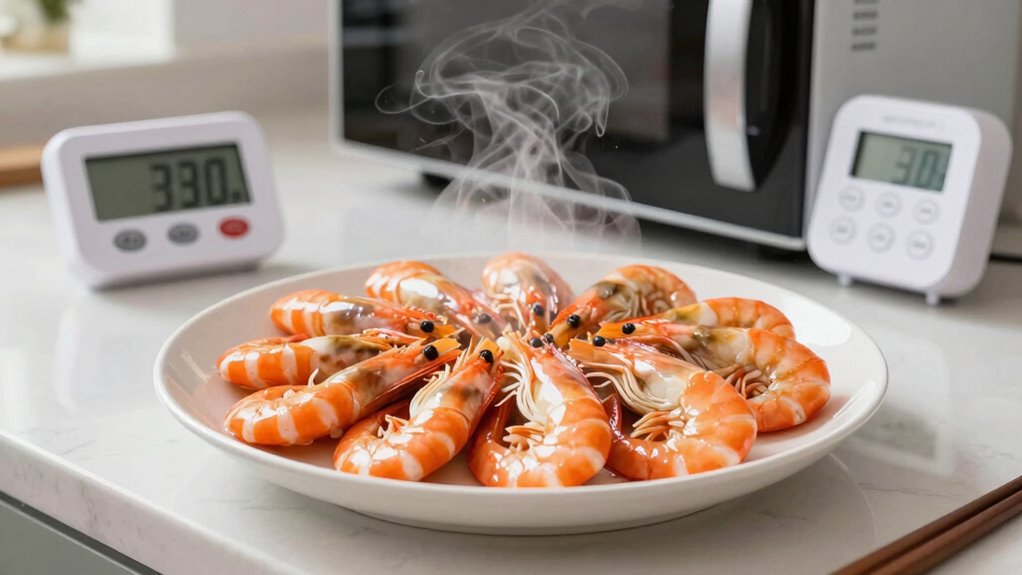
Even with the right temperature in mind, it’s easy to make mistakes that compromise the quality and safety of reheated seafood. Poor handling can turn a tasty meal into rubbery leftovers or pose health risks. Watch out for these common errors:
- Using old seafood that’s past its seafood freshness window
- Reheating seafood in inappropriate storage containers that trap moisture
- Overheating, which causes rubbery textures and flavor loss
- Reheating multiple times, increasing bacterial risk and quality decline
- Ignoring proper storage, leaving seafood at unsafe temperatures for too long
These mistakes often stem from neglecting proper storage practices and not paying attention to seafood freshness. To enjoy safe, delicious reheated seafood, handle leftovers carefully and reheat only once.
When Is It Better to Freshly Cook Instead of Reheating?
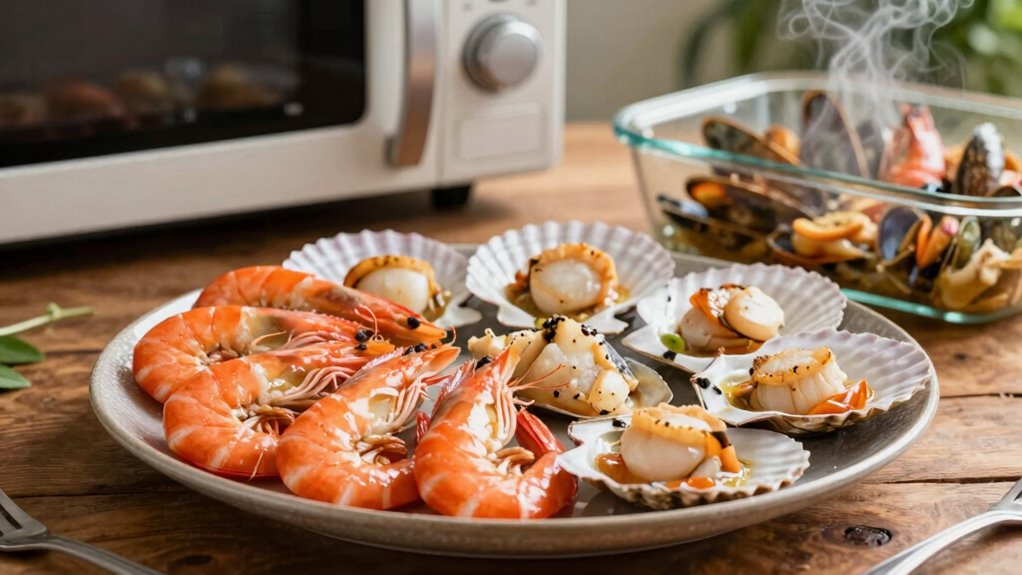
Sometimes, despite your best efforts to reheat leftovers safely, certain seafood dishes are better cooked fresh than reheated. Fresh preparation guarantees you get the best flavor preservation and texture, especially with delicate items like shellfish or flaky fish. When seafood has been stored for a while, reheating can lead to rubbery textures and loss of moisture, diminishing the dish’s quality. If the seafood was initially cooked with a complex sauce or seasoning, reheating might not do it justice and could introduce safety concerns. In these cases, it’s best to prepare seafood fresh to maintain ideal flavor, texture, and safety. Cooking seafood fresh guarantees a more enjoyable meal and reduces the risk of overcooking or bacterial growth that can occur during reheating.
Frequently Asked Questions
Can Reheated Seafood Cause Food Poisoning?
Yes, reheated seafood can cause food poisoning if it’s not handled properly. Bacterial growth occurs quickly when seafood is left at unsafe temperatures, increasing the risk of food poisoning. To avoid this, you should reheat seafood thoroughly to an internal temperature of 165°F and consume it promptly. Proper storage and reheating practices are essential to prevent bacteria from thriving and causing illness.
How Long Can Cooked Seafood Be Safely Stored Before Reheating?
If you want seafood to stay fresh enough to enjoy later, don’t let it sit out more than 2 days in the fridge, or it could turn into a health hazard! Follow freezer guidelines strictly—usually 3 to 6 months for ideal safety and quality. After that, your seafood risks bacterial growth and losing flavor, turning your tasty leftovers into a risky gamble. Always store and reheat within these timeframes for safety!
Is Microwave Reheating Better Than Oven for Seafood?
Microwave reheating is quicker and more convenient for seafood, but it can sometimes cause uneven heating and rubbery texture. Oven reheating offers gentler, more even heat, helping preserve seafood’s texture and flavor. If you want consistent, high-quality results, oven reheating is better, especially for larger or delicate pieces. Use the microwave for a quick fix, but always check the seafood’s temperature to avoid overcooking.
What Signs Indicate Seafood Has Been Reheated Improperly?
You’ll notice seafood has been reheated improperly if it develops a foul odor or a noticeably changed odor. Additionally, look for texture deterioration, like it becoming rubbery or mushy. These signs indicate it’s likely unsafe to eat, as bacteria may have grown or the seafood’s quality has degraded. Trust your senses—if it smells off or feels strange, it’s best to discard it and avoid health risks.
Are There Seafood Types That Shouldn’t Be Reheated at All?
Think of some seafood as delicate tapestries, best enjoyed fresh. Shellfish like oysters and clams shouldn’t be reheated due to bacteria risks and texture loss. Fish such as salmon can generally be reheated safely, but you must follow specific seafood reheating restrictions to prevent rubbery textures or food poisoning. Always check for signs of spoilage before reheating, and when in doubt, prefer enjoying seafood fresh to preserve flavor and safety.
Conclusion
Reheating seafood is like walking a tightrope—you want to enjoy the flavors without falling into rubbery, overcooked territory. I once rushed to reheat shrimp and ended up with a chewy mess, reminding me why patience and proper techniques matter. By following safe temperatures and avoiding common mistakes, you’ll turn leftovers into a delicious, safe meal every time. Think of reheating seafood as fine art—precision makes all the difference between a masterpiece and a mishap.