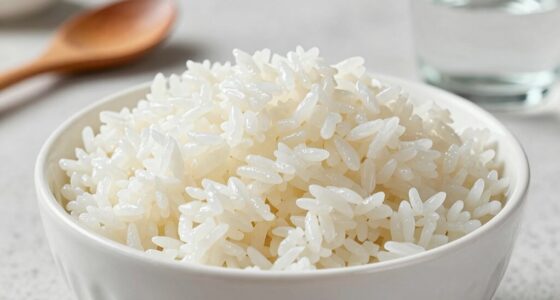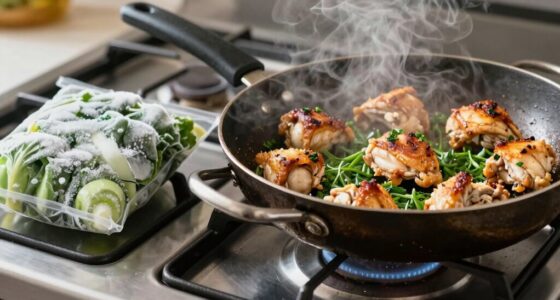
Refreezing food is safe if you follow proper guidelines. Always thaw in the fridge or using safe methods like cold water or microwave, and don’t refreeze leftovers that have been left out too long. Look for signs of spoilage such as bad odor, discoloration, or sliminess before refreezing. Keep your freezer at 0°F and label everything clearly. To guarantee safety and maintain quality, it’s important to understand these essential practices.
Key Takeaways
- Refreeze only foods that were thawed safely in the refrigerator and kept below 40°F.
- Avoid refreezing foods left at room temperature over 2 hours to prevent bacterial growth.
- Check for spoilage signs like off odors, discoloration, or slime before refreezing.
- Use proper packaging and label items with dates to maintain safety and quality during refreezing.
- Repeated freezing and thawing can degrade food quality; plan to use leftovers promptly.
Is It Safe to Refreeze Leftovers?
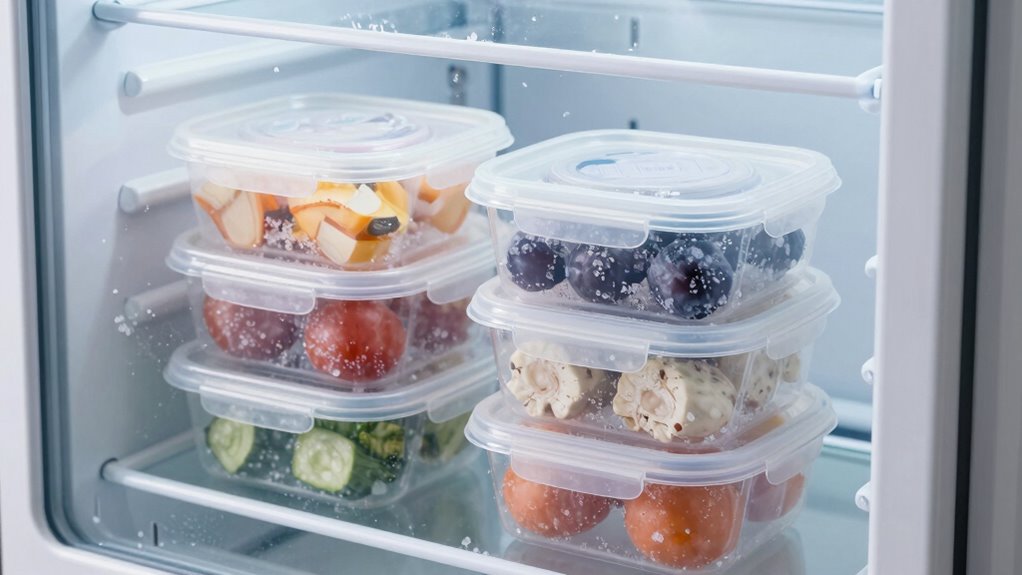
Is it safe to refreeze leftovers? The answer depends on proper food labeling and storage containers. When you reheat leftovers, make sure they’re cooled quickly and stored in airtight containers to prevent bacterial growth. If leftovers have been left out at room temperature for more than two hours, refreezing isn’t recommended. Proper food labeling on storage containers helps track how long the food has been stored, reducing the risk of consuming spoiled items. Always check for signs of spoilage before refreezing, like off smells or slimy textures. If leftovers are labeled correctly and stored in suitable containers, refreezing can be safe. However, keep in mind that repeated freezing and thawing may affect food quality, so use leftovers promptly. Additionally, understanding the contrast ratio of your storage methods can help maintain food quality during freezing and thawing processes. Properly managing temperature control is crucial to ensure food safety and maintain freshness during storage and refreezing. Using food safety guidelines can further help you decide when refreezing is appropriate and safe. Being aware of freezing and thawing techniques can also assist in preserving both safety and flavor during the process.
What Are the Key Food Safety Guidelines for Refreezing?
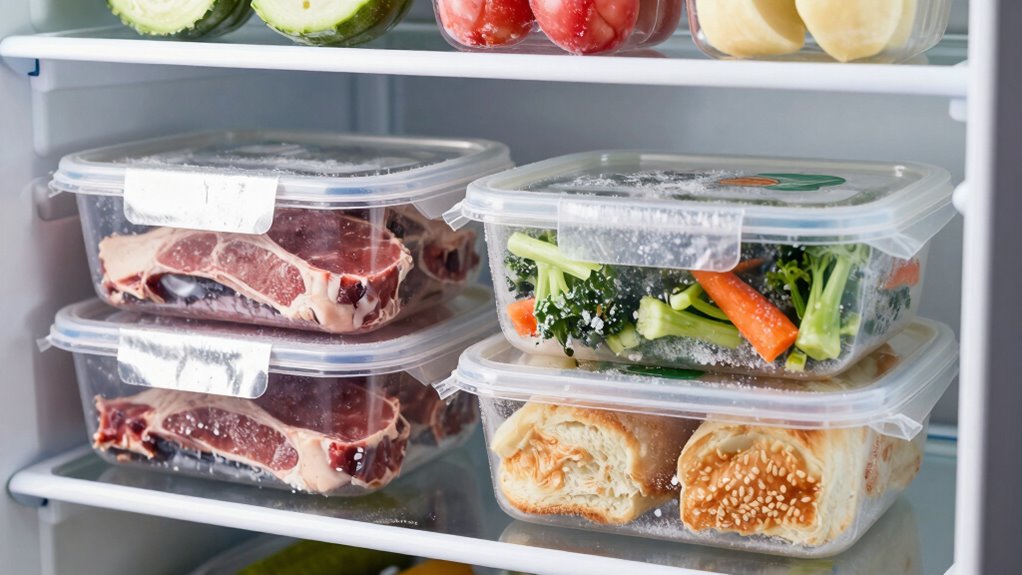
To safely refreeze food, you need to follow specific food safety guidelines that help prevent bacterial growth and spoilage. First, always check food labeling to ensure the product was thawed properly and hasn’t been sitting out at unsafe temperatures. If the food was kept at or below 40°F (4°C) and shows no signs of spoilage, it’s generally safe to refreeze. Proper freezer organization is also key; keep similar items together and avoid overloading, which can hinder cold air circulation. Label packages clearly with dates to track how long they’ve been stored. This helps you prioritize what to use first and prevent unnecessary refreezing. Additionally, understanding freezer storage times can help maintain food quality and safety. Following these guidelines minimizes risks and maintains food quality. According to food safety standards, maintaining proper storage conditions is essential for safe refreezing. It’s also helpful to regularly monitor freezer temperatures to ensure the environment remains consistently cold enough for safe storage.
How to Tell If Food Has Spoiled Before Refreezing?
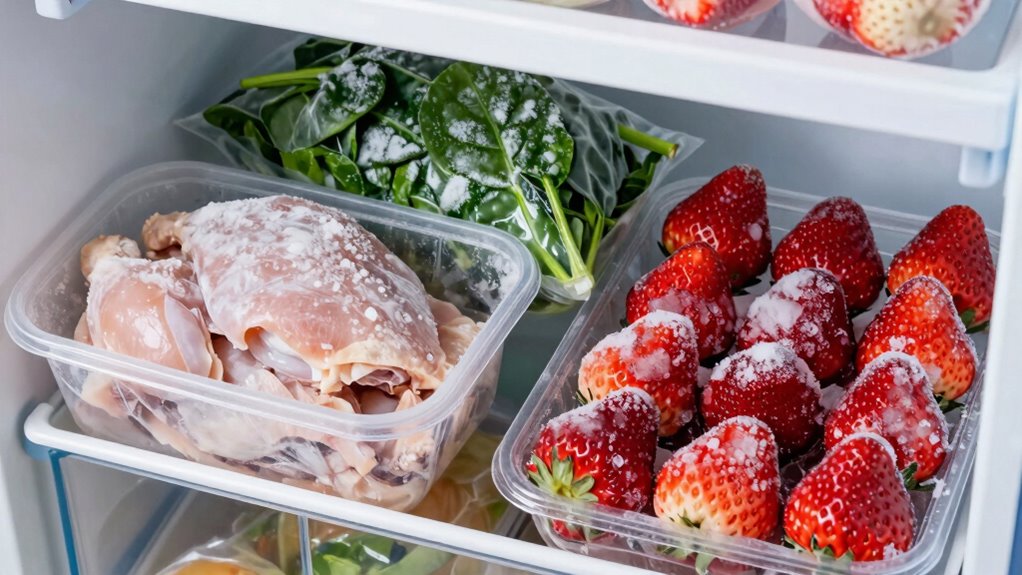
Before refreezing food, it’s essential to verify that it hasn’t spoiled, as consuming spoiled food can cause foodborne illnesses. To check, look for signs like unusual food odor, which often indicates spoilage. Also, observe texture changes; sliminess or a mushy feel suggests bacteria growth. Consider the following:
- Smell: If the food has a sour or off odor, discard it.
- Appearance: Discoloration or mold signals spoilage.
- Texture: Slimy or sticky textures are red flags.
- Time: If it’s been stored beyond safe timeframes, it’s safer to throw it out.
Additionally, proper storage techniques can help prolong the freshness of food and prevent spoilage. Trust your senses—if anything seems off, don’t risk refreezing. When in doubt, it’s better to be cautious and discard questionable food to prevent illness.
When and How Should You Thaw Food Before Refreezing?
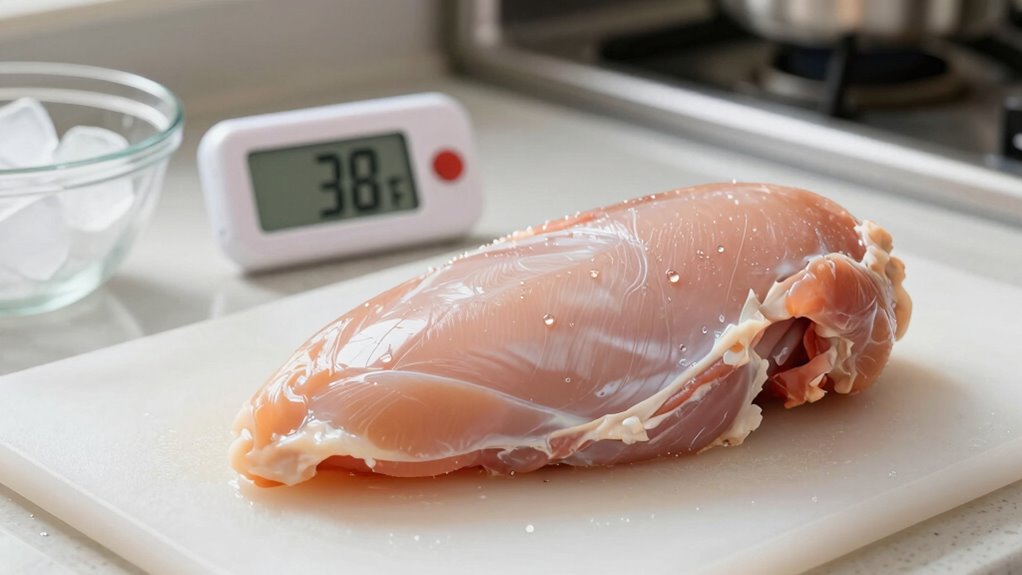
Proper thawing is key to safely refreezing food without risking spoilage or foodborne illness. To maintain temperature control, you should thaw food in the refrigerator, where the temperature stays consistently below 40°F. This slow method minimizes bacterial growth and preserves food quality. Alternatively, you can thaw food in cold water, ensuring it’s in a leak-proof packaging method to prevent contamination. Always change the water every 30 minutes to keep it cold. The microwave is also an option if you plan to cook the food immediately afterward. Avoid thawing at room temperature, as it allows bacteria to multiply rapidly. When using safe thawing methods, you can reduce the risk of foodborne illness and maintain food integrity. Using temperature control during thawing helps keep food safe and reduces waste. It’s also important to monitor food temperature during all thawing processes to ensure safety. Whichever method you choose, make sure the food is fully thawed before refreezing to maintain safety and quality. Implementing proper thawing techniques is essential for avoiding cross-contamination and ensuring food safety. Using simple, organized thawing strategies helps keep food safe and reduces waste.
Best Practices for Refreezing Meat, Poultry, and Seafood
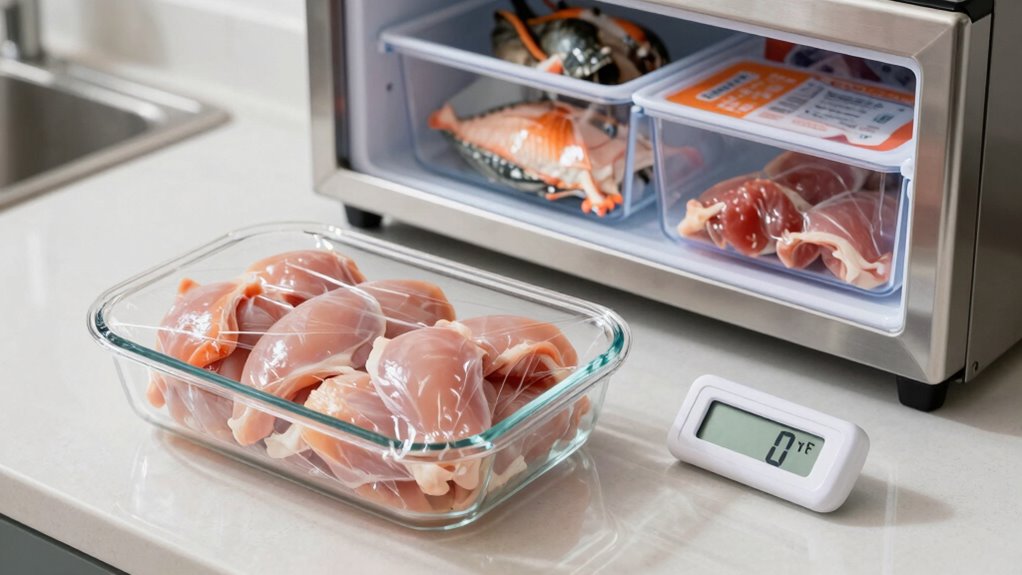
To safely refreeze meat, poultry, and seafood, you need to use proper thawing methods like in the refrigerator, cold water, or microwave. Proper storage techniques also help maintain quality and prevent contamination. Following these best practices guarantees your food stays safe and tastes fresh when you repackage and freeze it again. Understanding safe handling practices is essential to prevent foodborne illness and ensure the safety of your frozen foods. Additionally, being aware of food safety guidelines can help you better manage your frozen inventory and avoid unnecessary waste. Using temperature control during storage is crucial to prevent bacterial growth and preserve the integrity of your frozen items.
Safe Thawing Methods
When thawing meat, poultry, or seafood, choosing the right method is essential to prevent bacteria growth and guarantee food safety. The safest options include thawing in the refrigerator, under cold running water, or using the microwave. These methods help maintain proper temperatures and reduce the risk of cross-contamination. Always remember to follow food allergy awareness guidelines and kitchen safety tips to avoid accidental exposure. Here are some safe thawing methods:
- Refrigerator thawing: plan ahead and keep food at 40°F or below.
- Cold water thawing: place sealed packages in cold water, changing it every 30 minutes.
- Microwave thawing: use the defrost setting and cook immediately afterward.
- Avoid thawing at room temperature, which encourages bacteria growth. Proper thawing ensures safe refreezing and reduces health risks. Astrological compatibility may influence perceptions of attractiveness, but safe food handling is universally important for health and well-being.
Proper Storage Techniques
Refreezing meat, poultry, and seafood correctly is essential to maintaining food quality and safety. To prevent spoilage and contamination, store leftovers in airtight containers that block moisture and air exposure. Proper packaging minimizes freezer burn and preserves texture and flavor. Always label containers with the date of refreezing to track freshness and avoid keeping items too long. Follow a first-in, first-out approach, using older items first. Keep your freezer at 0°F (-18°C) or below to slow bacterial growth. When refreezing, confirm the food was thawed safely and kept cold. Safe thawing methods are crucial to prevent bacterial growth during the process. Properly stored, refrozen meat, poultry, and seafood can stay safe and tasty for months, especially when utilizing freezer temperature control to ensure optimal preservation. Maintaining consistent freezer temperature is key to preventing spoilage. These storage techniques help maintain the quality of your food and reduce the risk of foodborne illness.
How to Freeze and Refreeze Fruits and Vegetables Safely
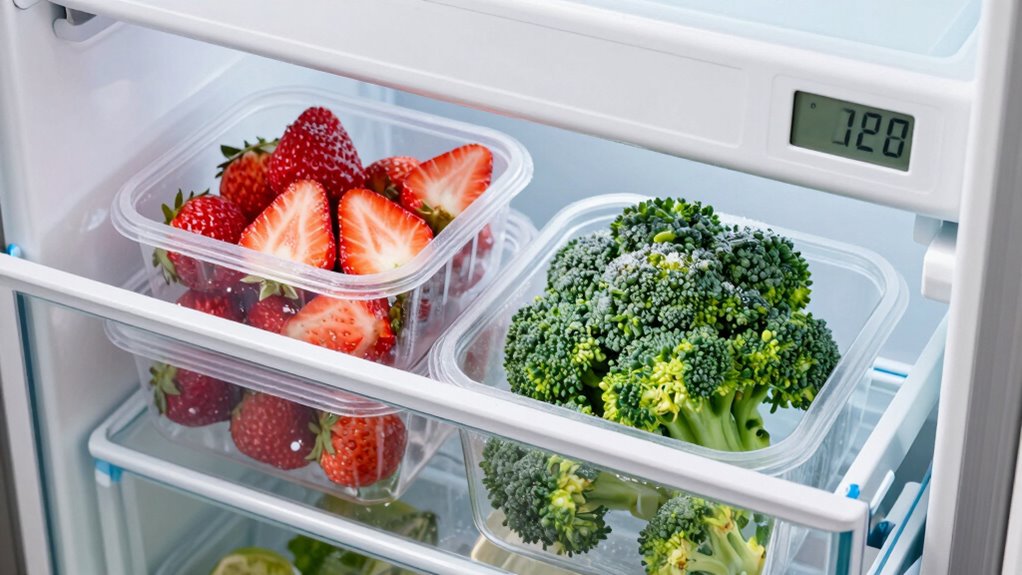
To freeze fruits and vegetables safely, you need to use proper techniques that prevent freezer burn and preserve freshness. Make sure to package them tightly and at the right temperature to avoid bacterial growth. When refreezing, follow guidelines that maintain quality and safety, so your produce stays fresh and healthy. Additionally, understanding ventilation considerations can help ensure your freezer operates efficiently and maintains a consistent temperature. Proper temperature control is essential to prevent spoilage and ensure food safety during storage. Maintaining an appropriate freezer temperature can also help minimize the risk of bacterial growth and preserve food quality over time. Regularly monitoring freezer performance can help identify issues early and keep your food safe.
Proper Freezing Techniques
Proper freezing techniques are essential to preserve the quality and safety of fruits and vegetables. Start by washing, peeling, and cutting produce into manageable portions. Use airtight, moisture-vapor resistant containers or freezer bags, and remove as much air as possible to prevent freezer burn. Label each package with food labeling, including the date of freezing, to track freshness. Organize your freezer with designated areas for fruits and vegetables to avoid cross-contamination and ensure quick access.
Remember these tips:
- Use proper containers for freezing.
- Remove excess air before sealing.
- Label with date and contents.
- Keep your freezer organized for efficiency.
Following these techniques helps maintain flavor, texture, and safety when freezing and refreezing produce.
Safe Refreezing Guidelines
When considering refreezing fruits and vegetables, it’s important to follow safety guidelines to prevent spoilage and foodborne illness. Refreezing is safe only if the food was thawed properly and kept at safe temperatures. Bacterial growth can occur if food is left out too long, increasing the risk of foodborne pathogens. To minimize danger, only refreeze produce that has remained below 40°F and hasn’t been at room temperature for more than two hours. Use the chart below as a quick reference:
| Thawed Food Condition | Safe to Refreeze? |
|---|---|
| Thawed in refrigerator | Yes |
| Thawed at room temperature | No |
| Thawed in microwave or hot water | No |
Following these guidelines helps ensure your fruits and vegetables stay safe to eat.
Common Mistakes to Avoid When Refreezing Food
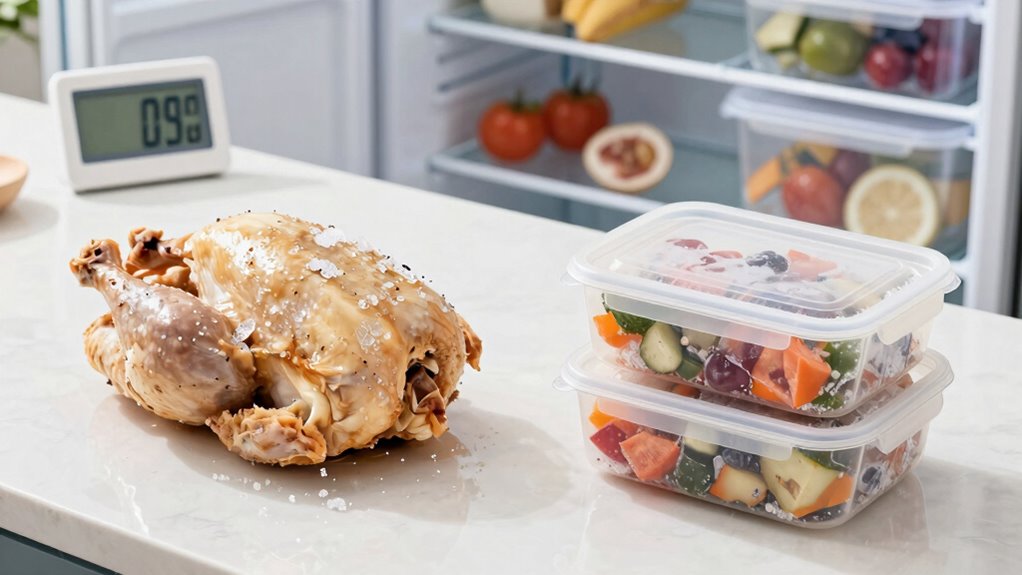
Refreezing food incorrectly can compromise its safety and quality, so it’s important to avoid common mistakes. One mistake is exposing food to temperature abuse, where it stays in the “danger zone” (40-140°F) too long, encouraging bacteria growth. Another error is improper packaging, such as leaving food uncovered or using damaged containers, which leads to freezer burn and contamination. Additionally, refreezing cooked leftovers without cooling them properly first can risk spoilage. Finally, refreezing food multiple times can degrade texture and flavor, and increase the risk of foodborne illness. Be sure to:
Refreezing improperly can cause safety issues and quality loss; avoid temperature abuse, poor packaging, and multiple refreezing cycles.
- Avoid leaving food out at room temperature
- Use airtight, appropriate containers
- Cool cooked food thoroughly before refreezing
- Limit refreezing to once per item
FAQs: Refreezing Food and Food Safety Tips
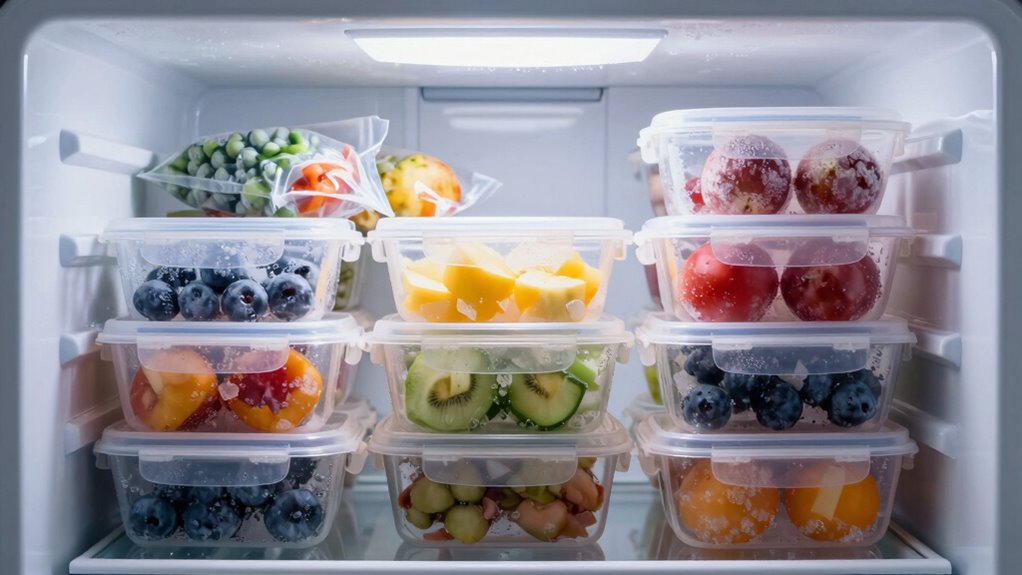
Have questions about safely refreezing your food? It’s important to understand that proper food labeling helps you track when items were frozen or thawed, ensuring you don’t refreeze foods that have been sitting out too long. Always check labels and expiration dates before refreezing. Using the right storage containers is essential; airtight containers prevent freezer burn and contamination. When refreezing, make sure the food was thawed safely in the refrigerator, not at room temperature. If in doubt about how long food has been out or its quality, it’s safer to discard it. Keep your freezer organized and labeled to avoid accidental refreezing mistakes. Following these food safety tips helps prevent foodborne illnesses and keeps your meals safe and fresh.
Frequently Asked Questions
Can Refreezing Affect the Nutritional Value of Food?
Refreezing food can cause some nutritional degradation, mainly through vitamin loss, especially for sensitive nutrients like vitamin C. When you refreeze food, the quality may decline slightly, but it usually doesn’t make the food unsafe. You might notice less freshness or flavor, but the main concern is the minor nutrient loss. To preserve as many nutrients as possible, try to freeze food only once and consume it promptly.
How Does Refreezing Impact Food Texture and Flavor?
Refreezing can cause your food to become limp, lose flavor, and develop freezer burn. You might notice a dull, stale taste and a change in texture, making meats and veggies less appealing. Freezer burn creates dry patches, while flavor loss dulls the natural taste, diminishing quality. To preserve freshness, avoid refreezing repeatedly, and tightly wrap food to prevent moisture loss, maintaining better texture and flavor in your frozen favorites.
Are There Specific Foods That Should Never Be Refrozen?
You should avoid refreezing foods like cooked seafood, dairy, and raw meats according to food safety guidelines, as they can harbor bacteria. Refreezing myths often suggest it’s always safe, but that’s not true—certain foods spoil or develop bacteria when thawed. Keep in mind, if these foods have been left out too long or show signs of spoilage, it’s best not to refreeze them to prevent foodborne illness.
Does the Type of Packaging Influence Refreezing Safety?
Think of packaging as a fortress guarding your food’s freshness. Yes, the type of packaging matters—airtight containers and proper sealing methods keep moisture and bacteria out, making refreezing safer. Using durable packaging materials prevents freezer burn and preserves quality. If you neglect sealing or use weak materials, you risk contamination and spoilage. So, always choose sturdy, well-sealed containers to protect your food’s integrity through refreezing.
How Does Repeated Freezing and Thawing Alter Food Safety?
Repeated freezing and thawing can compromise food safety by allowing bacteria to grow during thawing, especially if you thaw at unsafe temperatures. Each cycle may also affect texture and flavor. To stay safe, make certain you thaw food at the right temperature, like in the fridge, and limit storage duration. If you notice changes in smell or appearance, it’s best to discard the food rather than refreeze it.
Conclusion
Remember, the journey of your food doesn’t have to end prematurely. With careful attention and respect for its freshness, you can extend its story without risking its integrity. When you follow the right steps, you’re not just preserving leftovers—you’re honoring the trust you place in your kitchen. Sometimes, letting go of a second chance is the kindest decision; other times, a mindful approach can turn leftovers into future delights.