
Germs can hide unexpectedly in your kitchen, like sponges, dishcloths, and crumbs on countertops, making cross-contamination easier than you think. They spread not only through direct contact, but also via airborne droplets and settling on surfaces far from the original source. High-risk items such as cutting boards and utensils need regular sanitizing. Staying aware of these hidden pathways helps prevent illness—continue exploring how to keep your kitchen safer.
Key Takeaways
- Germs can spread via airborne droplets settling on surfaces, creating hidden contamination zones.
- Cross-contact occurs when raw meat germs transfer to utensils, cutting boards, or food.
- Sponges and dishcloths harbor bacteria, facilitating germ transfer to other surfaces and items.
- Poor ventilation allows airborne germs to settle on various kitchen surfaces, increasing cross-contamination risk.
- Using separate tools and thorough cleaning minimizes unseen germ spread across kitchen areas.
Where Do Germs Hide Hidden in Your Kitchen?
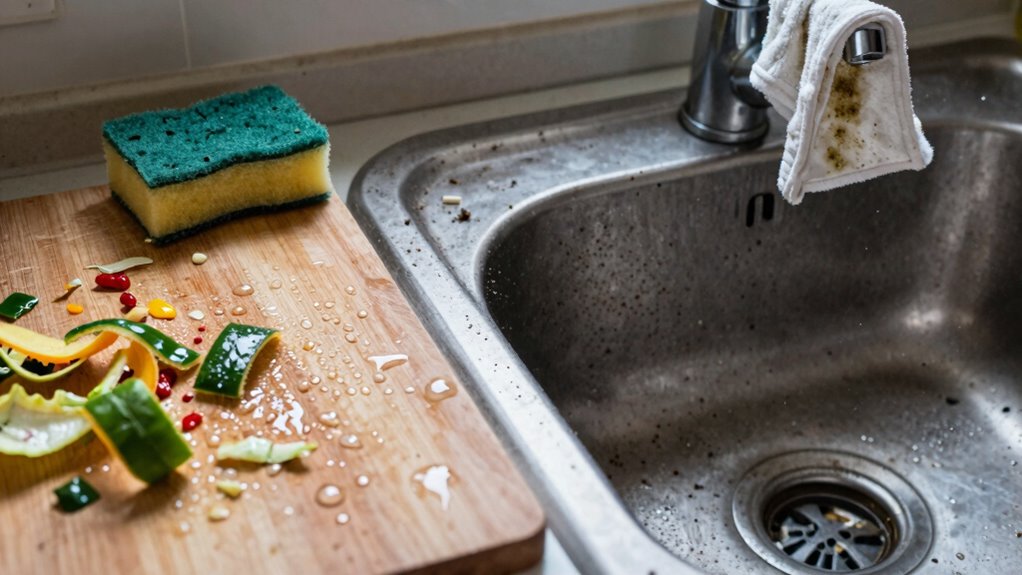
Germs can lurk in unexpected places in your kitchen, making it easy to accidentally spread bacteria and viruses. Invisible reservoirs, like sponges, dishcloths, and even the crumbs on your countertop, harbor these hidden threats. Airborne particles also play a role, settling on surfaces after coughing or sneezing, and lingering in the air, especially in poorly ventilated areas. You might not see these germs, but they’re there, quietly waiting to contaminate your food or hands. Items that seem clean, like cutting boards or utensils, can still harbor invisible reservoirs if not properly sanitized. Regular cleaning and disinfecting reduce these hidden dangers. Being aware of these hidden reservoirs helps you take better steps to keep your kitchen safer.
How Do Germs Spread Beyond the Obvious?

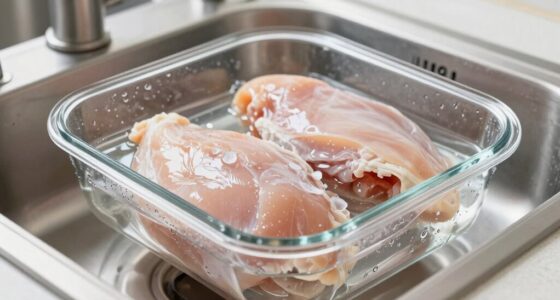
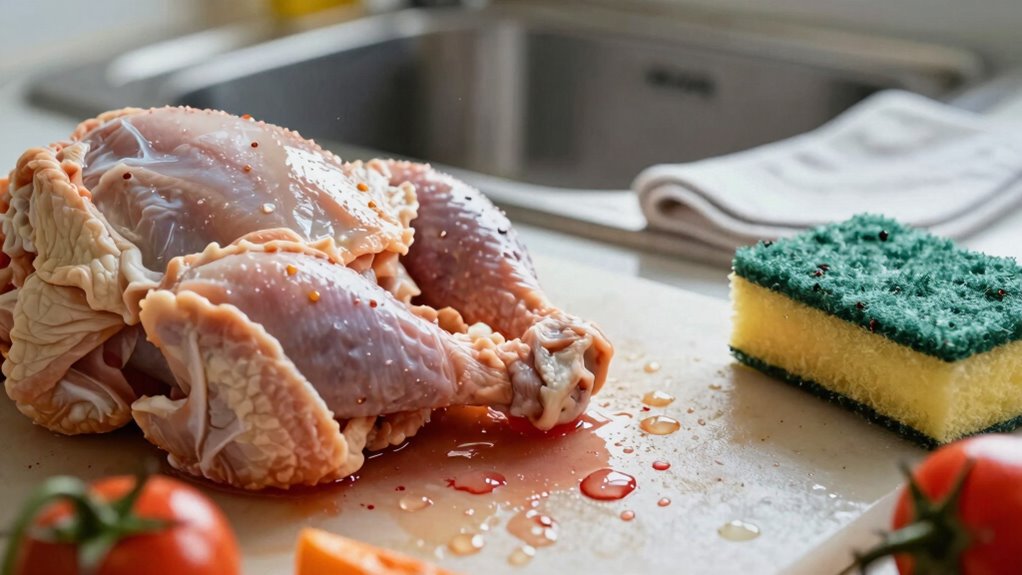
While you might think that visible contamination is the main way bacteria and viruses spread, they often travel beyond obvious surfaces through indirect means. Airborne transmission is a key factor—tiny droplets containing germs can linger in the air after someone coughs, sneezes, or talks, settling on surfaces you might not suspect. This means germs can spread to areas far from the original source. Cross contact contamination also plays a role; when you handle raw meat, for example, germs can transfer to utensils, cutting boards, or even your hands, then move onto other foods or surfaces. Even if you don’t see the germs, they’re still present and can spread through these invisible routes, increasing the risk of cross-contamination and foodborne illness. Additionally, contamination control measures are essential to reduce the spread of germs in the kitchen, especially considering how easily germs transfer occurs through contact with contaminated surfaces and objects. Understanding the role of Airborne transmission can help you implement better ventilation and cleaning practices to minimize unseen risks. Recognizing germ spread mechanisms is crucial for maintaining a safe cooking environment. Proper cleaning protocols are vital to eliminate these hidden threats and prevent outbreaks.
Which Surfaces and Utensils Are Most at Risk?

Certain surfaces and utensils in your kitchen are more prone to harboring germs and spreading contamination. Cutting boards, especially those used for raw meat, poultry, or seafood, are hotspots for bacteria. If not cleaned properly, they can transfer germs to other foods or surfaces. Sponge areas are another major risk; sponges easily trap moisture and food particles, providing an ideal environment for bacteria and mold to grow. If you don’t regularly disinfect sponges and replace them often, germs can easily spread to your hands, dishes, and countertops. These high-risk areas require extra attention. Regularly sanitize cutting boards with hot, soapy water or a vinegar solution, and disinfect sponges by microwaving or replacing them frequently. Staying vigilant helps prevent cross-contamination from these vulnerable surfaces. Additionally, sustainable cleaning practices can help reduce the buildup of harmful germs while being environmentally friendly.
How Can You Effectively Remove Hidden Germs?
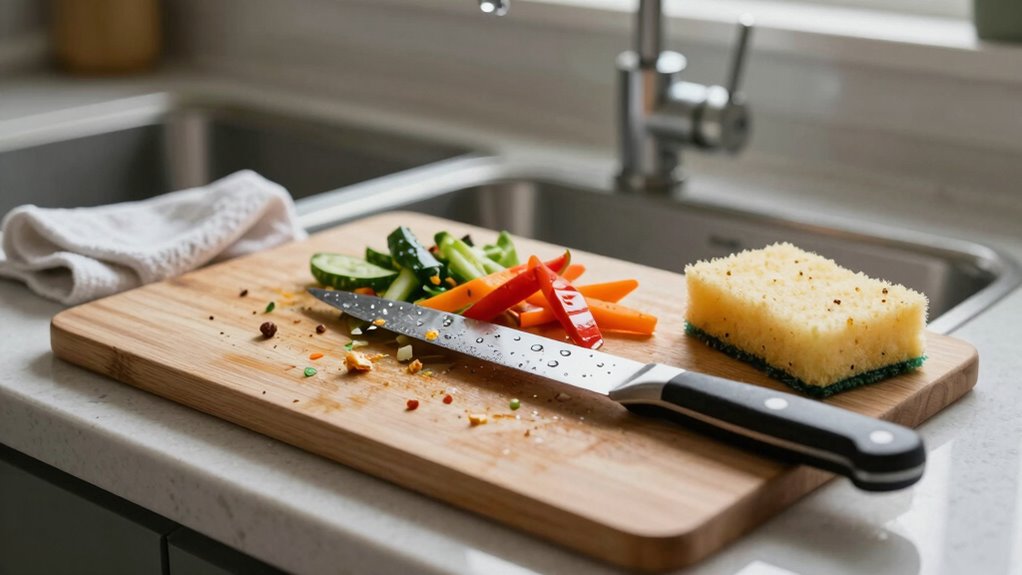
To effectively remove hidden germs from your kitchen surfaces and utensils, thorough cleaning is essential. Regular cleaning frequency helps prevent buildup of bacteria and reduces the risk of cross-contamination. Use hot, soapy water to scrub surfaces and utensils, paying special attention to cracks and crevices where germs hide. After cleaning, apply proper sanitization techniques, such as using a diluted bleach solution or commercial disinfectants, to kill remaining germs. Remember, simply wiping isn’t enough; you need to guarantee proper contact time for sanitizers to work effectively. Make cleaning and sanitizing a routine part of your kitchen maintenance, especially after handling raw meats or produce. Incorporating air purifiers with filter replacement can also help improve overall indoor air quality and reduce airborne germs. Regularly inspecting and maintaining your kitchen appliances can further eliminate hidden sources of bacteria and prevent future contamination. Additionally, choosing appliances with antimicrobial surfaces can help inhibit bacterial growth on frequently touched areas. Implementing proper cleaning techniques can significantly enhance the effectiveness of your efforts. Employing proper ventilation can also help disperse airborne germs and improve overall hygiene. Consistent, deliberate efforts keep hidden germs at bay and keep your kitchen safer for everyone.
What Are the Best Practices to Keep Your Kitchen Safe?

Implementing best practices in your kitchen helps prevent cross-contamination and keeps your food safe. Start by regularly cleaning gadgets like cutting boards, knives, and utensils with hot, soapy water or disinfectants. Use separate cutting boards for raw meats and vegetables to avoid spreading germs. Keep your kitchen organized by designating specific areas for prepping, cooking, and cleaning, which minimizes accidental cross-contact. Store raw foods away from ready-to-eat items, and always wash your hands thoroughly after handling raw meat or poultry. Regularly sanitize countertops and appliance surfaces. Proper kitchen organization reduces clutter and makes it easier to follow hygiene routines. Additionally, understanding the importance of air quality can help reduce airborne germs in your kitchen environment. Maintaining good ventilation can significantly decrease the presence of airborne contaminants. Proper surface sanitation further diminishes the risk of bacteria spreading. Good kitchen hygiene practices are essential for minimizing the spread of germs through contact and airborne pathways. By maintaining clean gadgets and a tidy space, you considerably lower the risk of germs spreading in your kitchen, ensuring a safer environment for everyone. Also, paying attention to air circulation can help remove airborne pathogens more effectively, creating a healthier cooking space.
Frequently Asked Questions
How Long Can Germs Survive on Different Kitchen Surfaces?
Germs can survive on various kitchen surfaces for different durations depending on surface porosity and germ type. On non-porous surfaces like stainless steel or plastic, germs can live from a few hours up to several days. Porous surfaces like wood or sponges tend to harbor germs longer, sometimes up to a week. Regular cleaning and disinfecting are essential to minimize germ survival and prevent cross-contamination.
Are There Specific Cleaning Products That Kill All Germs Effectively?
Think of cleaning products as your kitchen’s superheroes. Some, with powerful antibacterial agents, effectively kill germs and boost cleaning efficacy. Look for disinfectants labeled to eliminate bacteria and viruses; these are your best bet for extensive germ control. Regularly using these products on countertops, cutting boards, and utensils helps prevent cross-contamination, ensuring your kitchen stays safe. Remember, not all cleaners are equal—choose those proven to fight germs effectively.
Can Air Circulation Spread Germs in the Kitchen Environment?
Yes, air circulation can spread germs in your kitchen. Airborne transmission occurs when germs travel through the air, especially with poor ventilation. Ventilation systems help reduce this risk by moving contaminated air out and bringing in fresh air. To minimize germ spread, make certain your kitchen is well-ventilated, use exhaust fans, and open windows when possible. Good air circulation keeps airborne germs from lingering and spreading to surfaces or food.
What Are the Common Mistakes People Make During Kitchen Cleaning?
You often make mistakes during kitchen cleaning that increase cross-contamination risks. For example, you might use the same sponge for different surfaces or forget to disinfect cutting boards after chopping raw meat. Improper cleaning techniques, like not scrubbing thoroughly or skipping high-touch areas, also contribute. These habits allow germs to spread easily, so be mindful of sanitizing all surfaces properly and using separate cleaning tools to keep your kitchen safe.
How Often Should Kitchen Utensils and Sponges Be Replaced?
Think of your kitchen utensils and sponges as brave explorers. You should replace utensils every 3-4 years, giving them a fresh start. Sponges need more frequent care; follow a sponge replacement schedule of every 1-2 weeks to prevent germs from hiding. If they look worn or smell bad, replace them sooner. This way, you keep your kitchen safe, and your tools stay effective.
Conclusion
Just like Pandora’s box, your kitchen holds hidden dangers that can release germs beyond sight. By staying vigilant and following best practices, you can keep these unseen threats at bay. Remember, the battle against cross-contamination isn’t over once you clean the obvious surfaces—it’s about uncovering those hidden corners. Stay proactive, and your kitchen will remain a safe haven, shielding your family from unseen invaders lurking in the shadows.