Leftover pizza should not sit out longer than two hours at room temperature, as bacteria can grow rapidly beyond that time, increasing your risk of foodborne illness. To keep it safe, refrigerate it promptly within two hours in airtight containers or wrapped tightly, and consume within three to four days. Proper storage, reheating, and freshness checks are essential—if you want to know more about keeping your pizza safe, keep exploring these tips.
Key Takeaways
- Leftover pizza should not sit out longer than 2 hours at room temperature to prevent bacterial growth.
- Bacteria multiply rapidly after 2 hours, making pizza unsafe to eat beyond this time frame.
- Store leftover pizza in airtight containers and refrigerate within 2 hours of serving for safety.
- Reheat pizza to at least 165°F to kill bacteria before consuming leftovers stored properly.
- Discard pizza if it shows signs of spoilage like mold, sliminess, discoloration, or sour smell.
How Long Can Leftover Pizza Sit Out Safely?
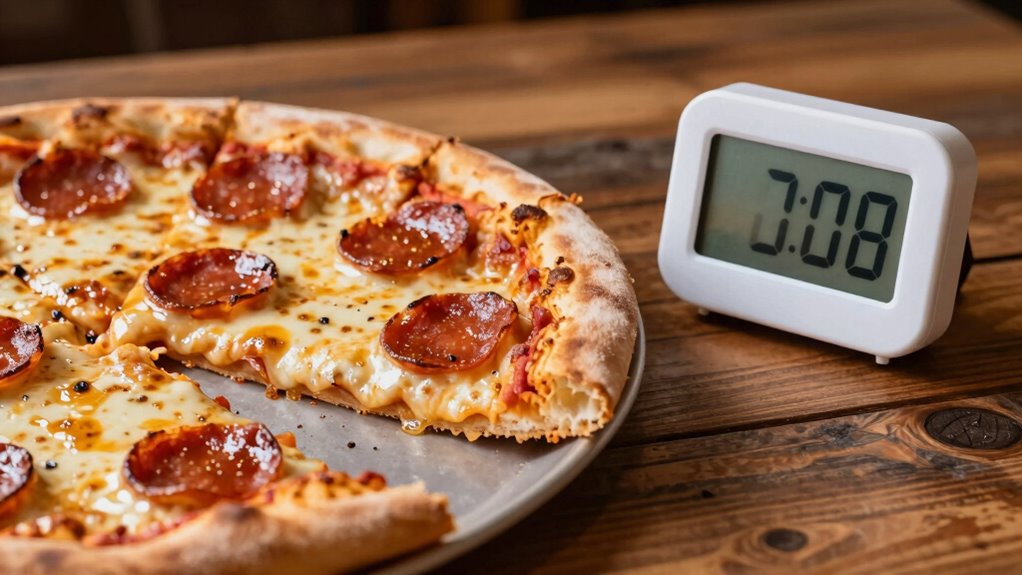
Leftover pizza should not sit out at room temperature for more than two hours. After that, the pizza’s crust begins to lose its crispness, and the toppings start to deteriorate in freshness. Bacteria can quickly grow on the exposed cheese and toppings, especially in warm environments, increasing the risk of foodborne illness. To keep your pizza safe and tasty, refrigerate it promptly if you don’t plan to eat it within two hours. When reheating, pay attention to the crust and toppings to ensure they’re heated evenly and thoroughly. Remember, the longer leftover pizza sits out, the more the quality declines, and the higher the risk of consuming spoiled food. Proper storage and temperature control are essential components of food safety to prevent illness. Additionally, understanding how temperature control affects bacterial growth can help you make safer choices regarding leftovers. Maintaining the proper food temperature is crucial for inhibiting bacteria and keeping your leftovers safe for consumption. Proper bacterial growth management through temperature regulation is vital to avoid potential health hazards, especially in environments where smart home technology can monitor and alert you about optimal storage conditions.
What Are the Food Safety Risks of Eating Pizza Left Out Too Long?
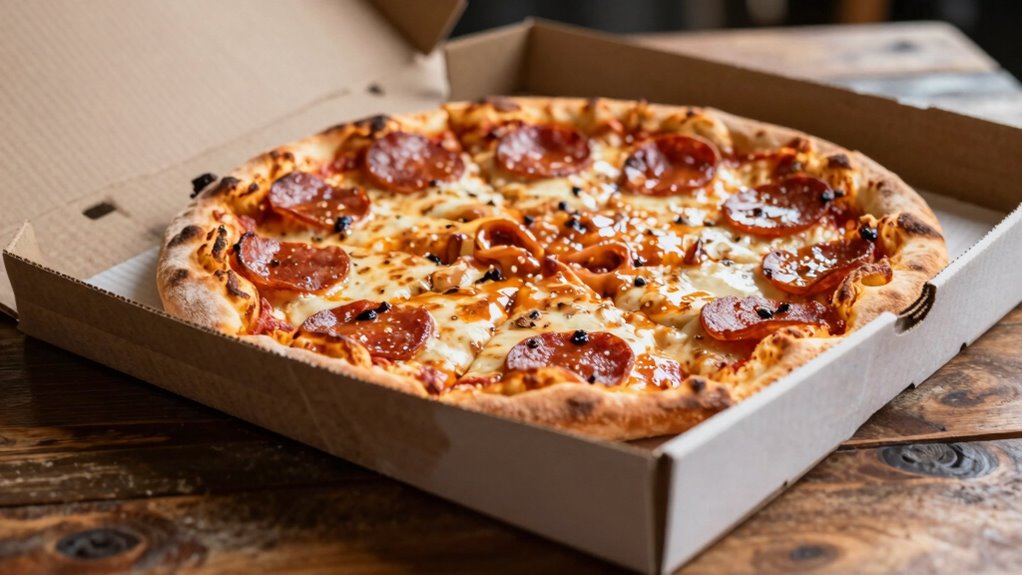
Eating pizza that’s been left out too long can pose serious health risks because bacteria can rapidly multiply on the exposed surfaces, especially in warm environments. These bacteria can cause food poisoning, leading to symptoms like nausea, vomiting, or diarrhea. Here’s what you risk:
- Dairy spoilage – The cheese and sauce can harbor bacteria that cause spoilage, making the pizza unsafe to eat.
- Crust texture changes – Left out pizza’s crust can become soggy or moldy, indicating potential bacterial growth.
- Foodborne illness – Consuming pizza beyond the safe window increases the chance of harmful bacteria like Salmonella or Listeria developing.
Always be cautious and avoid eating pizza left out longer than two hours to prevent these risks.
Understanding the 2-Hour Rule for Pizza Safety
You need to be aware of the 2-hour rule because bacteria can start growing quickly on your pizza if it sits out too long. As bacteria multiply rapidly within the temperature danger zone, keeping food safe depends on proper timing and temperature control. Knowing how to reheat pizza safely can help prevent foodborne illnesses and keep your leftovers tasty. Additionally, understanding the concept of Free Floating bacteria helps underscore the importance of timely refrigeration and proper storage practices. It’s also helpful to recognize how aquatic exercise techniques can promote overall health and stress relief, which emphasizes the value of attentive food handling to avoid unnecessary health issues. Being aware of food safety guidelines is crucial for preventing illness and ensuring your leftovers remain safe to eat. Implementing affiliate disclosure transparency ensures you are informed about how your data and interactions support the site’s operations.
Bacteria Growth Timeline
Understanding how bacteria grow on leftover pizza is vital for ensuring safety. Bacteria growth follows a spoilage timeline that determines when food becomes unsafe. Here’s what you need to know:
- Within 2 hours, bacteria can multiply rapidly, increasing the risk of foodborne illness. Bacteria proliferation accelerates significantly during this period, emphasizing the importance of timely refrigeration.
- After this window, bacteria enter the exponential growth phase, making the pizza unsafe to eat.
- If left out beyond 4 hours, bacteria levels can reach harmful levels, considerably raising the chance of health issues.
- Proper storage and awareness of air quality can also influence bacterial growth rates on leftovers.
- Environmental factors such as temperature control play a significant role in how quickly bacteria multiply on perishable foods.
- Monitoring bacteria growth helps you decide if your leftover pizza is still safe to consume. Additionally, maintaining appropriate storage conditions can slow down bacterial development.
Monitoring this bacteria growth timeline helps you decide if your leftover pizza is still safe. Remember, the longer pizza sits out, the more bacteria develop, making it essential to follow safe storage guidelines and discard leftovers after the recommended time.
Temperature Danger Zone
The Temperature Danger Zone, which ranges from 40°F to 140°F, is the temperature range where bacteria can multiply rapidly on your leftover pizza. Proper temperature control is essential to prevent microbial growth that can cause foodborne illness. When pizza sits within this zone for more than two hours, bacteria can grow to unsafe levels, increasing your risk of illness. To keep your leftovers safe, it’s important to refrigerate or cool pizza promptly, ideally within one hour of serving. If pizza remains in the danger zone for too long, bacteria can multiply exponentially, making it unsafe to eat. Understanding this temperature range helps you make smarter decisions about how long your pizza can sit out without compromising safety. Indoor air quality can also be affected by factors like humidity and ventilation, which influence microbial growth in your environment. Additionally, proper storage techniques are crucial to maintaining food safety after pizza has been served.
Safe Reheating Practices
To keep leftover pizza safe, it’s essential to follow the two-hour rule for reheating and storage. After two hours at room temperature, bacteria can grow on your pizza crust and topping varieties, increasing the risk of foodborne illness. To reheat safely:
- Reheat pizza to at least 165°F, ensuring the crust and toppings are steaming hot.
- Use a microwave or oven, but avoid leaving it in the danger zone for too long.
- Consume leftovers within 3 to 4 days, and always check for signs of spoilage before eating.
- Remember that proper storage practices can help prevent bacterial growth and keep your pizza safe longer.
- Additionally, maintaining good air purifier maintenance and regularly cleaning filters can help improve overall food safety in your kitchen environment.
How to Store Leftover Pizza to Keep It Safe and Fresh
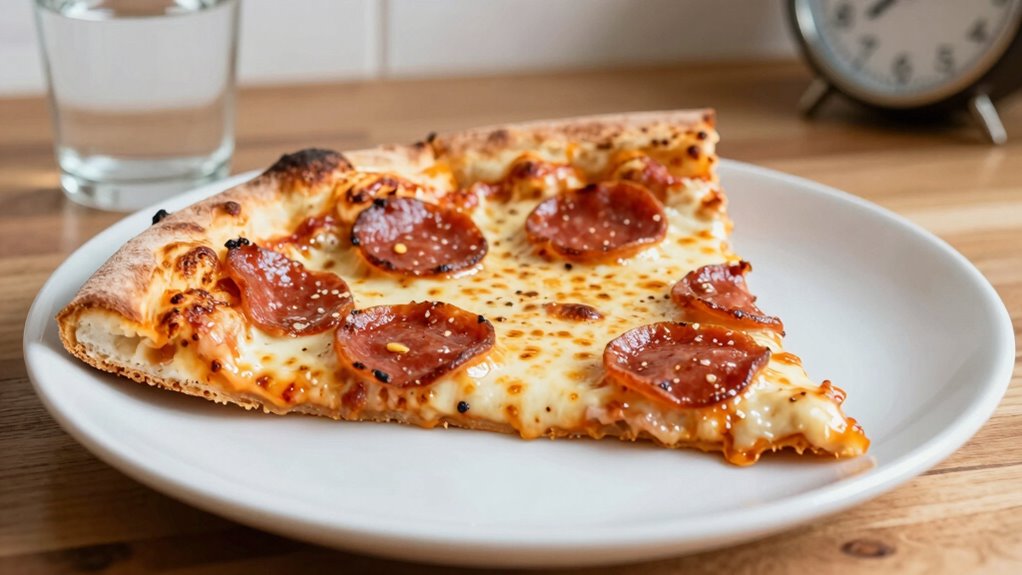
To keep your leftover pizza safe and fresh, proper refrigeration is vital. Use airtight containers or wrap it tightly to prevent contamination and drying out. When reheating, follow best practices to guarantee it’s heated evenly and safely before enjoying. Additionally, understanding food safety guidelines can help you determine how long pizza remains safely edible at room temperature. Being aware of the optimal storage duration ensures you don’t risk consuming spoiled leftovers. To further protect your food, consider using temperature control devices like thermometers or chillers to maintain proper storage conditions. Implementing proper cooling techniques can also help slow bacterial growth and extend the safety window for your leftovers.
Proper Refrigeration Techniques
Proper refrigeration is essential for keeping leftover pizza safe and fresh. To guarantee quality, follow these steps:
- Wrap your pizza tightly with plastic wrap or aluminum foil to protect the crust and prevent air exposure, which can cause the crust to become soggy or stale.
- Store slices in an airtight container or resealable bag to maintain cheese freshness and prevent other fridge odors from seeping in.
- Keep the refrigerator at or below 40°F (4°C) to slow bacterial growth, preserving the pizza’s texture and flavor. Properly stored pizza stays safe for 3 to 4 days. By following these techniques, you help maintain the pizza’s crust crispness and cheese quality while extending its freshness.
Airtight Storage Methods
Using airtight storage methods is key to keeping leftover pizza safe and fresh. When storing your pizza, make sure to wrap it tightly with plastic wrap or place it in an airtight container. This prevents air exposure, which can cause the pizza crust to become soggy and the cheese quality to decline. Keep in mind that excess air can also promote bacterial growth, reducing safety. For best results, remove any excess air from the packaging before sealing. If you’re stacking slices, use parchment paper between them to prevent sticking. Properly stored, your leftover pizza will maintain its texture and flavor longer, making it safer and more enjoyable when you reheat and eat later.
Best Reheating Practices
When reheating leftover pizza, it’s essential to do so safely to prevent bacterial growth and preserve flavor. To guarantee the best results, follow these practices:
- Use an oven or skillet rather than a microwave for crispy crust and even heating, especially for thicker or topping-heavy slices.
- Reheat to at least 165°F (74°C) to kill bacteria, focusing on the pizza’s center, crust, and toppings.
- Add moisture if needed—a damp paper towel over the slice in the microwave helps keep the pizza from drying out, especially for toppings with cheese or vegetables.
Does Reheating Affect Pizza Safety and Quality?
Reheating leftover pizza can impact both its safety and quality, but understanding how to do it properly makes all the difference. When reheating, your goal is to reach safe reheating temperatures of at least 165°F to kill bacteria. This guarantees the pizza is safe to eat, especially if it’s been sitting out too long. Additionally, the way you reheat influences the pizza crust’s texture; high temperatures can crisp the crust without drying out the toppings. Using a skillet or oven helps maintain the pizza’s original flavor and texture better than a microwave. Proper reheating preserves both safety and quality, making your leftover pizza just as enjoyable as when it was fresh.
How to Tell If Your Pizza Has Gone Bad
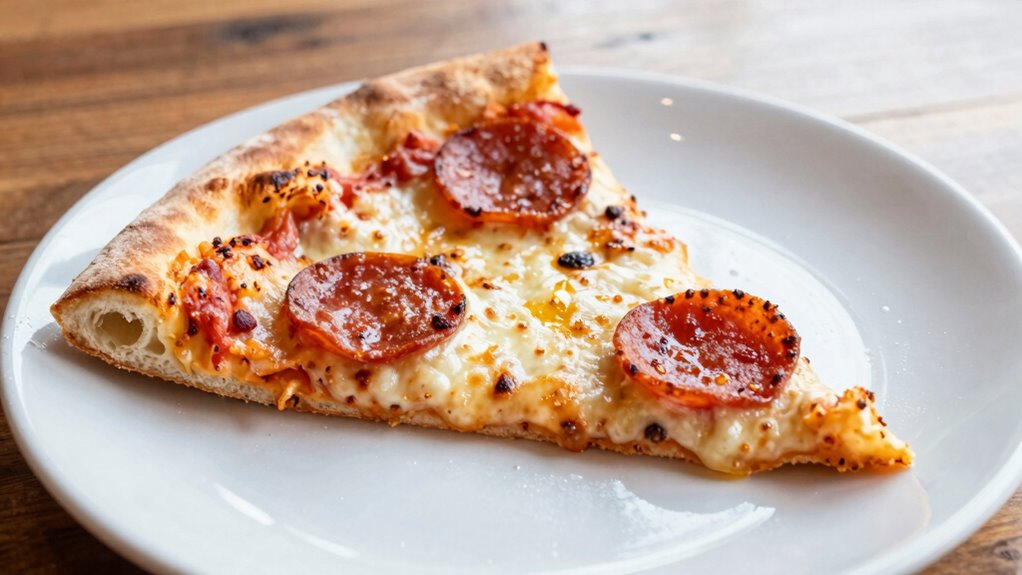
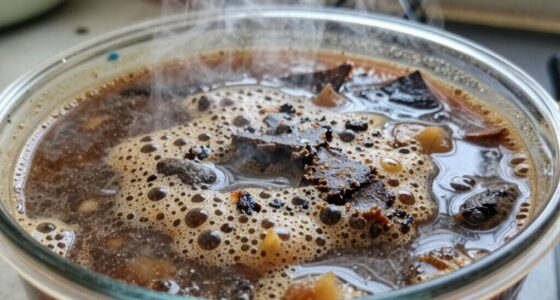
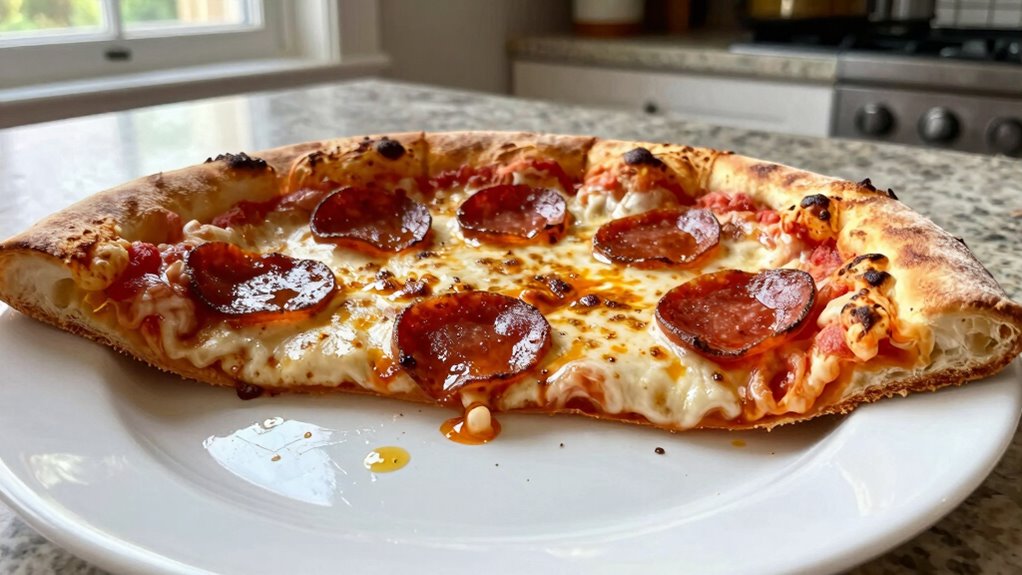
You can often tell if your leftover pizza has gone bad by inspecting it carefully. First, check the pizza crust for mold or a slimy texture, which signals spoilage. Second, examine the toppings for signs of dehydration or discoloration; stale or fuzzy toppings mean it’s time to discard. Third, trust your nose—if the pizza smells sour or off, it’s no longer safe to eat. Pay attention to the overall appearance: fresh toppings should look vibrant, and the crust should be firm and not soggy or sticky. If any of these signs are present, it’s best to toss the pizza. Remember, even if it looks okay, if it’s been sitting out too long, it’s safer to avoid eating it.
Do Toppings or Crust Type Change How Long Pizza Is Safe?
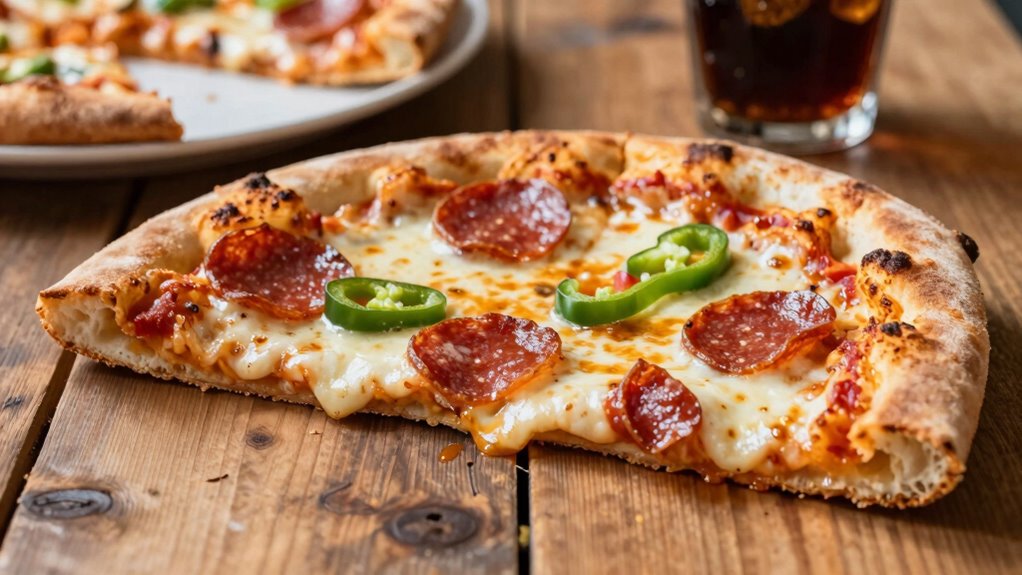
The type of toppings and crust can considerably influence how long leftover pizza remains safe to eat. Topping variations like meats or creamy cheeses may spoil faster, while veggies can sometimes last a bit longer. Crust types also matter—thick, dense crusts hold moisture longer, whereas thin, crispy crusts dry out quickly. Consider this imagery:
| Topping Variations | Crust Types |
|---|---|
| Meats, dairy, seafood | Thick and chewy |
| Veggies, herbs | Thin and crispy |
| Sauces and cheeses | Stuffed or deep-dish |
| Fresh toppings | Gluten-free or artisan |
Knowing these factors helps you gauge how long your leftovers stay safe, but generally, it’s best to consume within 2 hours.
What Do Food Safety Experts Recommend for Pizza Storage?
Food safety experts recommend refrigerating your leftover pizza within two hours of cooking to prevent bacterial growth. Store it in airtight containers to maintain its freshness and minimize contamination. When reheating, choose methods like the oven or skillet to ensure it heats evenly and stays safe to eat.
Proper Refrigeration Timing
To keep leftover pizza safe to eat, it’s important to refrigerate it promptly within a specific timeframe. Food safety experts recommend:
- Refrigerate within 2 hours of serving to prevent bacteria growth on the pizza crust and toppings.
- Store in airtight containers or wrap tightly to maintain topping safety and prevent moisture loss.
- Divide large portions into smaller pieces for quicker cooling and even refrigeration, helping preserve topping safety and pizza quality.
Waiting too long can compromise both the pizza crust’s texture and the safety of the toppings. Prompt refrigeration minimizes bacterial growth, ensuring your leftover pizza stays delicious and safe for later enjoyment. Always aim to refrigerate within two hours to keep food safety at its best.
Ideal Storage Containers
Choosing the right storage container can make a big difference in keeping your leftover pizza fresh and safe. Use shallow, airtight containers to prevent moisture buildup, which can make the crust soggy and spoil toppings. Clear containers help you see what’s inside without opening them, reducing unnecessary exposure. For best topping preservation, consider wrapping individual slices tightly with plastic wrap or aluminum foil before placing them in the container. This prevents air from reaching the toppings and helps maintain flavor and texture. Avoid deep or flimsy containers that can crush the crust or cause uneven cooling. Properly sealed containers minimize bacteria growth and keep your pizza tasting fresh longer. By selecting the right storage containers, you ensure your leftovers stay delicious and safe to enjoy later.
Recommended Reheating Methods
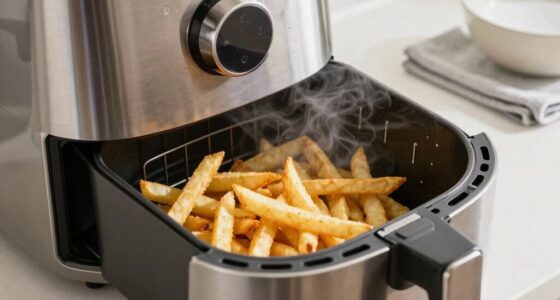
Reheating leftover pizza properly is essential to guarantee it remains safe to eat and retains its best flavor and texture. To achieve this, food safety experts recommend specific methods. First, the microwave is quick, but use a medium setting and add a cup of water to keep the pizza crust moist and prevent sogginess. Second, the oven or toaster oven at 375°F ensures even heating, preserving topping freshness and crispy crust; place pizza directly on the rack or a baking sheet. Third, an air fryer at 350°F offers rapid, crispy results without sacrificing topping quality. Always reheat to an internal temperature of 165°F to ensure safety. These methods help maintain pizza crust integrity and keep toppings fresh for a delicious, safe reheating experience.
Tips for Wrapping and Labeling Leftover Pizza Properly
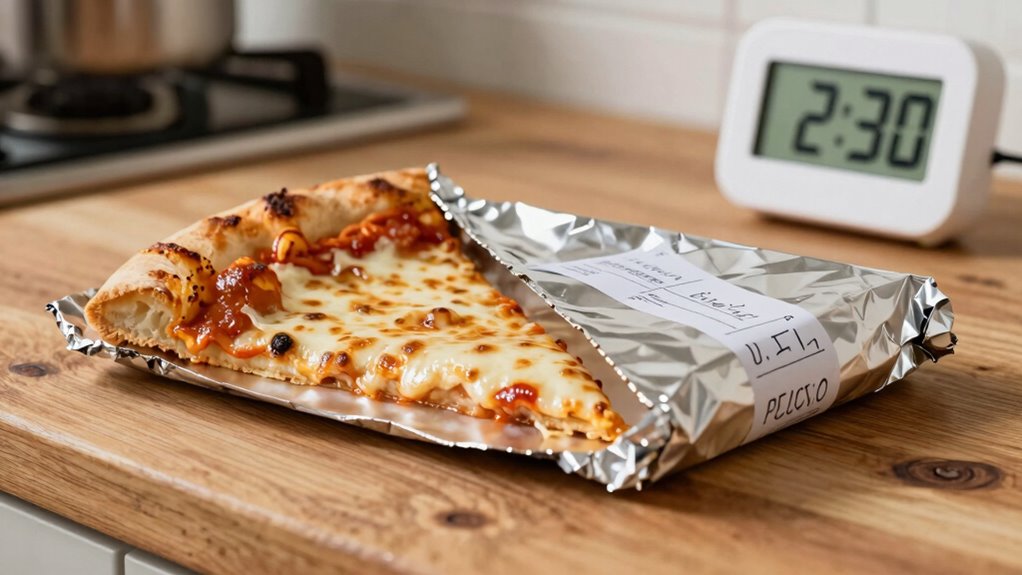
Properly wrapping and labeling leftover pizza is key to maintaining its freshness and safety. Use wrapping techniques like airtight plastic wrap or aluminum foil to prevent air exposure, which can cause spoilage. Make sure your pizza is completely cooled before wrapping to avoid condensation that promotes bacteria growth. When labeling, include the date you stored the leftovers so you know how long they’ve been in the fridge. Clear food labeling helps you keep track and reduces the risk of eating pizza that’s past its prime. Use a permanent marker or sticky notes directly on the container or wrap to avoid confusion. Proper wrapping and accurate food labeling ensure your leftover pizza stays fresh longer and remains safe to enjoy later.
FAQs About Leftover Pizza Safety
If you’ve followed the right wrapping and labeling methods, your leftover pizza should stay safe to eat for several days. But you might still have questions. Here are common FAQs about leftover pizza safety:
- How long can I keep pizza in the fridge? Typically, 3-4 days is safe, regardless of pizza crust or topping varieties.
- Can I leave pizza out overnight? No, per food safety guidelines, pizza should not sit out more than 2 hours.
- Is reheated pizza still safe? Yes, as long as it’s heated to at least 165°F to kill bacteria, especially if it has different topping varieties or a thick crust.
Always check for signs of spoilage, like bad odor or slimy texture, before eating.
Frequently Asked Questions
Can Frozen Leftover Pizza Be Safely Eaten After Thawing?
Yes, frozen leftover pizza can be safely eaten after thawing if you use proper freezing techniques and thawing methods. Make sure to freeze it promptly using airtight packaging to prevent freezer burn. When thawing, do so in the refrigerator or microwave rather than at room temperature. Once thawed, consume the pizza within a couple of days and reheat it thoroughly to guarantee safety.
Does the Type of Cheese Affect Pizza Shelf Life?
Cheese type definitely determines how long your pizza stays safe. Softer cheeses like ricotta melt quickly and may spoil sooner, while harder cheeses like Parmesan resist spoilage longer. When cheese melts perfectly, it seals in moisture, but if it’s prone to spoilage, bacteria can breed faster. So, you should be mindful of cheese melting and spoilage tendencies, keeping pizza properly refrigerated to preserve flavor and prevent foodborne foes.
How Does Altitude Impact Pizza Storage Safety?
Altitude effects can influence how long leftover pizza stays safe. Higher elevations may cause food to cool or dry faster, but they don’t substantially change storage safety guidelines. You should still refrigerate pizza within two hours of cooking, regardless of altitude. Just ensure your refrigerator is at the correct temperature, and avoid leaving pizza out too long, because bacteria can grow quickly at unsafe temperatures, no matter where you are.
Is It Safe to Reheat Pizza Multiple Times?
Can you really keep the magic alive by reheating pizza multiple times? Yes, you can, but beware—each reheating risks flavor loss and food safety issues. Use proper reheating techniques like oven or skillet methods to ensure even heating and preserve flavor. However, limit reheatings to avoid bacterial growth. Think of it as a dance—each step must be precise to keep your pizza tasty and safe.
What Signs Indicate Pizza Has Been Contaminated?
You’ll know pizza is contaminated if you notice mold growth or an off smell, which can cause foodborne illness. Also, slimy textures or unusual discoloration are signs it’s no longer safe to eat. If you see any of these signs, discard the pizza immediately. Consuming contaminated food increases your risk of foodborne illness, so always check your leftovers carefully before reheating or eating.
Conclusion
Remember, your leftover pizza’s safety isn’t just a matter of time but of vigilance. Don’t let it sit out beyond two hours—think of it as a ticking clock for your health. Proper storage and reheating are your best allies in keeping pizza delicious and safe. After all, isn’t enjoying a piece of leftover pizza without worry worth a little extra care? Treat it right, and every bite stays as tempting as the first.