To tell if chicken is done without cutting into it, use a meat thermometer and check for an internal temperature of 165°F (75°C) in the thickest part. Also, look for clear, watery juices and a firm, springy texture—if you press gently, it should bounce back. Avoid relying solely on color or juices, as these can be misleading. Want to master perfect chicken doneness? Keep exploring for more tips.
Key Takeaways
- Use a meat thermometer to check for an internal temperature of 165°F (75°C).
- Ensure the juices run clear and are not pink or bloody.
- Press gently; the chicken should feel firm yet springy and bounce back.
- Observe that drippings are thin, watery, and clear when fully cooked.
- Confirm the meat is opaque throughout, with no translucent or raw-looking areas.
Why You Should Use a Meat Thermometer to Check Chicken
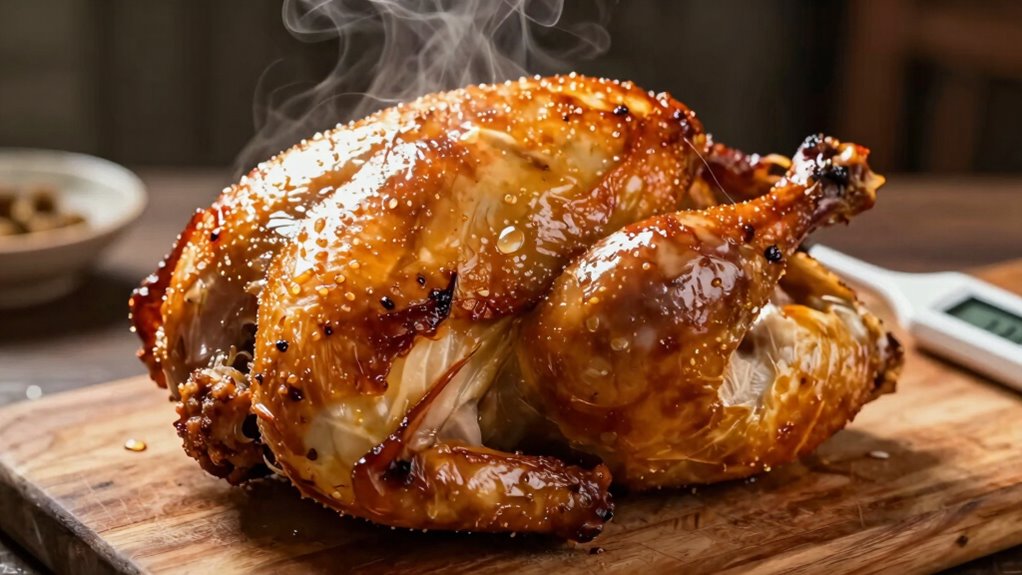
Why should you rely on a meat thermometer to check if your chicken is done? Because food safety is vital, and a thermometer provides an accurate way to ensure your chicken reaches the proper internal temperature. Relying solely on cooking techniques or visual cues can be risky, as undercooked chicken can harbor harmful bacteria. Using a meat thermometer takes the guesswork out of cooking, helping you avoid both undercooking and overcooking. It’s a simple tool that guarantees your chicken is cooked evenly and thoroughly. Proper use of a thermometer aligns with good food safety practices, reducing health risks. Additionally, it helps maintain the chicken’s moisture and flavor by preventing overcooking, making it an essential tool for precise, safe, and delicious results. Incorporating food safety tips into your cooking routine ensures a healthier, more enjoyable meal every time. To further improve your cooking, understanding cooking techniques can help you achieve perfect results consistently. For example, knowing how to interpret internal temperature readings can help you determine exactly when your chicken is ready without guesswork. Using proper equipment like a digital thermometer can also improve accuracy and ease of use.
How to Check If Chicken Juices Are Clear and Juicy
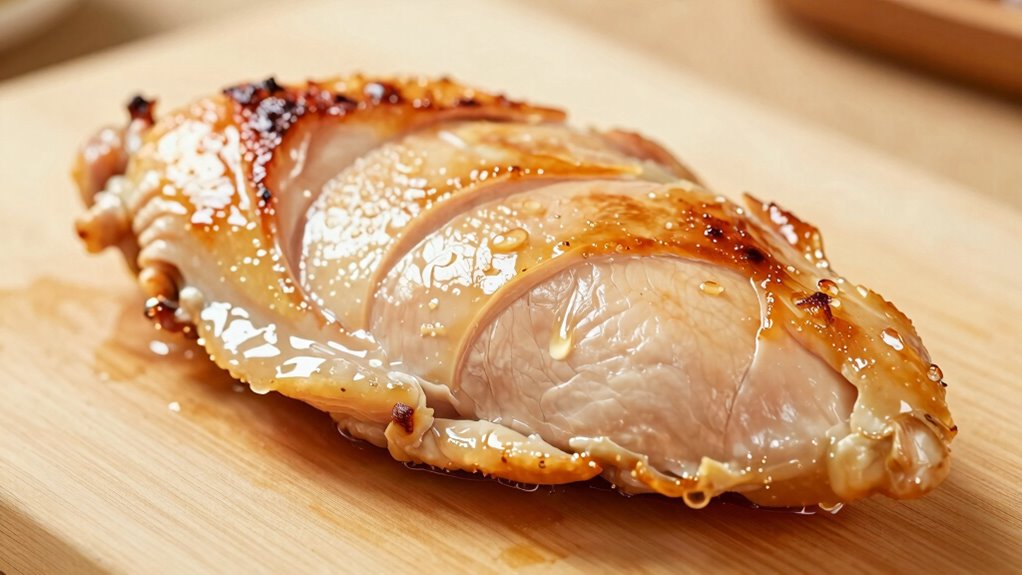
To tell if your chicken is done, start by observing the color of the juices; clear juices indicate doneness. Check the consistency of the drippings—juices should be be runny and free of any pink tint. Keep in mind that proper timing and reaching the right internal temperature are essential for ensuring your chicken is perfectly cooked. Additionally, using a food thermometer to verify that the internal temperature has reached 165°F provides the most reliable indication of doneness. Understanding cooking safety principles can help you prevent undercooking or overcooking your chicken. Remember that yarn weight and stitch type can influence cooking times when preparing chicken dishes that involve layered or stuffed preparations. Properly handling raw poultry and avoiding cross-contamination are critical steps in safe cooking practices. Being familiar with natural indicators of doneness can also help you assess your chicken more accurately without relying solely on tools.
Color of Juices
When checking if your chicken is done, observing the color of its juices is a simple yet effective method. Clear, slightly pinkish juices indicate doneness, while cloudy or red juices suggest it needs more cooking. The juice color reflects the internal temperature and doneness level. Additionally, smart home devices can help monitor cooking processes to ensure food safety and optimal results. Ensuring proper cooking temperature is essential, and food safety guidelines recommend using a meat thermometer to verify doneness accurately.
Consistency of Drippings
Checking the consistency of chicken drippings is a quick way to determine if your meat is cooked properly. When the chicken is done, the dripping consistency should be thin and runny, not thick or sticky. Clear, juicy drippings indicate that the juices have fully cooked and are no longer cloudy or opaque. If the drippings are cloudy or tinged with blood, it suggests the chicken isn’t fully cooked yet. On the other hand, if the juices are clear and watery, your chicken is likely ready to eat. Keep in mind that this method works best when the chicken has rested briefly, allowing the juices to settle. Food safety is an essential aspect of proper cooking, and observing these signs can help prevent undercooked poultry. Additionally, understanding the internal temperature of chicken with a meat thermometer provides an extra layer of certainty about doneness. Proper cooking techniques, including monitoring drippings and using a thermometer, can ensure your chicken is both safe and delicious. Regularly checking the dripping consistency is an easy way to improve your cooking results, especially when combined with other cooking tips from trusted resources.
Timing and Temperature
Timing and temperature are essential for ensuring your chicken is fully cooked and its juices are clear and juicy. Use a meat thermometer to check that the internal temperature reaches 165°F (74°C). Proper marination techniques can help keep chicken moist, but don’t rely solely on flavor—temperature is key. Choosing the right cooking vessel, like a roasting pan or skillet, influences heat distribution and cooking time. Additionally, adequate ventilation during cooking can prevent excess moisture build-up, which affects the appearance of juices. Proper airflow control can also help maintain consistent cooking conditions and ensure the chicken cooks evenly.
How to Feel If Chicken Is Fully Cooked (Firmness Test)
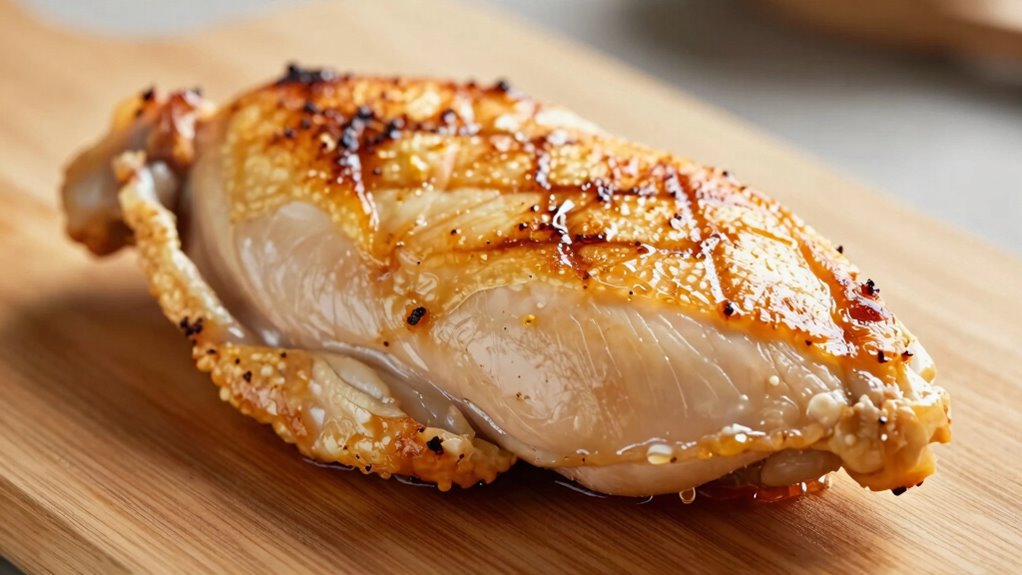
To determine if your chicken is fully cooked using the firmness test, gently press the thickest part of the meat with your finger or a utensil. This touch test helps you perform a firmness check without cutting into the meat. When the chicken is raw or undercooked, it feels soft and squishy. As it cooks, it firmens up. Fully cooked chicken should feel firm but still have some give, similar to pressing the fleshy part of your hand below your thumb. With practice, you’ll develop a sense for the right firmness. This method is reliable for checking doneness, especially when combined with other indicators. Remember, overcooked chicken can become dry, so aim for that perfect balance in firmness. Additionally, understanding the importance of proper cooking techniques can help ensure safety and quality. Being familiar with safe internal temperatures can also guide you to avoid undercooked or overcooked poultry. Incorporating temperature monitoring tools like a meat thermometer can further improve accuracy. Using a reversible tip such as the Graco FFLP can also help in preparing poultry with a smooth, even finish when applying sauces or marinades.
What Does Properly Cooked Chicken Look and Feel Like?
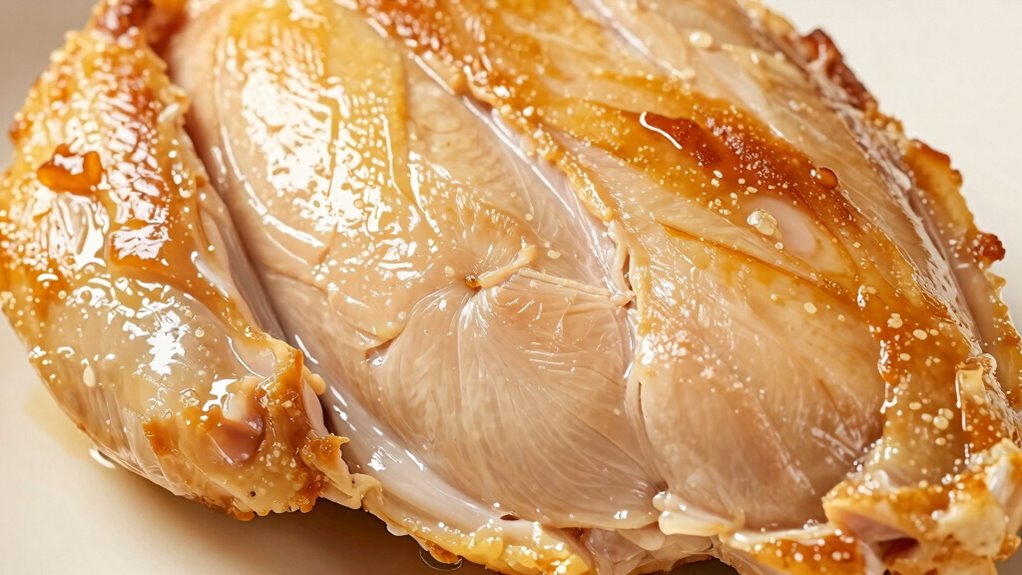
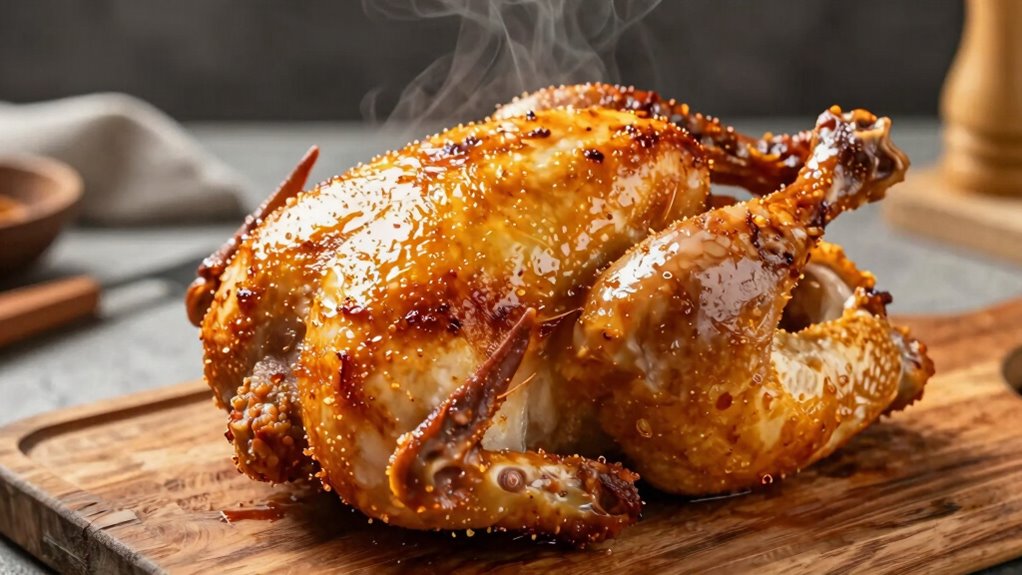
Properly cooked chicken should be juicy and have a firm, yet tender, texture when you touch it. The meat should be clear, with no pink juices or raw-looking areas. Using an internal temperature of 165°F guarantees it’s safely done and ready to serve. Additionally, knowing how to check doneness can help ensure your chicken is perfectly cooked every time. Paying attention to visual cues such as color and surface firmness can also help you determine doneness without cutting into the meat.
Juicy, Firm Texture
When chicken is cooked correctly, it should have a juicy, tender interior that feels firm but not rubbery. The marbling patterns inside indicate even fat distribution, contributing to that moistness and flavor. Proper cooking methods, like baking or grilling, help preserve this juiciness by sealing in moisture. When you press gently on the meat, it should feel firm yet resilient, bouncing back slightly without feeling dense or overly soft. If the texture is too soft or mushy, it’s undercooked; if it’s overly firm or tough, it’s overdone. The balance between juiciness and firmness signals that your chicken is cooked properly and ready to enjoy. Pay attention to these tactile cues to avoid cutting into the meat unnecessarily.
Clear, No Pink Juices
A key sign that your chicken is fully cooked is the absence of pink or red juices when you cut into it. Proper poultry safety depends on avoiding undercooked meat, which can harbor harmful bacteria. When done correctly, the juices should run clear, indicating the chicken has reached a safe internal level. Using effective cooking techniques, like even heat distribution and consistent temperature control, helps ensure your chicken cooks thoroughly. Pay attention to the color of the juices; if they are cloudy or pinkish, it’s a sign you need to cook it a bit longer. Relying on visual cues like clear juices is a simple, reliable method to determine doneness without cutting into the meat excessively, helping you achieve safe, delicious results every time.
Internal Temperature Guidelines
To guarantee your chicken is thoroughly cooked, monitoring its internal temperature is the most reliable method. Cooking times can vary depending on the cut and cooking method, so relying solely on time isn’t enough. Use a meat thermometer to ensure temperature accuracy—chicken should reach an internal temperature of 165°F (75°C). When properly cooked, the meat will be firm and opaque throughout, with no pinkness or translucent areas. Juices should run clear, and the texture will feel springy yet firm under gentle pressure. Avoid guesswork; instead, check the temperature at the thickest part of the meat, avoiding bones. This precise approach helps prevent undercooking or overcooking, ensuring your chicken is safe to eat and perfectly done every time.
How Long Should Chicken Cook Based on Size and Method
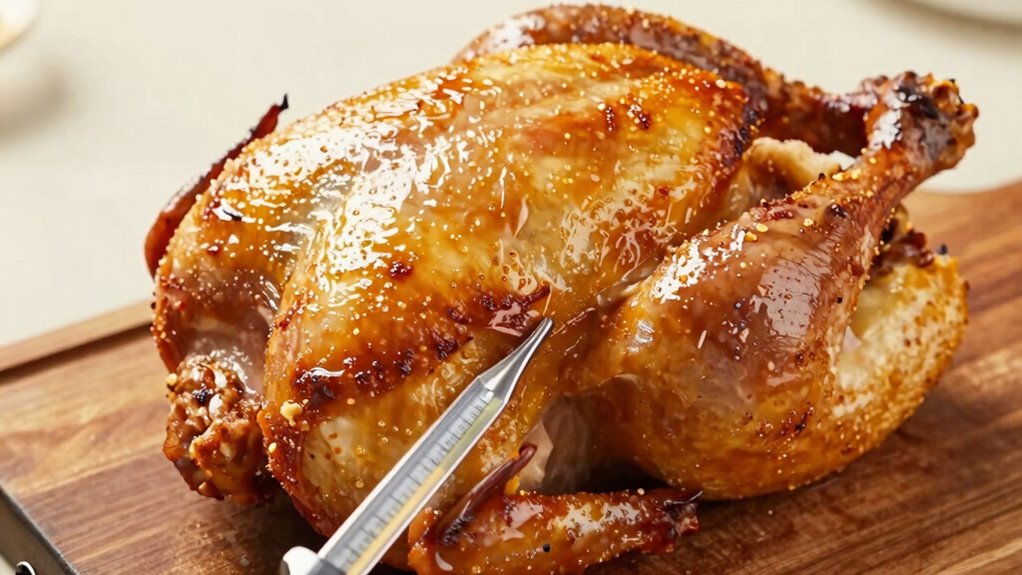
The cooking time for chicken varies considerably depending on its size and the method you choose. Larger pieces take longer, so size adjustments are essential. For example:
Cooking times for chicken depend on size and method; adjust accordingly for perfect results.
- Whole chickens may need 1.5 to 2 hours in the oven.
- Bone-in breasts typically cook for 30-40 minutes.
- Boneless breasts usually take 20-30 minutes.
- Thighs, whether bone-in or boneless, require about 40-45 minutes.
- Chicken tenders cook quickly, around 10-15 minutes.
Cooking times differ with grilling, baking, or stovetop methods, so always monitor internal temperature. Adjust your timing based on size, ensuring you don’t overcook or undercook. Proper size adjustments help you hit the perfect doneness without guesswork.
Quick Tips to Ensure Chicken Is Safe and Juicy Every Time
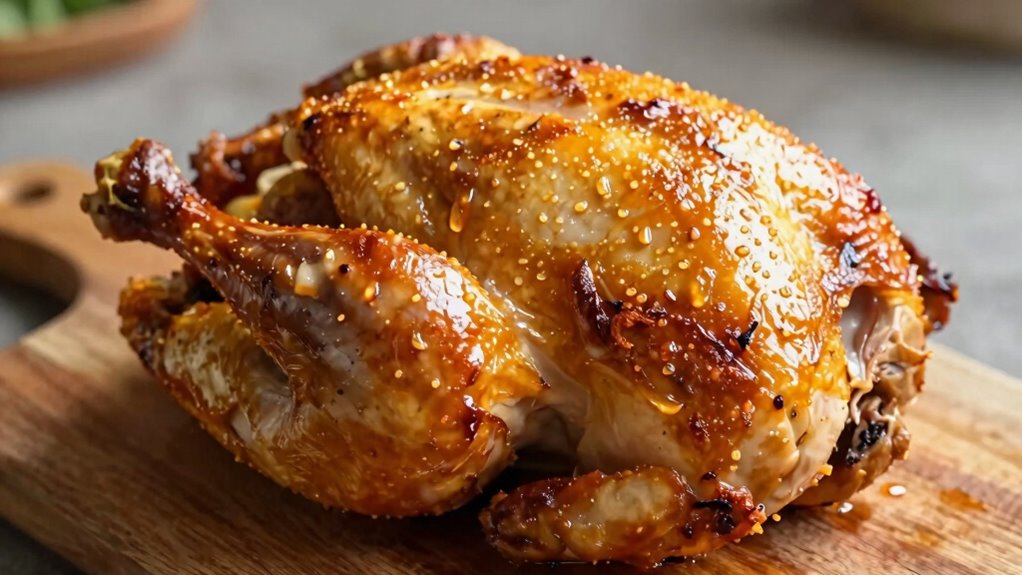
Ensuring your chicken stays safe and juicy starts with proper handling and attention during cooking. Use the right cooking methods, like baking, grilling, or sous-vide, to keep moisture in and bacteria out. Always refrigerate chicken promptly and store it in airtight containers to prevent contamination. When cooking, check the internal temperature with a meat thermometer—165°F (74°C) is key. Keep this table handy:
| Storage Tip | Cooking Tip | Safety Indicator |
|---|---|---|
| Refrigerate within 2 hours | Use a thermometer | Internal temp of 165°F |
| Keep raw & cooked separate | Avoid overcooking | Clear juices or firm texture |
| Use airtight containers | Rest chicken after cooking | No pink meat inside |
Following these tips guarantees your chicken is both safe and juicy every time.
Frequently Asked Questions
Can You Tell if Chicken Is Done Without Any Tools?
Yes, you can tell if chicken is done without tools by paying attention to visual cues and aroma indicators. Look for clear juices running from the meat, and the meat should turn from pink to white or tan. You’ll also notice a change in aroma—cooked chicken emits a savory, roasted smell. When these signs align, your chicken is most likely fully cooked and safe to eat.
What Are the Visual Signs of Overcooked Chicken?
Overcooked chicken looks like a sun-bleached skeleton—dry, chalky, and tough as leather. You’ll notice a pale, almost grayish color change, losing its natural pink hue. The juiciness level vanishes, leaving it as dry as a desert. The surface may appear leathery or cracked, and the meat pulls apart with difficulty. If it looks like it’s been through a desert storm, it’s definitely overcooked and needs moisture and care to salvage.
How Does Resting Time Affect Doneness?
Resting time considerably impacts doneness by allowing carryover cooking to finish, ensuring your chicken reaches the perfect internal temperature. During resting, the residual heat distributes evenly, preventing overcooking and keeping the meat juicy. The resting effects help you avoid cutting into undercooked or overcooked chicken, giving you a tender, safe-to-eat result. Always let your chicken rest for about 5-10 minutes before serving for ideal doneness and flavor.
Are There Differences in Cooking Times for Different Chicken Cuts?
Ever wonder if different chicken cuts need different cooking times? Yes, they do! Thicker cuts like breasts or thighs require longer cooking at the right temperature to reach safety, usually 165°F. Thinner pieces cook faster, so you should adjust the cooking temperature and time accordingly. Are you checking doneness with a thermometer? That’s the best way to guarantee each cut is perfectly cooked without overdoing it.
Is Pink Chicken Always Unsafe to Eat?
Pink chicken isn’t always unsafe. You should look for a proper color change to white or tan, and check that the juices run clear rather than pink or red. These signs indicate the chicken’s cooked through. Use a meat thermometer to confirm the internal temperature reaches 165°F (74°C). Relying on color alone can be misleading, so combining visual cues with a thermometer gives you the safest indication.
Conclusion
So, next time you’re unsure if your chicken’s done, don’t just guess—trust your tools and techniques. A quick check with a thermometer or a gentle press reveals more than you think, but there’s always a moment of hesitation. Will it be perfectly juicy or slightly underdone? The secret lies in paying attention to those subtle signs. Master these skills, and you’ll always serve safe, flavorful chicken—but only if you know exactly when to stop.