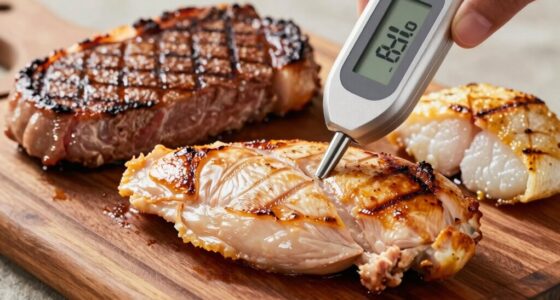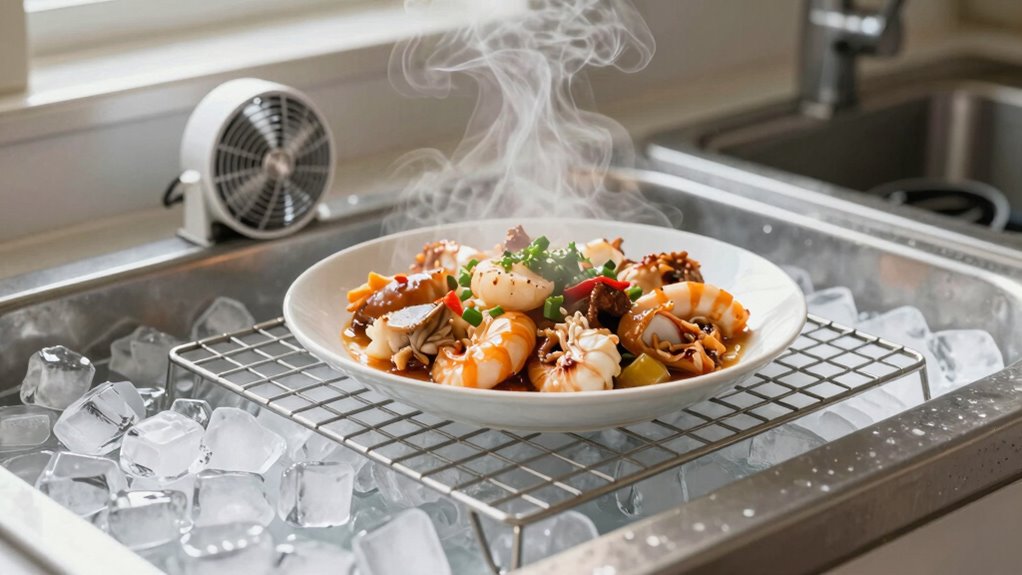
To cool hot food quickly and safely, transfer it into shallow, wide containers to increase surface area and promote faster cooling. Use ice baths, guaranteeing the food is fully submerged and stir gently to release heat evenly. Keep containers uncovered or loosely covered for airflow and monitor temperatures regularly to meet safety guidelines. Avoid shortcuts like leaving food out or using unsafe methods—sticking to proven techniques guarantees food stays safe. Learn more tips below to optimize your cooling process.
Key Takeaways
- Use shallow, wide containers to increase surface area and promote faster heat dissipation.
- Divide large portions into smaller containers to accelerate cooling.
- Immerse hot food in an ice bath, ensuring complete submersion and regular stirring.
- Elevate containers on racks or stands to enhance airflow around the food.
- Monitor temperatures regularly, cooling food to below 40°F within 4 hours for safety.
Introduction: Why Cooling Hot Food Safely Matters

Cooling hot food safely is essential to prevent the growth of harmful bacteria that can cause food poisoning. If you don’t cool food properly, bacteria thrive, increasing the risk of illness. Maintaining good kitchen hygiene is critical during cooling, as cross-contamination can spread bacteria from raw to cooked foods. Safe cooling practices help preserve food quality and ensure it stays safe to eat later. When food isn’t cooled quickly enough, bacteria multiply rapidly, making leftovers unsafe. Proper cooling techniques and using proper storage solutions can help maintain optimal temperatures and reduce risks during the cooling process, especially when using temperature control devices to monitor food safety. Incorporating efficient cooling methods can significantly minimize bacterial growth during the critical cooling period.
How to Cool Hot Food Quickly and Safely
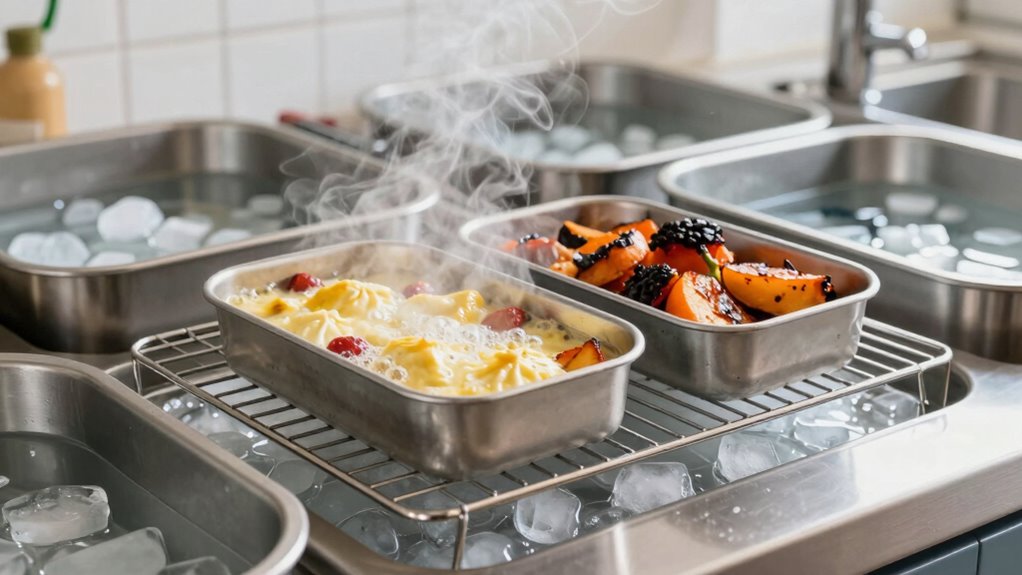
To prevent bacteria from multiplying, it’s important to cool hot food quickly and safely. Start by dividing large portions into smaller, shallow containers to speed up cooling. This enhances food storage efficiency and promotes proper kitchen hygiene. Avoid leaving food out at room temperature for too long; instead, place containers in an ice bath or use an ice paddle to lower temperature rapidly. Stirring occasionally helps release heat evenly. Incorporating proper cooling techniques can significantly improve the safety and quality of your stored food. Additionally, using food thermometers to monitor temperature ensures that food reaches the safe cooling range. Utilizing proper storage methods can further prevent contamination and spoilage. Once cooled, promptly store food in airtight containers to prevent contamination and maintain freshness. Always verify your cooling process adheres to food safety guidelines to reduce the risk of foodborne illnesses. Properly cooled food not only preserves quality but also upholds hygiene standards essential for safe food storage. Understanding food safety practices ensures that your food remains safe from spoilage and contamination. Moreover, employing temperature monitoring tools can help you confirm that the food has cooled sufficiently.
Common Risks of Improper Cooling

If hot food isn’t cooled properly, bacteria can grow rapidly, increasing the risk of food poisoning. Proper temperature control during cooling is crucial to inhibit this growth effectively. Maintaining correct cooling methods helps prevent bacteria from reaching dangerous levels. Additionally, using sound vibrations or other scientifically supported techniques can enhance the cooling process without introducing risks.
2. Food Poisoning: Consuming contaminated food causes symptoms like nausea, vomiting, and diarrhea.
3. Toxin Formation: Some bacteria produce toxins that aren’t destroyed by reheating, risking illness even after cooking.
4. Cross-Contamination: Bacteria from improperly cooled food can spread to other foods, amplifying health risks.
5. Temperature Control: Maintaining proper water chemistry and temperature regulation during cooling is essential to inhibit bacteria growth effectively.
Best Methods to Cool Hot Food Fast

To cool hot food quickly, you should consider using ice baths, which absorb heat rapidly, or transfer the food into shallow containers to increase surface exposure. Maximizing cold air flow around the food also speeds up the cooling process. These methods help prevent bacteria growth and keep your food safe to eat. Additionally, understanding heat transfer principles can help you choose the most efficient cooling method for different types of foods. Incorporating thermal conductivity knowledge can further improve your cooling techniques by selecting materials that facilitate faster heat dissipation. Using smart kitchen appliances that monitor and control temperature can also optimize the cooling process for safety and efficiency. Moreover, utilizing conversion kits designed for various bikes demonstrates the importance of compatible materials and systems in optimizing performance and safety. Being aware of material properties can also assist in selecting containers and tools that enhance heat transfer and cooling speed.
Use Ice Baths
When you need to cool hot food quickly, immersing it in an ice bath is one of the most effective methods. It rapidly lowers temperature, preserving food quality and ensuring safety. To do this properly:
- Place your hot food in a heatproof, shallow container.
- Fill a larger basin with ice and cold water, creating an ice bath.
- Submerge the container in the ice bath, ensuring water surrounds all sides.
- Stir the food occasionally for even cooling and to prevent ice from clumping.
- Use proper food safety techniques to prevent contamination during the cooling process.
- Incorporate modern kitchen technology like temperature sensors to monitor the cooling process accurately, ensuring optimal safety and efficiency. Regular monitoring helps prevent bacterial growth and ensures the food reaches a safe temperature promptly.
- Additionally, selecting the right cooling method based on the type of food can further enhance safety and efficiency.
- Proper storage practices after cooling are essential to maintain food safety and quality.
Using an ice bath not only speeds up cooling but also helps maintain food presentation by preventing overcooking or drying out. It preserves flavor enhancement, ensuring your dish tastes as fresh as when it was cooked.
Employ Shallow Containers
Using shallow containers is one of the quickest ways to cool hot food safely. When you transfer food into these containers, it increases surface area, allowing heat to dissipate faster. Choose container materials like metal or food-grade plastic that conduct heat well and won’t leach chemicals into your food. Avoid deep or bulky containers, which trap heat and slow cooling. Proper food storage is essential—you want to prevent bacteria growth, so don’t overload containers or pack food too tightly. Spread out hot food in thin layers for ideal cooling, and place the containers in a cool, well-ventilated area. Using shallow containers helps you reduce cooling time markedly, ensuring your food reaches safe temperatures quickly and safely for storage or consumption. Additionally, using proper cooling techniques can further enhance safety and efficiency in the cooling process.
Maximize Cold Air Flow
Maximizing cold air flow is one of the most effective ways to cool hot food quickly. To optimize airflow and improve container ventilation, follow these steps:
- Use a fan or open windows to increase air circulation around your containers.
- Place hot food in shallow, wide containers to expose more surface area for airflow.
- Elevate containers on a rack or stand to prevent airflow blockage beneath.
- Arrange containers with space between them, avoiding overcrowding to ensure consistent ventilation.
Using Ice Baths to Cool Food Fast

Setting up an effective ice bath is key to cooling your hot food quickly and safely. You need to oversee the temperature and timing closely to prevent bacteria growth or food spoilage. Always follow proper safety precautions to protect your food and ensure it cools efficiently.
Proper Ice Bath Setup
To properly set up an ice bath for cooling food quickly, start by choosing a large, sturdy container that can hold enough ice and water to fully submerge your hot items. This guarantees rapid heat transfer and prevents contamination. Next, follow these steps:
- Fill the container halfway with cold water.
- Add ice generously, maintaining a 2:1 ice-to-water ratio.
- Submerge your hot food, ensuring even contact with the ice water.
- Stir occasionally to distribute the cooling evenly, similar to adjusting baking techniques for uniform results.
Timing and Monitoring
How can you guarantee your food cools quickly and safely using an ice bath? The key is careful timing and diligent food monitoring. Keep a close eye on the temperature control process by using a reliable food thermometer to check the food’s temperature regularly. You should start timing immediately once you place the hot food in the ice bath, aiming to bring it down from 135°F to 70°F within two hours, then to 41°F or lower within an additional four hours. Monitor the temperature at intervals—every 15 to 30 minutes—to ensure it’s cooling properly. If the temperature plateaus or remains high, adjust the ice or stir the food gently for even cooling. Consistent monitoring helps prevent unsafe bacterial growth, ensuring safe, rapid cooling.
Food Safety Precautions
Ensuring food safety while cooling hot foods in an ice bath requires careful attention to hygiene and proper handling. To maintain ideal temperature control and prevent contamination, follow these steps:
- Use clean, sanitized containers and utensils to prevent bacteria transfer.
- Keep the ice bath at a consistent temperature below 41°F (5°C) to slow bacterial growth.
- Submerge the food completely, ensuring no part remains exposed to air.
- Regularly stir the food gently to promote uniform cooling and avoid hotspots.
Why Cooling in Stages Works and How to Do It

Cooling food in stages works because it helps prevent bacteria from multiplying rapidly, which can happen when hot food is cooled too quickly or too slowly. By using gradual cooling, you allow the food to pass through specific temperature stages safely. Start by dividing large quantities into smaller, shallow containers to increase surface area. Then, cool the food to about 70°F within two hours, using methods like placing containers in an ice water bath. After reaching this temperature, transfer the food to the refrigerator to cool further to below 40°F. This process ensures the food cools efficiently and safely. Following these temperature stages reduces the risk of bacterial growth and keeps your food safe to eat later.
Tips for Covering and Storing Hot Food During Cooling

Properly covering and storing hot food during cooling helps maintain food safety and prevents contamination. To do this effectively:
- Use appropriate covering techniques, like loose-fitting lids or plastic wrap, to allow moisture escape without exposing food to contaminants.
- Choose shallow, heat-safe storage containers to promote even cooling and reduce bacteria risk.
- Divide large quantities into smaller portions in separate containers for faster cooling.
- Label containers clearly with date and contents to ensure proper inventory management.
Always avoid airtight seals during initial cooling, as trapped heat can promote bacterial growth. Proper covering techniques and suitable storage containers ensure your hot food cools quickly and safely, reducing the risk of foodborne illness.
Mistakes That Slow Down Cooling or Endanger Safety

If you leave hot food out too long, bacteria can grow quickly, risking food safety. Using warm containers slows cooling and can keep your food in the danger zone longer. Ignoring temperature guidelines might seem harmless, but it actually increases the risk of foodborne illness.
Leaving Food Out Too Long
Leaving food out at room temperature for too long can substantially slow down the cooling process and increase the risk of foodborne illness. When food isn’t properly stored, bacteria multiply rapidly, compromising safety and quality. To avoid this, follow these principles:
- Limit time out of refrigeration to under two hours to maintain kitchen hygiene.
- Use shallow containers to promote faster cooling and prevent bacterial growth.
- Regularly check food storage conditions to ensure safety standards are met.
- Avoid leaving hot food uncovered, which can attract pests and introduce contaminants.
Using Warm Containers
Using warm containers to store hot food can substantially slow down the cooling process and increase the risk of bacterial growth. When you choose containers, consider their material—metal cools faster than plastic, aiding quicker temperature monitoring and safe cooling. Warm containers hold residual heat, which keeps food above safe temperatures longer, giving bacteria more time to multiply. To optimize cooling, always use pre-chilled or room temperature containers, especially for large quantities.
| Container Material | Effect on Cooling Speed |
|---|---|
| Metal | Cools swiftly |
| Plastic | Slower cooling |
| Insulated | Traps heat |
Selecting the right container minimizes heat retention, speeds up cooling, and ensures food safety.
Ignoring Temperature Guidelines
Ignoring temperature guidelines can substantially delay the cooling process and increase the risk of bacterial growth. When you neglect proper temperatures, you risk temperature abuse, which allows bacteria to thrive. Additionally, improper reheating can create uneven heat distribution, further endangering food safety. To avoid these mistakes:
- Don’t leave hot food out too long; follow recommended cooling times.
- Always cool food quickly to prevent temperature abuse.
- Reheat leftovers thoroughly, reaching safe internal temperatures.
- Use a thermometer to monitor food temperatures and prevent improper reheating.
Failing to adhere to these guidelines can foster bacterial growth, making food unsafe to eat. Remember, quick cooling and proper reheating are essential to maintaining safety and quality, preventing both health hazards and wasted food.
How Long Should It Take to Cool Hot Food Safely?
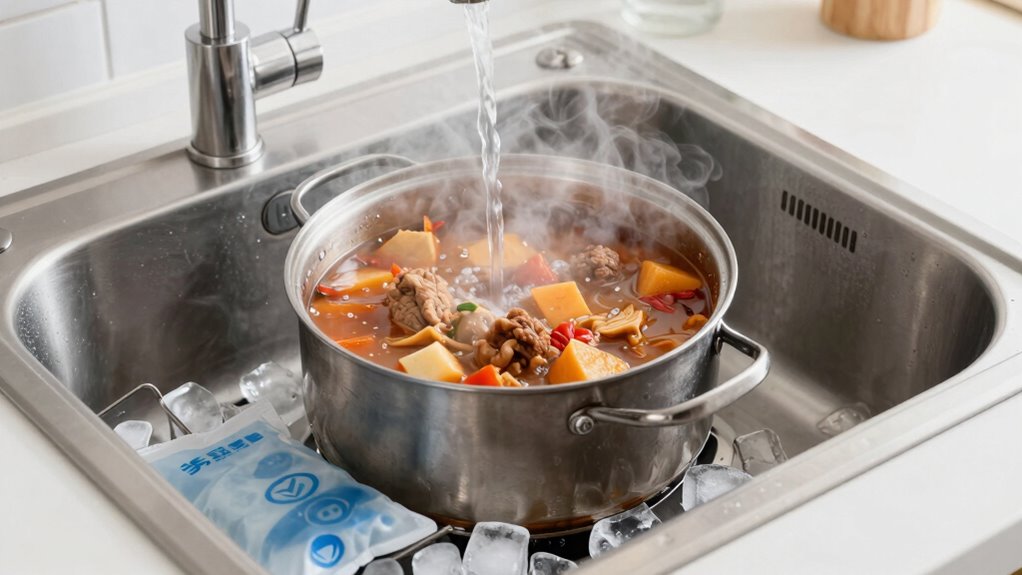
To cool hot food safely, it’s important to follow recommended timeframes to prevent bacterial growth. Generally, hot food should reach a safe food temperature of 40°F (4°C) within two hours. The total cooling time should not exceed four hours from the time it was cooked.
| Food Temperature | Ideal Cooling Time | Maximum Cooling Time |
|---|---|---|
| 135°F (57°C) | 1-2 hours | 4 hours |
| 70°F (21°C) | 2 hours | 4 hours |
| Below 70°F (21°C) | Within 4 hours | N/A |
| Room temperature | Avoid beyond 2 hours | N/A |
Sticking to these guidelines guarantees your food remains safe, minimizing the risk of bacteria developing during the cooling process.
Extra Tips for Fast, Safe Cooling
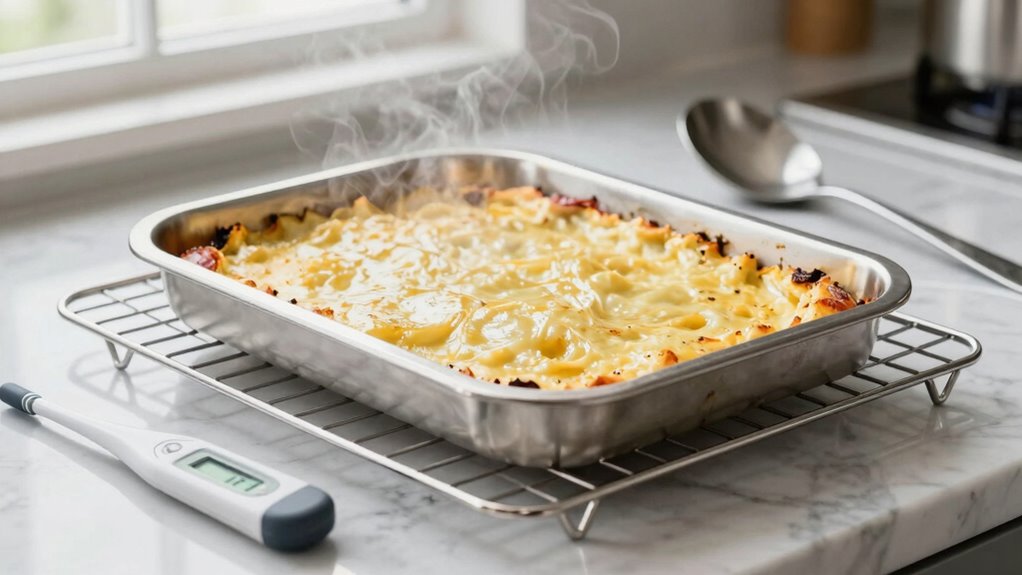
Implementing additional techniques can substantially speed up the cooling process while keeping your food safe. Proper food storage and maintaining kitchen hygiene are key. To optimize cooling, consider these tips:
Speed up cooling safely with proper storage, hygiene, and techniques like shallow containers and gentle stirring.
- Use shallow containers to increase surface area, promoting faster heat dissipation.
- Divide large portions into smaller, manageable amounts for quicker cooling.
- Stir hot foods gently to release heat evenly, avoiding the risk of bacterial growth.
- Keep the cooling area clean to prevent cross-contamination and ensure food safety.
Frequently Asked Questions
Can Using a Fan Help Cool Food Faster Without Safety Risks?
Yes, using a fan can help cool food faster without safety risks. Fan assistance improves air circulation around your hot food, speeding up the cooling process naturally. Just place the food in a shallow container and position the fan nearby to blow air across the surface. This method safely accelerates cooling, reduces bacterial growth risk, and avoids dangerous shortcuts like leaving food at room temperature for too long.
Is It Safe to Leave Hot Food at Room Temperature to Cool?
Don’t let hot food sit out too long; it’s a recipe for trouble. Leaving food at room temperature can lead to bacteria growth, risking food poisoning. Follow food storage and temperature guidelines—cool food quickly using shallow containers or ice baths. If it’s been out more than two hours, it’s safer to discard it. When in doubt, play it safe and keep your meals out of danger’s way.
How Does Container Material Affect Cooling Speed and Safety?
Container materials greatly affect cooling speed and safety through heat conduction. Metal containers, like stainless steel, transfer heat quickly, helping food cool faster but can be hot to handle. Glass or ceramic containers conduct heat more slowly, delaying cooling but remaining safer to touch. To cool hot food safely and efficiently, choose containers with good heat conduction, like metal, and avoid airtight lids that trap heat, ensuring even cooling.
Can Reheating Cooled Food Cause Safety Issues?
Imagine lifting the lid of your fridge, ready to reheat leftovers. Reheating cooled food can cause safety issues if it’s been in the temperature danger zone too long, risking bacteria growth. Proper food hygiene means reheating to the correct temperature quickly to kill harmful microbes. If you don’t, you could unknowingly consume unsafe food, risking illness. Always reheat thoroughly to keep your meals safe and delicious.
Is There a Temperature Threshold to Stop Cooling Methods Safely?
You should stop cooling methods once your food reaches 70°F within two hours, according to food safety and cooling guidelines. It’s essential to keep hot food out of the danger zone (40-140°F) to prevent bacteria growth. Using ice baths or shallow containers helps you cool food quickly and safely, avoiding risks. Always monitor temperatures closely to guarantee your food stays within safe limits during cooling.
Conclusion
Remember, rushing cooling can lead to dangerous bacteria growth, so never skip proper methods. While it might seem quicker to leave food out or use risky shortcuts, doing so puts your health at risk. Instead, trust proven techniques like ice baths and proper storage. Taking a few extra minutes guarantees your food stays safe to eat and tastes great. Prioritize safety—it’s worth it for peace of mind and your health.