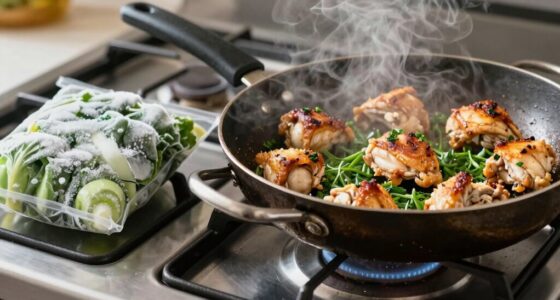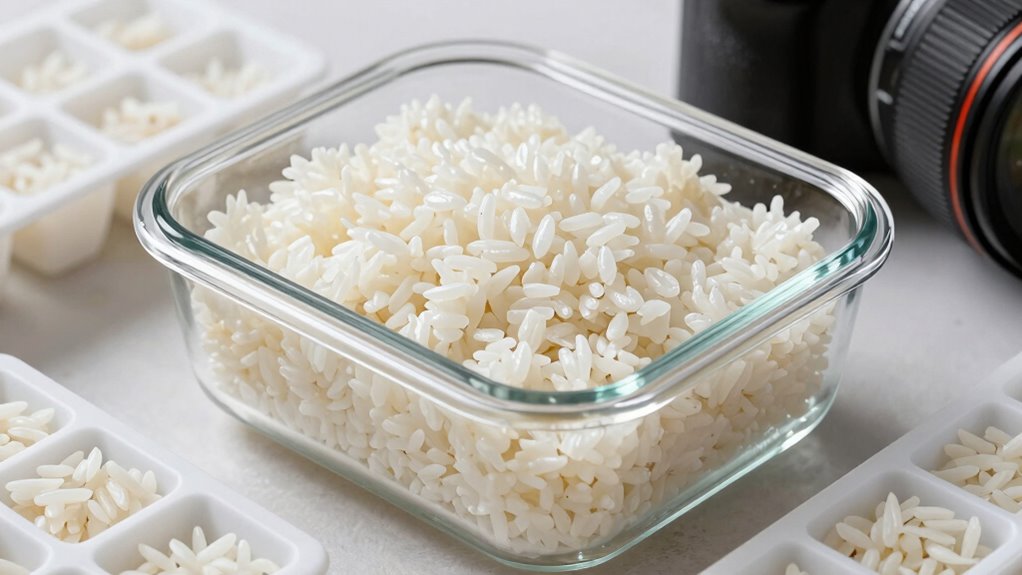

To freeze cooked rice safely and make reheating easy, cool it quickly by spreading it on a baking sheet or using an ice bath. Once cold, transfer the rice into airtight, leak-proof containers or resealable bags, removing excess air. Label each portion with the date and freeze within two hours of cooking. For best results, thaw it in the fridge and reheat thoroughly, and you’ll preserve the flavor and texture. Keep exploring for more tips and tricks.
Key Takeaways
- Cool cooked rice quickly to below 41°F (5°C) within two hours to prevent bacteria growth before freezing.
- Store rice in airtight, resealable freezer bags or containers, removing excess air to prevent freezer burn.
- Label packages with the freezing date and divide rice into smaller portions for easy reheating.
- Freeze rice flat in shallow containers or bags for quick freezing and thawing.
- Thaw rice safely in the refrigerator overnight or use microwave defrost, then reheat thoroughly to 165°F (74°C).

Rubbermaid Brilliance 16-Cup Airtight Food Storage Container with Lid Clear/Grey – optimal for pantry organization flour sugar and food storage
Modular Design: Rubbermaid Storage Containers are compact and stackable, optimizing your kitchen storage space.
As an affiliate, we earn on qualifying purchases.
As an affiliate, we earn on qualifying purchases.
Why Proper Storage Matters for Cooked Rice
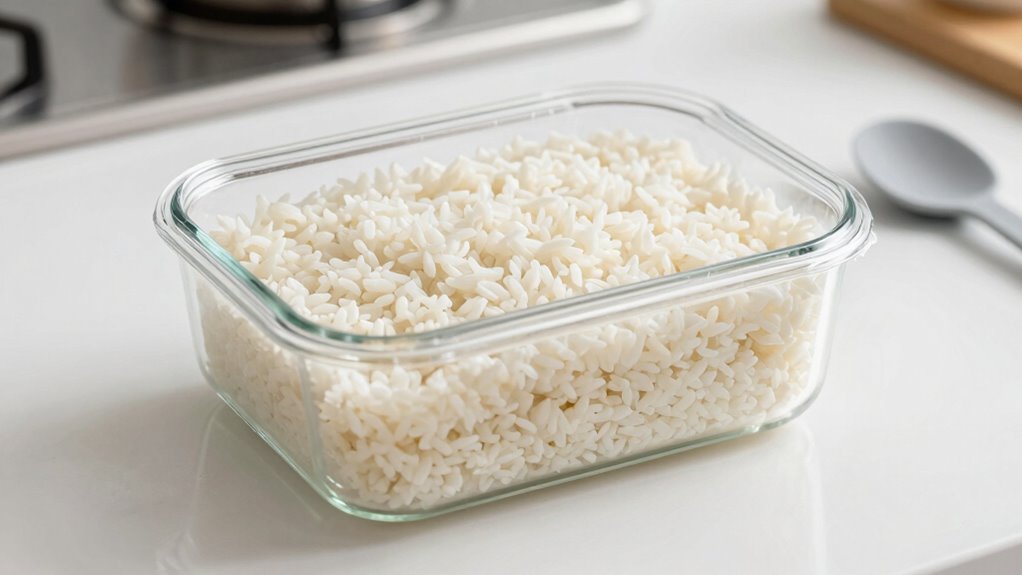
Proper storage is essential to keep cooked rice safe and flavorful. When you store rice correctly, you prevent bacterial growth that can cause foodborne illnesses. Bacteria like Bacillus cereus can survive cooking and multiply quickly if rice is left at unsafe temperatures. To avoid this, you should refrigerate cooked rice within two hours of cooking, ideally in airtight containers. Proper storage slows bacterial growth and maintains rice’s texture and taste. If you neglect this step, you risk food safety issues and spoilage. Keeping rice at the right temperature minimizes health risks and keeps your leftovers fresh. Additionally, awareness of temperature control is crucial for preventing the proliferation of harmful bacteria. Ensuring proper storage containers also helps in maintaining rice quality and safety. Using proper refrigeration practices further reduces the risk of bacterial growth and spoilage. Maintaining consistent temperature management can be key to preserving rice quality over time. Implementing safe reheating methods helps ensure rice remains safe to eat when served later.

Chamigon 50 Pack 7.5 Mil Mylar Stand Up Bags – 8.5×6.5 Inches Resealable Smell Proof Pouch Bag withstand Hot Water – Heat Sealable Foil Zipper Sample Pouches for Food Storage – Glossy Silver
RESEALABLE BAGS: the zipper design is easy to open and seal, you can reseal it multiple times
As an affiliate, we earn on qualifying purchases.
As an affiliate, we earn on qualifying purchases.
How to Cool and Prepare Rice Before Freezing
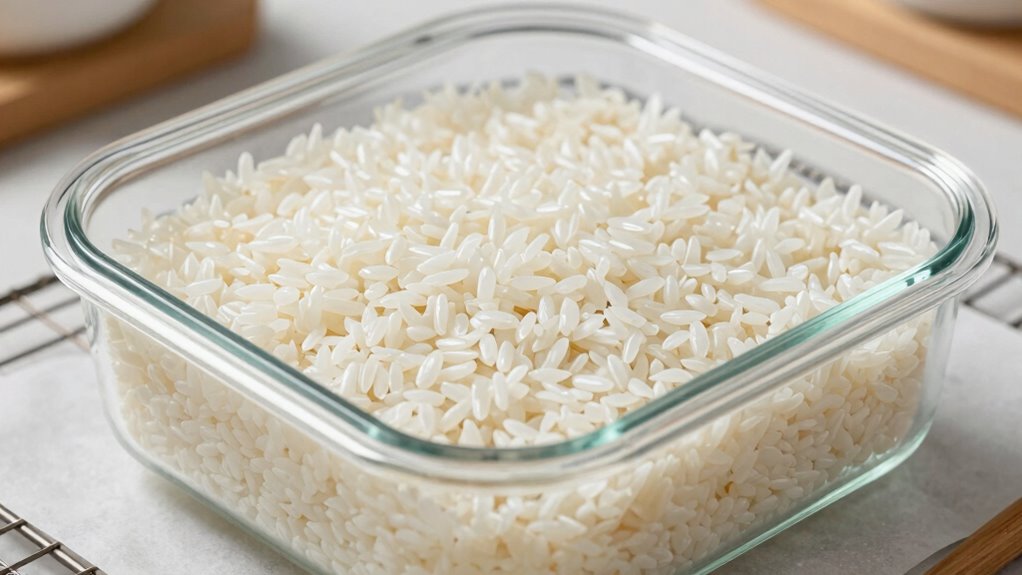
To prepare your rice for freezing, start by cooling it quickly to prevent bacteria growth. Drain any excess moisture to avoid ice crystals and freezer burn. Then, portion the rice into smaller containers or bags to make future use easier. Proper cooling helps preserve the rice’s quality and safety during storage through rapid temperature reduction. Additionally, using proper cooling techniques ensures the rice remains safe and maintains its texture after reheating. Employing food safety guidelines during cooling further minimizes the risk of contamination and spoilage. Incorporating appropriate storage methods can also extend the rice’s freshness and prevent spoilage over time. Implementing these temperature control measures is essential for optimal preservation and safety of frozen cooked rice.
Cool Rice Quickly
When you’ve finished cooking rice, cooling it quickly is essential to prevent bacteria growth. Use effective cooling methods like spreading the rice in a thin layer on a baking sheet or shallow dish. This promotes rapid chilling by increasing surface area and airflow. Alternatively, place the rice in a heatproof container and set it in an ice bath, stirring gently to accelerate cooling. The goal is to bring the rice down to below 41°F (5°C) within two hours. Rapid chilling prevents bacteria from multiplying and keeps the rice safe for freezing later. Avoid leaving rice at room temperature for extended periods. Proper food safety practices ensure your rice cools efficiently and remains safe to store and reheat later. Additionally, understanding safe storage durations can help you determine the best time to consume or freeze your rice. Cooling methods are critical for maintaining food safety and quality. Incorporating temperature control techniques can further enhance the safety of your cooled rice.
Drain Excess Moisture
After you’ve cooled the rice, it’s important to drain any excess moisture before freezing. Moisture drainage helps prevent ice crystals from forming, which can negatively affect the rice’s texture when reheated. Use a fine-mesh sieve or colander to gently shake or tilt the rice, allowing excess water to escape. Spread the rice out on a clean towel or paper towels to absorb remaining moisture. Removing excess moisture ensures the rice stays fluffy and does not become soggy or clumpy after freezing. Proper moisture drainage also helps the rice freeze more evenly and reheats more successfully. Keep in mind, the goal is to reduce surface water without drying out the rice, preserving its soft, tender texture for later use. Understanding the mechanics of French press coffee can be a fun analogy for controlling moisture and temperature during the process. Additionally, employing techniques similar to temperature regulation can help maintain the rice’s optimal texture during cooling and freezing. Maintaining the right moisture level is also key to preventing freezer burn, which can compromise quality. Properly drained rice is less likely to develop ice crystals, ensuring a better texture upon reheating.
Portion for Freezing
Once the rice has cooled and excess moisture has been drained, you should portion it into suitable sizes for freezing. Proper portion control makes reheating easier and helps prevent waste. Use small, individual portions if you plan to reheat single servings, or larger quantities for multiple meals. To guarantee even freezing, consider these freezing tips:
- Use airtight containers or resealable bags to prevent freezer burn.
- Flatten bags to save space and promote quick thawing.
- Label each portion with the date to track freshness.
- Avoid overfilling containers to allow space for expansion during freezing.
- Incorporating freezing best practices, such as proper storage techniques, can help maintain rice quality over time. Utilizing temperature regulation in your freezer can further enhance the preservation of frozen rice.

Sistema Microwave Food Storage Containers with Steam Release Vent, Dishwasher Safe Red
MICROWAVE CONTAINER SET: 4 durable microwave containers that have been specifically designed for microwave cooking and reheating -…
As an affiliate, we earn on qualifying purchases.
As an affiliate, we earn on qualifying purchases.
What Are the Best Containers for Freezing Cooked Rice?
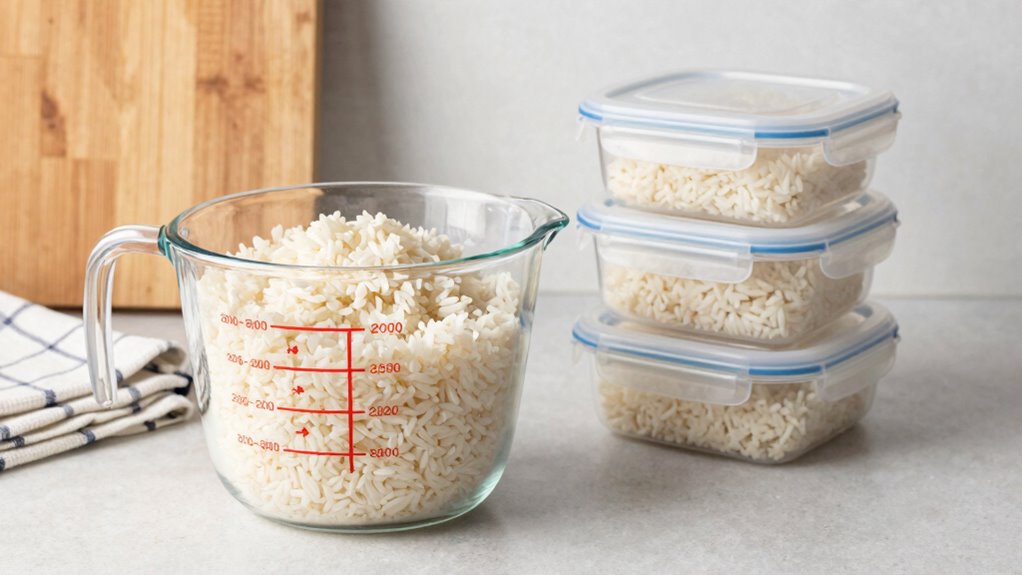
Choosing the right containers is essential to preserving the quality of your frozen cooked rice. You have several rice container options, including airtight plastic containers, glass containers with secure lids, and resealable freezer bags. Opt for containers that are durable, leak-proof, and microwave-safe for easy reheating. When selecting containers, consider freezer storage tips like leaving a little space at the top for expansion and labeling with the date. Vacuum-sealed bags are also a great choice for minimizing air exposure and preventing freezer burn. Avoid containers that aren’t airtight or that don’t seal properly, as moisture loss can affect texture and flavor. Proper containers help maintain rice’s freshness and make reheating more convenient. Additionally, choosing containers made from food-safe materials is crucial to prevent chemical leaching and ensure safe storage.
![Quarter Sheet Pan with Cooling Rack Set [2 Baking Sheets + 2 Baking Racks], CEKEE Stainless Steel Cookie Sheets for Baking and Wire Rack - Rust & Warp Resistant & Nonstick, Size 12 x 9.8 x 1 Inch](https://m.media-amazon.com/images/I/51bCW7VK2dL._SL500_.jpg)
Quarter Sheet Pan with Cooling Rack Set [2 Baking Sheets + 2 Baking Racks], CEKEE Stainless Steel Cookie Sheets for Baking and Wire Rack – Rust & Warp Resistant & Nonstick, Size 12 x 9.8 x 1 Inch
PERFECT AND COMPLETE SET: CEKEE quarter baking sheet with rack sets are 4 PIECES , which includes 2…
As an affiliate, we earn on qualifying purchases.
As an affiliate, we earn on qualifying purchases.
How to Freeze Cooked Rice Safely: A Step-by-Step Guide
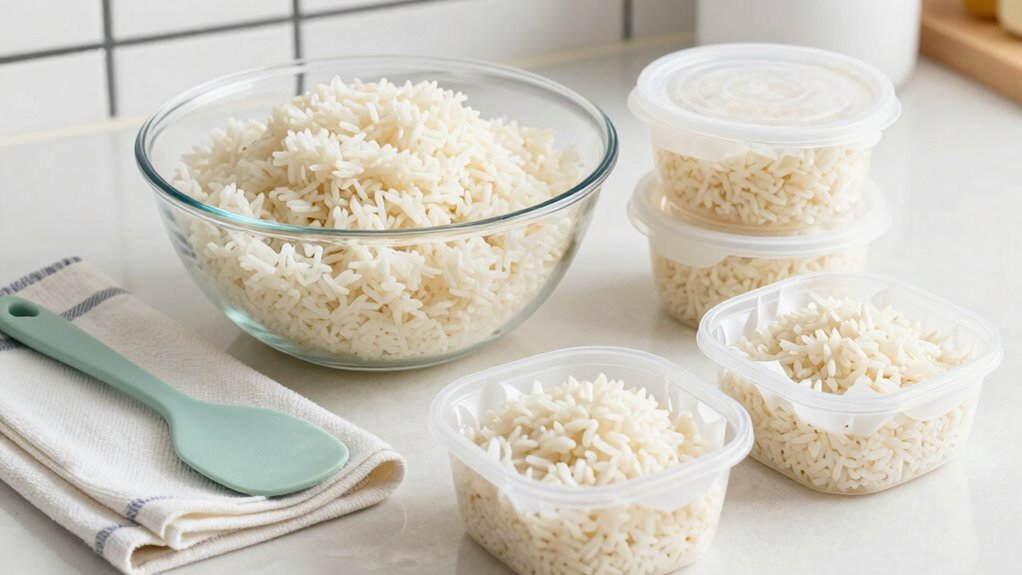
To freeze cooked rice safely, you need to focus on proper storage techniques that prevent bacteria growth and freezer burn. Make sure you cool the rice quickly and store it in airtight containers or bags. When you’re ready to use it, follow safe thawing methods to preserve quality and avoid foodborne illness. For optimal safety, consider freezing techniques that help maintain the rice’s texture and prevent spoilage. Additionally, understanding the importance of proper storage duration can help ensure the rice remains safe and tastes fresh when reheated.
Proper Storage Techniques
Proper storage is essential to guarantee your cooked rice stays fresh and safe to eat later. To do this effectively, focus on proper rice packaging and adding rice seasoning before freezing. Use airtight containers or resealable bags to prevent freezer burn and preserve flavor. Label each package with the date to track freshness. For added rice seasoning, mix spices or herbs before freezing, ensuring even distribution. When packing, remove excess air to minimize moisture buildup. Consider dividing rice into smaller portions for quick reheating. Proper storage not only keeps your rice safe but also maintains its texture and taste. By following these techniques, you make reheating easier and ensure your rice remains delicious after freezing.
Safe Thawing Methods
When thawing cooked rice, it’s crucial to do so safely to prevent bacteria growth and guarantee the rice remains safe to eat. Use proper thawing techniques like transferring the rice from the freezer to the refrigerator overnight, which allows for gradual, even thawing. Alternatively, you can thaw cooked rice quickly in the microwave using the defrost setting, but ensure it’s heated evenly. Never leave rice to thaw at room temperature, as this encourages bacteria development. Once thawed, reheat the rice thoroughly to a steaming temperature of 165°F (74°C) to guarantee safe reheating. These thawing methods minimize risk, maintain rice quality, and make sure your reheated rice is safe and delicious. Always follow safe reheating guidelines to prevent foodborne illnesses.
How Long Can You Store Frozen Cooked Rice?
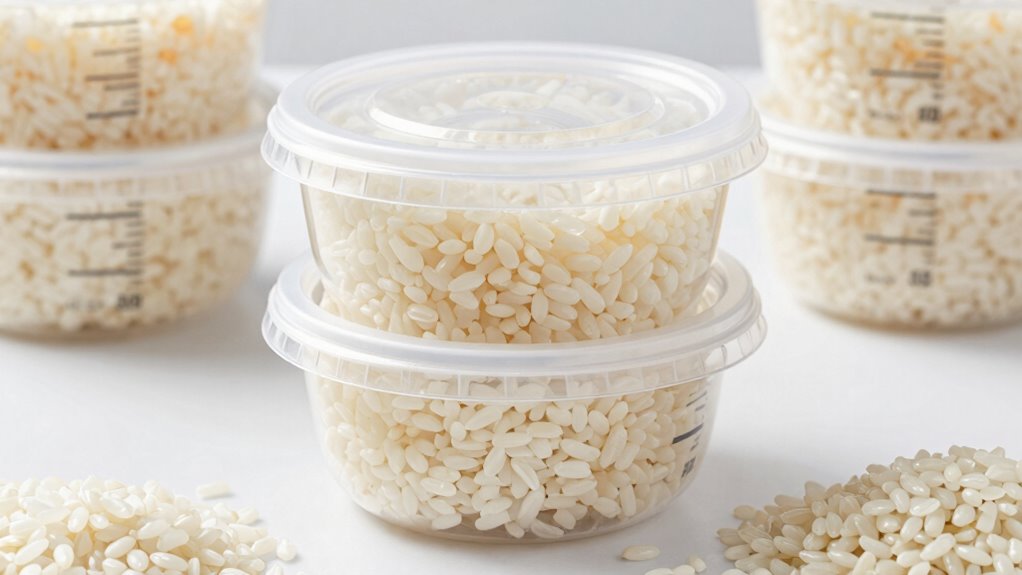
Frozen cooked rice can typically be stored for up to six months without significant loss of quality. After this period, the rice’s texture may become less desirable, and freezer burn could affect flavor. To maintain the best quality, monitor the freezing duration carefully. Here are key points to take into account:
- Rice texture starts to degrade after three to four months, becoming more mushy or dry.
- Proper packaging minimizes exposure to air, preserving freshness during freezing.
- Label containers with freezing dates to track storage time accurately.
- Regularly check for freezer burn or ice crystals, which signal the need to discard older rice.
Storing rice beyond six months can compromise its taste and safety. Stick to recommended durations to enjoy reheated rice at its best.
What’s the Best Way to Reheat Frozen Rice Without Losing Texture?
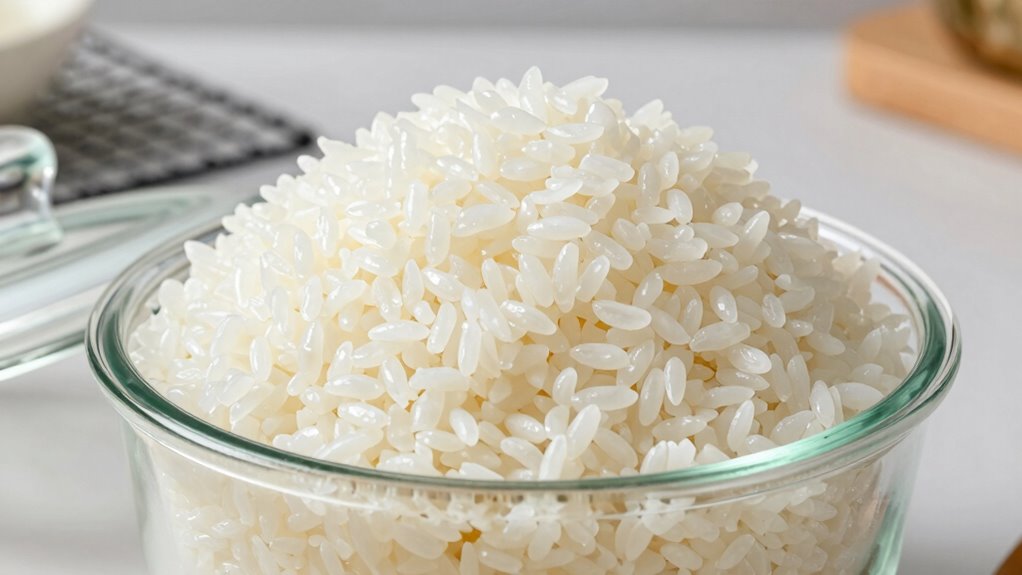
To preserve the quality of your frozen cooked rice when reheating, it’s important to choose the right method. The goal is to maintain rice texture without turning it mushy or dry. Steaming or microwaving with a splash of water are your best options. Use a microwave-safe dish, cover, and reheat at medium power, stirring halfway through to distribute heat evenly. Alternatively, steaming rice on the stovetop with a little water helps retain moisture and texture. Avoid using high heat or direct contact with heat sources, which can cause rice to dry out or become tough. Proper freezing techniques—like removing excess air and storing in airtight containers—also help ensure your rice reheats evenly and stays fluffy.
Common Mistakes to Avoid When Freezing Rice

One common mistake people make when freezing cooked rice is not letting it cool properly before storage. If you skip this step, condensation can form, leading to soggy rice and freezer burn. To avoid this, follow these tips:
- Don’t freeze rice while it’s still hot, as it promotes bacterial growth and affects flavor.
- Avoid adding rice seasoning or sauces before freezing, since they can cause freezer burn and impact reheating leftovers.
- Use airtight containers or freezer bags to prevent moisture loss and maintain texture.
- Do not overcrowd the freezer, which can cause uneven freezing and clumping.
How to Fix Off-Flavors or Clumping in Frozen Rice
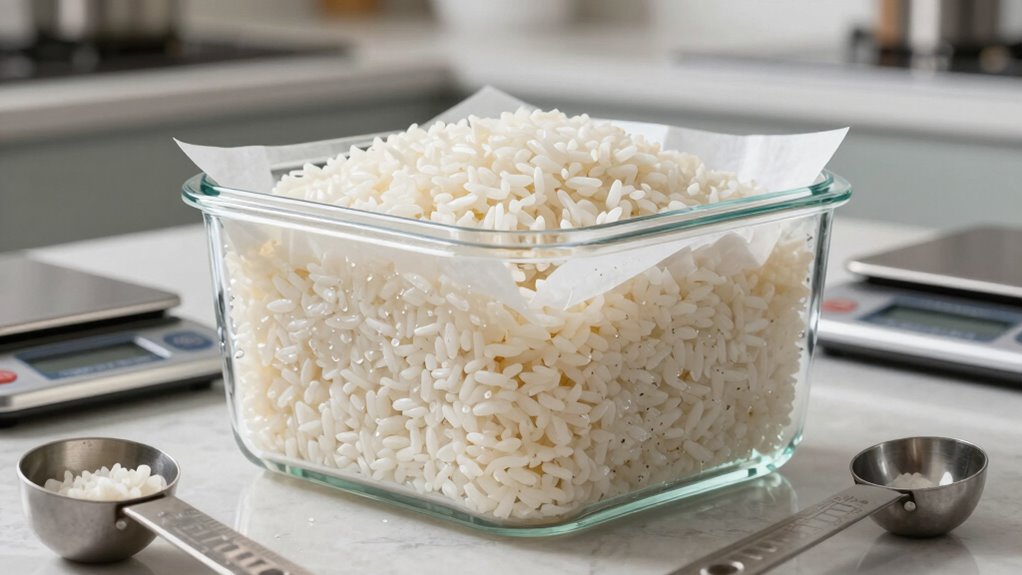
If your frozen rice develops off-flavors or becomes clumpy, you can often fix these issues with simple methods. To improve flavor, try reheating the rice with fresh herbs, a splash of soy sauce, or a small amount of broth to mask off-flavors and boost taste. For clumping, gently break apart the rice with a fork or use a fork and spoon to loosen the grains while reheating. To prevent clumping in future, ensure you let the rice cool completely before freezing and store it in small, airtight portions. Properly reheated and stored, your rice will regain better flavor and texture, making it more enjoyable and easier to serve. These quick fixes help restore quality without much effort.
Easy Recipes and Ideas Using Frozen Rice
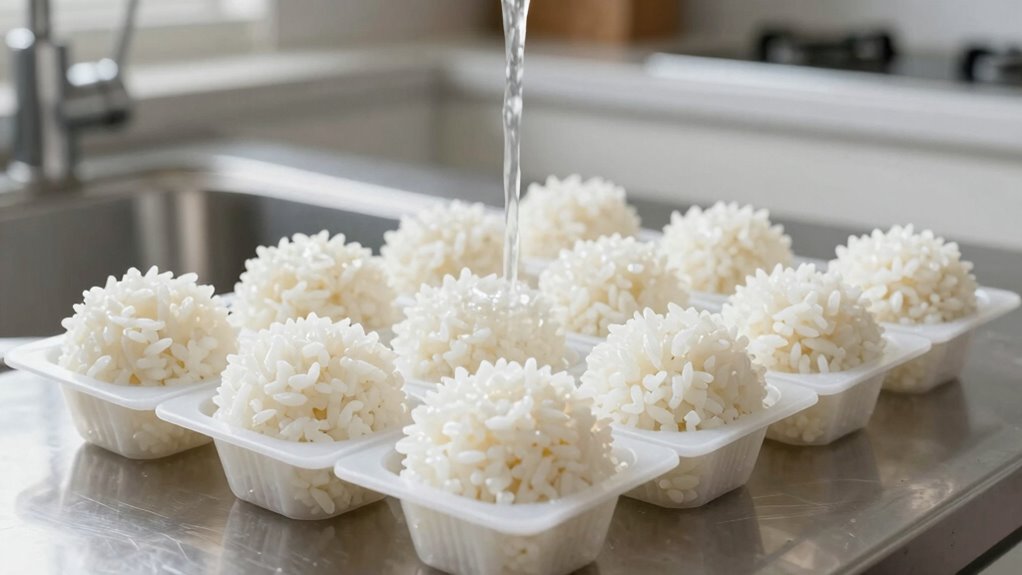
Frozen rice is incredibly versatile and ready to be transformed into quick, delicious meals. You can easily turn your frozen rice into a variety of dishes by choosing different rice varieties and cooking methods. For example, jasmine rice works well for stir-fries, while brown rice adds hearty texture to salads. Reheating can be done on the stove, in the microwave, or using a steamer for best results. Here are some ideas to get you started:
- Stir-fry with frozen rice, vegetables, and your favorite protein
- Fried rice with scrambled eggs and soy sauce
- Rice bowls topped with sautéed greens and grilled chicken
- Rice casserole baked with vegetables and cheese
These options are quick, adaptable, and perfect for utilizing your frozen rice efficiently.
Frequently Asked Questions
Can I Freeze Cooked Rice With Added Ingredients Like Vegetables or Meat?
Yes, you can freeze cooked rice with added ingredients like vegetables or meat. Just guarantee you add sauces and flavoring enhancements before freezing to maintain taste and moisture. Mix everything well to distribute flavors evenly. Let the rice cool completely, then transfer it to airtight containers or freezer bags. Label and freeze promptly. When reheating, stir well and add a splash of water or broth to restore moisture.
Does Freezing Cooked Rice Affect Its Nutritional Value?
Freezing cooked rice doesn’t ruin its nutritional integrity—you’re safe from major nutrient loss! While some vitamins might take a tiny hit, the overall nutrient profile remains pretty much intact. Think of it like preserving a treasure chest; freezing locks in the nutrients, keeping your rice nutritious when you reheat. So, rest assured, freezing cooked rice is a smart way to keep your meals healthy without sacrificing essential nutrients.
How Can I Tell if Frozen Rice Has Gone Bad?
You can tell if frozen rice has gone bad by checking its rice texture and appearance. If it feels slimy or develops an off smell, it’s a sign of spoilage. Look for signs of freezer burn, like dry, discolored patches, which can affect quality but aren’t necessarily unsafe. If you notice any of these, it’s best to discard the rice to avoid foodborne illness.
Is It Safe to Refreeze Cooked Rice After Thawing?
Refreezing cooked rice after thawing is generally safe if you follow proper food safety guidelines. You should only do it if the rice was thawed in the refrigerator and hasn’t been left out at room temperature for more than two hours. Keep in mind, for ideal storage duration and to prevent bacteria growth, consume the refrozen rice within 1-2 days. Always reheat thoroughly before eating to ensure safety.
What Are the Signs of Improper Freezing or Storage?
You’ll notice signs of improper freezing or storage if your cooked rice develops mold growth or a foul odor. These indicate bacteria or fungi have infiltrated the rice, making it unsafe to eat. Also, watch for slimy texture or discoloration. If you see any of these signs, discard the rice immediately to prevent food poisoning. Always store rice in airtight containers and freeze promptly to maintain quality.
Conclusion
Freezing cooked rice is like planting a seed—you’re preserving its freshness for later. With proper care, your rice will stay vibrant and ready to sprout into delicious meals anytime. Think of your freezer as a treasure chest, safeguarding your culinary gems. Just follow these simple steps, and you’ll always have perfectly reheatable rice at your fingertips. Keep it safe, keep it tasty, and enjoy your kitchen’s endless possibilities.