

Runny eggs are riskier mainly when they haven’t been cooked enough to kill bacteria like Salmonella. If the whites are still runny or yolks are overly soft, bacteria may survive and cause illness. To stay safe, cook eggs until whites are firm and yolks are slightly thickened, using a thermometer to confirm the right temperature. To learn more about how to enjoy eggs safely, keep exploring essential tips and practices.
Key Takeaways
- Runny eggs pose higher infection risks if not cooked to proper internal temperatures (160°F/71°C).
- Bacteria like Salmonella can infect eggs through shell cracks or internal contamination.
- Proper handling, storage, and cooking significantly reduce the risk of bacterial presence in runny eggs.
- Use a food thermometer to ensure eggs reach safe temperatures before consumption.
- Fully cooked eggs with firm whites and thickened yolks are safest, especially if eggs are runny initially.
Are Runny Eggs Safe? Understanding the Risks

Are runny eggs safe to eat? It depends on several factors, including egg nutrition and farming practices. Runny eggs can retain more of their natural nutrients, which many people find appealing. However, their safety largely hinges on how the eggs are produced and handled. Egg farming practices, such as maintaining clean environments and proper hygiene, reduce the risk of bacteria. When eggs are fresh and come from reputable sources that follow strict safety standards, a runny yolk isn’t necessarily unsafe. Proper ventilation considerations in egg storage areas can help maintain freshness and reduce contamination risks. Additionally, storage conditions play a crucial role in preventing bacterial growth on eggs. Ensuring proper hygiene practices during handling can further reduce the risk of contamination. Implementing temperature controls in storage facilities can also help inhibit bacterial proliferation. Maintaining appropriate sanitation protocols is essential for minimizing contamination risks. Still, the Centers for Disease Control and Prevention recommend fully cooked eggs to minimize health risks. Understanding that eggs from well-managed farms are less likely to harbor harmful bacteria can help you make informed choices about eating runny eggs.
How Do Salmonella and Other Bacteria Get Into Eggs?

Bacteria like Salmonella can be present in the environment around hens, increasing the risk of contamination. They can enter eggs through cracks in the shell or pores, especially if hygiene practices are poor. Sometimes, bacteria get inside the egg during formation, posing a hidden threat even if the shell looks clean. Proper sanitation and hygienic handling are essential to minimize these risks. Additionally, understanding how egg formation processes can influence bacterial entry helps in developing better safety protocols. Recognizing the impact of technology on food safety can further aid in preventing contamination during egg production. Maintaining biosecurity measures on farms is also vital to reduce bacterial presence in the flock environment.
Bacterial Presence in Environment
Salmonella and other bacteria can find their way into eggs through various environmental pathways, often starting with contamination on the hen’s body or the nesting environment. Environmental contamination plays a key role in bacterial transmission, making it essential to understand how bacteria spread. Here are four common ways this happens:
- Bacteria from feces can contaminate nesting boxes or bedding.
- Dirty transport equipment can transfer bacteria to hens or eggs.
- Contaminated feed or water sources introduce bacteria into the environment.
- Wild animals or pests can carry bacteria into poultry facilities. Additionally, Free Floating bacteria can survive in the environment, increasing the risk of contamination, especially when bacteria persistence mechanisms allow them to endure outside the host. Understanding environmental contamination sources helps in implementing effective biosecurity measures to reduce bacterial presence. Furthermore, maintaining strict sanitation protocols can significantly decrease the likelihood of bacterial spread within poultry operations.
Eggshell Penetration Pathways
How do bacteria like Salmonella manage to enter eggs despite their protective shells? The answer lies in breaches in shell integrity and contamination pathways. Even tiny cracks or pores in the shell can serve as entry points for bacteria present on the surface or in the environment. During laying, bacteria can also penetrate through the shell if contamination occurs earlier in the hen’s reproductive tract. Additionally, bacteria can exploit natural pores in the shell that allow gases and moisture to pass through. shell microstructure plays a crucial role in determining the egg’s vulnerability to bacterial invasion. The microstructural properties of the shell influence how easily bacteria can penetrate or migrate inside the egg. Understanding these contamination pathways highlights the importance of handling eggs carefully and maintaining proper sanitation to minimize infection risks. Modern kitchen technology can assist in detecting compromised eggs and ensuring food safety through innovative monitoring tools. Recognizing the biological vulnerabilities of eggs can further inform better practices for cleaning and storage, especially considering that shell quality can vary depending on hen health and environmental factors.
Internal Contamination Risks
Even if eggs appear clean and intact, bacteria can still find their way inside during formation or handling. Eggshell integrity isn’t foolproof, allowing contamination from various sources. Here are the main ways bacteria like Salmonella enter eggs:
- Contamination during laying: Hen’s reproductive tract can harbor bacteria, which transfer directly into the egg before shell formation completes. Proper hygienic handling during collection can reduce this risk.
- Cracks or damages: Even tiny cracks compromise eggshell integrity, providing entry points for bacteria.
- Environmental exposure: Contaminated surfaces or handling practices can transfer bacteria onto or into eggs, especially if proper hygiene isn’t maintained.
- Storage conditions: Improper storage at warm temperatures encourages bacterial growth, increasing infection risk.
- Influences from artistic movements and cultural practices can also impact how eggs are handled and stored, affecting their safety. To reduce risks, proper handling procedures are essential for maintaining egg safety.
Understanding these contamination sources helps you prevent bacteria from reaching the egg’s interior.
How Can You Tell If Your Eggs Are Fresh and Safe to Eat?
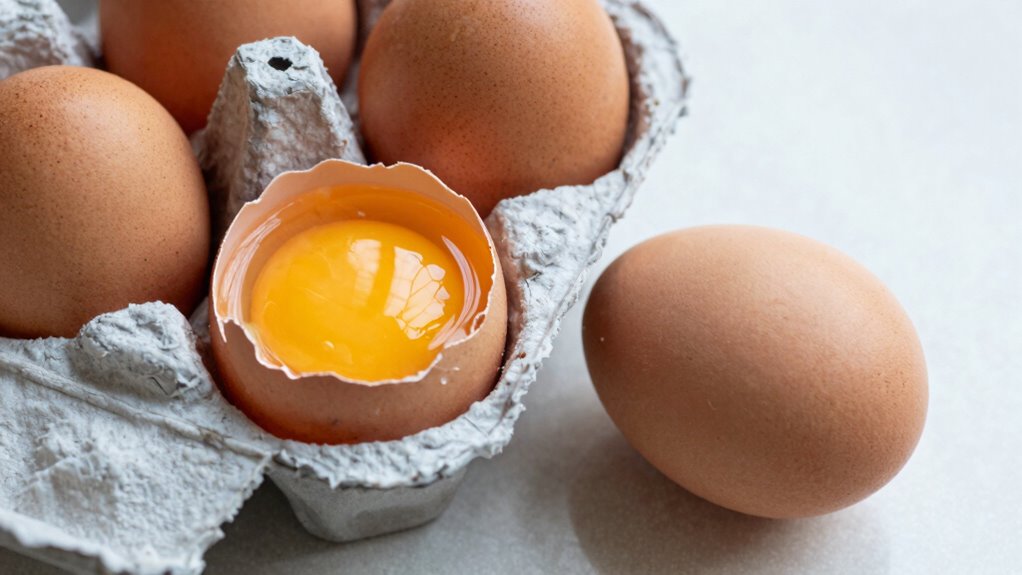
To determine if your eggs are fresh and safe to eat, start by performing a simple float test. Fill a bowl with cold water and gently place the egg in it. If it sinks and lays flat on its side, it’s very fresh. If it stands upright or tilts, it’s still safe but should be used soon. If it floats, discard it—this indicates age or potential spoilage. Additionally, check the egg’s shell integrity; a clean, uncracked shell suggests freshness and reduces contamination risk. Egg grading also provides clues about quality—Grade A eggs are typically fresher than lower grades. Always inspect the shell for cracks or slimy spots, which can harbor bacteria. These steps help guarantee your eggs are both fresh and safe to enjoy, and maintaining proper air quality considerations in your kitchen can further reduce contamination risks.
What Are the Best Ways to Cook Eggs Safely and Avoid Runny Yolks?

To cook eggs safely and avoid runny yolks, you need to pay attention to proper cooking temperatures. Using a food thermometer guarantees you reach the right internal temperature for safety. Following these steps helps you enjoy eggs without risking foodborne illnesses.
Proper Cooking Temperatures
Ensuring eggs are cooked to the right temperature is essential for safety and avoiding runny yolks. Proper heat destroys bacteria and minimizes shell porosity, which can allow contaminants in. To achieve safe cooking, follow these steps:
- Cook eggs until the whites are firm and the yolk is slightly thickened.
- For scrambled eggs, cook to an internal temperature of 160°F (71°C).
- When boiling, ensure eggs are fully set and not runny inside.
- Avoid overcooking to preserve nutrient retention while reaching safe temperatures.
Balancing these factors prevents bacteria survival and maintains egg quality. Using proper techniques ensures you get safe, nutritious eggs without sacrificing texture or flavor. Remember, temperature control is key to enjoying eggs safely and minimizing health risks.
Using Food Thermometers
Using a food thermometer is the most reliable way to confirm eggs are cooked to a safe temperature. When checking doneness, focus on the yolk’s consistency, which varies with egg freshness. Fresh eggs tend to have firmer yolks, making it easier to avoid runny yolks, while older eggs may have slightly more fluid yolks. To prevent foodborne illness, cook eggs until an internal temperature of 160°F (71°C) is reached. This ensures both the whites and yolk are fully set, reducing the risk of Salmonella. Using a thermometer removes guesswork, especially when preparing dishes like scrambled eggs or baked casseroles. Always insert the thermometer into the thickest part of the egg or dish to get an accurate reading. Proper temperature control guarantees safe, fully cooked eggs with the desired yolk consistency.
When Is a Runny Egg Safe to Eat? Key Safety Guidelines
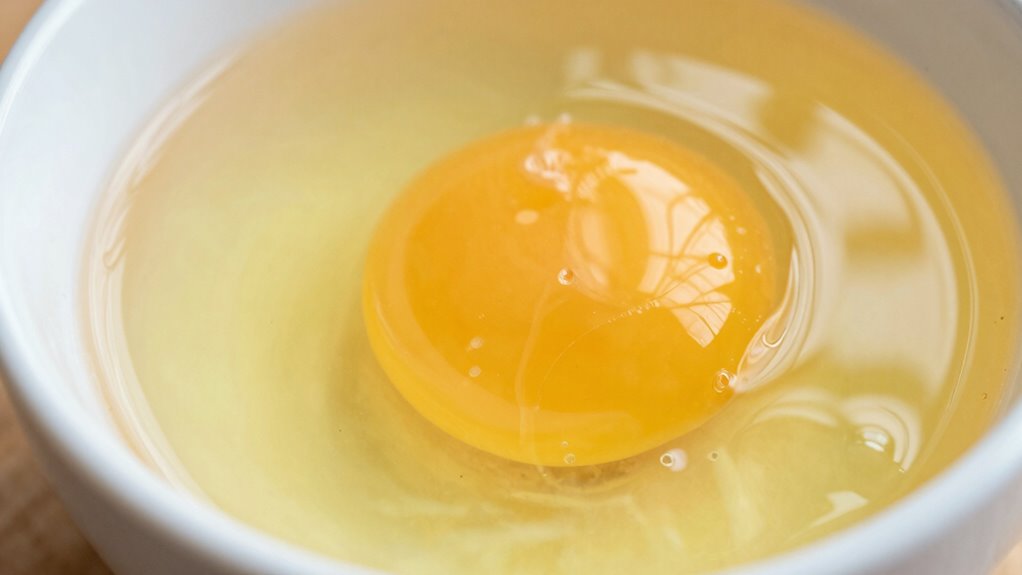
A runny egg can be safe to eat if it has been cooked properly and reaches the right internal temperature. Eggshell porosity allows bacteria to enter, so thorough cooking minimizes risk. To enjoy a runny egg safely, follow these guidelines:
A runny egg is safe if cooked thoroughly to 145°F, ensuring minimal bacterial risk.
- Cook eggs until the whites are firm and the yolk is slightly runny but warm throughout.
- Use a food thermometer to ensure the internal temperature reaches 145°F (63°C), preserving nutrients without overcooking.
- Avoid eggs with visible cracks or shells that are overly porous, as contamination is easier.
- Consume eggs promptly after cooking to maintain nutrient preservation and reduce bacterial growth.
How to Handle and Store Eggs Properly to Prevent Contamination

Proper handling and storage of eggs play a vital role in preventing contamination and maintaining safety. Always check that the eggs have intact shell integrity, with no cracks or chips, since damaged shells can allow bacteria to enter. Store eggs in the main body of your refrigerator, not in the door, where temperature fluctuations are common. Follow storage temperature guidelines by keeping eggs at or below 40°F (4°C); this slows bacterial growth and preserves quality. Keep eggs in their original carton to protect them and prevent absorbing strong odors. Avoid washing eggs before storage, as this can remove protective coatings. Proper handling and consistent storage help reduce the risk of contamination and ensure eggs stay fresh and safe to eat.
Common Myths About Egg Safety Debunked
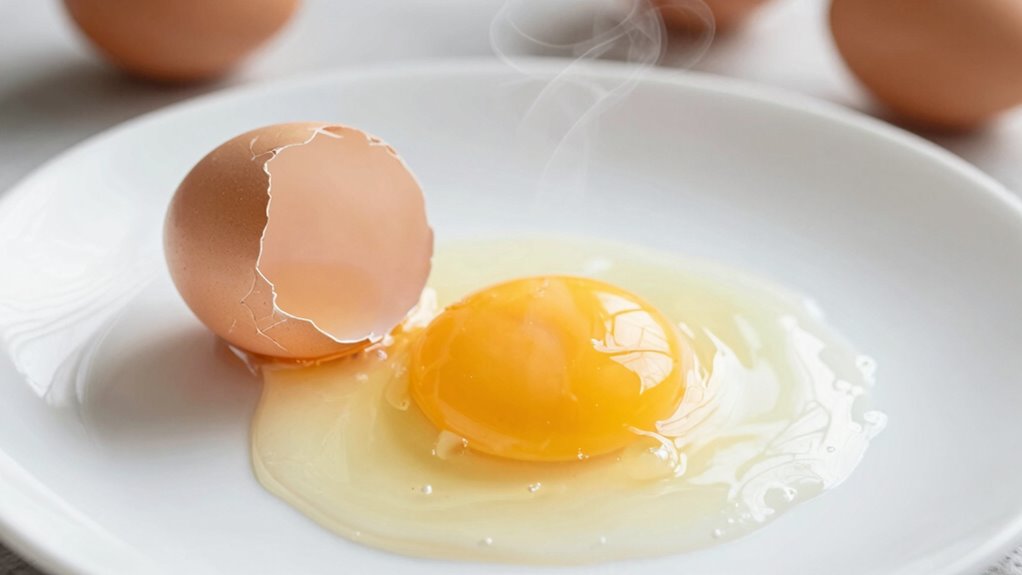
Many common beliefs about egg safety are actually myths that can mislead consumers. First, some think washing eggs damages the shell’s integrity, but proper cleaning with gentle methods can actually reduce contamination without harm. Second, people believe that eggs from small farms are always safer; however, poor poultry farm hygiene can pose risks regardless of size. Third, many assume that a runny yolk is unsafe; in reality, it depends on proper handling and cooking, not just appearance. Lastly, some believe that eggs with cracks are automatically unsafe—if the shell’s integrity is compromised, bacteria can enter, but minor cracks can still be safe if eggs are stored and cooked properly. Focus on poultry farm hygiene and shell integrity to guarantee egg safety.
What Should You Do If You Suspect Egg-Related Food Poisoning?

If you suspect egg-related food poisoning, acting quickly can help prevent further health complications. First, stop eating the eggs immediately and discard any remaining portions. If the eggshell integrity appears compromised—cracks or slimy surfaces—bacterial transmission is more likely, so avoid consuming them. Wash your hands thoroughly with soap and water to prevent spreading bacteria. If you experience symptoms like nausea, vomiting, diarrhea, or abdominal cramps, stay hydrated and rest. Seek medical attention if symptoms worsen or persist beyond a day or two, especially for vulnerable groups like children or the elderly. Remember, proper handling and awareness of eggs’ shell integrity are essential for preventing bacterial transmission and protecting your health.
Simple Tips to Enjoy Eggs Safely Every Day

To enjoy eggs safely every day, start by purchasing fresh eggs from reputable sources and checking the expiration date on the carton. Good egg sourcing guarantees you’re getting quality, reducing the risk of contamination. Remember, understanding egg nutrition helps you make informed choices about incorporating eggs into your diet. To keep eggs safe and tasty, follow these simple tips:
Purchase fresh eggs from trusted sources and check expiration dates for safe, nutritious eating.
- Always refrigerate eggs promptly and keep them at or below 40°F.
- Cook eggs thoroughly until both whites and yolks are firm.
- Avoid consuming runny or undercooked eggs, especially if vulnerable groups are involved.
- Use clean utensils and surfaces when handling eggs to prevent cross-contamination.
Following these guidelines helps you enjoy eggs safely and maximizes their nutritional benefits every day.
Frequently Asked Questions
Are Organic Eggs Safer Than Conventional Eggs Regarding Runny Yolks?
Organic eggs aren’t necessarily safer than conventional eggs when it comes to runny yolks. The safety depends more on how eggs are handled, stored, and cooked rather than whether they’re labeled organic or conventional. You should always refrigerate eggs promptly, cook them thoroughly, and avoid consuming raw or undercooked eggs, regardless of their type. Proper food safety practices are your best defense against potential risks.
Can Eating Undercooked Eggs Cause Long-Term Health Issues?
Eating undercooked eggs *could* cause long-term health issues if you’re consistently consuming contaminated ones. While rare, salmonella from raw eggs can lead to serious infections, potentially impacting your long-term health. Regular egg consumption with properly cooked eggs markedly reduces this risk. So, if you love runny yolks, just be cautious—avoid making it a daily habit, and your long-term health will thank you!
Do Egg Washing Methods Affect the Risk of Bacterial Contamination?
Egg washing methods can influence the bacterial risk, but proper procedures help minimize contamination. If you wash eggs correctly with warm water and gentle scrubbing, you reduce the bacteria on the shell’s surface. Avoid using harsh chemicals or low-quality washing techniques, as they might introduce bacteria or damage the eggshell’s natural barrier. Proper egg washing is essential for lowering bacterial risk, especially when handling eggs that might be cracked or dirty.
How Do Different Egg Storage Temperatures Influence Safety?
Imagine your eggs as tiny battlegrounds; if you store them at room temperature, bacteria can quickly invade, like an unchecked army. Keep your eggs in the fridge at 40°F or below to slow bacterial growth, preserving freshness and safety. Cold storage creates a fortress, preventing harmful bacteria from multiplying rapidly. So, always mind your storage temperature to keep your eggs safe and delicious.
Are There Specific Eggshell Colors More Prone to Contamination?
You might think shell color affects contamination risk, but it doesn’t substantially. The color significance of eggshells, whether white or brown, isn’t linked to higher or lower contamination levels. Instead, focus on shell contamination signs like cracks or dirt, regardless of color. Proper handling and washing are essential to reduce bacteria, so don’t rely on shell color to judge egg safety. Always buy from trusted sources and store eggs properly.
Conclusion
Did you know that about 1 in 20,000 eggs can be contaminated with Salmonella? By following safe handling, storage, and cooking practices, you can enjoy eggs without the risk of illness. Always check for freshness, cook eggs thoroughly, and avoid runny yolks if you’re concerned about bacteria. Staying informed and cautious helps you keep your meals safe and delicious every day. Your health is worth the extra step—so make egg safety a priority!