
To prevent re-contaminating clean dishes, regularly sanitize your sponge by microwaving or soaking in vinegar or hydrogen peroxide, and make sure it dries completely after each use in a well-ventilated area. Replace your sponge every 1-2 weeks or when it shows signs of mold, odor, or damage. Using antibacterial tools and keeping your kitchen organized also help. For more tips on keeping your dishes spotless, learn how to stop bacteria from spreading.
Key Takeaways
- Regularly replace sponges every 1-2 weeks or when they show signs of mold, odor, or damage.
- Sanitize sponges by microwaving, boiling, or soaking in vinegar or hydrogen peroxide regularly.
- Allow sponges and dishcloths to dry completely in a well-ventilated area after each use.
- Use antibacterial or eco-friendly cleaning tools to reduce bacterial buildup and cross-contamination risks.
- Designate specific areas for raw and cooked foods and sanitize surfaces frequently to prevent bacterial transfer.
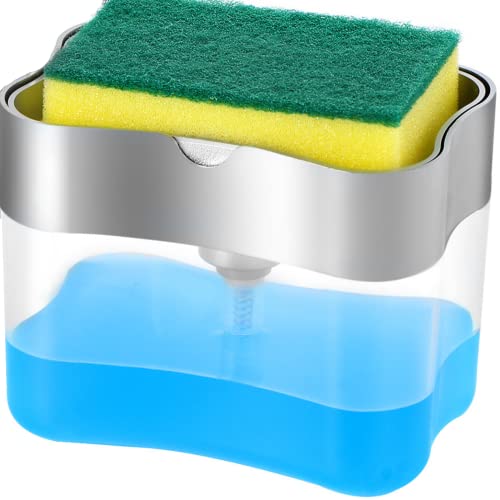
New 2026 Version Soap Dispenser with Added Features – Premium Quality Dish Soap Dispenser – Countertop Kitchen Soap Dispenser, Sink Dish Washing 13 Ounces (Sponge Included)
Effortless Dispensing with Large Quantity – Dispenses soap easily, holds up to 13 oz of fluid. Liquid soap…
As an affiliate, we earn on qualifying purchases.
As an affiliate, we earn on qualifying purchases.
Why Your Dish Sponge Can Be a Bacterial Hotspot
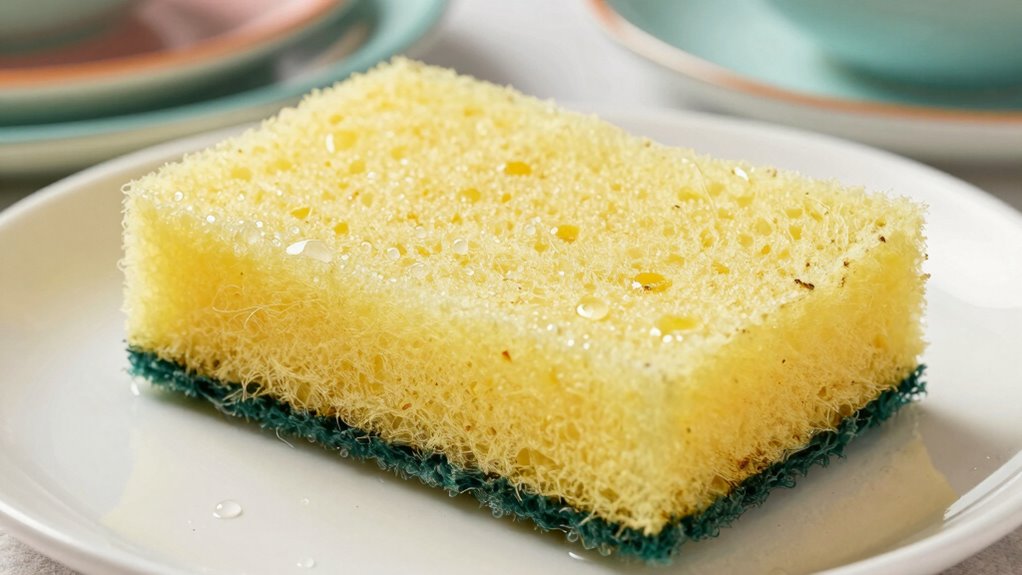
Your dish sponge can quickly become a bacterial hotspot because it provides the perfect environment for germs to thrive. The sponge material, often porous and absorbent, traps moisture and food particles, creating ideal conditions for bacterial growth. When you use a sponge to clean dishes, germs from raw meats, dairy, and other sources latch onto its surface. If you don’t regularly disinfect or replace it, bacteria multiply rapidly within the tiny pores of the sponge. The dampness and leftover debris foster a breeding ground for pathogens, increasing the risk of cross-contamination. Regularly drying and sanitizing your sponge is essential to prevent bacteria from spreading to your dishes. Understanding cleaning appliance maintenance can help you keep your sponge—and your dishes—more hygienic. Additionally, using proper sanitation methods can significantly reduce bacterial buildup and ensure your dishes stay truly clean, especially when combined with effective drying techniques.

Scotch-Brite Odor Resist Non-Scratch Scrub Sponge, Dishwasher-Safe Kitchen Sponges that Resist Bacterial Odors, Multipurpose Dish Sponge for Gentle Cleaning, 6 Dish Sponges
SIX SCRUBBING SPONGES: This pack of Scotch-Brite Odor Resist Non-Scratch Scrub Sponges includes 1 pack of six sponges.
As an affiliate, we earn on qualifying purchases.
As an affiliate, we earn on qualifying purchases.
How to Recognize Signs of a Contaminated Dish Sponge
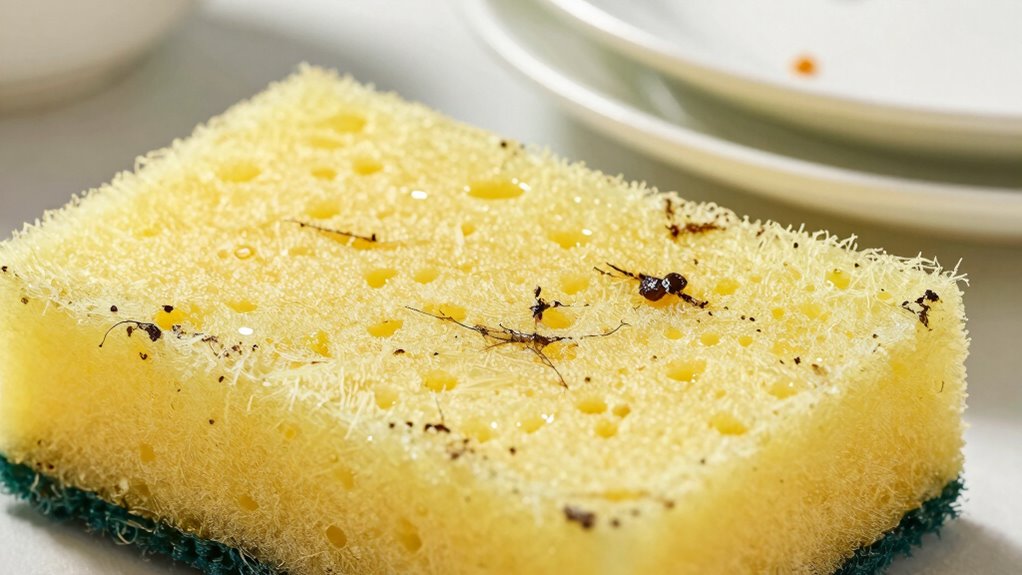
Since a contaminated sponge can harbor harmful bacteria, it’s important to recognize the signs before using it further. One key indicator is odor detection; if your sponge emits a sour, musty, or foul smell, it’s likely teeming with germs. Discoloration cues also reveal contamination—look for unusual or persistent staining, such as mold-like dark spots or yellowing that doesn’t wash away. If the sponge’s color has changed dramatically from its original hue, it’s a sign it’s no longer clean. Additionally, if the sponge feels slimy or sticky even after rinsing, it’s a red flag. Regular Natural Pool maintenance and proper sponge hygiene can significantly reduce bacterial buildup. Proper cleaning techniques are essential for maintaining the sponge’s antibacterial properties and safety. To further reduce bacteria, consider air drying the sponge thoroughly between uses and replacing it regularly, especially if signs of contamination are evident. Incorporating bacterial growth understanding into your routine can help you better identify when a sponge has become unsafe. Always inspect your sponge before each use.

Wet-it! Skrubba 3-Pack Reusable Dish Scrubbers – Non-Scratch Scouring Pads for Kitchen & Household – Eco-Friendly, Dishwasher Safe Scrub Sponges for Dishes, Pots & Pans (Vogue)
A set of three cotton blend Skrubby's that will NOT SCRATCH most common household surfaces.
As an affiliate, we earn on qualifying purchases.
As an affiliate, we earn on qualifying purchases.
How to Sanitize Your Dish Sponge and Kill Germs
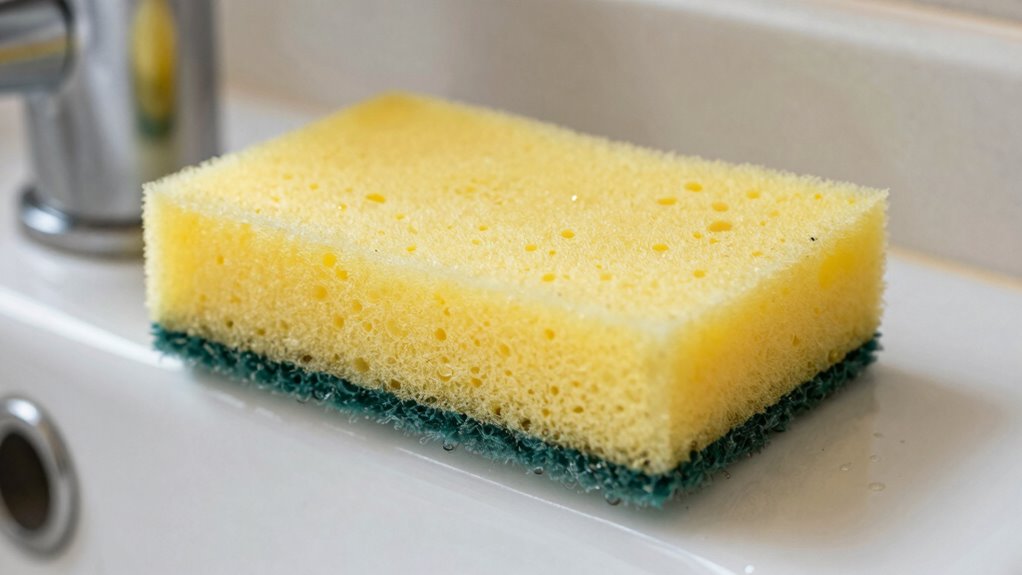
To effectively kill germs and keep your dish sponge safe to use, regular sanitization is necessary. First, check if your sponge is dishwasher safe—most are, making this an easy option. Place it in the dishwasher on the hot cycle to sanitize thoroughly. Alternatively, you can use natural disinfectants like vinegar or hydrogen peroxide. Soak your sponge in white vinegar for five minutes or spray it with hydrogen peroxide, then let it sit for a few minutes before rinsing. These natural solutions effectively reduce bacteria without harmful chemicals. Sustainable cleaning practices can also be incorporated by choosing eco-friendly disinfectants or methods. After sanitizing, squeeze out excess water and let the sponge air dry completely. Incorporating environmental considerations such as using natural disinfectants helps promote sustainable cleaning practices. Regularly sanitizing your sponge prevents bacteria buildup and stops germs from re-contaminating your clean dishes.

Dish Wand Refills 16Pack, Dishwand Sponges Replacement Heads,Common Compatible Dish Wand Heads, Durable Dish Wand Scrubber Sponge for Kitchen Cleaning
UPGRADE QUALITY: The dish wands scrub refills adopted new advanced molding method, which makes sponge .difficult to separate…
As an affiliate, we earn on qualifying purchases.
As an affiliate, we earn on qualifying purchases.
When Should You Replace Your Dish Sponge?
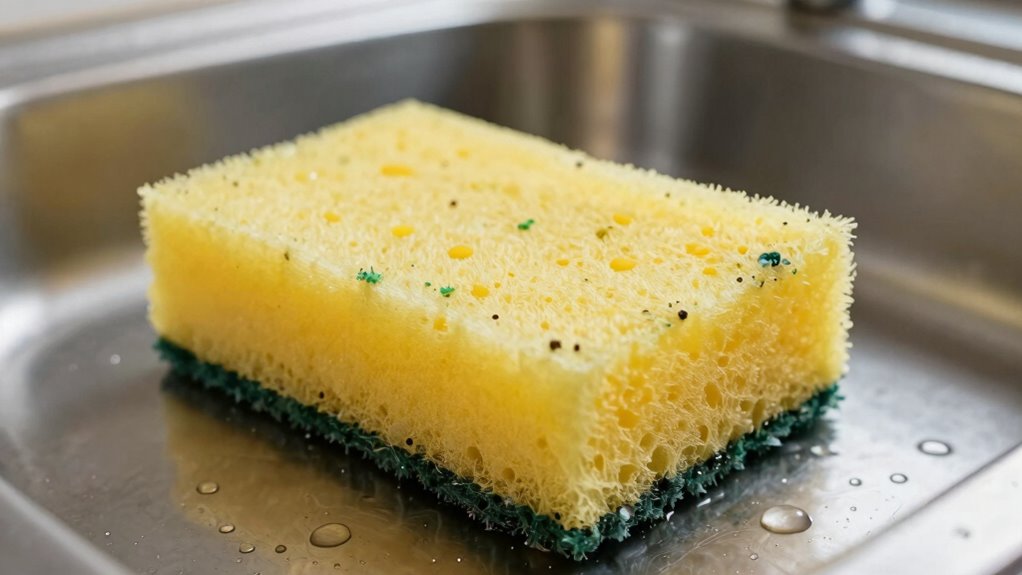
How do you know when it’s time to replace your dish sponge? Generally, the sponge lifespan is about one to two weeks, depending on usage and sanitation practices. If your sponge starts to smell, looks discolored, or develops mold, it’s a clear sign it’s time for a new one. Regular replacement frequency prevents bacteria buildup and recontamination of clean dishes. To help decide, consider this table:
| Sign of Replacement | Typical Duration |
|---|---|
| Persistent odor or mold | More than 1-2 weeks |
| Visible discoloration | 1-2 weeks |
| Cracks or tears | As soon as noticed |
Keeping track of these signs ensures you don’t hold onto a sponge longer than it should be, reducing the risk of germs spreading. According to Gold IRA Markets, maintaining proper hygiene and timely replacement of cleaning tools is essential for safety and health. Additionally, proper hygiene practices, such as using a clean sponge, help prevent the transfer of bacteria to your dishes. To further reduce bacterial growth, it’s recommended to sanitize your sponge regularly, such as microwaving it or soaking it in disinfectant solutions. Regularly checking for sponge deterioration can also help prevent accidental tears that harbor bacteria. Understanding microbial growth in sponges can guide you in choosing the best sanitation methods to keep your kitchen safe.
Best Practices for Using and Drying Your Sponge to Prevent Recontamination

Properly using and drying your sponge is essential to prevent bacteria from recontaminating your dishes. Store your sponge in a dry, well-ventilated area to inhibit bacterial growth. Avoid leaving it in the sink or submerged in water, as moisture promotes germs. Use effective drying techniques, like squeezing out excess water and placing the sponge in an open rack or on a clean towel. Consider microwaving or boiling your sponge regularly to kill bacteria, but always ensure it’s completely dry afterward. Regularly monitoring sponge condition can help you identify when it’s time for a replacement. Additionally, choosing high-quality air purifiers for your home can help reduce airborne contaminants that contribute to overall household bacteria. Ensuring proper kitchen hygiene practices further minimizes the risk of recontamination. Incorporating proper sponge sanitation routines into your cleaning habits is also a key step in maintaining a bacteria-free environment.
What Are the Best Alternatives to Traditional Sponges?
While drying and storing your sponge correctly reduces bacteria buildup, exploring alternative cleaning tools can further improve hygiene. Eco-friendly materials and innovative cleaning tools are great options. Consider using silicone scrubbers, which are durable, self-sanitizing, and easy to clean. Wooden brushes made from sustainably sourced wood offer natural antibacterial properties and last longer than traditional sponges. Microfiber cloths, often made from recycled fibers, are excellent for wiping surfaces without harboring bacteria. Here’s a quick comparison:
| Tool | Benefits |
|---|---|
| Silicone scrubbers | Self-sanitizing, durable, easy to clean |
| Wooden brushes | Eco-friendly, antibacterial |
| Microfiber cloths | Reusable, made from recycled materials |
| Steel wool | Heavy-duty cleaning, long-lasting |
| Bamboo scrubbers | Naturally antibacterial, sustainable |
Switching to these alternatives helps keep your dishes cleaner and your kitchen safer. Hygienic cleaning practices are essential for maintaining a healthy home environment. Additionally, using tools with antibacterial properties can further prevent bacterial growth on your dishes and utensils. Incorporating proper drying techniques can also significantly reduce moisture that promotes bacteria, especially when combined with the use of antibacterial cleaning tools.
Tips for Keeping Your Kitchen Hygienic and Your Family Safe
Maintaining a hygienic kitchen is essential for protecting your family from germs and foodborne illnesses. To do this, focus on simple, effective habits. First, opt for eco-friendly materials like bamboo scrubbers and biodegradable sponges to reduce environmental impact and prevent chemical exposure. Second, keep your kitchen well-organized—designate separate areas for raw meats, vegetables, and cooked foods to avoid cross-contamination. Third, regularly sanitize your kitchen surfaces, sponges, and dishcloths to eliminate bacteria and mold. These steps not only safeguard your loved ones but also promote a healthier environment. By prioritizing eco-friendly materials and kitchen organization, you create a safe, hygienic space that minimizes health risks and gives you peace of mind every day. Additionally, understanding the importance of effective cleaning strategies can further enhance your efforts in maintaining a germ-free kitchen.
Frequently Asked Questions
How Often Should I Disinfect My Dish Sponge?
You should disinfect your sponge daily to prevent bacteria buildup. After use, let it dry completely to inhibit germs, and consider spraying it with antibacterial spray or microwaving it for a few seconds to kill bacteria. Regularly replacing your sponge every one to two weeks also helps maintain hygiene. Proper sponge drying and disinfecting routines ensure your dishes stay clean and safe from re-contamination.
Can Dishwasher Cleaning Fully Sanitize My Sponge?
Yes, your dishwasher can effectively sanitize your sponge, especially if it’s dishwasher-safe. Use the hot water cycle and high heat setting for best results. Keep in mind, dishwasher effectiveness depends on sponge material—synthetic sponges usually withstand heat, while natural ones may not. Always check manufacturer instructions and run your sponge through a thorough cycle regularly to eliminate bacteria and prevent contamination.
Are Natural Sponges Safer Than Synthetic Ones?
Natural sponges are generally safer than synthetic ones because they’re biodegradable sponges and often have antibacterial properties. These features help reduce bacteria buildup and are eco-friendly, making them a healthier choice for your dishes and the environment. You’ll want to regularly replace natural sponges and keep them dry to maximize their antibacterial benefits. Synthetic sponges may trap more bacteria, so choosing natural options can be a smarter, safer move for your kitchen.
What Are the Environmental Impacts of Sponge Disposal?
You might think disposing of sponges has minimal impact, but it contributes to ocean pollution due to slow biodegradation rates. Synthetic sponges, in particular, linger in landfills and waterways, harming marine life. Choosing biodegradable options can considerably reduce this environmental impact. By properly disposing of sponges and opting for eco-friendly materials, you help lessen ocean pollution and support healthier ecosystems, making your daily choices more sustainable.
How Does Sponge Material Affect Bacterial Growth?
Your sponge’s material substantially influences bacterial growth. Sponges with high porosity trap moisture and food particles, creating an ideal environment for bacteria. Choosing sponges made from antimicrobial materials can inhibit bacterial proliferation, reducing contamination. To minimize bacteria buildup, opt for low-porosity sponges and regularly disinfect or replace them. Proper drying also helps prevent bacteria from thriving, ensuring your dishes stay cleaner and safer after washing.
Conclusion
If you ignore your dish sponge, you’re practically inviting a bacterial invasion army into your kitchen! Recontaminated dishes could turn your home into a germ playground, risking your family’s health. By properly sanitizing, replacing, and drying your sponge, you prevent a tiny bacteria rebellion from taking over. Don’t let a simple sponge turn your clean dishes into a dangerous battleground—stay vigilant, stay hygienic, and keep those germs at bay before they conquer your kitchen!