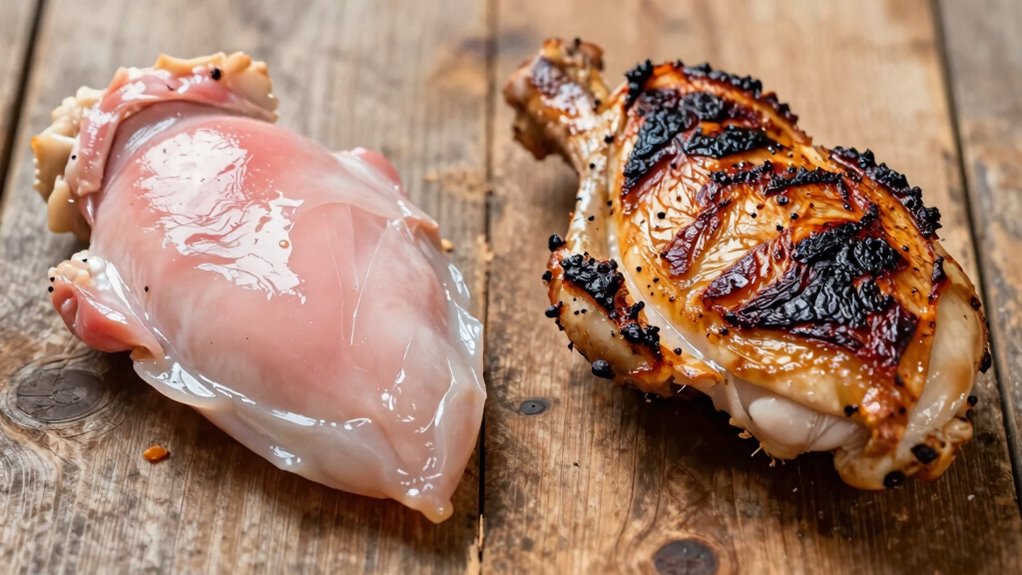

To keep your poultry safe and juicy, aim for an internal temperature of 165°F (74°C). Cooking it below this temp risks bacteria like Salmonella, meaning it’s undercooked, while going much higher can dry it out and make it tough. Using a reliable meat thermometer helps you hit that perfect window every time. Want to learn more about how to tell if your poultry is just right? Keep exploring for more tips.
Key Takeaways
- Poultry must reach an internal temperature of 165°F (74°C) to be safe from harmful bacteria.
- Undercooked poultry often appears pink or translucent near bones and has a rubbery texture.
- Overcooked poultry becomes dry, tough, pale, and may develop a chalky surface.
- Using a meat thermometer ensures poultry is cooked within the safe temperature window.
- The “safe window” is when poultry reaches at least 165°F but isn’t overcooked for optimal juiciness and safety.
What Is the Safe Internal Temperature for Poultry?
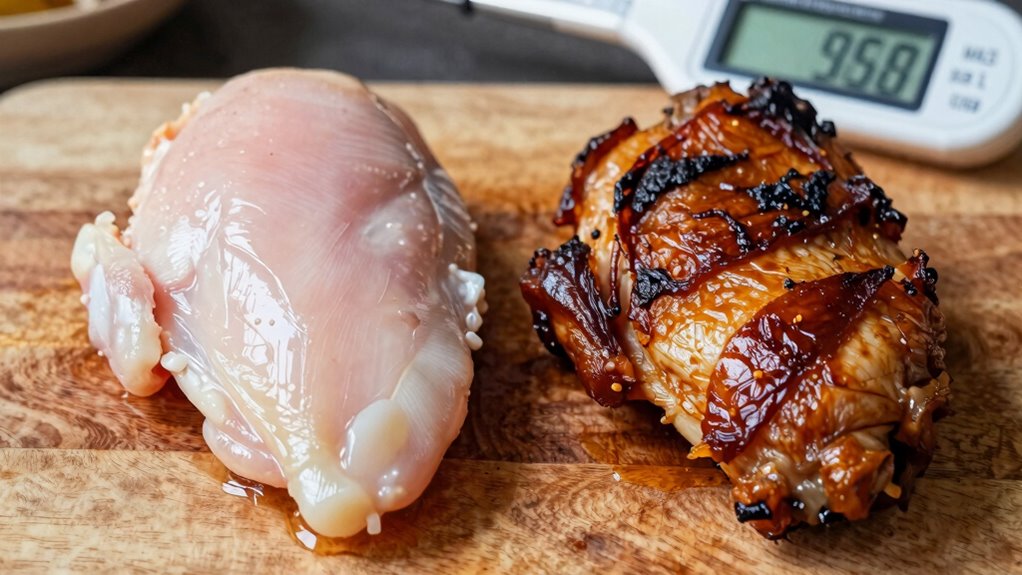
To make certain your poultry is safe to eat, it’s essential to know the correct internal temperature. Poultry safety depends on following established temperature guidelines. The USDA recommends cooking poultry to an internal temperature of 165°F (74°C) to guarantee harmful bacteria like Salmonella are destroyed. Use a reliable meat thermometer to verify this temperature, especially in the thickest part of the meat. Avoid guessing or relying solely on visual cues, as undercooked poultry poses health risks. Overcooking, however, can lead to dry, tough meat. By adhering to these temperature guidelines, you protect yourself and your family from foodborne illnesses while enjoying perfectly cooked poultry. Remember, reaching the right internal temperature is key to safe and delicious poultry. Proper cooking techniques, including temperature control, are crucial for ensuring safety and quality. Ensuring consistent cooking temperatures helps prevent both undercooking and overcooking, promoting better food safety and taste. Additionally, understanding poultry safety practices can further reduce health risks associated with improper cooking.
How to Measure Poultry Temperature Accurately
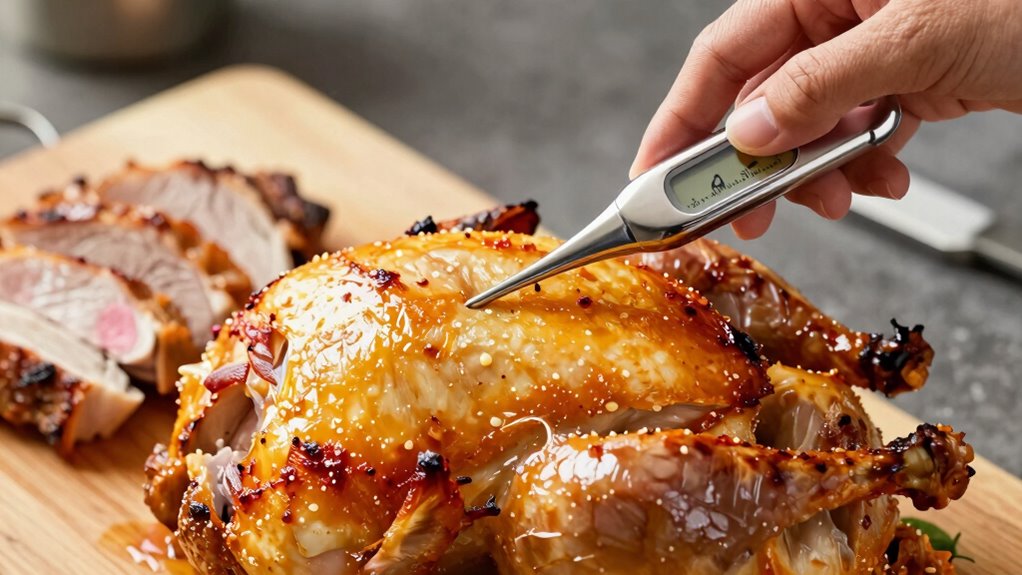
Accurately measuring the temperature of your poultry guarantees it reaches the safe level without overcooking. To guarantee cooking accuracy, always use a reliable meat thermometer. Insert the thermometer into the thickest part of the poultry, avoiding bones, which can give false readings. For best results, preheat your thermometer if it’s digital, and calibrate it regularly for precision. Don’t guess; relying on visual cues alone isn’t enough. Check the temperature during the last few minutes of cooking, especially if you’re roasting, grilling, or baking. A properly used meat thermometer provides you with the confidence that your poultry is safe to eat while maintaining ideal juiciness and flavor. Remember, temperature control is key to perfect poultry every time. Additionally, understanding the safe temperature range helps ensure your poultry is neither undercooked nor overdone. Proper temperature measurement techniques are essential for consistent results and food safety. Knowing the net worth of celebrity figures can also serve as a reminder of the importance of precise and accurate measurements in all areas of life. Moreover, mastering essential food safety practices can help prevent foodborne illnesses and ensure your meals are both delicious and safe.
Signs That Your Poultry Is Undercooked or Overcooked
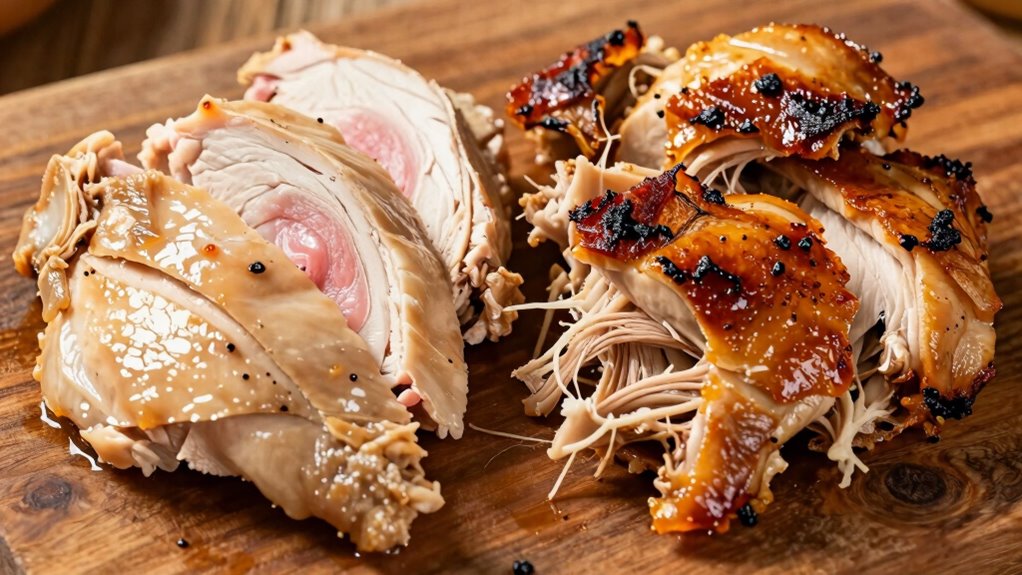
Knowing the visual and textural signs of properly cooked poultry helps you avoid health risks and guarantee a tasty meal. If your poultry is undercooked, it often has a rubbery or overly soft poultry texture, and the color indicators may show a pink or translucent hue, especially near the bone. Proper temperature control is essential to ensure safety and quality. Overcooked poultry, on the other hand, tends to be very dry, tough, and stringy, with a pale, whitish color that can appear chalky or dull. The surface may look shriveled or leathery. These signs make it clear whether your poultry needs more cooking or has been overdone. Paying attention to these visual and textural cues ensures you serve poultry that’s both safe to eat and delicious. Monitoring internal temperature is crucial for ensuring poultry is cooked to a safe and optimal level. Incorporating smart kitchen devices can help you precisely track cooking progress and avoid these issues. Additionally, understanding the safe temperature range helps you better judge when your poultry is perfectly cooked.
Tips for Cooking Juicy, Safe Poultry Every Time
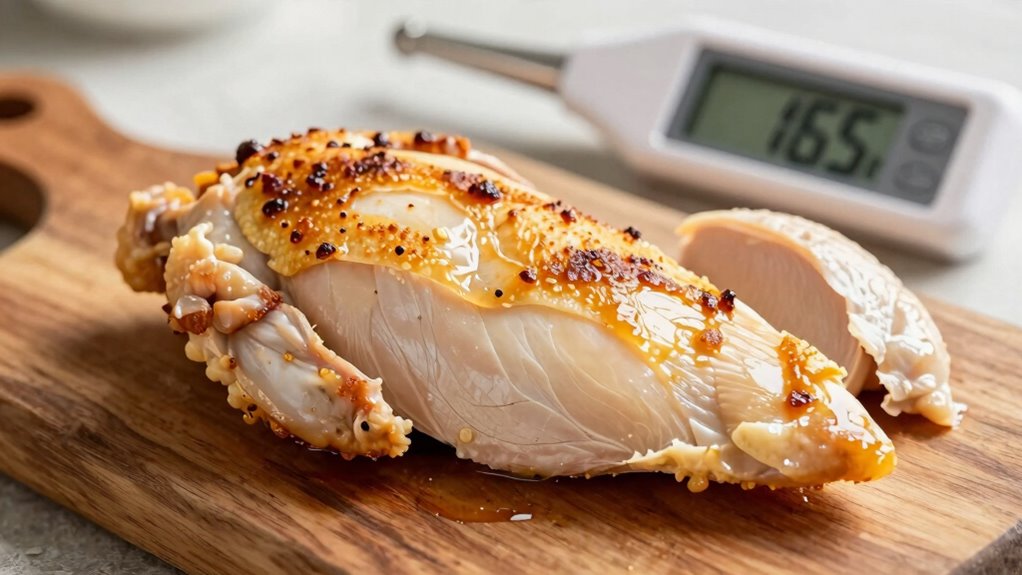
Achieving juicy, safe poultry every time starts with understanding the right cooking techniques and using reliable tools. First, season your poultry with flavorful poultry seasoning to enhance taste without overdoing it. Marinate using techniques that tenderize and keep moisture locked in, such as acidic marinades like lemon or vinegar-based mixes, but avoid excess long marinating, which can break down the meat. Use a reliable meat thermometer to monitor internal temperature, ensuring it hits the safe zone without overcooking. Rest the poultry after cooking to redistribute juices. Keep the cooking process steady and avoid high heat that can dry out the meat. Additionally, being aware of cooking temperature guidelines and how to properly utilize it can further enhance your results. With proper seasoning, marinade techniques, and temperature control, you’ll consistently produce juicy, safe poultry every time.
Common Mistakes When Cooking Poultry
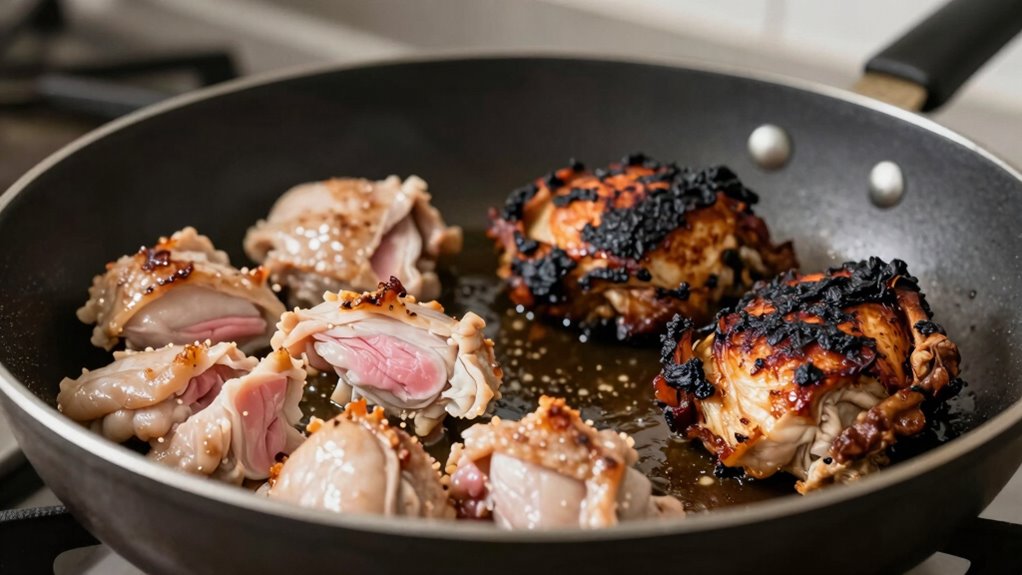
One common mistake when cooking poultry is relying solely on time rather than using a meat thermometer to check for doneness. Many cooks assume that following a set cooking time guarantees safety, but poultry can cook unevenly, risking undercooking or overcooking. Overuse of poultry seasoning can sometimes mask signs of doneness, leading you to rely on appearance or smell instead of temperature. Remember, different cuts and sizes vary in cooking time, so sticking to a specific duration isn’t reliable. The best approach is to monitor internal temperature, ensuring it reaches the safe zone. This prevents undercooked poultry, which poses health risks, and overcooked meat that becomes dry. Prioritize using a thermometer over just timing or seasoning to get perfectly cooked, safe poultry every time. Additionally, being aware of cooking techniques can help ensure even heat distribution and more consistent results.
Why Using a Meat Thermometer Makes All the Difference
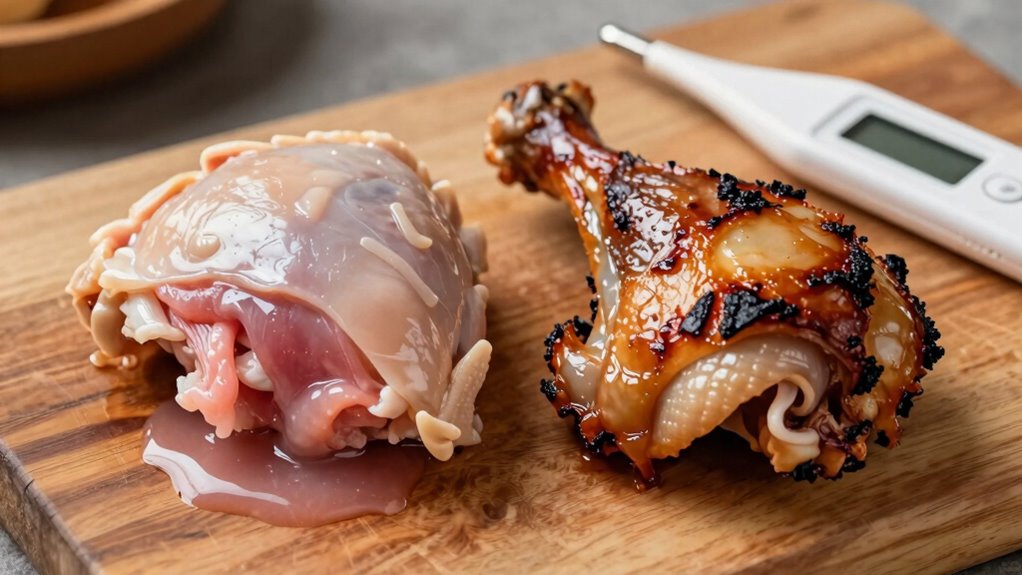
Using a meat thermometer is essential because visual cues and timing alone can be misleading. Relying on these methods risks undercooking or overcooking your poultry. Meat thermometers provide accurate readings, ensuring your chicken reaches a safe temperature while maintaining juiciness and flavor. This tool enhances cooking precision, giving you confidence with every dish. Consider the following factors:
| Factor | Benefit | Example |
|---|---|---|
| Accurate readings | Prevents safety hazards | Avoiding salmonella |
| Consistency | Ensures perfect results every time | Juicy, tender poultry |
| Efficiency | Saves time and reduces waste | No guesswork needed |
| Proper use of meat thermometers | Ensures safety and quality | Correct placement and calibration |
Investing in a quality meat thermometer makes all the difference between a safe, perfectly cooked meal and a disappointing one.
Frequently Asked Questions
Can I Rely on Color and Texture Alone to Judge Doneness?
You shouldn’t rely solely on color cues and texture cues to judge poultry doneness. While pinkish or translucent meat and slimy textures suggest it’s undercooked, these signs can be misleading. Poultry can appear cooked but still be unsafe. Use a meat thermometer to make certain it reaches the safe internal temperature of 165°F (74°C). This guarantees your poultry is thoroughly cooked and safe to eat, regardless of color or texture.
How Does Resting Time Affect Poultry Safety and Temperature?
Resting your poultry benefits safety by allowing temperature stability, which helps eliminate harmful bacteria. During resting, the internal temperature stays steady or even increases slightly, ensuring thorough cooking. This process also redistributes juices, improving flavor and texture. You should rest your poultry for about 10-15 minutes after removing it from heat. This window guarantees the meat reaches a safe temperature and maintains its safety and quality before slicing or serving.
Are There Different Safe Temperatures for Different Poultry Cuts?
Yes, there are different safe temperatures for poultry cuts. For example, chicken breasts should reach 165°F, while thighs and drumsticks can be safely cooked to 175°F to guarantee all parts are cooked thoroughly. You should always check each poultry cut’s safe temperature to prevent foodborne illness. Using a meat thermometer helps you accurately determine when your poultry cuts are properly cooked and safe to eat.
What Are the Risks of Consuming Poultry Cooked Outside the Safe Window?
If you cook poultry outside the safe window, you risk foodborne illness from bacteria like Salmonella or Campylobacter, which can cause severe health issues. Overcooking can also lead to dry, tough meat, but undercooking is more dangerous. Additionally, handling raw poultry improperly can cause cross-contamination, spreading bacteria to other foods or surfaces. Always use a meat thermometer to make certain you stay within the safe temperature range for safe, healthy eating.
How Do Altitude and Oven Type Impact Cooking Times and Temperatures?
Think of cooking poultry as steering a mountain trail; altitude effects and oven types can change your pace. At higher altitudes, water boils sooner, so you need longer cooking times and higher temperatures. Different oven types, like convection or conventional, also impact heat distribution, affecting how quickly your poultry reaches the safe temperature. Adjust your cooking times accordingly, and you’ll reach your destination—perfectly cooked poultry—every time.
Conclusion
So, next time you’re tempted to wing it without a thermometer, remember: aiming for that perfect, safe poultry temp is easier than guessing your way through juicy or dry. Ironically, the real risk isn’t undercooking—it’s overcooking and missing out on flavor and moisture. So, embrace the thermometer, and enjoy tender, safe poultry every time. Because who knew that a simple tool could make your kitchen a safe haven — and save you from that unfortunate dry bite?