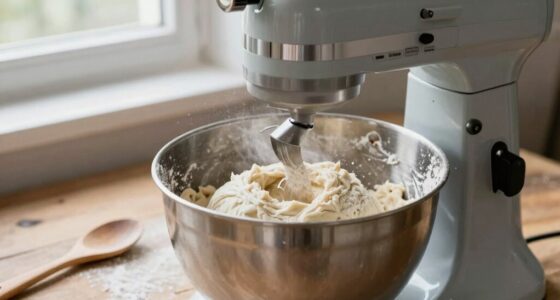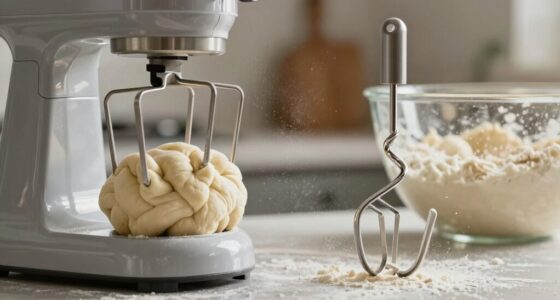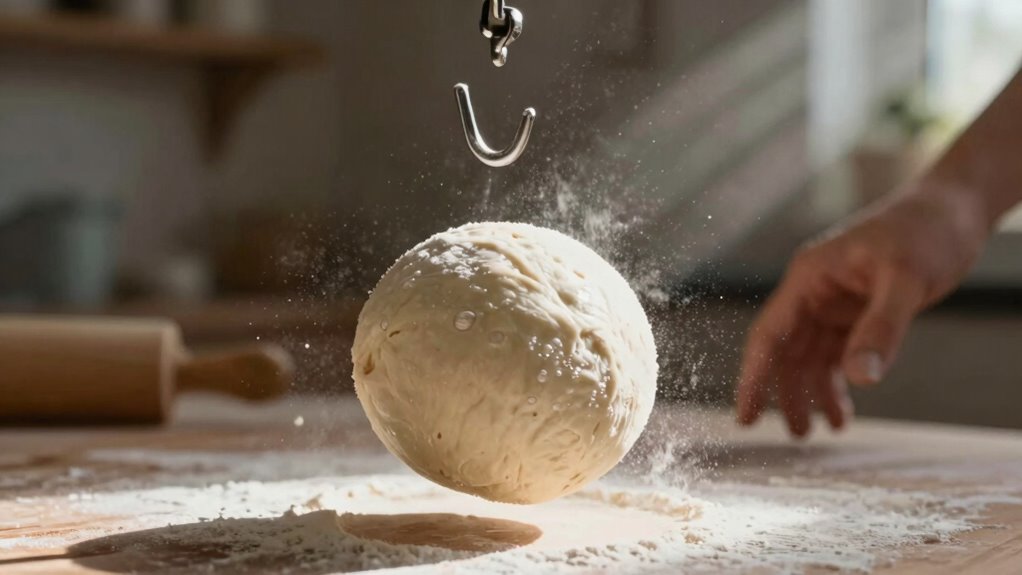

Dough climbs the hook when moisture levels, flour type, and kneading techniques aren’t balanced. If your dough’s too wet, it sticks like glue. If it’s too dry, it won’t stick at all. Choosing the right flour affects gluten development, while proper kneading guarantees smooth texture. Aim for that sweet spot: moist yet manageable dough. By fine-tuning these factors, you can control climbing issues and improve your baking outcomes. There’s more to explore about achieving perfect dough!
Key Takeaways
- Dough climbing the hook often results from excessive moisture; ensure the right hydration level for optimal texture and mixing behavior.
- Choose the appropriate flour type; higher protein flours enhance gluten development, aiding in dough elasticity and reducing climbing.
- Insufficient kneading can lead to poor dough elasticity; knead adequately to achieve a smooth, elastic consistency that prevents climbing.
- Monitor dough texture; it should be smooth and slightly tacky, as this balance helps control climbing during mixing.
- Adjust kneading techniques, like using stretch and fold, to gradually build elasticity without overworking the dough, preventing climbing issues.
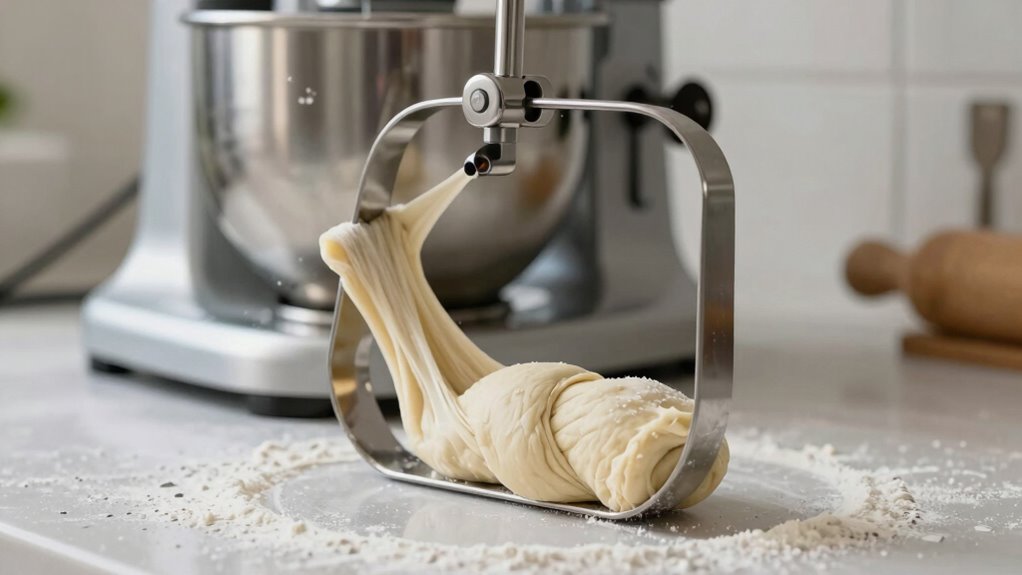
When you think about dough, you might picture it rising in a warm kitchen, but have you ever considered its adventurous side? “Dough Climbing the Hook” takes you on a journey through the fascinating world of dough’s elasticity and how it interacts with the hook of a mixer. This phenomenon can leave you puzzled, especially when you notice your dough climbing up the hook during mixing. Understanding why this happens involves diving into the dough’s consistency and your kneading techniques. A key factor influencing this behavior is the dough’s elasticity, which is affected by gluten development and hydration levels. Dough climbing the hook often results from an imbalance in moisture and flour. When you start mixing, the ingredients need to be combined to achieve a specific consistency. If your dough is too wet, it can become overly sticky, causing it to cling to the hook. On the flip side, when it’s too dry, it might not adhere to the hook at all. Striking the right balance is essential. You want a dough that’s moist yet manageable, allowing it to develop gluten without becoming a sticky mess. Additionally, the temperature of your ingredients can influence gluten development and elasticity, so using room temperature ingredients can help achieve better results. Understanding how hydration levels affect dough behavior can also guide you in maintaining the optimal moisture content for your recipes. Furthermore, the type of flour you choose can significantly impact the dough’s elasticity and its tendency to climb the hook, so selecting the right flour for your recipe is crucial. Using proper kneading techniques, such as kneading until the dough is smooth and elastic, can help prevent it from climbing the hook and ensure proper gluten development. Your kneading techniques also play a significant role in this process. If you’re not mixing long enough, the dough might not develop the necessary elasticity, which can lead to it climbing the hook. Conversely, if you over-knead, the dough can become tough and resistant. Finding that sweet spot requires practice and attentiveness to how the dough feels. Pay attention to its texture; it should be smooth and slightly tacky but not overly sticky. Using stretch and fold techniques, especially in wetter doughs, can help build elasticity gradually, reducing the chances of climbing. Ultimately, understanding why dough climbs the hook can enhance your baking experience. By fine-tuning your dough consistency and kneading techniques, you’ll find yourself in control, leading to delicious results every time.

MEET JUICE C-Shaped K45DH Coated Dough Hook, Attachment for KitchenAid Tilt-Head Stand Mixers Only, Fits 4.5–5 Quart Bowls, Compatible with K45, K45SS, KSM90, KSM150
High Quality】Aluminum material with nylon coated to avoid oxidation.
As an affiliate, we earn on qualifying purchases.
As an affiliate, we earn on qualifying purchases.
Frequently Asked Questions
Can Dough Climbing the Hook Affect My Mixer’s Performance?
Yes, dough climbing the hook can definitely affect your mixer’s performance. When this happens, it puts extra strain on the motor, which can lead to faster wear and tear. To maintain your mixer, keep an eye on dough hydration; too much moisture can cause the dough to stick. Regularly check for any buildup and guarantee proper mixing techniques to keep everything running smoothly and extend your mixer’s lifespan.
What Types of Flour Are Best to Prevent Climbing?
To keep your dough from climbing the hook, think of flour as the foundation of a sturdy building. Bread flour and high gluten flour have higher gluten content, giving your dough strength and structure. All-purpose flour works well too, but if you’re aiming for a softer texture, pastry flour can help. Whole wheat flour adds nutrition, but be cautious; its density might lead to climbing. Choose wisely for the best results!
How Does Humidity Impact Dough Consistency?
Humidity greatly impacts dough consistency by affecting dough hydration. When the air’s humid, your dough can absorb extra moisture, leading to a stickier texture. Conversely, low humidity can dry out your dough, making it tougher to work with. You might find yourself adjusting your flour or adding more water to achieve the right balance. Always keep an eye on the weather; it could change how your dough behaves during mixing and fermentation.
Is Dough Climbing a Sign of Over-Kneading?
Dough climbing isn’t necessarily a sign of over-kneading. It often reflects your kneading technique and the dough texture you’re aiming for. If the dough climbs the hook, it might mean it’s overly sticky or not properly hydrated. Pay attention to how the dough feels; if it’s smooth and elastic, you’re likely on the right track. Adjust your kneading time and technique to achieve the desired consistency without overworking your dough.
Can Adding Ingredients Help Reduce Climbing Issues?
Yes, adding ingredients can help reduce climbing issues. Curiously, a study found that dough with ideal ingredient ratios and hydration levels can reduce climbing by up to 30%. By adjusting your flour-to-water ratio, you can achieve a more manageable dough consistency. Incorporating fats like oil or butter also improves texture, making it less prone to climbing. So, experiment with your ingredient ratios for a smoother kneading experience!

King Arthur Gluten-Free Bread Flour, 1:1 Replacement for Yeasted Recipes, 2 lb (Pack of 1) – Premium GF Flour for Artisan Boules, Bagels, Cinnamon Rolls & Burger Buns – Sorghum & Xanthan Gum
Versatile Replacement: This gluten free flour 1 to 1 substitute for wheat flour can be used in yeasted…
As an affiliate, we earn on qualifying purchases.
As an affiliate, we earn on qualifying purchases.
Conclusion
To sum up, if you notice your dough climbing the hook like it’s trying to escape a baking prison, don’t panic! Adjusting hydration levels, managing your mixing speed, and using the right flour can help keep that dough in check. Remember, a little attention goes a long way in preventing that sticky situation. With these tips, you’ll be the master of your mixer, turning out perfect dough every time, like a baking superhero!

YINMIK Digital pH Meter for Food, pH Probe for Sourdough and Bread Dough, Checking The pH of Fermenting Sausages and Salami, Waterproof pH Tester for Solid and Liquid Soft Soil Sample…
pH Meter for Sourdough Making: With proprietary spear pH probe, YINMIK food pH meter is great for managing…
As an affiliate, we earn on qualifying purchases.
As an affiliate, we earn on qualifying purchases.

ALLTOP Pastry Shortening Blender Cutter,Stainless Steel Dough Masher for Butter, Biscuit,Baking, Kneading,Dough, Flakier and Fluffier Pie Crusts, Almond – Hand Kitchen Tool (1, Black)
Unrivaled Quality: This Dough & Pastry Blender comes with high-quality, durable metal blades,guaranteeing longevity and top-tier performance. Your…
As an affiliate, we earn on qualifying purchases.
As an affiliate, we earn on qualifying purchases.