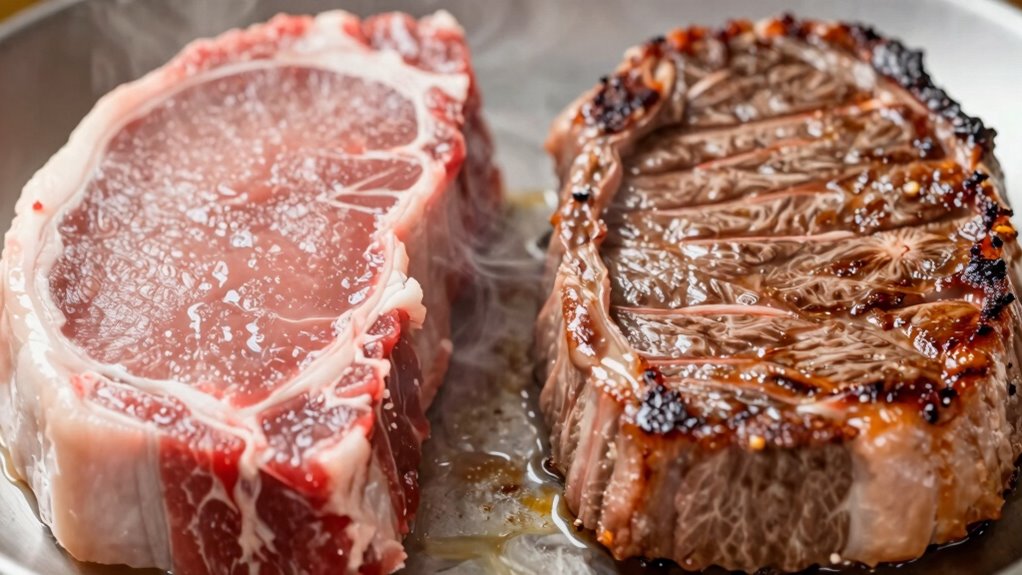

When you cook meat, proteins like actin and myosin unfold and tighten, causing the fibers to contract and squeeze out moisture. Heat also causes collagen to shrink and turn into gelatin, which further reduces size. Additionally, water evaporates as vapor, making the meat denser and smaller. The combination of protein contraction, collagen breakdown, and water loss explains the shrinking process. To learn more about how temperature and method affect meat size, keep exploring.
Key Takeaways
- Proteins denature and coagulate when heated, causing muscle fibers to contract and shrink.
- Heat unfolds proteins like actin and myosin, squeezing out water and tightening the meat’s structure.
- Collagen transforms into gelatin at higher temperatures, shrinking and pulling muscle fibers closer.
- Water is expelled as vapor during cooking, reducing meat volume and contributing to shrinkage.
- Higher cooking temperatures accelerate protein denaturation and water loss, increasing overall meat shrinkage.
Why Does Meat Shrink When You Cook It?
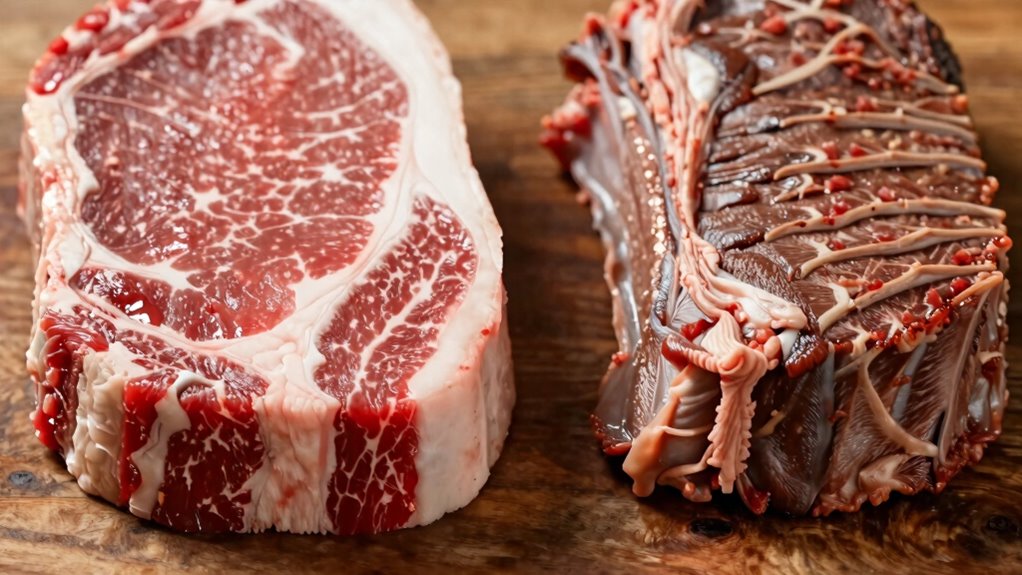
When you cook meat, it shrinks because heat causes the muscle fibers to contract and the moisture inside to evaporate. This process impacts meat tenderness, making it less juicy but also affecting flavor retention. As the muscle fibers tighten, they push out water, leading to a smaller, denser piece of meat. Proper cooking techniques can help you manage this shrinkage, preserving tenderness and flavors. Overcooking causes more water loss, resulting in tougher, drier meat, while gentle heat helps maintain juiciness. Understanding this mechanism allows you to cook meat more effectively, ensuring it remains tender and flavorful. So, the key to minimizing shrinkage is controlling heat and cooking time, which helps retain moisture and preserve the meat’s overall quality. Additionally, learning about cooking methods can further optimize meat texture and moisture retention, especially when considering temperature control. Proper marination can also help reduce moisture loss during cooking and improve tenderness.
What Causes Meat to Reduce in Size During Cooking?
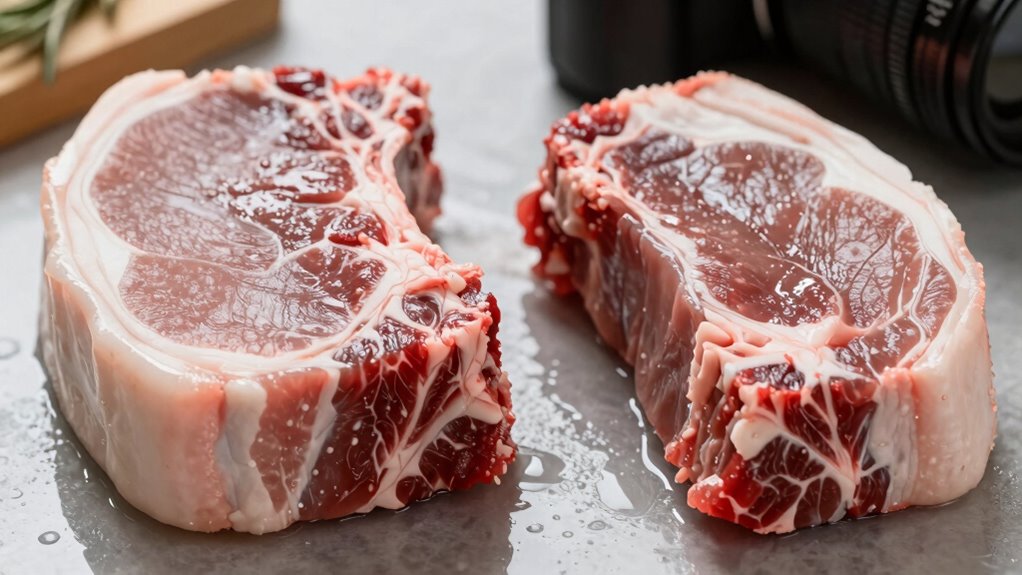
When you cook meat, its size decreases mainly because water escapes as vapor, reducing overall weight. Additionally, proteins unfold and tighten, pulling the meat’s structure inward, while collagen contracts and transforms into gel, further shrinking the meat. These combined effects cause the noticeable reduction in size you’re familiar with.
Water Evaporation Losses
During cooking, meat loses a significant amount of water through evaporation, which causes it to shrink in size. As heat is applied, the muscle fibers contract and push out water, reducing overall water retention within the meat. This loss of moisture is a primary factor in meat’s shrinking, as water makes up a large portion of its weight and volume. When water escapes from the muscle fibers, the meat becomes denser and smaller. The temperature at which you cook also influences evaporation; higher heat accelerates water loss. Keep in mind that water evaporation not only affects size but also impacts juiciness and tenderness. Managing cooking time and temperature can help minimize water loss, preserving moisture and keeping the meat tender. Additionally, understanding the contrast ratio can help you choose the right cooking method to improve visual appeal and texture. Proper cooking techniques can help retain moisture and prevent excessive shrinkage, and using methods like brining or marinating can also help retain water content during cooking. Applying the right cooking methods can significantly reduce moisture loss and improve overall meat quality, especially when combined with techniques that preserve meat tenderness and juiciness.
Protein Denaturation Effects
As heat causes water to evaporate from meat, it also triggers changes in the protein structure itself. When heated, proteins undergo unfolding, known as protein denaturation, where their natural folded shape breaks apart. This process causes the proteins to lose their original texture, leading to shrinkage. Additionally, heat can diminish enzymatic activity that normally helps maintain protein flexibility. As enzymes become inactive, proteins no longer retain their original structure, resulting in tighter, more compact forms. This unfolding and loss of enzymatic function work together to reduce the meat’s size, as the proteins contract and tighten during cooking. Moreover, protein denaturation alters the meat’s moisture content, contributing further to shrinkage. Understanding these effects explains why meat becomes smaller and firmer as it reaches higher temperatures. Recognizing the cooking process helps in controlling the degree of meat shrinkage and achieving the desired texture.
Collagen Contraction Dynamics
Ever wonder why meat shrinks so much during cooking? It’s mainly due to collagen contraction. When you heat meat, the heat causes the collagen fibers to tighten and shrink, pulling the muscle fibers closer together. This process is driven by enzyme activity that breaks down connective tissues, but as temperatures rise, these enzymes become less active, and collagen begins to contract more tightly. The tightening of collagen pulls on the muscle fibers, reducing the overall size of the meat. As collagen shrinks, it releases moisture, which also contributes to the meat’s loss of volume. The combined effect of collagen contraction and enzyme activity explains why cooked meat becomes smaller and more compact, giving you that tender yet smaller piece of meat you enjoy. Proper meat preparation techniques can help minimize unnecessary shrinkage and preserve juiciness.
How Do Proteins Change When You Cook Meat?
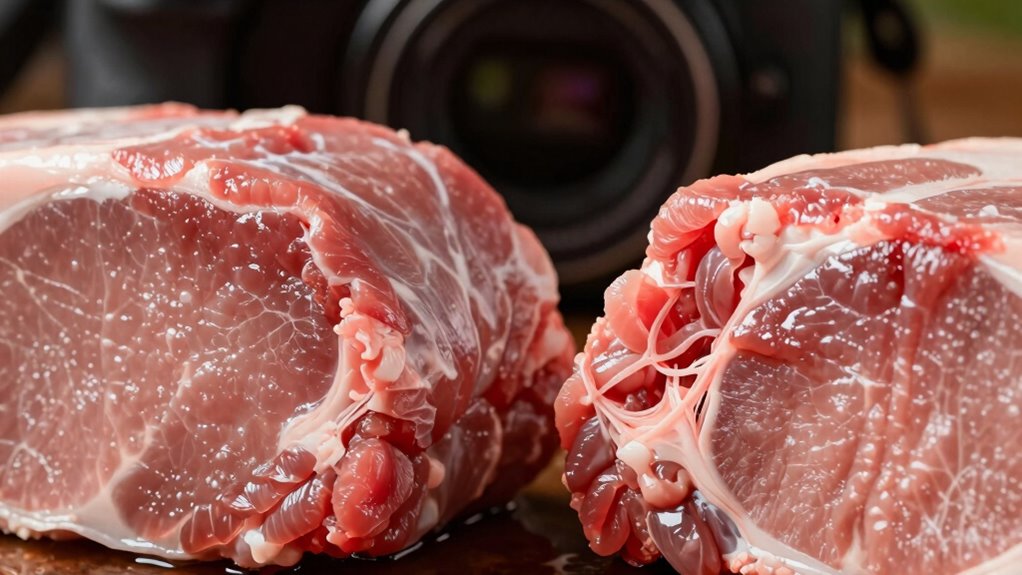
When you cook meat, the proteins inside undergo significant changes that affect its texture and size. As heat increases, muscle fibers tighten and denature, causing the meat to become firmer. Enzyme activity slows down and eventually stops, preventing natural breakdown processes. Proteins like actin and myosin unfold and form new bonds, leading to shrinkage. This structural transformation causes the meat to contract and lose moisture, resulting in a smaller, denser piece. The more you cook, the more these proteins coagulate and the muscle fibers tighten further. This process explains why cooked meat feels tougher and why its size diminishes. Understanding these protein changes helps you control cooking times to achieve the desired tenderness without excessive shrinkage.
Why Does Water Evaporate From Meat as It Cooks?
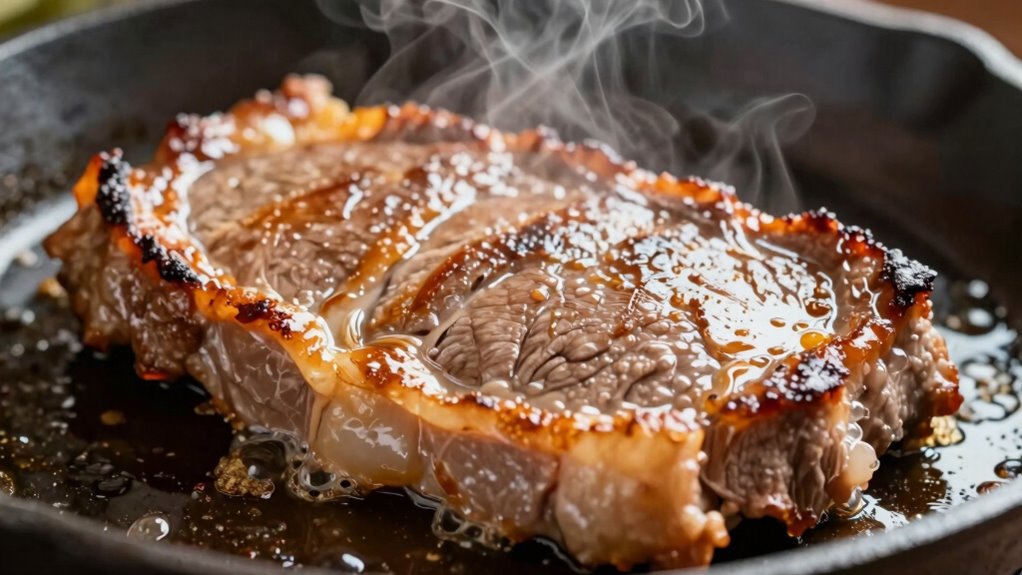
Water evaporates from meat during cooking because heat causes the moisture inside to turn into vapor. As the temperature rises, this moisture escapes through tiny pores and surface cracks, leading to weight loss. This process influences meat tenderness, as losing water can make the meat feel drier and tougher if overdone. Additionally, moisture retention during cooking is essential for maintaining juiciness and flavor. Proper temperature control ensures that moisture loss is minimized while still achieving the desired level of doneness. Concentrating flavors through controlled evaporation enhances flavor retention. When you cook meat properly, some moisture escapes, but enough remains to keep the meat juicy and tender. The evaporation process is a natural part of cooking that affects both texture and flavor. Understanding how water leaves the meat helps you manage cooking times** more effectively, ensuring your meat stays flavorful and tender while avoiding excessive dryness. Proper cooking techniques are vital for balancing moisture loss and meat quality. Moisture loss** is a key factor in cooking meat effectively.
How Does Temperature Affect Meat’s Structure and Size?
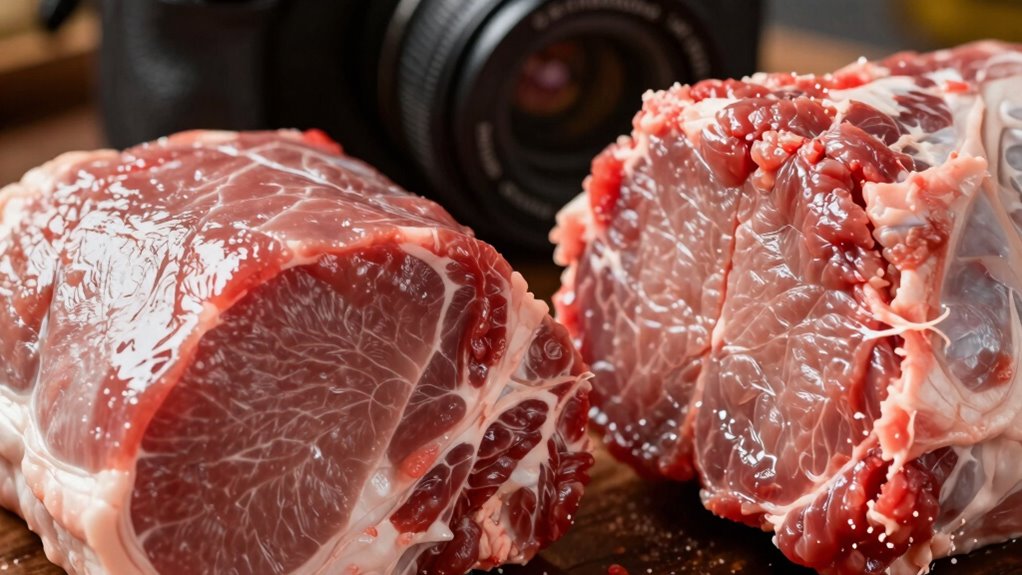
As you heat meat, proteins unfold and lose their natural shape through denaturation, which causes it to shrink. This process is influenced by the high pressure applied during cooking, which can accelerate protein unfolding. Simultaneously, collagen transforms into gelatin, impacting tenderness and size. Understanding water loss mechanisms during this process reveals how temperature influences meat’s structure and overall shrinkage. Additionally, the degree of shrinkage can be affected by artistic expression, as it reflects the complex interplay of heat, water, and protein changes within the meat. Recognizing the role of essential oils in meat preparation and flavoring can also provide insights into how different factors impact meat quality during cooking. Moreover, temperature control is crucial for managing how much the meat shrinks, ensuring optimal texture and juiciness. Proper appliance maintenance plans can help ensure consistent cooking performance and prevent issues that might affect meat preparation.
Protein Denaturation Dynamics
Temperature plays a crucial role in how proteins within meat respond to heat, leading to structural changes that affect its size and texture. As you cook, muscle fiber proteins unfold and lose their natural shape through denaturation, causing the meat to shrink. Enzyme activity accelerates at specific temperatures, breaking down muscle components and influencing tenderness. Sound healing research indicates that vibrations can influence cellular processes, which is related to how enzymes and proteins react during cooking. Understanding protein denaturation dynamics helps you see why meat becomes smaller and firmer as it cooks. Key points include:
- Heat causes muscle fibers to contract, reducing overall size.
- Enzymes become active at certain temperatures, affecting meat quality.
- Structural changes are immediate and irreversible once proteins denature.
- The thermal energy involved in cooking directly influences the rate and extent of protein changes.
These processes directly impact how you perceive doneness, tenderness, and moisture retention in cooked meat.
Collagen Conversion Process
Ever wonder why meat becomes noticeably more tender and sometimes smaller when cooked slowly? It’s all about the collagen conversion process. Collagen, a key protein in connective tissue, has a complex structure that’s resistant to heat initially. As you cook meat with thermal effects, the temperature causes the collagen structure to break down into gelatin. This transformation begins around 140°F (60°C) and accelerates with higher heat, softening the tissue and making the meat more tender. The conversion process reduces the meat’s overall size slightly as the collagen shrinks and melts away, but it also absorbs water, which can counterbalance some shrinkage. Understanding how temperature influences collagen helps you control tenderness and moisture, ensuring your meat reaches the perfect texture without excessive shrinkage. Cooking temperature plays a crucial role in how effectively collagen converts, impacting both tenderness and size.
Water Loss Mechanisms
Have you ever noticed how meat shrinks as it cooks? This happens because heat causes water loss through water migration within the protein network. As temperature rises, the proteins denature, tightening the structure and squeezing out moisture. This process impacts the meat’s size and juiciness.
- The heat disrupts the protein network, releasing trapped water.
- Water migrates from the interior to the surface, where it evaporates.
- The overall shrinkage results from this combined water loss and protein contraction.
Understanding these water loss mechanisms helps you see how temperature influences meat’s structure and size. As you cook, the delicate balance between protein denaturation and water migration determines whether your meat stays tender or becomes dry. Controlling temperature helps retain moisture, keeping your meat juicy and satisfying.
Do Different Cooking Methods Make Meat Shrink More or Less?
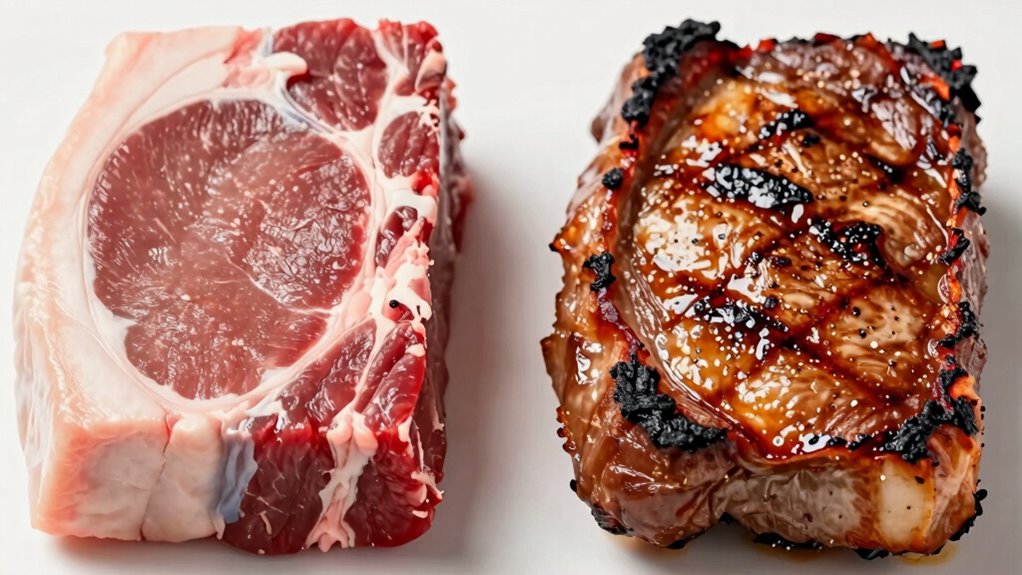
Different cooking methods can considerably influence how much meat shrinks during preparation. High cooking temperatures, like grilling or broiling, cause rapid moisture loss and protein contraction, leading to more shrinkage. Conversely, gentle methods such as braising or slow roasting use lower temperatures, allowing meat to cook more evenly and retain more moisture, resulting in less shrinkage. The choice of method affects meat tenderness as well; quick, high-heat techniques can toughen meat if not monitored carefully, while slow, moist methods tend to produce tender results. If you’re aiming to minimize shrinkage, opt for cooking techniques that maintain lower temperatures and moisture levels. Understanding how different methods impact protein behavior helps you cook meat that stays juicy and tender with less size reduction.
Why Do Lean Cuts Shrink More Than Fattier Cuts?
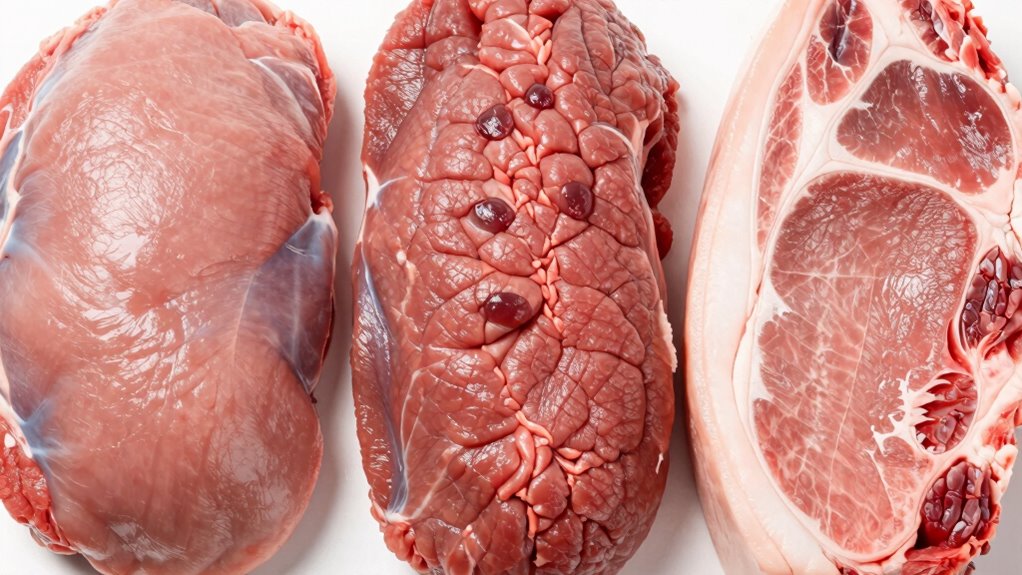
You’ll notice that lean cuts tend to shrink more during cooking than fattier cuts. This happens because lean meats have less fat and moisture to keep them tender, so they lose more weight as they cook. Understanding these differences helps you choose the right cut and cooking method for your desired results.
Moisture Content Differences
Lean cuts tend to shrink more during cooking because they contain higher moisture content than fattier cuts. When heated, the water within these lean proteins escapes, leading to significant moisture loss. This moisture loss causes texture changes, making the meat firmer and drier. Fattier cuts retain more fat and have less water, which helps preserve moisture retention during cooking, reducing shrinkage. Understanding this difference helps you anticipate how each cut will behave.
- Higher moisture content means more water evaporates during cooking
- Texture becomes denser and less juicy in leaner cuts
- Fattier cuts stay juicier because of better moisture retention
Fat Content and Shrinkage
Because fattier cuts contain more fat, they are less prone to shrinkage during cooking. The higher fat content acts as a buffer, reducing water loss and limiting overall size reduction. Lean cuts, with less fat, lose moisture more quickly, especially at higher cooking temperatures, which accelerates shrinkage. When you cook lean meat at elevated temperatures, the rapid evaporation of moisture causes more noticeable shrinkage. Conversely, fattier cuts can withstand higher temperatures without losing as much moisture, maintaining their size better. So, if you want minimal shrinkage, choose cuts with higher fat content and control the cooking temperature to prevent excessive moisture loss. This balance helps keep your meat tender, juicy, and closer to its original size after cooking.
Can Marinating or Brining Help Prevent Excessive Shrinkage?
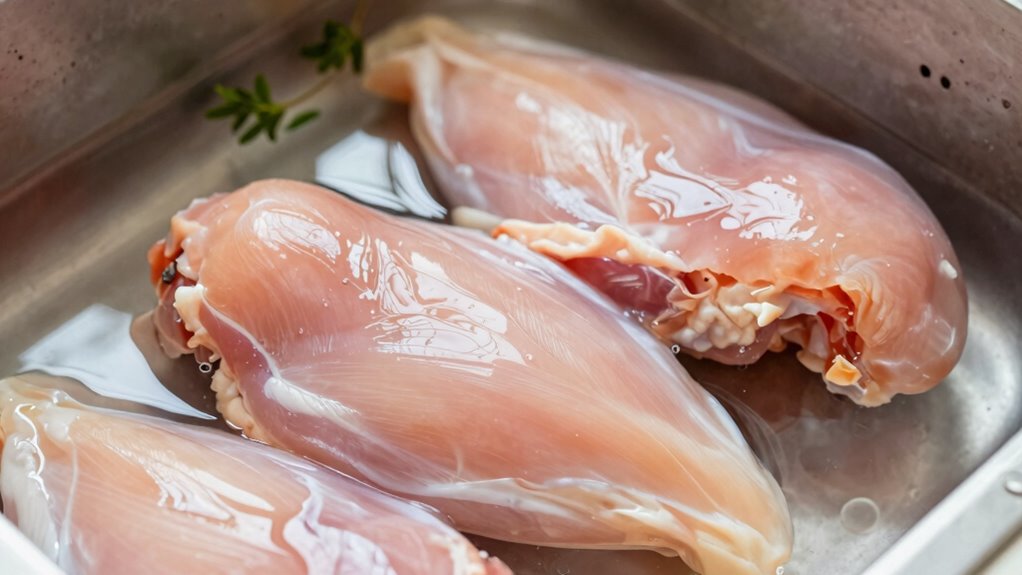
Marinating or brining meat can be effective strategies to reduce excessive shrinkage during cooking. These techniques help the meat retain moisture, making it less prone to drying out and shrinking. Marinating benefits include tenderizing and flavor enhancement, while brining techniques involve soaking meat in a saltwater solution that helps it absorb extra moisture. This added moisture acts as a barrier during cooking, minimizing protein contraction.
Marinating and brining help meat retain moisture, reducing shrinkage and improving texture during cooking.
- Enhances moisture retention, reducing overall shrinkage
- Improves texture and juiciness of the meat
- Creates a more even, controlled cooking process
How Can You Cook Meat to Minimize Shrinkage and Keep It Juicy?
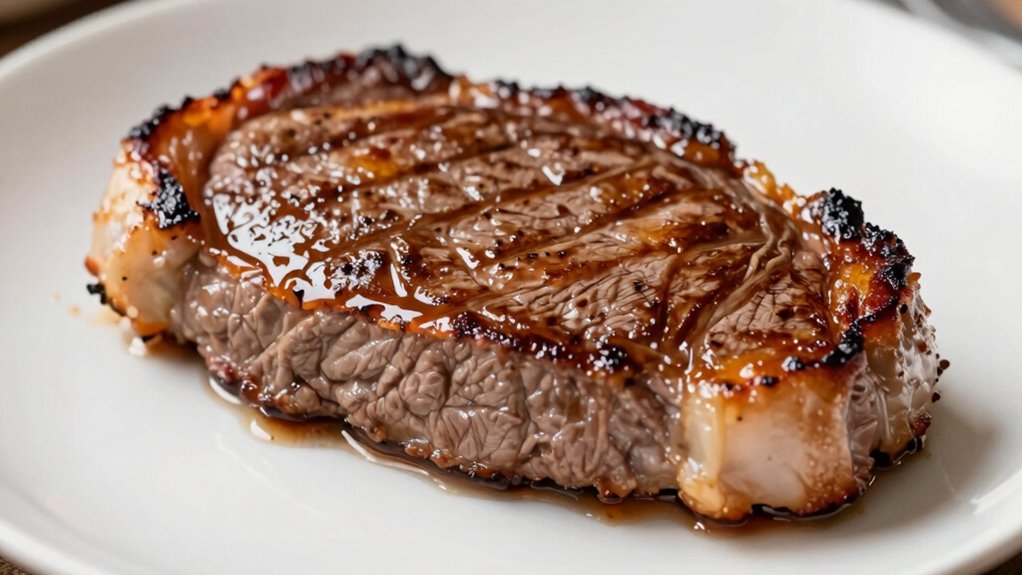
Cooking meat properly is key to preserving moisture and preventing excessive shrinkage. To keep it juicy and tender, focus on the right cooking temperature. High heat can cause rapid moisture loss, so aim for moderate temperatures that promote even cooking. Use a meat thermometer to monitor internal temperature and avoid overcooking. Tender meat retains more juices and shrinks less. Here’s a quick guide:
| Cooking Temperature | Meat Tenderness | Resulting Shrinkage |
|---|---|---|
| Low (around 120°F) | Very tender | Minimal |
| Medium (around 140°F) | Tender | Moderate |
| High (over 160°F) | Less tender | Excessive |
Control your heat, cook gently, and monitor internal temperature to maximize tenderness and minimize shrinkage.
What Are Common Mistakes That Lead to Too Much Meat Shrinkage?
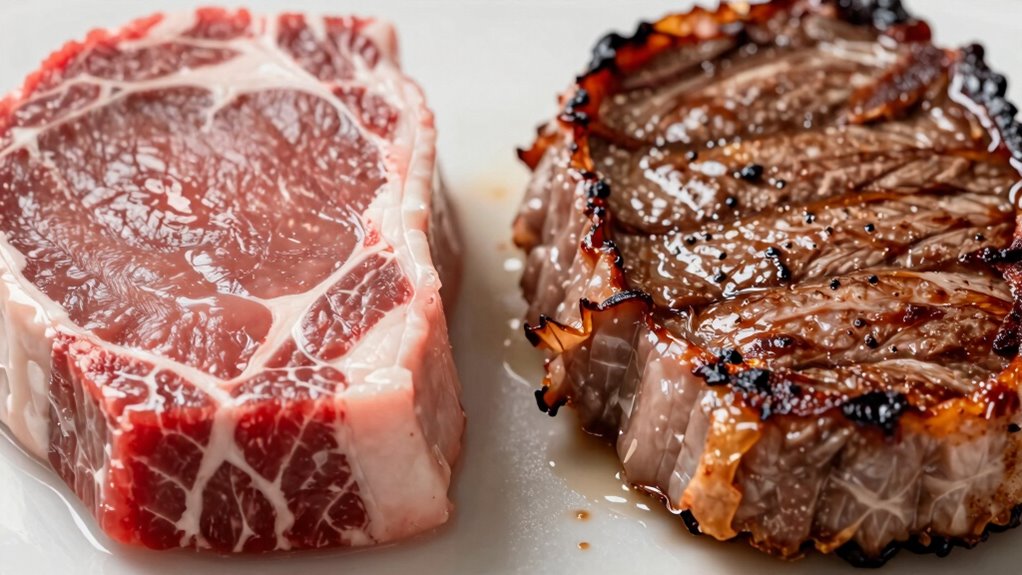
One common mistake that causes excessive meat shrinkage is cooking at too high a temperature, which quickly forces moisture out of the meat. When you cook with a high temperature, the rapid heat can toughen the meat and reduce its tenderness, leading to more shrinkage. To avoid this, remember that a moderate cooking temperature helps retain moisture and preserves tenderness.
- Ignoring the importance of proper cooking temperature, which affects meat tenderness and shrinkage
- Overcooking meat, causing excessive moisture loss and size reduction
- Using inconsistent heat, leading to uneven cooking and unnecessary shrinkage
Frequently Asked Questions
Does the Type of Meat Affect How Much It Shrinks When Cooked?
Yes, the type of meat affects how much it shrinks when cooked. Different meat compositions and moisture content influence shrinkage levels; for example, lean meats with less fat tend to shrink more because they lose more moisture. Conversely, fattier cuts retain more moisture and shrink less. So, understanding a meat’s composition helps you anticipate how much it will shrink during cooking.
How Does Resting Meat After Cooking Influence Its Size?
Resting meat after cooking allows meat fiber relaxation and moisture redistribution, which helps it retain more of its original size. When you let it rest, the juices settle back into the meat, preventing excessive moisture loss. This process reduces shrinkage, keeps your meat juicy, and enhances tenderness. So, always give your meat a few minutes to rest before slicing, ensuring it stays tender and retains its ideal size.
Can Cooking at Lower Temperatures Reduce Shrinkage?
Imagine gently watering a delicate plant; cooking at lower temperatures helps you do the same with meat. By controlling temperature, you slow down protein shrinkage, allowing moisture to stay in the fibers longer. This technique improves moisture retention, preventing excessive shrinking. So yes, cooking at lower temperatures can reduce shrinkage, giving you a juicier, more tender result while preserving the meat’s original size and flavor.
Is There an Ideal Cooking Time to Minimize Meat Loss?
To minimize meat loss, aim for an ideal cooking duration that balances doneness with shrinkage reduction. Generally, shorter cooking times at appropriate temperatures help retain moisture and protein structure. Use a meat thermometer to monitor internal temperature and avoid overcooking. By controlling cooking duration carefully, you ensure your meat stays juicy and tender, reducing shrinkage while achieving the perfect cook.
How Does the Thickness of Meat Slices Impact Shrinkage?
Thicker meat slices experience less shrinkage impact because they retain moisture better during cooking. When you cook thinner slices, heat penetrates quickly, causing more water loss and greater shrinkage. To minimize shrinkage, opt for thicker cuts, as they help preserve juiciness and size. Keep in mind that adjusting cooking time and temperature also plays a role, but meat thickness directly influences how much it shrinks during cooking.
Conclusion
So, next time you watch your juicy steak turn into a tiny morsel, remember—it’s all about proteins shrinking and water escaping. Ironically, the very act of cooking makes your meat more flavorful, but also a bit smaller. Embrace the shrinkage, or use some clever tricks to keep it juicy and tender. After all, the best part of cooking is knowing you’ve turned a hefty cut into a delicious, if slightly smaller, masterpiece.