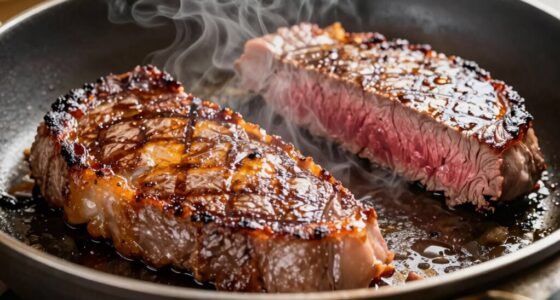
Frozen foods tend to brown faster because freezing damages cell structures, exposing sugars and proteins that promote browning during cooking. This damage increases surface area and makes heat transfer more rapid, risking burnt spots if heat isn’t controlled. To avoid this, thaw properly, control your cooking temperature, and use gentle heat. If you continue, you’ll discover more tips to prevent over-browning and achieve even, delicious results with frozen foods.
Key Takeaways
- Freezing damages cell structures, increasing surface area and promoting uneven heat transfer during cooking, which accelerates browning.
- Larger ice crystals from slow freezing cause more cellular damage, leading to faster browning and uneven cooking.
- Fluctuating storage temperatures activate enzymes and chemical reactions, resulting in uneven browning and burnt spots.
- Higher sugar content in frozen foods speeds up caramelization, causing faster browning during cooking.
- Proper thawing, controlled heat, and even cooking techniques prevent hot spots and reduce the risk of burnt spots in frozen foods.

Toshiba Air Fryer Combo 4-in-1 Countertop Microwave Oven, Smart Sensor, Convection, Mute Function, Position Memory 13.6" Turntable, 1.5 Cu Ft, 1000W, Silver, ML-EC42P(SS)
4-in-1 Multifuntional Countertop Microwave One microwave with multi-functions of microwave, air fry, convection, combination cooking (microwave plus convection)...
As an affiliate, we earn on qualifying purchases.
Why Do Frozen Foods Brown Faster Than Fresh?
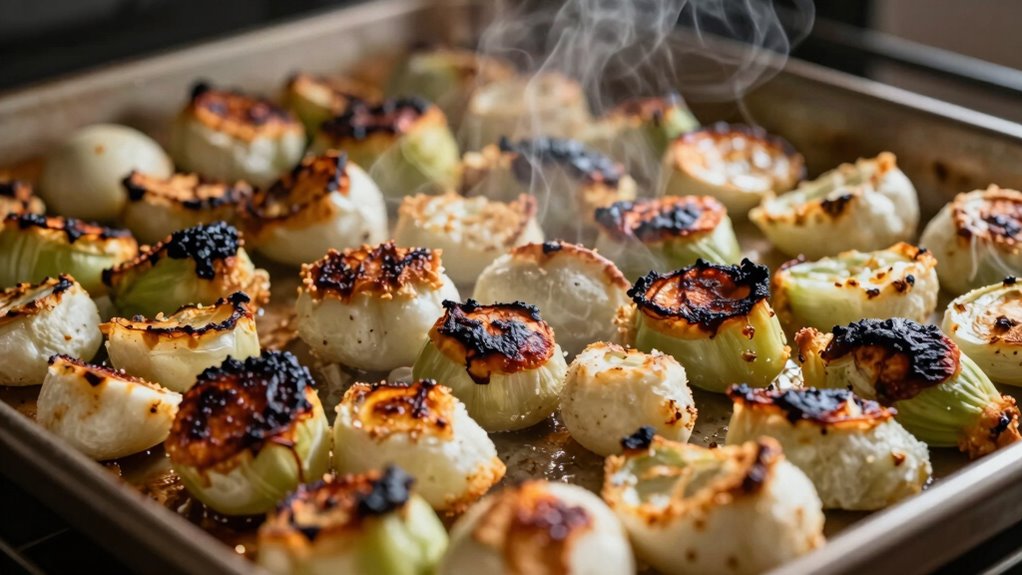
Frozen foods tend to brown faster than fresh ones because the freezing process causes cellular damage that accelerates enzymatic activity during thawing. This damage exposes sugars and proteins, making them more susceptible to heat-induced reactions like sugar caramelization. When you cook frozen foods, these exposed sugars undergo caramelization more quickly, leading to faster browning. Additionally, additive effects from preservatives or other ingredients can intensify this process, promoting uneven coloration or burnt spots. The cellular damage also increases the surface area, making heat transfer more efficient and speeding up browning reactions. Interestingly, the enzyme activity in frozen foods can sometimes remain active after freezing, further contributing to browning during cooking. As a result, frozen foods are more prone to developing a darker, sometimes burnt appearance during cooking, especially if not monitored carefully. Understanding this helps you manage browning and prevent overcooking.

TOSHIBA Countertop Microwave Oven Air Fryer Combo, Inverter, Convection, Broil, Speedy Combi, Even Defrost, Humidity Sensor, Mute Function, 27 Auto Menu&47 Recipes, 1.0 cu.ft/30QT, 1000W
Ultimate Versatility: This multi-microwave with 10 power levels is your ultimate kitchen helper. The versatility as a microwave,...
As an affiliate, we earn on qualifying purchases.
How Freezing and Storage Conditions Speed Up Browning
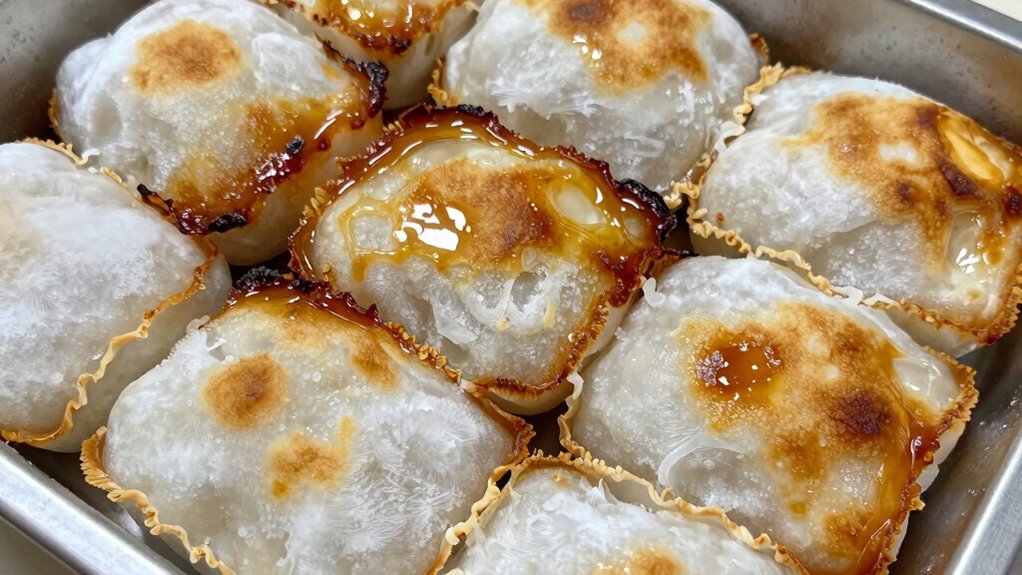
When you freeze foods quickly, smaller ice crystals form, which can cause more cell damage and lead to faster browning upon storage. If your storage temperature isn’t consistently cold enough, enzymatic reactions accelerate, speeding up the browning process. Keeping foods at ideal freezing conditions helps slow these reactions, but fluctuations can still hasten browning. Additionally, maintaining proper color accuracy during storage can help preserve the visual quality of frozen foods. Proper temperature management is essential to minimize enzymatic activity and prevent undesirable color changes over time. Ensuring consistent freezing temperatures also reduces the risk of freezer burn, which can further impact food quality over time.
Freezing Rate Effects
The rate at which foods are frozen considerably influences how quickly browning occurs during storage. Rapid freezing creates smaller ice crystals, which cause less cell damage and preserve the food’s structure. This slows down enzymatic reactions responsible for browning. Conversely, slow freezing results in larger ice crystals that damage cell walls, increasing exposure to oxygen and enzymes that promote browning. Proper frozen packaging is vital, as it minimizes airflow and reduces moisture loss, preventing uneven freezing. Additive effects, such as using anti-browning agents or antioxidants, work more effectively when freezing occurs quickly, as they inhibit enzyme activity before damage sets in. Hence, understanding freezing rate effects helps you choose the right techniques and packaging to slow browning and maintain food quality longer.
Storage Temperature Impact
While rapid freezing helps slow down browning by minimizing cell damage, the storage temperature after freezing also plays a significant role in how quickly browning occurs. The freezing effects on food tissues influence enzymatic activity and moisture retention, but once stored, the storage impact becomes critical. If your freezer isn’t cold enough, residual enzymes can remain active, accelerating browning and developing burnt spots faster. Higher storage temperatures allow enzymes and oxidation processes to persist, speeding up discoloration and deterioration. To prevent this, keep your freezer at the ideal temperature, ideally at or below 0°F (-18°C). Maintaining a consistent, cold environment minimizes the freezing effects that trigger browning, ensuring your foods stay fresher and free of fast-occurring discoloration. Proper temperature control is essential for preserving food quality over time, especially in relation to freezing and storage conditions. Additionally, understanding freezing rate can help optimize storage methods to further slow down undesirable browning and spoilage.

TOSHIBA Air Fryer Combo 8-in-1 Countertop Microwave Oven, with Convection, Broil, Odor Removal Mode, 12.4" Position Memory Turntable, Child-Lock, 1.0 Cu.ft, Black Stainless Steel, ML2-EC10SA(BS)
Two-Step Child Lock: This mandatory safety feature for microwaves helps prevent unintended use by younger family members, plesase...
As an affiliate, we earn on qualifying purchases.
Do Sugars and Additives Make Frozen Foods Browner?
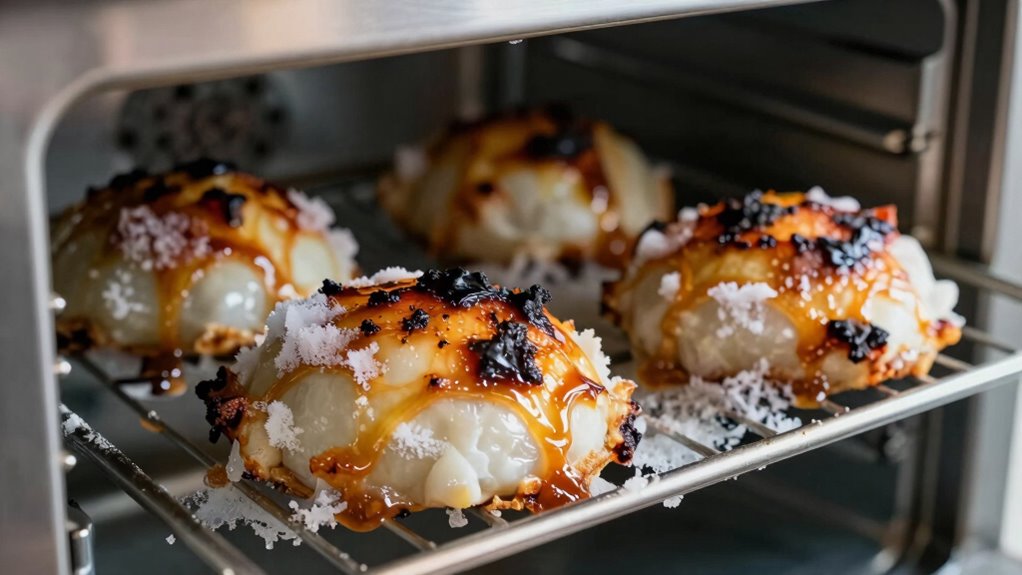
Ever wonder if adding sugars and additives to frozen foods speeds up their browning process? Higher sugar content definitely influences browning because sugars undergo caramelization at relatively low temperatures, resulting in a darker appearance. Additive effects also play a role; certain preservatives or flavor enhancers can alter chemical reactions during freezing and thawing, subtly impacting browning. While some additives might promote browning, others can inhibit it or cause uneven spots. It’s important to check labels if you want to control browning, especially in baked or cooked frozen foods. However, simply having more sugar or specific additives isn’t the sole factor—storage conditions, moisture levels, and freezing techniques also interact to influence how fast a product browns. Understanding Free Floating concepts can help in managing these factors more effectively.

GE 4-in-1 Countertop Microwave Oven, 1.0 Cu Ft, 1050W Convection Microwave with Air Fry & Broil, Compact and Quiet, Stainless Steel, Ideal for Apartments, Dorms & Offices, GCST10A1WSS
THIS MICROWAVE DOES IT ALL: 4‑IN‑1 GE microwave countertop, air fry, convection bake and broil in one compact...
As an affiliate, we earn on qualifying purchases.
How Your Cooking Method Affects Browning and Burn Spots
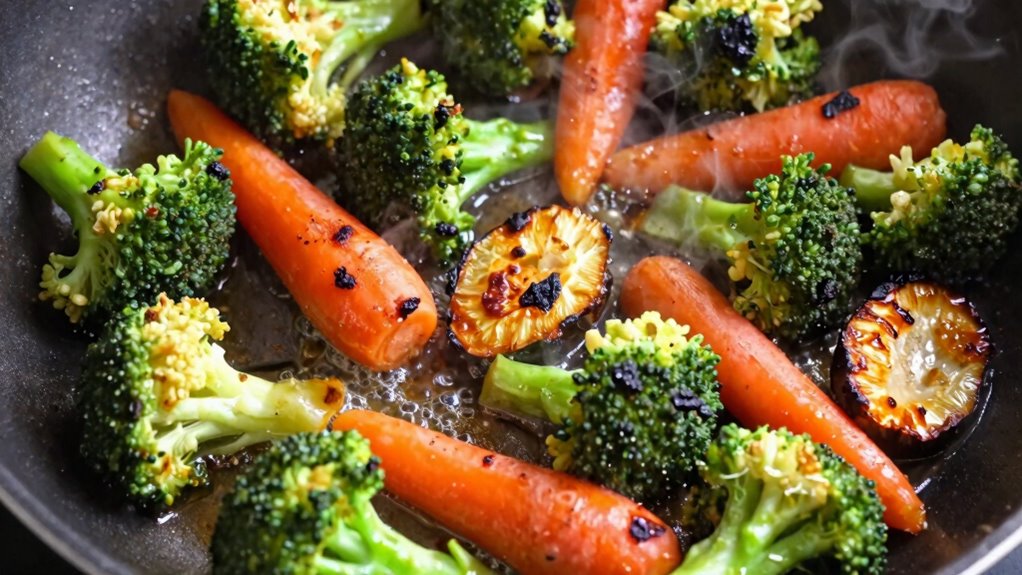
Your choice of cooking method directly impacts how frozen foods brown and where burn spots may appear. Using high heat or uneven heat distribution can cause rapid browning or scorching, especially in spots with thicker sauce consistency. If your sauce is too thick, it’s more prone to burning; stirring frequently helps prevent this. Understanding heat distribution in your cookware can help you better control cooking outcomes and prevent uneven browning. Utensil choice also matters—thin or narrow utensils focus heat, increasing the risk of burn spots, while wider, flat spatulas distribute heat more evenly. Sautéing at moderate temperatures allows for controlled browning and reduces the chance of burnt areas. Adjusting your method, maintaining consistent heat, and choosing the right utensils help ensure even browning without scorch marks, keeping your frozen foods flavorful and visually appealing.
How to Properly Thaw Frozen Foods to Prevent Uneven Browning
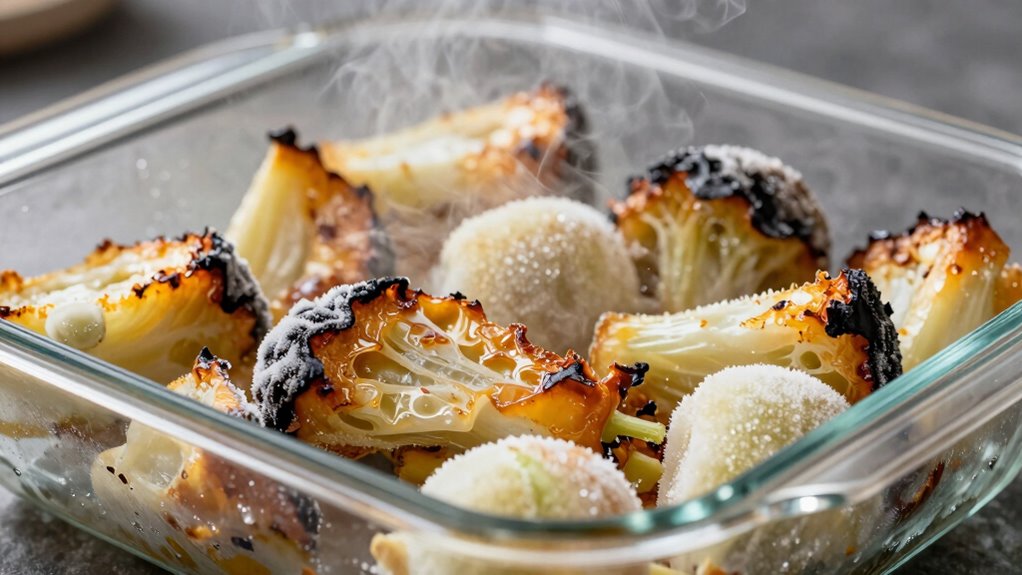
Properly thawing frozen foods sets the stage for even browning and prevents scorch marks. Effective thawing practices rely on temperature management to avoid uneven heating. To do this, you should:
- Use the refrigerator: Thaw foods slowly at 40°F (4°C) or below for consistent temperature control. Maintaining a stable temperature helps prevent the formation of hot or cold spots. Temperature stability is critical for safe and even thawing. Additionally, consistent temperatures help maintain food quality throughout the process.
- Avoid room temperature thawing: This can promote bacterial growth and uneven defrosting.
- Use cold water or microwave when needed: For quicker thawing, submerge in cold water or use the microwave’s defrost setting, but cook immediately afterward.
- Understanding water chemistry principles can help optimize thawing methods and maintain food safety. Proper water temperature and circulation are essential for efficient thawing.
Maintaining proper temperature during thawing ensures foods defrost evenly, reducing the risk of burnt spots caused by hot or cold spots. This careful approach helps achieve uniform browning and better overall results.
Best Techniques for Cooking Frozen Meats and Vegetables Without Burning
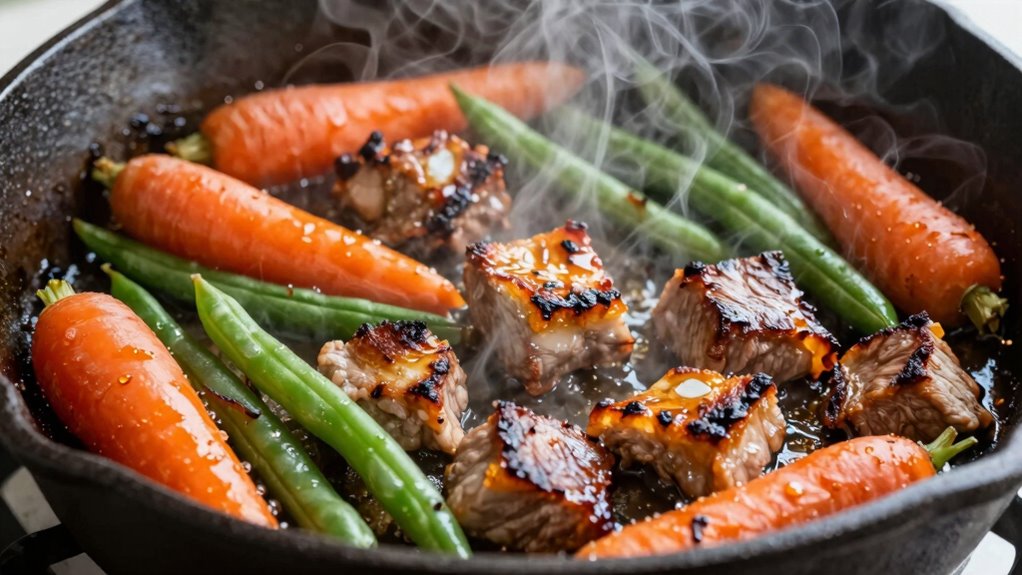
To cook frozen meats and vegetables without burning, start with proper thawing techniques to make certain of even heat distribution. Keep your cooking temperatures controlled, avoiding high heat that can cause quick browning or burning. Using non-stick cookware can also help prevent sticking and scorching, making your cooking process smoother and safer. Additionally, understanding the importance of consistent heat application can improve your results and prevent burnt spots. Moreover, employing precise temperature control through modern kitchen technology, such as smart ovens with temperature sensors, can help maintain optimal heat levels throughout your cooking process. Incorporating temperature monitoring tools can further enhance your ability to prevent overcooking and uneven browning. Being aware of cooking temperature guidelines can also assist in achieving evenly cooked frozen foods without burning. Regularly checking your cookware and adjusting heat as needed is essential because proper airflow around your pots and pans can influence heat distribution and prevent hotspots that cause burning.
Proper Thawing Techniques
When cooking frozen meats and vegetables, thawing them properly is essential to prevent burning and guarantee even cooking. Your choice of thawing methods impacts temperature management, which is key to avoid hot spots and burnt spots. To achieve optimal results, consider these techniques:
- Refrigerator Thawing: Plan ahead and thaw in the fridge for 24 hours, maintaining a safe, consistent temperature.
- Cold Water Thawing: Submerge sealed packages in cold water, changing it every 30 minutes for faster, safe thawing.
- Microwave Thawing: Use the microwave’s defrost setting, but cook immediately afterward to prevent uneven heating.
Proper thawing methods help control temperature fluctuations, reducing the risk of burning and ensuring even cooking throughout.
Controlled Cooking Temperatures
Cooking frozen meats and vegetables requires careful temperature control to prevent burning and make certain of even doneness. Maintaining consistent heat helps preserve food quality and minimizes unwanted texture changes caused by overheating. Starting with medium or low heat, allowing the food to thaw slightly and cook evenly, is essential. Using a thermometer can help monitor your stove’s temperature, ensuring it stays within the ideal range. Avoid high heat, which can cause exterior burning while the inside remains undercooked, risking food preservation issues. Slow, controlled cooking prevents burnt spots and keeps textures intact. Stir frequently to distribute heat evenly and reduce hot spots. Proper heat management, including the use of temperature controls, is essential for achieving optimal results and avoiding the deterioration of your frozen ingredients. Additionally, understanding field recording techniques can improve your awareness of environmental factors that influence cooking outcomes, such as ambient temperature and humidity. Recognizing the importance of efficient heat transfer can further enhance your ability to cook frozen foods evenly and prevent uneven browning. Moreover, paying attention to water content in your ingredients can help prevent sticking and burning during the cooking process. Developing consistent cooking habits and monitoring these variables can significantly improve the quality of your frozen foods.
Use of Non-Stick Cookware
Using non-stick cookware is highly effective for cooking frozen meats and vegetables without burning, especially when you want to maintain even heat distribution. The non-stick benefits include easier food release, reduced need for excess oil, and simpler cleanup. When selecting cookware, focus on quality materials like ceramic or PTFE coatings to guarantee durability and even heating. To optimize your cooking:
- Choose the right cookware size to prevent overcrowding and uneven heat.
- Preheat the pan gradually to avoid sudden temperature changes that cause burning.
- Use medium or low heat settings to control cooking speed and prevent burnt spots.
Proper cookware selection combined with these techniques ensures your frozen foods cook evenly, minimizing browning issues and preserving flavor.
How Temperature Control Helps Avoid Burnt Spots
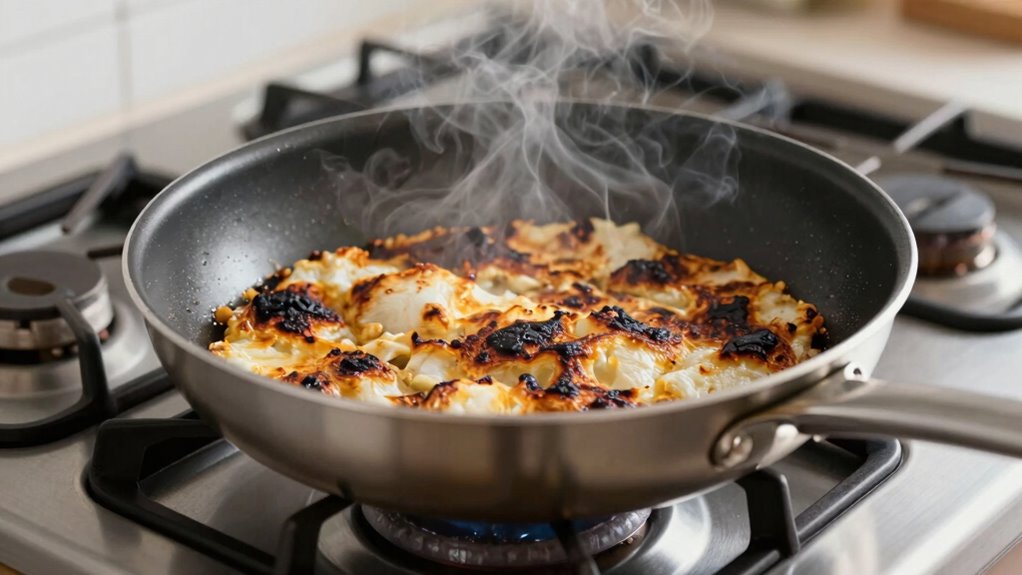
Maintaining precise temperature control is essential to prevent burnt spots on frozen foods. When your heat remains consistent, it ensures even cooking and minimizes the risk of scorching certain areas. Temperature consistency helps distribute heat uniformly across the pan or oven, avoiding hot spots that cause localized browning. Using a reliable thermometer or stove with accurate temperature settings allows you to monitor and adjust heat as needed. Proper heat distribution ensures that frozen foods cook evenly, reducing the chance of over-browning or burnt patches. By regulating the temperature carefully, you can achieve a perfectly cooked dish without the uneven discoloration often caused by temperature fluctuations. This approach helps preserve food quality and appearance, making your cooking more efficient and enjoyable.
Common Mistakes That Cause Over-Browning and How to Avoid Them
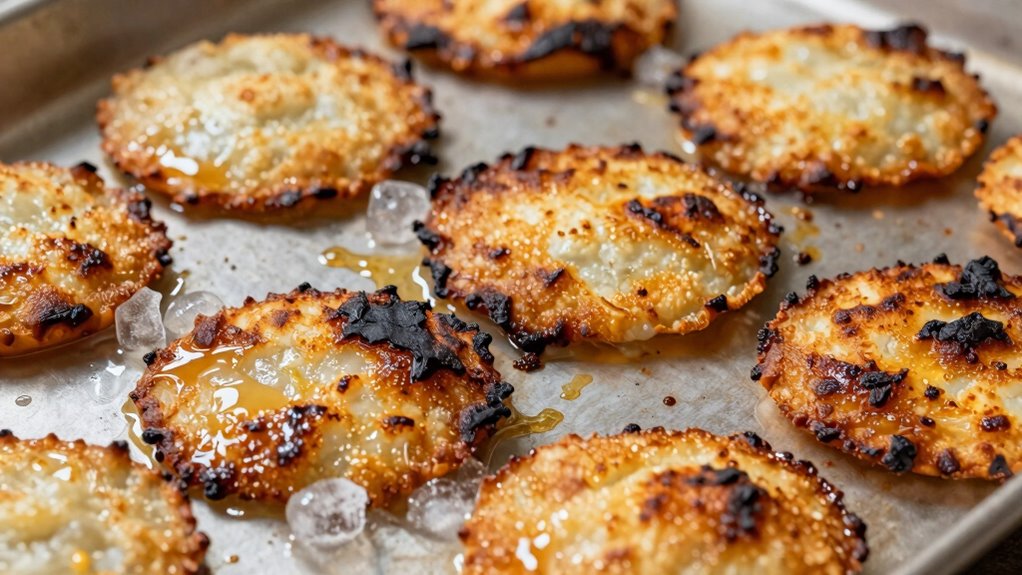
One common mistake that leads to over-browning is not paying attention to the heat level during cooking. If the heat is too high, you’ll risk over-browning, freezer burn, and flavor loss. To avoid this, consider these tips:
- Use medium heat to control browning and prevent rapid surface scorching.
- Avoid overcrowding the pan, which can trap moisture and cause uneven browning.
- Monitor cooking time closely, as extended exposure increases the chance of burnt spots and dry, flavorless food.
Neglecting these steps can cause over-browning, leading to freezer burn and flavor loss. Maintaining proper heat and timing helps ensure even browning and preserves the quality of your frozen foods.
Easy Tips for Even Browning When Cooking Frozen Foods
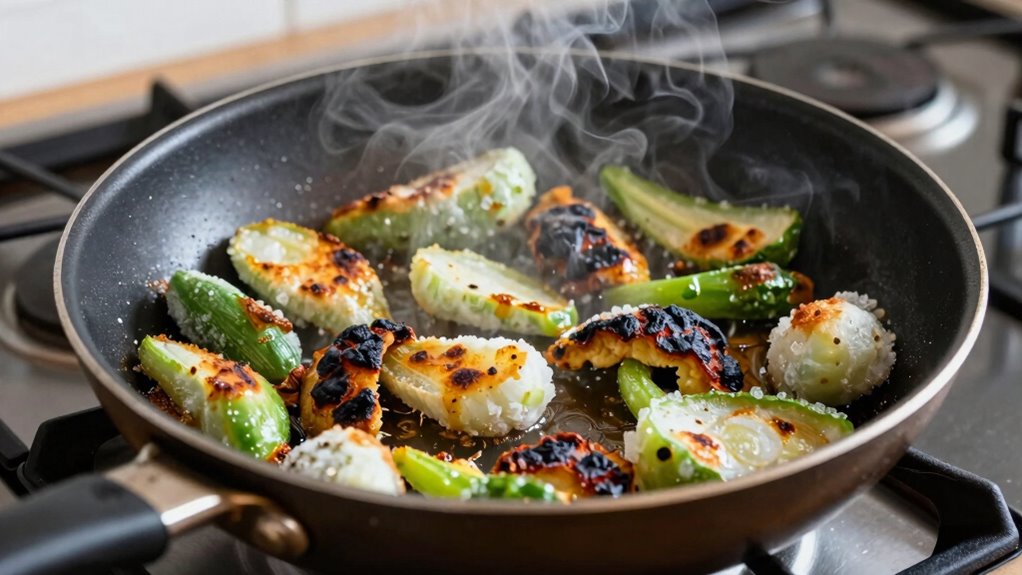
To achieve even browning when cooking frozen foods, it’s essential to start with proper preparation. Make certain your foods are evenly thawed or patted dry to prevent steaming and uneven color. Seasonings can enhance flavor and promote uniform browning—try simple seasoning tips like salt, pepper, or herbs before cooking. Using a hot pan and sufficient oil helps distribute heat evenly. Additionally, stirring or flipping frequently prevents burnt spots.
| Technique | Benefits |
|---|---|
| Preheat pan thoroughly | Ensures consistent heat absorption |
| Use even oil coverage | Promotes uniform browning |
| Season early | Enhances flavor and improves browning |
| Avoid overcrowding | Prevents steaming, promotes crispness |
| Stir or flip often | Ensures even color and texture |
Frequently Asked Questions
Can Marinating Frozen Foods Prevent Uneven Browning?
Marinating frozen foods can help prevent uneven browning by adding moisture and flavor, which improves the overall texture. The marination benefits include tenderizing and enhancing taste, but it won’t fully stop uneven browning caused by temperature differences. Keep in mind, frozen food texture remains somewhat firm, so for best results, marinate partially thawed items. This promotes even absorption, reducing the risk of burnt spots and ensuring a more consistent cook.
Does the Type of Cookware Affect Browning of Frozen Foods?
You notice the sizzle when you place frozen foods in your pan, but the type of cookware matters. Different materials like cast iron, stainless steel, or non-stick affect heat distribution, influencing how evenly your food browns. For consistent results, choose cookware that distributes heat well, preventing hot spots that cause burnt spots. So, yes, your cookware material greatly impacts browning, and selecting the right piece helps achieve perfectly cooked, evenly browned frozen foods.
How Does Humidity Impact Browning During Cooking?
Humidity effects your cooking by influencing moisture levels, which impacts browning. When humidity is high, excess moisture slows down browning because the water needs to evaporate first. To control moisture, you should use proper ventilation and avoid over-covering pans, ensuring moisture escapes. This moisture control helps you achieve a better sear and even browning, preventing soggy or burnt spots, and giving your dishes that perfect, crispy finish.
Are There Specific Seasonings That Promote Even Browning?
You might think all seasonings behave the same, but some promote even browning better than others. For flavor enhancement and uniform color, try using light coatings of paprika, turmeric, or cumin, which contain natural color and promote even heat distribution. Seasoning techniques that include dry rubs or marinades with these spices help prevent burnt spots while enhancing flavor. So, choose your seasonings wisely to achieve that perfect, evenly browned dish.
What Role Does Pre-Cooking Temperature Play in Preventing Burnt Spots?
Pre-cooking temperature plays a vital role in preventing burnt spots by allowing you to control heat levels effectively. Using proper temperature control guarantees your food cooks evenly, avoiding high heat that causes rapid browning. Employing good cooking techniques, like starting with lower temperatures and gradually increasing, helps distribute heat uniformly. This approach minimizes burnt spots and promotes consistent browning, giving you perfectly cooked frozen foods every time.
Conclusion
Understanding why frozen foods brown faster helps you stay one step ahead in the kitchen. By controlling thawing, cooking methods, and temperature, you can turn the odds in your favor and prevent burnt spots. Think of it as guiding a delicate dance—you lead with care, and your dishes turn out perfectly golden every time. With these tips, you’ll master the art of even browning, making your frozen favorites deliciously flawless, not fiery disasters.