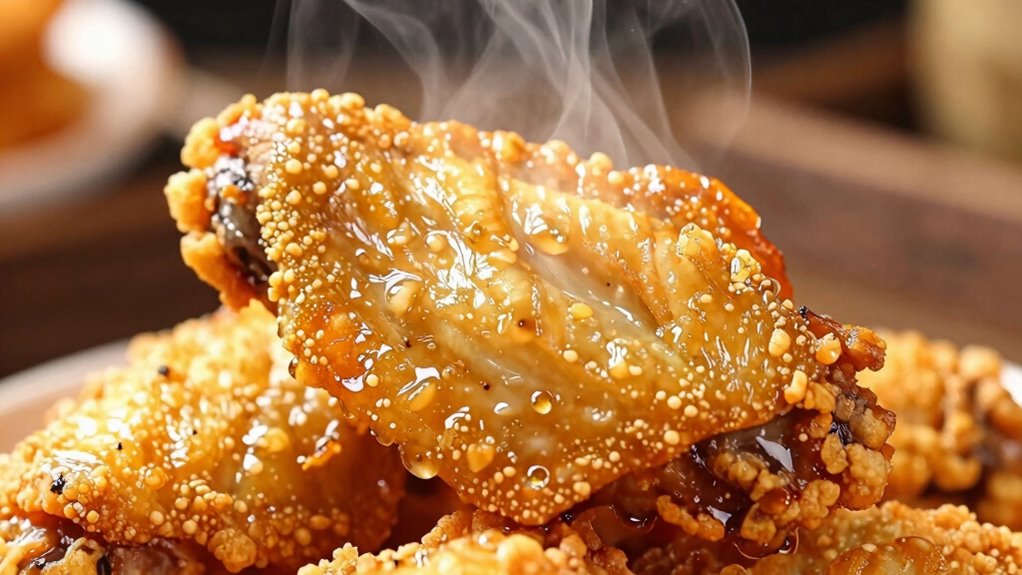

If you cover fried or baked foods too early, you trap steam inside, which softens the crispy crust and makes the food soggy. Moisture builds up under the cover, preventing the surface from staying crunchy and often causing excess oil absorption. Proper timing and using breathable covers help steam escape and keep your food crisp. Stick around to discover how to prevent this common mistake and enjoy perfectly crispy dishes every time.
Key Takeaways
- Covering hot, crispy foods too early traps steam, leading to moisture buildup and sogginess.
- Proper cooling and breathable covers allow steam to escape, preserving crispiness during storage.
- Sealing foods immediately after frying prevents moisture from escaping, softening the crust.
- Using tight lids or foil traps steam, which softens textures and diminishes crunch.
- Managing airflow and moisture is essential to prevent sogginess and maintain food crispiness.
What Is the “Steam Trap” Mistake and How Does It Ruin Crispy Food?
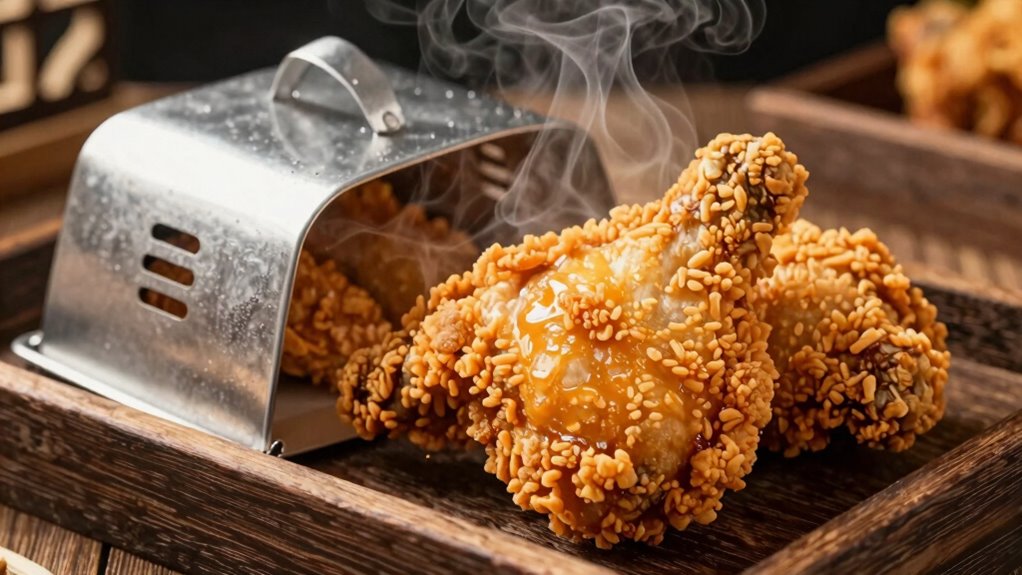
Have you ever wondered why your crispy foods lose their crunch so quickly? The answer often lies in the “steam trap” mistake. When you cover fried or baked foods too early, steam gets trapped inside, causing steam buildup. This trapped moisture isn’t just uncomfortable—it’s destructive to your food’s crispiness. This process happens because the trapped steam keeps the food’s surface damp, preventing it from drying out and crisping up properly. To keep your foods crunchy, you need to avoid sealing in that steam too soon. Letting the steam escape allows moisture to evaporate, preserving the crispiness and preventing the food from turning soggy too quickly. Proper ventilation also plays a critical role in maintaining optimal airflow around your food, helping to dissipate moisture more effectively. Additionally, understanding cooking techniques can help you better manage moisture levels during food preparation. Incorporating thermal behavior principles can further optimize your process by controlling how heat and moisture interact during cooking. Mastering moisture control techniques ensures your foods stay deliciously crispy from first bite to last. Properly managing ventilation during and after cooking is essential for maintaining the desired texture.
Why Covering Fried Food Too Early Makes It Soggy
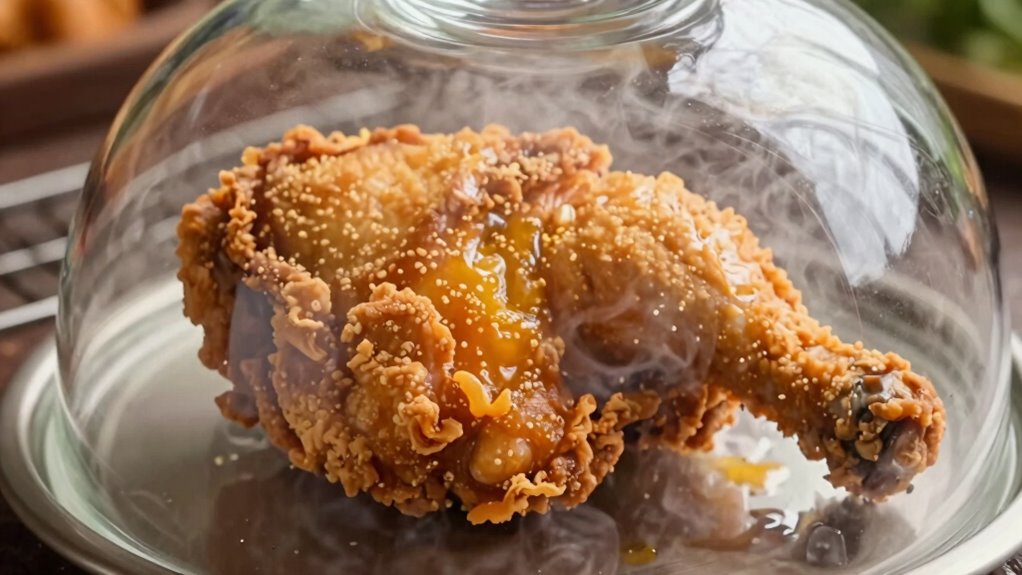
Covering fried food too early traps steam inside, which quickly turns the crispy exterior soggy. When you do this, moisture can’t escape, leading to oil absorption that makes the food greasy and dulls its texture. The trapped steam also dilutes flavor, reducing the intensity of spices and seasonings. As a result, you lose both the crunch and the rich taste you’re aiming for. The longer moisture stays locked in, the more the food softens and becomes less appealing. To keep your fried foods crispy and flavorful, wait until they’ve fully cooled and the crust is set before covering or storing. This approach minimizes oil absorption, preserves flavor, and maintains the satisfying crunch you want. Additionally, understanding proper food storage techniques can help maintain the crispiness for longer. Being mindful of proper cooling methods ensures that excess moisture is released naturally, further protecting your food’s texture. Incorporating ventilation strategies during cooling can also help moisture escape more efficiently and keep your fried foods crisp. Utilizing controlled airflow can optimize the drying process and help prevent sogginess over time.
The Science Behind Steam, Moisture, and Food Texture

Steam plays a vital role in adding moisture to food, which can improve or ruin its texture. If too much moisture builds up, your dish can become soggy or lose its crispness. Understanding how to control steam helps you prevent overly moist foods and achieve the perfect result. Properly managing free floating conditions in your cooking environment ensures that excess moisture does not compromise your food’s texture. Additionally, recognizing the impact of steam on food can help you make informed decisions to maintain ideal food quality. Being aware of how moisture retention affects food can further enhance your ability to cook with precision. Controlling ventilation during cooking can be essential in managing moisture levels effectively. Mastering precise moisture control is key to achieving consistently crispy and well-textured dishes.
Steam’s Role in Moisture
Ever wonder how steam influences the moisture content and texture of your food? Steam plays a crucial role in moisture control, helping maintain juiciness or crispiness. Proper steam management prevents excess moisture from seeping into food, which can make it soggy. When steam is trapped or escapes unpredictably, it affects how moisture interacts with the food’s surface. Here’s a quick look at how different factors influence moisture:
| Factor | Effect on Moisture | Best Practice |
|---|---|---|
| Excessive Steam | Increases moisture, sogginess | Use proper venting and traps |
| Insufficient Steam | Dry, tough texture | Maintain consistent steam flow |
| Uneven Steam | Irregular moisture levels | Manage steam distribution evenly |
| Steam Distribution | Proper distribution helps achieve desired food texture | Properly calibrated vents and fans improve results |
Additionally, understanding cloud computing principles can help optimize industrial cooking processes, ensuring better control of steam and moisture management systems. Proper ventilation also plays a vital role in maintaining consistent steam levels and preventing moisture buildup that can compromise food quality. Incorporating feedback mechanisms can further enhance the precision of steam control, leading to more consistent and desirable food textures. Implementing sensor technology supports real-time adjustments for optimal moisture balance.
Impact on Food Texture
Have you ever noticed how the texture of your food changes depending on how steam interacts with it? When steam condenses on food, it adds moisture that can make items soggy or lose their crispiness. Proper kitchen equipment, like well-maintained steam traps, helps control moisture levels, preserving food textures. For example, crisp fried foods benefit from minimal steam exposure, maintaining their crunch. Conversely, overexposure to steam can soften textures, ruining dishes meant to be firm or flaky. Understanding how steam affects moisture transfer is key to successful food pairing and presentation. Additionally, controlling ventilation in the kitchen prevents excess humidity that can contribute to undesirable moisture buildup. Proper steam management techniques are essential for maintaining optimal food texture and appearance during cooking and serving. Implementing effective moisture control strategies ensures that food retains its intended texture and visual appeal, preventing unwanted sogginess or loss of crunch. Recognizing the importance of moisture transfer helps chefs optimize cooking environments for superior results.
Preventing Overly Moist Foods
Do you know how moisture transfer during cooking can turn a perfectly crisp dish into a soggy disappointment? To prevent overly moist foods, control steam release and avoid trapping excess humidity. Proper sauce pairing can help maintain crispiness by adding flavor without introducing unnecessary moisture. When plating presentation, keep sauces on the side or drizzle lightly to prevent sogginess. Use techniques like draining fried foods thoroughly or using paper towels to absorb excess moisture. Covering dishes too tightly traps steam, increasing moisture content, so vent lids or uncover when appropriate. Managing moisture levels preserves texture and ensures your food stays crisp. Being mindful of steam and moisture transfer not only enhances the food’s texture but also prevent sogginess and elevate the overall dining experience. Additionally, understanding the role of moisture control in cooking can help you develop a more consistently crisp finish. Recognizing the steam trap mistake—covering dishes too tightly—can make the difference between a crunchy delight and a soggy mess, emphasizing the importance of proper ventilation during cooking.
When and How to Cover Food to Maintain Crispy Texture
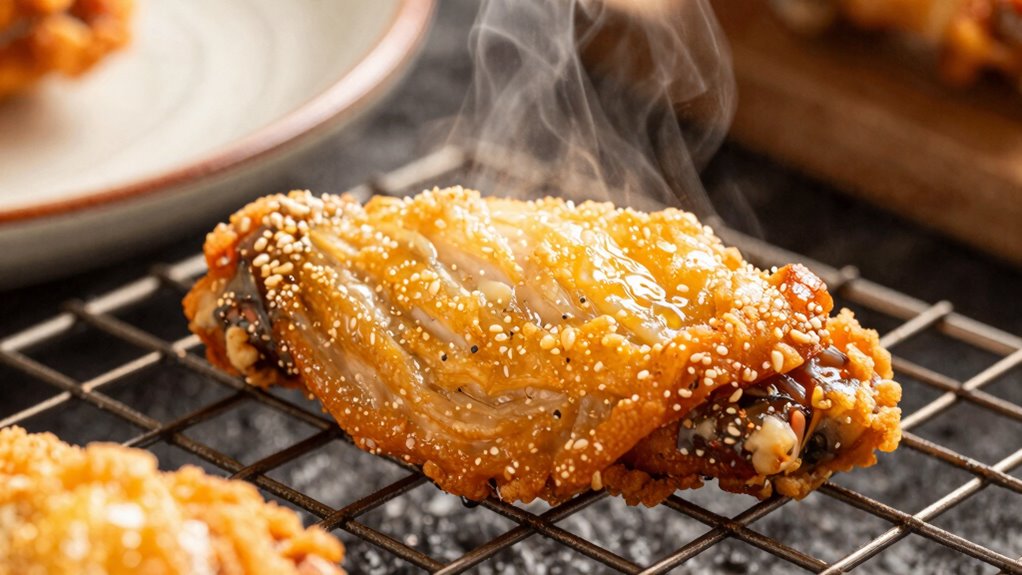
Timing is key when covering food to keep it crispy; wait until it’s nearly cooked through before covering. Use a loose lid or foil to allow steam to escape, preventing excess moisture. Proper technique guarantees your food stays crunchy without losing heat or flavor.
Proper Timing for Covering
To keep food crispy, you need to know the right moment to cover it during cooking or resting. Proper covering timing is essential for controlling steam release. Cover too early, and trapped steam creates moisture, softening the crispiness. Wait too long, and the food might cool or become dry. The key is to uncover just enough to allow excess steam to escape as the food finishes cooking or rests. This prevents moisture buildup that can make surfaces soggy. If you’re frying or roasting, cover briefly at the end to trap heat, then remove the cover to let steam escape and keep the outside crisp. Timing is everything: monitor your food closely and adjust your covering accordingly to maintain that perfect crispy texture.
Best Covering Techniques
Ever wondered when and how to cover your food to keep it crispy? The key is to use the right covering technique during ingredient prep and food storage. For crispy results, avoid fully sealing hot foods immediately; instead, loosely cover them with foil or a vented lid to let steam escape. This prevents excess moisture from trapping and softening the surface. When storing, guarantee the food cools slightly before covering tightly, which helps maintain crispiness. Use breathable covers or paper towels under lids to absorb residual moisture. Proper covering techniques balance protection and ventilation, reducing the risk of sogginess caused by trapped steam. Mastering this approach keeps your food crispy longer, making sure your ingredient prep and storage preserve that perfect crunch.
Top Tips for Keeping Your Fried Foods Crispy Every Time
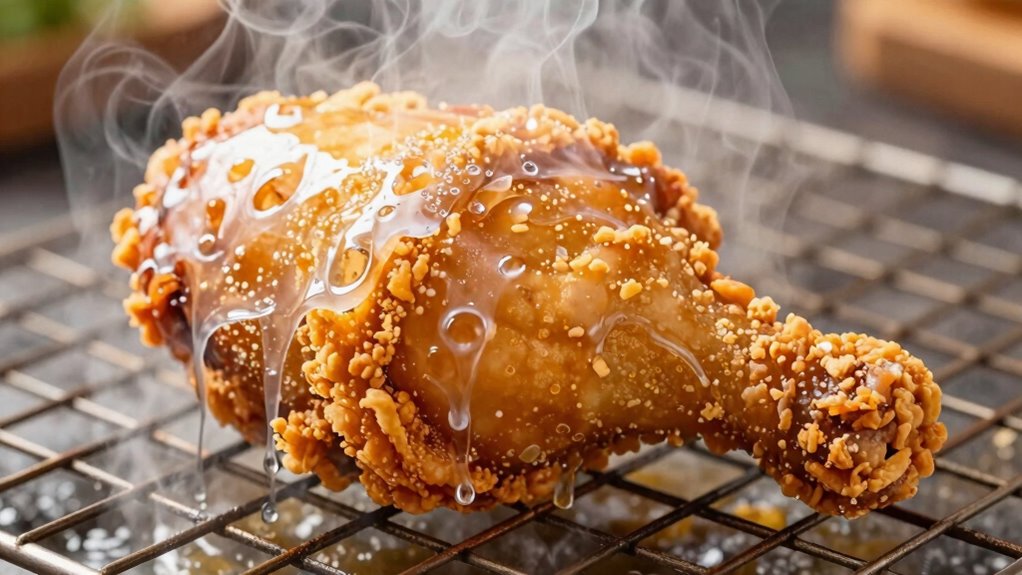
Achieving that perfect crispy texture on fried foods requires more than just hot oil. To prevent excessive oil absorption, avoid overcrowding the pan, which lowers the oil temperature and makes foods soggy. Use a wire rack instead of paper towels to drain excess oil, keeping the crust crisp. Keep oil at a consistent temperature—around 350°F—to ensure even cooking and prevent flavor loss. Don’t cover the food immediately after frying; steam trapped inside can soften the crust. Instead, let fried items rest briefly on a rack, allowing excess moisture to escape. These tips help maintain crunchiness and prevent the loss of flavor, ensuring every bite stays crispy and delicious. Proper oil management and ventilation are key to achieving that ideal texture.
Common Covering Mistakes That Lead to Sogginess (And How to Avoid Them)
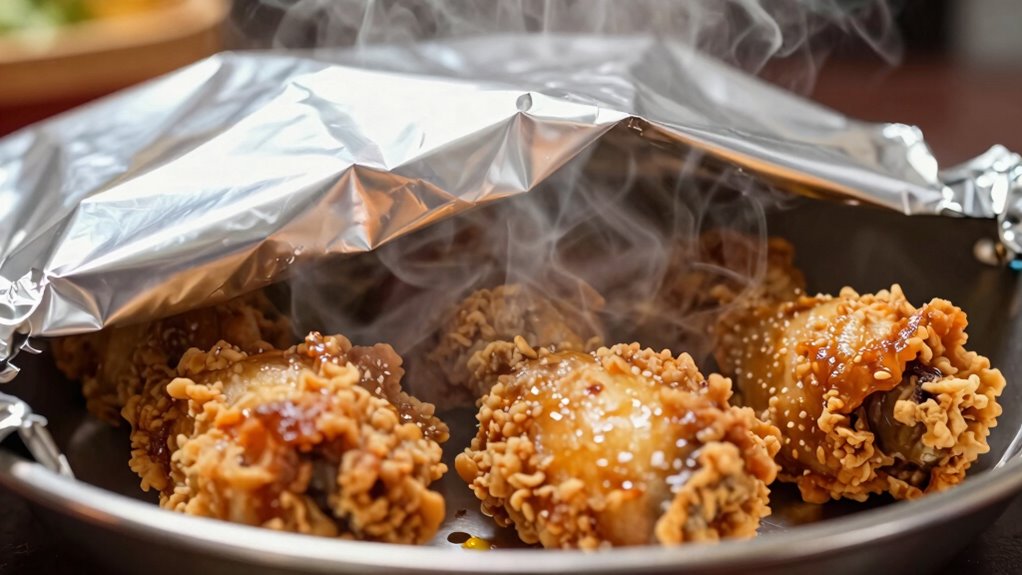
Covering fried foods too soon or with the wrong type of lid can trap steam, leading to sogginess and a loss of crispy texture. To avoid this, focus on proper breading techniques that create a sturdy crust, which helps moisture escape and prevents sogginess. Using seasonings strategically can also enhance flavor without adding moisture that might contribute to sogginess. For example, apply a light dusting of flour or cornstarch before frying to improve crispness. Avoid covering dishes immediately after frying; instead, let them cool slightly on a wire rack. If you must cover, choose a breathable lid or loosely tent foil to allow steam to escape. These simple adjustments help maintain your food’s crunch and keep it deliciously crispy.
Troubleshooting Soggy, Steamed-Feeling Dishes: Fixes and Prevention
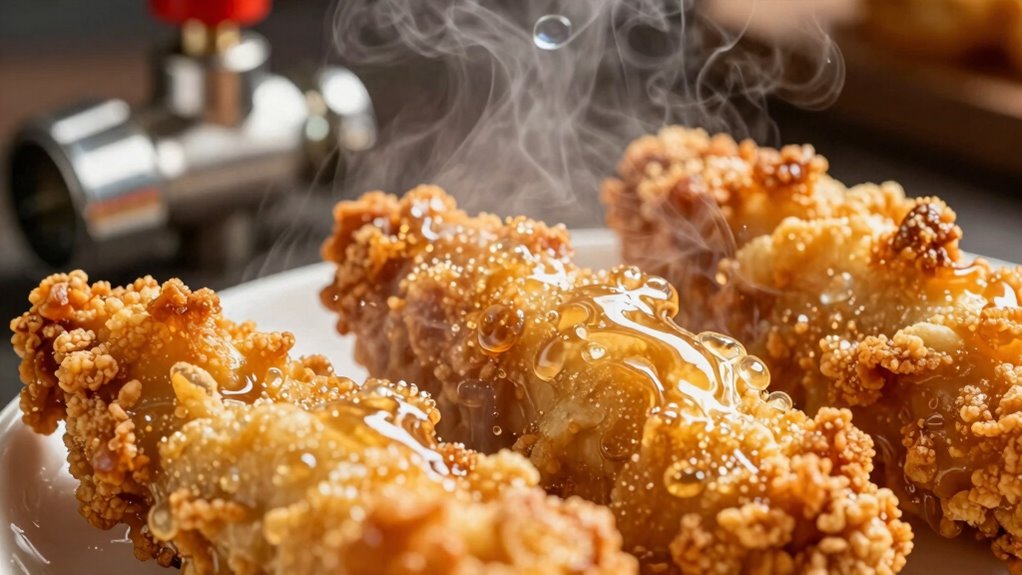
When your fried foods turn out soggy or feel steamed instead of crispy, it often means moisture is lingering where it shouldn’t. To fix this, start by:
- Drain excess oil immediately after frying to reduce oil absorption, which helps maintain crispiness.
- Use a wire rack instead of paper towels; it allows moisture to escape and prevents trapped steam.
- Serve promptly to maximize flavor retention and prevent moisture from seeping in.
Prevention is key. Keep your oil at the right temperature to avoid over-absorption, and don’t cover foods tightly as trapped steam creates a steamed effect. These steps help keep your dishes crisp, flavorful, and satisfying.
Frequently Asked Questions
Can Certain Oils or Coatings Affect Steam Buildup and Sogginess?
Yes, certain oils or coatings can impact steam buildup and sogginess. Oil coatings create a barrier that can trap moisture within the food, increasing porosity and making it harder for steam to escape. This traps steam inside, leading to sogginess. To keep your food crispy, choose lighter coatings and avoid heavy, thick oils that promote food porosity, which can ruin the texture you’re aiming for.
Does the Type of Food Influence How Quickly It Becomes Soggy Under a Cover?
Yes, the type of food influences how quickly it gets soggy under a cover. Foods with high moisture content, like fried chicken or crispy vegetables, generate more steam and retain it longer, leading to faster sogginess. Delicate foods with less moisture won’t trap as much steam, helping to keep their crispiness longer. Managing food moisture and controlling steam retention are key to maintaining texture when covering foods.
Are There Specific Kitchen Tools to Help Maintain Crispiness During Serving?
Like a shield guarding treasure, heated plates help keep food crisp by maintaining a warm, dry environment. Use them alongside absorbent papers to soak up excess moisture, preventing sogginess. Smart kitchen tools like wire racks or specialized covers also help elevate food, allowing steam to escape. These tools work together to preserve crispiness during serving, ensuring your dishes stay fresh and crunchy until the very last bite.
How Does Room Temperature Impact Steam Formation and Food Texture?
Room temperature influences steam formation and food texture through humidity levels and temperature fluctuations. When your kitchen is warm or humid, steam forms more easily, which can make crispy foods soggy faster. Conversely, cooler, stable temperatures help maintain low humidity, reducing unwanted steam. By controlling room temperature and minimizing fluctuations, you prevent excess moisture buildup, keeping your food crispy and fresh longer.
Can Reheating Fried Food Under a Cover Restore Crispiness Effectively?
Reheating fried food under a cover isn’t effective for restoring crispiness, as the trapped steam makes it soggy. Instead, use microwave reheating with a paper towel to absorb moisture, or better yet, employ oven techniques like baking at a high temperature on a wire rack. This allows heat circulation, helps re-crisp the exterior, and preserves that satisfying crunch you want.
Conclusion
To keep your fried foods crispy, avoid rushing to cover them, avoid trapping steam, and avoid sealing in moisture. Instead, wait for the perfect moment, uncover when needed, and allow excess steam to escape. Embrace patience, understand the science, and apply these tips consistently. By doing so, you’ll enjoy crunchy textures, satisfying bites, and delicious results every time—because crispy treats deserve your attention, your care, and your knowledge.